12 Open Shelf Kitchen Ideas You’ll Love
Open shelf kitchen ideas are having a real moment — and it’s easy to see why. Swapping a few upper cabinets for open shelving makes a kitchen feel bigger, brighter, and more personal, putting your prettiest dishes to work as decor. But there’s a difference between shelves that look styled and shelves that look cluttered, and it comes down to a few simple rules: group by material, leave breathing room, and keep everyday pieces within reach.
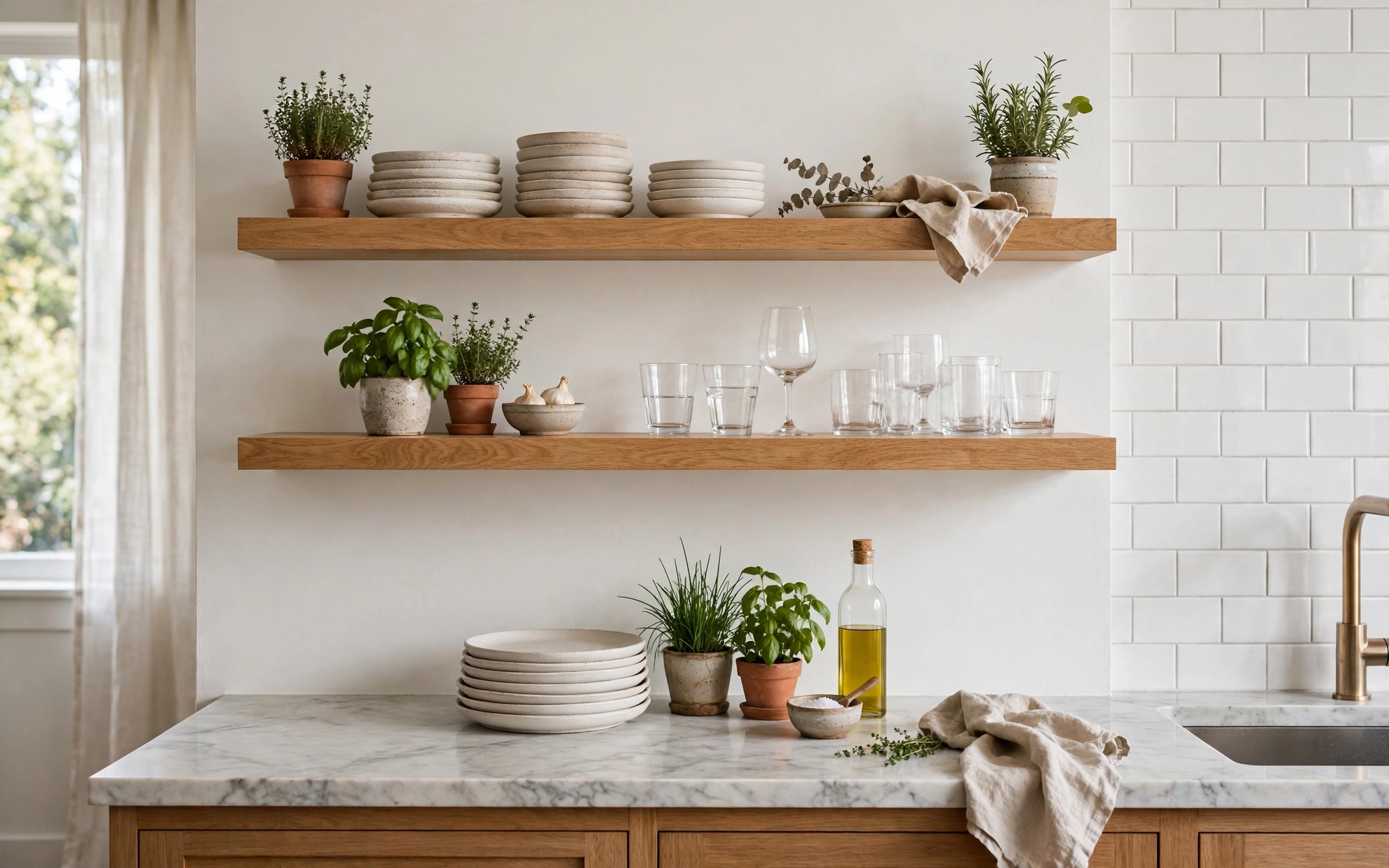
1. Everyday Dishes on White Oak: Open Shelf Kitchen Ideas That Work Daily
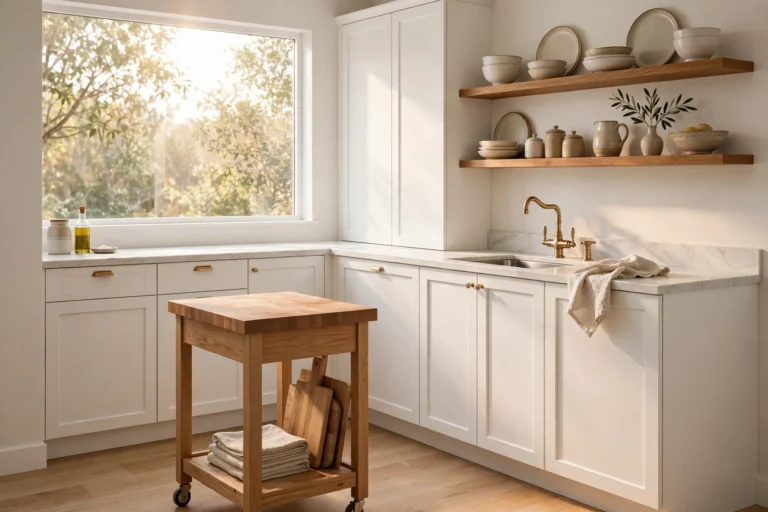
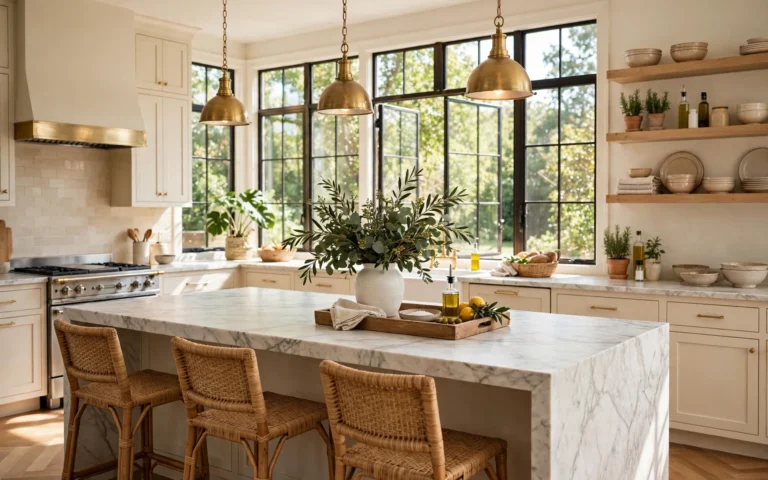
The classic for a reason: two or three white oak floating shelves, 10 to 12 inches deep, mounted about 18 inches above the countertop. Put your actual daily dishes here — stacked stoneware plates, cereal bowls, drinking glasses — so the shelves earn their keep. Keep the palette tight: white and cream ceramics plus clear glass read clean even when shelves are full. Style each shelf like a row, not a jumble. Heavy items go low, lighter pieces (a small plant, a pitcher) go high. Leave a few inches of empty space at each end so the eye can rest. Anchor brackets into studs; a well-mounted oak shelf handles 40 to 50 pounds.
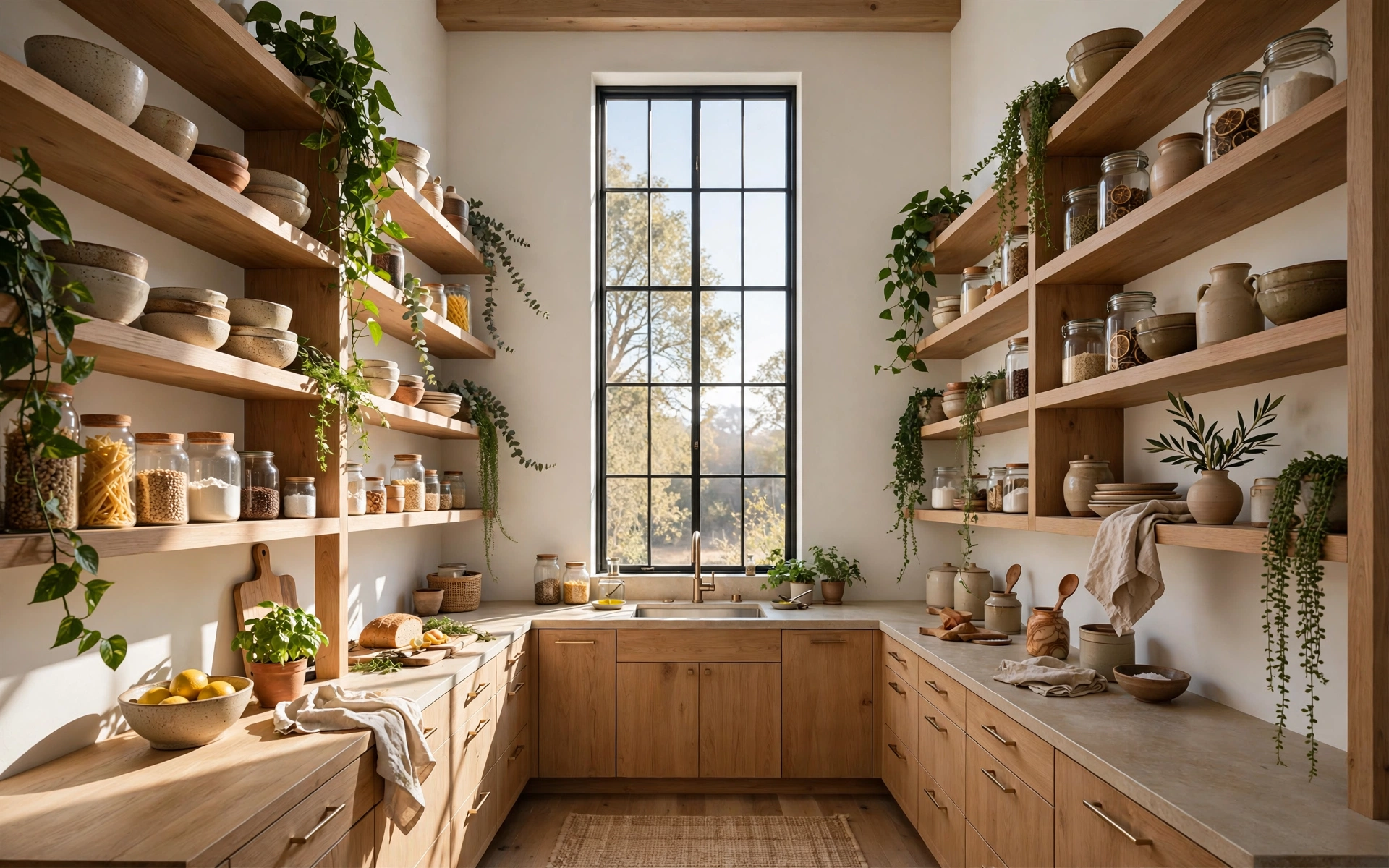
2. Shelves Flanking a Window: Open Shelf Kitchen Ideas With Natural Light
If you have a kitchen window with bare wall on either side, flank it with short stacks of open shelves and let daylight do the styling. Glassware and light ceramics catch the sun and glow; trailing plants on the top shelves soften the hard lines. Keep each stack two shelves high so nothing competes with the window trim. Go with narrow shelves here, 8 to 10 inches deep, in a finish close to your trim color so they read as built-in. Style asymmetrically: a tall vase or stack of pitchers on one side, small bowls and a plant on the other. Items you use daily stay clean, and a quick weekly wipe handles the rest.
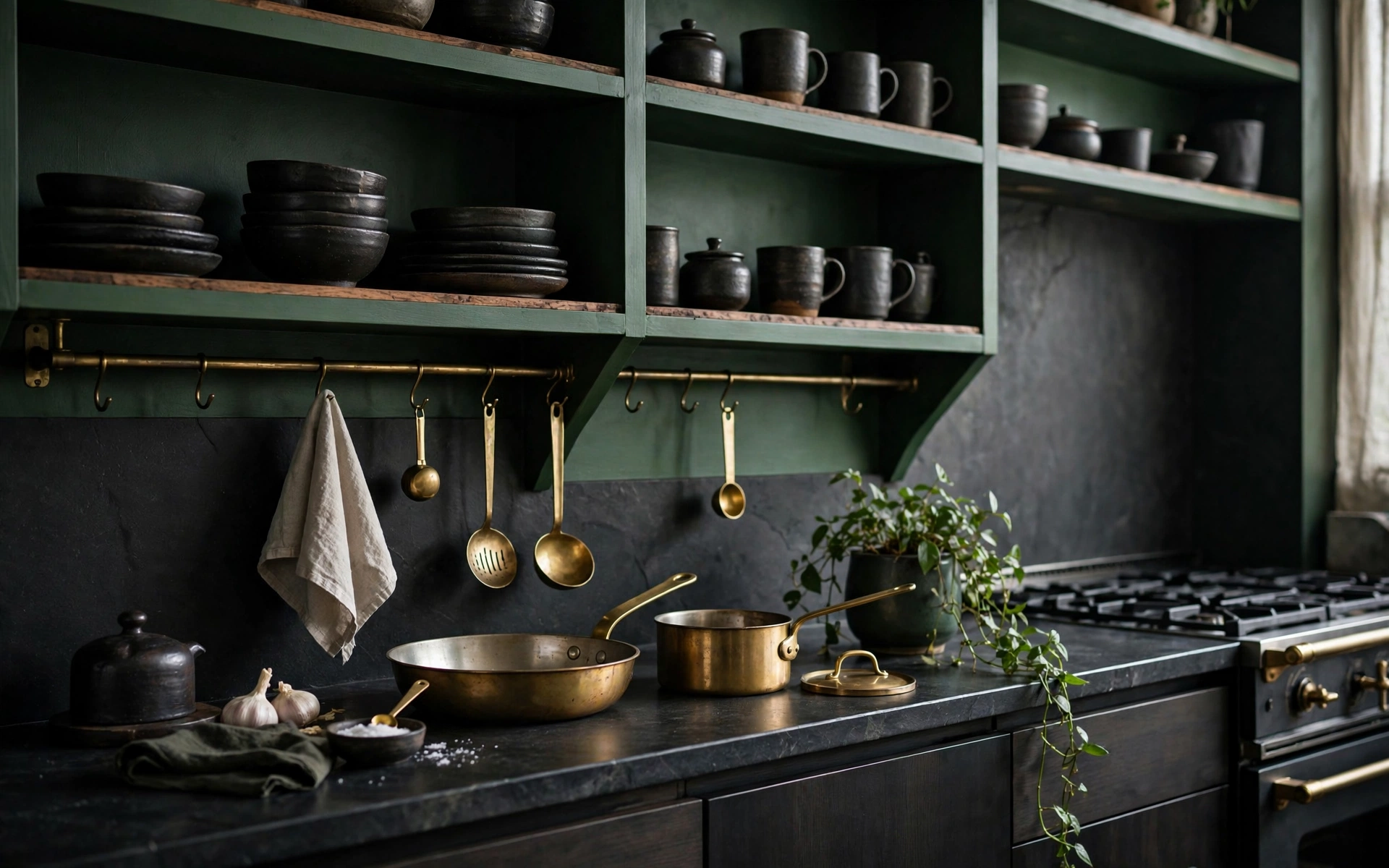
3. Moody Green Shelving With Brass: Bold Open Shelf Kitchen Ideas
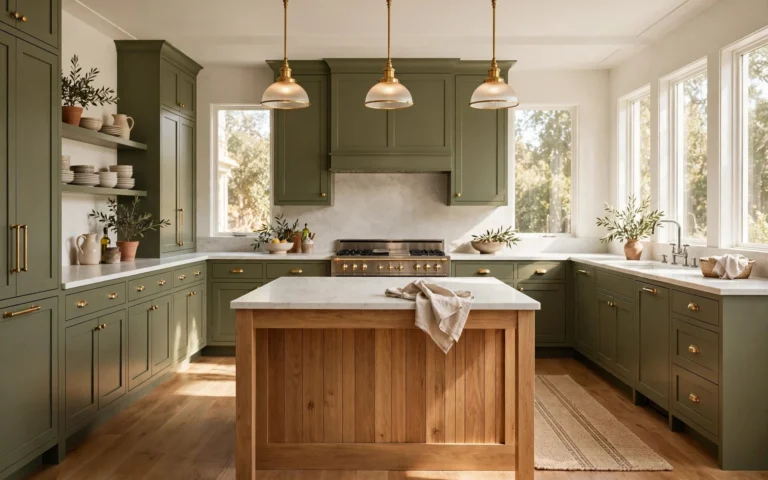
Paint the wall — or the shelves themselves — a deep green like hunter or forest, then style with black stoneware, brass cookware, and one trailing plant. The dark backdrop makes every object look deliberate, and a brass rail under the lowest shelf gives you a place to hang ladles. Contrast is the trick: dark shelves need light counters beneath them (marble, butcher block, or pale stone) so the wall doesn’t feel like a cave. Keep styling sparse — three to five groupings per shelf — because clutter reads loud on dark paint. A slim LED strip tucked under each shelf makes brass and ceramics gleam after dark.
4. Rustic Reclaimed Wood: Open Shelf Kitchen With Mason Jars
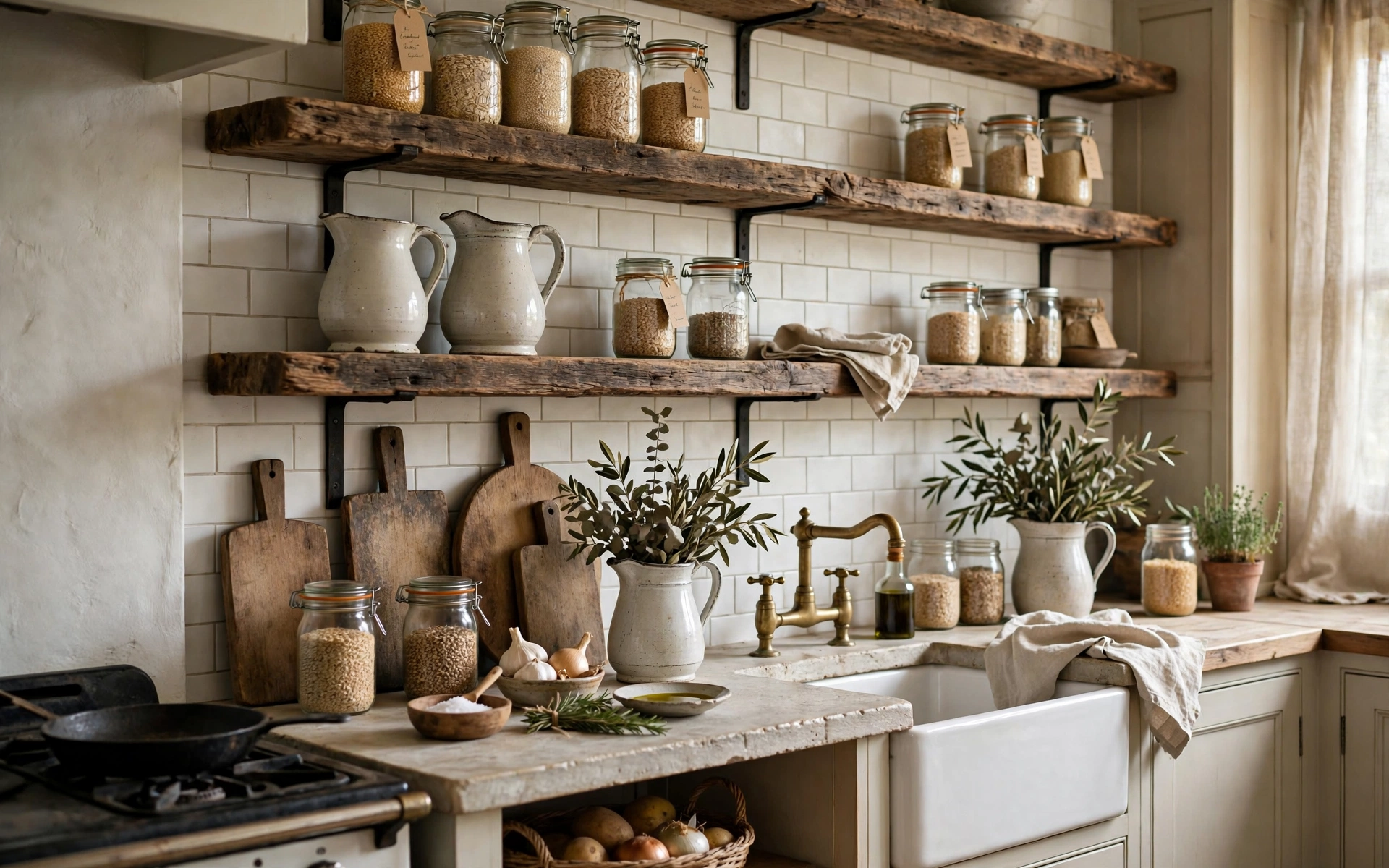
Thick reclaimed-wood shelves against a white subway-tile backsplash give instant farmhouse character. The styling secret is repetition: rows of matching mason jars filled with grains, pasta, and dry goods create a pantry look that’s decorative and functional. Decant staples into jars, add simple labels, and flour starts looking like decor. Mix in wood cutting boards leaned upright and a couple of ironstone pitchers to break up the glass. Keep shelf spacing generous — 14 to 16 inches — because jars and pitchers are tall. If you’re drawn to warm wood tones, our chocolate brown decor ideas show how to carry that palette through the rest of the house.
5. Cooking Station: Open Shelf Kitchen Beside the Range
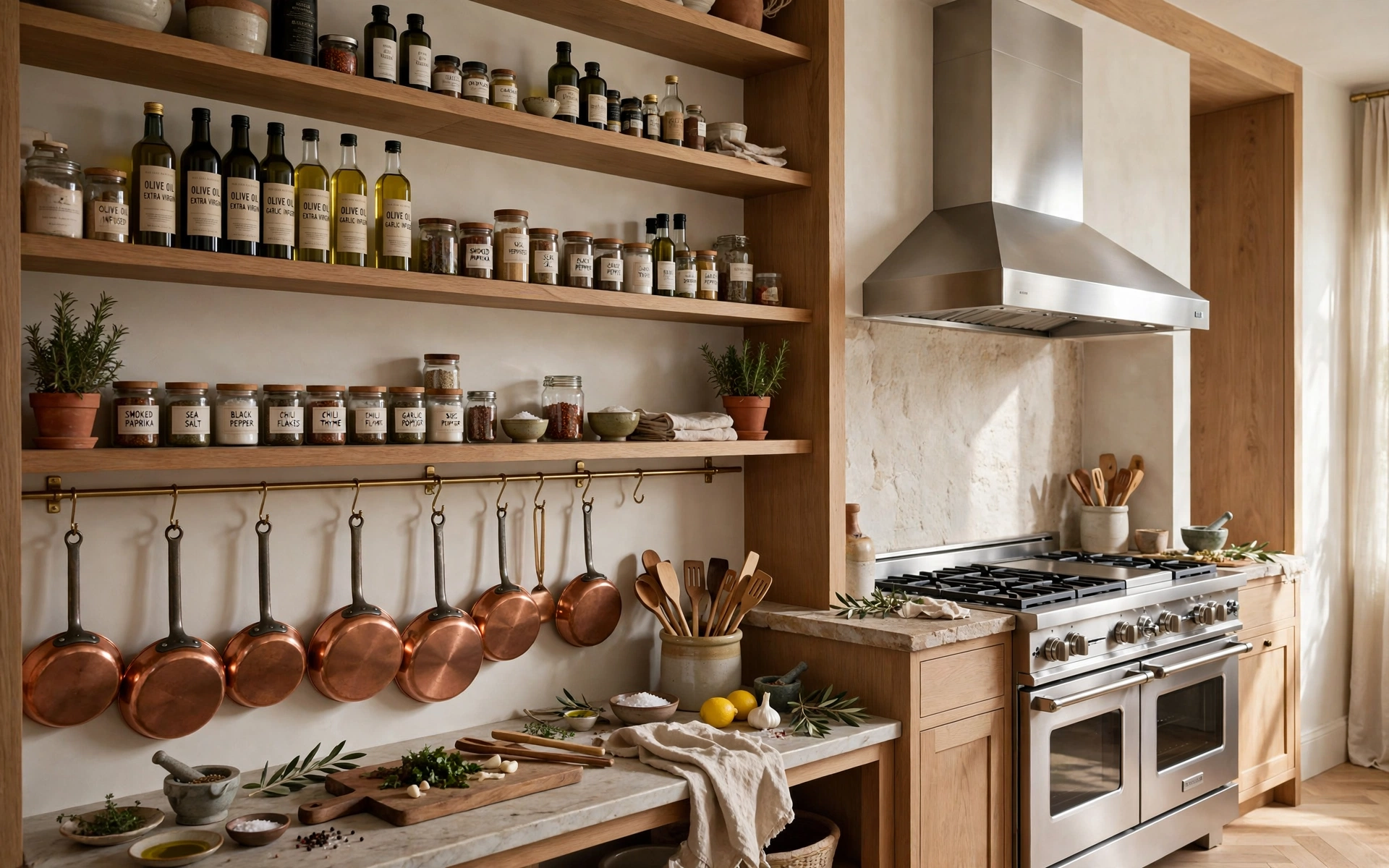
Dedicate one full wall of open shelves next to your range to everything you reach for while cooking: olive oils, vinegars, salt cellars, spice jars, and wooden utensils in a crock. Mount a rail underneath for tongs and oven mitts. This is shelving as a workstation, and it can cut your cooking steps in half. Keep it ruthlessly practical. Spices go in uniform small jars with labels facing out, oils in easy-pour bottles, and nothing fragile above the stove where heat and steam rise. Wipe shelves weekly since cooking grease travels; glass and metal containers clean with one swipe.
6. A Corner Coffee Station: Open Shelf Kitchen Ideas for Slow Mornings
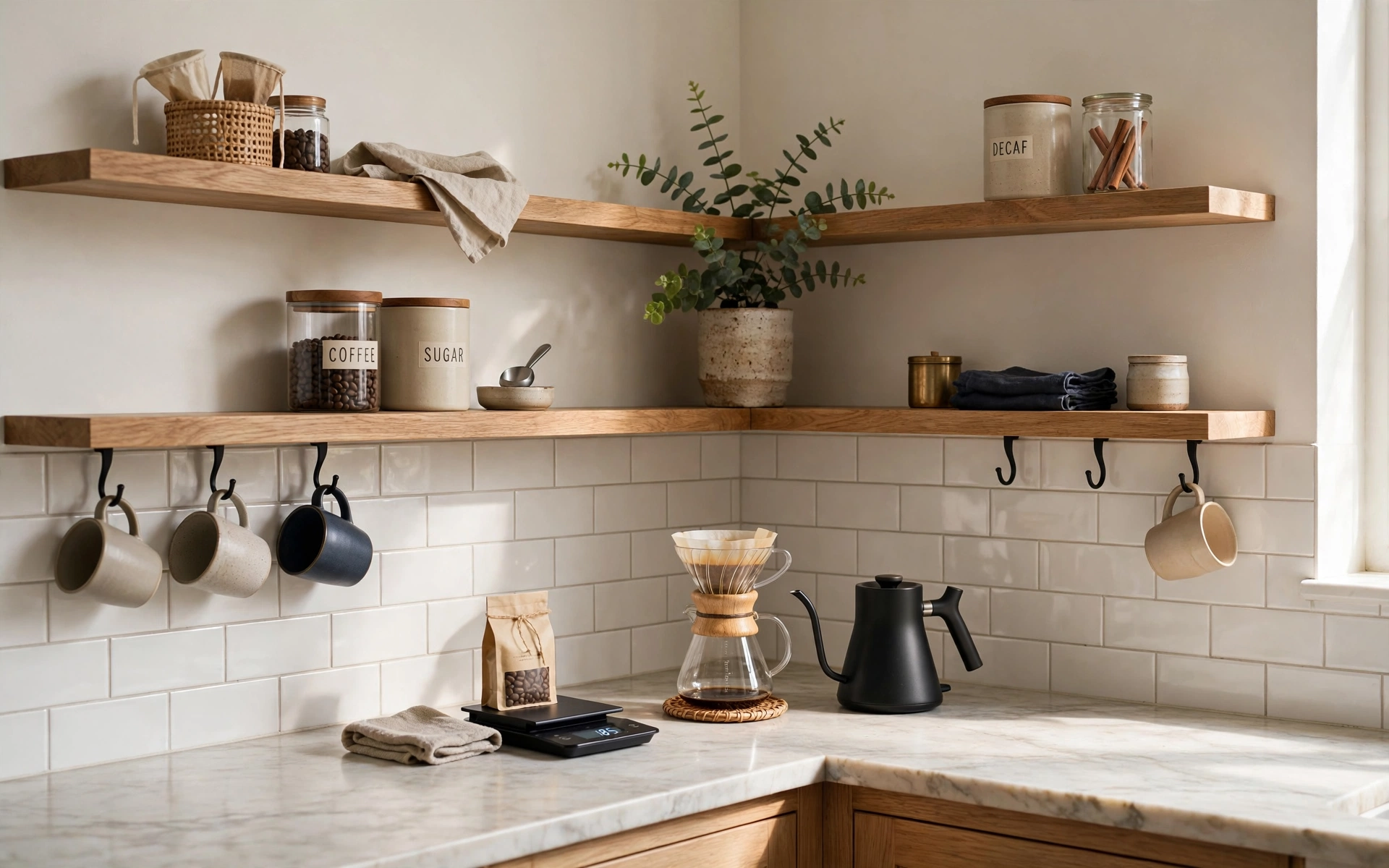
Turn a dead corner into the best spot in the kitchen: L-shaped open shelves wrapping the corner, stocked for coffee. Mugs hang from hooks under the top shelf, a pour-over dripper and canisters sit below, and a small plant keeps it from feeling like a supply closet. Corner shelves need to be shallow — 8 to 10 inches — so you can reach the back without knocking things over. Keep the color story tight: one mug style in two or three colors beats a random collection. Hide the less pretty stuff (filters, spare beans) in a lidded canister.
7. Minimalist All-White Scandi Shelves
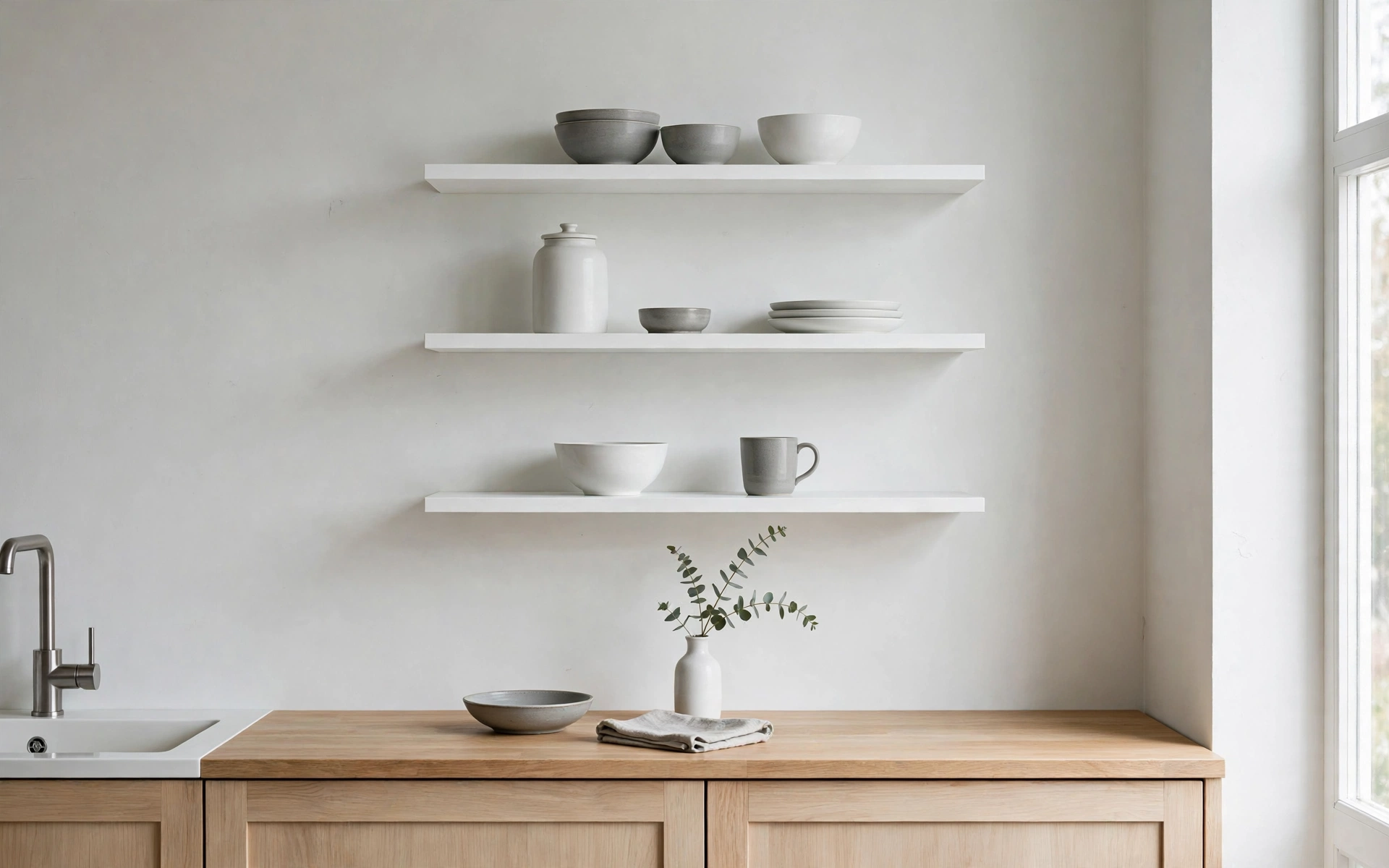
For the less-is-more kitchen: white shelves on a white wall, styled with monochrome ceramics and almost nothing else. The discipline is what makes it work — every object earns its place, and the empty space is part of the design. The formula: stick to two colors (white plus one), one material family (ceramic or stoneware), and strict groupings of odd numbers. Space shelves 13 to 15 inches apart so each row feels like its own quiet composition. Designers featured in The Spruce’s kitchen cabinet and open shelving ideas guide recommend exactly this approach — style open shelves with kitchen essentials and plants for a light, airy feel.
8. Vintage Finds Tucked Between Cabinets
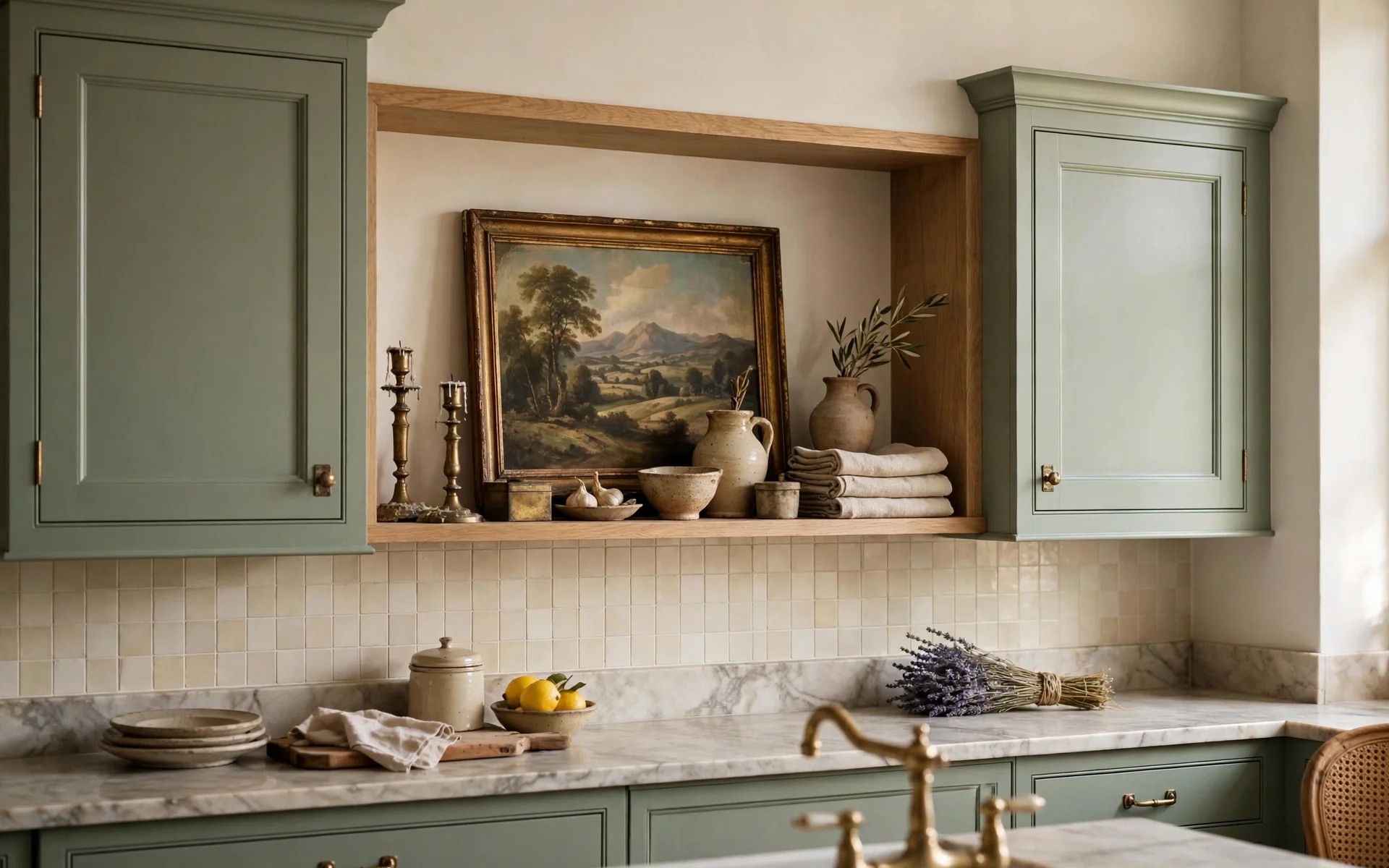
Instead of replacing cabinets, open up one section between two wall cabinets and style it like a curated cabinet of curiosities: antique brass candlesticks, a small unframed oil painting, stacked linen napkins, handmade pottery. Because it’s framed by cabinetry, even an eclectic mix looks intentional. This is the place for pieces with a story — thrifted brass, inherited china, market pottery. Layer a small framed print behind a stack of bowls for depth, and vary heights deliberately: tall candlestick, medium vase, low stack of bowls, repeat.
9. Above-the-Sink Shelves: Open Shelf Kitchen Ideas for Small Spaces
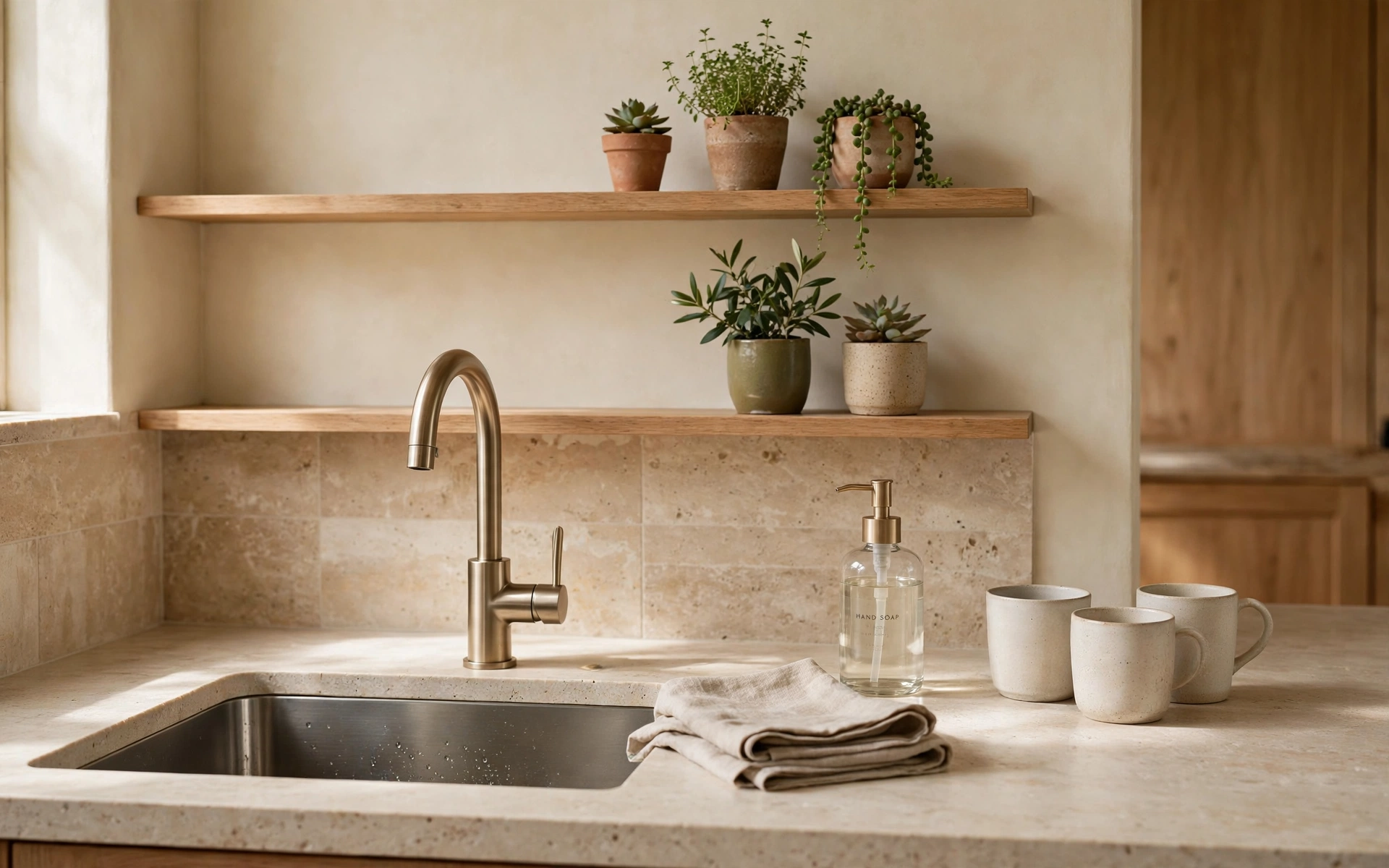
The wall above the sink is often wasted — fill it with two slim open shelves for the things you grab constantly: a folded linen towel, a glass soap dispenser, a few ceramic cups, and small potted herbs. Herbs like rosemary and thyme actually thrive here thanks to the ambient moisture. Keep shelves narrow (6 to 8 inches) and at least 20 inches above the faucet so splashes stay off your styling. Choose items that don’t mind humidity: glass, ceramic, and sealed wood are safe. One trailing pothos on the top shelf softens the whole arrangement.
10. Industrial Brackets and Copper Pots
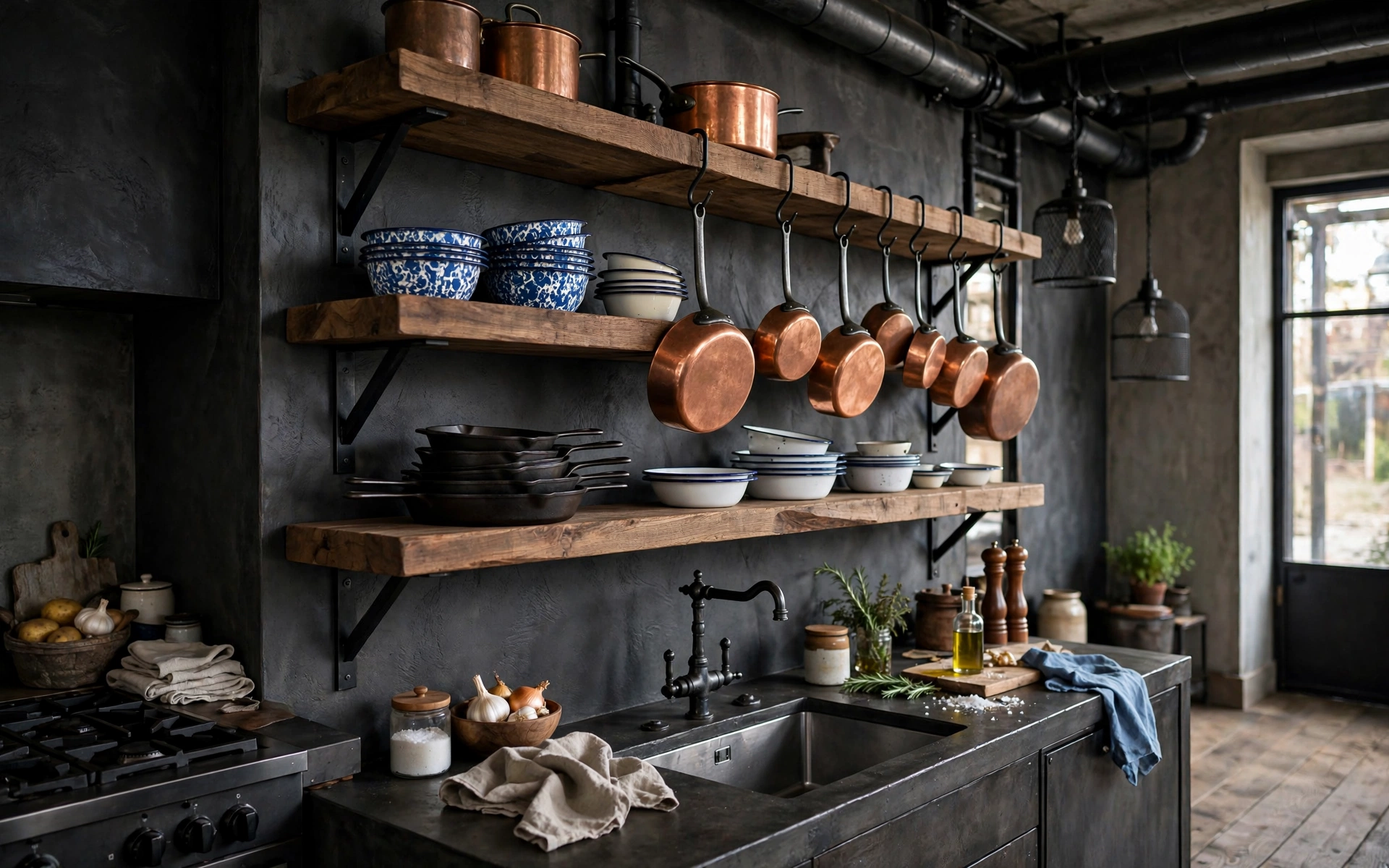
Thick wood shelves on black metal brackets bring an industrial edge that suits loft-style and modern rustic kitchens. Style them with the heavyweights: hanging copper pots, enamelware bowls, cast-iron skillets. This look celebrates cookware as decor instead of hiding it. Brackets must be anchored into studs or masonry — cast iron is heavy, and a loaded shelf can exceed 60 pounds. Space brackets no more than 24 inches apart for a 1.5-inch-thick shelf. Keep copper polished or let it patina; either is fine, but pick one. Add one warm element, like a wooden bowl, so the metal-and-iron combo doesn’t feel cold.
11. The Cookbook Niche by the Fridge
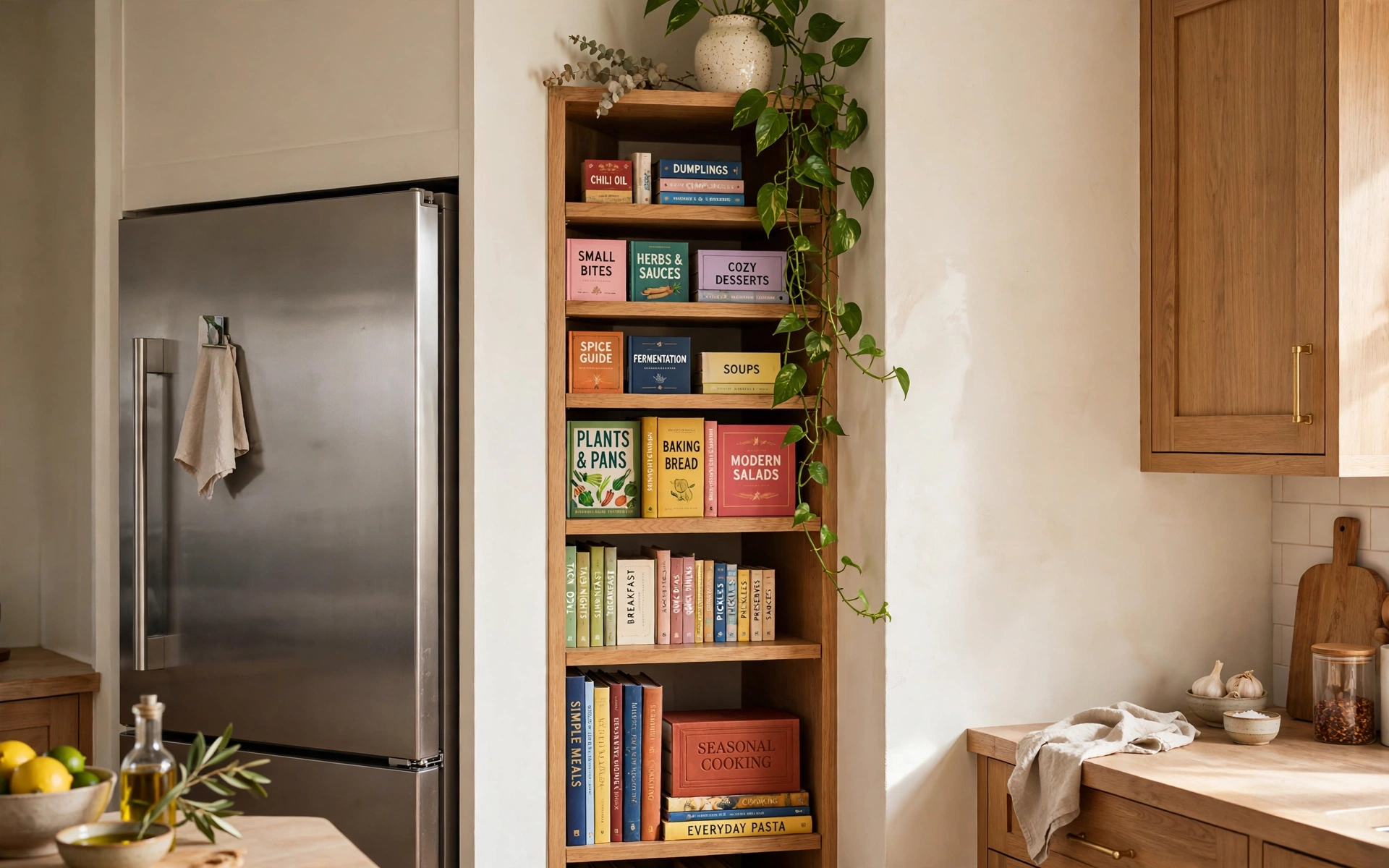
That awkward gap between the fridge and the wall? Fit a tall, narrow open niche — 10 to 12 inches wide — and fill it with cookbooks arranged by height, tallest in the middle like a skyline. It’s the perfect use for dead space. Top the niche with a small vase and trailing plant, and keep the books you actually cook from at chest height. If the gap is too narrow for a built-in, a single floating shelf at the right height does the same job. Pull the spines flush so the front edge looks tidy from across the room.
12. An Autumn Refresh for the Shelves
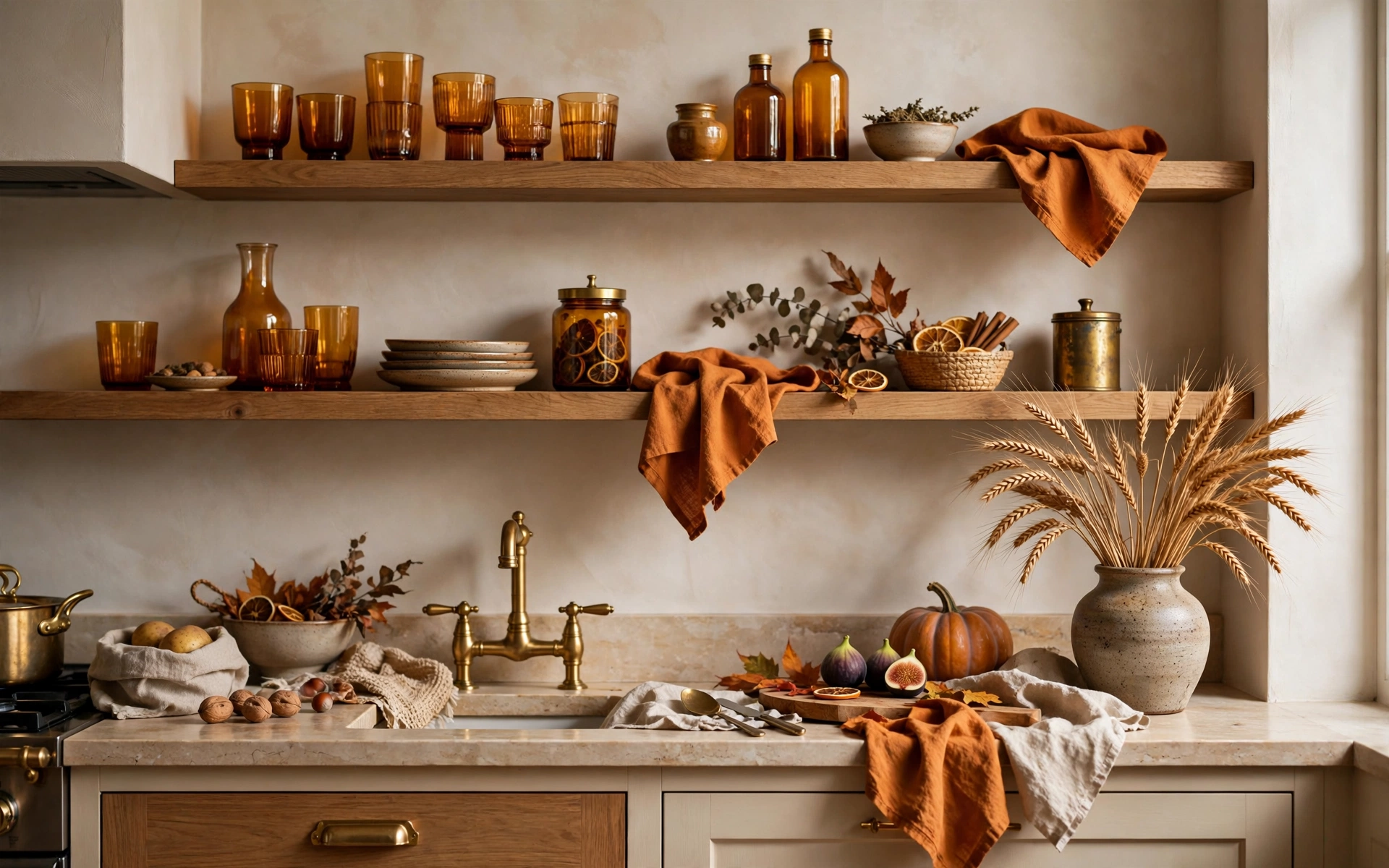
You don’t need new shelves for a new look — just a seasonal restyle. For fall, swap in amber glassware, dried wheat stems in a stoneware vase, linens in pumpkin and rust tones, and a few brass accents that catch the low autumn light. Twenty minutes, and the kitchen feels completely different. Store the off-season pieces in one labeled bin so the swap stays easy. Keep your everyday dishes in place and only change the decorative layer: the top shelf and the shelf ends are where seasonal styling lives. This is the real argument for open shelves — they’re the easiest decor in the house to refresh.
Frequently Asked Questions About Open Kitchen Shelves
Are open shelves practical in a real, working kitchen?
Yes — if you put everyday items on them. Dishes and mugs you use daily get washed constantly, so dust never settles. Keep rarely used pieces in closed cabinets.
What belongs on open kitchen shelves?
Attractive, sturdy, frequently used items: stoneware, glassware, cookbooks, jars of staples, plants. Skip chipped plastic, mismatched containers, and anything greasy near the range.
How do you keep open shelves from looking cluttered?
Limit the palette to two or three tones, group items in odd numbers, and leave 20 to 30 percent of each shelf empty. Corral small items into trays or canisters so they read as one object.
How deep should kitchen open shelves be?
Ten to 12 inches suits most kitchens — deep enough for dinner plates, shallow enough that nothing hides in the back. Go 8 inches for tight spots.
Final Thoughts
The best open shelf kitchen ideas aren’t about copying a showroom — they’re about matching the shelves to how you actually cook and live. Start with one wall, style it with everyday pieces, and rearrange until it feels right. Shelves are forgiving that way. If these ideas sparked a bigger refresh, our cozy bedroom ideas on a budget will help you carry the same warmth through the rest of the house.
By Nestora Find