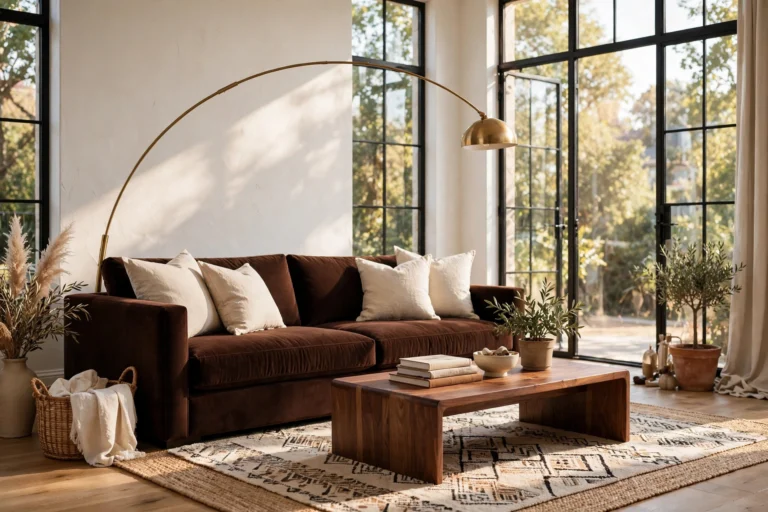
12 Travertine Coffee Table Ideas for Organic Style
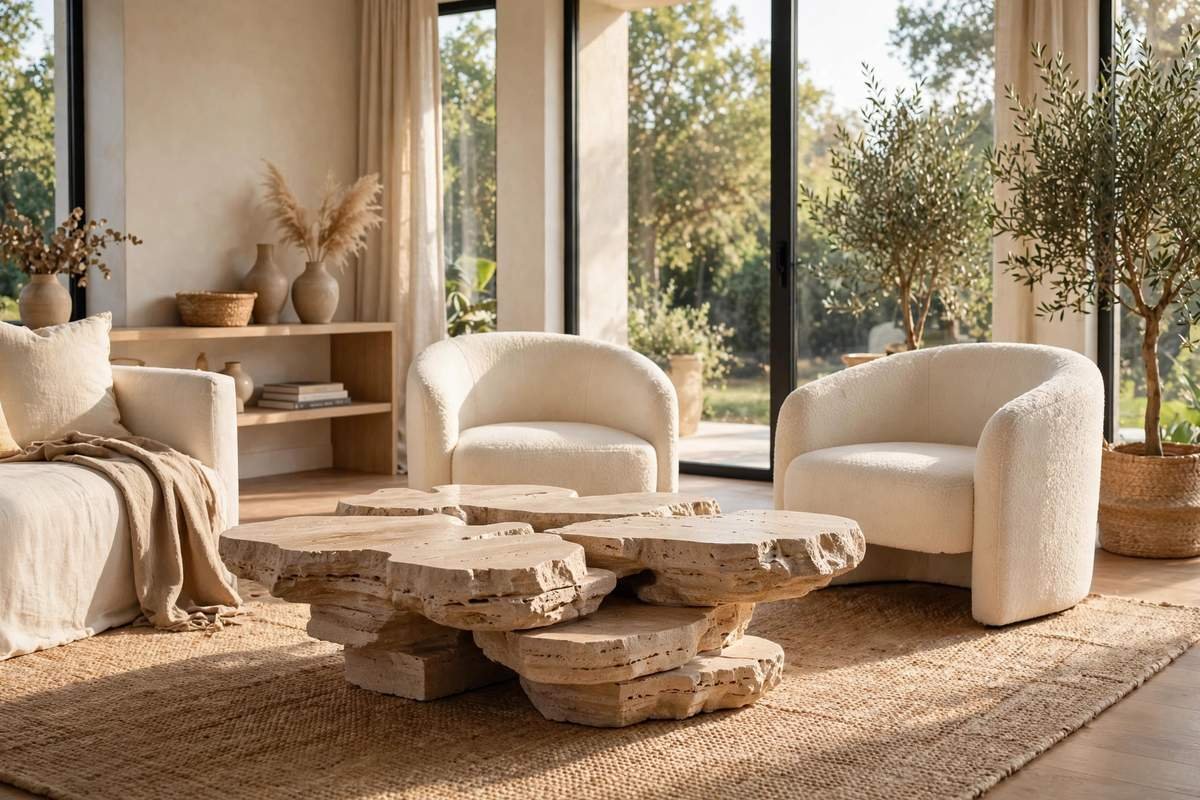
Travertine has quietly become the stone of the moment in interior design. With its warm beige tones, soft pitting, and natural veining, a travertine coffee table brings an organic, earthy elegance that manufactured materials struggle to replicate. Each slab is one of a kind, carrying the marks of how it formed over thousands of years — which means your coffee table is genuinely unique.
These travertine coffee table ideas focus on styling and placement rather than just buying the table itself. From sculptural single-slab designs to smart styling tricks that protect the stone, you will learn how to make travertine the calm, grounding center of your living room. As Apartment Therapy notes in its coffee table decor guide, even a simple tray can organize a beautiful tabletop — and travertine gives you the perfect canvas to start with.
1. Let a Single Slab Be the Sculpture
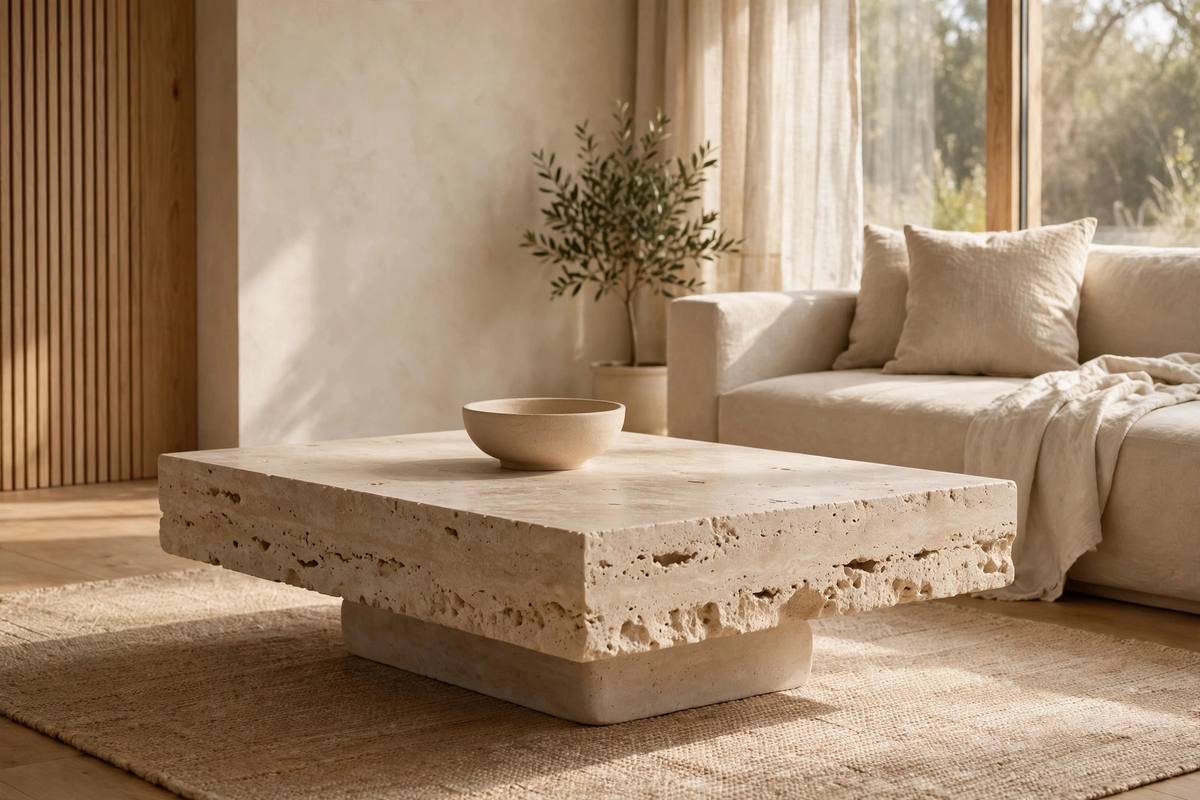
The most striking travertine coffee tables are carved from a single thick slab with minimal legs — sometimes just a matching stone plinth. Choose this style when you want the stone itself to be the artwork. Keep the tabletop nearly bare: one low bowl or a small stack of books is enough. The pitting and veining provide all the visual interest you need. This approach suits minimalist and Japandi living rooms where every piece earns its place. Because the stone is heavy, position it carefully once and plan your rug and seating around it rather than moving it later.
2. Pair Travertine with Soft, Curved Seating
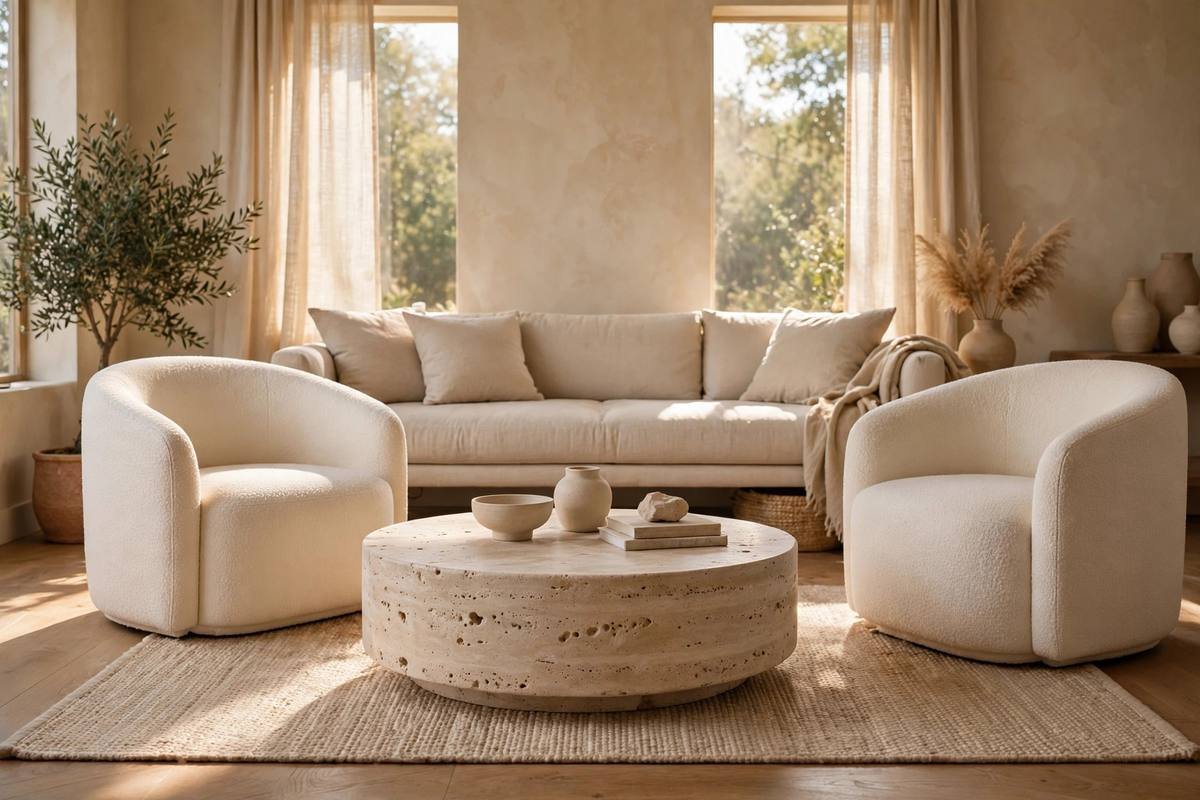
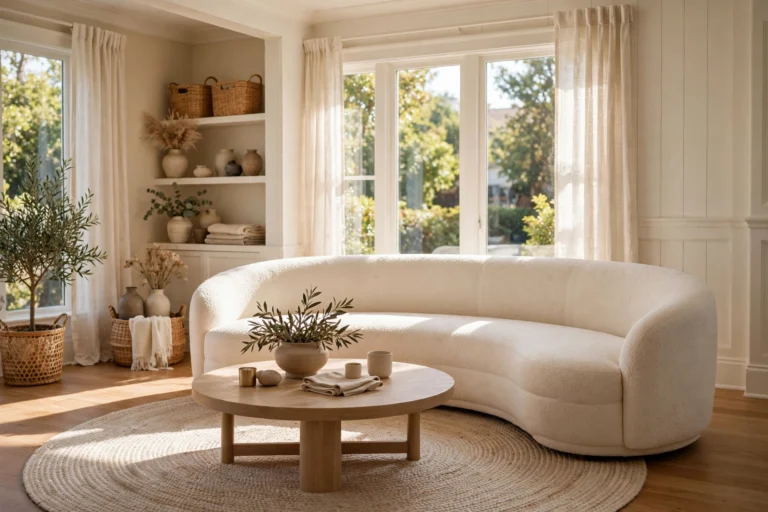
Travertine's cool, hard surface begs for contrast, and curved upholstered seating delivers it. Place a round travertine coffee table between two curved boucle chairs or in front of a soft, low-profile sofa. The organic shapes echo the stone's natural origins while the upholstery softens its visual weight. Keep the palette warm — creams, camels, and soft whites — so the beige undertones of the travertine feel intentional. This pairing is the essence of organic modern style: natural materials, gentle curves, and nothing that feels mass-produced. Add a wool rug underneath to complete the soft-hard balance.
3. Style with a Simple Stone or Wood Tray
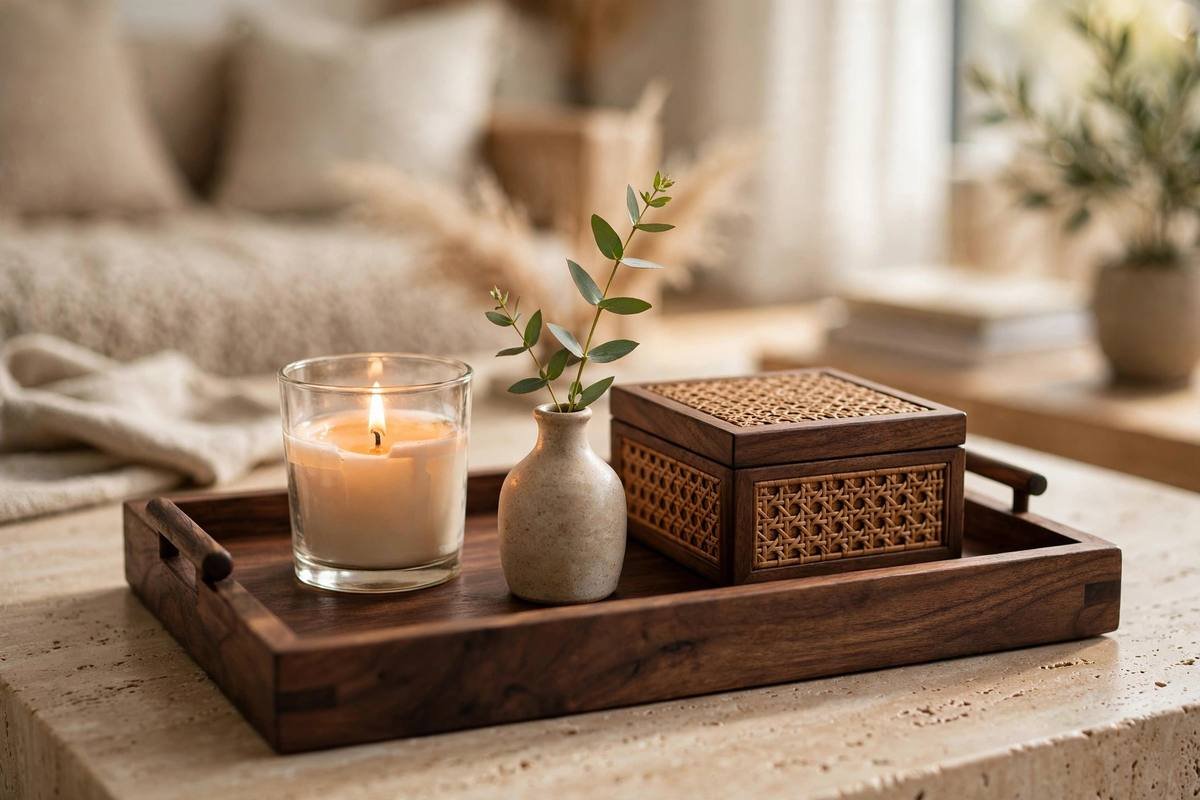
A tray does two jobs on travertine: it corrals small items so the stone reads clean, and it protects the surface from rings and scratches. Choose a tray in a contrasting natural material — dark walnut wood, black marble, or hammered brass — to create a focal point on the pale stone. Inside the tray, group three items of varying heights: a candle, a small vase, and a decorative box. The rest of the table stays empty, letting the travertine breathe. For more tabletop styling strategies, see our coffee table styling guide.
4. Add Height with Sculptural Branches
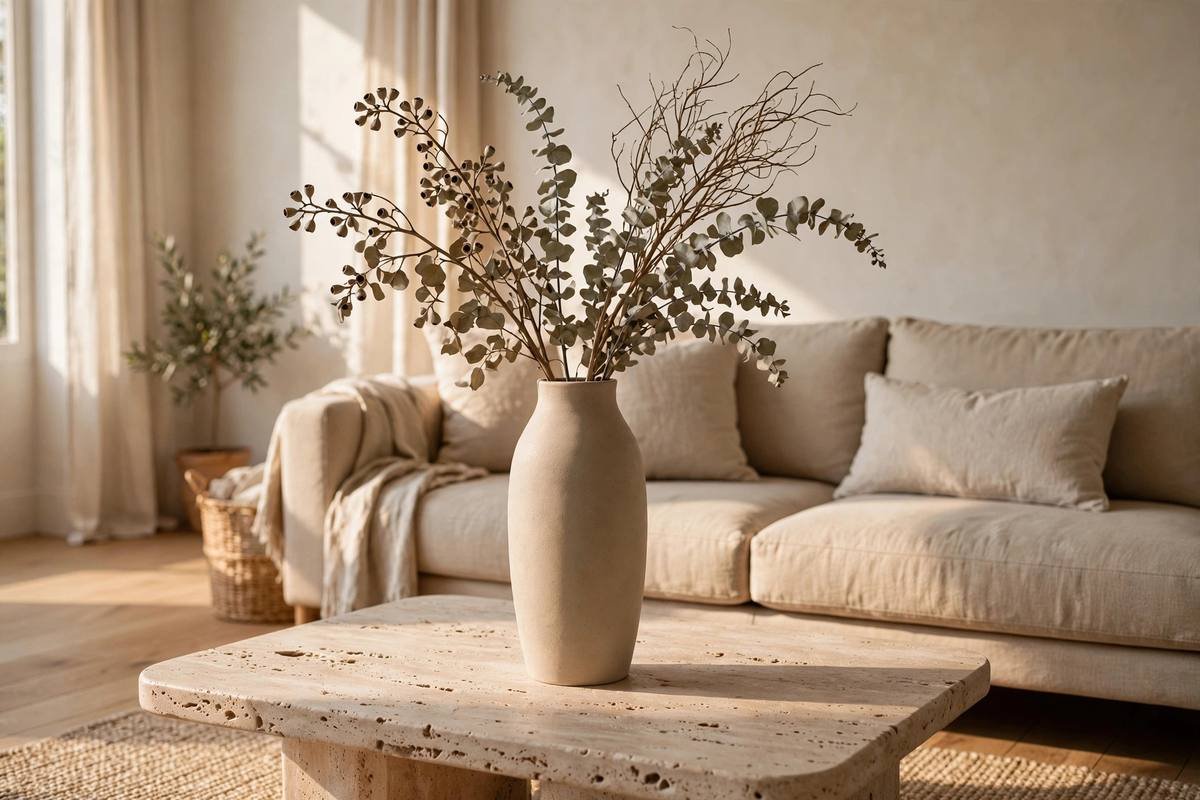
Travertine tables sit low and solid, so adding vertical interest above them creates beautiful proportion. Place a tall vase with sculptural branches — dried eucalyptus, curly willow, or pampas grass — directly on the stone. The organic lines of the branches rhyme with the stone's natural texture. Keep the arrangement airy rather than dense so it does not visually crush the table. A ceramic vase in a matte earth tone works better than glass here, since it continues the natural-material story. Swap the branches seasonally to keep the vignette feeling fresh without buying anything new.
5. Mix Travertine with Warm Wood Tones
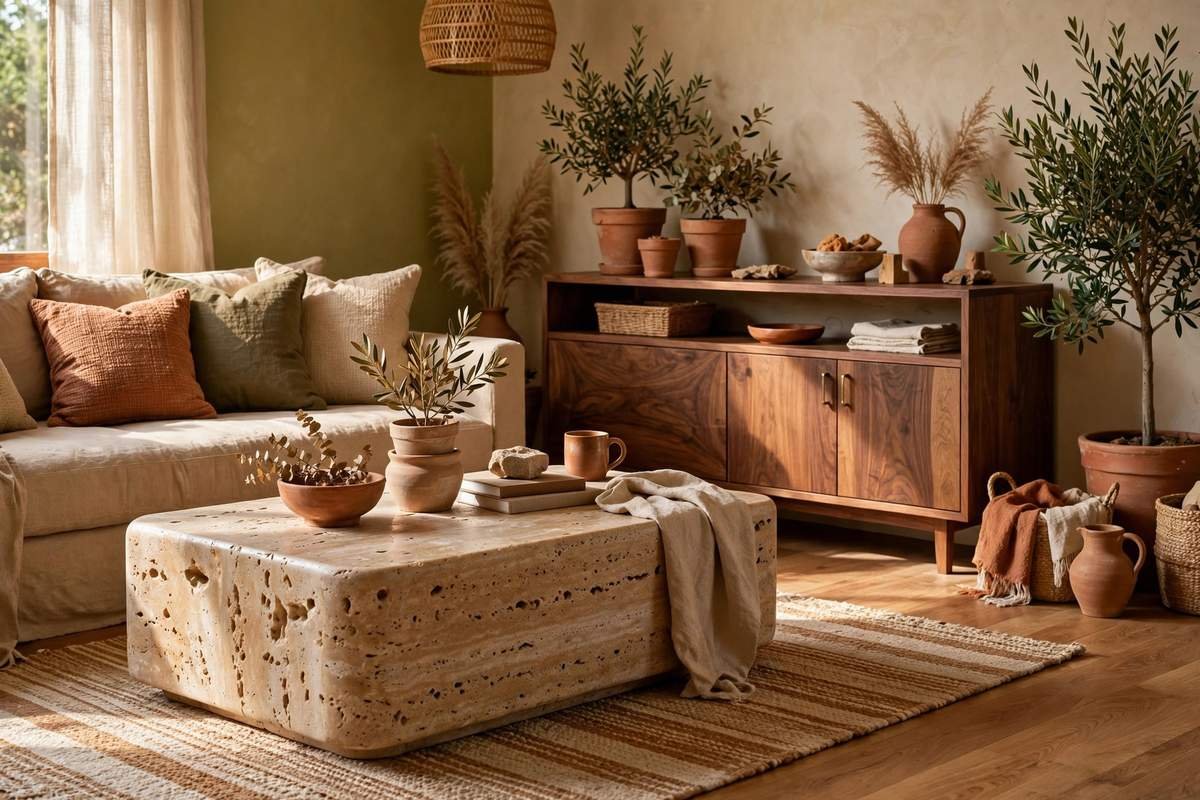
Travertine and wood are natural partners — both are organic materials with visible grain and variation. Pair your travertine coffee table with a walnut sideboard, oak floors, or a teak side table to build a warm, layered living room. The key is varying the tones: travertine's pale beige looks richest next to medium and dark woods, not against more pale wood that washes it out. If your floors are light oak, add a darker wood console or walnut picture frames to create contrast. This combination suits earthy, Mediterranean, and midcentury-inspired rooms especially well.
6. Keep It Minimal with One Statement Book
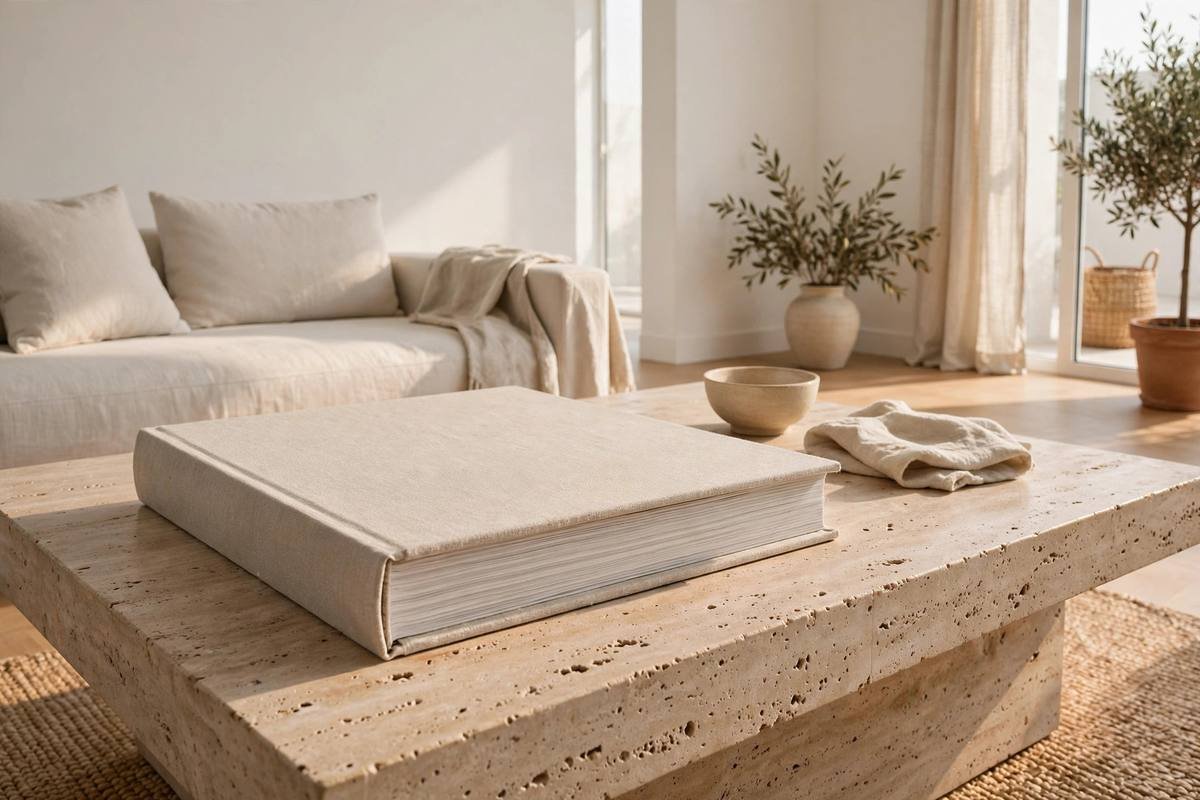
Sometimes the best styling is restraint. A single oversized art or architecture book, placed slightly off-center on a travertine coffee table, looks effortlessly curated. Choose a book with a linen or neutral cover that complements the stone rather than competing with it. The book adds a touch of personality and gives guests something to flip through. This minimal approach works beautifully in small living rooms, where a cluttered coffee table can make the whole space feel cramped. If you love a fuller look, compare this restraint with the layered approach in our marble coffee table ideas.
7. Layer a Rug Underneath for Softness
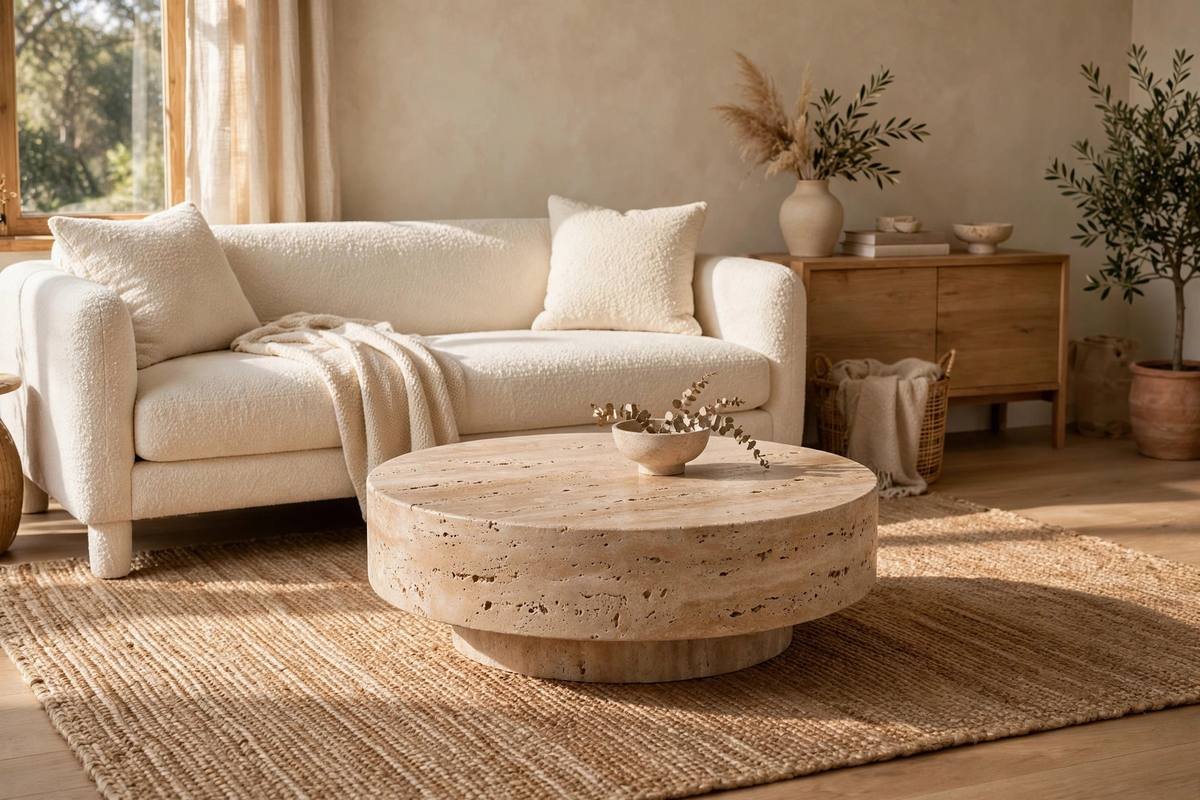
A travertine coffee table on bare hard floors can feel cold and echoey. Ground it with a rug that extends at least six inches beyond the table on all sides — ideally far enough to sit under the front legs of the sofa too. Natural fiber rugs like jute or wool enhance the organic feel, while a subtle pattern adds interest without fighting the stone. In terms of color, warm ivories and soft terracottas flatter travertine's beige tones. Make sure the rug is low-pile so the heavy table sits stable and does not wobble on thick padding.
8. Contrast with Black Accents
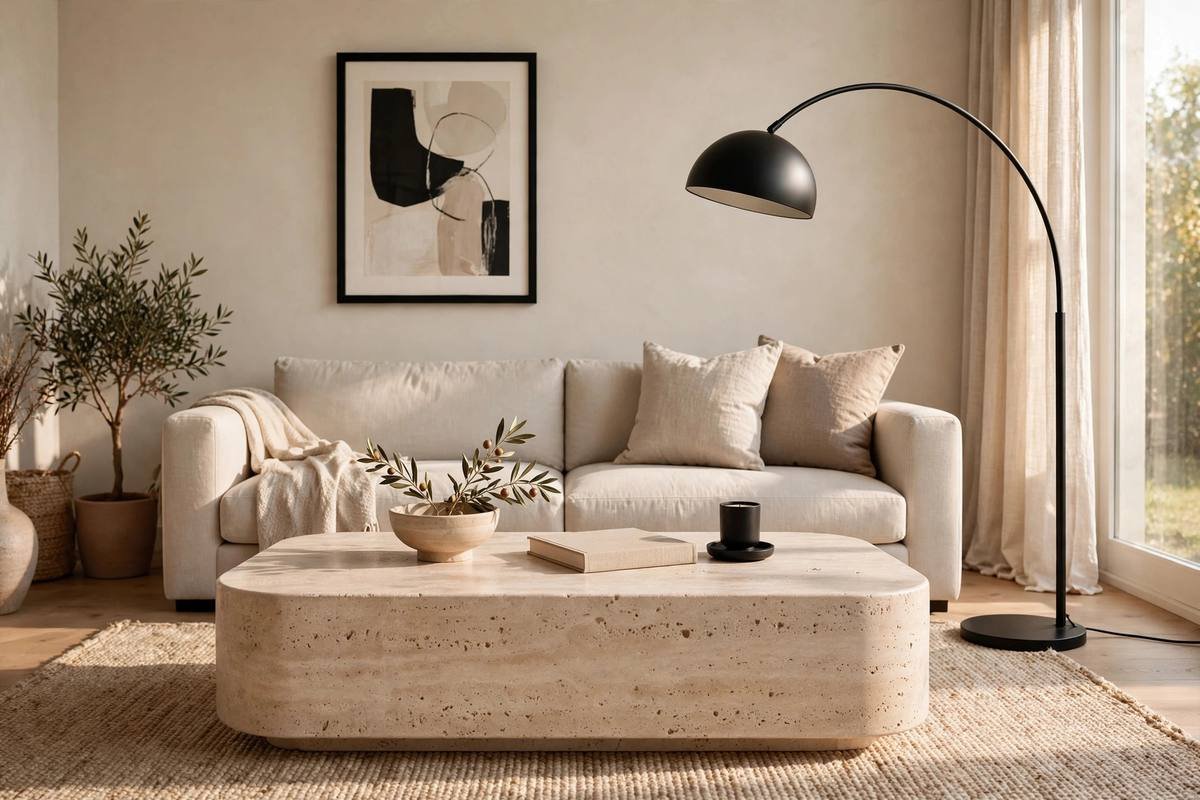
Pale travertine pops dramatically against black. Add black accents — a matte black floor lamp, black-framed artwork, or black metal side tables — to give the stone definition and a modern edge. The high contrast keeps an all-neutral room from feeling bland and makes the travertine's texture more visible by comparison. You do not need much black: three to five accents around the room are enough to create the effect. This pairing suits contemporary and transitional living rooms where you want organic warmth with a crisp, tailored finish. Keep the black finishes matte rather than glossy for the most sophisticated result.
9. Use Travertine as a Plant Pedestal
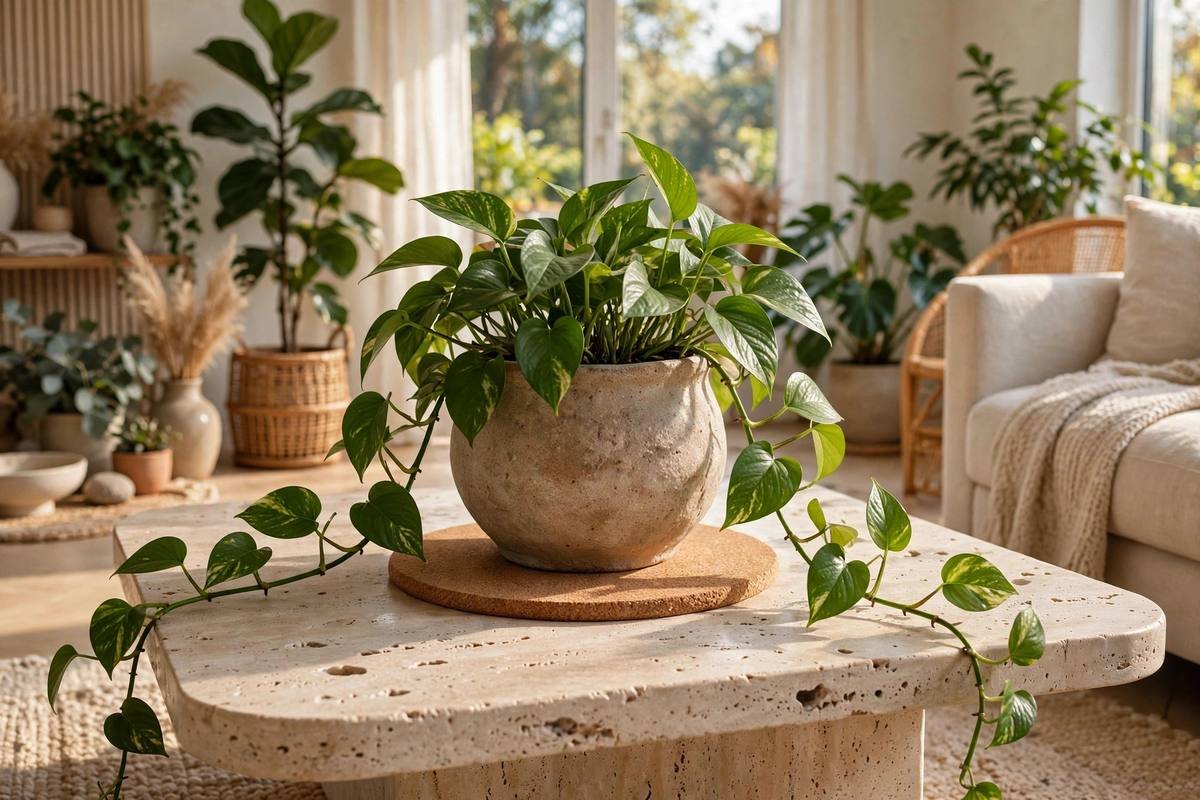
Travertine's earthy character makes it a natural stage for greenery. Style your coffee table with one sculptural plant — an olive tree in a clay pot is too tall, so think smaller: a trailing pothos in a stoneware pot, a sculptural snake plant, or a bowl of succulents. The green against the beige stone is a classic, calming combination. Use a cork or felt pad under the pot to protect the travertine from moisture rings, since the stone is porous. One plant is enough; a jungle of pots will hide the beautiful surface you paid for.
10. Try a Travertine Side Table Pairing
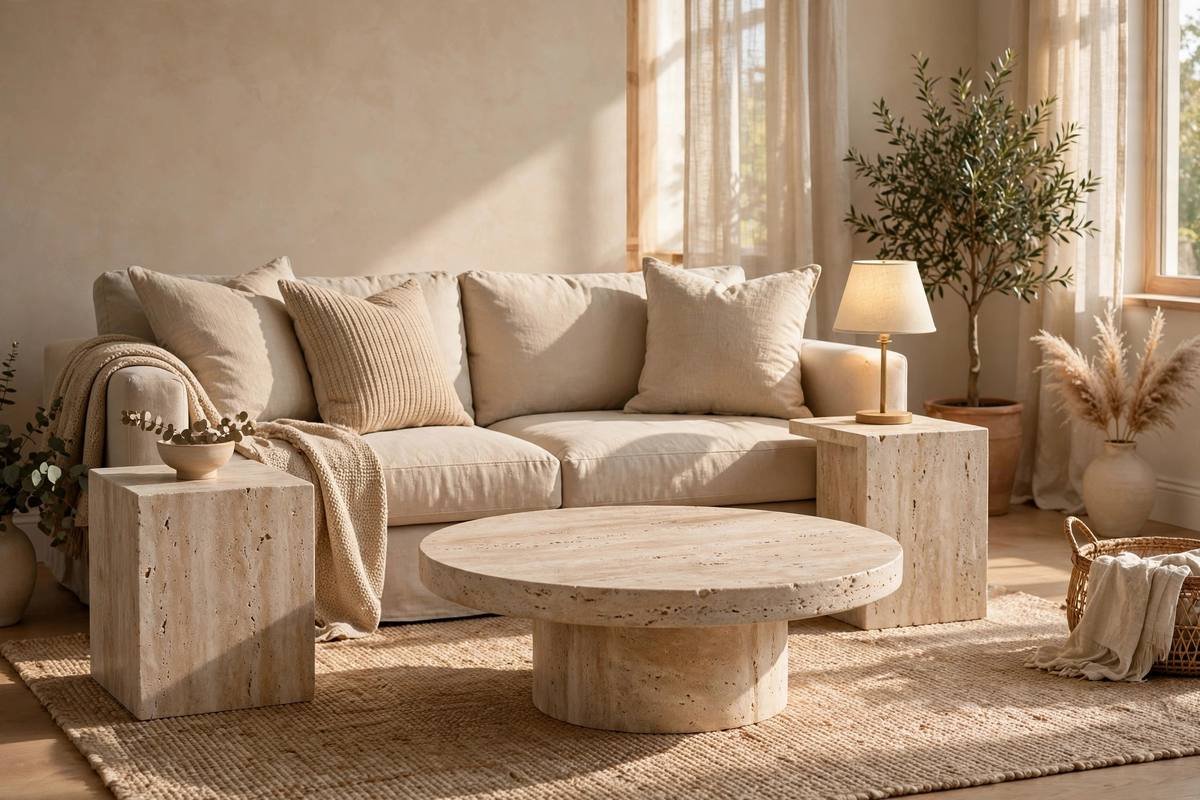
Extend the travertine story with matching side tables flanking your sofa. A trio of travertine pieces — coffee table plus two side tables — creates a cohesive, collected look that feels intentional rather than matchy. Vary the heights and shapes slightly: a round coffee table with square side tables, or a low slab table with taller drum side tables. Keep the styling on the side tables minimal — a single lamp or small stack of books — so the coffee table remains the hero. This approach works especially well in larger living rooms that need visual anchors in multiple spots.
11. Seal and Protect the Stone Properly
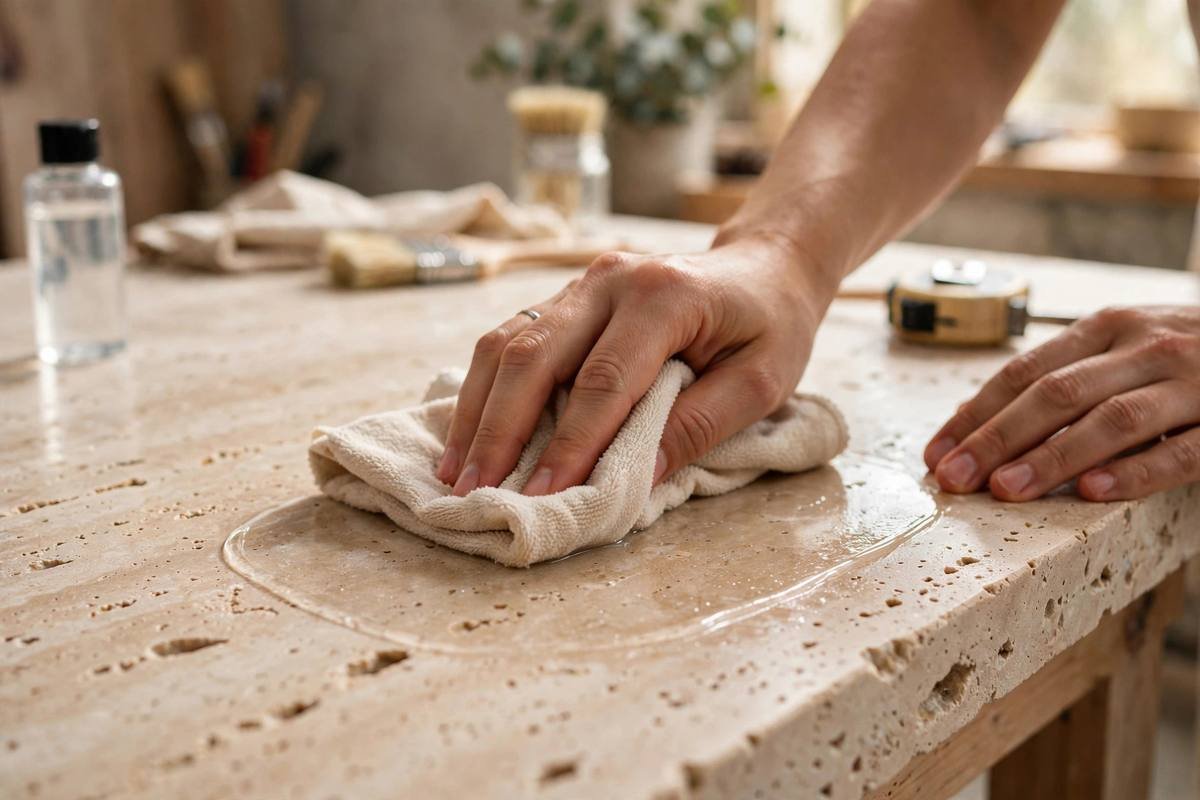
Travertine is porous, so protection is part of the styling. Apply a penetrating stone sealer when the table is new and reapply yearly — it is invisible and does not change the stone's look. Always use coasters under drinks and felt pads under decor objects; acidic liquids like wine, coffee, and citrus can etch the surface. Blot spills immediately rather than wiping, which can spread them into the pores. With basic care, travertine develops a soft patina over time that many owners love even more than the original finish. Think of maintenance as part of living with a natural material, not a burden.
12. Style Seasonally Without Hiding the Stone
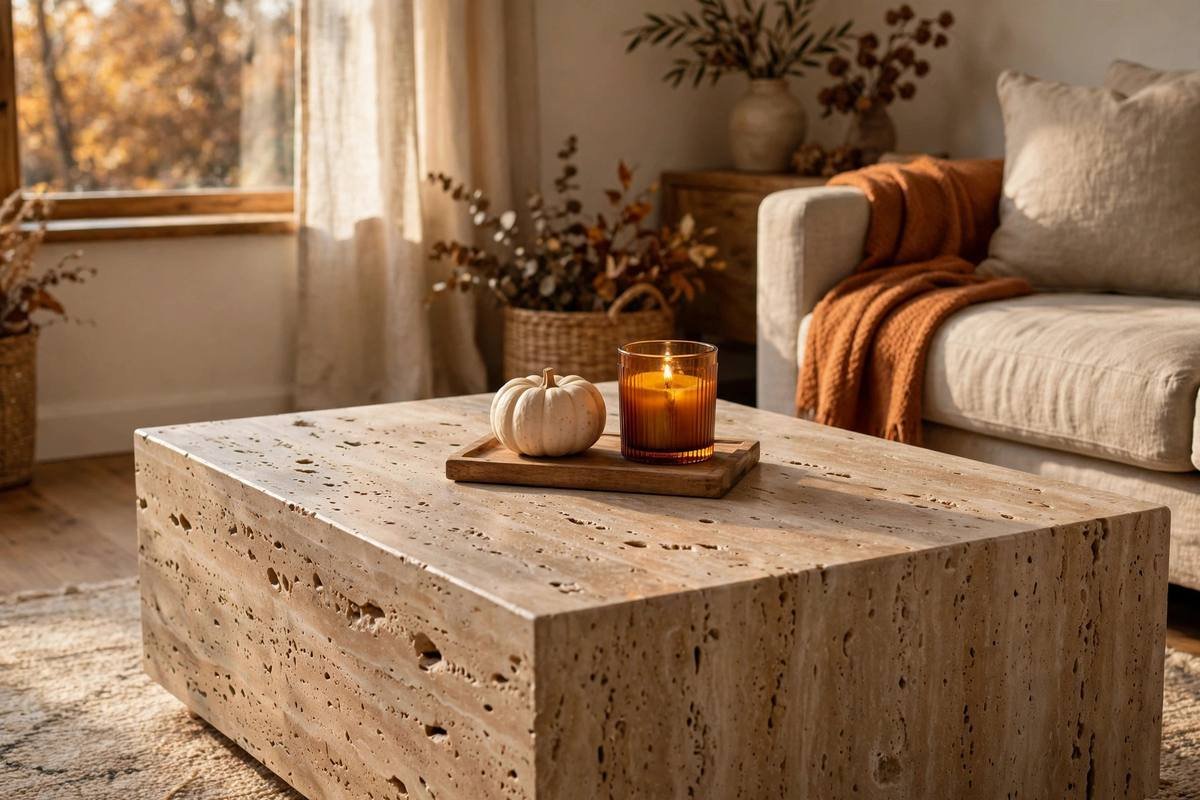
Travertine works year-round because its neutral tone adapts to any season. In fall, add a small pumpkin and amber candle; in winter, a pine sprig and brass candlestick; in spring, fresh tulips in a ceramic vase. The trick is keeping seasonal accents small and contained — a single tray or one corner of the table — so the stone always shows. Avoid covering the whole surface with seasonal decor, which defeats the purpose of owning a beautiful stone table. This light-touch approach fits the broader organic modern living philosophy: natural materials first, decoration second.
Frequently Asked Questions
Is travertine durable enough for a coffee table? Yes, with proper sealing. Travertine is a natural limestone that handles daily use well when sealed with a penetrating sealer. Use coasters and felt pads, clean up spills promptly, and it will last for decades while developing an attractive patina.
Does travertine stain easily? Unsealed travertine can stain because it is porous, but a quality penetrating sealer makes it quite resistant. Acidic substances like red wine, coffee, and citrus juice are the biggest risks, so wipe them up quickly. Regular resealing once a year keeps protection strong.
How do you clean a travertine coffee table? Use a soft damp cloth with mild, pH-neutral soap and dry the surface afterward. Avoid vinegar, bleach, and abrasive cleaners, which can etch or dull the stone. For the natural pits in the surface, a soft brush keeps dust from settling in.
What styles go well with a travertine coffee table? Travertine suits organic modern, Japandi, Mediterranean, midcentury modern, and minimalist styles. It pairs beautifully with warm woods, boucle upholstery, black accents, and natural fiber rugs. Avoid ultra-glam or high-shine surroundings that fight its matte, earthy character.
Is real travertine better than faux travertine? Real travertine has unique veining, natural pitting, and a depth that replicas cannot fully match, and it ages with a desirable patina. Faux travertine is lighter, cheaper, and more stain-resistant, making it practical for busy households. Choose based on your budget and how much maintenance you accept.