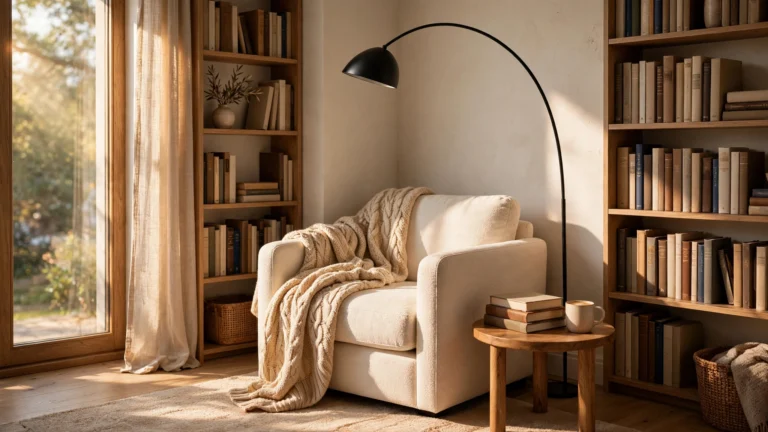
12 Throw Blanket Storage Ideas

Throw blankets are the ultimate cozy paradox: you need them everywhere, but they always seem to be in the way. Draped over every chair arm, puddled on the sofa, migrated to the floor — without a storage plan, throws turn a styled living room into a laundry pile.
The trick is storing blankets where you actually use them, in ways that look intentional. These twelve ideas keep your throws accessible, organized, and — just as importantly — looking like decor rather than clutter.
1. Woven Storage Baskets
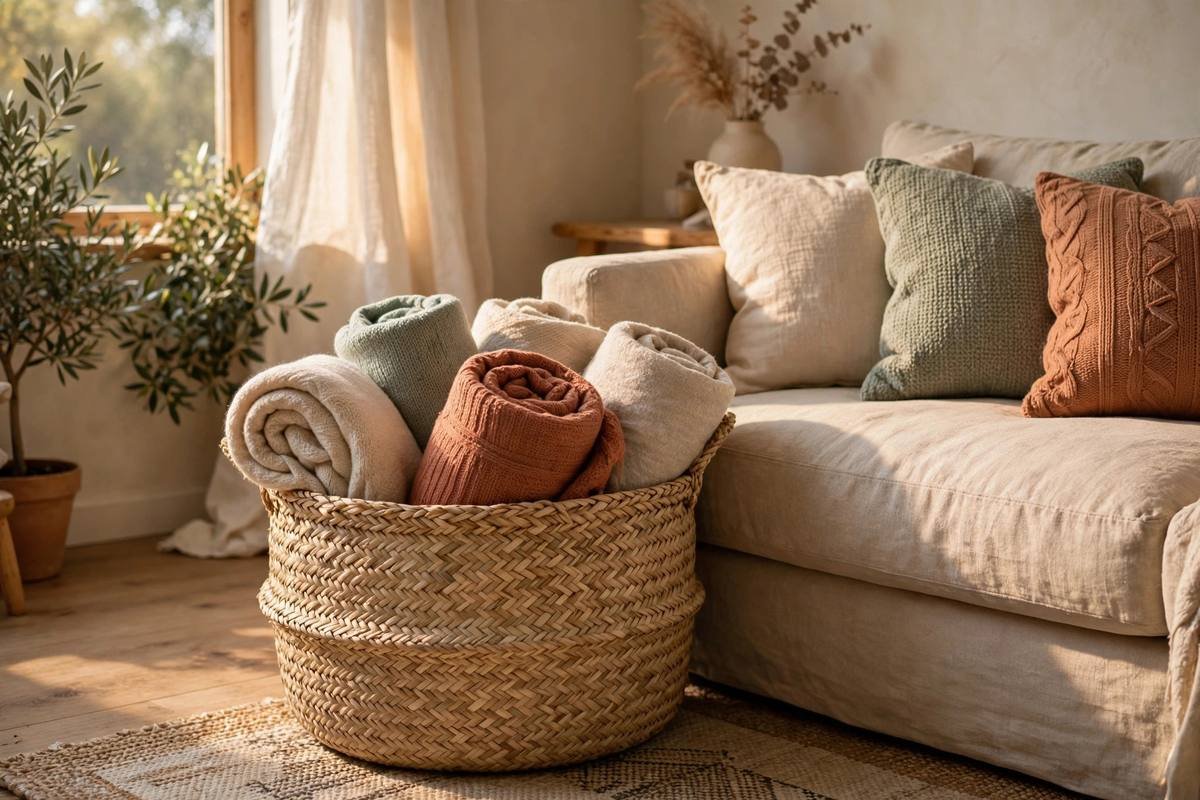
The classic throw blanket solution is a large woven basket beside the sofa, and it remains the best for a reason. Baskets hold several folded or loosely rolled throws, keep them within arm's reach of the couch, and add natural texture to the room. Choose a basket large enough that blankets fit without stuffing — an overstuffed basket looks messy, not cozy. Seagrass, rattan, and cotton rope baskets all work beautifully; the rattan storage basket style is especially popular for its warm, organic look. Roll throws instead of folding them for a casual, inviting display that practically begs someone to grab one. Place the basket where it is visible but not in the main traffic path.
2. Blanket Ladders

A leaning blanket ladder turns throw storage into wall decor. Drape two to four throws over the rungs, arranged by color or texture, and the ladder becomes a styled display that also keeps blankets accessible. Ladders work in the narrow dead space beside bookshelves, in bedroom corners, and behind sofas — places too slim for furniture but perfect for vertical storage. Choose wood tones that match your room, from natural oak to dark walnut. The key to making a blanket ladder look good is restraint: leave some rungs empty and arrange throws with casual folds rather than military precision. As The Spruce shows in its cozy living room roundup, layered textiles like throw blankets are essential to the inviting, lived-in feeling that makes a room truly comfortable.
3. Storage Ottomans

A storage ottoman is the hardest-working piece in a cozy living room: footrest, extra seat, coffee table (with a tray on top), and blanket storage all in one. Lift the lid to reveal room for two to four folded throws, keeping them completely hidden but instantly accessible. This is the ideal solution for minimalists who want the coziness of throws without the visual clutter. Choose an ottoman sized proportionally to your sofa — roughly two-thirds the sofa's width for a single piece, or a pair of smaller cubes for flexibility. Upholstered ottomans in performance fabric handle daily use, while leather-top versions add sophistication. For more ways to style these multitaskers, explore our ottoman decor ideas.
4. Decorative Trunks and Chests

A vintage-style trunk or storage chest at the foot of the bed or beside the sofa stores a serious blanket collection while looking like intentional decor. Trunks hold folded throws, seasonal quilts, and spare bedding in one generous compartment. The flat top doubles as a side table or display surface for books and a lamp. Look for trunks with sturdy hinges and a lid that stays open safely. In living rooms, a trunk can replace a coffee table entirely — style the top minimally so it is still easy to open. The aged, storied look of a trunk adds character that new storage furniture cannot replicate, making it as much a design choice as a practical one.
5. Open Shelving Displays

Dedicate a section of open shelving to beautifully folded throw blankets, arranged by color for a boutique-like display. This works on bookshelves, built-in cubbies, and standalone etageres — anywhere with a few empty shelves. Fold throws into uniform rectangles and stack two or three per shelf, or roll them and stand them upright like a linen shop display. The visual trick is color coordination: group similar tones together so the shelf reads as styled rather than stuffed. This approach suits people who genuinely love their blanket collection and want to show it off. Keep the throws you use most on the most accessible shelf, and rotate seasonal colors to keep the display feeling fresh.
6. Over-the-Sofa Draping

Sometimes the best storage is no storage — artful draping over the sofa back or arm keeps throws visible, accessible, and looking intentional. The key word is artful: fold the throw in thirds lengthwise, then drape it evenly over the sofa back or fold it neatly over one arm. Limit draped throws to one or two per seating piece; more than that reads as clutter. Choose throws whose colors complement the sofa rather than clash with it. This method works best for your one or two favorite everyday throws — the ones in constant rotation. It is honest storage: the blanket lives where it is used, and the casual drape adds the relaxed, lived-in texture that makes living rooms feel welcoming.
7. Under-Bench and Console Storage

Benches with open lower shelves, console tables with baskets underneath, and entryway benches with cubbies all offer hidden-in-plain-sight throw storage. Slide folded throws onto the lower shelf of a console behind the sofa, tuck them into cubbies of an entryway bench, or fill the shelf under a bedroom bench. These spots are perfect for the throws you want nearby but not on display — guest blankets, seasonal extras, the itchy-but-warm wool one. Use the storage to its fullest by assigning each cubby or shelf a category. This approach is especially valuable in open-plan spaces where every piece of furniture should earn its footprint with both function and storage.
8. Wall-Mounted Blanket Racks
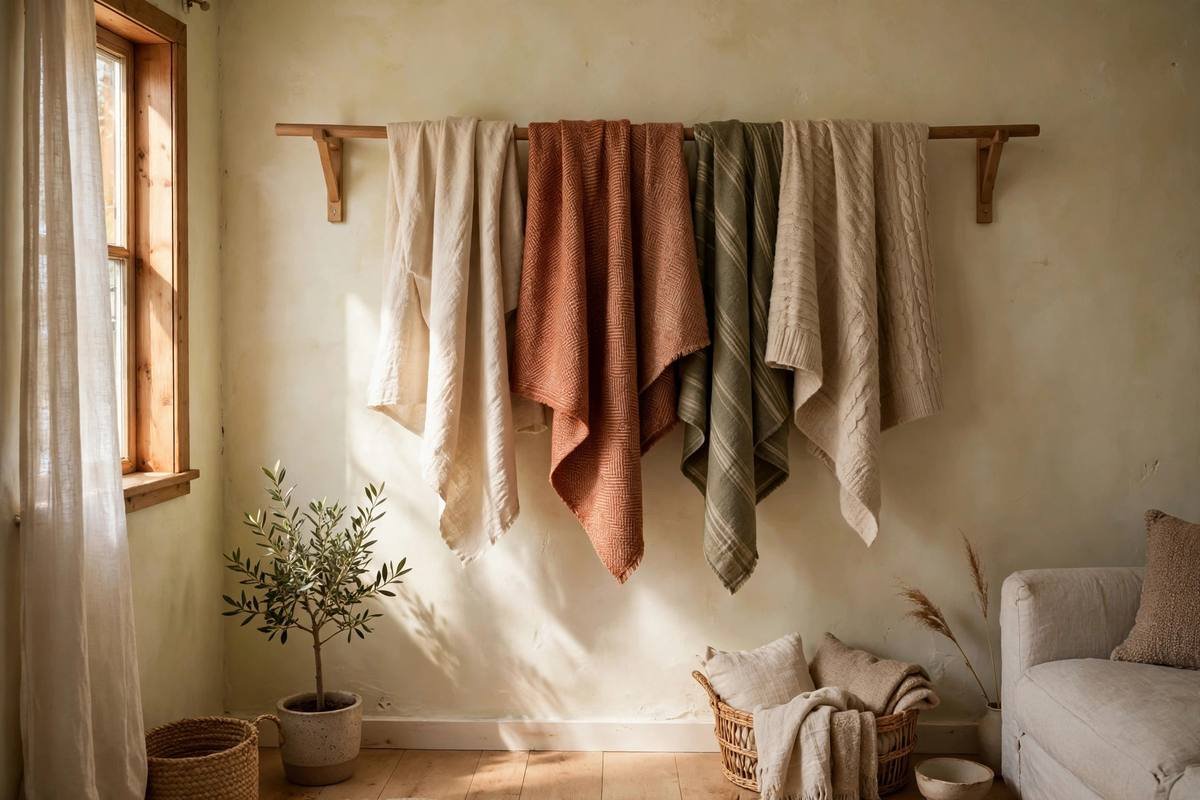
Wall-mounted racks, hooks, and dowels turn throw storage into a design feature while freeing floor space entirely. Mount a wooden dowel with brackets on the wall and drape throws over it like a textile gallery; install a row of sturdy hooks for hanging folded throws; or use a wall-mounted quilt rack for a traditional look. This is ideal for small rooms where floor space is precious and every square foot counts. Hang throws by color for a curated display, and keep the arrangement to three or four pieces to avoid visual overload. The vertical presentation also airs out blankets between uses, which is a practical bonus in humid climates.
9. Coffee Table with Storage
Recommended Ebook
Small Space Checklists & Planners
299 fillable checklists and planners for small space living — tick boxes digitally or print and use!
Only $7

A storage coffee table keeps throws exactly where movie nights happen. Lift-top coffee tables reveal deep compartments perfect for folded blankets; tables with lower shelves or drawers offer more visible but still tidy options. When choosing, prioritize easy access — if getting a blanket out requires moving everything off the table, you will never use the storage. Lift-tops are the gold standard because the surface stays usable while the storage stays hidden. Style the tabletop with a tray, a candle, and a small stack of books, keeping decor minimal enough that opening the table is effortless. This is arguably the most convenient throw storage of all, since the blankets live at the point of use.
10. Bedroom Foot-of-Bed Storage

The bedroom needs its own throw strategy separate from the living room. A storage bench at the foot of the bed holds extra throws and quilts while providing a perch for getting dressed. Alternatively, fold two or three throws across the foot of the bed itself — the classic hotel look that keeps them accessible for chilly nights. A lidded basket beside the bed works for smaller spaces. Keep bedroom throws in the room's color palette so they contribute to the serene feeling rather than disrupting it. Having dedicated bedroom throws also means you are not raiding the living room basket every night, which keeps both rooms' systems working. For seasonal swaps, coordinate with your fall throw blankets collection.
11. Rolling Baskets and Carts

A basket on casters or a small rolling cart brings throw storage wherever it is needed. Roll it beside the reading chair for afternoon naps, next to the sofa for movie night, or into the guest room when visitors arrive. The mobility means one blanket collection can serve multiple rooms without permanent clutter in any of them. Choose a lidded basket on wheels for the tidiest look, or an open wire cart for easy grab-and-go access. This is a particularly smart solution for open-plan homes where seating areas shift with the occasion. When not in use, the cart tucks into a closet or corner, disappearing completely — storage that exists only when you need it.
12. Seasonal Rotation System

If your throw collection has grown beyond what your living space can gracefully hold, implement a seasonal rotation. Keep the current season's throws accessible — chunky knits and flannel for fall and winter, lightweight cotton and linen for spring and summer — and store the off-season collection in vacuum bags or lidded bins in a closet. Twice a year, swap the collections; the rotation feels like getting new decor each time. Label the storage bins clearly so the swap takes minutes. This system also forces a natural declutter: if you dread unpacking a particular throw, it is time to donate it. A curated collection of throws you love beats a sprawling collection you merely tolerate, in both looks and function.
Frequently Asked Questions
How many throw blankets should I own? For most homes, four to six throws is the sweet spot: two for the living room, one or two for the bedroom, and one or two for guests or seasonal rotation. More than that usually means some never get used. Quality over quantity — a few throws you love beat a pile of mediocre ones.
Should I fold or roll throw blankets for storage? Rolling works best for baskets and open displays — it looks casual and inviting and prevents creases. Folding works best for shelves, trunks, and ottomans where uniform stacks look tidier. Either way, avoid stuffing; cramped blankets look messy regardless of method.
How do I store throw blankets without them looking cluttered? Contain them: baskets, ottomans, trunks, and shelves with boundaries all turn loose blankets into intentional storage. Limit visible throws to a coordinated color palette, and keep the "in use" count low — one draped throw per seat is plenty.
Where is the best place to store throw blankets? Wherever you use them: beside the sofa, at the foot of the bed, near the reading chair. Point-of-use storage means blankets get put away because putting them away is effortless. Central linen closets work for overflow and off-season throws.
How do I keep stored throw blankets smelling fresh? Wash throws before long-term storage, ensure they are completely dry, and add cedar blocks or lavender sachets to storage containers. For baskets in daily use, a monthly wash rotation keeps everything fresh. Avoid airtight plastic for natural fibers, which need some airflow.