12 Kitchen Drawer Organization Ideas

Kitchen drawers are where good intentions go to disappear. Utensils tangle, lids vanish, and spices hide behind the soy sauce. But a well-organized drawer can genuinely change how your kitchen feels — everything you need is exactly where you expect it, and putting groceries or dishes away takes seconds instead of minutes.
The secret is not buying more organizers; it is choosing the right ones and assigning every item a home. These 12 kitchen drawer organization ideas range from simple five-minute fixes to smarter layouts that make even a small kitchen work harder. Pick a few, try them this weekend, and enjoy the calm every time you open a drawer.
1. Start With Adjustable Drawer Dividers

Adjustable dividers are the single best upgrade for chaotic drawers. Unlike fixed trays that waste space around odd-sized items, spring-loaded or expandable dividers adapt to your drawer and your stuff. Use them to separate cooking utensils, long-handled tools, and serving pieces so nothing slides around. The best ones are slim enough to waste almost no room themselves. Measure your drawer’s interior before ordering — depth matters as much as width, since tall dividers will jam in shallow drawers. This one change makes every other organization idea easier, because your dividers create the zones everything else lives in. Once the zones are set, you will be surprised how little actually needs to live in any given drawer.
2. Use a Classic Cutlery Tray — Done Right

A cutlery tray only works if it fits your drawer. Measure the interior and choose a tray that fills it edge to edge; gaps around the tray become crumb traps and wasted space. Bamboo trays look warm and wipe clean, while expandable trays handle drawers that are wider than standard. Separate everyday silverware from specialty pieces — steak knives and serving spoons do not need daily access. Keep only what you use regularly in the tray and relocate the rest. A common mistake is stacking cutlery too deep; single layers with a little breathing room are easier to grab from and put back. The right tray turns a junk drawer back into a utensil drawer.
3. Create a Dedicated Cooking Utensil Drawer

Move spatulas, tongs, whisks, and ladles out of the crock on your counter and into a dedicated drawer near the stove. Use a deep drawer with diagonal dividers or a divided tray so handles do not tangle. Organize by function — everyday tools up front, specialty gadgets at the back. This frees valuable counter space and keeps tools within arm’s reach while you cook. Pro organizers often recommend storing items by how often you use them, and the tools you grab daily deserve the most accessible real estate. Line the drawer with non-slip liner so everything stays put when the drawer slides. As The Spruce notes, arranging items by frequency of use is the key to a system that actually stays organized.
4. Organize Spices With Tiered Inserts

Spice chaos ends with a tiered drawer insert. A stepped rack inside a shallow drawer lets you see every jar label at a glance — no more buying a third jar of cumin. Decant spices into matching jars for a uniform look and easier reading, and label each lid. Alphabetize or group by cuisine depending on how you cook. Keep the spice drawer close to your prep area or stove for maximum convenience. If drawer space is tight, a tiered insert in a narrow pull-out next to the range works just as well. This is one of those upgrades that feels like a luxury kitchen the first time you open the drawer.
5. File Baking Sheets and Cutting Boards Vertically

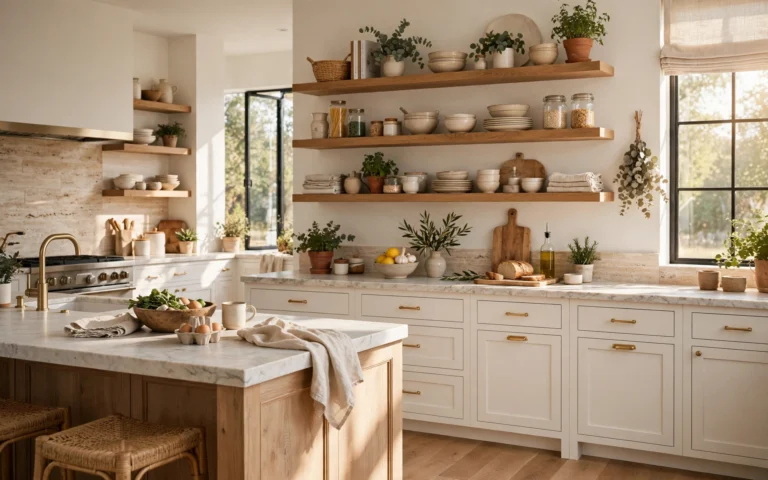
Stop stacking baking sheets in a horizontal pile you have to unearth. Place them vertically in a deep drawer or cabinet using tension rods or a vertical divider insert — then you can slide one out without disturbing the rest. The same trick works for cutting boards and cooling racks. Vertical filing is one of the most satisfying organization moves because it instantly converts a frustrating pile into a browsable collection. If your drawers are too shallow, a vertical organizer in a base cabinet achieves the same result. This idea pairs well with open shelf kitchen storage for the items you want to keep visible.
6. Build a Charging and Junk Drawer Combo

Every home needs a junk drawer — the trick is making it an organized one. Designate one shallow drawer for the essentials: scissors, tape, batteries, pens, a flashlight, and a few rubber bands. Add a small tray or divider so items have zones instead of forming one tangled mass. If you charge devices in the kitchen, route a cable through the back of the drawer and keep chargers, earbuds, and a power strip inside — instant hidden charging station. Purge anything that has not been used in six months. An intentional junk drawer earns its keep; a random one just collects stress.
7. Store Pots and Lids With a Rack Insert

Deep drawers are ideal for pots and pans if you organize them properly. Use a pan organizer insert with vertical dividers so lids and pans stand on edge, each instantly visible and grabbable. Nest pots inside each other with protectors between them to prevent scratches. Keep lids separate from pots rather than stacked on top — matching them later is easy when both are filed upright. Place your most-used skillet and saucepan closest to the front. This layout saves your back from lifting heavy stacks out of low cabinets and keeps everything reachable. A well-filed pot drawer is the hallmark of a kitchen that truly works.
8. Dedicate a Drawer to Wraps and Foil
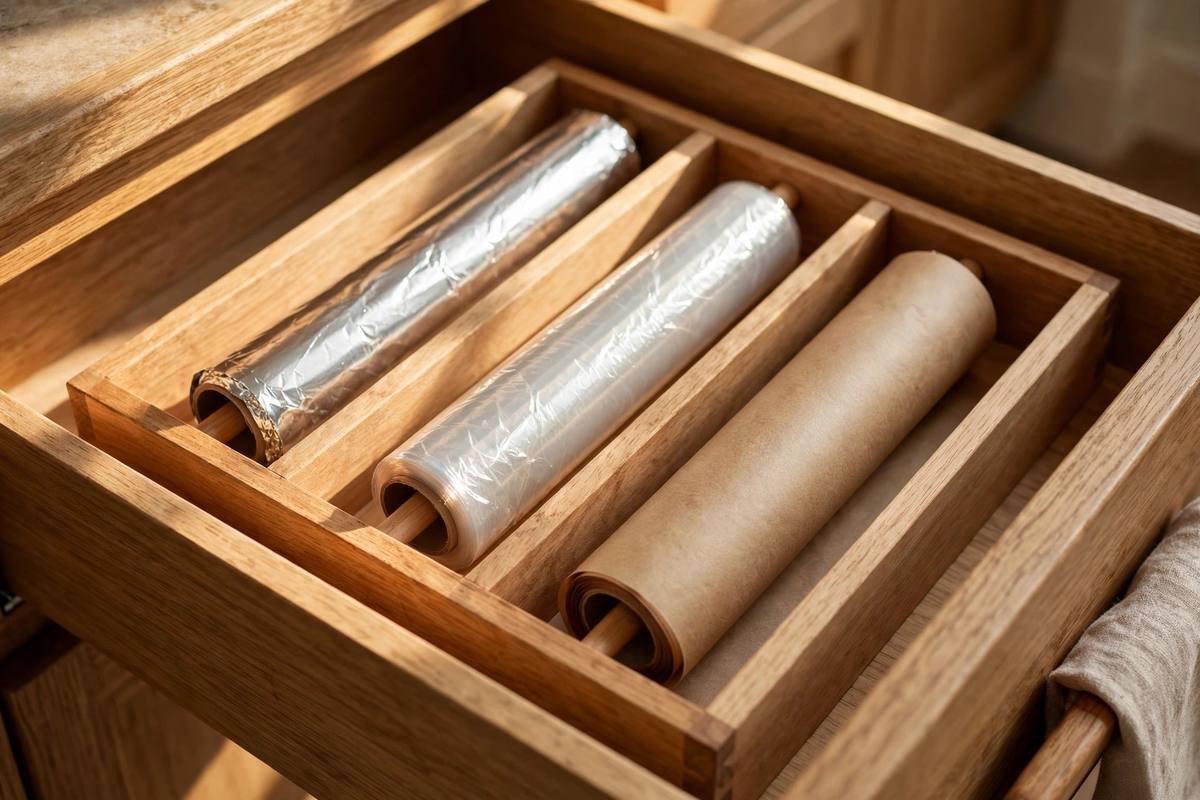
Plastic wrap, foil, parchment, and zip bags deserve their own home instead of crammed beside the spatulas. A wrap organizer with dowels or slots keeps rolls from unspooling and tangling. Add a small section for sandwich bags and a box of rubber bands or clips. Mounting a wrap station inside a deep drawer near your food-prep zone keeps everything one-handed during cooking and packing lunches. If you prefer, a pull-out drawer in a lower cabinet with the same dowel system works for taller roll boxes. Either way, the days of wrestling a stuck roll of cling wrap are over.
9. Add Small Bins for Packets and Sachets
Recommended Ebook
Small Space Checklists & Planners
299 fillable checklists and planners for small space living — tick boxes digitally or print and use!
Only $7

Sauce packets, tea bags, seasoning sachets, and snack bars multiply fast. Corral them in small stackable bins inside a drawer so they stop spreading. Clear bins let you see when you are running low; labeled bins let everyone in the house put things back correctly. Sort by category — sweeteners and tea in one bin, condiment packets in another — and toss anything expired quarterly. This little system is especially useful in family kitchens where packets otherwise end up in every drawer at once. It is a five-dollar fix with an outsized impact on drawer sanity.
10. Keep Dish Towels in a Rolled Drawer
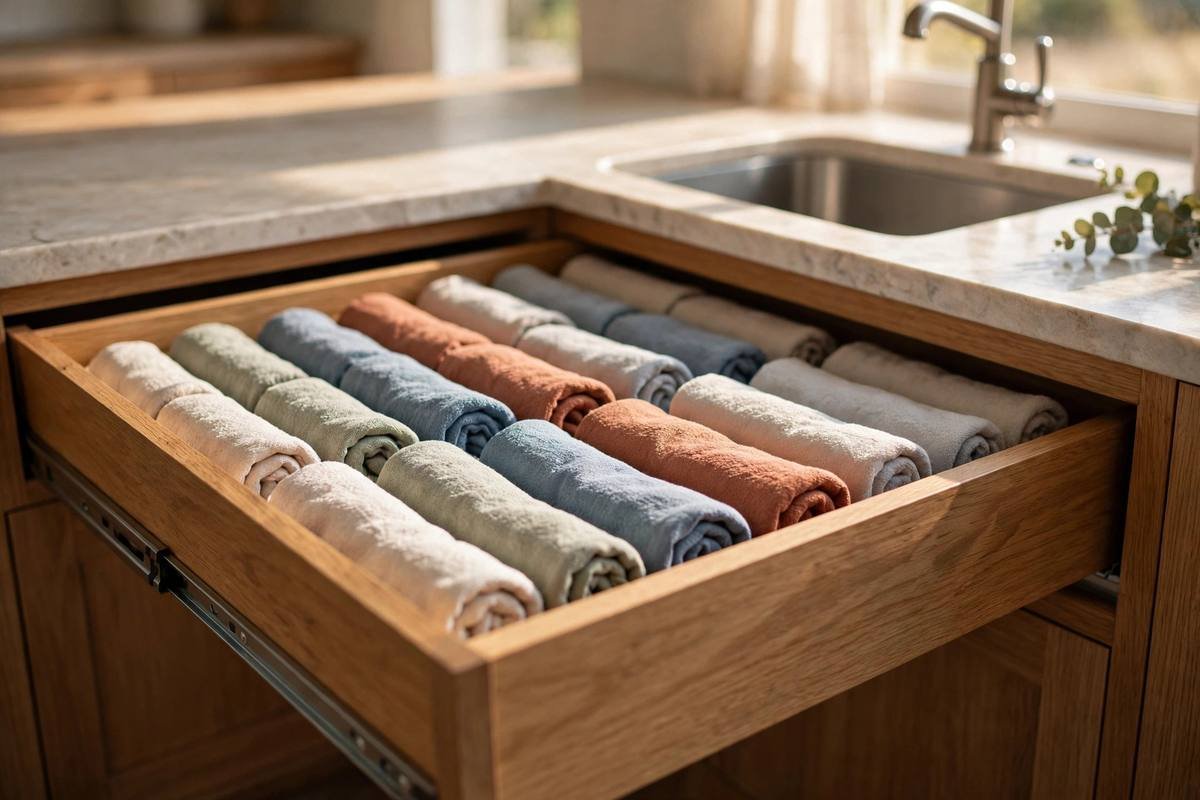
Rolling instead of folding transforms a towel drawer. Rolled dish towels and pot holders pack tighter, look neater, and let you see every option at a glance. Dedicate one drawer — ideally near the sink or dishwasher — to towels only, sorted by type: everyday towels up front, specialty cloths behind. A simple drawer divider keeps the rolls from unraveling into a pile. Retire stained or worn towels to the garage rag bin so only good ones take up prime real estate. For more ways to make your kitchen work harder, see our small kitchen ideas guide.
11. Create a Coffee and Tea Drawer
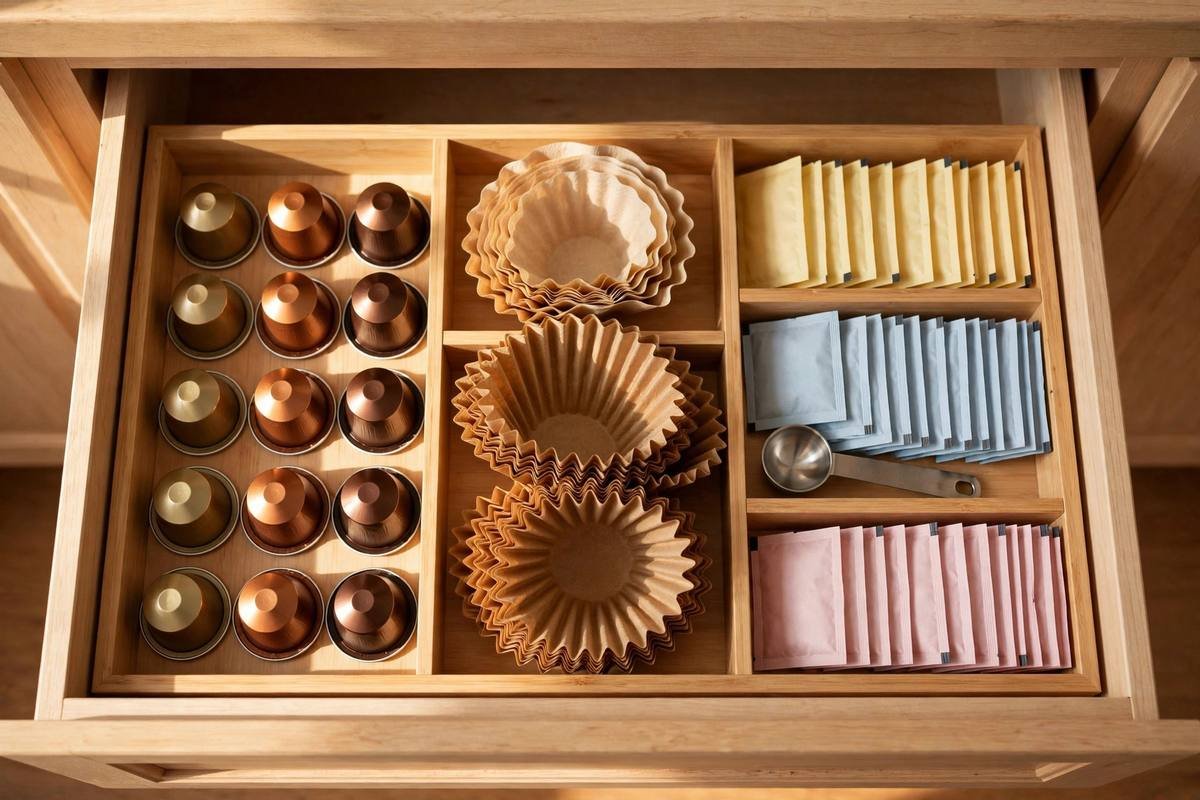
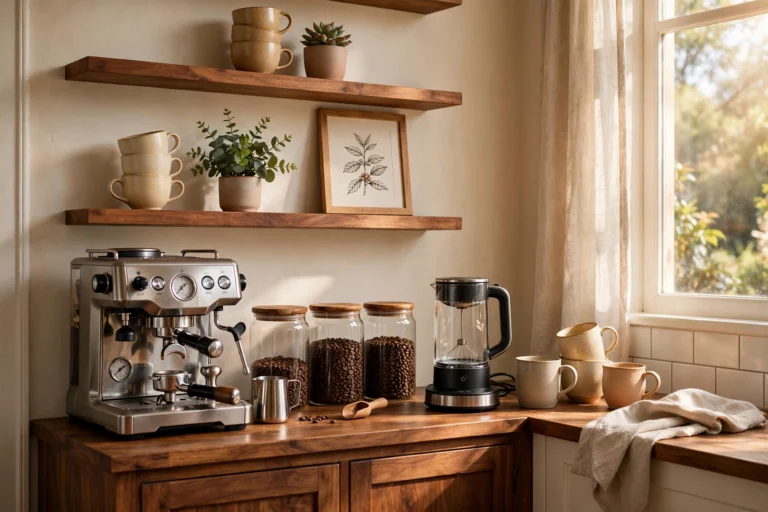
Turn your morning routine into a ritual with a dedicated coffee and tea drawer. Keep filters, pods or beans, sweeteners, and measuring scoops together in one shallow drawer near the coffee maker. Use small containers for loose tea and a tray for pods so everything is tidy. If space allows, add your favorite mugs in an adjacent drawer or on a shelf above. This “coffee station in a drawer” keeps counters clear while making your first cup of the day effortless. It is a small luxury that costs almost nothing — just a drawer liner and a few bins.
12. Label Everything and Maintain Monthly

The final idea is the one that makes all the others stick: label your zones and do a monthly five-minute reset. Labels — on bins, dividers, or the drawer front — tell everyone in the house where things belong, which is how systems survive contact with family life. Once a month, pull out each drawer, wipe it down, toss the expired and broken, and put everything back in its zone. This tiny habit prevents the slow drift back to chaos. Organization is not a one-time project; it is a rhythm. A labeled drawer maintained monthly stays calm for years, not weeks. For a kitchen that functions as beautifully as it looks, our kitchen island decor ideas keep the rest of the room pulling its weight too.
Frequently Asked Questions
What is the best way to organize deep kitchen drawers? Use vertical dividers and tiered inserts so items file upright instead of stacking. Deep drawers work best for pots, baking sheets, and bulky items filed on edge, while shallow drawers suit utensils, cutlery, and spices. Non-slip liner keeps everything from sliding.
How do I organize kitchen drawers without buying anything? Declutter first — remove duplicates and broken items. Then group like items together, use cardboard boxes or shoeboxes as free dividers, and assign each category a dedicated drawer. Even repurposed boxes create zones that keep things tidy.
Should I use bamboo or plastic drawer organizers? Both work well. Bamboo looks warm, is naturally antimicrobial, and wipes clean, making it great for utensil and cutlery drawers. Plastic or acrylic is better for wet zones and under-sink storage since it handles moisture without warping. Choose based on the drawer’s location.
How deep should dividers be for a standard kitchen drawer? Match the divider height to your drawer’s interior depth — dividers should sit at or just below the drawer’s rim so the drawer closes smoothly. Most kitchen drawers are 3 to 6 inches deep; shallow drawers need low-profile dividers to avoid jamming.
How often should I reorganize my kitchen drawers? Do a quick five-minute reset monthly and a deeper declutter every six months. Monthly resets catch expired items and drifted utensils before they pile up, while seasonal declutters keep your system matched to how you actually cook.