
12 Small Apartment Living Room Ideas That Feel Twice as Big
A living room under 200 square feet can still feel open, calm, and comfortable — it just needs smarter choices. These small living room ideas focus on what actually changes how a room feels: light, sightlines, furniture scale, and a layout that leaves breathing room. None of them require knocking down walls or spending a fortune, and nearly all are renter-friendly. Pick the three or four small apartment living room ideas that fit your space, and the same four walls will feel surprisingly bigger.
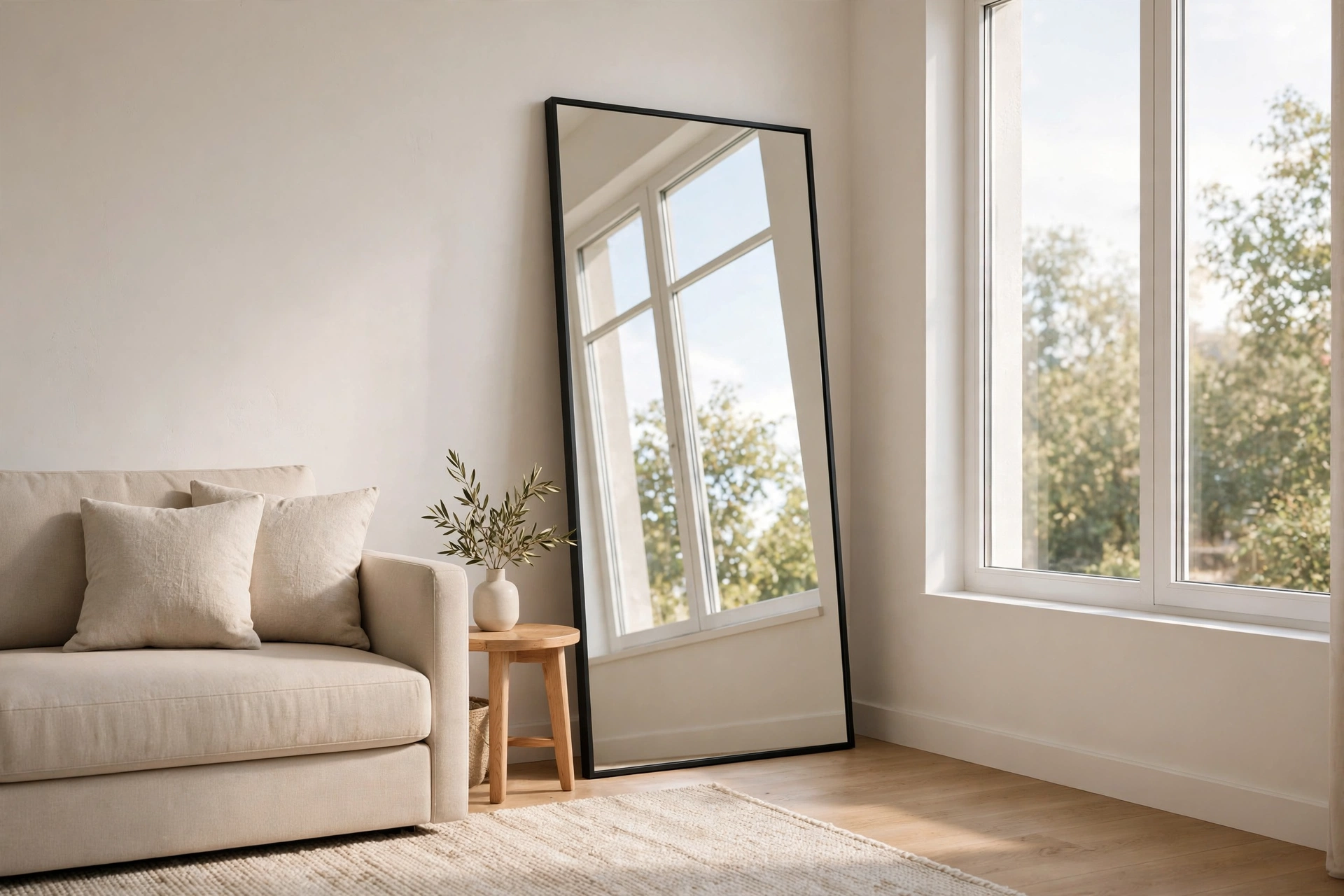
1. Start With One Oversized Mirror
A single large mirror does more for a tight room than a whole wall of small decor. Lean a full-length mirror (around 60 inches tall) against the wall opposite or beside your biggest window, and it bounces daylight deep into the room while visually doubling the space. One generous mirror reads as intentional; a cluster of tiny ones just adds visual clutter. Anchor a leaning mirror to the wall with an anti-tip strap, because in a tight room it will get bumped by bags, kids, and vacuum cleaners.
Keep the frame slim and simple — thin black metal or light wood — so the mirror itself disappears and all you notice is the extra light. If you want to style the wall around it, these wall mirror decor ideas show how to hang and layer mirrors without overwhelming a small room.
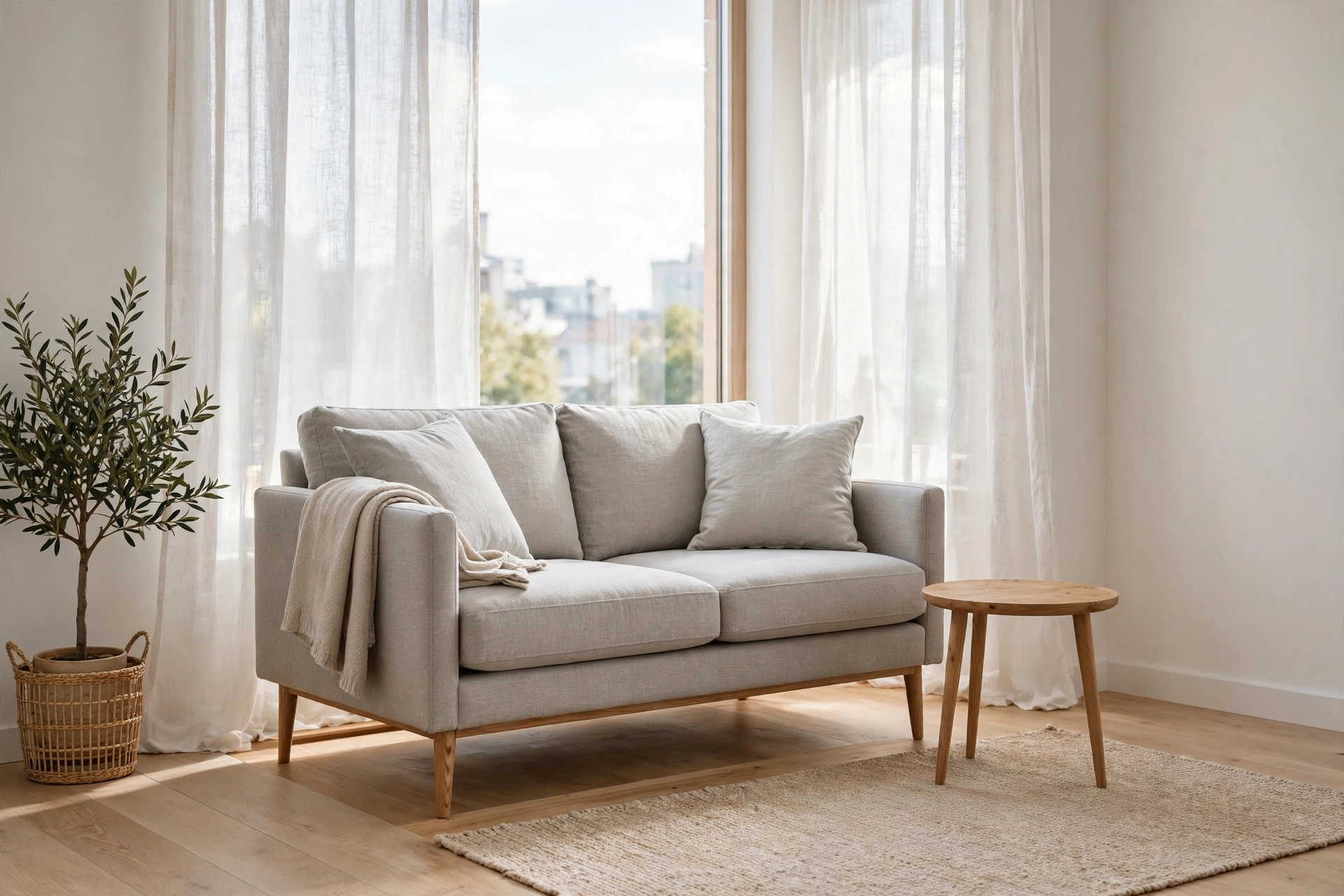
2. Pick a Sofa With Slim, Exposed Legs
Bulky, skirted sofas sit like a solid block and swallow floor space visually. A sofa or loveseat with slim, tapered legs — even just 4 to 6 inches of clearance underneath — lets your eye travel across the floor beneath it, which makes the whole room read as larger. For most small rooms, choose a 68- to 78-inch sofa with a tight back and narrow arms, which gives real seating without eating the walkway. If the room is very narrow, try a loveseat paired with one light accent chair instead of a full three-seater; you keep the conversation area while leaving circulation open on both sides.
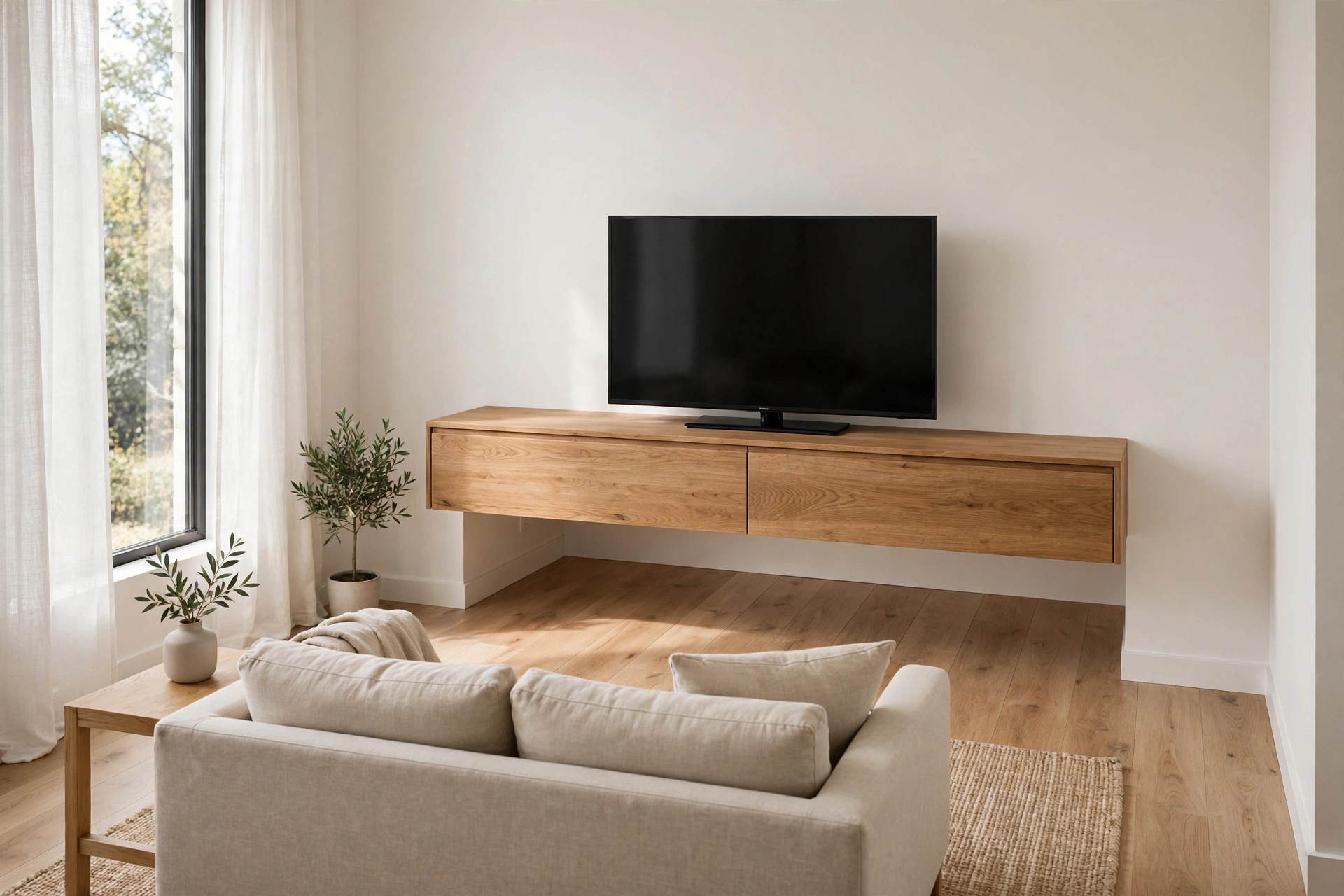
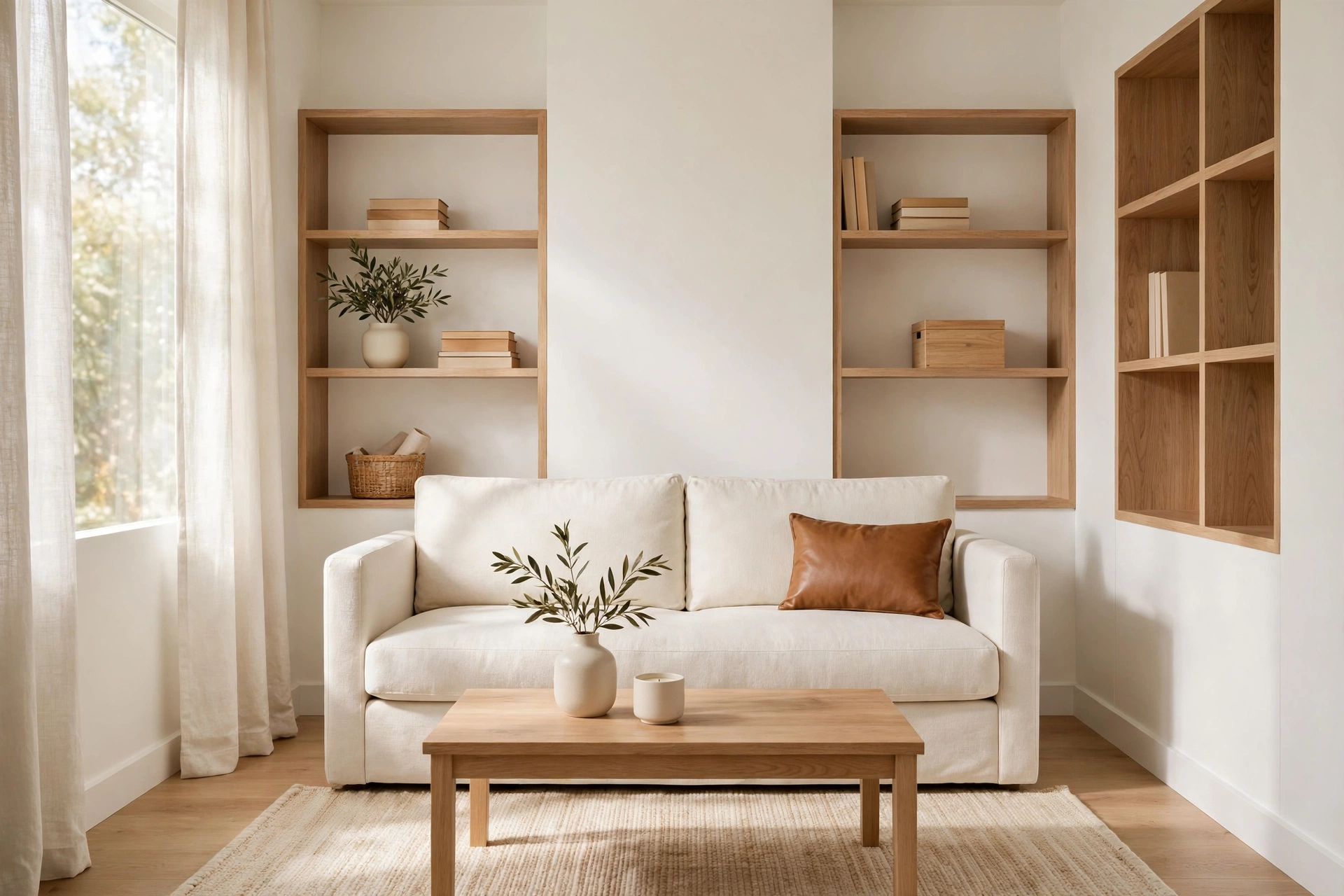
3. Float the Media Console on the Wall
A media console that floats on the wall instead of sitting on the floor frees up a surprising amount of visual space. Mount it 8 to 12 inches above the floor and run the cables through the wall or a slim cord cover, and the floor line stays unbroken from one side of the room to the other. Choose a console no wider than your TV plus a few inches on each side, with closed doors to hide remotes, consoles, and chargers. The floating effect makes even a basic big-box console look custom, and wiping the floor underneath takes about ten seconds.
4. Paint Walls, Trim, and Ceiling the Same Light Color
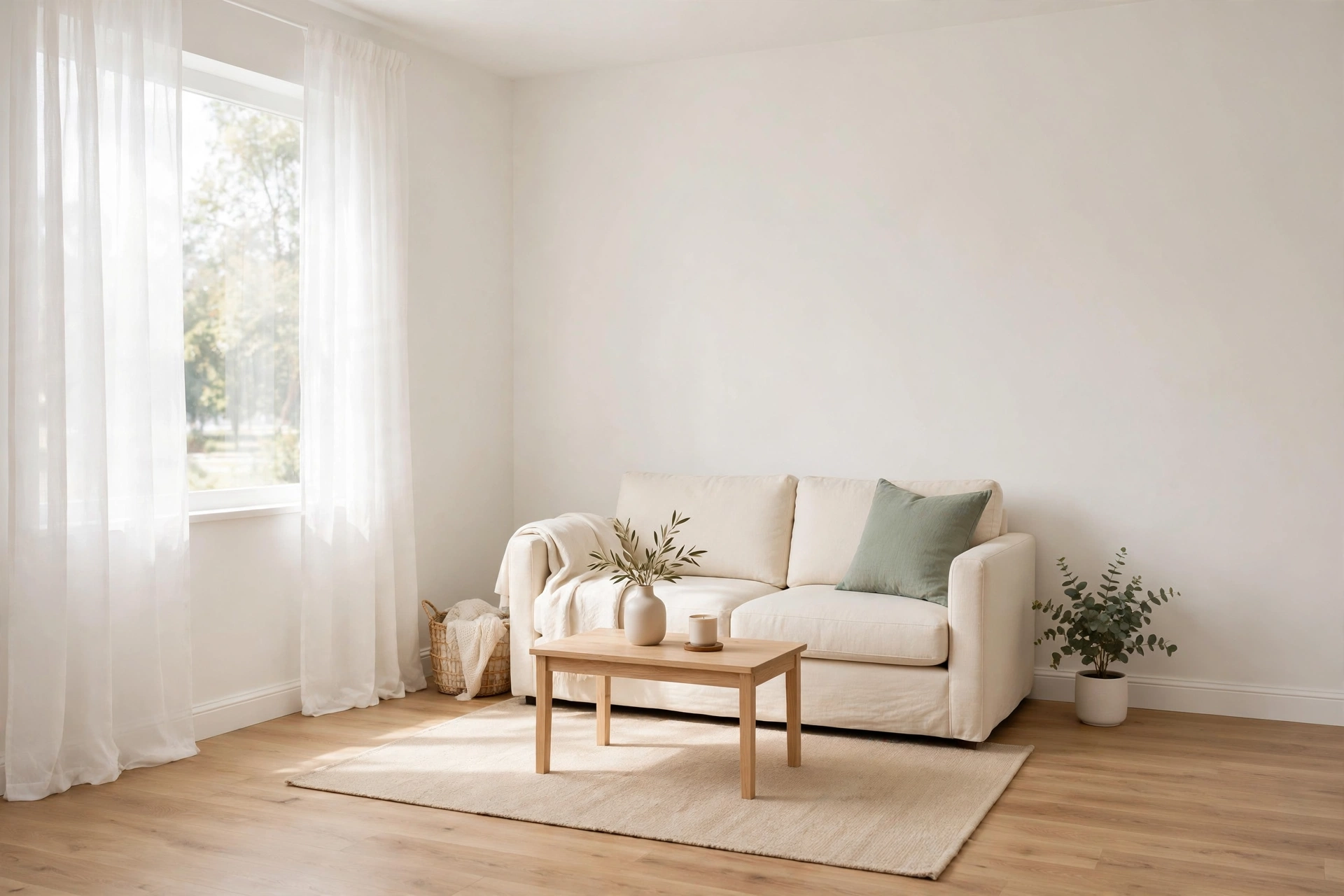
Contrast draws the eye to boundaries, and in a small room every boundary you notice makes the space feel smaller. Painting the walls, baseboards, and ceiling the same warm white or pale greige erases those edges so the room reads as one continuous volume. Among small living room ideas, this paint trick is the cheapest: warm whites (think soft linen or creamy alabaster tones) keep the room from feeling cold or flat. It is also the change with the highest return for the least money.
If all-white feels too stark, carry one slightly deeper tone onto a single accent wall — a soft sage or warm clay — and keep everything else light. The key is low contrast: the less your eye stops at edges and corners, the bigger the room feels.
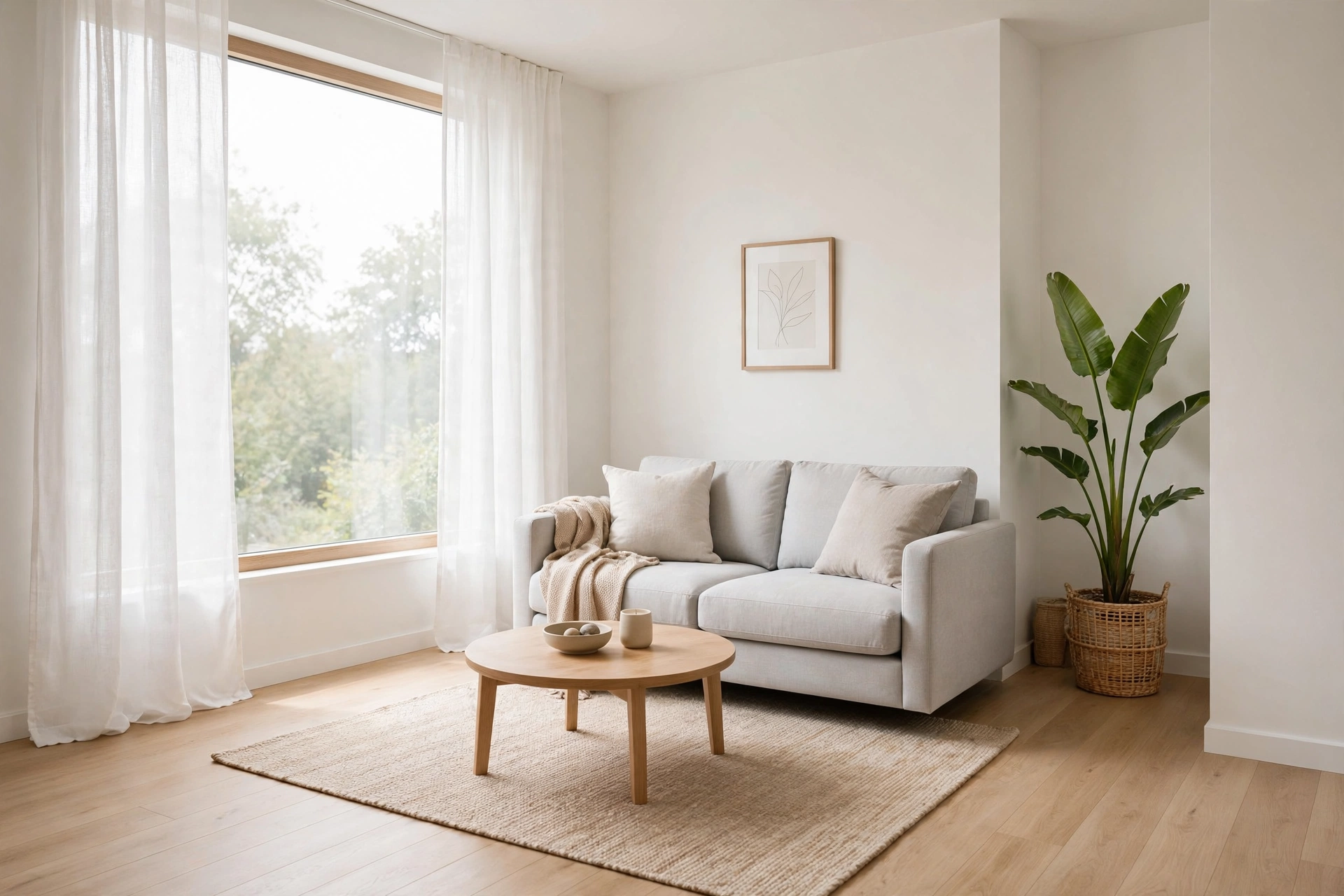
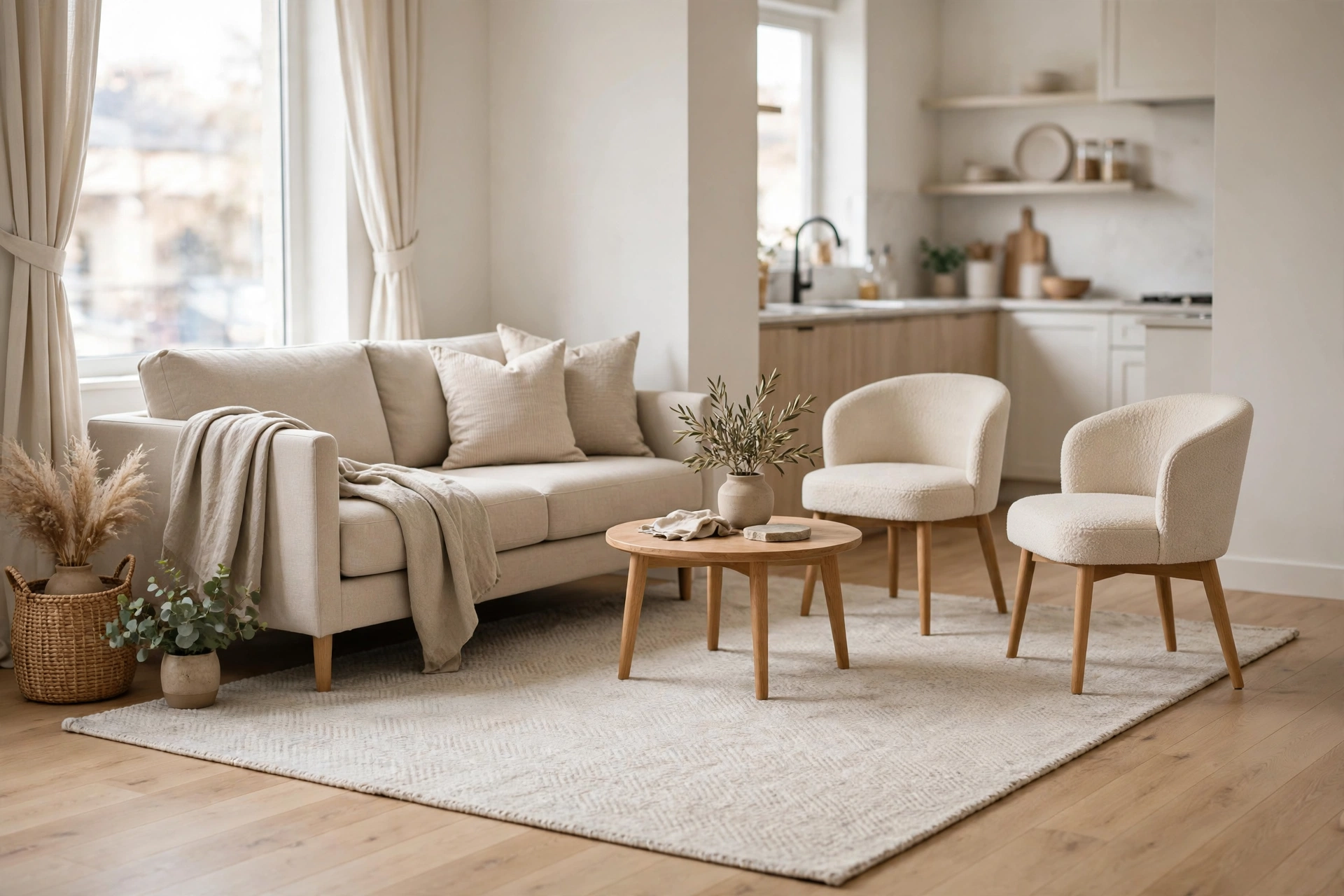
5. Go Round With Tables and Rugs
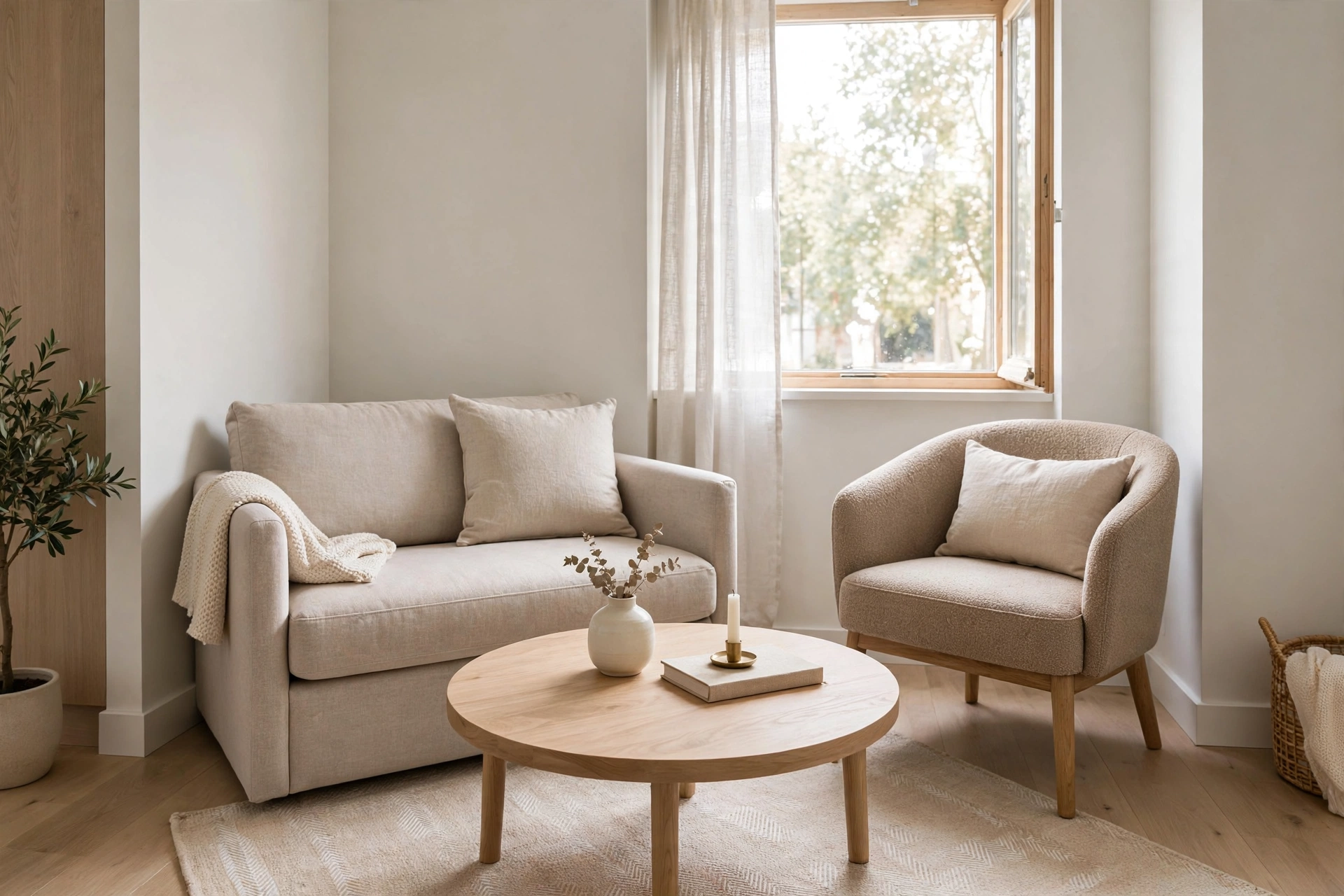
Sharp corners are space hogs in tight quarters — they snag shins, block paths, and chop up the floor plan. A round coffee table around 30 to 36 inches across tucks neatly between a sofa and chairs, and you can squeeze past it from any angle. Round side tables and a round or oval area rug soften the geometry of a boxy room and improve traffic flow without any renovation — a simple change with big payoff. As a bonus, round tables have no corners for toddlers to bump into, which matters in a room where everything sits close together — a practical bonus for family apartments.
6. Float the Sofa a Few Inches Off the Wall
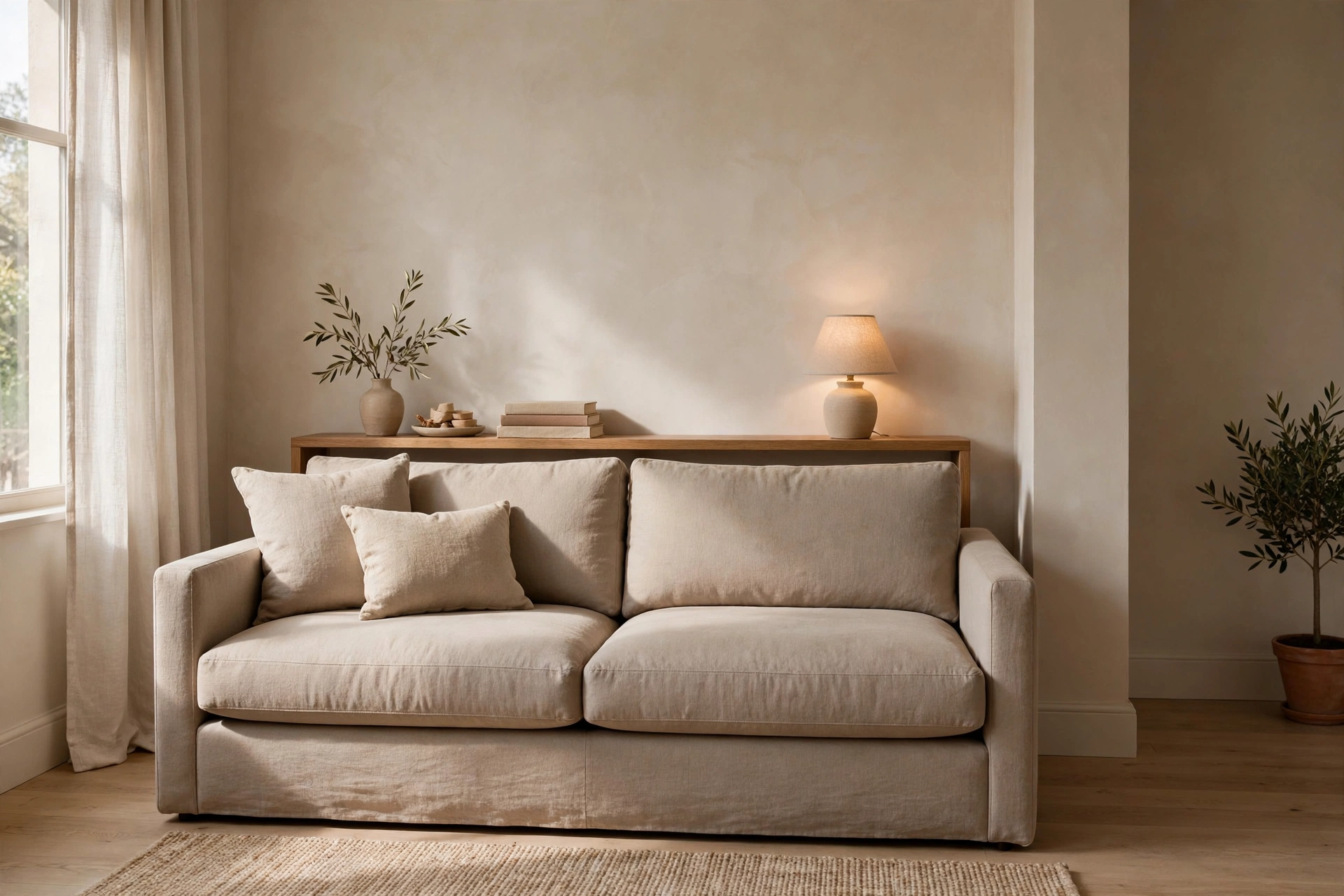
Pushing every piece of furniture hard against the walls feels like the obvious way to save space, but it usually backfires — the room ends up feeling like a waiting area. Pull the sofa even 3 to 4 inches off the wall and leave a sliver of shadow behind it; that small gap gives the room depth, a subtle change with outsized impact.
In slightly larger small rooms, the idea goes further: float the sofa fully — with a narrow console table behind it — to create a walkway and make the seating area feel like a deliberate zone rather than leftovers. Apartment Therapy’s living room layout tips make the same point designers repeat: keep clear traffic paths and choose pieces scaled to the room, and the layout will feel generous instead of cramped.
7. Send Storage Up the Walls
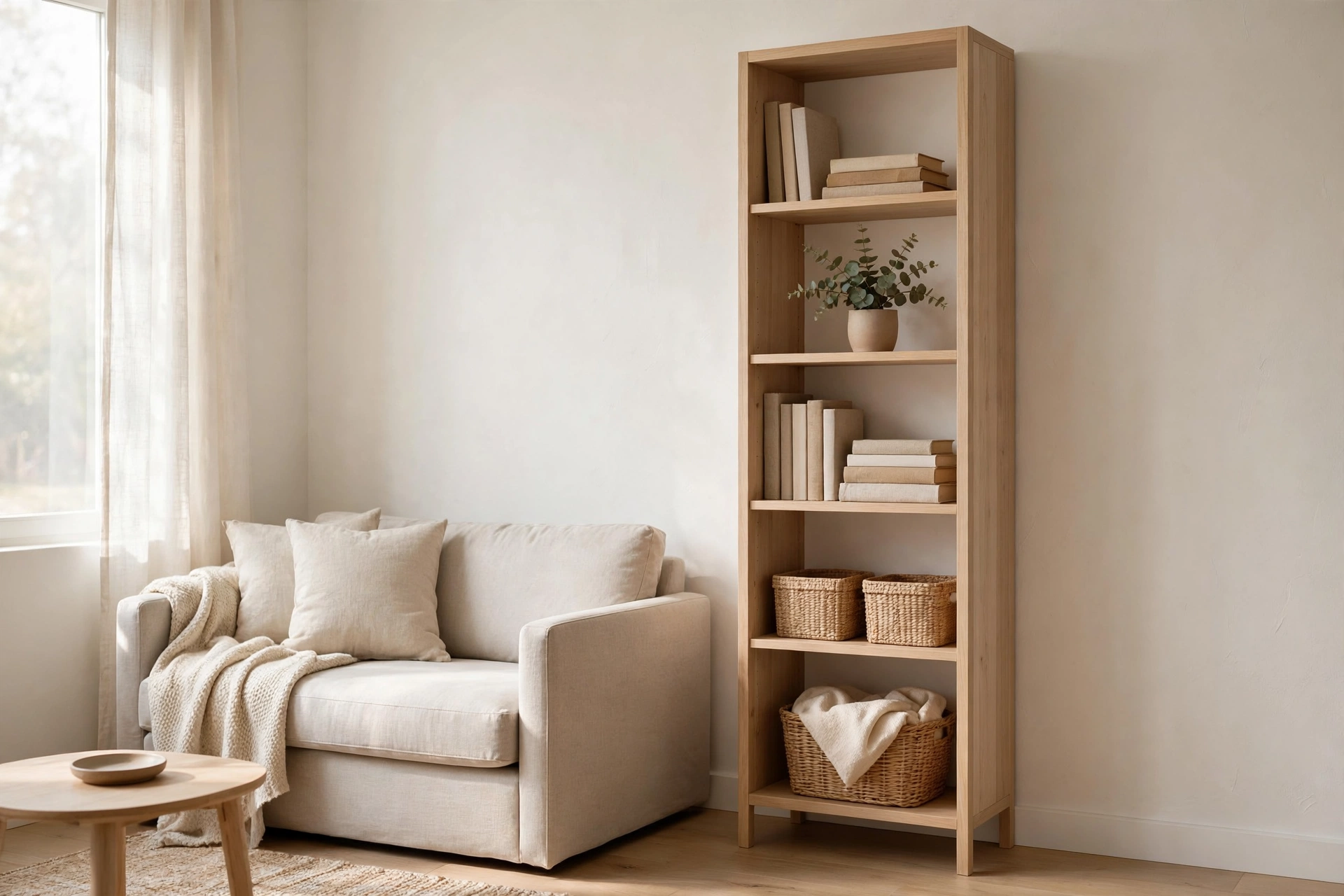
Floor space is precious, so the best small living room ideas send storage upward. A tall, narrow bookcase that reaches close to the ceiling draws the eye up and makes the ceiling feel higher while holding as much as a wide, squat unit. Wall-mounted shelves above the sofa or beside the TV keep books, plants, and baskets off the floor entirely. Keep the styling simple — group items in odd numbers, leave some shelves partly empty, and repeat two or three finishes so the vertical storage reads as architecture instead of clutter. One tall piece beats three short ones every time in a small footprint — a core rule for small-space storage.
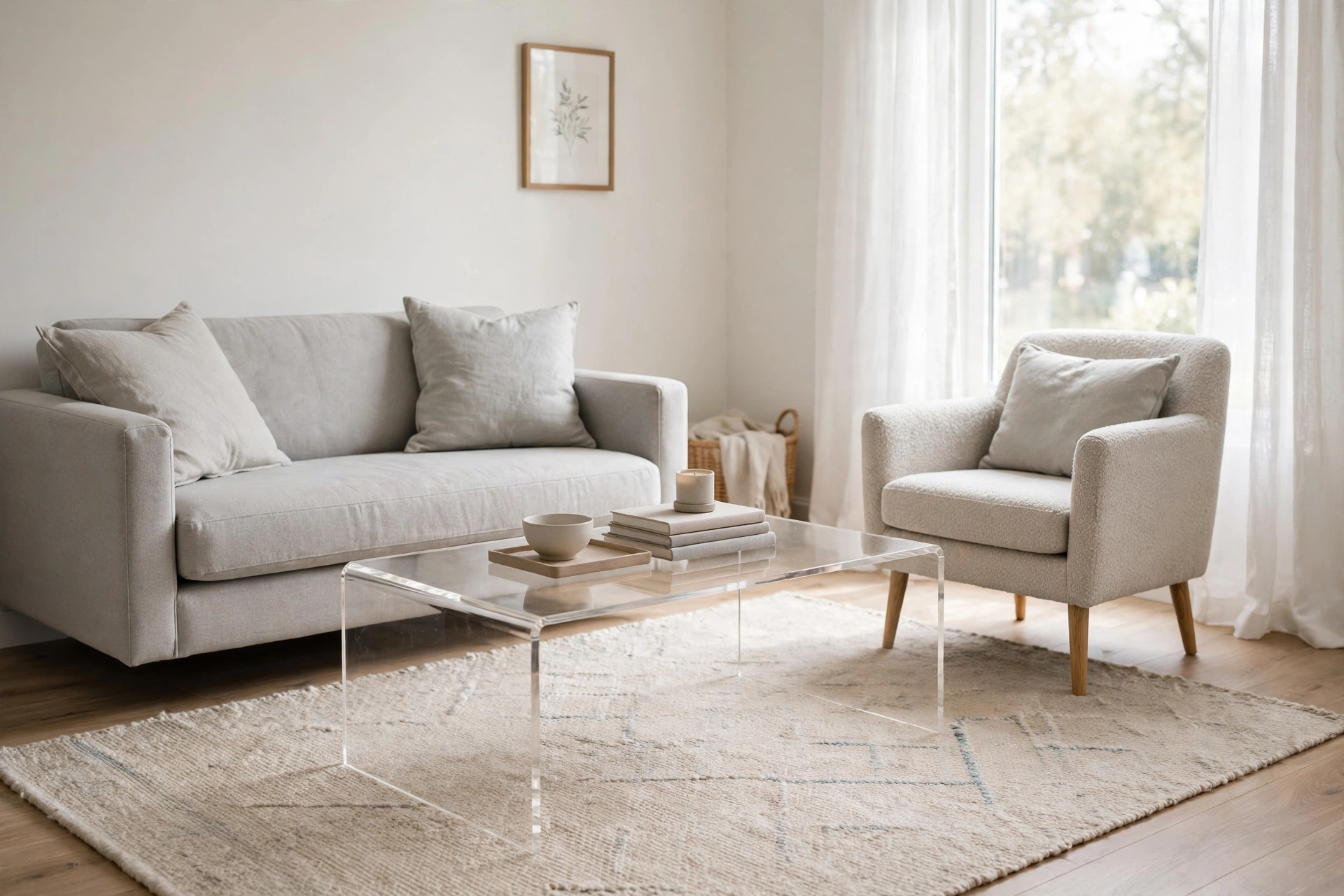
8. Swap in a Glass or Acrylic Coffee Table
When a coffee table visually disappears, the floor reads as one continuous surface — and continuous floor equals bigger room. A clear glass or acrylic table gives you a real surface for drinks, books, and feet-up evenings without adding any visual weight. If full acrylic feels too modern, try a glass top on slim metal or wood legs — one of the simplest ways to keep the airy effect with a warmer look. Keep the styling minimal: a small tray, one stack of books, nothing more — clutter defeats the purpose.
9. Zone Open Space With One Large Rug
In a studio or open-plan apartment, one big undefined floor can feel smaller than it is because nothing tells your eye where the living room starts. A rug fixes that instantly — it’s one of the fastest small living room ideas. Choose one large enough that the front legs of your sofa and chairs sit on it — usually 5 by 8 feet in a small room — and align it with the room’s longest axis to stretch the sightline.
A low-contrast pattern or subtle texture adds warmth without chopping the floor into pieces. Skip the tiny 3-by-5 rug floating in the middle; undersized rugs shrink a room faster than almost anything else, which is why rug sizing matters this much.
10. Hang Curtains High and Wide
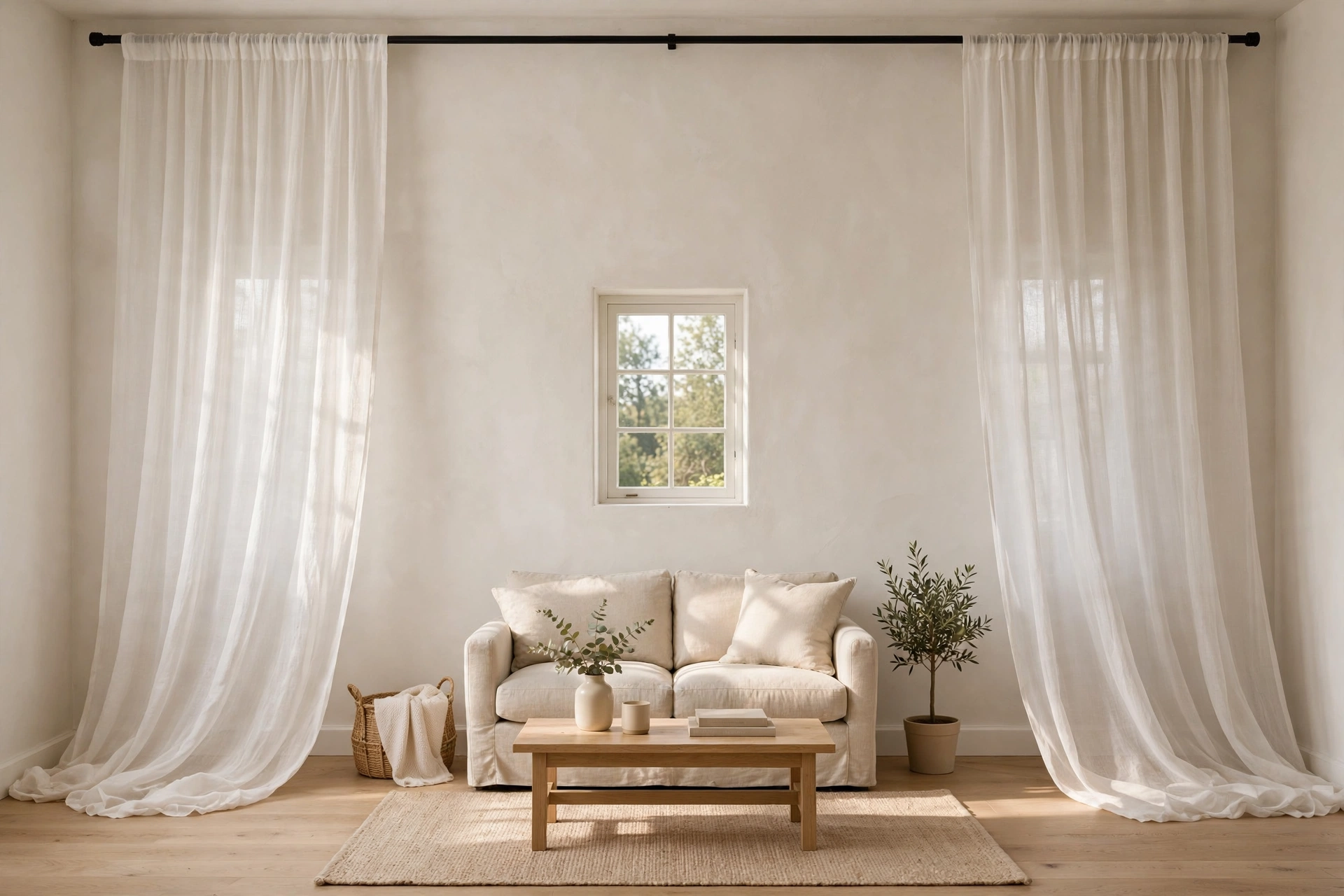
Curtains hung at the window frame’s edge frame a small window and make it look smaller. Mount the rod 4 to 6 inches below the ceiling and extend it 6 to 10 inches past the frame on each side, then hang panels that just kiss the floor. When open, the panels cover wall — not glass — so the full window shows and the window looks far wider than it is. When closed, the tall panels draw the eye up and make the ceiling feel higher. Light, airy fabrics in a tone close to the wall color keep the effect seamless — an easy win; heavy dark drapes do the opposite.
11. Choose Furniture That Pulls Double Duty
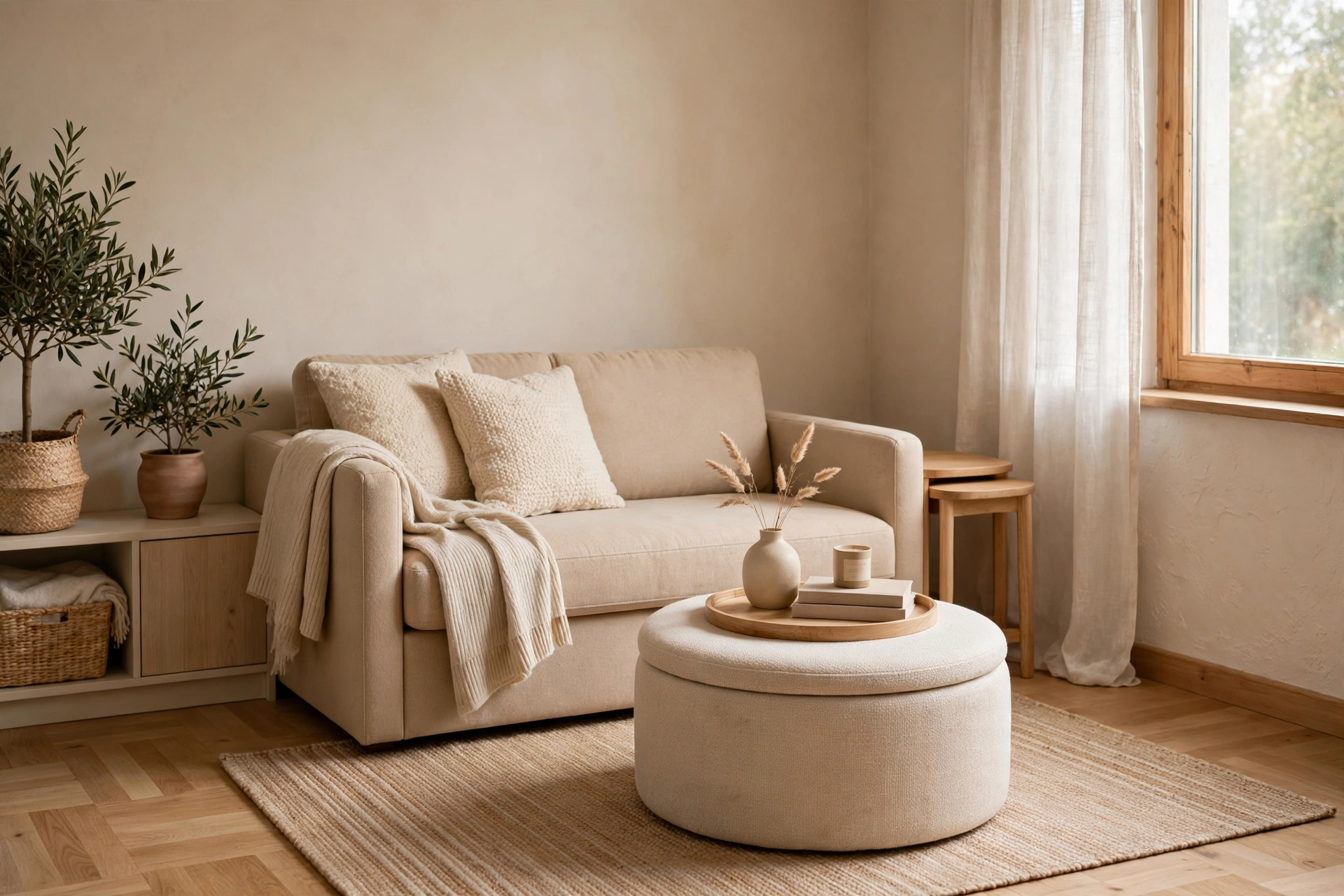
Every piece in a small living room should earn its footprint twice — a key principle in any small room. A storage ottoman holds throw blankets inside and serves as extra seating, a footrest, and a coffee table with a tray on top. Nesting side tables pull apart when guests come and tuck together when they leave. A lift-top coffee table hides remotes and chargers and rises to laptop height for work-from-couch days.
Even a sleeper sofa or a daybed-style loveseat turns the living room into a guest room a few nights a year. Before buying anything new, ask what two jobs it can do — if the answer is one, keep looking. Of all the small living room ideas here, this is the one that saves the most money.
12. Keep the Palette to Two or Three Colors
A dozen competing colors chop a small room into visual fragments; a tight palette stitches it back together. Pick a light base (warm white, pale greige), one mid-tone for depth (soft sage, warm tan, or muted blue), and one accent you repeat in small doses — pillows, a throw, art.
Repeating the same two or three colors across the rug, curtains, and upholstery is a foundational move — it makes the whole room feel calm and continuous, which reads as spacious. If you love rich, moody color, try deep chocolate brown as your accent against creamy neutrals — these chocolate brown decor ideas show how to use it without darkening a small space.
Frequently Asked Questions
How can I make a small living room feel bigger without buying anything?
Float the sofa a few inches off the wall, clear the floor of anything that does not need to be there, and rehang the curtains you already own higher and wider. Editing what you have usually buys more visual space than one new piece of furniture.
What sofa size works best in a small apartment?
A 68- to 78-inch sofa or loveseat with a tight back and narrow arms seats two or three people without eating the walkway. Check the seat depth as well: 20 to 22 inches keeps the profile slim while staying comfortable for most adults.
Are dark colors always a mistake in a small room?
No. One dark accent — a chocolate-brown throw or a walnut side table — adds depth against light walls and a pale rug. The mistake is spreading dark color over every large surface at once, which closes the walls in and shrinks the room.
How much clearance do walkways need in a small room?
Keep main traffic paths about 30 to 36 inches wide, and leave roughly 18 inches between the sofa and the coffee table. If you have to turn sideways to pass a piece of furniture, the room will feel cramped no matter how well it is styled.
Recommended Ebook
Budget Small-Space Organization
Clever, budget-friendly systems to organize every inch of a small home — no renovation needed.
Only $12
Recommended Ebook
Small Space Checklists & Planners
299 fillable checklists and planners for small space living — tick boxes digitally or print and use!
Only $7
Conclusion
Small rooms reward editing more than spending. Start with light and one good mirror, right-size a piece or two, and give everything a second job. These small living room ideas change perception, not square footage — pick your three favorites this weekend and the room will prove it by Sunday.


One Comment