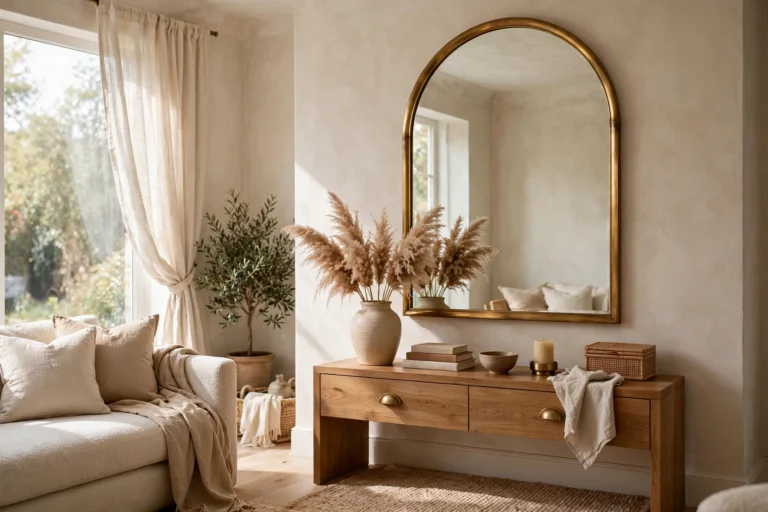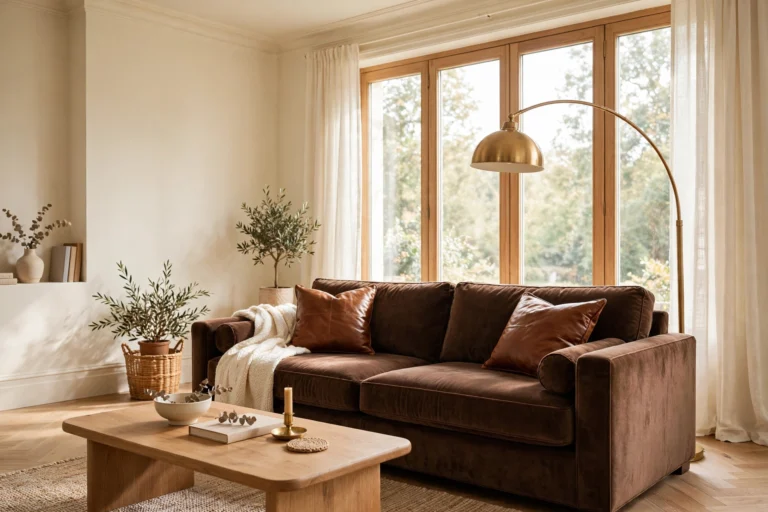
12 Walnut Furniture Ideas for Warm Modern Style
Walnut furniture ideas keep showing up in well-designed homes for one simple reason: walnut sits exactly halfway between brown and black, so it adds depth without going dark. Where pale oak can feel breezy and almost unfinished, walnut brings a settled, library-like richness — the grain has natural movement that reads warm in daylight and quietly dramatic after dark. It pairs with brass, linen, leather, stone, and just about every neutral, which makes it one of the easiest woods to build a room around. The twelve walnut furniture ideas below cover every major room — living room, dining room, bedroom, kitchen, office, and entryway — and each one focuses on a single piece, with the proportions, placement, and styling details that make it look intentional.
1. Walnut Furniture Ideas for the Living Room: Anchor the Wall With a Credenza
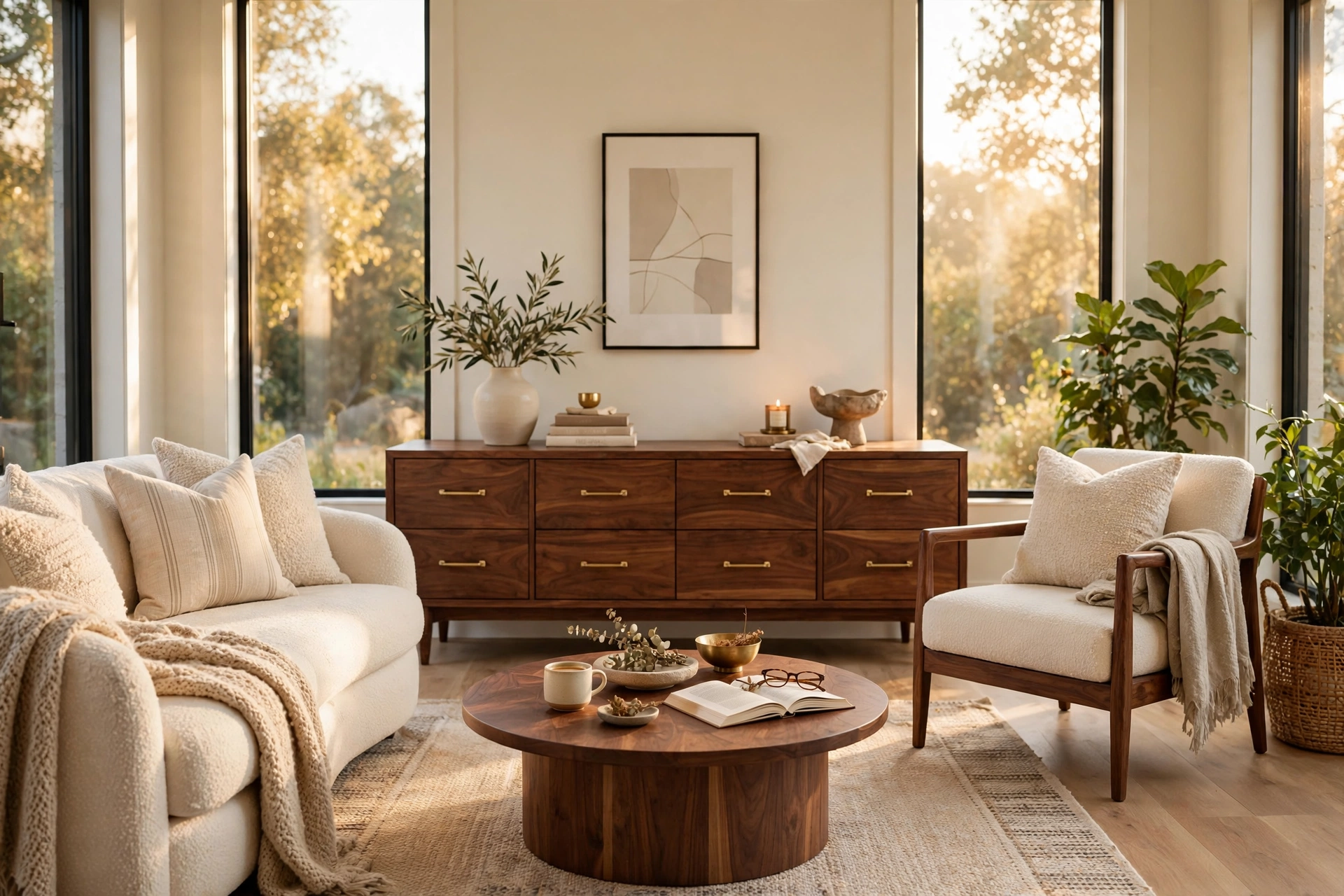
A walnut credenza does the job of three pieces at once — storage, surface styling, and visual anchor. Choose one 60 to 72 inches long with tapered legs and simple brass or black pulls, which keep the room feeling open. Style the top with restraint: a ceramic vase with dried grasses on one end, a stack of two or three art books in the middle, and a small linen-shade lamp on the other. Leave at least a third of the surface empty so the grain stays the star. For more room-specific inspiration, browse these mid-century modern living room ideas from The Spruce.
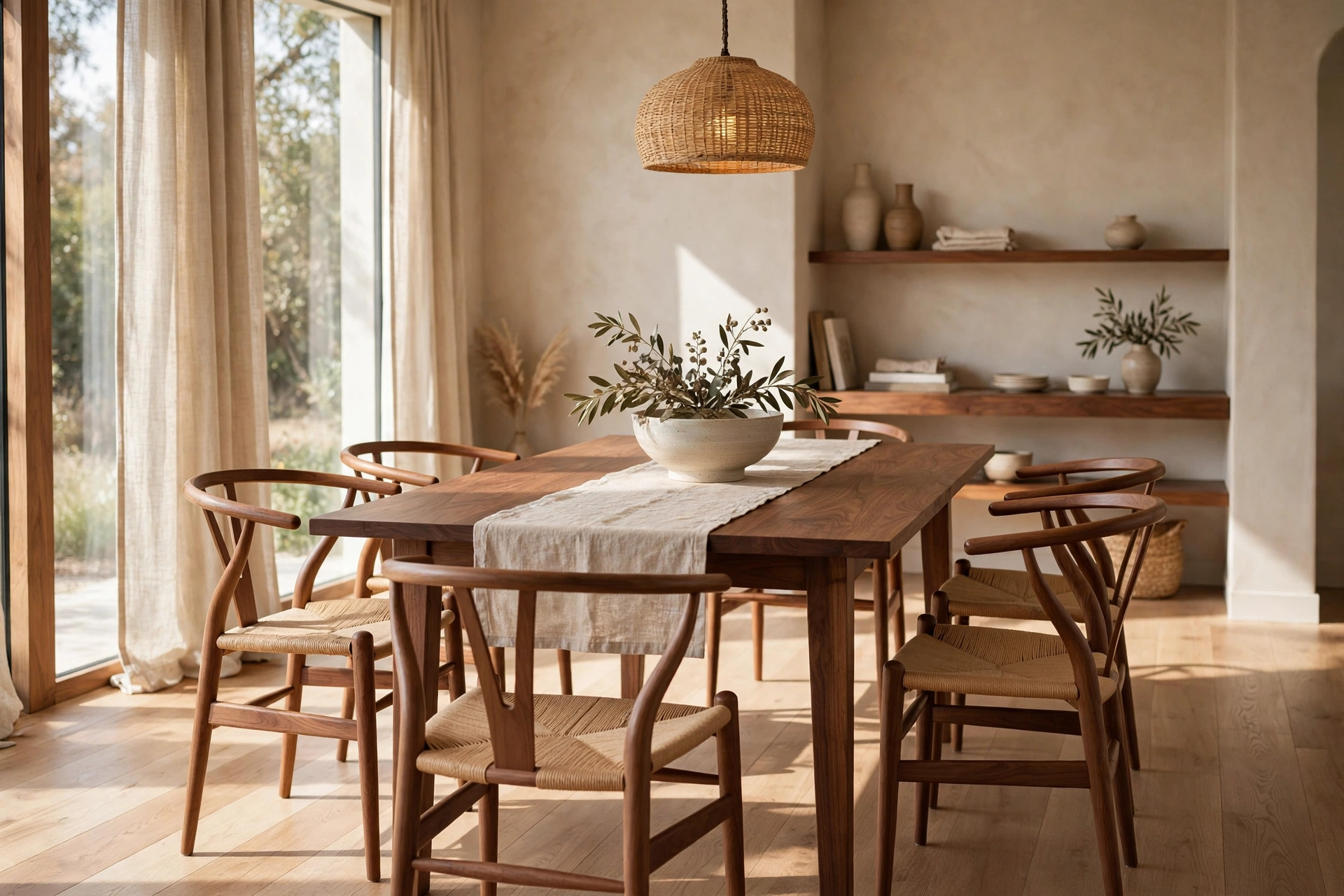
2. Gather Around a Walnut Dining Table
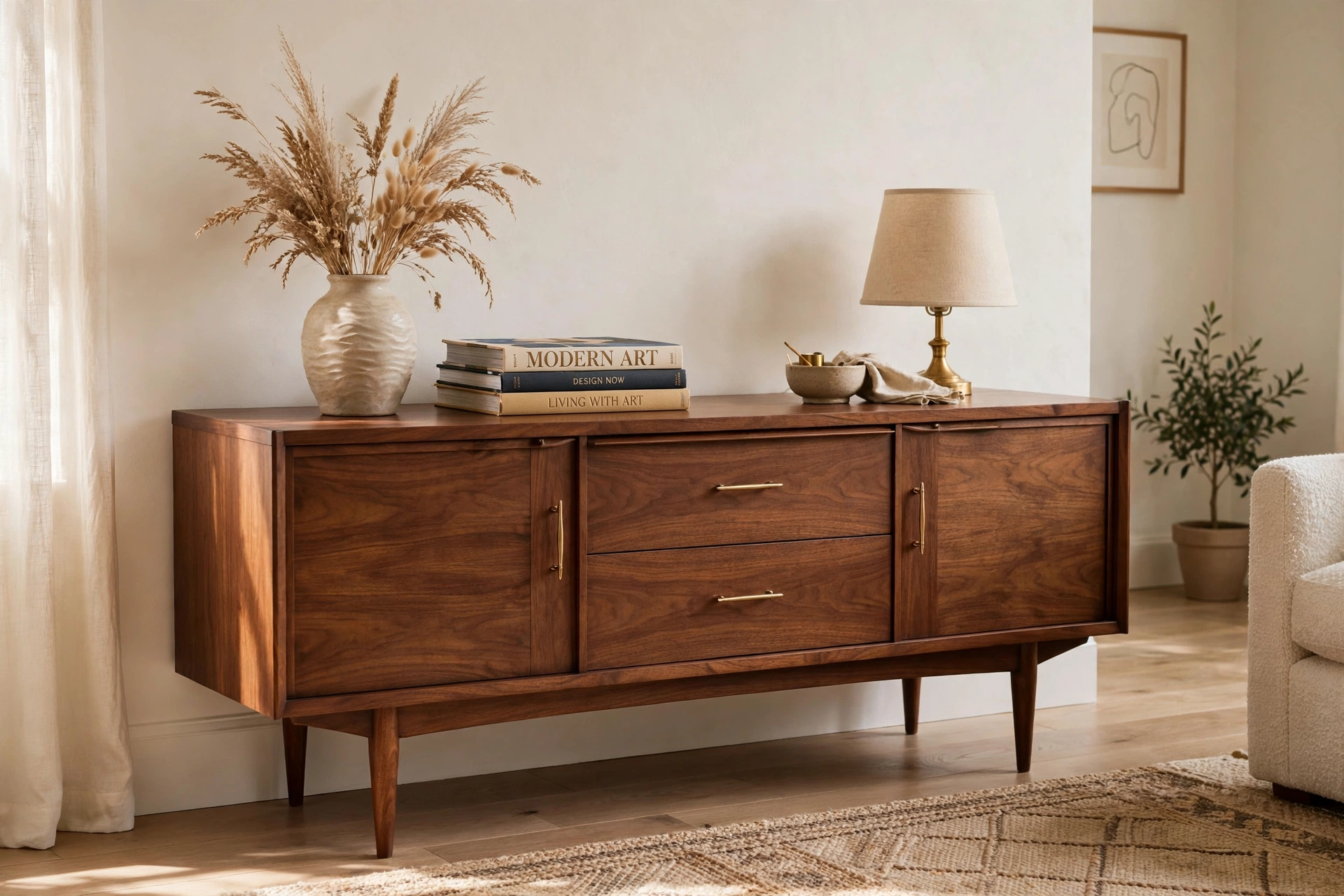
Few pieces define a home like the dining table, and walnut gives it a presence white or glass tops never quite reach. A 72-inch rectangular top seats six comfortably, while a 42 to 48-inch round suits four and keeps conversation easy in smaller rooms. Pair the walnut top with chairs in a lighter tone — cream, oatmeal, or cognac leather — so they don’t compete with the grain. Hang a pendant or two 30 to 34 inches above the tabletop; too high and the light feels disconnected, too low and it blocks sightlines. Finish with a linen runner and one low centerpiece, so the table works for daily meals, not just dinner parties.
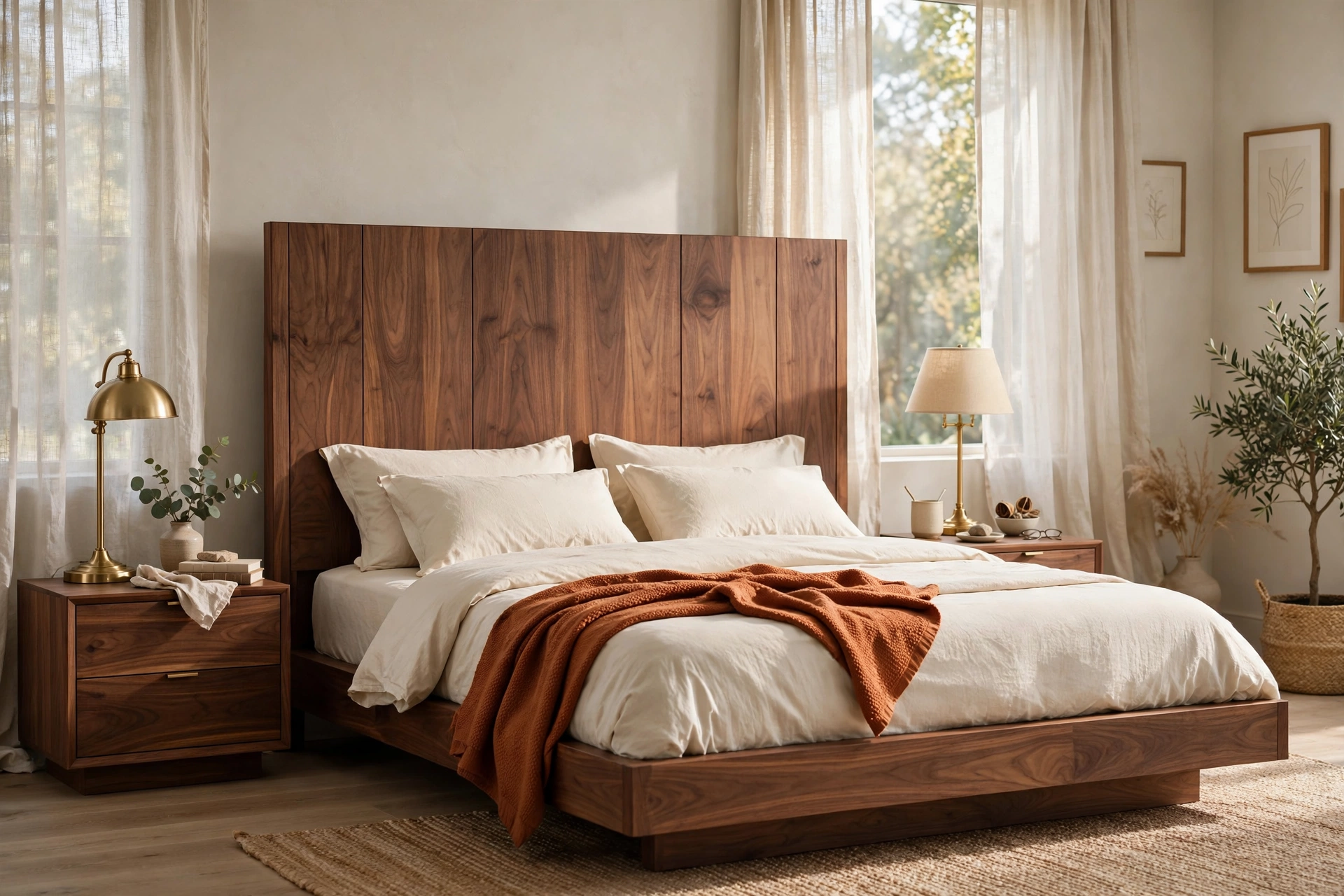
3. Walnut Furniture Ideas for the Bedroom: A Headboard That Grounds the Room
A walnut bed with a solid headboard changes the whole temperature of a bedroom. Pick a platform bed 12 to 14 inches high with a headboard reaching at least 48 inches from the floor — tall enough to read against, not so tall it dominates the wall. Dress it in cream or ivory bedding so the dark wood frames the lighter textiles, and add one warm accent like a rust throw folded across the foot. Flank the bed with nightstands kept within 2 inches of the mattress height. Keep wall color soft — warm white, greige, or pale clay — because bold colors fight the wood for attention.
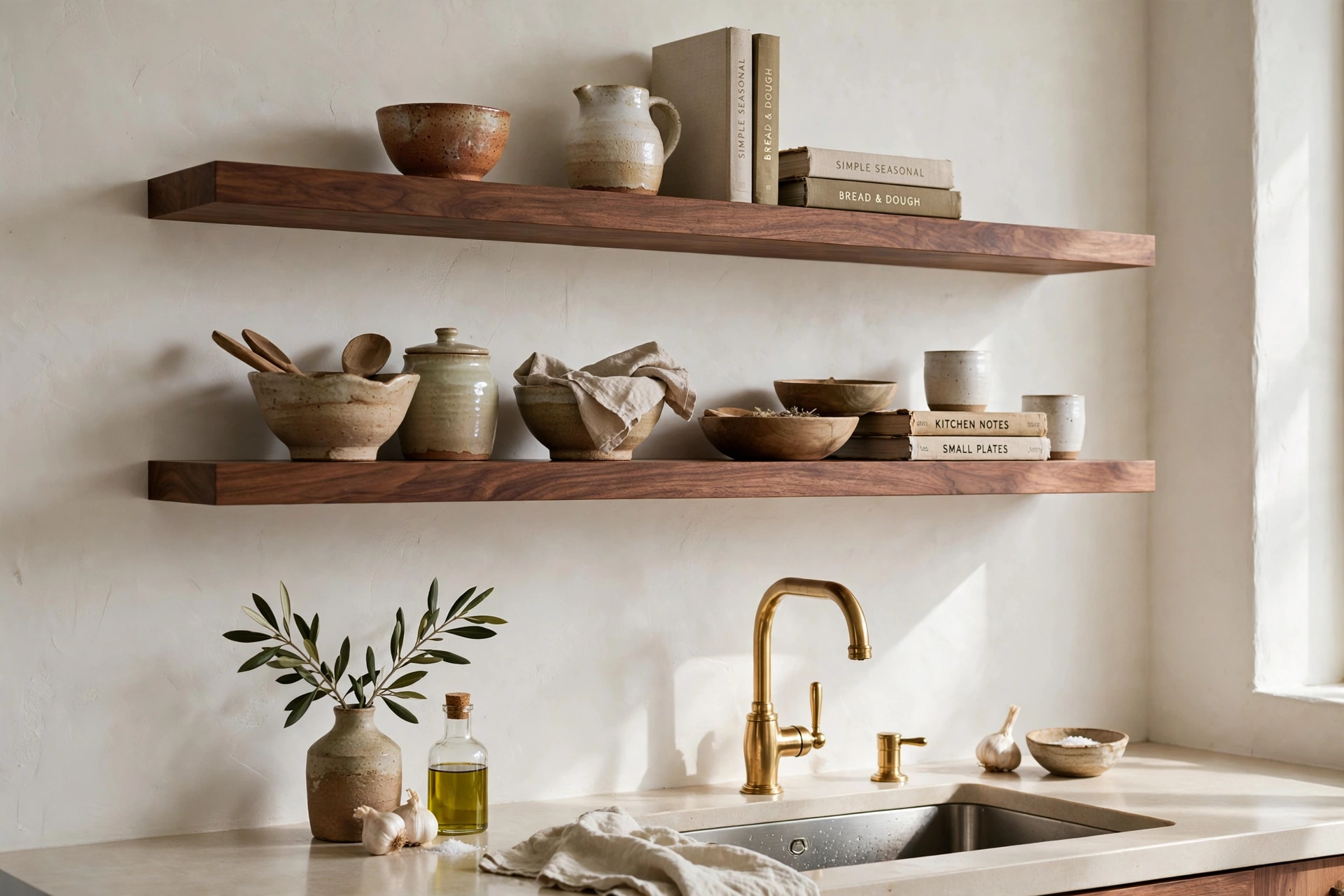
4. Warm Up the Kitchen With Walnut Floating Shelves
Open walnut shelving is a small change that makes a kitchen feel designed rather than assembled. Two or three shelves, 24 to 36 inches wide and mounted 18 to 24 inches above the counter, give display space without closing in the room. Style them with daily-use pieces — handmade ceramic bowls, wooden cutting boards leaned upright, a row of glass jars. Mix in one or two cookbooks with covers facing out for color. Because walnut is dark, keep the wall behind it light: white plaster, pale tile, or warm cream paint. For more ways to bring wood tones into the kitchen, see these warm wood kitchen ideas.
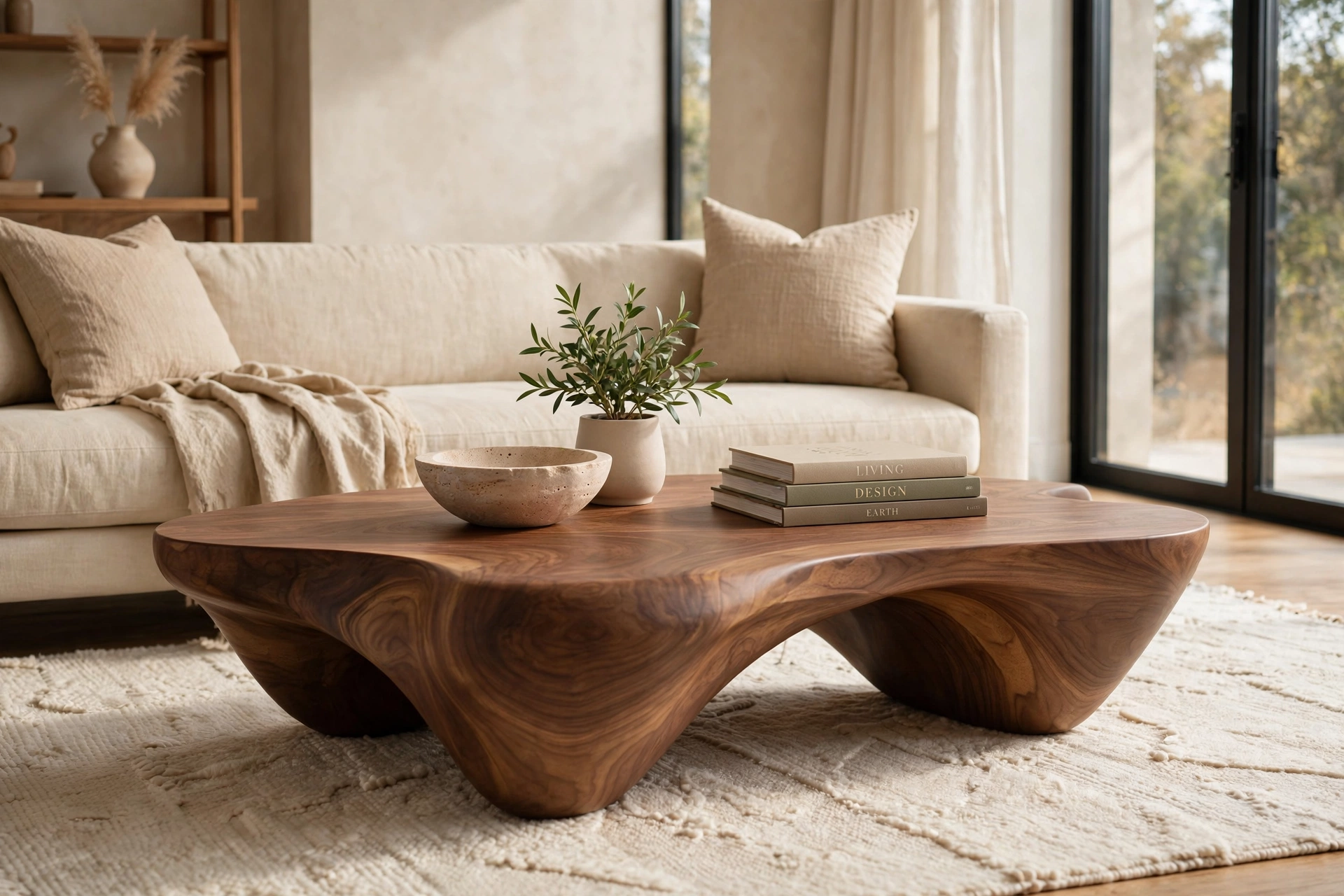
5. Let a Walnut Coffee Table Carry the Living Room
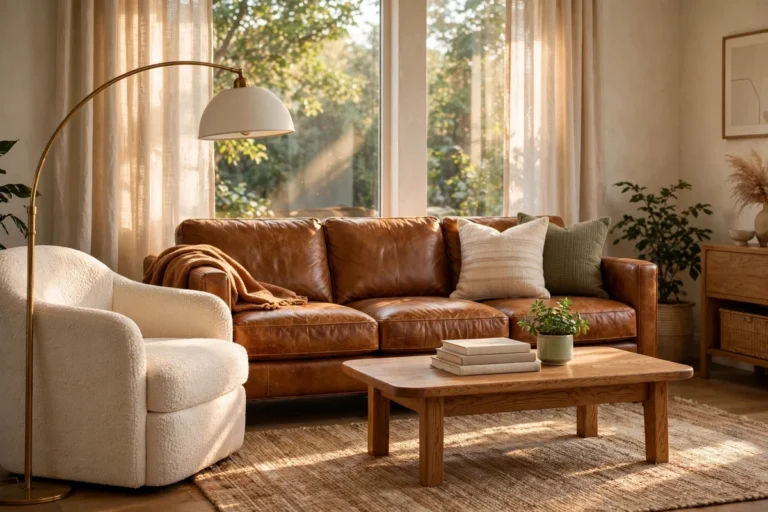
The coffee table sits in the center of the room’s sightlines, so choosing walnut here has outsized impact. A 48 to 54-inch table suits a standard sofa; keep the height at 16 to 18 inches, roughly level with the seat cushions. Look for rounded edges — curved furniture softens the straight lines of a modern sofa and makes the room easier to move through. Style the surface in threes: a stack of books with a stone object on top, a small plant or bud vase, and one sculptural bowl left empty. Leave breathing room between the groupings — a crowded table looks cluttered, a sparse one looks calm. A sealed finish means coasters are optional.
6. Walnut Furniture Ideas for the Dining Room: A Sideboard for Serving and Storage
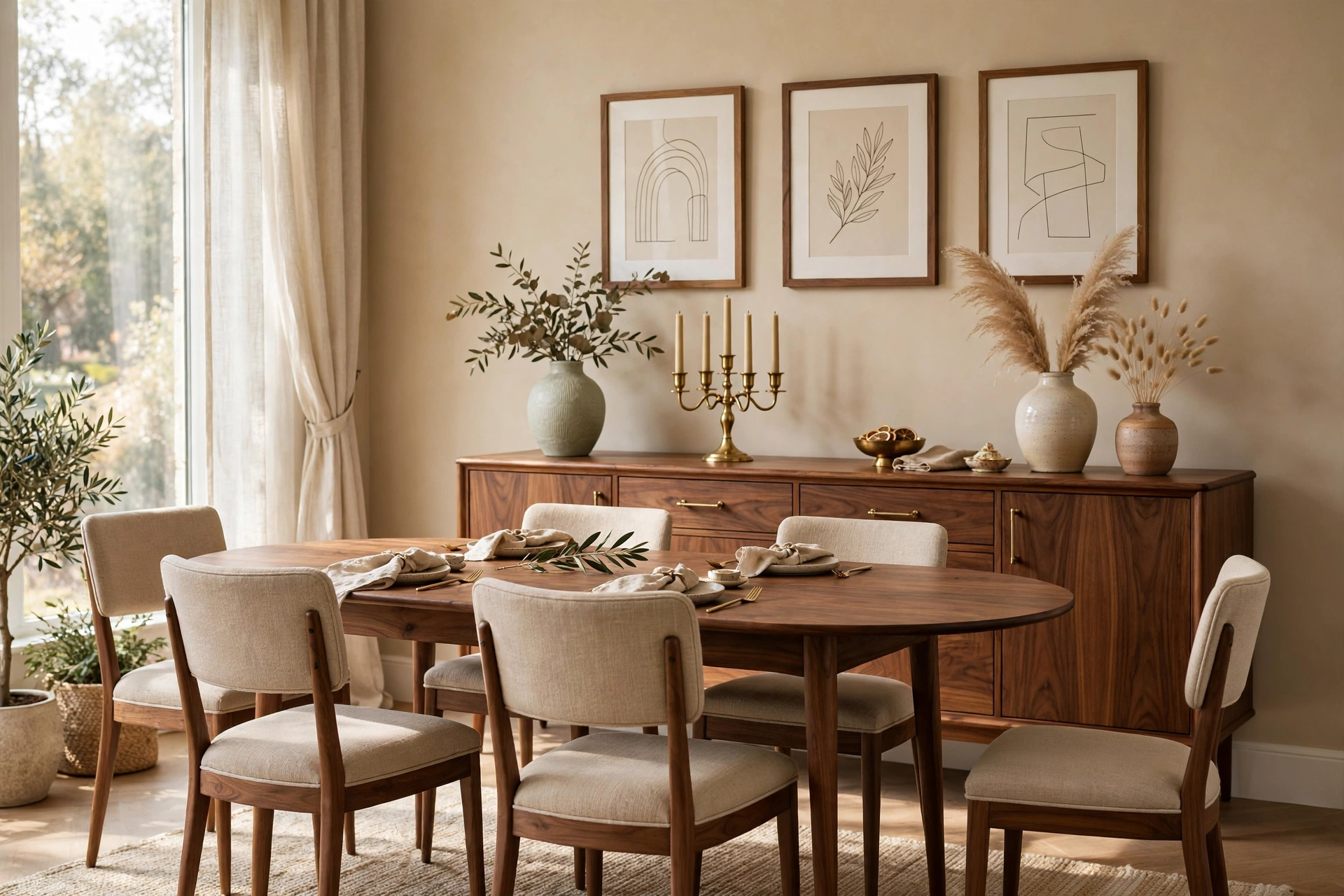
A walnut sideboard gives the dining room a landing spot for serving dishes, table linens, and the candlesticks that never quite have a home. Size it to about three-quarters of your dining table’s length — a 60-inch sideboard suits a 72-inch table — and keep its height between 30 and 36 inches so plates clear it at table level. Style the top in an asymmetric trio: a tall candelabra on one side, a low bowl or tray in the center, and a medium vase or framed print on the other. Hang one piece of art 6 to 8 inches above the sideboard.
7. Build a Walnut Desk Into the Home Office
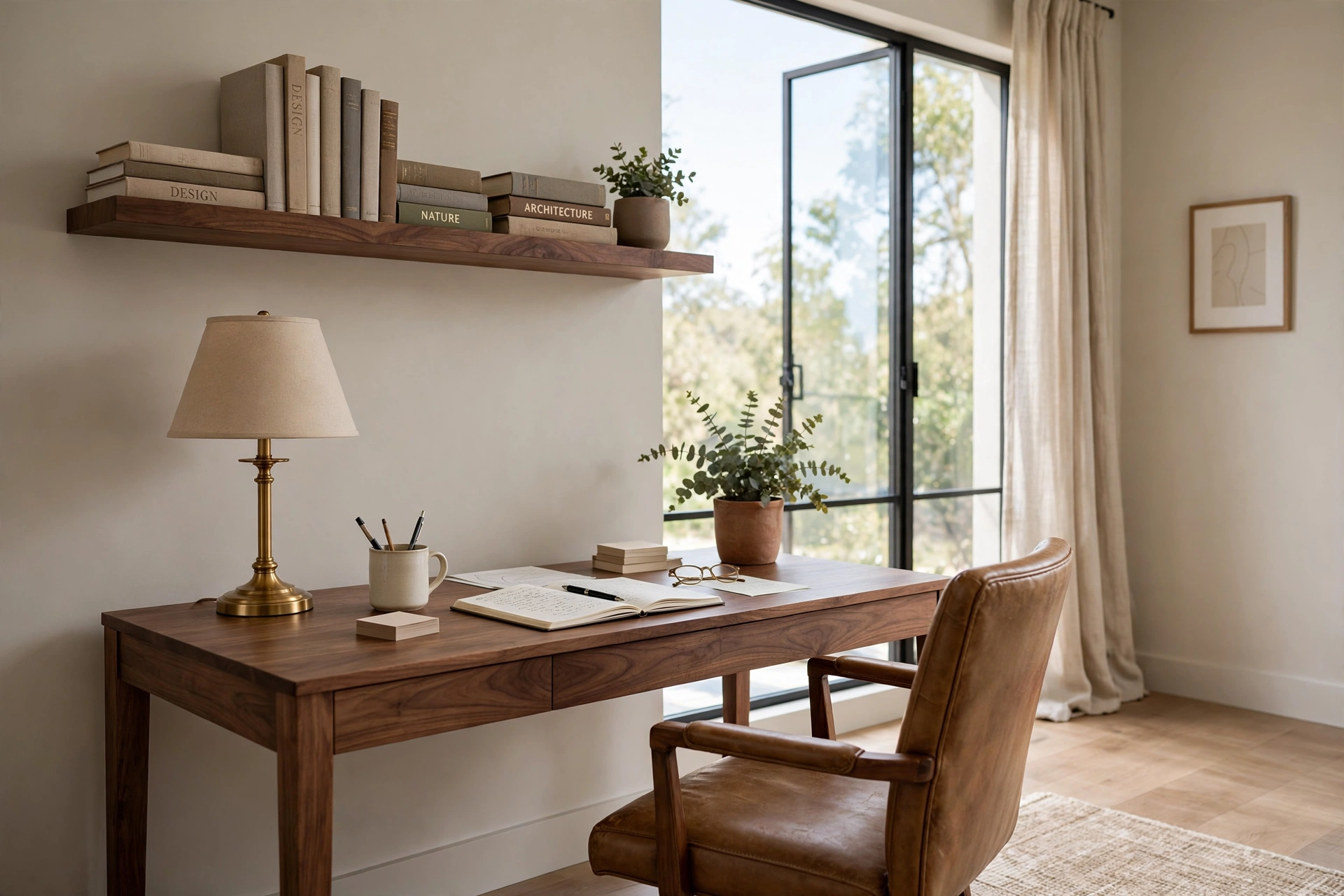
A walnut desk makes a home office feel like a real workplace instead of a corner that happened to a laptop. A 48 to 60-inch desktop holds a monitor, a notebook, and a lamp without the keyboard sliding off the edge; keep depth at 24 inches minimum so the screen sits at least an arm’s length away. Mount a walnut shelf 16 to 20 inches above the desktop for books and a small plant, freeing the work surface. Choose a chair in a contrasting material — tan leather or cream upholstery — to break up the wood. Add a desk lamp with a warm 2700K bulb, since cool light turns walnut gray and harsh.
8. Style an Entryway With a Walnut Bench
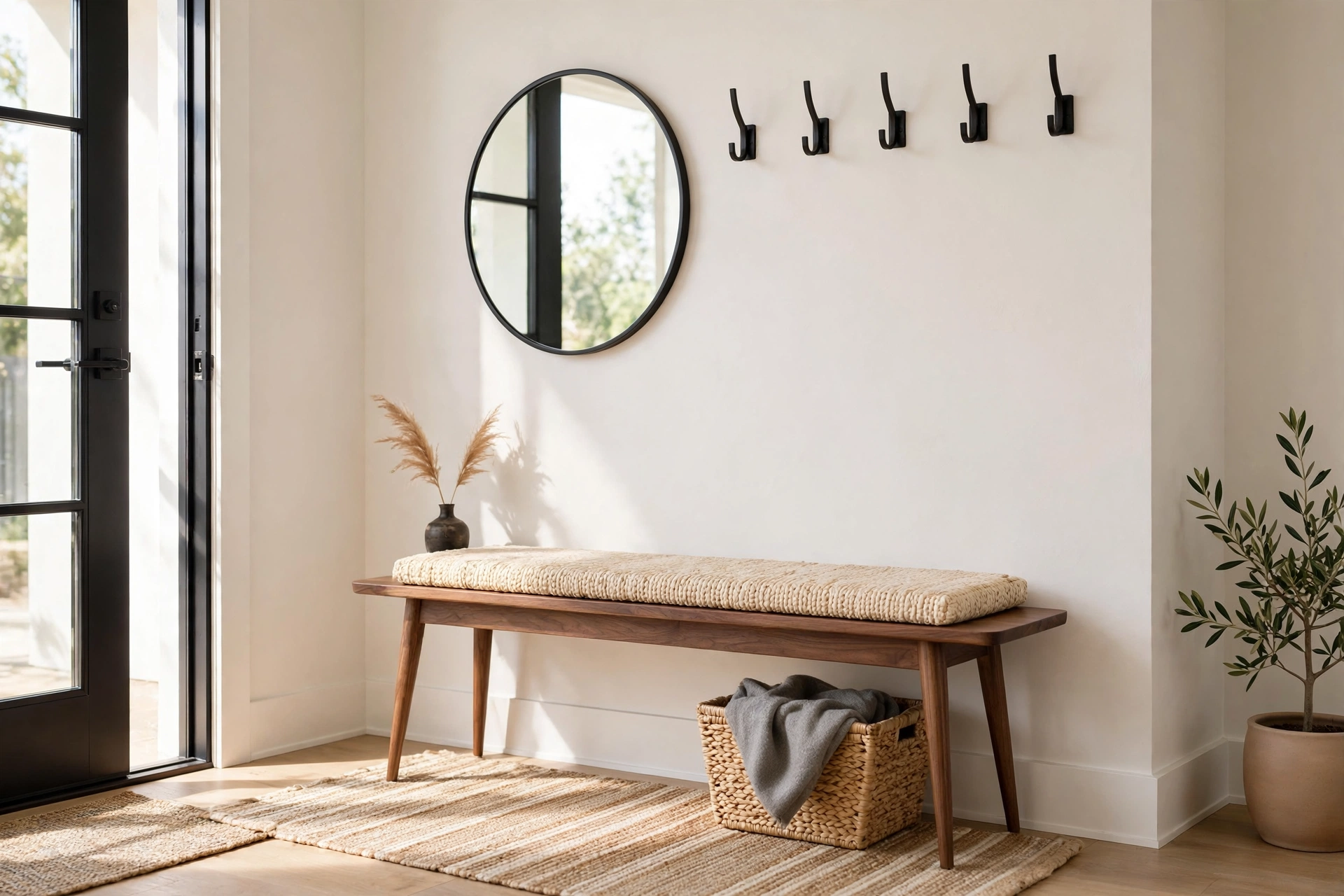
Entryways rarely get furniture with intent, and a walnut bench fixes that in one move. A 42 to 48-inch bench with tapered legs fits most foyers and gives you a spot to sit while lacing shoes. Top it with a single woven or wool cushion in a neutral tone, and tuck one low basket underneath for shoes or winter gear. Mount two or three hooks on the wall 60 inches up for coats and bags, and hang a round mirror opposite the bench to bounce light back into the space. Because entryways take daily knocks, choose a sealed finish and wipe scuffs with a damp cloth before they set.
9. Walnut Furniture Ideas for Movie Night: A Low Media Console
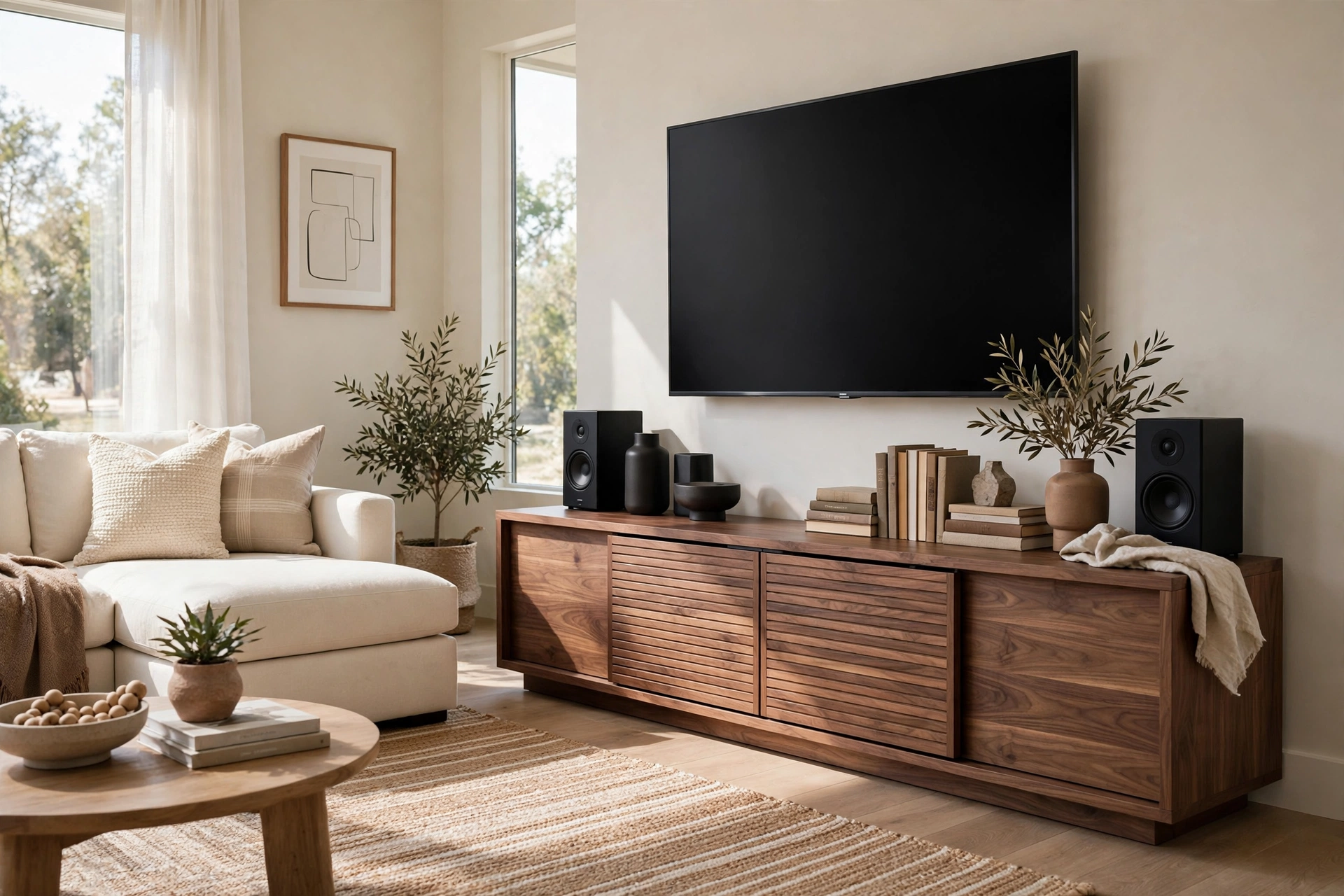
A walnut media console brings warmth to the most technology-heavy corner of the house. Choose a low, long console — 60 to 72 inches wide and 20 to 24 inches tall — with sliding or hinged doors to hide the router, remotes, and cable box. Size it to the TV: the console should be at least as wide as the screen, ideally 6 to 12 inches wider on each side. Mount the TV with the screen’s center about 42 inches from the floor, or rest it directly on the console for a cleaner look. Feed cords through a rear cutout or a slim raceway painted to match the wall, and keep the top nearly clear.
10. Carve Out a Reading Corner With a Walnut Bookcase
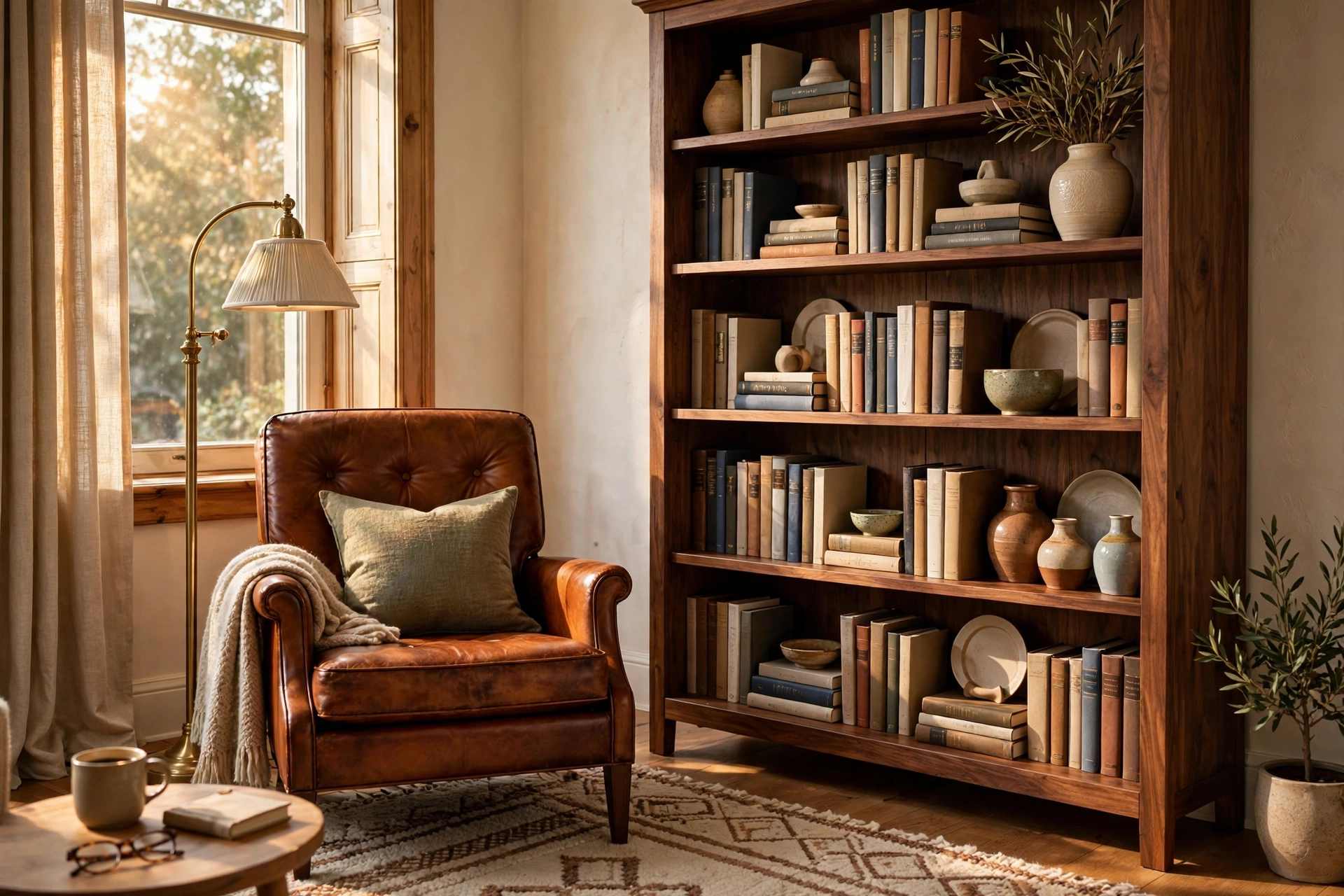
A tall walnut bookcase does double duty: it stores the books and creates the backdrop that makes a reading corner feel like a destination. A 36-inch-wide case with five or six shelves fits most corners without overwhelming them; style shelves at roughly 70 percent books, 30 percent objects — a small ceramic, a framed photo, a plant trailing over one shelf edge. Place a cognac leather sofa chair or armchair beside the case and add a brass floor lamp with a warm bulb behind it. A wool rug under the chair defines the footprint and softens the wood’s weight. Face the chair toward the window when you can.
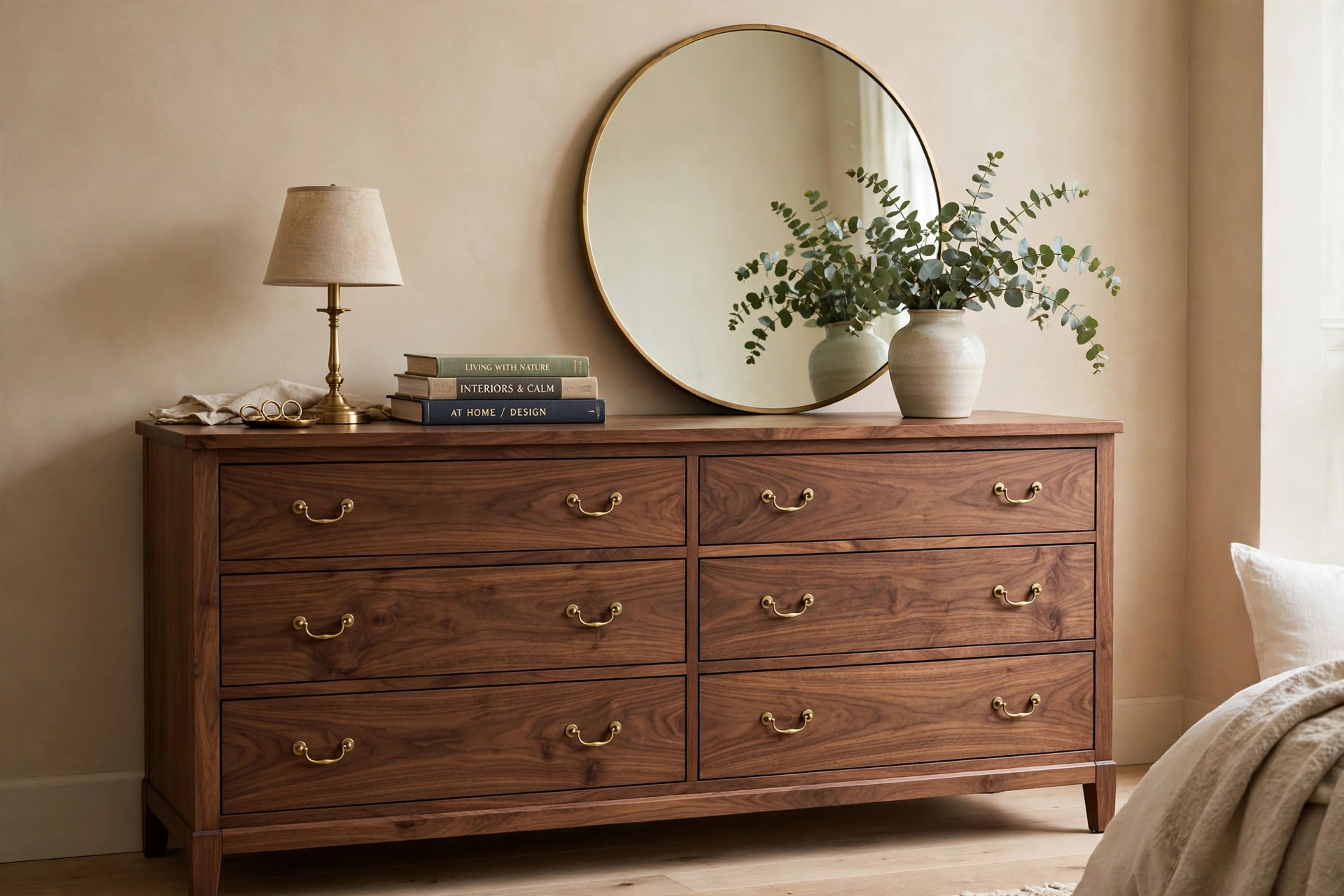
11. Walnut Furniture Ideas for the Dresser: Brass Pulls and a Calm Profile
The dresser is where walnut’s calm, grown-up character pays off most. A six-drawer dresser 58 to 64 inches wide and 34 inches tall holds a full wardrobe while staying low enough to double as a changing surface or console. Brass pulls against walnut are the classic pairing — the warm metal picks up the wood’s undertones and keeps the front from reading as one flat slab. Style the top like a console: a leaning round mirror or framed print, one lamp, and a low tray for daily items. If drawers stick, rub a white candle along the wooden runners rather than forcing them. Keep one drawer deliberately half-empty.
12. Close the Evening With a Walnut Bar Cabinet
A walnut bar cabinet earns its place by being furniture first and storage second. Look for a cabinet 30 to 36 inches wide with glass-front doors so the glassware catches the light, and a lighter back panel or interior mirror to keep it from reading as a dark box. Style the top with a brass tray, a decanter, and two to four glasses — enough to suggest a drink is on offer, not enough to look like a liquor store. Place it near the seating it serves: beside the sofa, or against the dining room wall for dinner parties. Keep lighting warm and low, because walnut glows at its best after dark.
FAQ
Does walnut furniture go with gray walls?
It depends on the gray. Walnut pairs well with warm grays that lean toward greige or stone, but cool blue-grays can pull the wood’s warmth into an awkward middle ground. Hold a sample board against the wall in daylight before committing.
How do I keep walnut furniture from looking too dark?
Pair each walnut piece with lighter textiles — cream rugs, ivory upholstery, pale bedding — and keep walls light. One dark wood piece per sightline is usually plenty; a second walnut item in the same view should be small, like a shelf or side table.
What’s the difference between solid walnut and walnut veneer?
Solid walnut is timber throughout, so it can be sanded and refinished many times; walnut veneer is a thin slice of real walnut over an engineered core. Veneer is common on larger case pieces because it resists warping, while solid walnut shows up more in legs and frames.
What colors go best with walnut furniture?
Walnut loves warmth: cream, camel, cognac, rust, olive, brass, and warm white. It also handles one strong accent well — forest green or burgundy against walnut feels rich rather than loud. Watch cool gray and chrome, which can make the wood look muddy.
How do I care for walnut furniture day to day?
Dust with a soft, dry cloth and wipe spills immediately — water is the enemy of every wood finish. Clean with a barely damp cloth followed by a dry one, and skip silicone sprays, which build up and dull the finish. Every year or two, refresh with furniture oil or wax matched to the finish.
Conclusion
Walnut works in warm modern rooms because it does much of the styling for you — the grain brings pattern, the tone brings warmth, and the color sits comfortably next to almost everything. Start with one anchor piece, a credenza, bed, or dining table, and let the rest of the room stay quiet around it.
By Nestora Find