12 Chandelier Ideas for Low Ceilings
12 Chandelier Ideas for Low Ceilings
A chandelier in a room with 8-foot ceilings sounds like a recipe for bumped heads, but it does not have to be. Most homes built in recent decades have 8-foot ceilings, and lighting makers design fixtures specifically for them.
These chandelier ideas for low ceilings work with the height you have instead of fighting it: fixtures that sit tight to the ceiling, wide silhouettes that stay out of the way, and placement choices that put the light exactly where people need it. Every idea below is built for real 8-foot ceilings, with the measurements to get it right.
1. Flush-Mount Chandelier Ideas for Low Ceilings in the Living Room
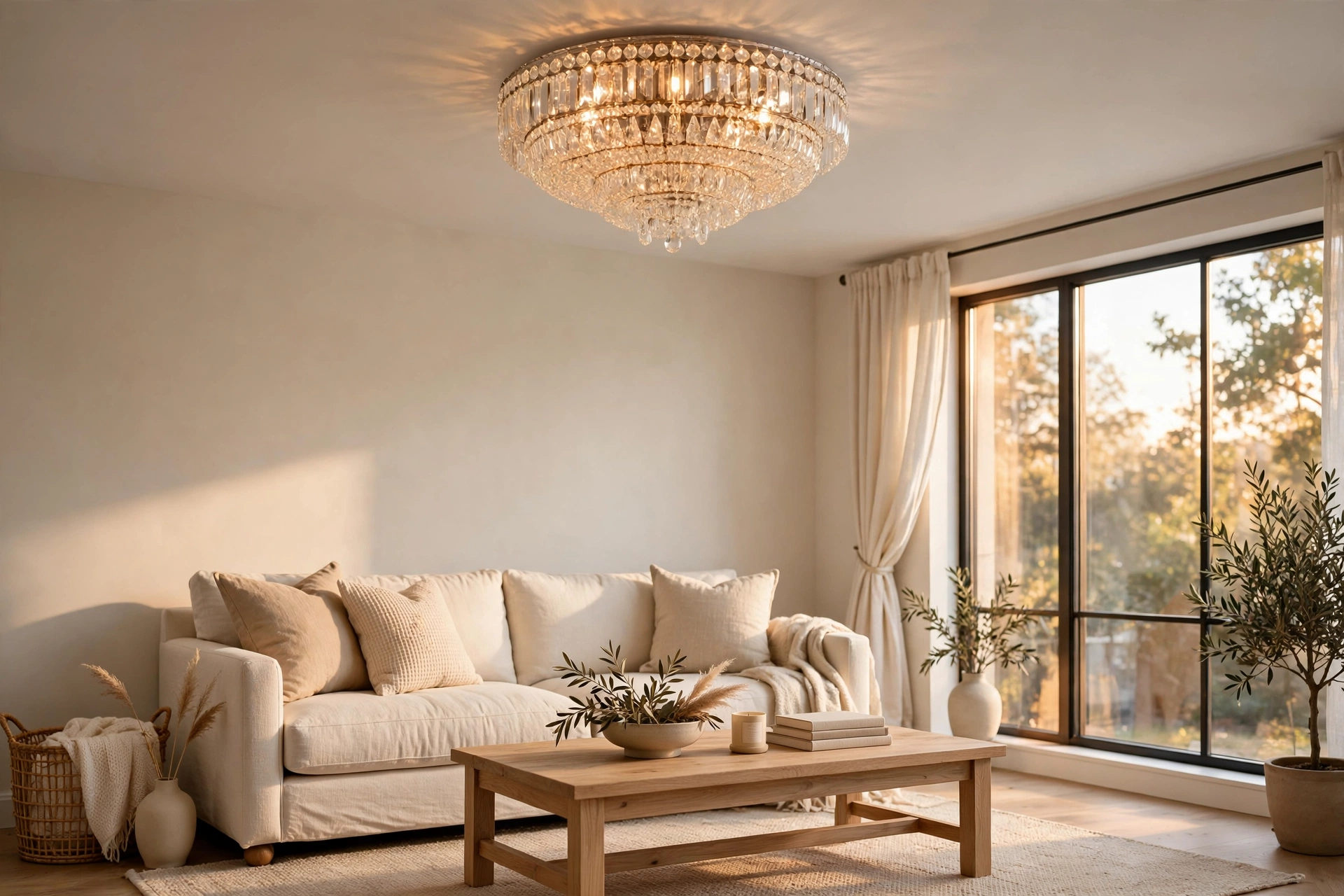
Flush-mount fixtures sit directly against the ceiling with zero drop, which makes them the safest starting point for a living room where people walk in every direction. Of all the chandelier ideas for low ceilings, this is the easiest win.
Look for a decorative canopy or wide diffuser that hides the mounting hardware. A diameter of 24 to 30 inches suits a typical living room; go much smaller and the fixture disappears, go much larger and it can feel heavy overhead. Fabric shades soften the look and spread light evenly, while crystal or faceted glass versions add sparkle without taking up an inch of headroom. Screw in warm 2700K bulbs so the light flatters skin tones in the evening, and check that the fixture is rated for a dimmer if you want adjustable brightness later.
2. Hang a Semi-Flush Fixture Over the Dining Table
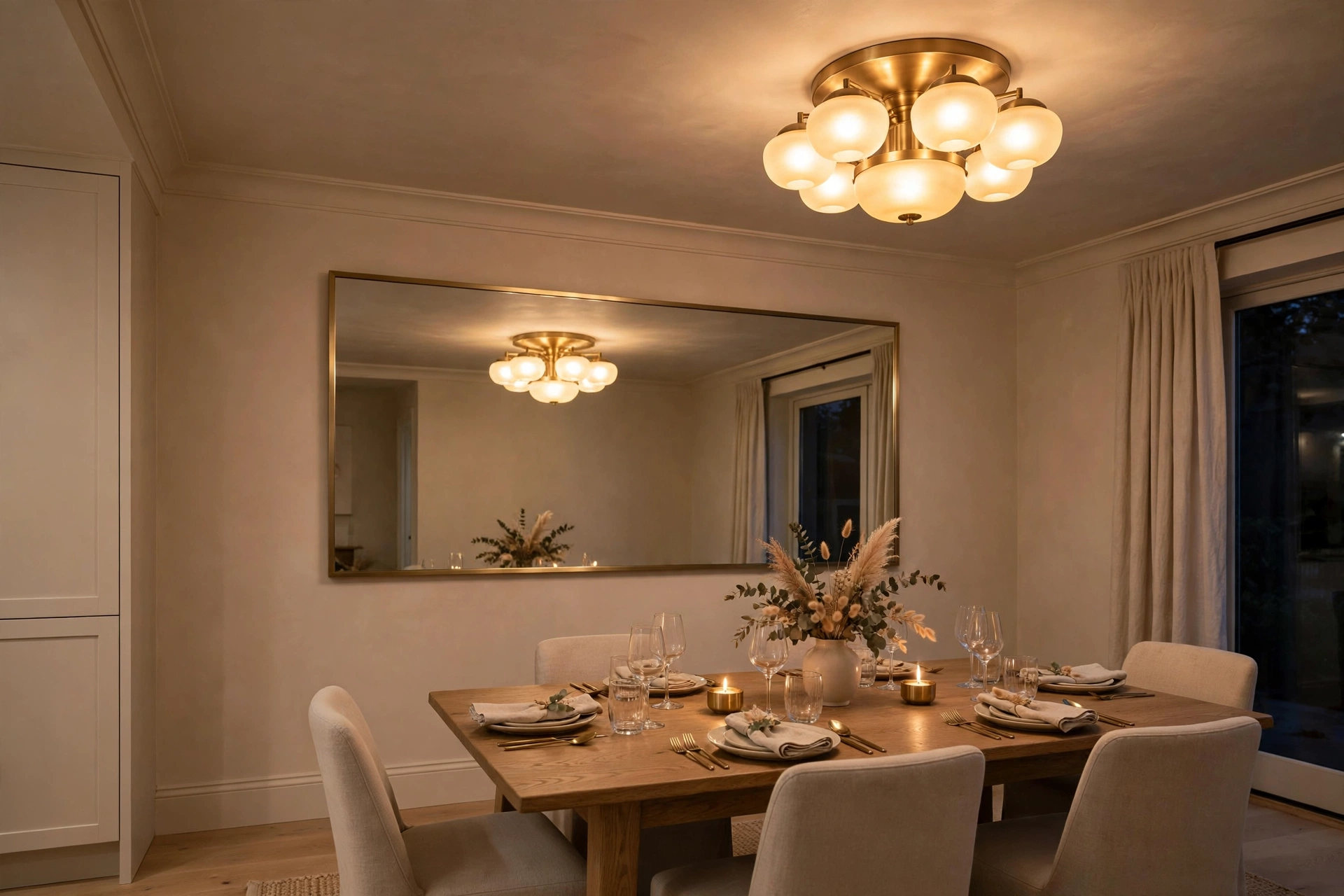
Semi-flush chandeliers hang just 4 to 8 inches below the ceiling on a short stem or chain, and that small gap is where the magic happens: light escapes upward and washes across the ceiling, making the room feel taller than it is. It’s one of the most versatile chandelier ideas for dining spaces.
Keep these over the dining table rather than in walkways, since the extra drop cuts into headroom. Glass globe or open-shade designs spread light the most evenly, and a stem you can shorten during installation gives you control over the final height. When you are seated, the bottom of the fixture should sit above eye level so conversation flows without anyone leaning around the lights. Measure your ceiling before you shop, subtract the fixture’s listed drop, and confirm the math works with your table height.

3. Keep Walkways Clear: Hang the Chandelier Over Furniture
The single most important placement rule for low ceilings is also the simplest: hang the chandelier over furniture, never over a path where people walk. Over a dining table, an island, or a bed, a fixture can hang a little lower because nobody passes underneath it; in open floor areas, that same fixture becomes a hazard.
In any walk-through zone, keep the bottom of the fixture at least 7 feet off the floor. For the classic dining setup, the widely followed guidance is to hang the bottom of the chandelier 30 to 36 inches above the tabletop, which keeps light on the food while leaving sightlines open. Sketch your room’s traffic paths on paper before drilling a single hole.

4. Go Wide Instead of Tall: Low-Profile Chandelier Ideas
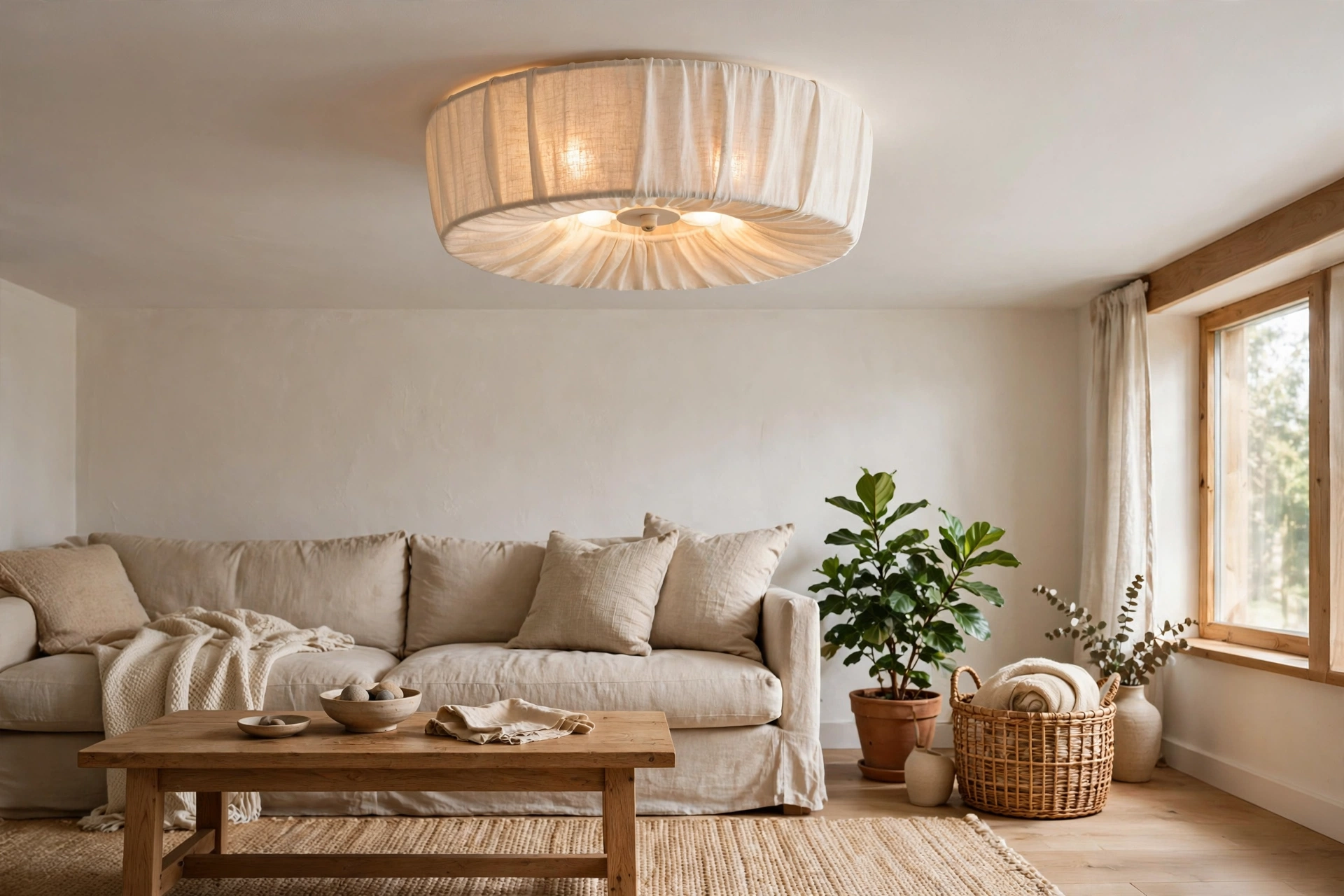
When you cannot go tall, go wide. A drum chandelier or a wide crystal flush-mount measuring 24 inches or more across gives you the presence of a statement fixture while staying within 10 to 12 inches of the ceiling. Wide chandelier ideas like this give you presence without the drop.
The broad horizontal silhouette reads as grand and intentional, especially over a coffee table or in the center of a seating area where a tall fixture would crowd the space. Linen or cotton drum shades produce a soft, even glow, and wider versions distribute light across a larger area than a narrow pendant ever could. In a bedroom, one wide flush-mount can replace the ceiling light and several lamps, simplifying the whole lighting plan.

5. Try a Linear Fixture Over the Kitchen Island
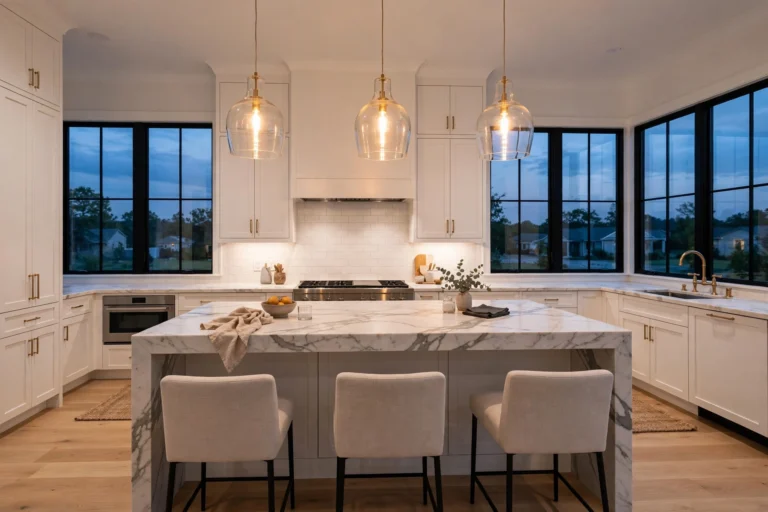
Kitchen islands are the perfect spot for a low-ceiling chandelier because the island itself does the work of keeping people out from under it. A linear fixture — long, narrow, and rectangular — mirrors the shape of the island and spreads light evenly along its whole length.
Hang it so the bottom sits 30 to 36 inches above the island surface, the same range The Spruce recommends in its guide to hanging a dining room chandelier at the right height. Choose a fixture about two-thirds the length of the island; anything shorter leaves dark ends, anything longer overwhelms the counter. Matte black suits modern kitchens, while brass warms up white cabinetry. Add a dimmer so the same fixture handles bright prep work and soft evening glow without a second thought.

6. Chandelier Ideas for Low-Ceiling Bedrooms: Center It and Dim It
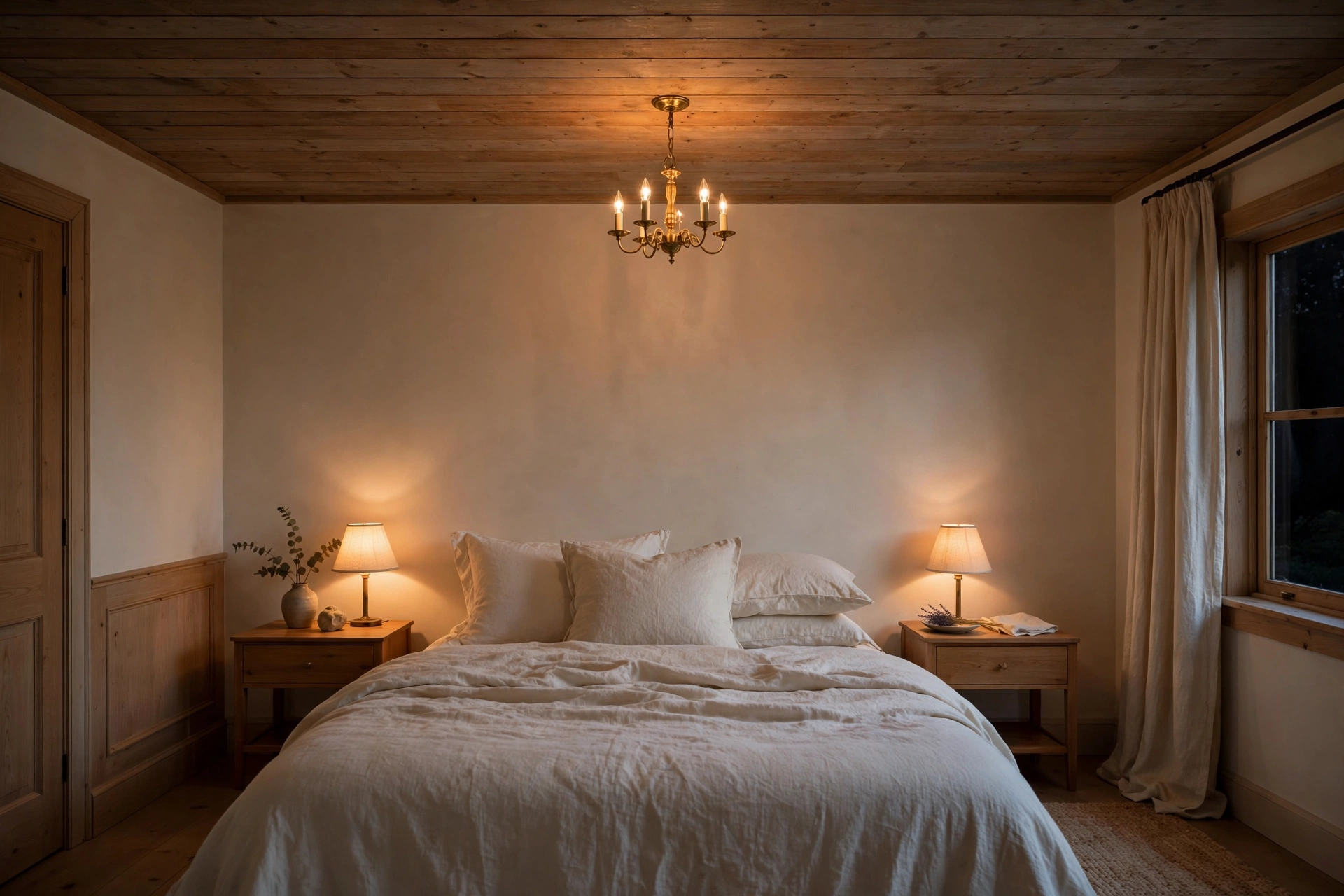
Bedrooms forgive low ceilings more than any other room because the fixture hangs over the bed, where nobody stands. Center a small chandelier — 18 to 24 inches across for a typical bedroom — directly above the bed rather than the middle of the room, which keeps it visually anchored and physically out of the way.
A dimmer is non-negotiable here: full brightness for getting dressed, then a low warm glow for winding down. Frosted glass or fabric shades prevent harsh glare when you are lying underneath looking up. Pair the fixture with these cozy bedroom ideas on a budget — layered bedding and warm textiles make the softened light feel even richer.
7. Choose Upward-Facing Lights to Wash the Ceiling
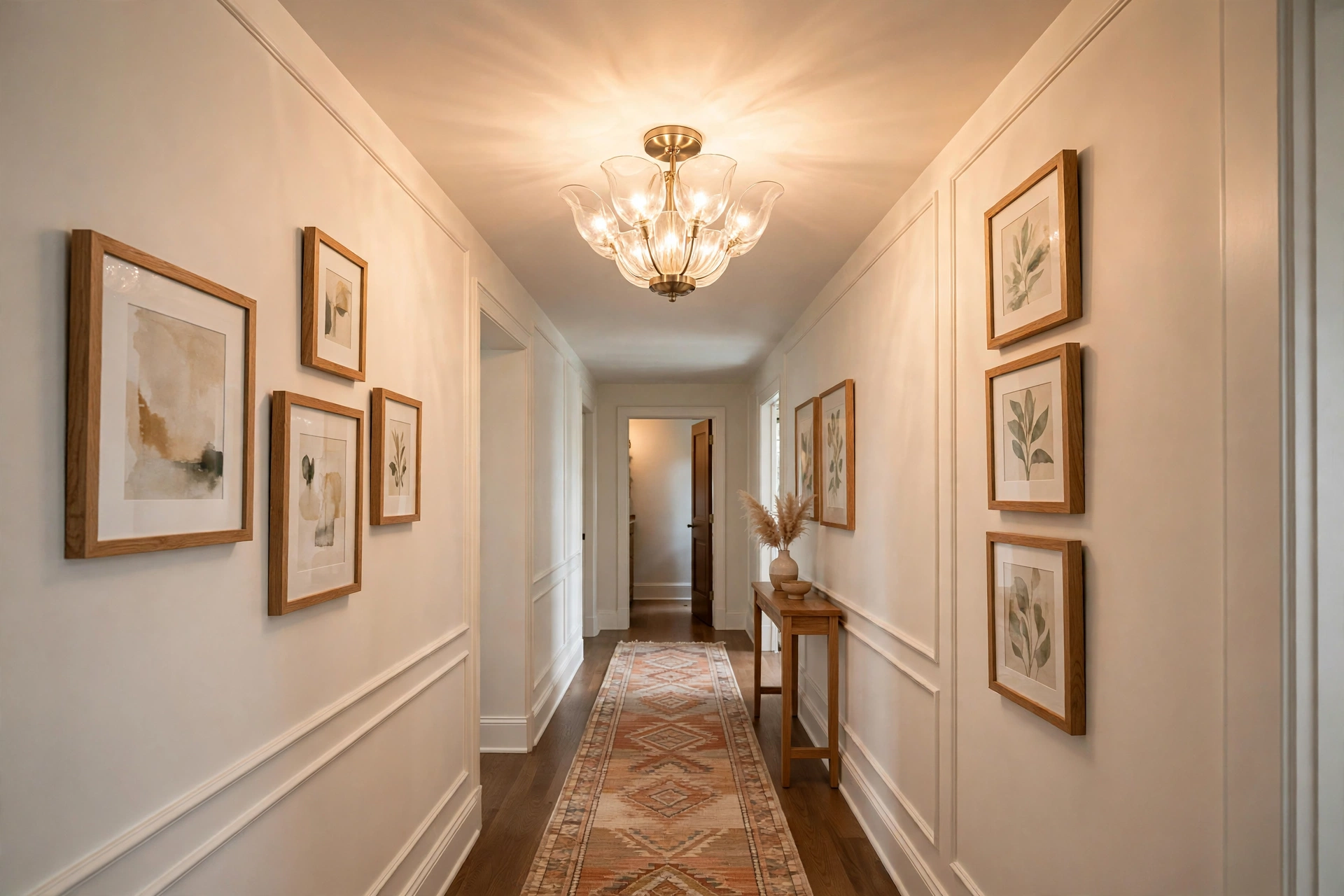
Fixtures with upward-facing bulbs or shades bounce light off the ceiling instead of pushing it straight down, and that reflected glow makes a low ceiling feel noticeably taller. This trick works especially well in hallways, entryways, and small rooms where a bright white ceiling acts like a giant reflector.
Look for semi-flush designs with open tops, uplight bowls, or frosted glass that directs a good share of its output upward. Keep the ceiling itself a clean white or very light tone — darker ceilings absorb the bounce and kill the effect. The result is a soft, shadow-free brightness that reads as daylight spilling in, even at night. These chandelier ideas are especially effective in dark hallways. Because the light source stays partially hidden, glare is rarely an issue with this style.
8. Brass, Glass, and Crystal Chandelier Ideas That Add Sparkle
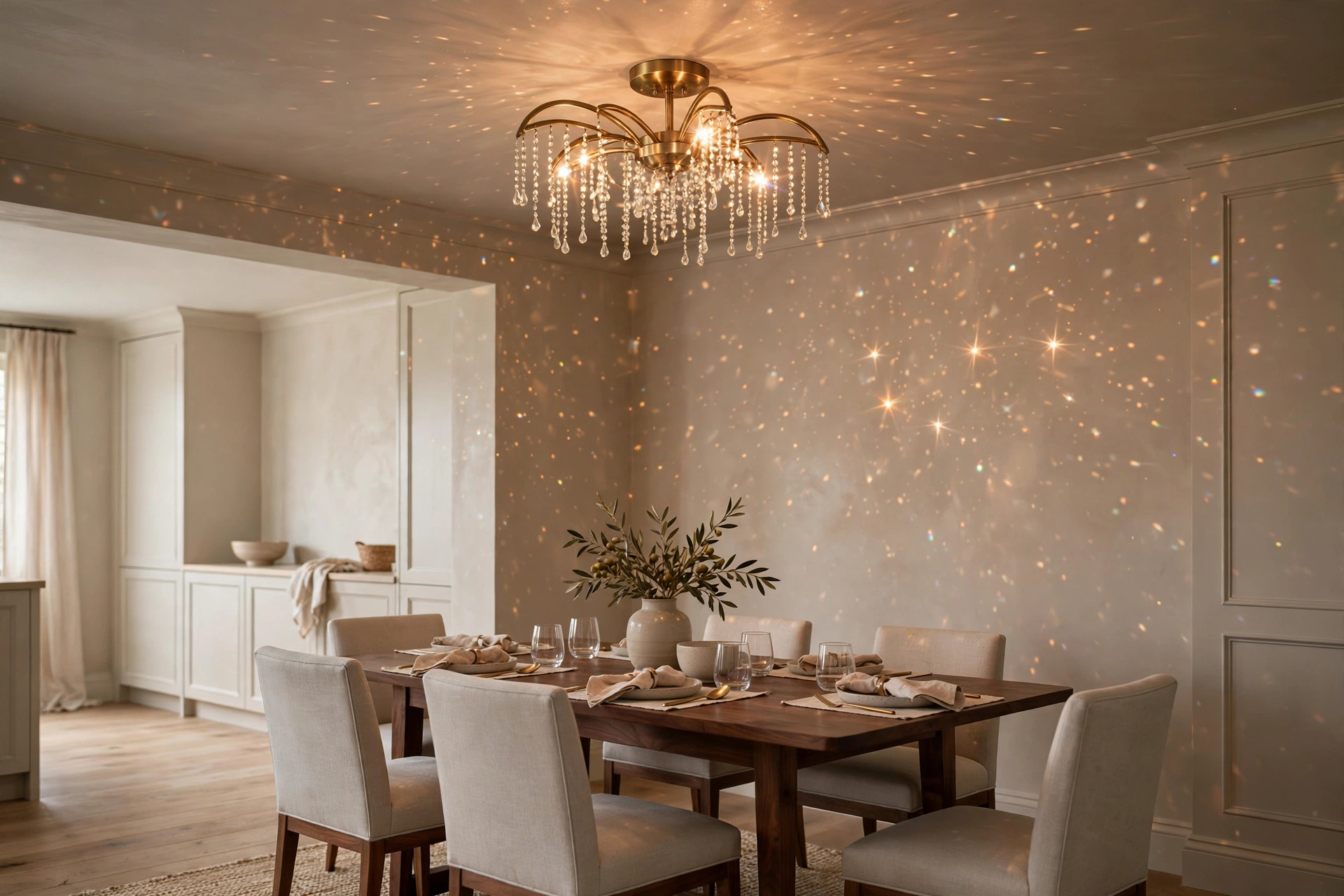
When the fixture has to stay small, let the finish do the heavy lifting. Reflective materials like brushed brass, polished nickel, and cut crystal multiply the light visually, so a compact 20-inch fixture can feel twice as grand as a matte one the same size.
Crystal strands and faceted glass catch every bulb and throw tiny reflections across the walls, which adds movement and life to the room. Match the fixture’s finish to something else nearby — cabinet hardware, a mirror frame, a faucet — so it reads as part of a deliberate scheme rather than a lone shiny object. Keep the surrounding palette calm and neutral so the sparkle has room to register.
9. Put the Fixture on a Dimmer Switch
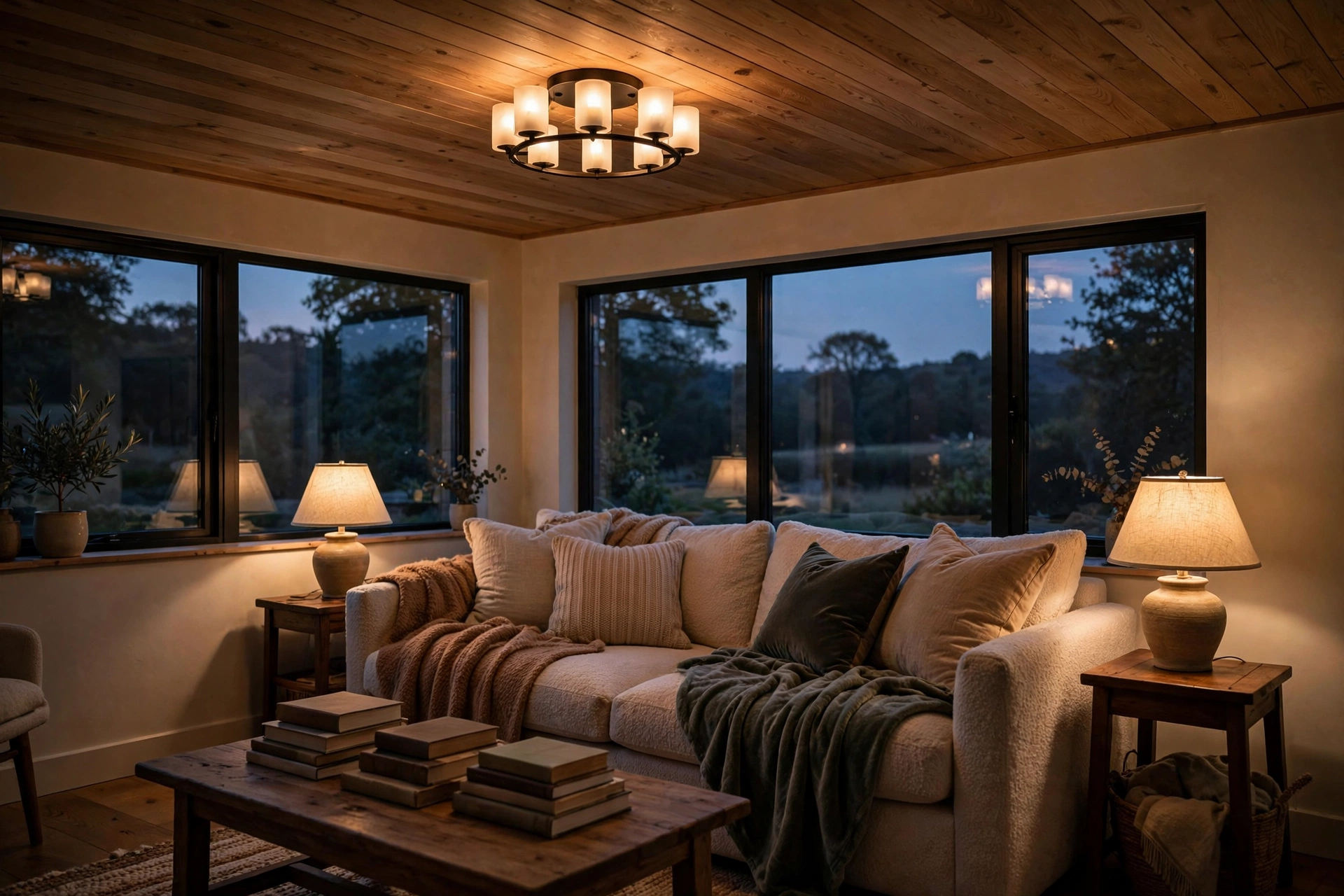
A dimmer turns one chandelier into three fixtures: full brightness for cleaning and homework, medium for dinner, and a low warm glow for movie nights. If you try only one of these chandelier ideas, make it the dimmer.
With low ceilings, that flexibility matters even more, because a single bright overhead is often the only ceiling light the room has. Before you buy, confirm both the fixture and the bulbs are marked dimmable — many LED bulbs are not, and mismatched pairs flicker or buzz. Pair the dimmer with 2700K or warmer bulbs so the light gets softer and more golden as it dims. Deep wall colors respond beautifully to dimmed light: rich tones like these chocolate brown decor ideas look especially inviting under a softened warm glow.
10. Keep Seven Feet of Clearance in Walk-Through Rooms
In hallways, entries, and any spot where people walk under the fixture, the bottom of the chandelier should sit at least 7 feet off the floor. With an 8-foot ceiling, that leaves only about a foot of working room, which means flush-mount is the only sensible choice for walk-through spaces. These practical chandelier ideas keep every walkway safe.
Measure your actual ceiling height before shopping — older homes often have ceilings slightly under 8 feet, and new builds can vary room to room. Then subtract the fixture’s listed drop from the ceiling height to confirm you land above the 7-foot line. If the numbers are tight, choose a fixture with a low-profile canopy and no dangling crystals or low-hanging trim along its bottom edge.

11. Chandelier Ideas for Sizing: Match the Diameter to the Room
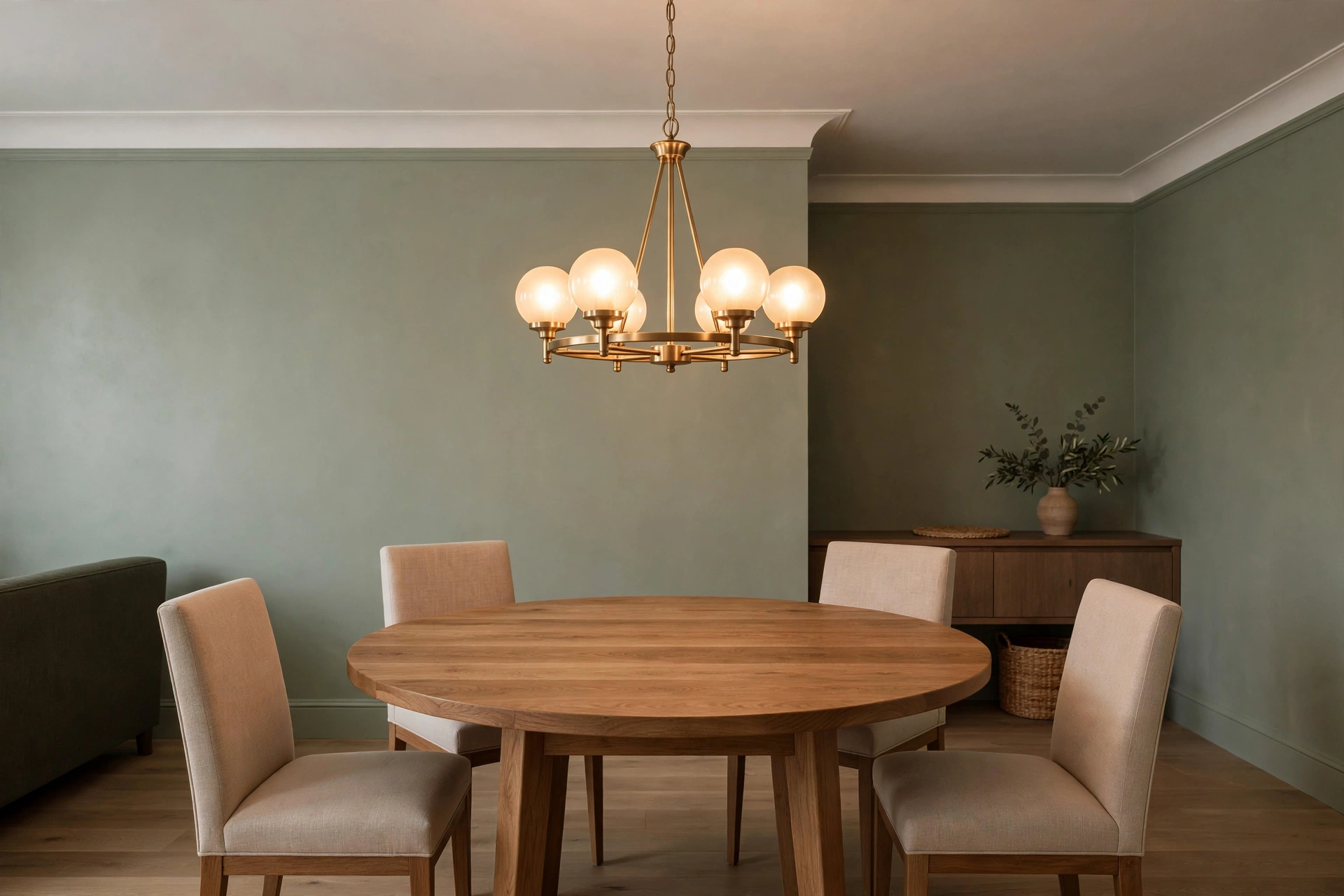
The right size makes a chandelier look expensive; the wrong size makes it look like a mistake. The classic sizing rule still works: add the room’s length and width in feet, and use that number in inches as your target diameter — a 12-by-14-foot room wants roughly a 26-inch fixture.
Over a table, aim for a diameter between one-half and two-thirds of the table’s width so the two stay in proportion. With low ceilings, err on the wider side rather than the taller side: a generous diameter with a shallow profile fills the room without pressing down on it. When a fixture falls between two sizes, most designers lean slightly larger, since an undersized chandelier disappears while an oversized one at least looks deliberate. Getting the size right is what separates good chandelier ideas from costly mistakes.
12. Double the Light With a Mirror Opposite the Chandelier
A large mirror hung on the wall opposite your chandelier catches its glow and throws it back into the room, effectively doubling your light without a second fixture. This works wonders in small dining rooms and entryways where one fixture has to do all the work.
Hang the mirror so its center sits around 57 inches off the floor and it catches the chandelier at a flattering angle from the main seating position — a quick test with a helper holding the mirror saves a lot of rehanging. Round mirrors soften a formal fixture, while a tall rectangular one makes a narrow room feel wider. These wall mirror decor ideas have placement tricks that pair perfectly with ceiling lighting.
Frequently Asked Questions
Can you put a chandelier on an 8-foot ceiling? Yes. Choose a flush-mount or semi-flush fixture, hang it over furniture rather than walkways, and keep the bottom at least 7 feet off the floor anywhere people walk.
How low should a chandelier hang in a dining room with a low ceiling? Hang the bottom of the fixture 30 to 36 inches above the tabletop. Because the table keeps people out from under it, this height gives great light and clear sightlines without risking bumped heads.
What is the difference between flush-mount and semi-flush chandeliers? A flush-mount sits directly against the ceiling with no drop. A semi-flush hangs 4 to 8 inches below on a short stem, letting some light wash upward so the room feels a bit taller.
How big should a chandelier be for a room with a low ceiling? Add the room’s length and width in feet and use that total in inches as a starting diameter. Over a dining table, pick a fixture between one-half and two-thirds as wide as the table. Favor wide, shallow profiles over tall narrow ones.
Will a chandelier make my low ceiling look lower? Not if you choose well. Wide rather than tall fixtures, upward-facing lights that wash the ceiling, light ceiling colors, and a mirror opposite the fixture all keep the room feeling open instead of pressed down.
Conclusion
A low ceiling is not a reason to skip the chandelier — it is a reason to choose it more carefully. Measure your ceiling, keep fixtures over furniture instead of walkways, and let width and finish do what height cannot. Start with these chandelier ideas in the room where you spend your evenings, and you will wonder why you waited this long.