12 Entryway Storage Ideas That Look Beautiful
Good entryway storage ideas make the difference between a front hall that works and one that swallows your keys, your mail, and your patience. This small zone handles shoes, coats, bags, and everything you grab on the way out — which is why smart entryway storage ideas start with furniture that pulls its weight.
You don’t need a mudroom or a big budget. A bench with hidden compartments, a row of sturdy wall hooks, or a slim console can completely change how the space functions. Below are 12 entryway storage ideas built for real life — school bags, dog leashes, winter coats and all — and attractive enough to be the first thing guests see.
1. Build Around a Classic Hall Tree
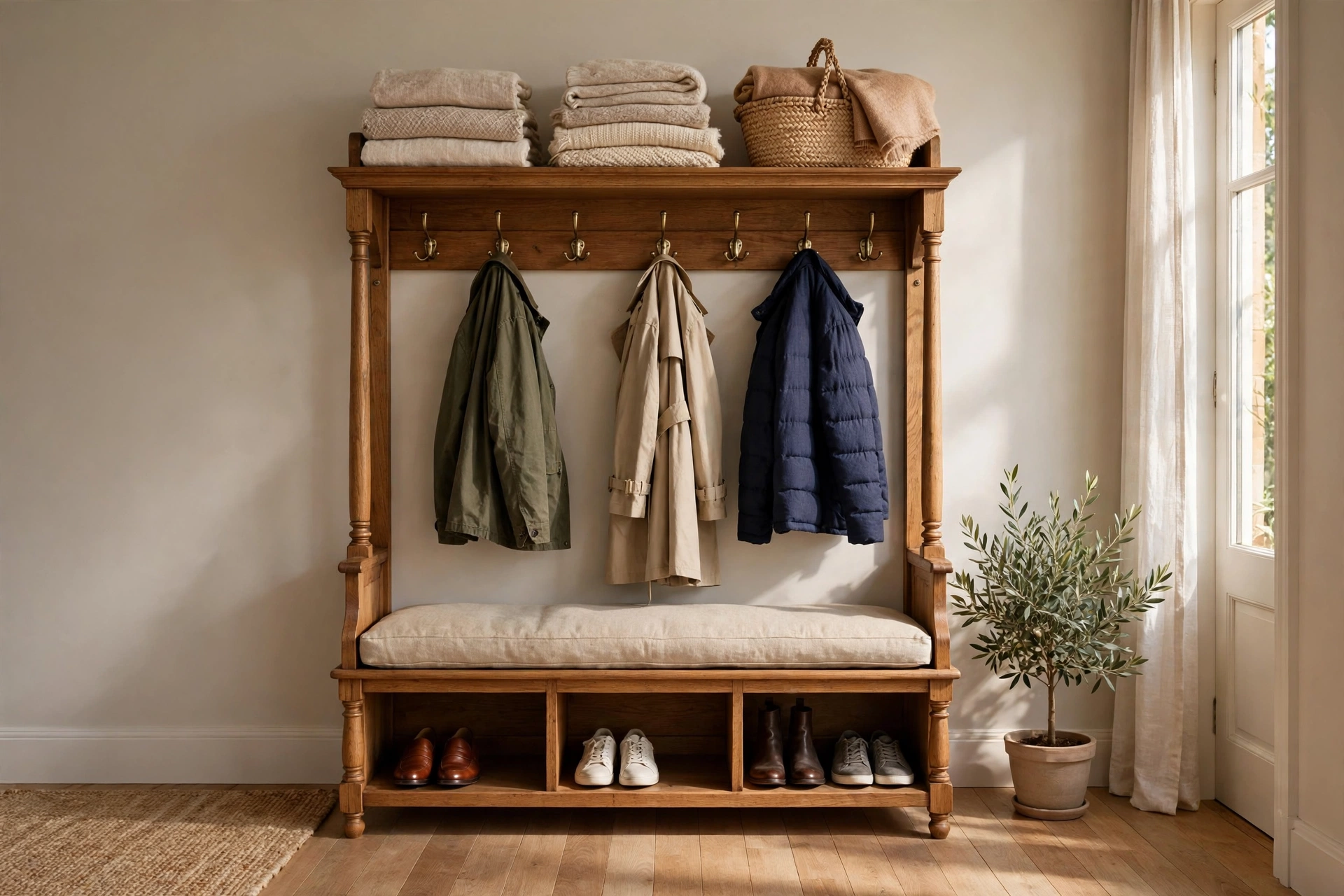
A hall tree is the workhorse of entryway furniture: coat hooks, a bench, an upper shelf, and lower cubbies in one unit. Look for solid wood and hooks rated for at least 10 pounds each — flimsy hooks bend under a wet winter coat. A bench height of 17 to 19 inches works for sitting to tie shoes. Give each person a lidded basket in a lower cubby for backpacks and sports gear, keep daily coats on the hooks, and reserve the upper shelf for spare umbrellas and out-of-season hats. Most hall trees need 3 to 4 feet of wall width, so measure before you buy. Among entryway storage ideas, the hall tree remains the most complete single purchase.
2. Entryway Storage Ideas with a Seating Bench
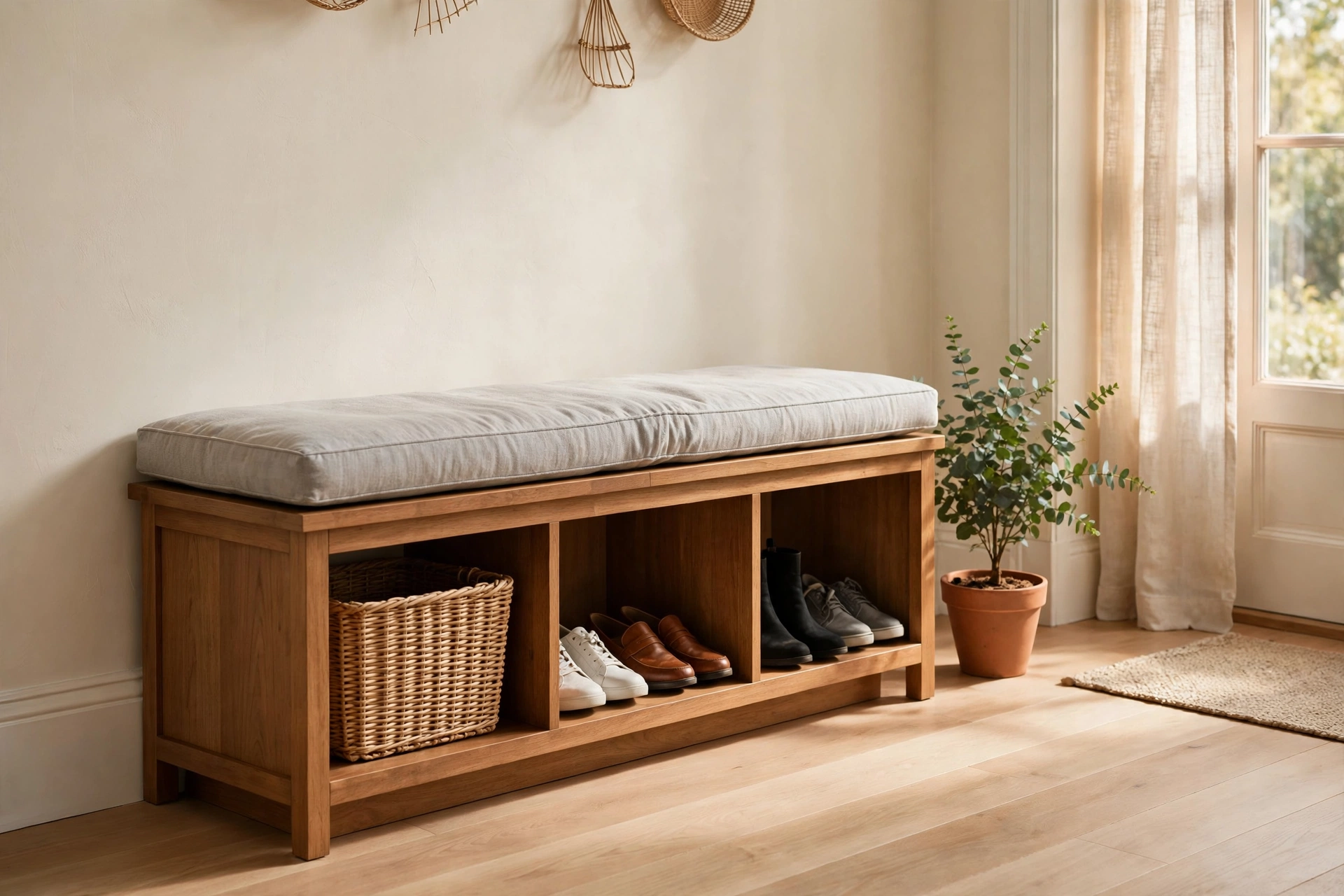
A storage bench gives you a place to sit and a place to stash — the two things every entryway needs most. Choose one 14 to 16 inches deep with a lift-up lid for bulky tote bags or drawers for smaller items like sunglasses and spare keys. Add a washable cushion on top, and pick slatted or ventilated compartments if shoes will live inside so airflow prevents odors. Keep at least 30 inches of clear walkway in front so the front door swings freely. For households of three or more, divided cubbies give everyone their own slot.
3. Float a Slim Console Table Against the Wall
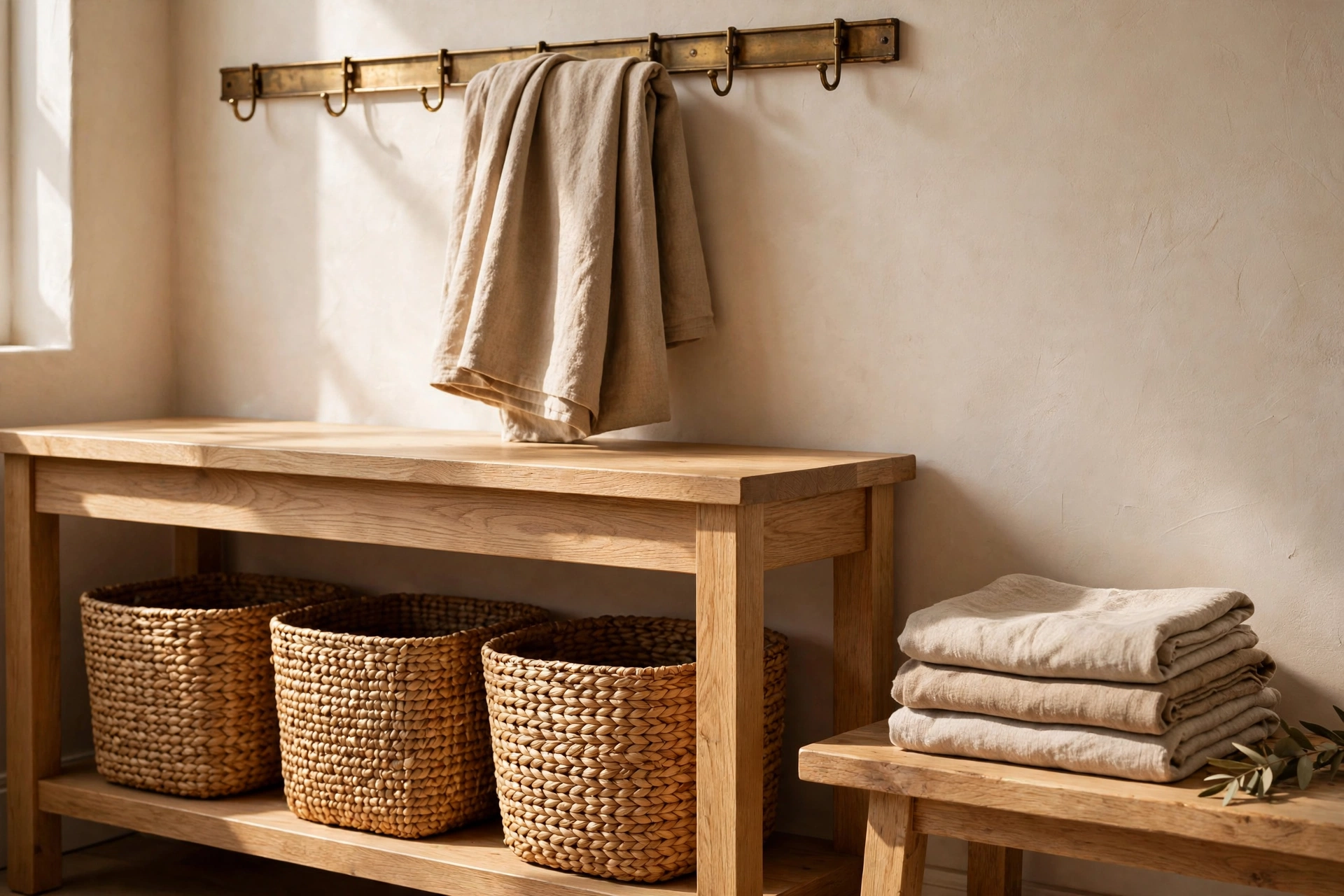
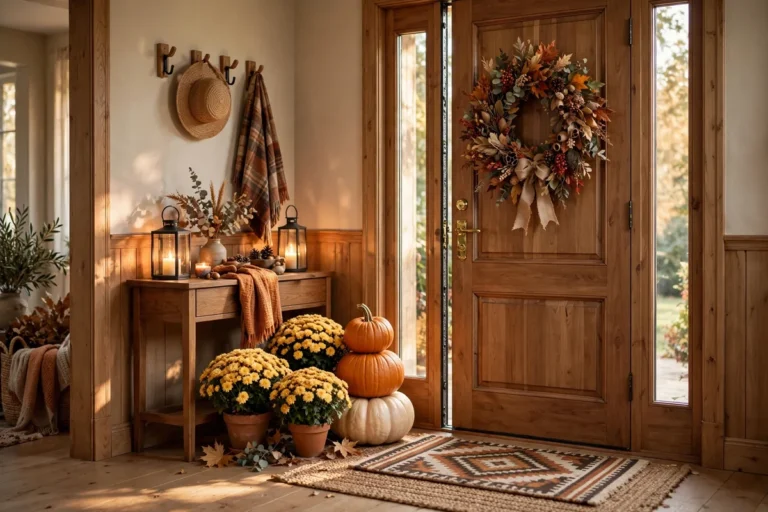
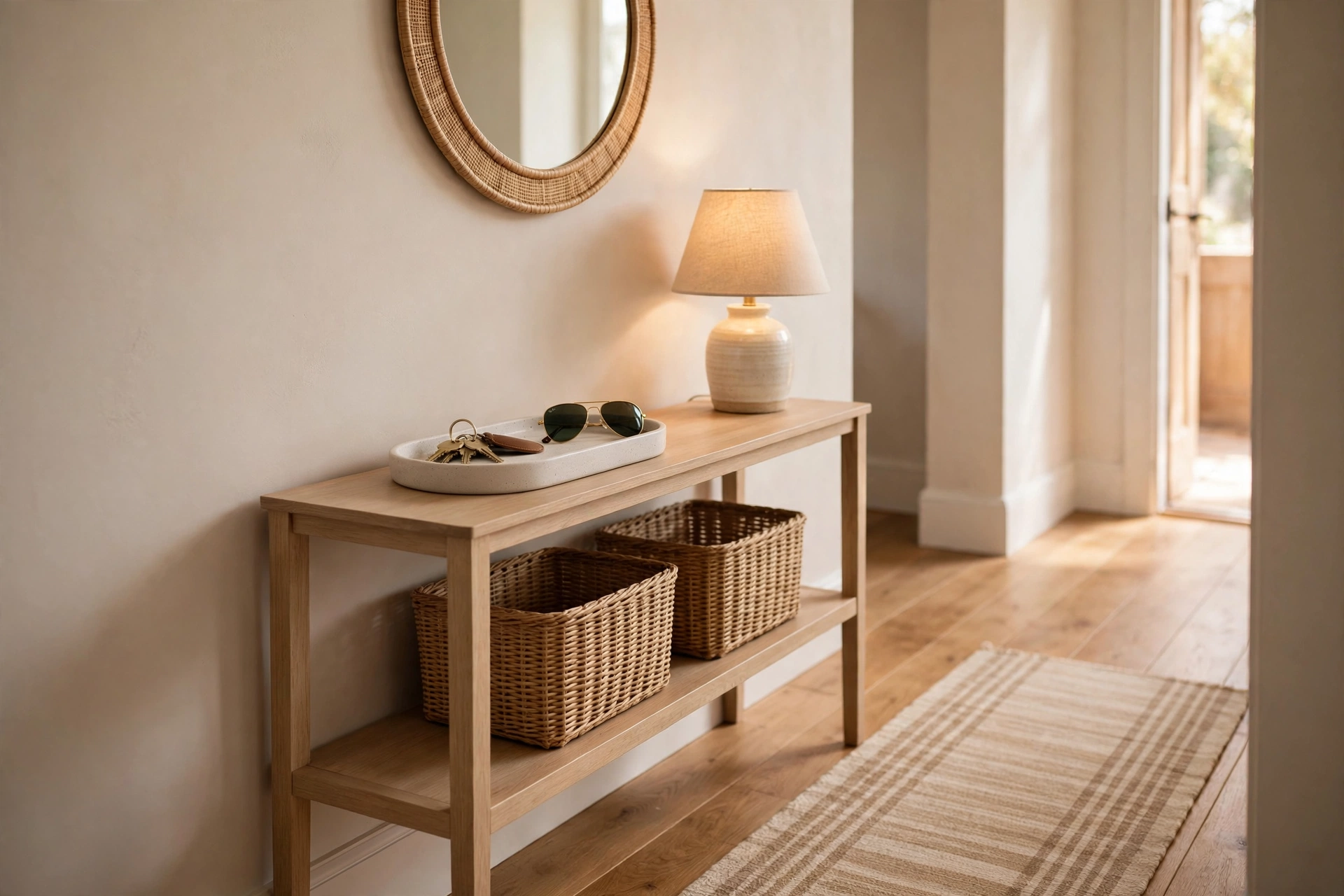
When floor space is tight, a slim console table — 10 to 14 inches deep — gives you a landing zone without blocking traffic. Top it with a shallow tray for keys and sunglasses so small items stop scattering. Use the lower shelf for two or three lidded baskets holding gloves, hats, and reusable shopping bags. If it has a drawer, dedicate it to entryway essentials: a spare house key, stamps, a lint roller, and a phone charger. Hang a mirror above so the space feels larger — a classic companion to these entryway storage ideas. It’s one of the most adaptable entryway storage ideas for hallways, foyers, and open-plan rooms — just keep 30 to 36 inches of clear passage.
4. Pair Wall Hooks with a Floating Shelf
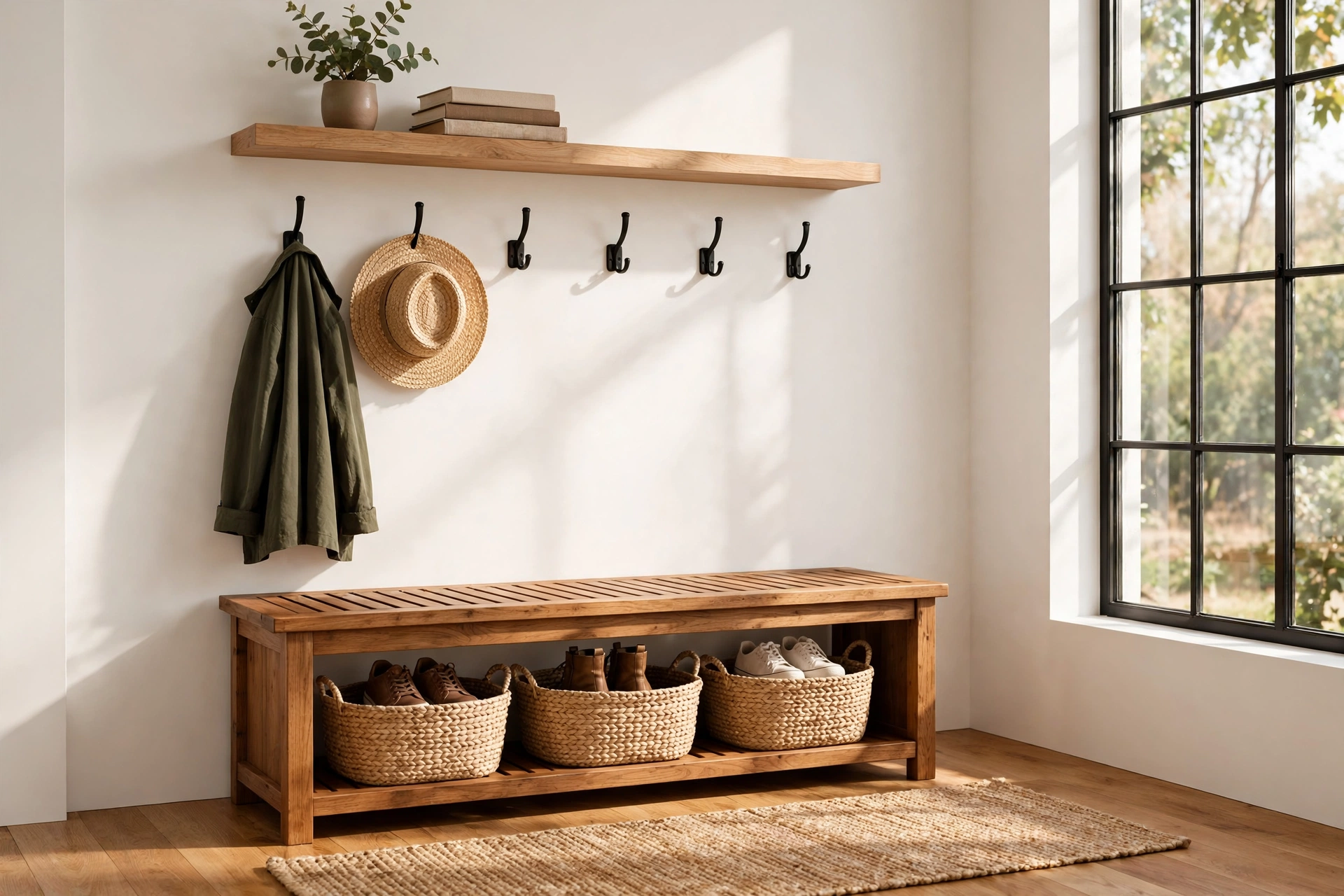
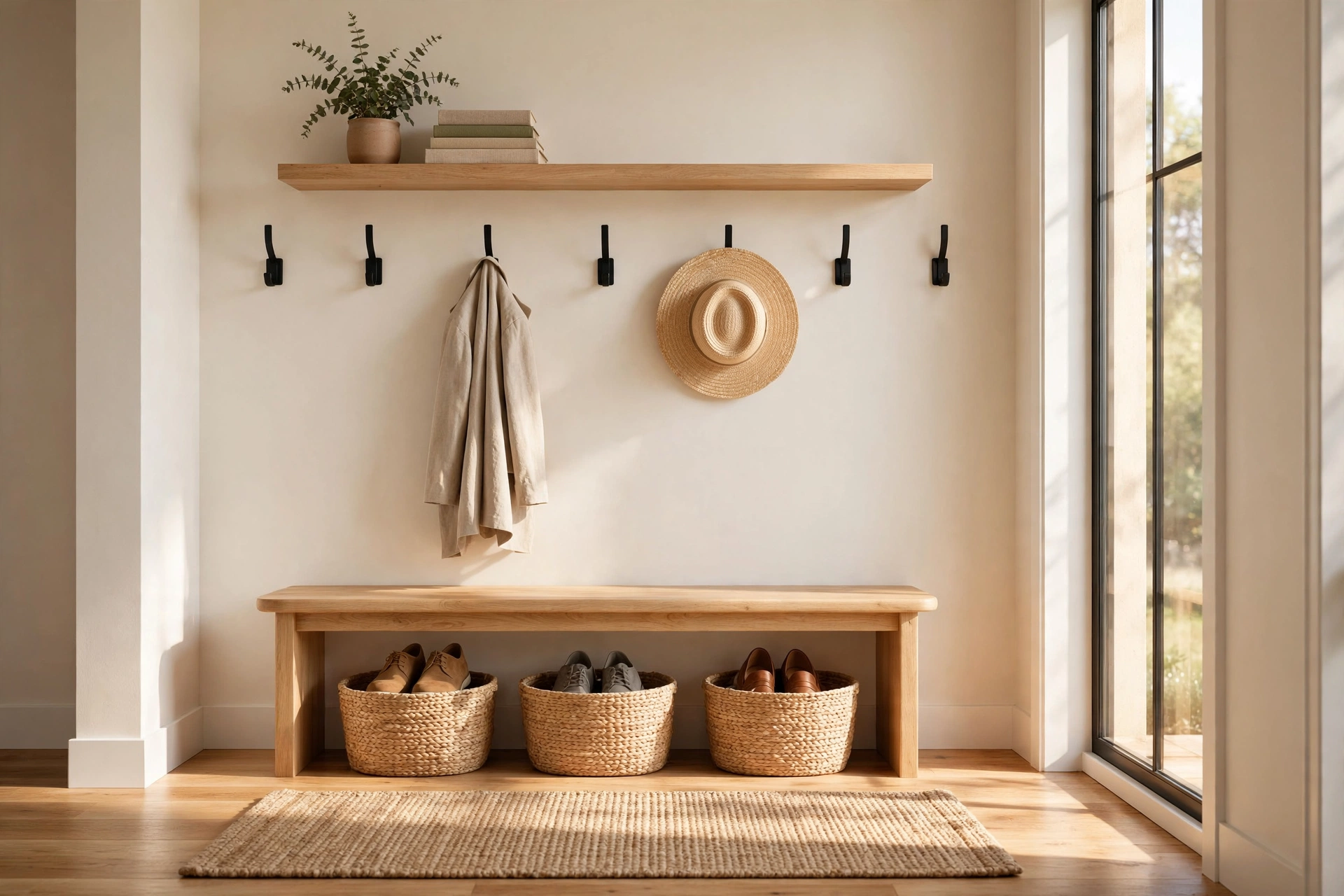
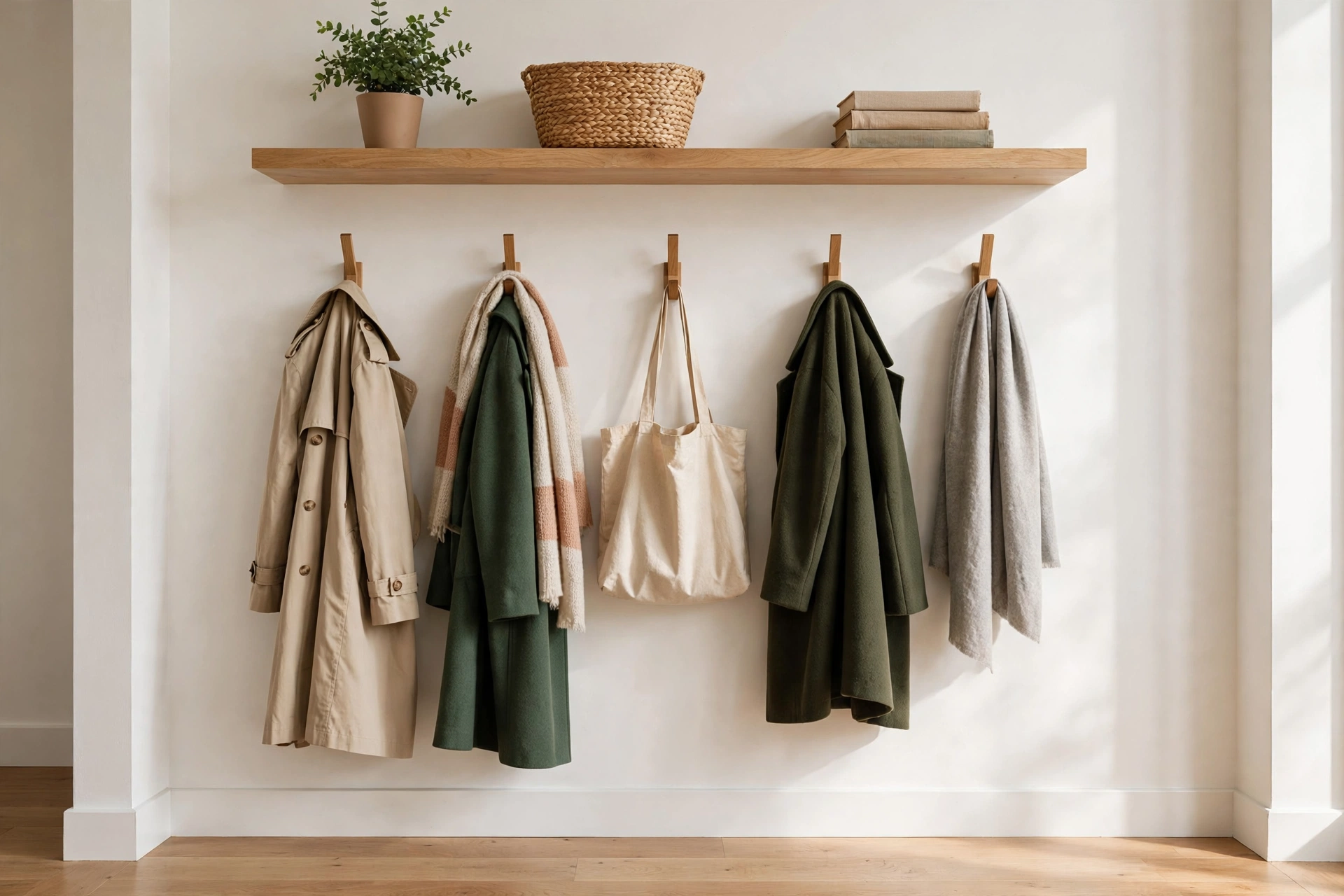
Hooks plus a shelf is the simplest storage pairing there is, and it uses zero floor space. Mount sturdy hooks at 60 to 66 inches for adult coats, with a second row at about 40 inches for kids. Anchor every hook into a stud or use heavy-duty anchors rated for 25 pounds or more. Mount a floating shelf 8 to 10 inches above for things that don’t hang: a small plant, a mail basket, or sunscreen. Stagger hooks slightly in height so bulky coats don’t crowd each other. For a room-by-room approach, Apartment Therapy’s guide to organizing an entryway at any size breaks down what to add based on your space. The combo fits hallways as narrow as 3 feet, making it one of the most space-efficient entryway storage ideas.
5. Entryway Storage Ideas for Small Spaces: a Narrow Cabinet
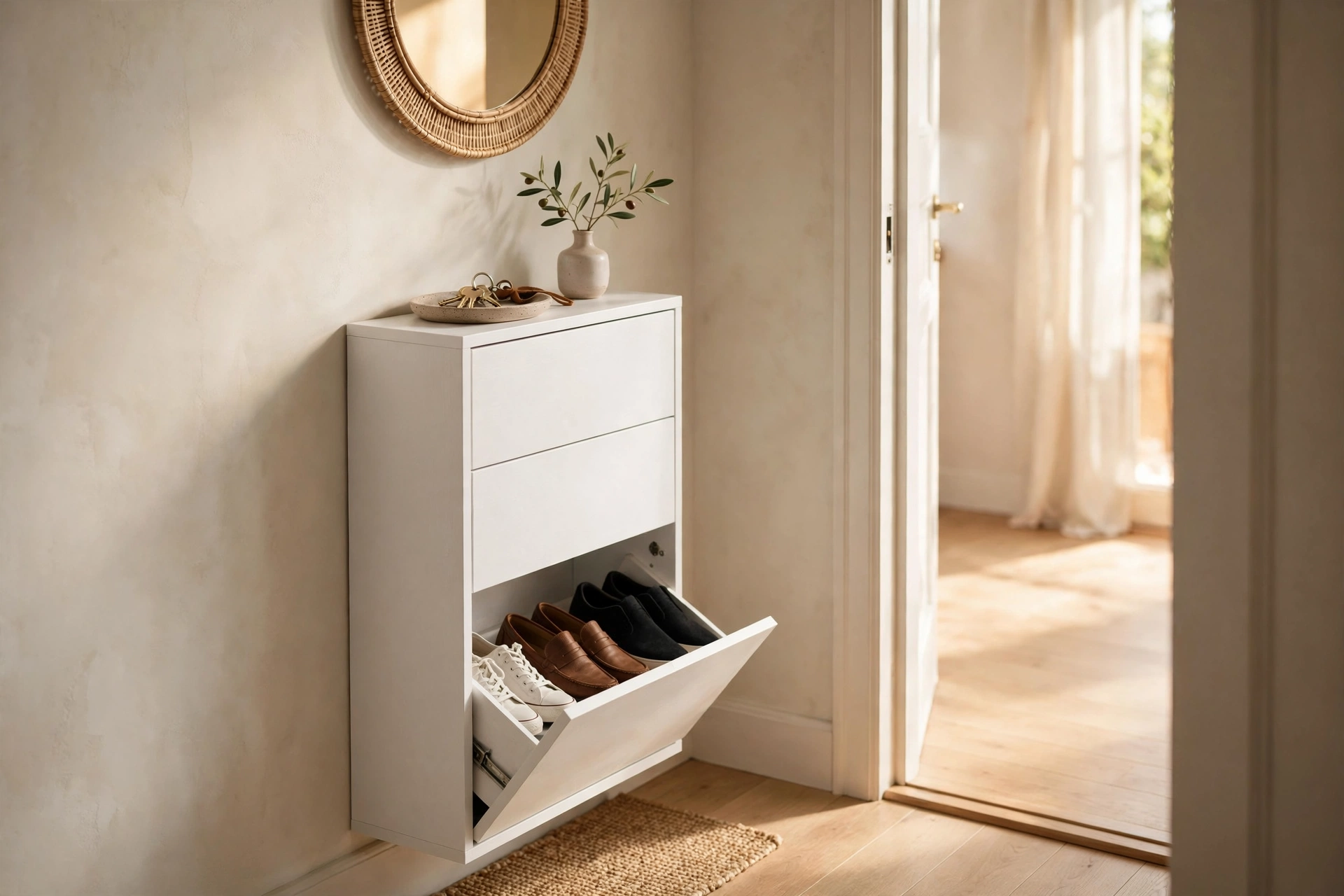
If your entryway is barely wider than the door, go vertical and narrow. A cabinet just 8 to 12 inches deep holds plenty: tilt-out shoe cabinets store 6 to 12 pairs while projecting only inches from the wall when closed. A tall armoire around 24 inches wide hides coats and cleaning supplies behind doors. Pick a cabinet with a finished top so it doubles as a landing strip for keys and mail, and consider a mirrored front to bounce light around a dark entry. Before buying, tape out the footprint and swing the front door through its full arc to confirm nothing collides.
6. Corral Daily Gear with Baskets Under a Console
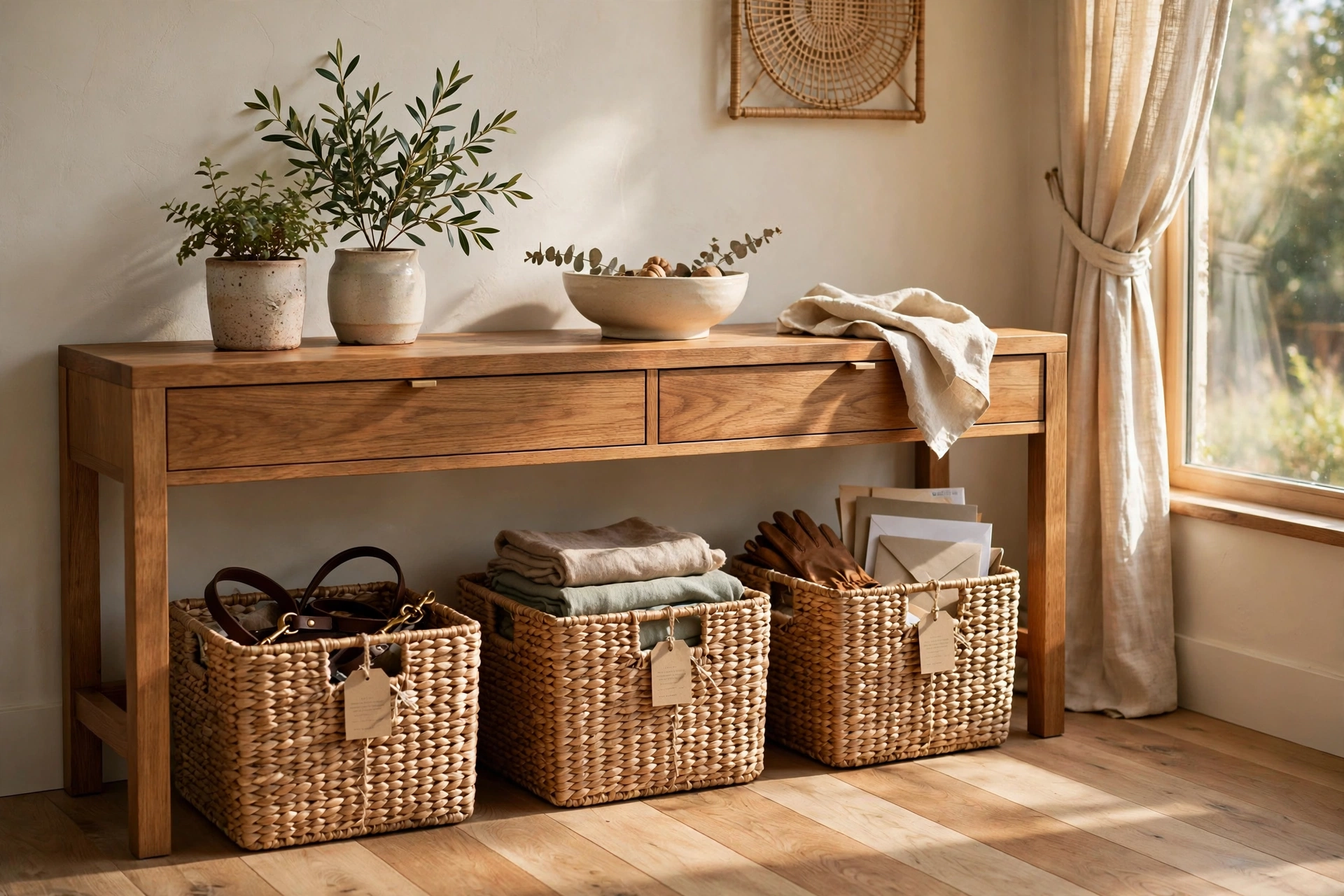
Open space under a console or bench is wasted without structure, and baskets are the easiest fix. Measure the opening, then buy baskets an inch shorter so they slide in without scraping. Assign categories: one for dog gear, one for outgoing mail and returns, one for hats and gloves. Add washable liners for anything damp, and label each basket so the whole house returns things to the right spot. Among all entryway storage ideas, labeled baskets are the cheapest way to make open storage look intentional. When a basket overflows, edit the contents — don’t buy a bigger basket.
7. Double Up with a Storage Ottoman
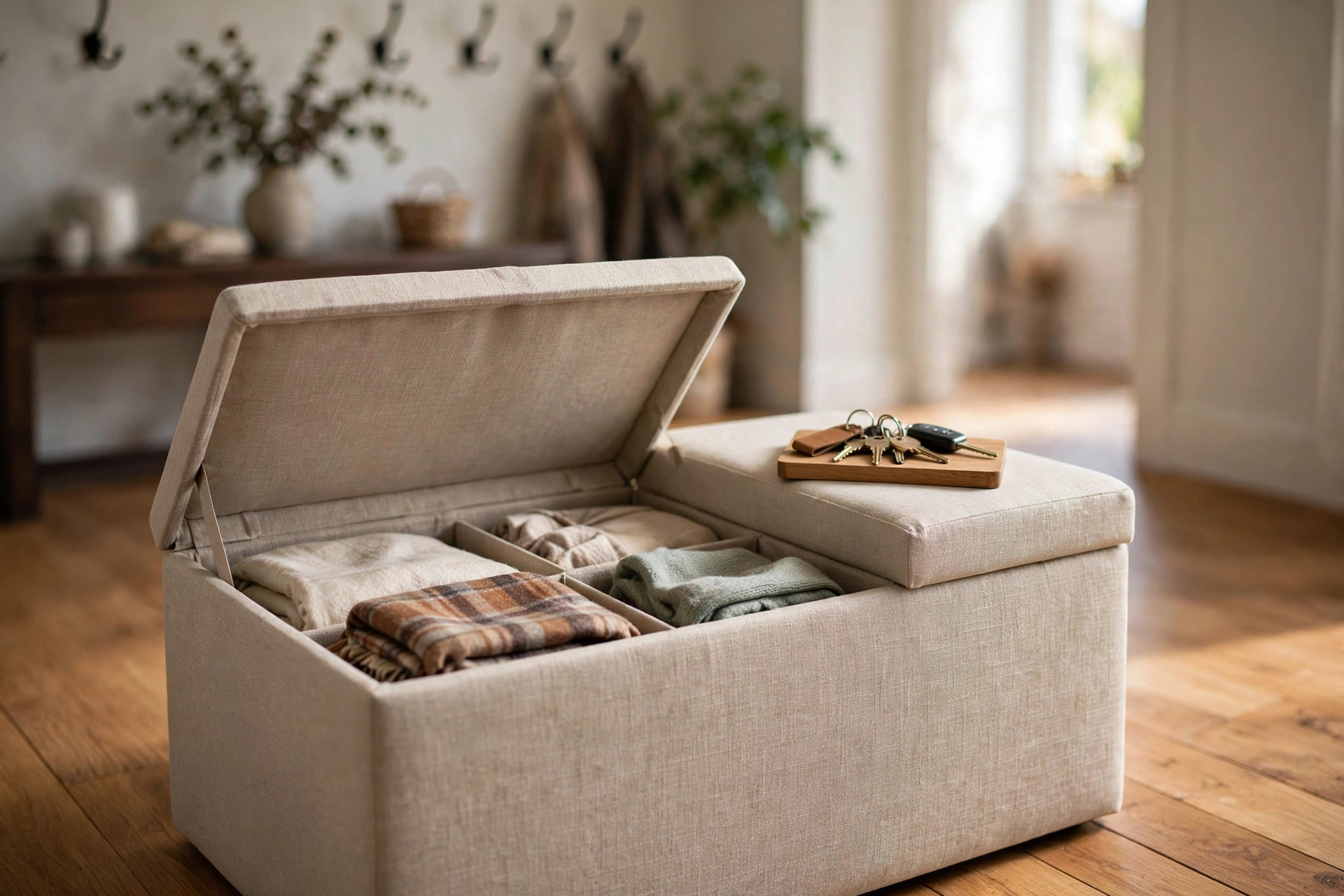
A storage ottoman is the entryway’s quiet multitasker: a seat for pulling on boots and a hidden bin in one. Look for one around 15 by 30 inches with a hinged lid that stays open while you load it. Inside, keep soft bulky things that otherwise drape over furniture — spare scarves, reusable grocery bags, a picnic blanket, kids’ outdoor toys. Set a small tray on the closed lid and it becomes your key drop. Tuck it under a console when you need floor space. Choose performance fabric or faux leather so mud and paw prints wipe off — the best entryway storage ideas hold up to real life.
8. Mount a Peg Rail for Flexible Hanging Storage
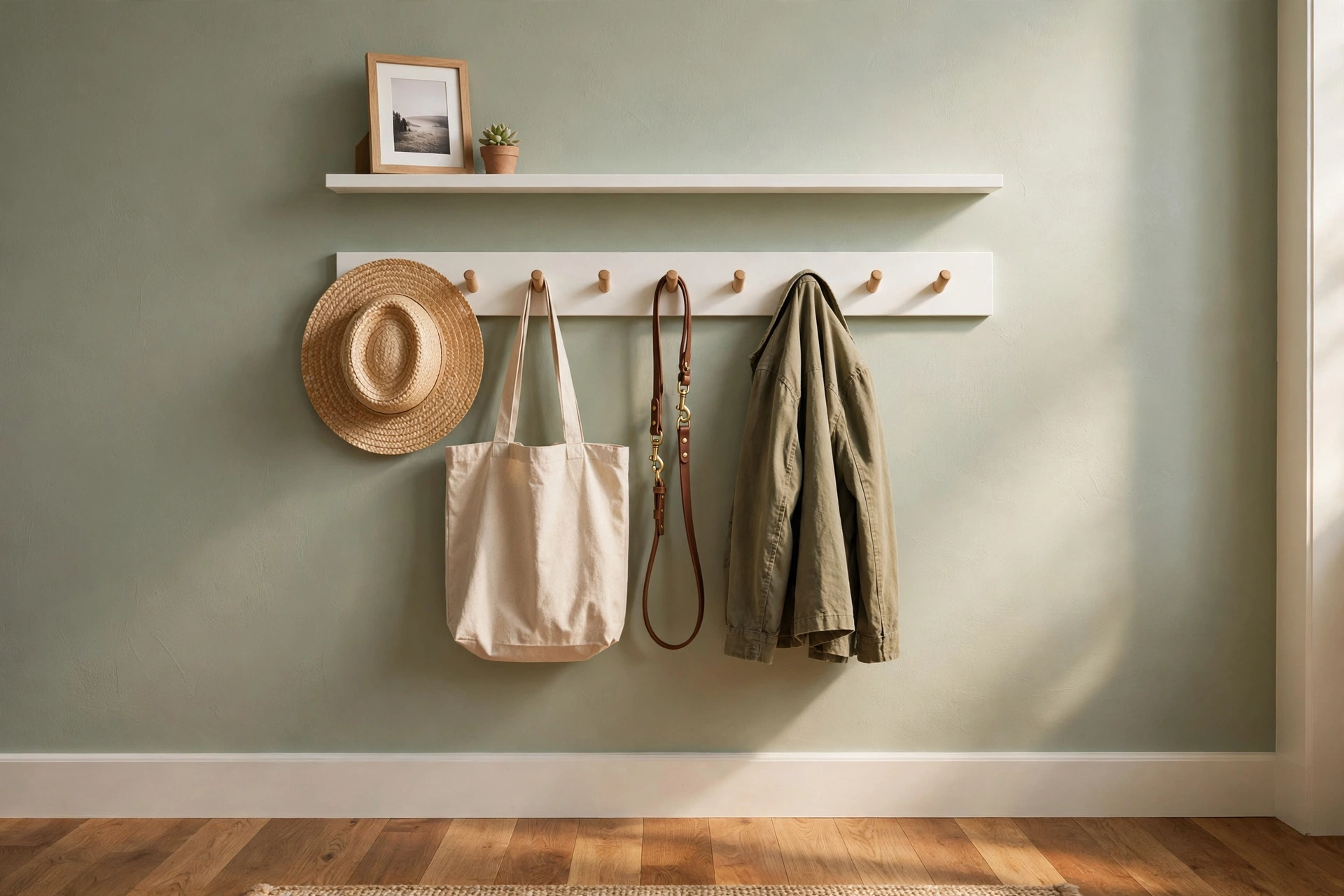
A Shaker-style peg rail gives you hanging storage that rearranges in seconds. Install the rail at about 66 inches for adults, with a second rail at 40 to 44 inches for kids’ backpacks and jackets. Pegs slide or lift out, so space them widely for winter coats and cluster them for hats and tote bags. Hang an S-hook for the dog leash and loop an umbrella by its strap. Paint the rail to match your trim so it reads as architecture, and cap it with a narrow picture ledge for a plant or photo to double its job.
9. Entryway Storage Ideas That Hide the Clutter: Closed Cabinets
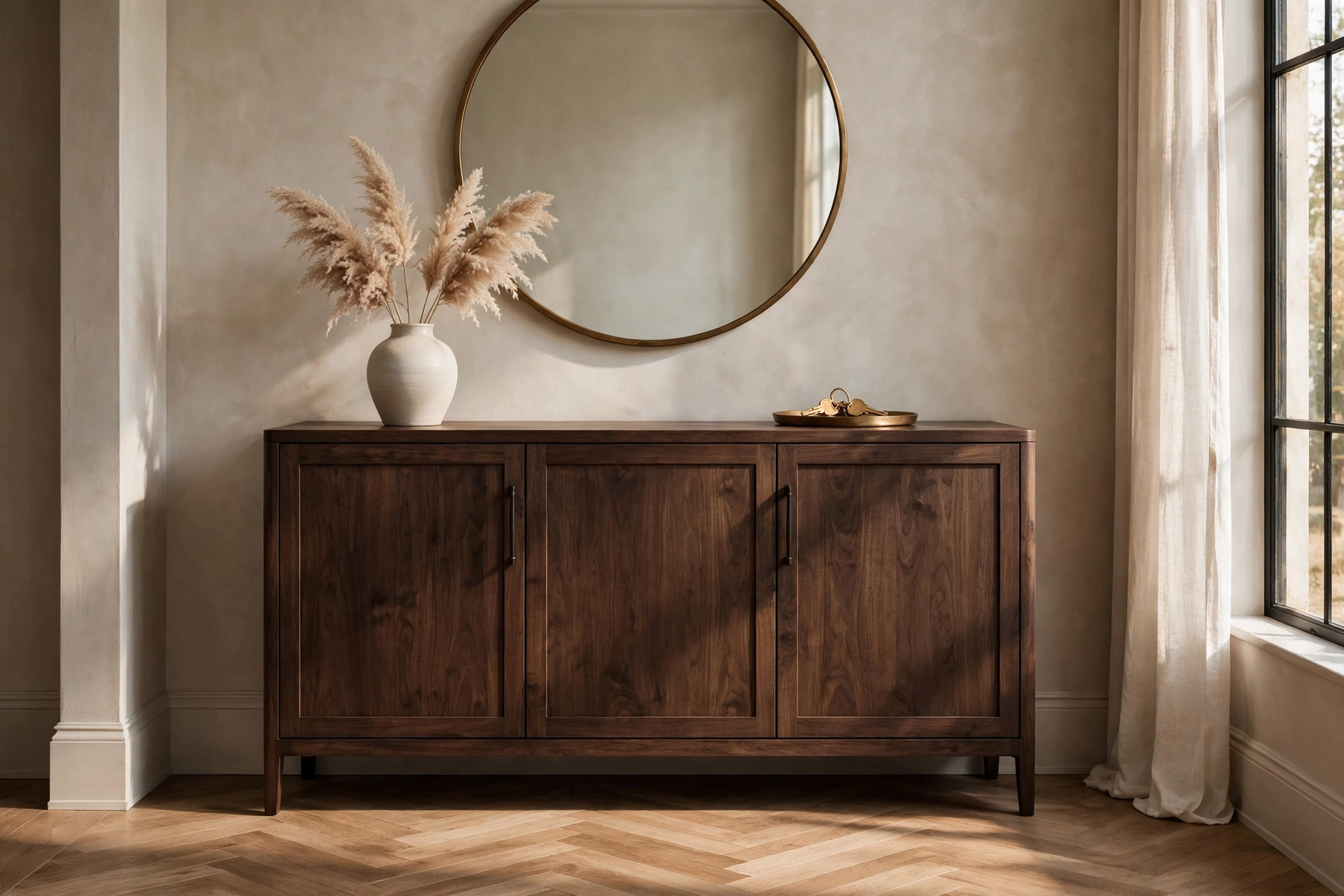
Open storage is convenient but always looks busy. If visual calm matters, put the mess behind doors. A closed cabinet 16 to 18 inches deep hides overflow coats, extra shoes, and cleaning supplies. Inside the doors, add adhesive hooks for flashlights and a small whiteboard for reminders. If shoes live inside, drill discreet ventilation holes in the back panel or choose louvered doors. Style the top minimally: one vase and a small key tray. What you can’t see still needs a system, so sort the interior once a season and donate whatever hasn’t been touched.
10. Add a Tilt-Out Shoe Cabinet
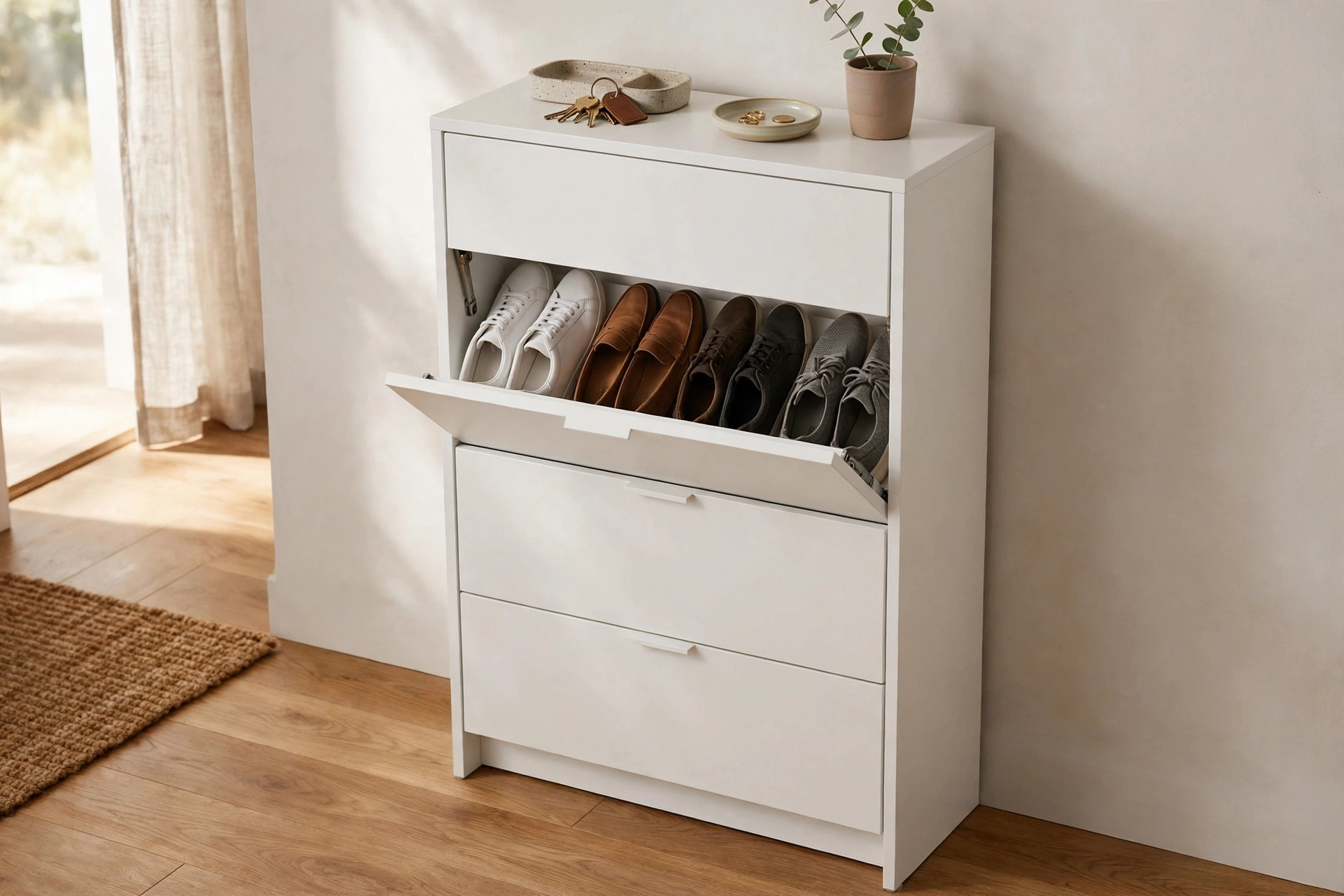
Shoes are the number-one entryway clutter culprit, and a tilt-out cabinet is purpose-built to fix it. These stand only about 6 inches deep when closed, yet each tilted compartment holds 3 to 4 pairs. Arrange shoes toe-to-heel to fit an extra pair per row, and choose a model with rear ventilation slots so shoes air out. The flat top becomes your landing strip — add a key tray and a small dish for loose change. Always anchor the cabinet to the wall, since tilting shifts its weight forward. For a family of four, one double-wide unit covers daily shoes — proof that the simplest entryway storage ideas work best.
11. Roll In a Cart for Seasonal Rotation
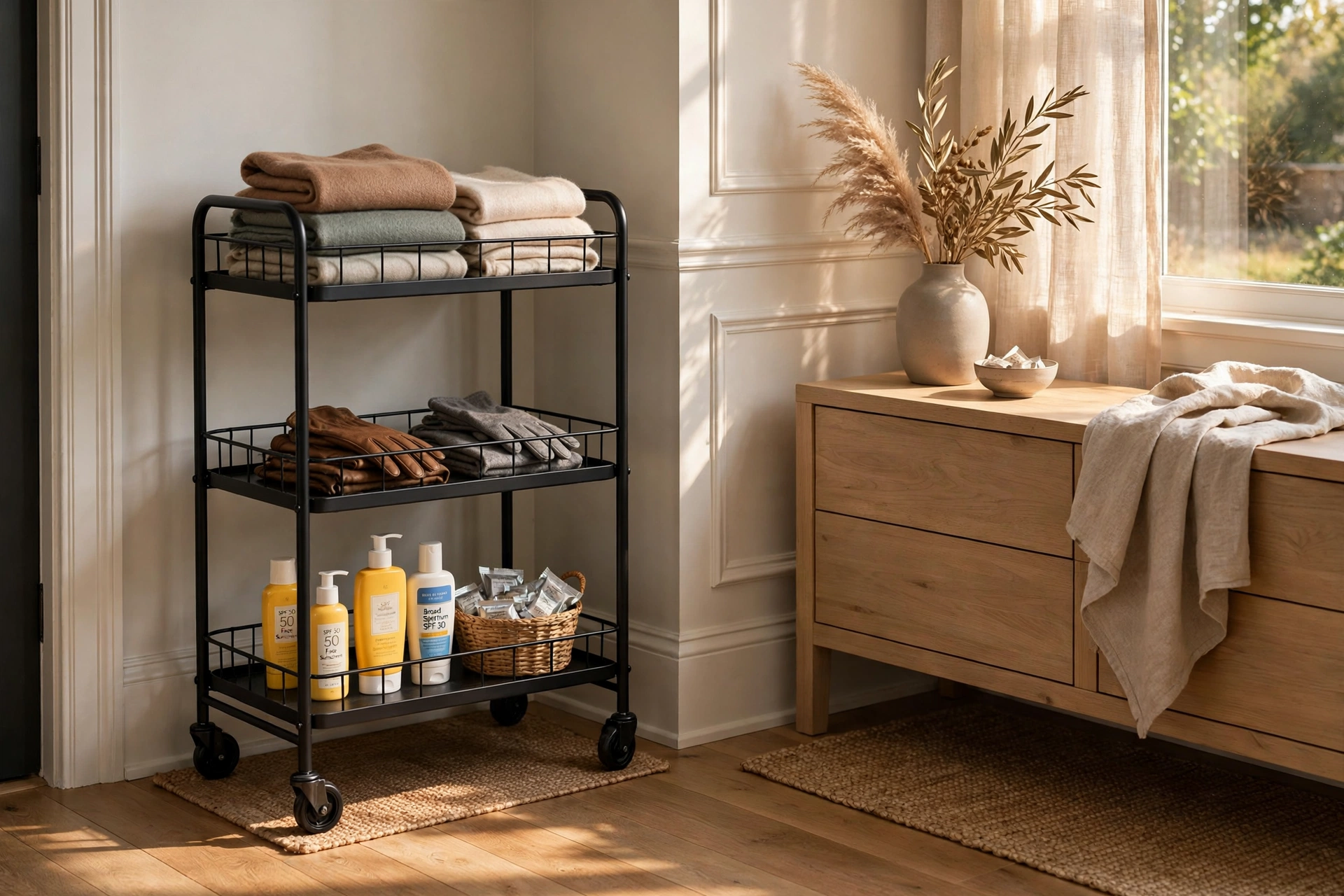
A three-tier rolling cart keeps your entryway matched to the season. In summer load it with sunscreen, bug spray, and hats; in winter swap in gloves, scarves, and a boot tray on the bottom tier. Park it beside a console or in a corner with locking casters so it stays put. Dedicate the top tier to guests: spare phone chargers, mints, and a lint roller. When the season turns, wheel it to a closet and restock in ten minutes. Because it’s freestanding, renters can use these entryway storage ideas without drilling a single hole.
12. Entryway Storage Ideas for the Whole Wall: a Mixed Storage Wall
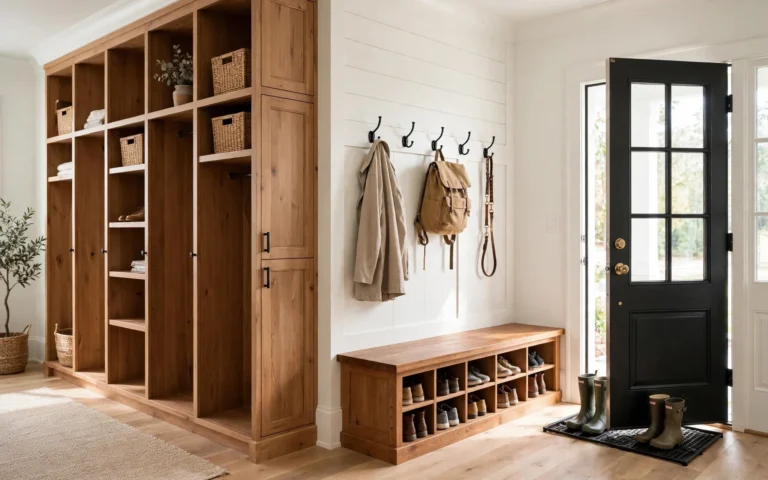
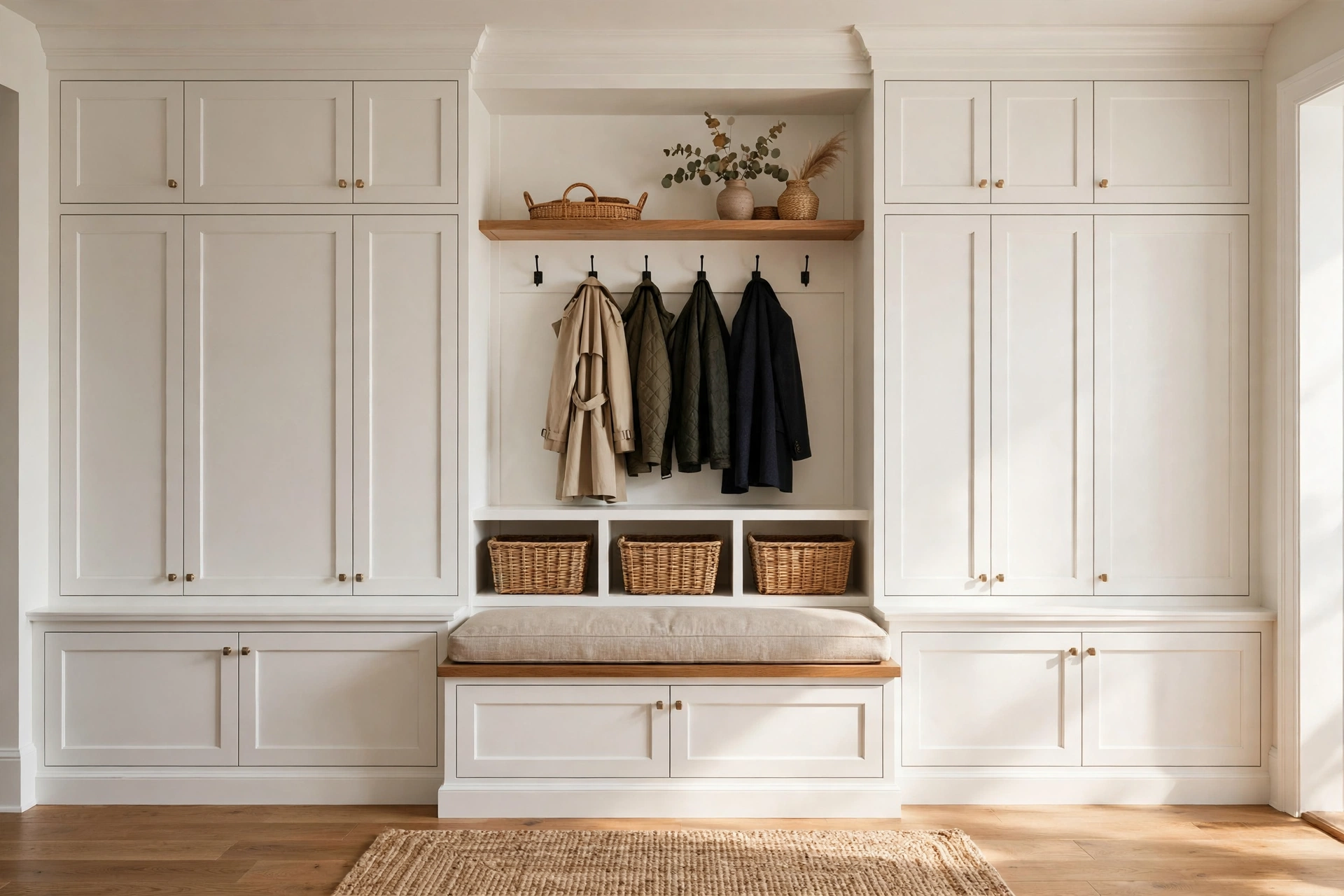
With a full blank wall, build a storage wall mixing open and closed zones. Start with stock base cabinets 18 inches deep, topped with a wood bench seat at 18 inches high. Above, combine closed uppers for out-of-season gear with an open section of hooks and a shelf for daily coats. Add crown molding on top and baseboard below so stock cabinets read as built-in. Keep 36 inches of clear walkway and confirm the door’s swing arc stays clear. Finish with one basket per person in the open cubbies.
Frequently Asked Questions
How do I add storage to a really small entryway?
Think vertical and shallow. Wall hooks, a floating shelf, and a peg rail use zero floor space. A tilt-out shoe cabinet only 6 inches deep handles footwear, and the area beside the door frame can hold a narrow umbrella stand. Keep the palette light and hang a mirror to make the narrow space feel wider — these small-footprint entryway storage ideas work even in a hallway barely wider than the door.
What’s the best way to store shoes in the entryway?
Limit the entryway to the shoes you wear weekly — usually two to three pairs per person. A ventilated bench, tilt-out cabinet, or slatted shoe rack keeps them contained and aired out. Put a washable tray underneath for wet or muddy days, and move off-season shoes to a bedroom closet. When the rack overflows, rotate pairs out instead of adding more storage.
How do I keep my entryway from looking cluttered?
Give every category a container: hooks for coats, a tray for keys, baskets for gear, a cabinet for shoes. Then follow a one-in, one-out rule — when a new pair of shoes arrives, an old pair leaves. Closed storage hides the visual noise, and a two-minute reset each evening keeps the landing strip clear. If you can see the floor and the tabletop, you’re winning.
What should every entryway have for storage?
Four things cover nearly every household: sturdy hooks for coats and bags, a contained spot for shoes, a tray or bowl for keys and sunglasses, and a basket for extras like mail, dog gear, or umbrellas. A mirror and a small rug aren’t storage, but they make the zone feel finished — and a rug protects floors from grit tracked in on shoes.
The Takeaway
Pick one of these entryway storage ideas that solves your biggest daily annoyance — the shoe pile, the missing keys, the coat avalanche — and start there. A single bench, a row of hooks, or a slim cabinet can change how your whole front hall feels within an afternoon. Once everything has a home, keeping it tidy takes minutes, not a weekend overhaul. Your future self, rushing out the door with everything in hand, will thank you for these entryway storage ideas.