12 Japandi Living Room Ideas for Calm Minimalism
The best japandi living room ideas start with restraint: fewer pieces, honest materials, and room to breathe around everything you keep. Japandi blends the warmth and practicality of Scandinavian design with the quiet order of Japanese interiors, so the living room feels calm without feeling cold. Low furniture, light wood, linen, and handmade ceramics do most of the work. If you want the background first, this guide to Japandi style from Apartment Therapy explains where the look comes from and why it lasts. Below are twelve practical ways to build the style in a real living room, one decision at a time, using pieces you can source slowly and keep for years.
Start Low: Japandi Living Room Ideas Begin With the Sofa
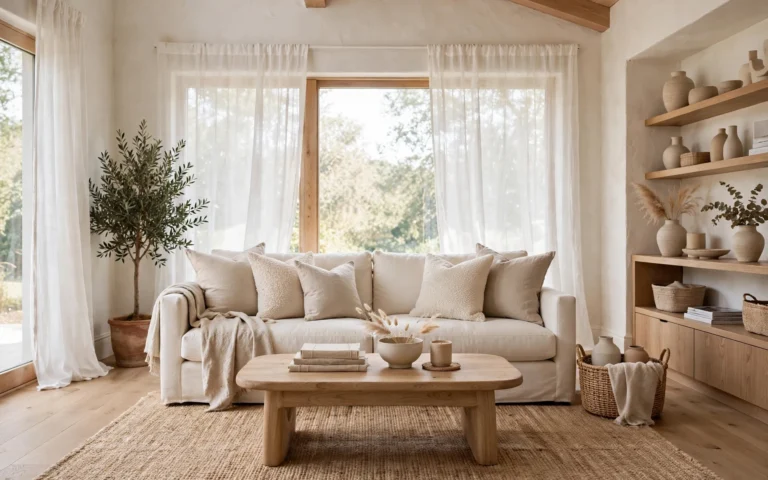
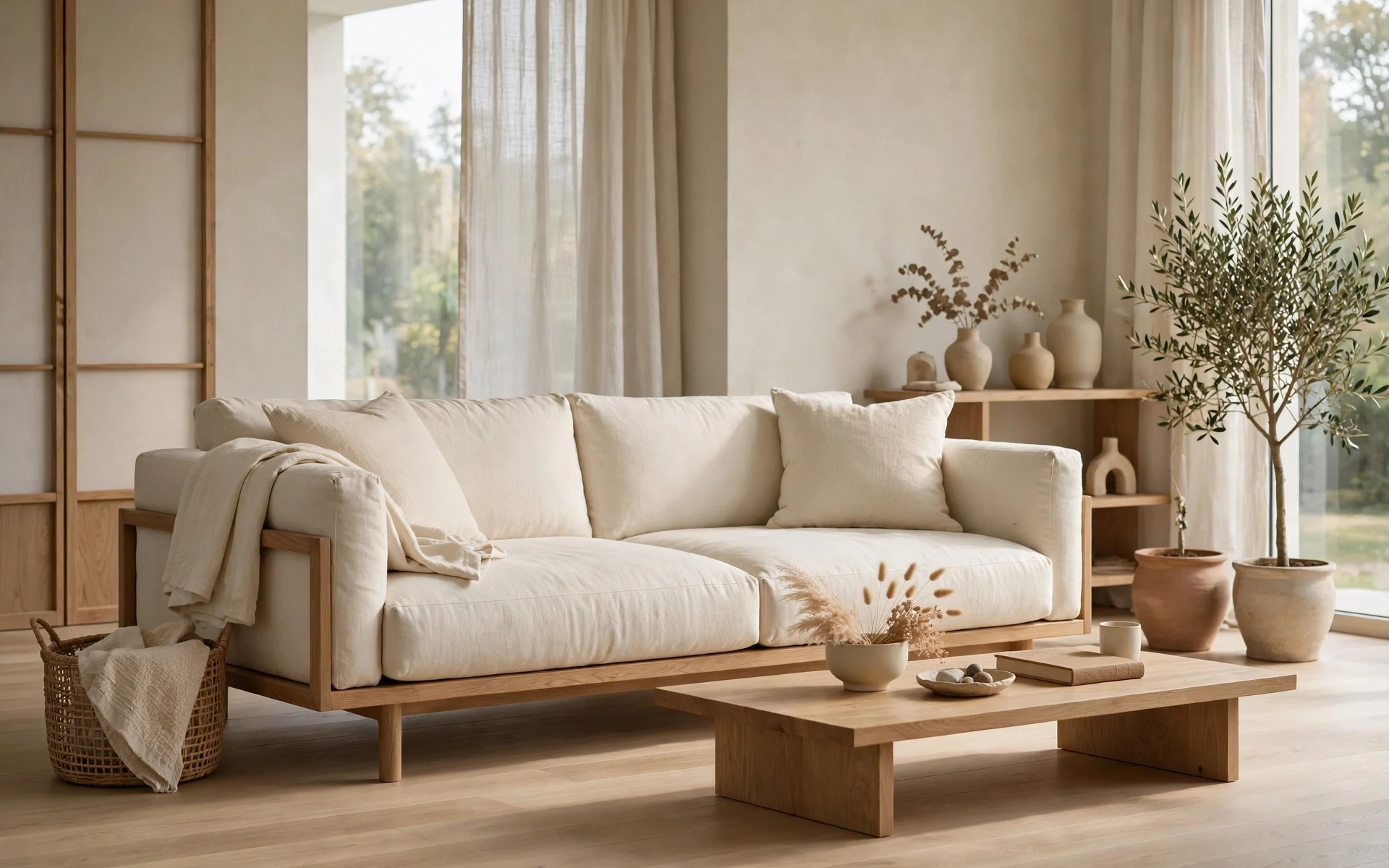
Height sets the tone in a Japandi room, and a low-profile sofa is the piece that anchors everything else. Look for a seat height around 15 to 17 inches, a simple wood or wood-trim frame, and cushions in cream, oatmeal, or pale gray linen. Keep the silhouette straight and unadorned — no rolled arms, no tufting, no skirt. A lower sofa leaves more wall visible above it, which makes ceilings feel taller and the whole room calmer. Pair it with a coffee table no higher than the seat cushions so the horizontal lines stay consistent. Our guide to choosing a low profile sofa covers frame depth and cushion fills in detail. Leave at least a few inches of bare floor around the base so the piece feels grounded, not bulky.
A Warm Neutral Palette: Japandi Living Room Ideas for Walls
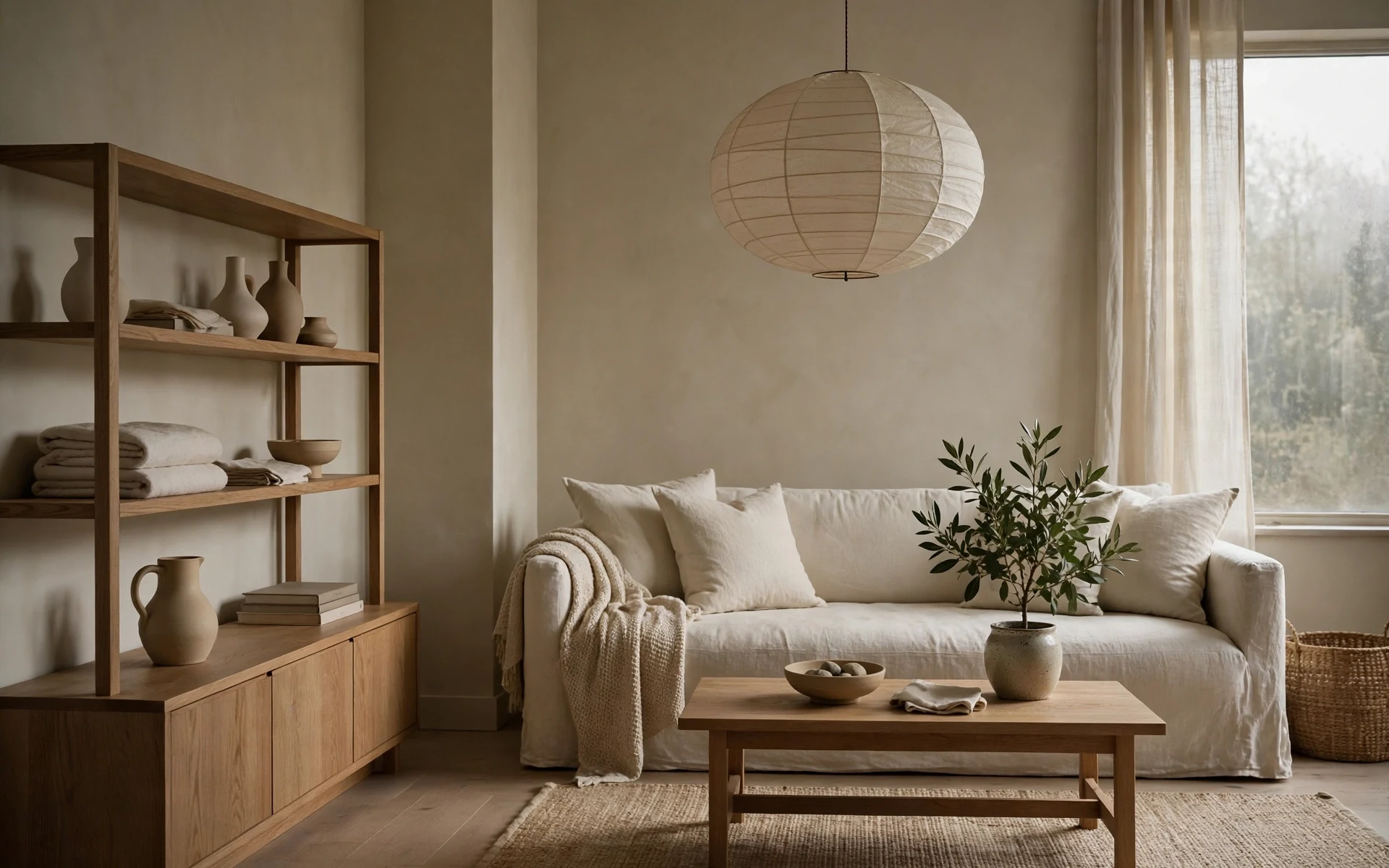
Japandi color is quiet but never stark. Paint walls a warm white, soft beige, or pale greige rather than a blue-toned bright white, and the room will hold afternoon light without glare. Carry the same family of tones through the sofa, rug, and curtains, shifting only a shade or two between them. Depth comes from the wood tones and one or two grounding accents — a charcoal cushion, a black side table leg, a deep clay pot — rather than from bright color. Test paint on the wall and check it morning and evening, since warm neutrals change a lot with the light. Keep skirting and trim the same color as the walls for an unbroken, restful background that lets texture do the decorating.
Light Wood Tones: Japandi Living Room Ideas in Oak and Ash
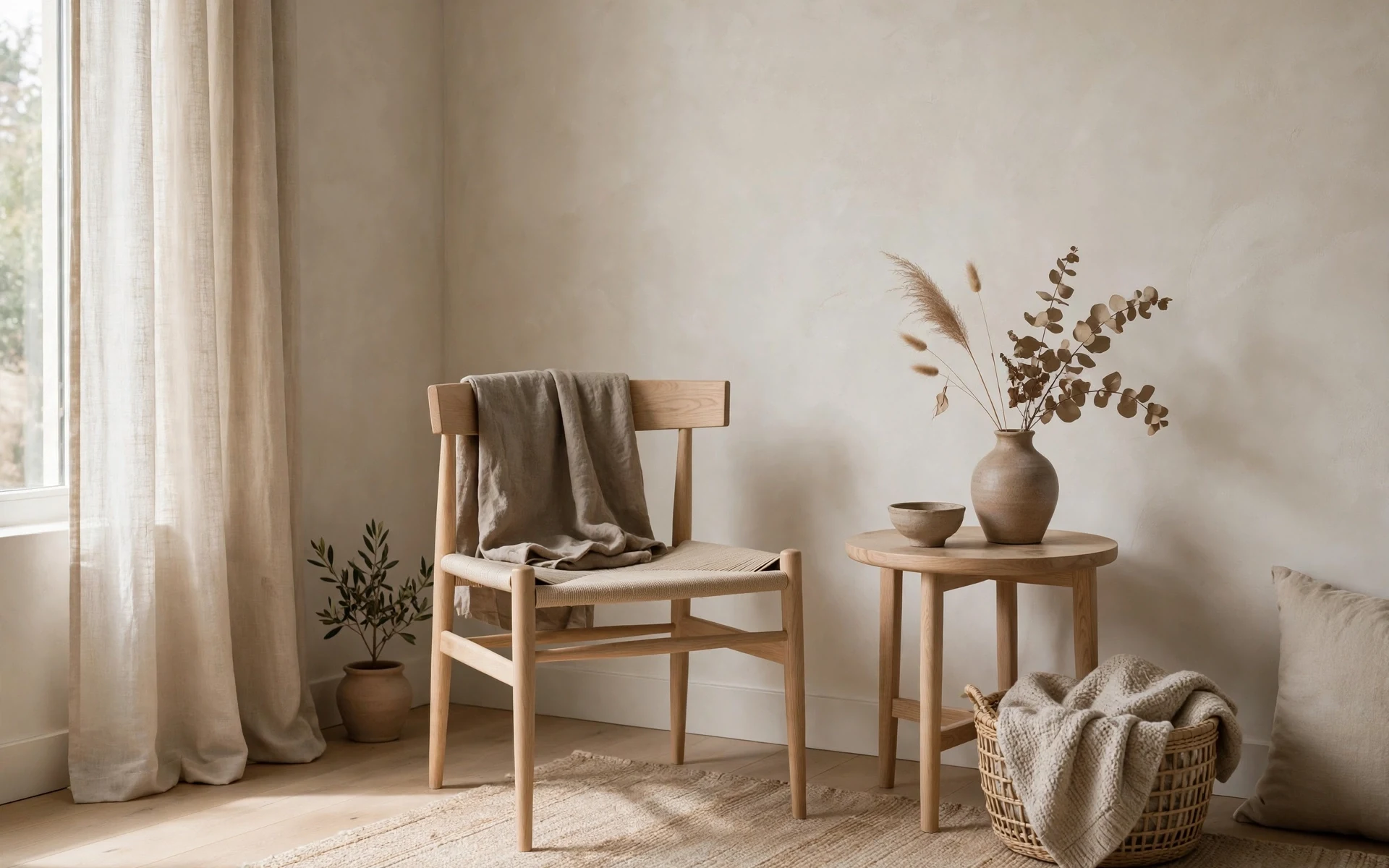
Wood is the main material in a Japandi living room, and pale, matte finishes keep it feeling light. Choose light oak, ash, or beech for the coffee table, media unit, and chair frames, and avoid glossy varnish or orange-toned stain. Two wood tones are enough — a pale floor tone and a slightly deeper furniture tone — repeated around the room so pieces feel related. Add bamboo or rattan in one accent, such as a chair back or a storage basket, for a finer grain against the smooth timber. Care is simple: dust with a dry cloth, use coasters under cups, and oil solid wood once or twice a year. This restrained material palette is also the base of organic modern living, if you want a slightly softer direction later.
Leave Empty Space: Japandi Living Room Ideas for Layout
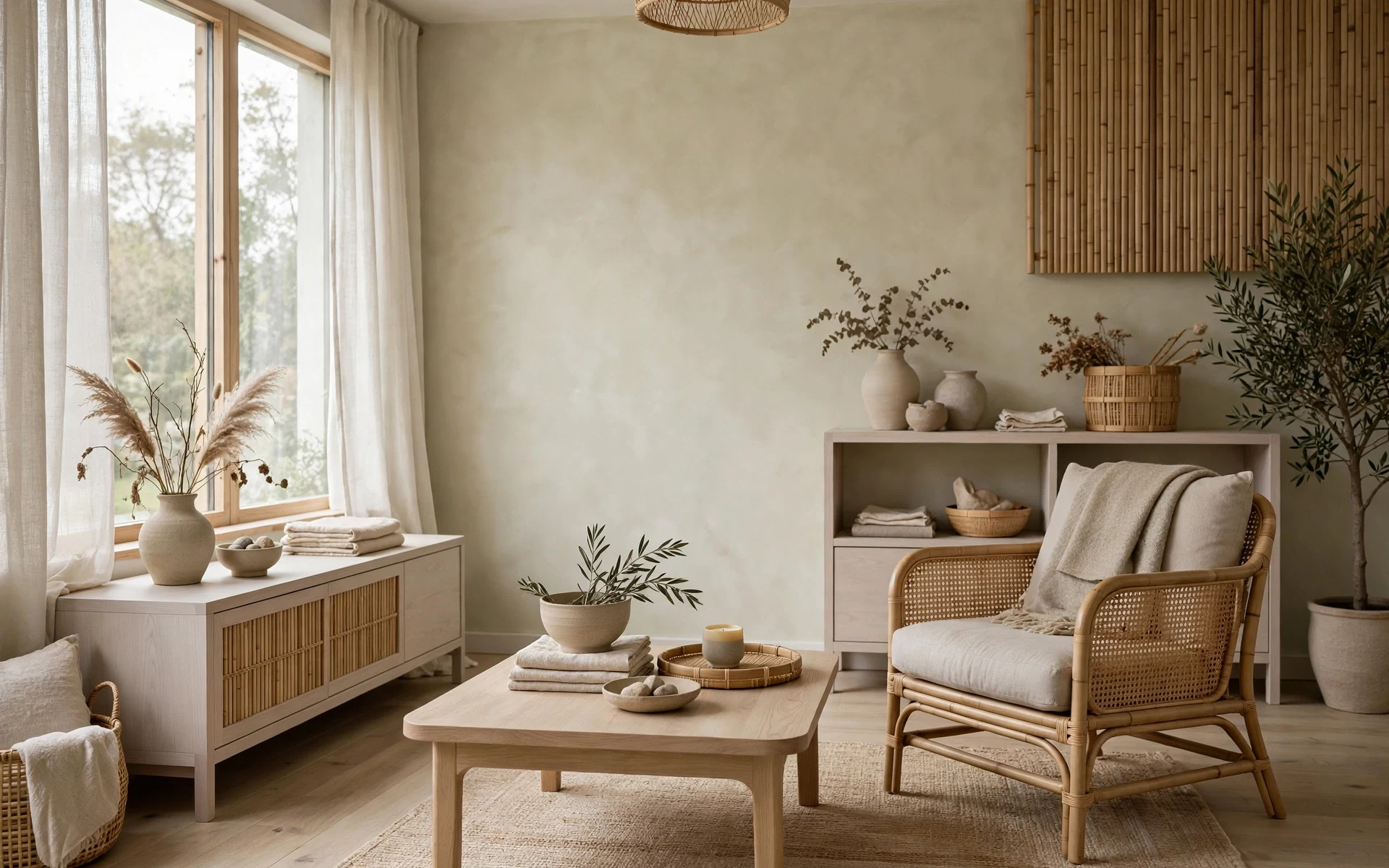
In Japandi rooms, empty space is a deliberate part of the design. Arrange the sofa, one or two chairs, a coffee table, and a low storage unit, then stop — even if the room could fit more. Keep clear walking paths of roughly 30 inches, and let at least one wall stay almost bare. Push nothing hard against every wall; pulling the sofa a few inches forward often makes a room feel calmer, not smaller. Storage should be closed where possible, with remotes, blankets, and games inside a lidded basket or the media unit rather than on display. Edit monthly: if a surface has gathered objects that serve no purpose, clear it back to one or two pieces and notice how much quieter the room feels.
Soft Paper Lighting: Japandi Living Room Ideas After Dark
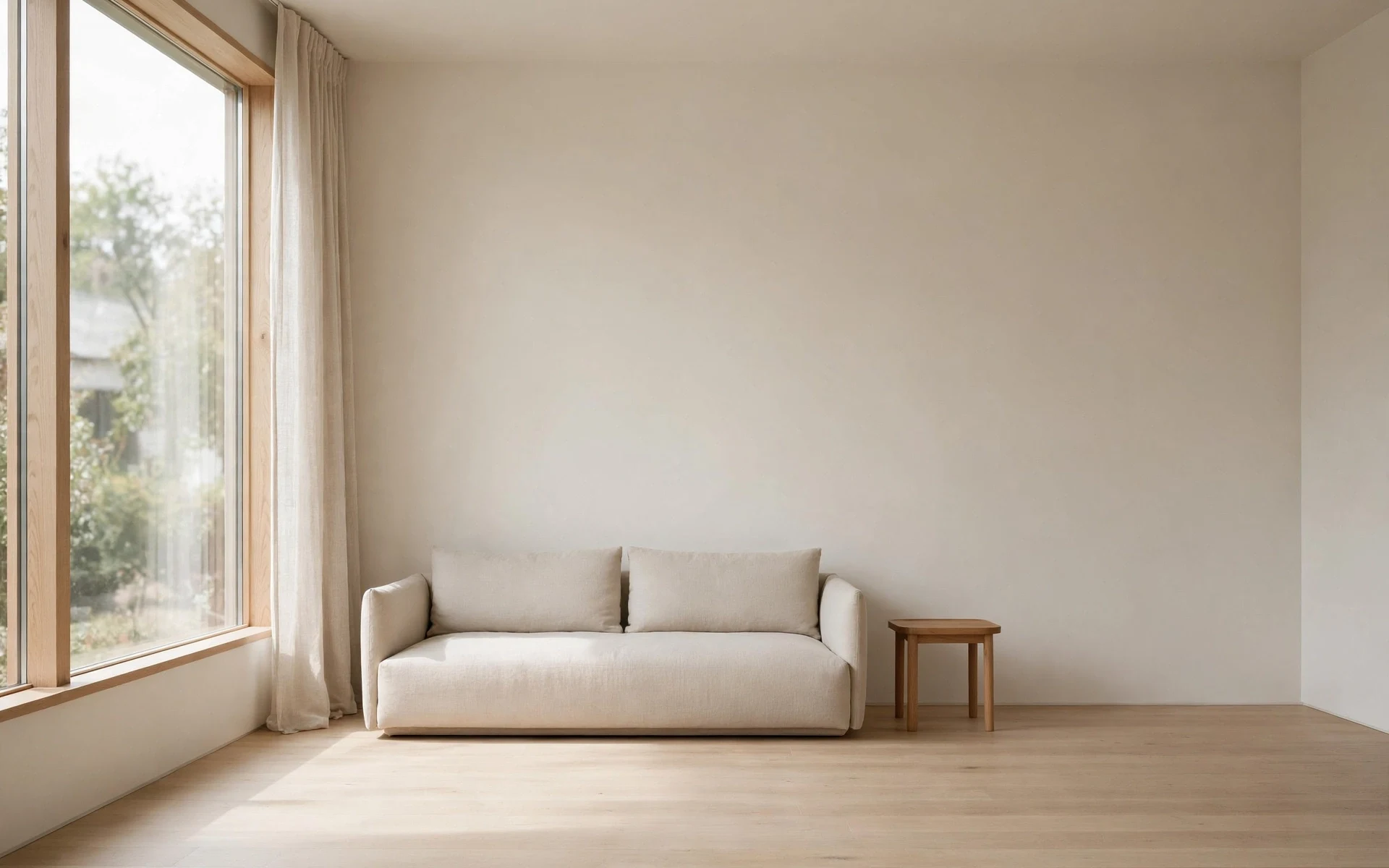
Lighting decides whether a minimal room feels serene or stark after sunset. A large rice paper or linen pendant, hung low over the coffee table, gives a soft central glow without glare. Add one wooden or paper floor lamp beside the reading chair and keep bulbs warm, around 2700K, on dimmers if you can. Avoid a single bright ceiling light on its own; two or three low, warm sources layered at different heights feel closer to candlelight. Paper shades need gentle care — dust them with a dry cloth or a soft brush and keep them away from steam and kitchen grease. In the evening, this kind of lighting turns pale wood and cream textiles golden, which is when a Japandi room looks its best.
Handmade Ceramics: Japandi Living Room Ideas With Wabi-Sabi Character
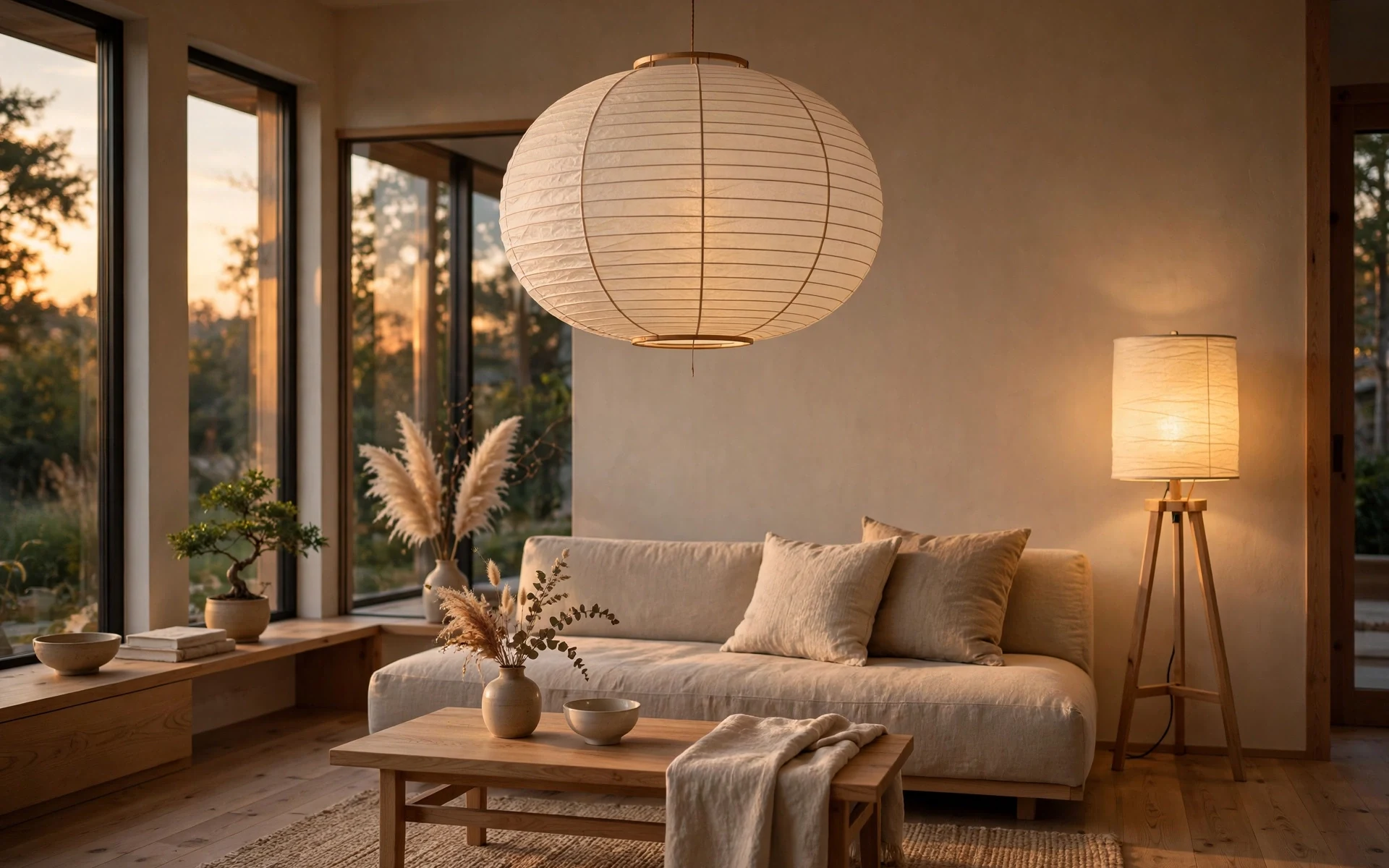
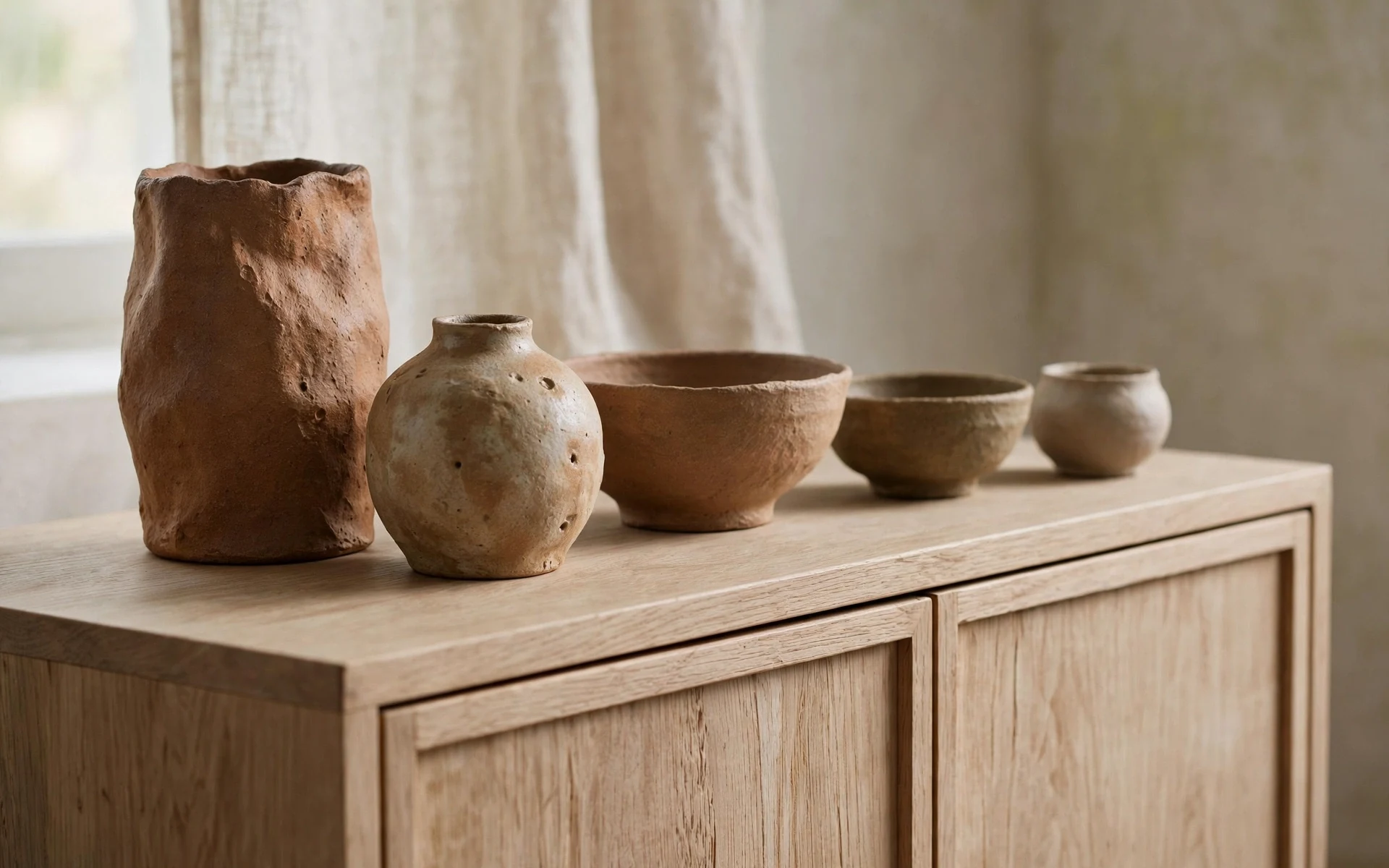
A few handmade ceramics keep a minimal room from feeling like a showroom. Choose pieces with slight irregularities — a stoneware vase with a matte glaze, a clay bowl with a visible maker’s mark, a pair of unglazed planters — in earth tones that sit inside your palette. Group them in twos or threes on the media unit or coffee table tray, and let one larger vessel stand alone as the room’s single statement piece. Imperfection is the point here, so avoid matching sets bought all at once. Pick pieces up slowly from local makers and markets, and wash stoneware by hand to protect matte glazes. One shelf of honest, uneven pottery adds more warmth than a dozen factory-perfect ornaments.
Linen and Wool Layers: Japandi Living Room Ideas for Texture
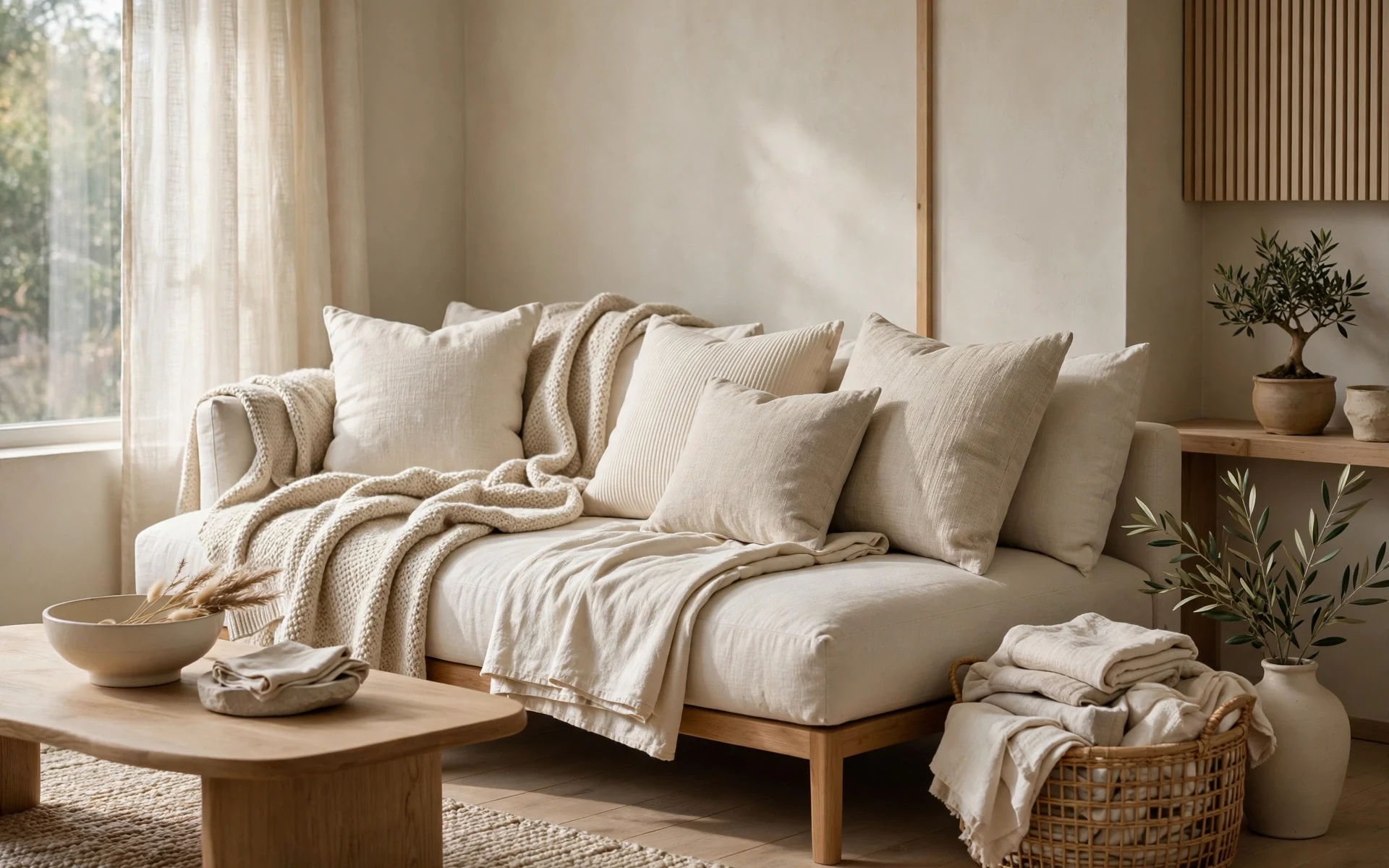
With color held back, texture becomes the decoration. Layer natural fabrics with different weaves: a loose linen sofa cover or cushions, a flat wool throw folded over one arm, cotton curtains that filter light rather than block it. Keep every textile in the same warm neutral family and let the contrast come from nubby against smooth, matte against slightly rough. Two cushions per sofa corner are plenty — more starts to read as clutter. Linen softens with washing and suits removable covers you can clean at 30 degrees; keep wool throws out of direct sun so the fibers do not fade unevenly. For more ways to work with a pale sofa, see our cream sofa styling ideas. Hang curtains from just below the ceiling line to make the low furniture below feel deliberate.
One Plant, One Branch: Japandi Living Room Ideas for Greenery
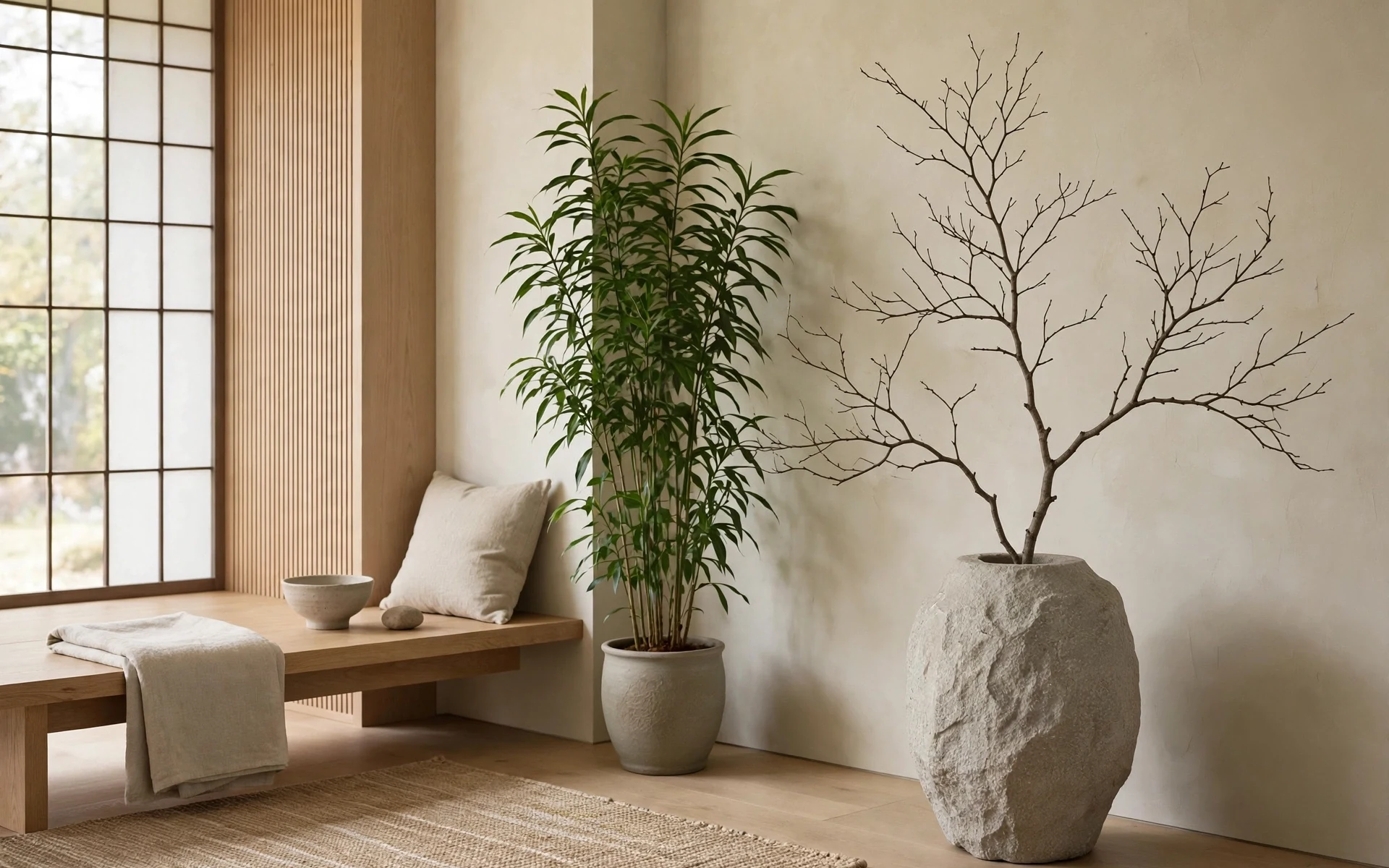
Japandi greenery is edited, not lush. One tall plant — an olive tree, a ficus, or a simple potted pine — in a plain stone or clay pot gives the room its living element. On the coffee table or sideboard, a single bare or flowering branch in a tall vase does the same job at a smaller scale, in the spirit of ikebana. Resist lining windowsills with small pots; a row of little plants reads as clutter against an otherwise calm room. Choose a pot at least as considered as the plant, keep leaves dusted so they stay matte and healthy, and turn the plant weekly for even growth. If light is poor, a sculptural dried branch needs no care at all and still brings the line and shadow the style relies on.
A Low Table Setting: Japandi Living Room Ideas for Slow Evenings
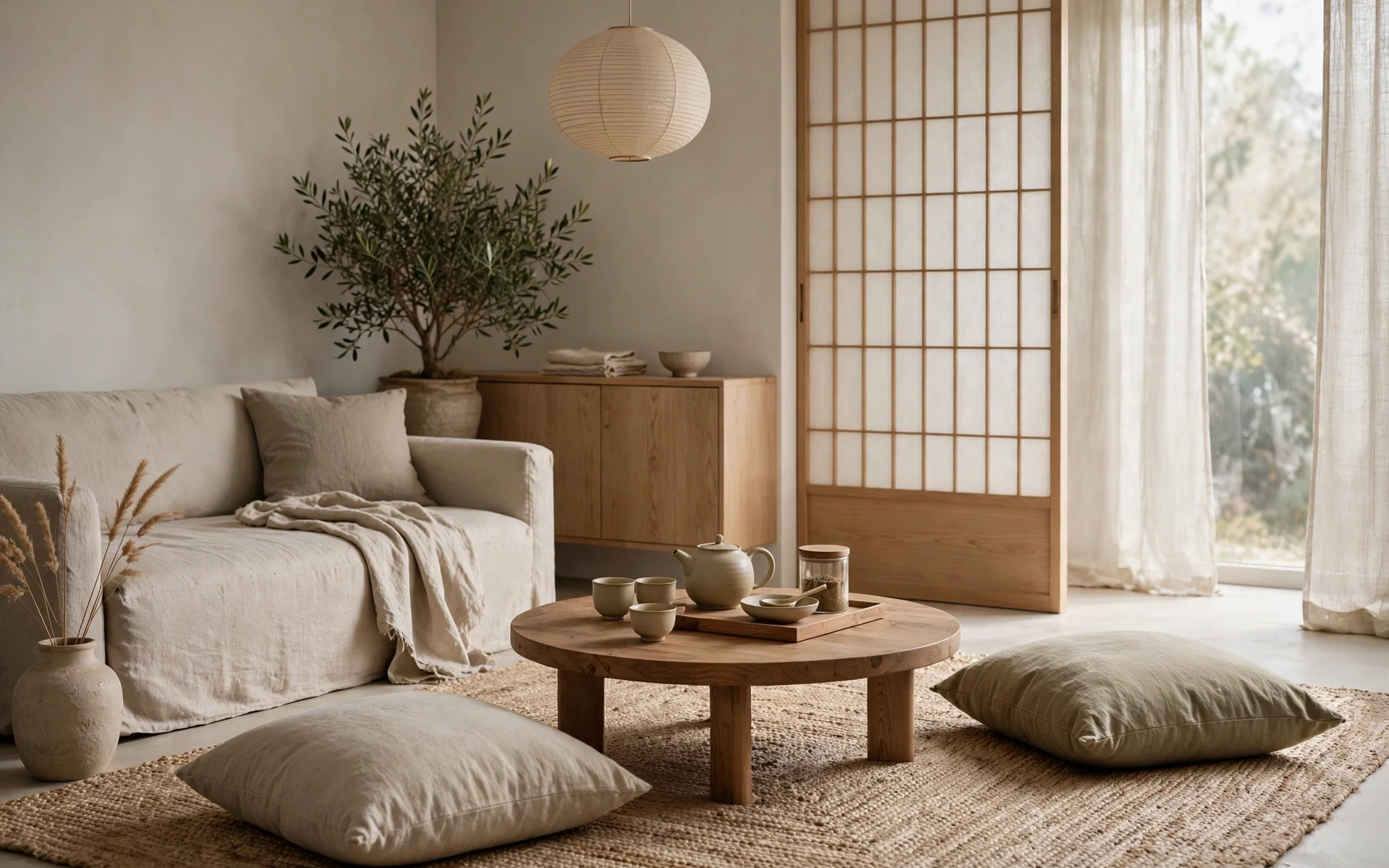
The coffee table ritual is where Japandi’s Japanese roots show most clearly. Pick a low, round or rectangular solid wood table and style it with a wooden tray holding a small teapot, two cups, and nothing else. Floor cushions in linen or cotton, placed on two sides of the table, invite sitting lower and lingering longer, and they stack or store in a basket when not in use. Keep the table surface at least half empty day to day — a book and the tray are enough. Choose cushions around 14 to 16 inches square with firm fill so they hold their shape. This low, unhurried setup changes how the room is used, not just how it looks. Wipe the tray and table after use so the wood never takes a ring or stain.
Slatted Wood and Shoji Lines: Japandi Living Room Ideas for Dividing Space
Open-plan rooms still need quiet zones, and a light wood slatted screen divides space without blocking light. Set a freestanding slatted divider behind the sofa to separate the living area from a desk or dining spot, or fix slim wood battens to one wall section as a permanent backdrop for the reading chair. The vertical lines echo shoji screens while staying honest about being timber, not paper. Keep spacing even — gaps roughly equal to the slat width read calmest — and match the stain to your other furniture wood. Dust slats with a long brush weekly, since horizontal edges collect it quickly. Unlike a bookcase divider, a screen stores nothing, which is precisely why the room stays uncluttered. Leave the floor beneath it completely clear so the divider stays visual, never storage.
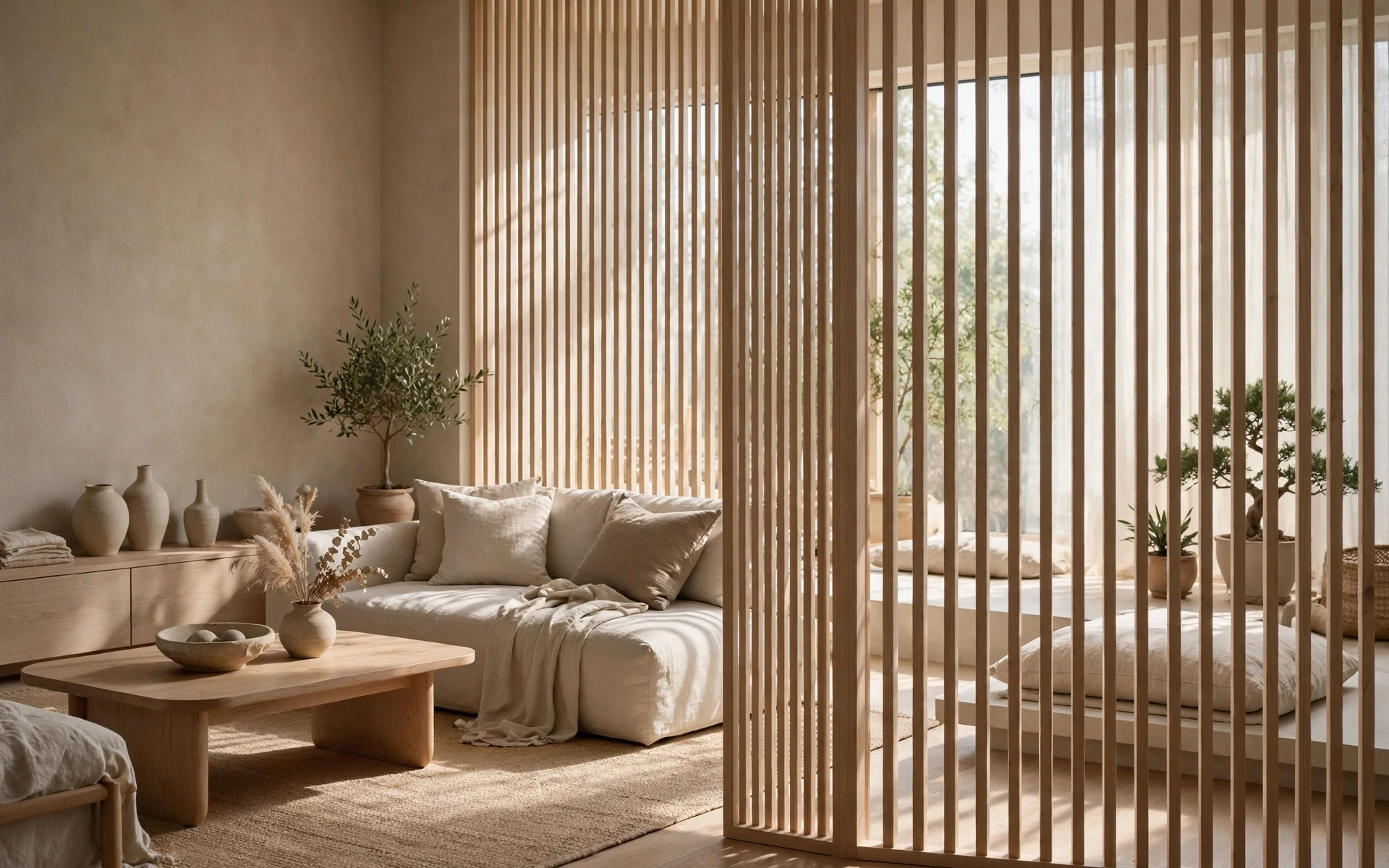
The Scandinavian Layer: Japandi Living Room Ideas for Coziness
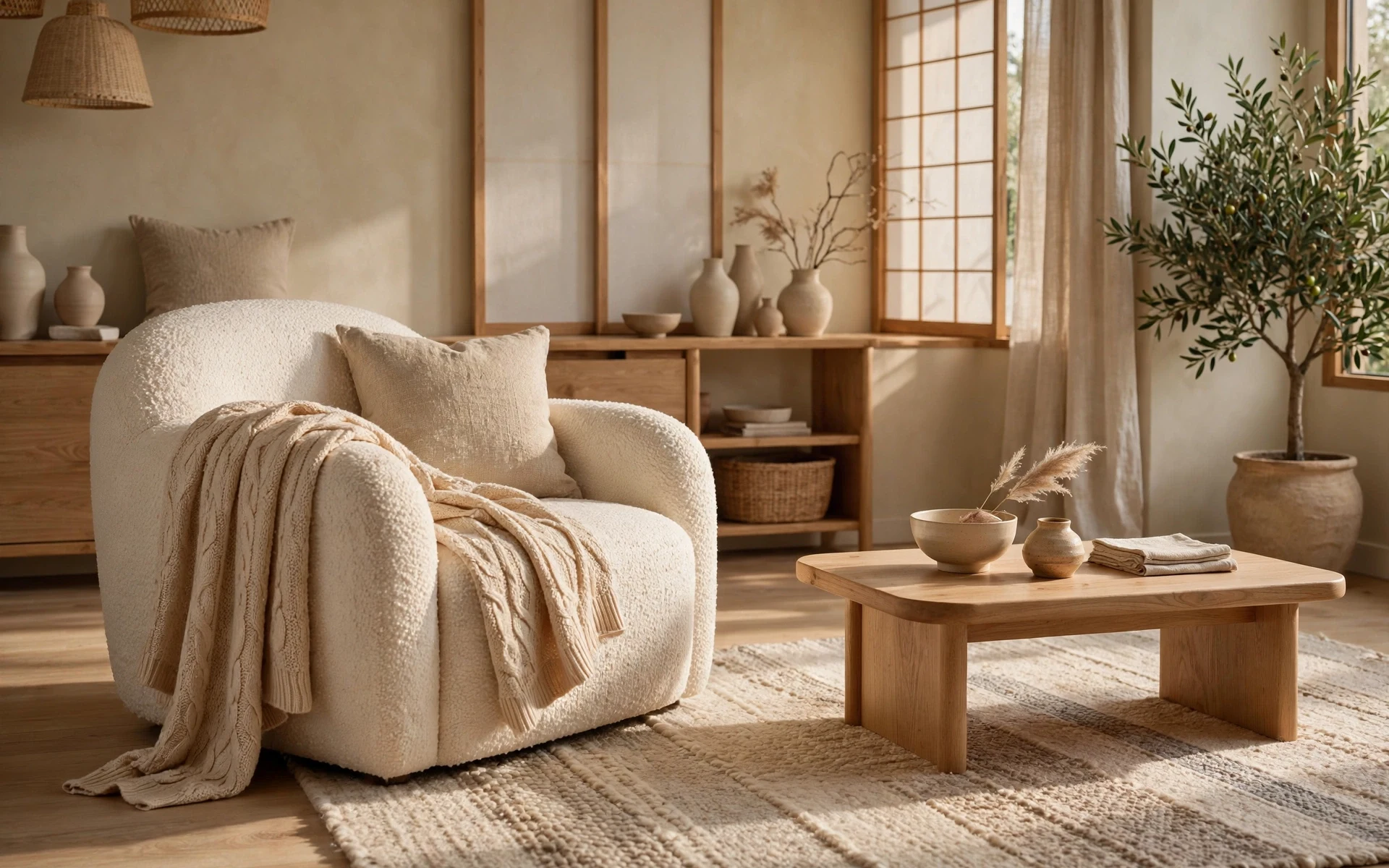
Japandi’s Scandinavian side is what keeps the minimalism comfortable. Add it through one soft, generous piece: a boucle or wool armchair you can curl into, a thick flatweave or short-pile wool rug underfoot, and a knitted throw in cream or pale gray. The rug matters more than it seems — choose one large enough that the sofa and chair front legs sit on it, in a natural fiber with no pattern or only a faint woven stripe. These soft layers should still obey the palette and the editing rule: one chair, one rug, one throw. Vacuum wool rugs on suction only, without a beater bar, and rotate them twice a year so wear and light fall evenly. One cushion in a slightly deeper tone can rest on the chair without breaking the calm.
A Quiet Media Wall: Japandi Living Room Ideas for the TV
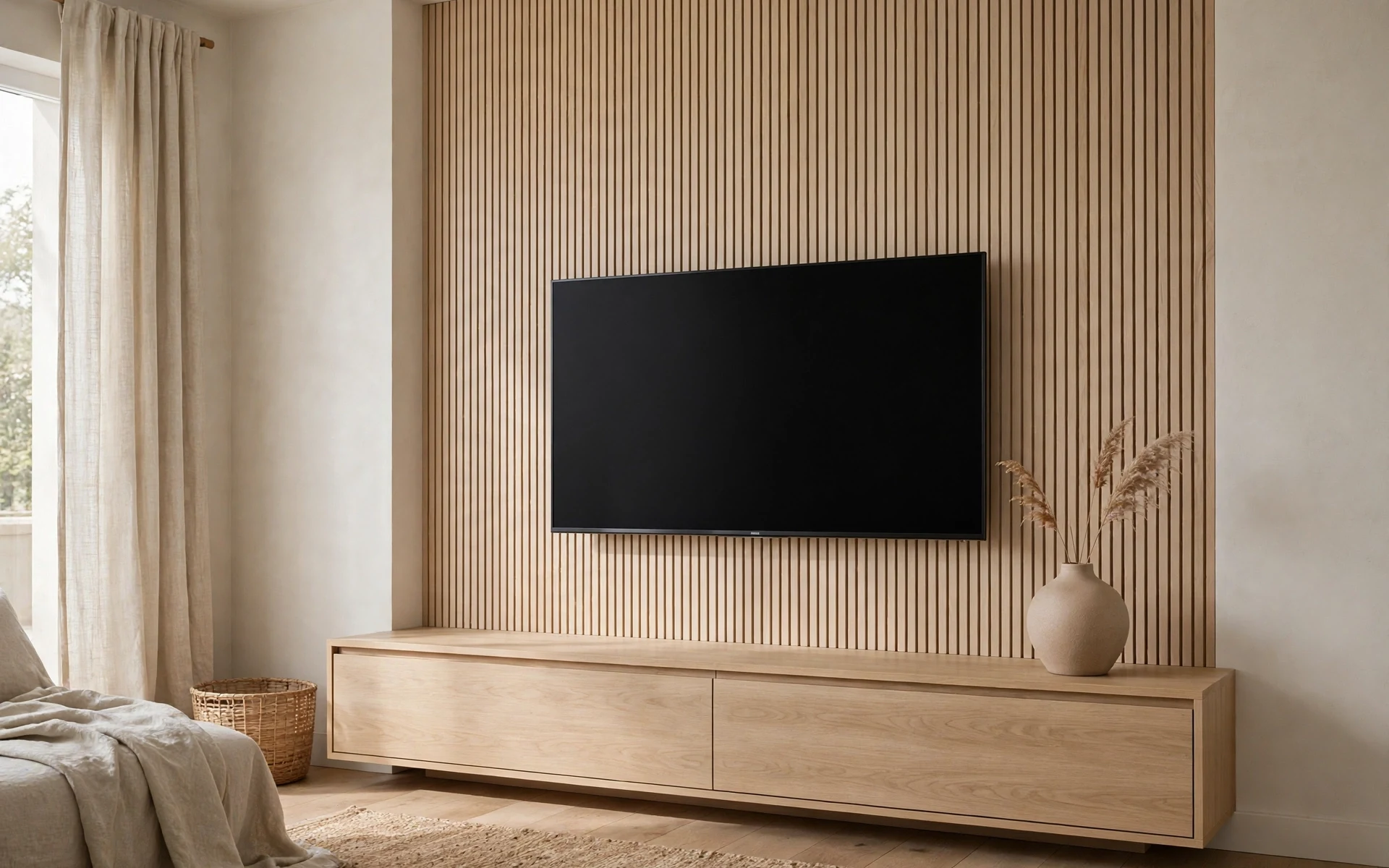
A television does not have to break the calm. Mount it flat on the wall above a long, low credenza in light oak, with doors or drawers that hide consoles, remotes, and cables completely. Keep the credenza top nearly bare — one ceramic vase or a small stack of art books at one end — and run cables inside the wall or a painted channel so nothing dangles. A matte or anti-glare screen finish suits the room better than a glossy one. Proportion helps too: the credenza should be wider than the television by a good margin on each side, so the setup reads as furniture with a screen above it, not a screen with furniture squeezed underneath. At night, lamplight alone makes the dark screen recede.
Frequently Asked Questions
What is the difference between Japandi and Scandinavian style?
Scandinavian style is lighter and more casual, with pale colors and cozy layers. Japandi keeps that warmth but adds Japanese restraint: lower furniture, darker grounding accents, and stricter editing of objects.
What colors suit japandi living room ideas best?
Warm white, soft beige, greige, and mushroom on walls and large pieces, with light natural wood throughout. Add depth with small amounts of charcoal, black, clay, or muted sage in accents and plants.
Can I create a Japandi living room in a small space?
Yes — the style suits small rooms because it uses few, low pieces and closed storage. Choose a compact low sofa, one chair, and a wall-mounted or low media unit, and keep surfaces mostly clear.
What furniture should I avoid in a Japandi living room?
Avoid tall, bulky, or ornate pieces, glossy finishes, and matched furniture sets. Every piece should be low, simple in line, made from natural materials, and earn its place by being used daily.
Conclusion
Pick the order that suits your room: start with the low sofa and the palette, clear the layout back to what you use, then add light, ceramics, and textiles one piece at a time. These japandi living room ideas reward patience — a calm room built slowly, from pieces you intend to keep, will outlast any quick copy of the look.
By Nestora Find