
12 Linen Bedding Ideas for an Effortless Bedroom
The best linen bedding ideas work because linen does not need to look perfect to look good. Its natural texture, soft wrinkles, and matte finish make a bed feel relaxed the moment you walk into the room. Flax linen is breathable, it softens with washing, and it works in summer and winter with a simple change of layers. Below are twelve practical ways to style it, from an all-white set to deep navy and warm terracotta. If you are still choosing between fabrics, this guide to why linen sheets can work better than cotton from Real Simple covers the comfort and care differences clearly.

All-White Set: Linen Bedding Ideas to Start With
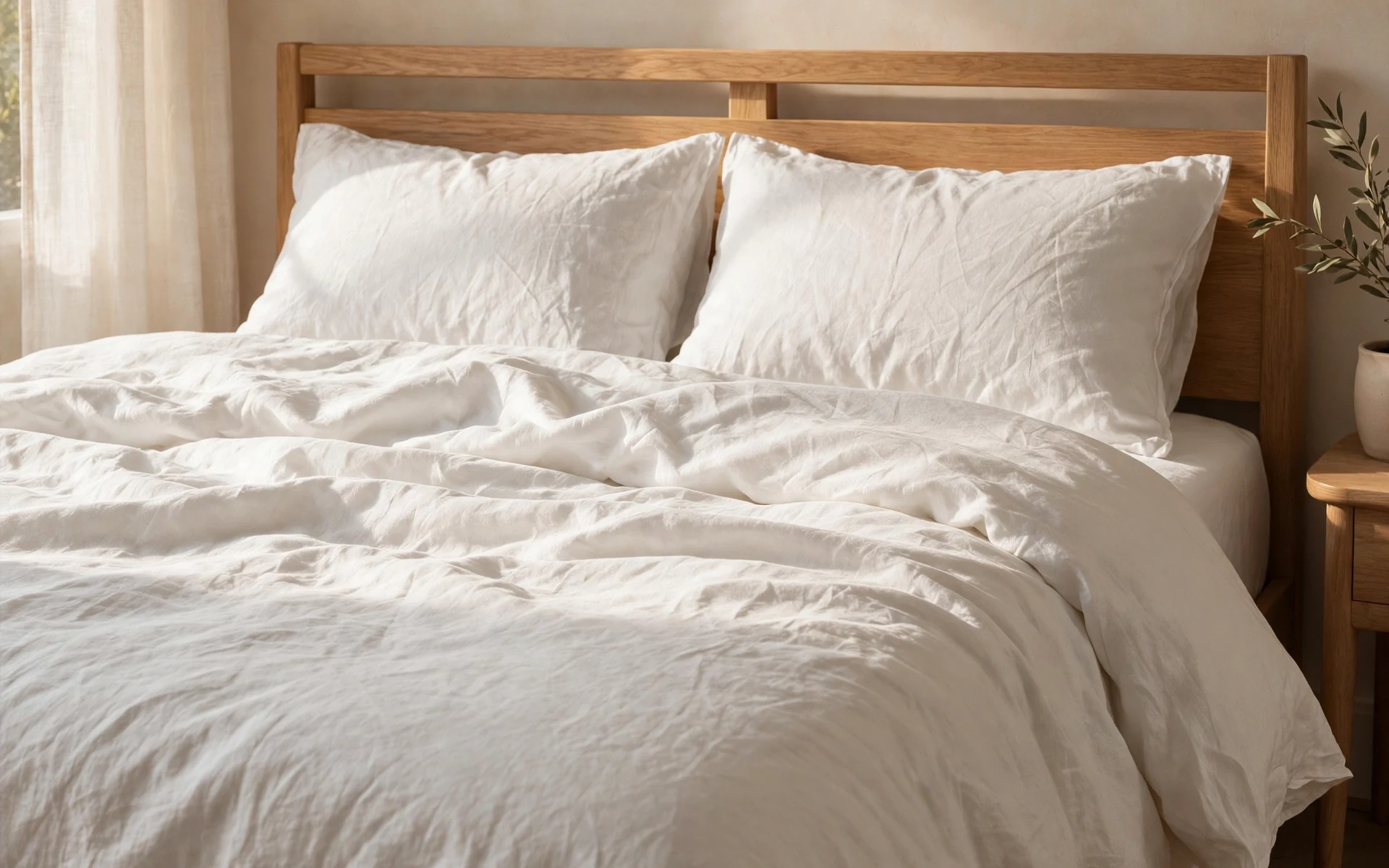
An all-white linen set is the simplest place to start and the hardest to get wrong. Choose a duvet cover, fitted sheet, and two pillowcases in the same white so the bed reads calm rather than patched together. Leave the duvet slightly rumpled and fold the top sheet back about eight inches to show the texture. White linen suits small rooms because it reflects daylight and makes painted wood or a dark headboard stand out. Wash whites separately on a gentle cycle with mild detergent, and skip fabric softener, which coats the fibers. Line drying helps keep the white bright without bleach, which weakens flax over time.
Layered Neutrals: Linen Bedding Ideas in Oatmeal and Flax
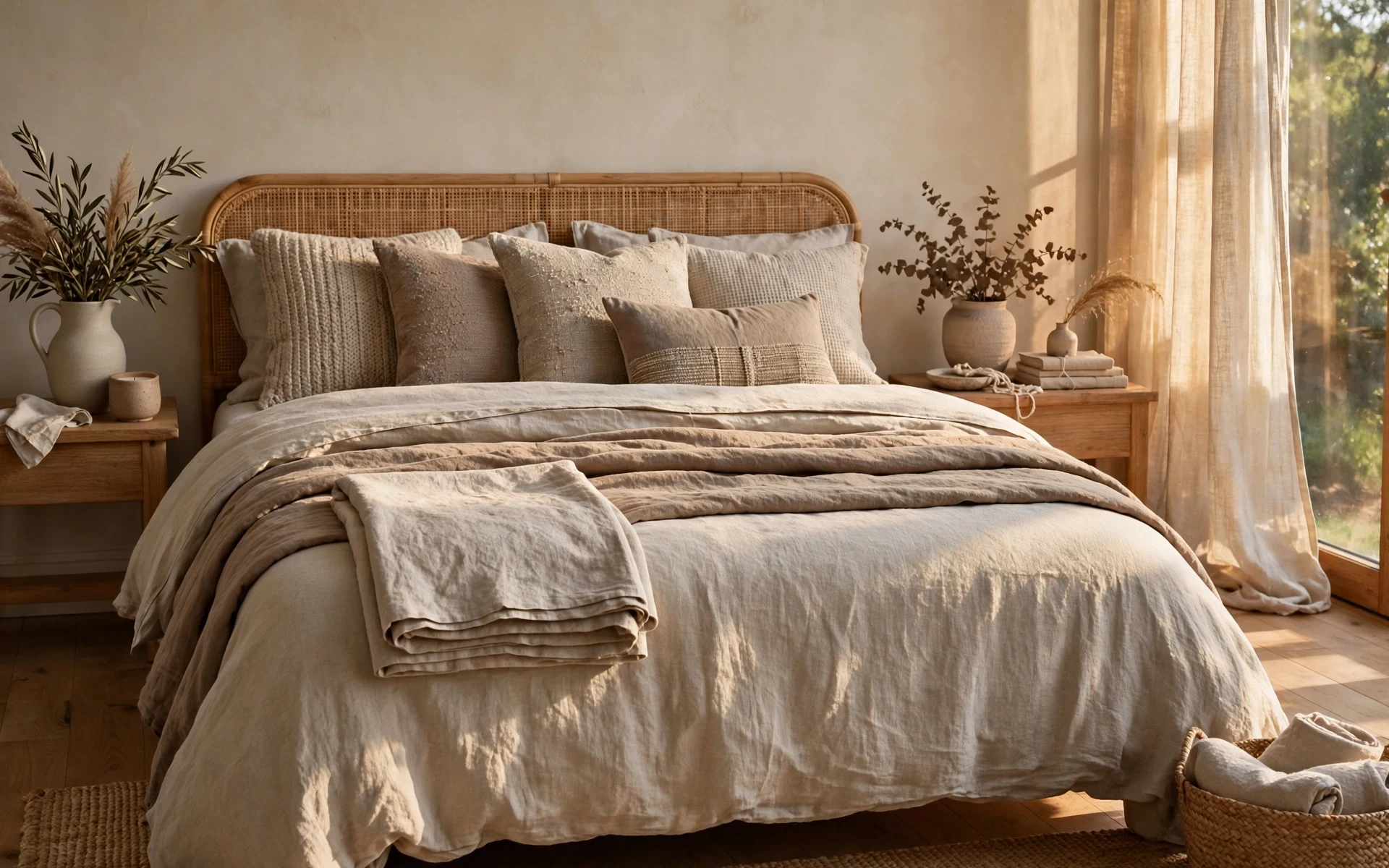
Layering neutrals gives a bed depth without adding strong color. Start with an oatmeal fitted sheet, add a flax-colored duvet cover, and finish with a slightly darker taupe throw folded across the foot. Keep the three tones close in value so nothing jumps out. Two sleeping pillows in the base color and one smaller cushion in the darkest tone are enough. This approach suits renters and anyone who changes accessories often, because lamps, rugs, and art can change without clashing. Natural linen varies a little between dye lots, so buy pillowcases and sheets from the same range when you can, and embrace small differences as part of the material.
Sage Green Linen for a Calm, Plant-Friendly Room
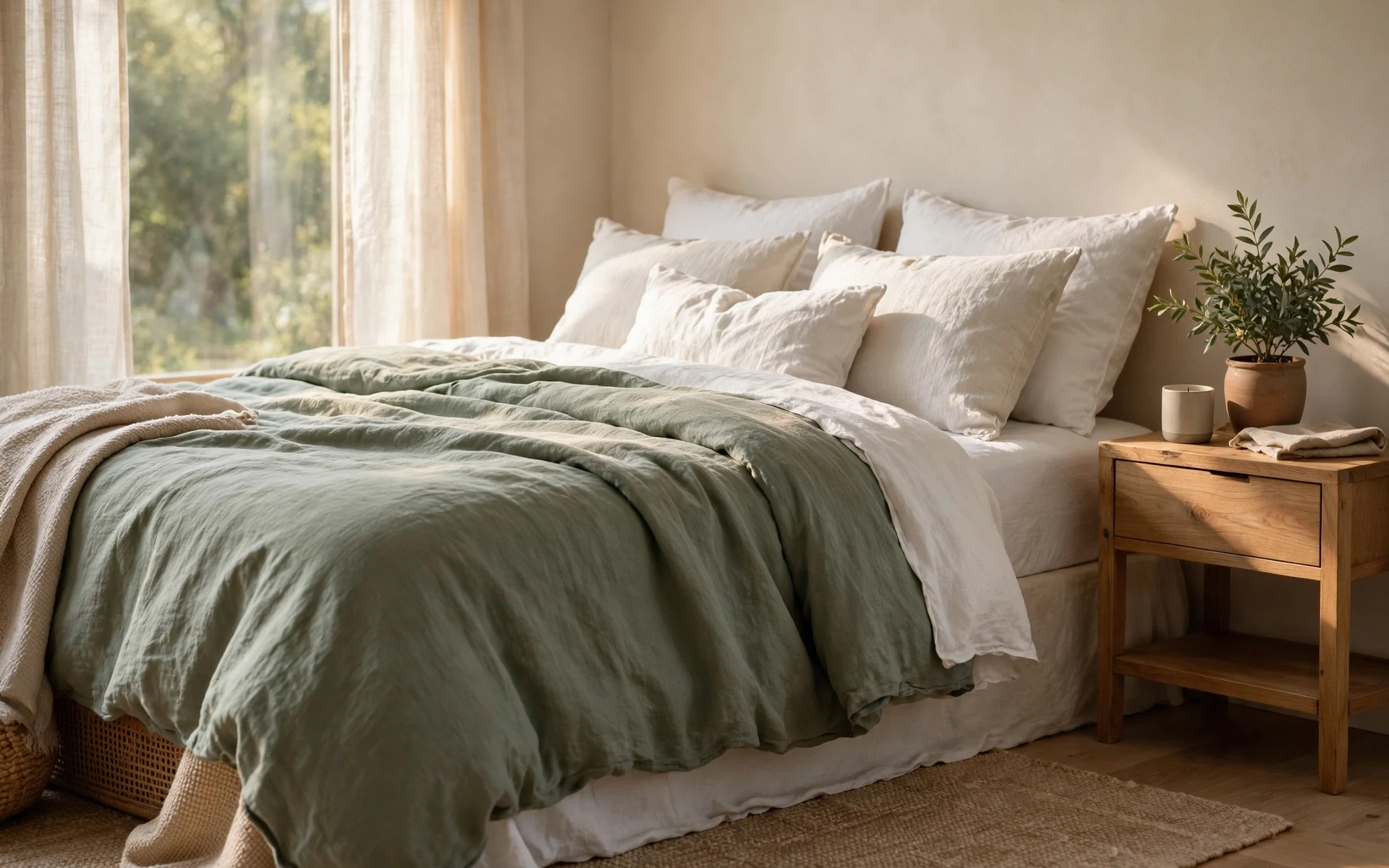
Sage green linen brings color in without making the room feel busy. Use it for the duvet cover only, and keep sheets and pillowcases in warm white so the green stays soft rather than heavy. The shade pairs well with light oak, rattan, and unglazed ceramic, and it flatters houseplants on a nightstand or windowsill. Sage can look grey in north-facing light, so check a pillowcase against your wall paint before buying a full set. Wash sage linen inside out in cool water to protect the color. If you like this palette through the rest of the room, carry the same green into one cushion or a small throw rather than repeating it everywhere.
Terracotta and Clay Linen for Warmth
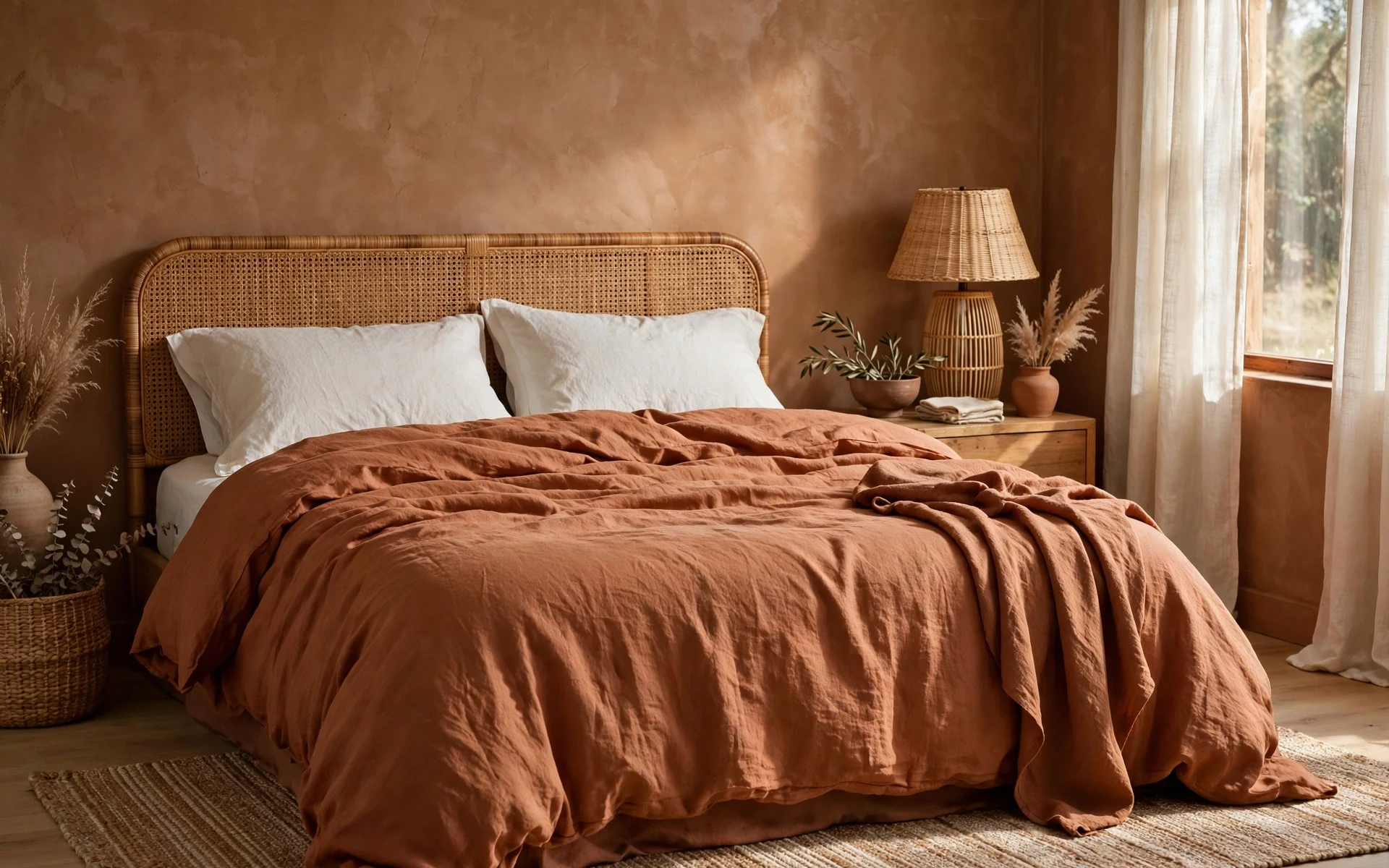
Terracotta linen adds warmth that suits autumn and also works year-round in rooms with little sun. Pair a clay-colored duvet cover with white or natural pillowcases to keep the look light around the headboard. A woven rug in cream, a rattan lamp shade, and warm wood furniture all sit comfortably beside it. Terracotta shows lint from white towels and throws, so store it separately and give it a quick shake outside before making the bed. The color deepens slightly when new and settles after a few washes. Start with pillowcases if you are unsure — two clay pillowcases on a white bed give you the effect without committing to a full set.
Lightweight Summer Linen Bedding Ideas
In hot weather, strip the bed back to the basics. Use a linen flat sheet as your only cover on warm nights, or choose a light linen duvet cover with no insert for a thin layer that still looks finished. Pale blue, white, and natural flax feel coolest and reflect the summer light in the room. Keep spare layers off the bed entirely and store them in a breathable cotton bag. Linen releases moisture quickly, so it feels less clammy than tighter cotton weaves on humid nights. Wash more often in summer, using cool water and a gentle spin, then hang the bedding where air moves so it dries evenly and does not develop a musty smell.

Charcoal Linen Layers for Cold Months
For winter, keep the same linen sheets and change what goes over them. A charcoal or warm grey linen duvet cover gives the bed a heavier look, and a wool or cotton throw across the foot adds real warmth. Linen under a warm layer still helps because it does not trap moisture against the skin. Add a second pair of pillowcases in a mid-grey if your set is white, so the bed does not look stark under low winter light. This is also a good base for a fuller seasonal change — see these fall bedroom decor ideas for colors and layers that sit well over a grey base.

Mix and Match Stripes With Plain Linen
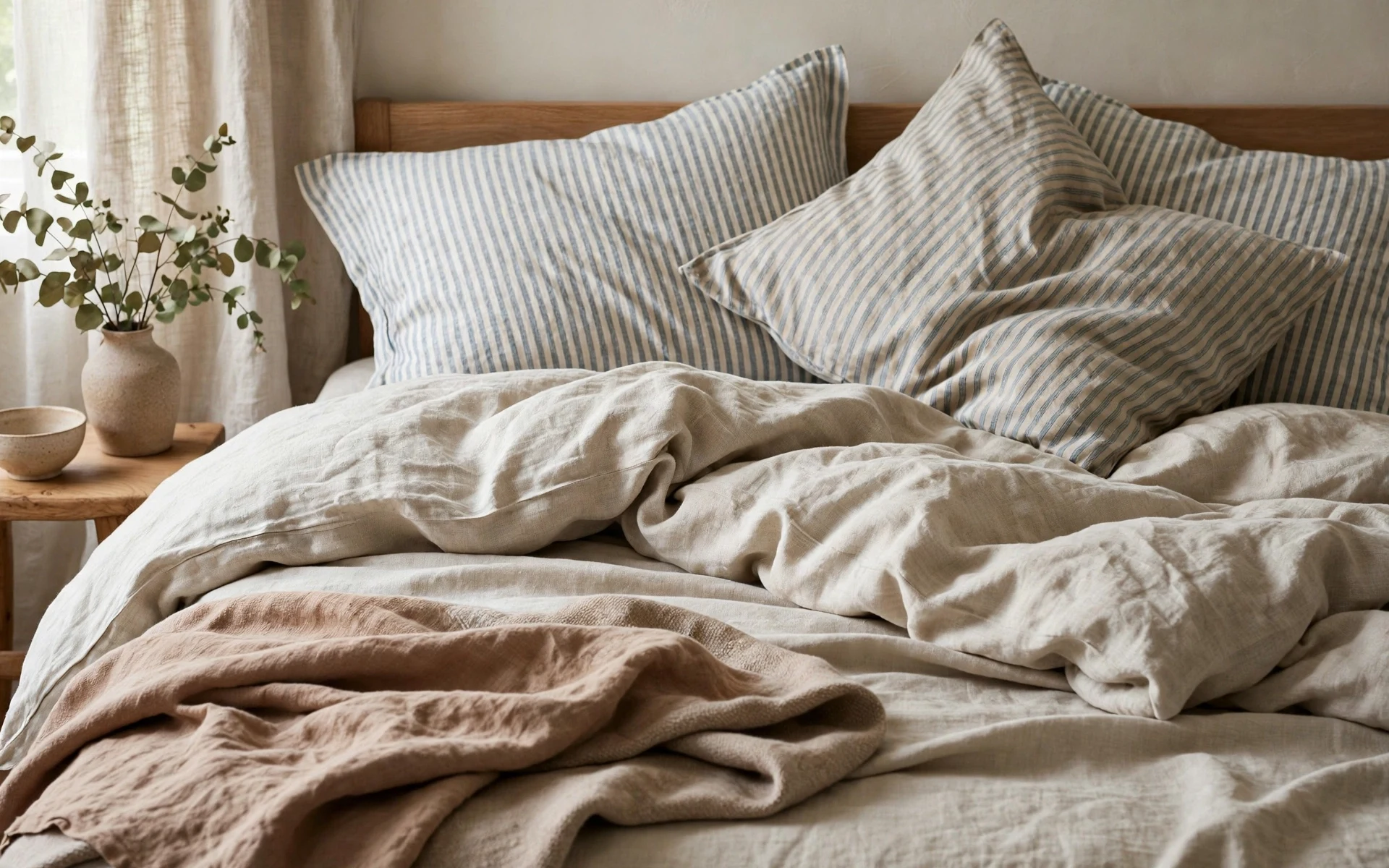
You do not need to buy complete matching sets. A plain natural duvet cover looks fresh with striped pillowcases, and a striped flat sheet folded back over a plain duvet is a classic hotel-style detail with a softer finish. Keep the stripe narrow and in one color — navy, charcoal, or clay on white all work — so it does not fight with rugs or curtains. Buy the patterned pieces first, since they are easier to match plain linen to later. Mixing pieces from the same fabric weight matters more than matching color exactly. Heavier linen drapes differently from a light weave, so check the fabric description before combining sets from different makers.
Blush Linen Bedding Ideas for a Guest Room
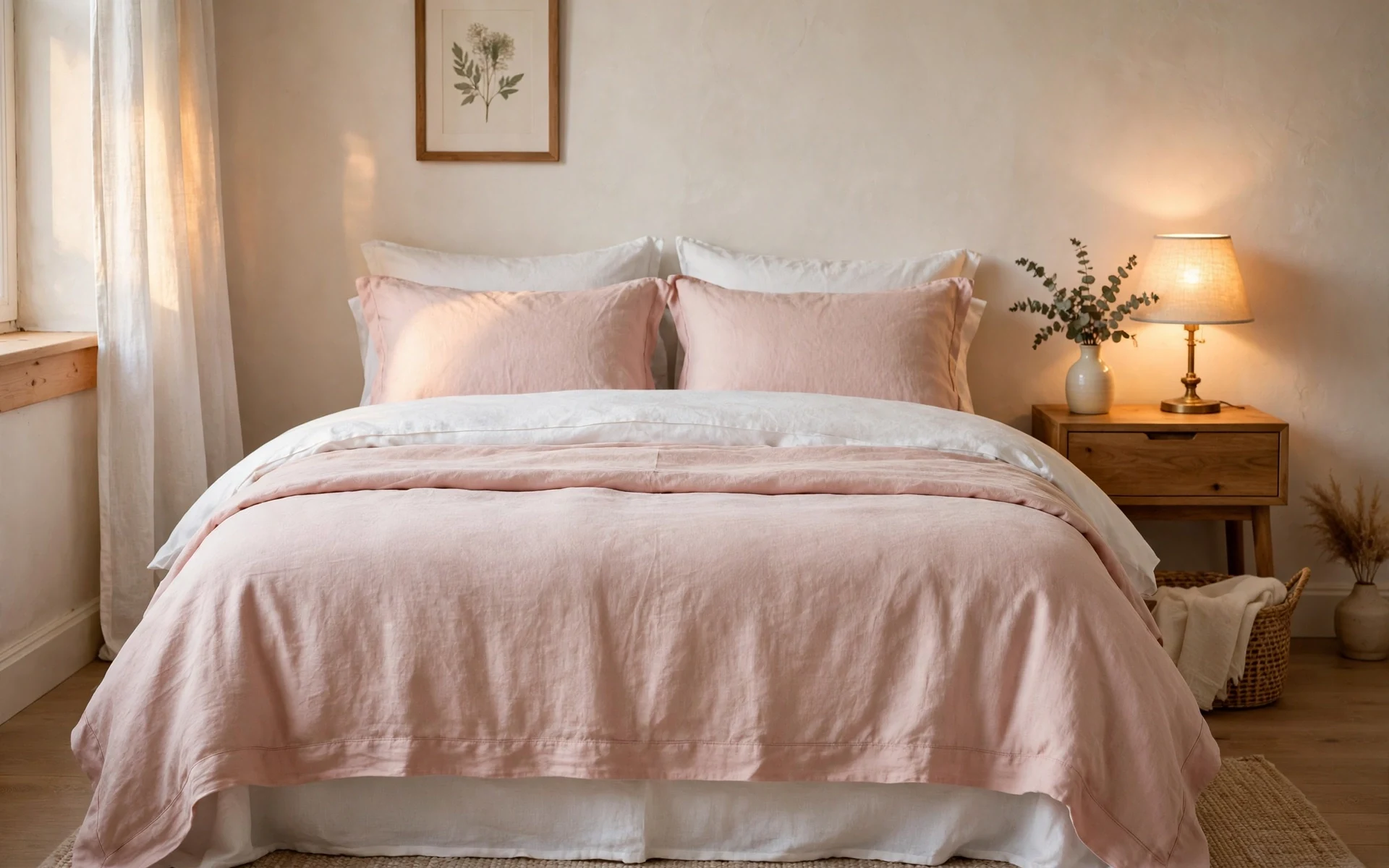
Blush pink linen makes a guest room feel prepared without much effort. Use blush for the duvet cover, white for the sheets, and add one folded natural throw at the foot so guests have an extra layer within reach. Keep a small carafe of water and a spare pillow on hand, and tuck the corners in neatly — guests read a tidy bed as a welcome. Blush fades faster than darker colors, so wash it inside out and dry it out of strong direct sun. Choose a dusty, muted blush rather than a bright pink; it pairs better with wood, brass, and the cream walls most spare rooms already have.
Show the Texture: Fold-Backs and Layered Edges
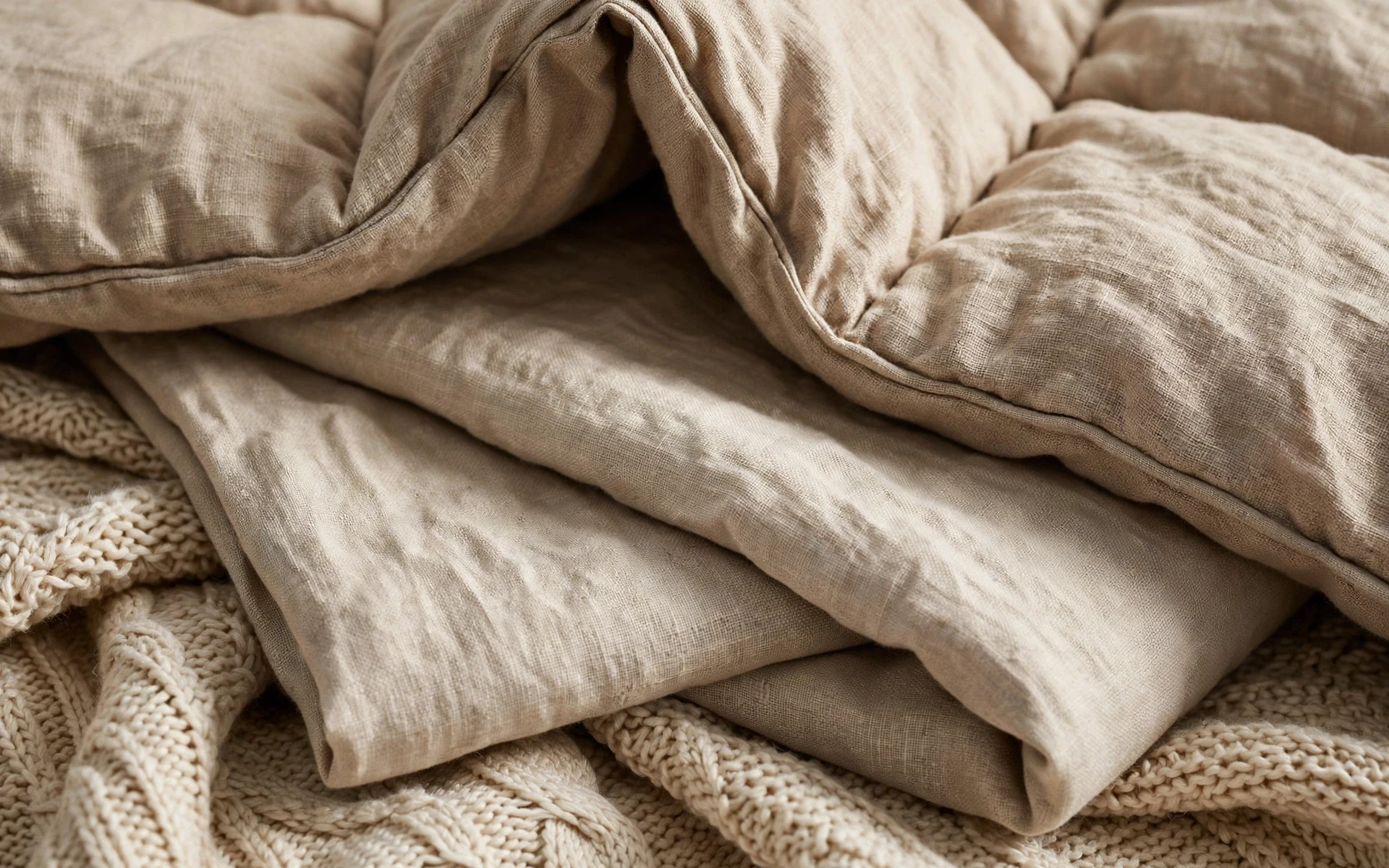
Linen’s main appeal is texture, so let people see it. Fold the duvet down by a third, fold the flat sheet back over it, and stack sleeping pillows upright against the headboard with two flatter pillows in front. That simple sequence shows three layers and three edges, which is where the woven texture reads best. Add one textured throw — waffle cotton, a loose knit, or a fringed edge — rather than several smooth ones. If you want more ways to build that layered surface, these textured bedding ideas cover throws, quilts, and cushions in detail. Make this style of bed in the morning light if you can; raking light shows whether the layers look even.
Undyed Natural Linen for a Minimal Bedroom
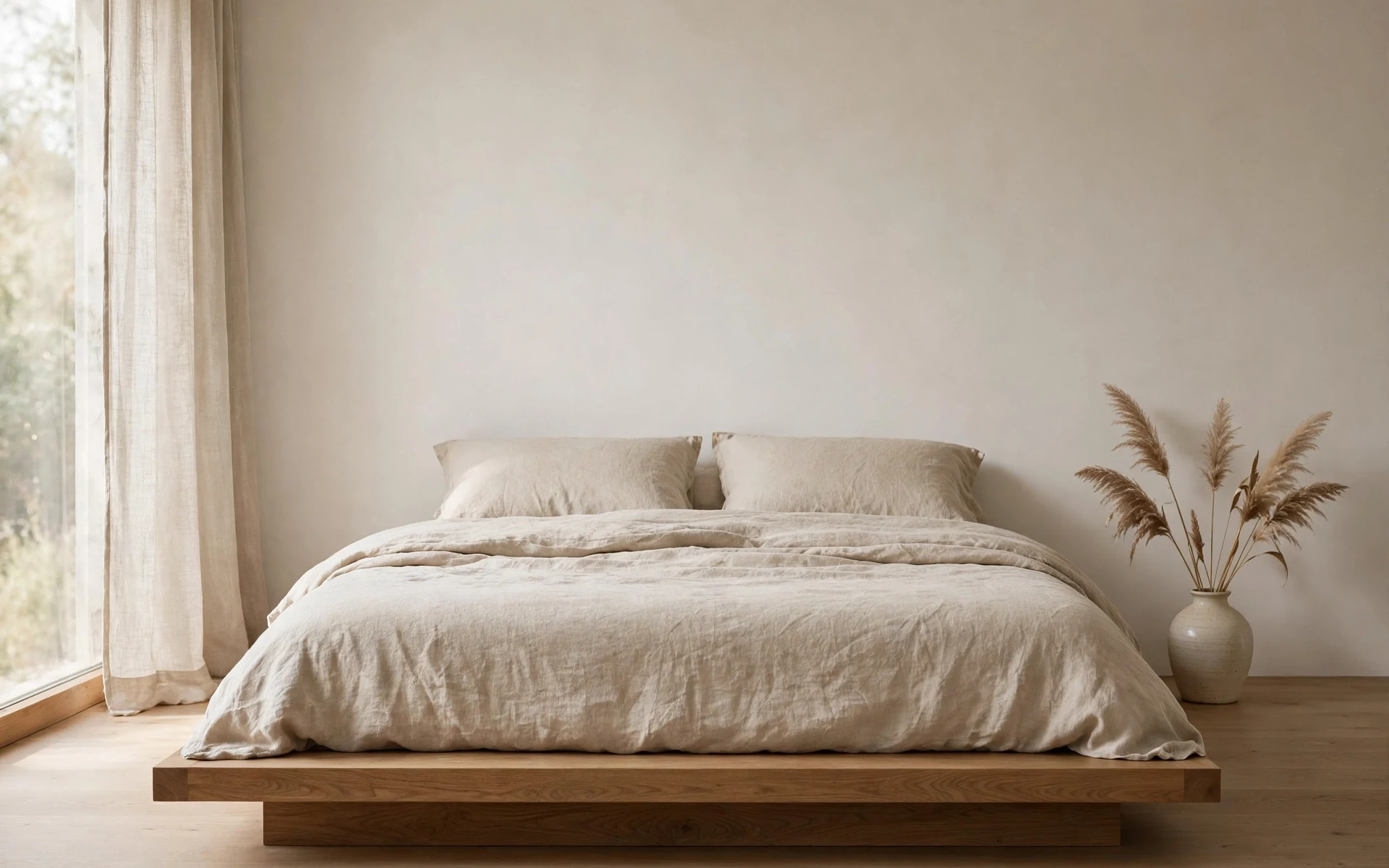
Undyed linen in its natural flax shade is the quietest option of all. It suits a low platform bed, plain walls, and very little else in the room — one ceramic vase, one lamp, and a rug in a similar tone. Because there is no dye, small flecks and slight color variation in the weave are normal and become part of the look. This palette is forgiving about dust and pet hair compared with white, and it hides fading well. It fits the calm approach in these warm minimalist bedroom ideas, where the bed is the main feature and everything else stays pared back. Keep bedding storage simple too: one open shelf or a lidded basket.
Navy Linen With White Sheets for Contrast
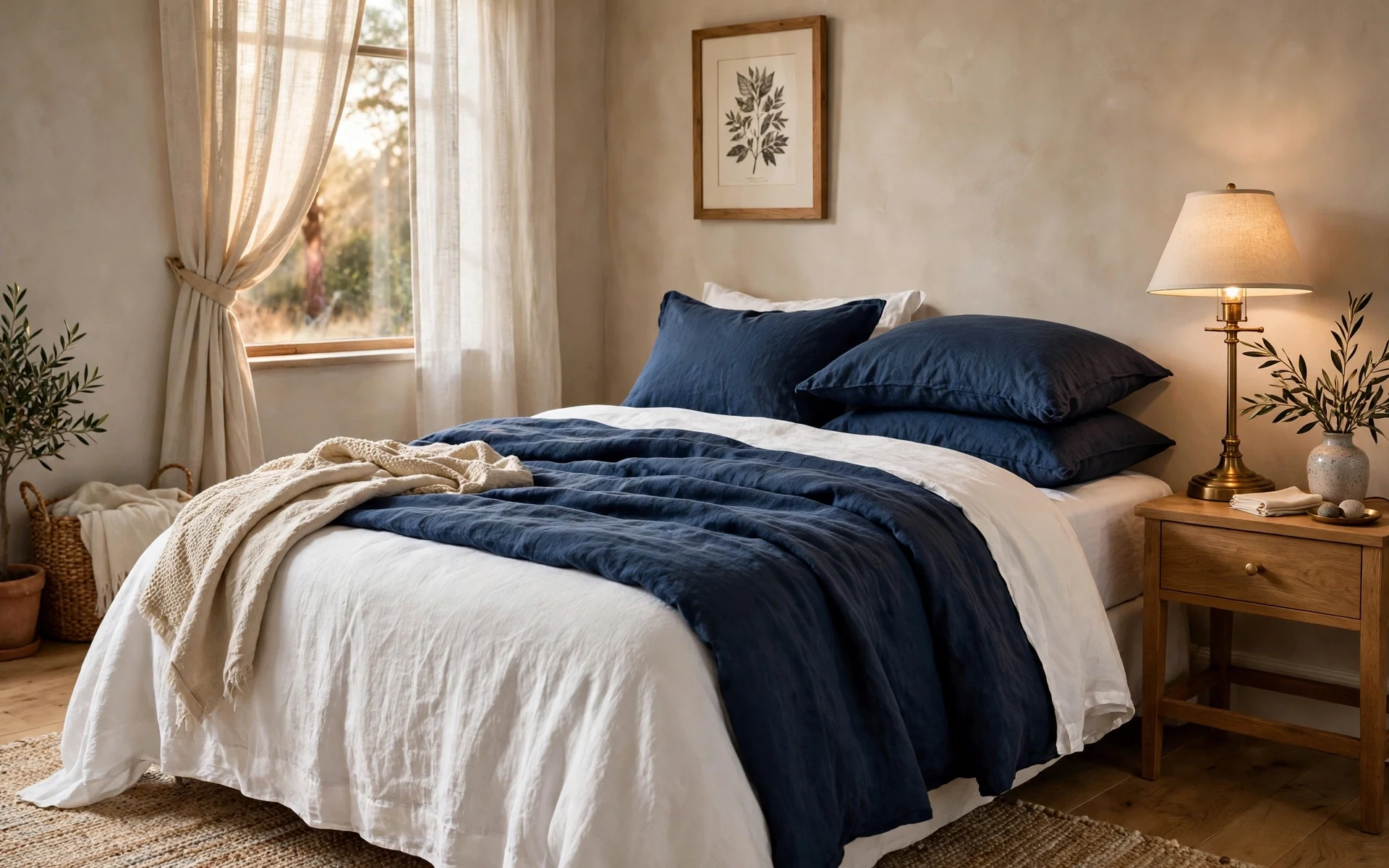
Navy linen gives a bedroom a clear focal point and hides everyday marks better than pale colors. Balance it with white sheets folded back at the top and white pillowcases behind navy ones, so the dark color does not close in around the headboard. Brass or warm wood lamps stop navy from feeling cold, and a light rug keeps the floor from disappearing under it. Navy and white is also a practical pairing for shared rooms where two people want different levels of formality — it reads tidy without ironing. Wash navy pieces separately for the first few washes, since dark linen can release a little color early on.
Care Basics That Keep Linen Bedding Looking Good
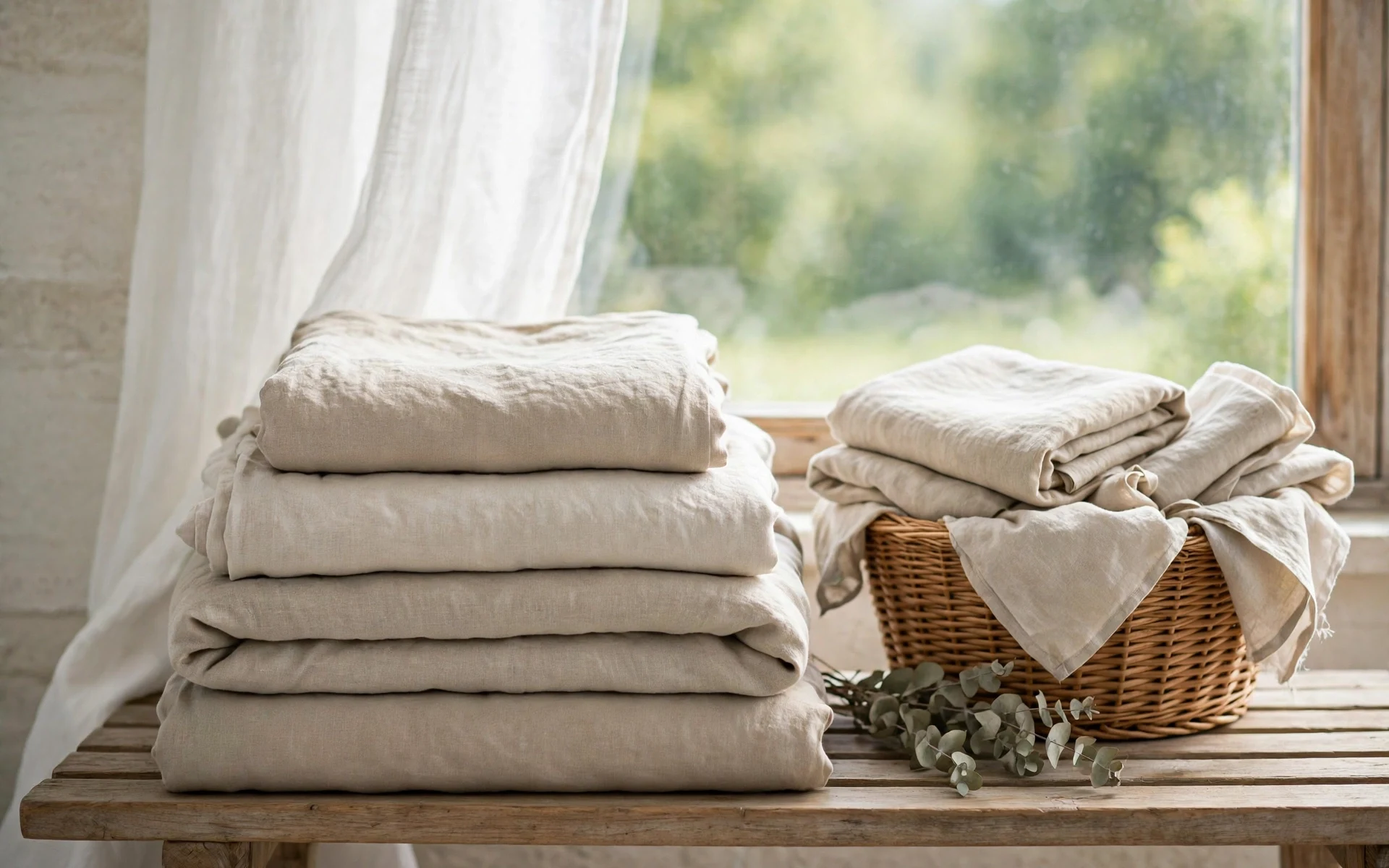
Good care is what makes linen worth buying. Wash sets in cool or lukewarm water on a gentle cycle with mild detergent, and wash similar colors together. Skip fabric softener and bleach; both coat or weaken flax fibers. Tumble dry on low and remove the bedding while it is still slightly damp, or line dry it and give each piece a firm shake before hanging. Store folded linen in a dry cupboard, not in sealed plastic, which can trap moisture and cause yellowing. Expect linen to feel firmer at first and soften steadily over the first dozen washes. Small wrinkles are normal — smooth them by hand when you make the bed rather than ironing every piece.
Frequently Asked Questions
Is linen bedding comfortable in every season?
Yes. Linen breathes in summer and works in winter under a wool throw or a heavier duvet insert, so most people can keep the same sheets all year and change only the top layer.
How do I wash linen bedding without damaging it?
Use cool water, a gentle cycle, and mild detergent. Avoid bleach and fabric softener, dry on low heat or on a line, and take pieces out while slightly damp.
Does linen bedding need ironing?
No. The relaxed wrinkle is part of the look. Smooth the duvet and pillowcases by hand when you make the bed, and iron only pillowcase edges if you want a neater finish.
How long does linen bedding last?
With regular gentle washing and storage away from moisture, a good flax linen set lasts for years and gets softer over time. Rotate two sets if you can, so each rests between uses.
Conclusion
Start with one change: a white set, a sage duvet cover, or two striped pillowcases. Linen bedding ideas do not need a full room makeover to work — the texture and the relaxed finish do most of the job on their own. Wash it gently, layer it by season, and let the wrinkles stay.
By Nestora Find