
12 Porch Swing Ideas for the Coziest Seat in the House
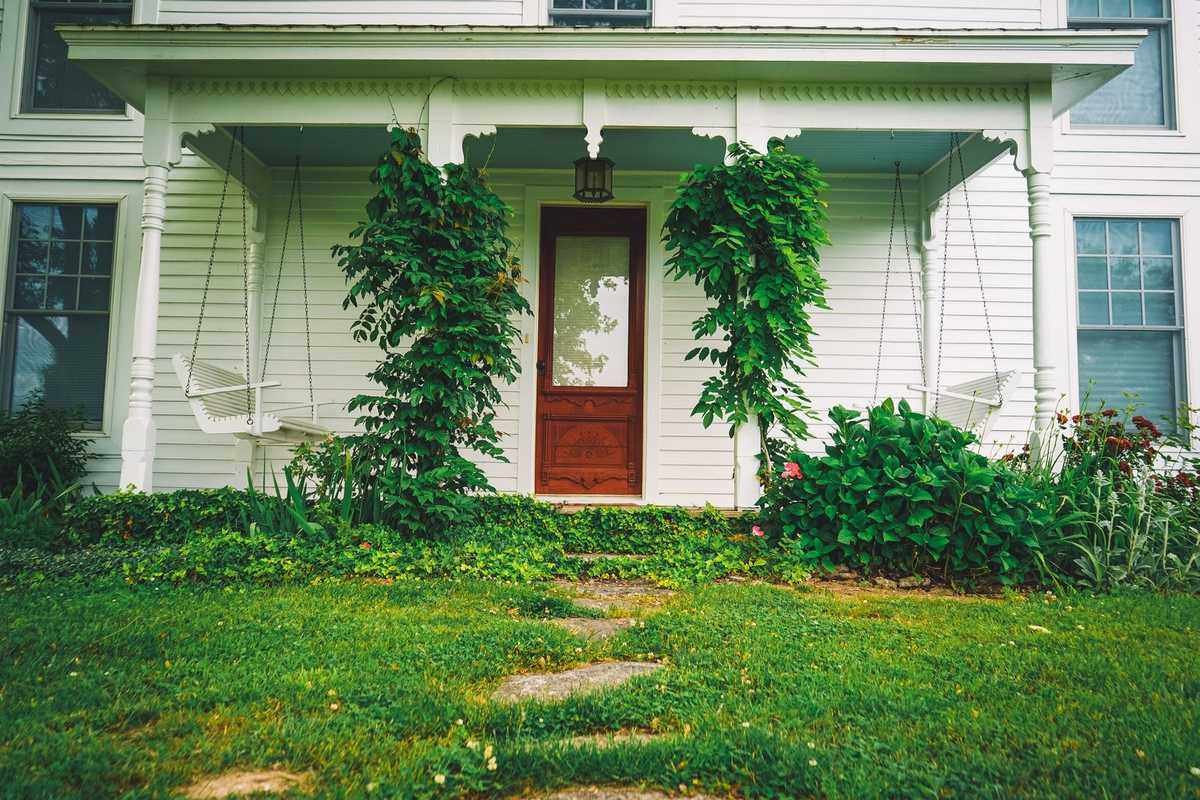
A porch swing is the one seat everybody drifts toward, but it only earns that spot when it is sized, hung, and styled properly. A swing that bangs the wall, sits too high to climb onto, or faces a blank fence stays empty no matter how pretty it looks in the listing photo. The porch swing ideas below start with the measurements that make a swing safe and comfortable, then move through the styles, fabrics, and finishing layers that turn a hanging bench into the coziest seat in the house.
Measure before you fall in love with a style. You need a ceiling joist or beam you can trust, roughly 4 feet of clear swing path, and a walking route past the seat that never drops below 36 inches. With those three numbers settled, every one of these porch swing ideas becomes a styling decision instead of a gamble.
1. Hang It Right: Joists, Chains, and Clearance First

Every good swing starts above your head. Hang from ceiling joists or a solid beam, 2 by 6 lumber or larger, never from beadboard or porch ceiling boards alone, which are only a cover. Use heavy-duty eye bolts screwed into the center of the joist and chain or rope rated well above the load: a 5-foot wood swing weighs 50 to 75 pounds, and two adults add 350 to 400 pounds, so look for a combined rating of 500 to 800 pounds. Leave at least 3 feet behind the swing and 2.5 feet in front for the arc, plus 14 to 18 inches at each side. Set the seat 17 to 19 inches off the floor, like a chair, so feet rest flat.
2. Choose the Classic 5-Foot Wood Bench Swing
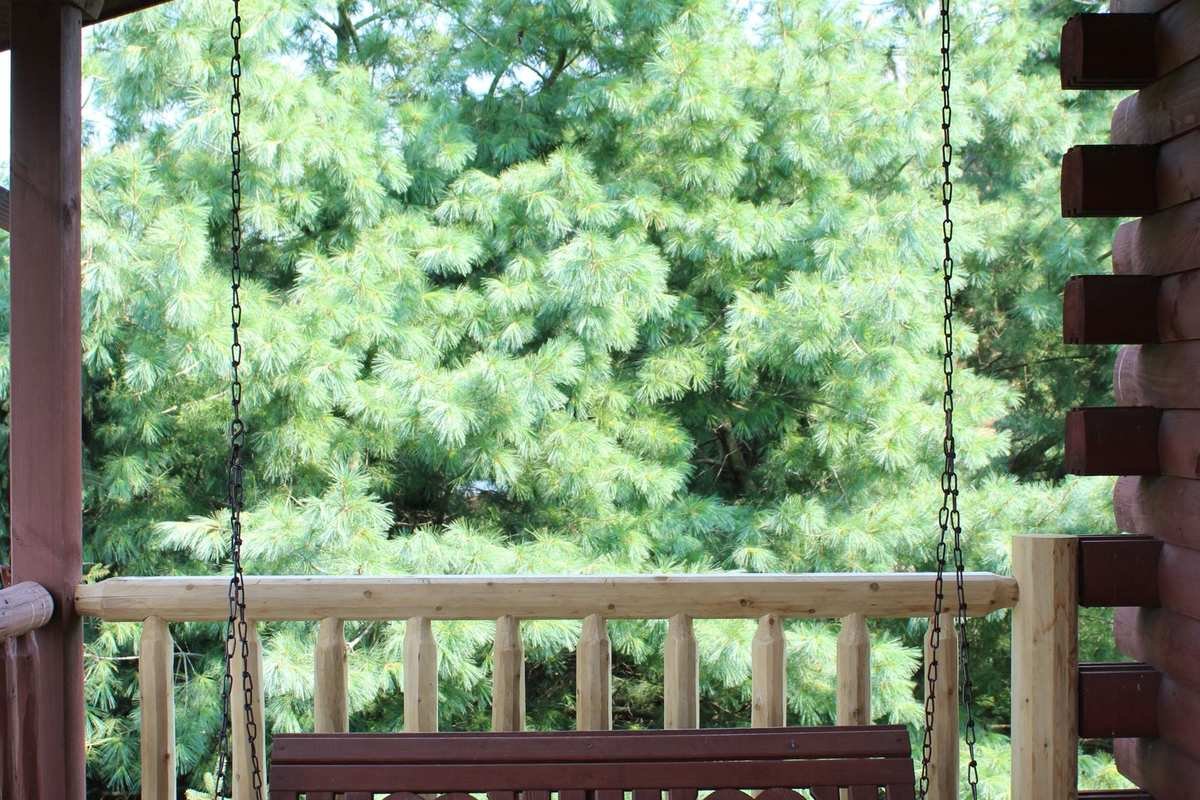
The 5-foot bench is the standard for a reason: it seats two adults with room for a cushion between them, or three people for a short sit. Look for a seat depth of 18 to 20 inches and a back height of 24 to 28 inches, in cedar, cypress, or pressure-treated pine that shrugs off weather. A slatted back lets air through on hot afternoons and sheds rain faster than a solid panel. Expect $200 to $450 for a solid ready-made bench, or $120 to $180 in lumber for a weekend build. Browsing Houzz porch swing photos is a fast way to compare slat spacing, arm shapes, and finishes before you commit.
3. Stretch Out on a Porch Swing Bed

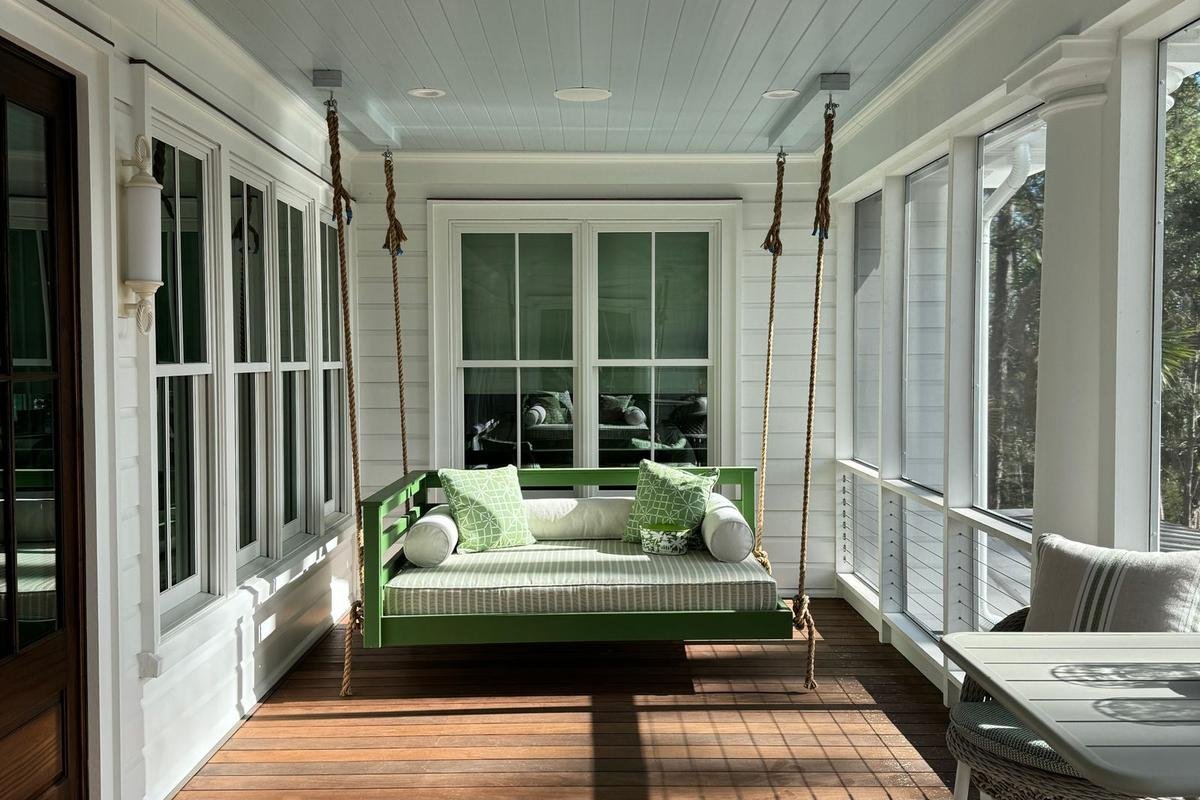
A swing bed is the luxury version of all porch swing ideas: a hanging daybed deep enough to lie on sideways, read on, or nap on. The common sizes follow mattresses, either a crib size at 52 by 28 inches for a narrow porch or a twin at 75 by 38 inches where the porch runs 8 feet deep or more. That depth changes the hardware math, so rate chains and eye bolts for 800 pounds and hang the bed from four points, not two. Dress it with a washable mattress cover, two 24-inch back cushions, and a light throw. Ready-made swing beds run $600 to $1,500; a pallet or 2-by-4 build with a new crib mattress can land near $250.
4. Go Small With a 4-Foot Swing on a Narrow Porch

A shallow or narrow porch is not a reason to give up; it is a reason to size down honestly. A 4-foot swing seats two people snugly and fits a porch as narrow as 5 feet deep once the swing arc is counted. Choose a shallower seat, 16 to 18 inches deep, a lower back, and arms that sit inside the frame rather than flaring out. Hang it at one end of the porch, parallel to the house, and keep the door swing completely clear. The same end-of-porch trick works indoors-adjacent too: our balcony decor ideas use the same measure-the-arc-first logic for small outdoor seats. Compact swings cost $150 to $350.
5. Pick Rope for Softness, Chain for Strength
Hanging hardware changes how a swing feels. Galvanized or stainless chain is the strong, low-maintenance default: it adjusts link by link, never rots, and suits swings rated over 500 pounds, though it can pinch fingers and clink. Rope, usually 3/4-inch manila or braided polyester, gives the relaxed coastal look and a quieter, softer motion, but natural manila weakens after two or three wet seasons and needs a yearly pull test. Whichever you choose, keep the two sides exactly level and add a swivel or spring hanger at each bolt if your household includes enthusiastic swingers; springs take the jerk out of the motion and spare the joists. Hardware kits run $25 to $70.
6. Try a Rattan or Wicker Swing for Texture

Wicker and rattan bring the woven texture that makes a plain porch feel collected. A two-seat rattan swing typically runs 48 to 55 inches wide with a deep, slightly reclined seat, and it weighs far less than solid wood, often under 40 pounds, which eases the load on older joists. The catch is weather: natural rattan belongs on a covered porch, out of direct rain, while resin wicker handles open porches far better. Add a single 20-inch seat pad rather than loose cushions, which slide on the curved seat. Our rattan decor ideas show how to repeat the weave in a side table or planter so the swing looks planned. Prices run $250 to $600.
7. Use an A-Frame Stand When There Are No Joists

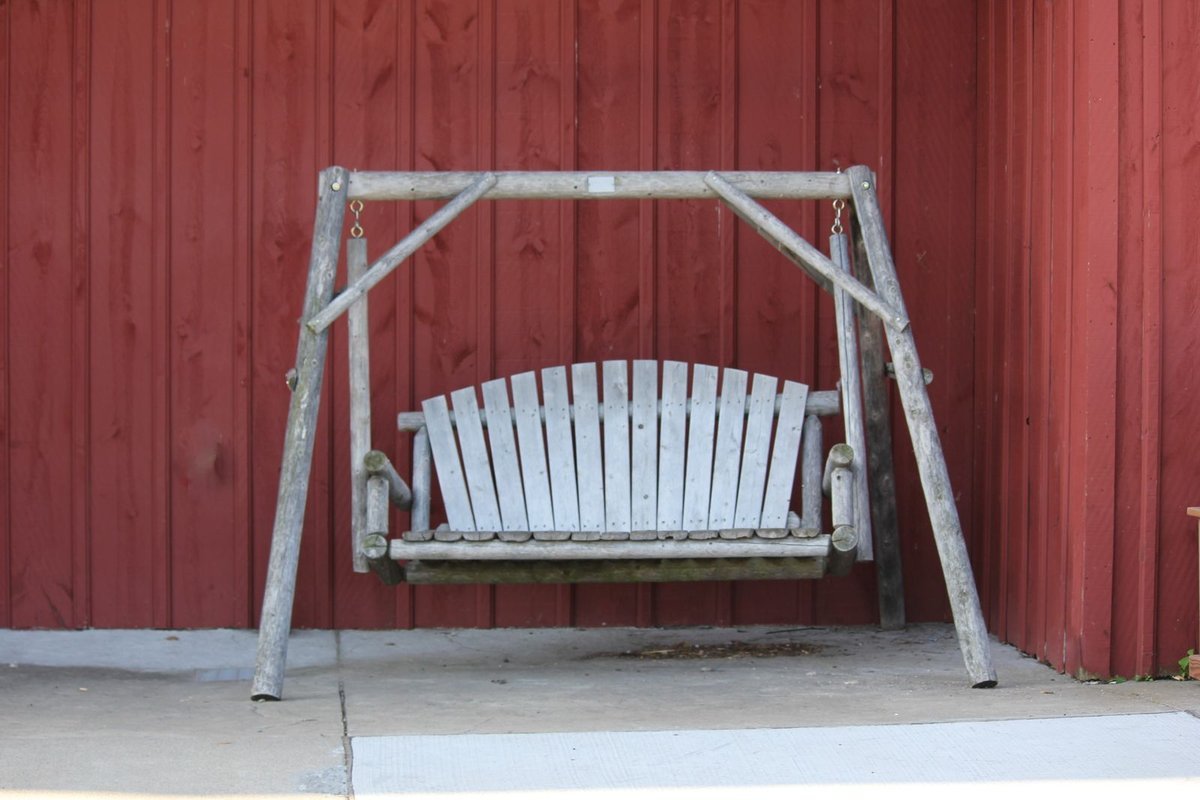
Not every porch can take a ceiling hang: vinyl soffits, low beams, and rental rules all rule it out. A freestanding A-frame or stand swing solves the problem and makes the swing movable, so it can migrate to the yard or a sunroom decor ideas setup in winter. Budget the footprint honestly, because a frame for a 5-foot swing needs about 7.5 by 4.5 feet of floor, and the frame, not the seat, sets the limit on a small porch. Steel frames cost $180 to $400 and shrug off weather; wood frames cost $300 to $650 and look better against a house. Confirm the frame rating matches the swing, not just the seat size.
8. Paint the Swing a Color With a Job to Do
Paint is the cheapest personality a swing can get. Match the swing to your shutters or front door and the whole facade reads coordinated; paint it black against pale siding and it becomes the graphic anchor of the porch; choose a soft blue-green and it disappears into the garden in the best way. Use exterior acrylic or spar urethane over primer on bare wood, two thin coats, and expect a repaint every three to four years on an open porch. A quart, at $15 to $25, covers a 5-foot swing with coats to spare. Leave the seat slats a natural wood tone if you want the color to feel like an accent rather than a commitment.
9. Layer Cushions and Pillows Like a Sofa
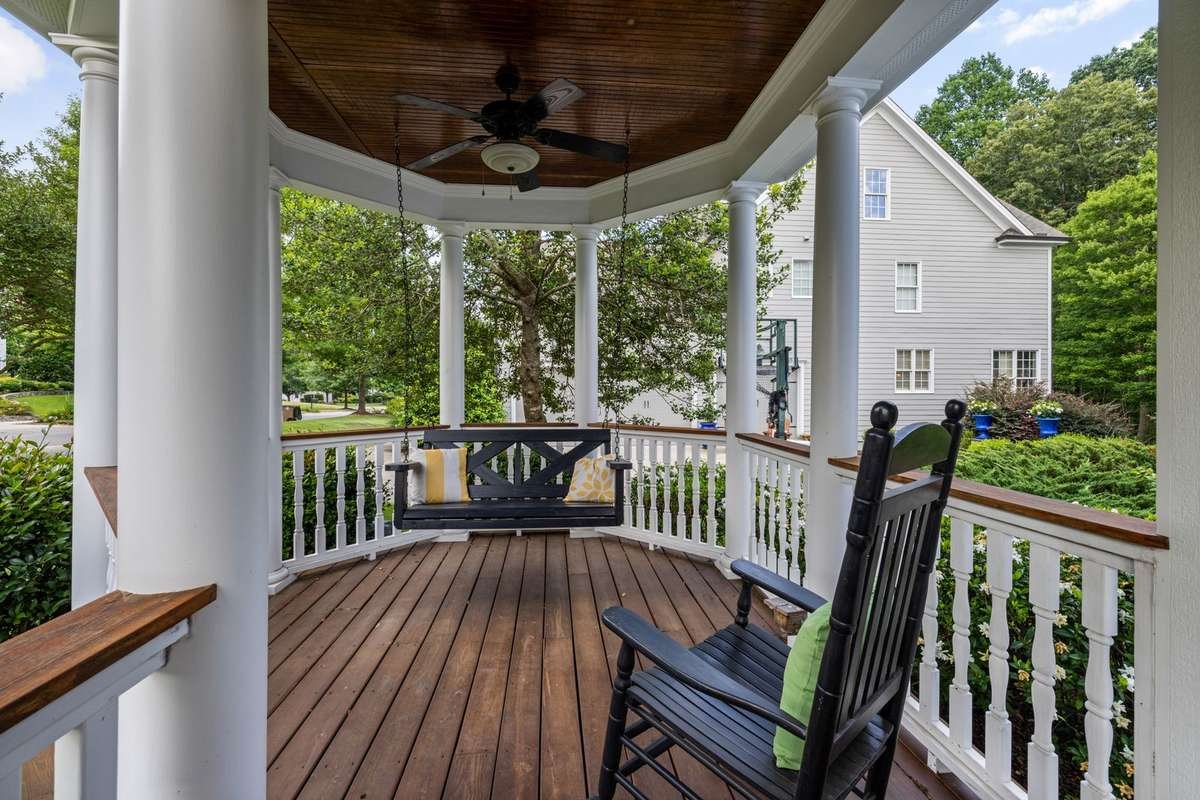
A bare wood swing is charming for ten minutes and hard by minute twenty. A 2- to 3-inch seat cushion in outdoor fabric, sized to the full seat, 48 to 60 inches wide by 18 to 20 inches deep, changes the seat from perch to destination. Add pillows in odd numbers, three on a 5-foot swing: two 18-inch squares at the corners and one lumbar, 20 by 12 inches, in the middle. Solution-dyed acrylic or olefin covers shrug off sun and mildew and zip off for washing. Our throw pillow combos translate directly outdoors: one solid, one stripe, one small print, all sharing two colors. A full cushion set runs $80 to $220.
10. Frame the Swing With Plants at Three Heights

A swing floating on a bare porch looks parked; a swing framed by plants looks placed. Work in three heights: a tall pot, 24 to 36 inches, at the end away from the door; a medium planter or hanging fern at seat height beside the arm; and a low trailing pot under the side table or on the step. Keep every pot out of the swing arc and off the 36-inch walkway. Ferns, caladiums, and coleus handle porch shade, while geraniums and lantana suit sun. Repeat one pot finish, terracotta or matte black, three times so the grouping reads as a set. Three decent planters plus plants cost $60 to $150 and do more for the scene than any accessory.
11. Add Light and a Drink Table for Evening Hours

The coziest swing hours are after sunset, so light the seat in layers: a porch ceiling fixture or lantern overhead, a wall sconce at eye height beside the door, and one low source, a rechargeable lantern or step light, near the floor. Warm 2700K bulbs keep faces friendly and bugs slightly less interested. Pair the light with a drink table, 14 to 18 inches across and about 24 inches high, set just outside the swing arc at the arm you favor, close enough to reach a mug without leaning into the chains. A swing with light and a landing spot stops being decor and becomes the room the household actually uses on summer nights.
12. Keep It Cozy for Years: Care and Common Mistakes

Most porch swing ideas fail on upkeep, not looks. Once a year, tighten every bolt, check chain links for rust at the eye bolts, test rope by bouncing your full weight near the ground, and wash cushions before mildew sets in. Oil or reseal wood every one to two years on an open porch. Avoid the classic mistakes: hanging from ceiling boards, crowding the door path, choosing indoor fabrics that fade by July, and skipping the clearance behind the swing so it taps the house. Treated kindly, a cedar swing lasts 15 years or more. If your porch opens off a reading corner, our window seat ideas carry the same cushion-and-light formula indoors.
Frequently Asked Questions
How much space do I need for a porch swing? Plan on the swing itself, 4 to 6 feet wide, plus swing room: at least 3 feet of clear space behind it, 2.5 feet in front, and 14 to 18 inches at each side. Keep a 36-inch-wide walking path past the seat. A porch 6 feet deep is the comfortable minimum for a standard 5-foot bench swing.
Does a porch swing have to hang from ceiling joists? Yes, if it hangs from the ceiling. Eye bolts must land in solid joists or beams, 2 by 6 or larger, never in ceiling boards alone. If you cannot find or use joists, choose a freestanding A-frame swing instead. That is the safe route for renters and for porches with vinyl or low ceilings.
What size should I choose from these porch swing ideas? A 4-foot swing seats two people closely and suits narrow porches. A 5-foot swing is the family standard, seating two adults comfortably or three briefly. A 6-foot swing or a twin-size swing bed, about 75 inches long, lets one person stretch out fully. Match the size to the porch depth first, then to the guest list.
How high should a porch swing hang? Hang the seat 17 to 19 inches off the porch floor, about standard chair height, so sitters can rest their feet flat and stand up easily. On an 8- to 9-foot ceiling, standard 8-foot chain sets usually leave enough length to adjust. Check the height with the cushions on, since a 3-inch pad raises the seat noticeably.
