12 Narrow Hallway Decorating Ideas
These narrow hallway ideas are for the most walked-through, least decorated spaces in the house — and the hardest ones to get right. Too much stuff and you can’t pass; too little and it feels like a service corridor. They solve both problems at once: light tricks that visually widen the walls, slim-profile pieces that add function without eating floor space, and layers that give a plain passage some personality.
The guiding rule is simple: keep the walkway clear (at least 3 feet wide), keep the palette light, and put the interesting things at eye level where they register as you walk past. Below are twelve proven ways to do exactly that.
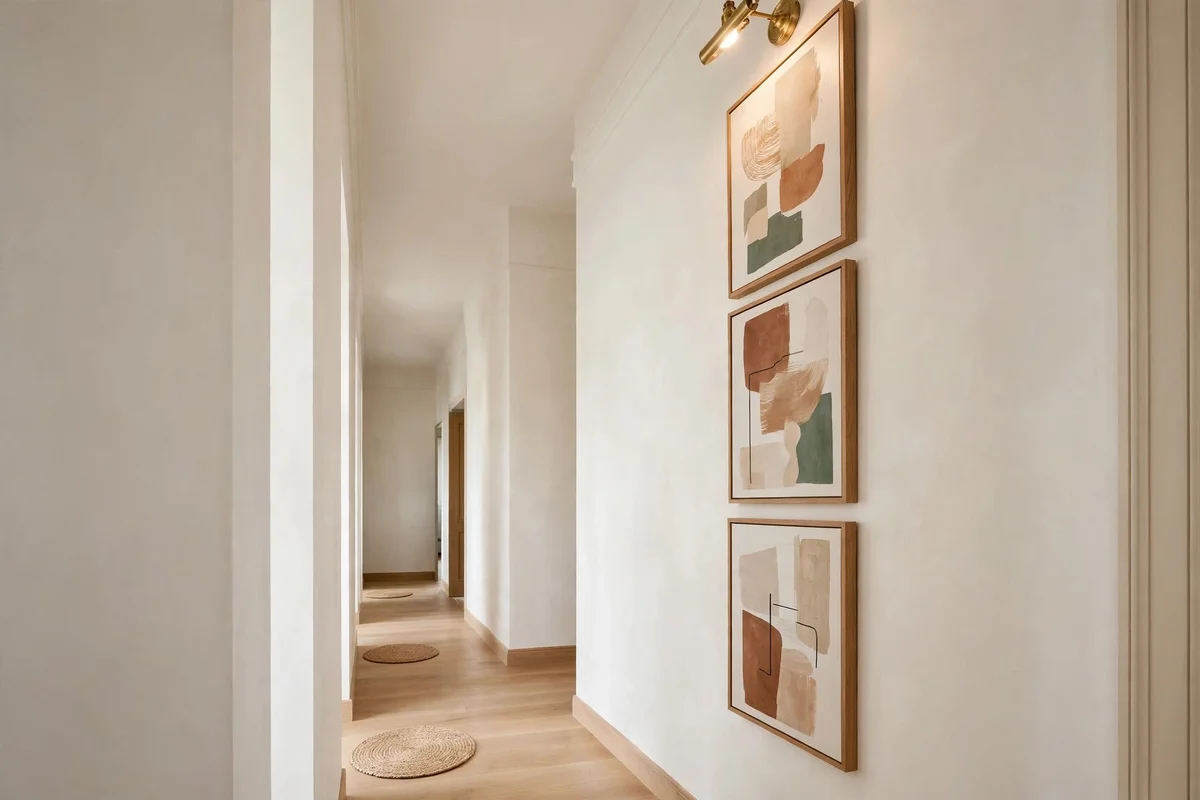
1. Narrow Hallway Ideas Start With Light, Bright Walls
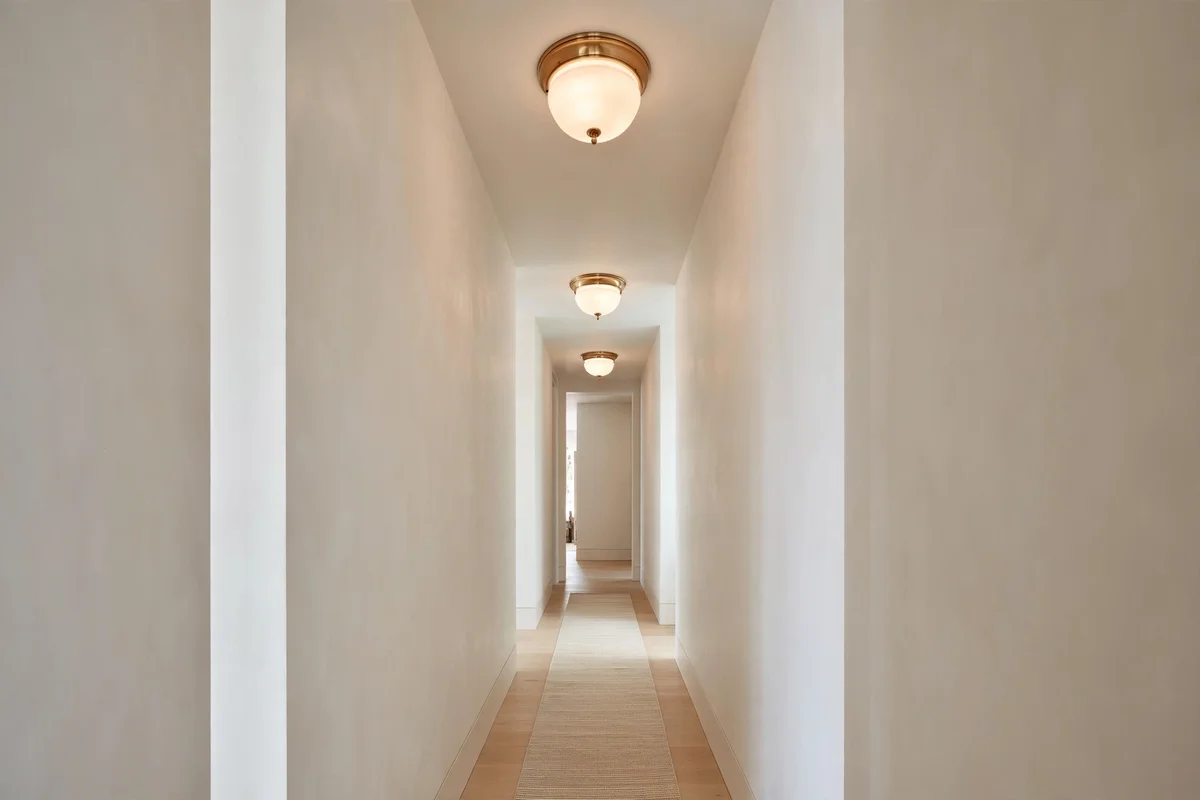
Dark paint closes a narrow hallway in like a tunnel — light paint pushes the walls back. Warm white, soft cream, or pale greige with an eggshell finish is the safest bet; the slight sheen bounces light down the corridor. Paint the ceiling the same color (or one shade lighter) so there’s no dark lid pressing down, and keep the trim a crisp white for definition.
If the hallway has no windows, add the effect with lighting: two or three small ceiling fixtures spaced evenly create a rhythm that pulls the eye forward instead of letting it stall. According to The Spruce’s guide to making small spaces feel bigger, light color is the single most effective trick — and it’s the cheapest idea on this list.
2. Lay a Runner That Elongates the Space
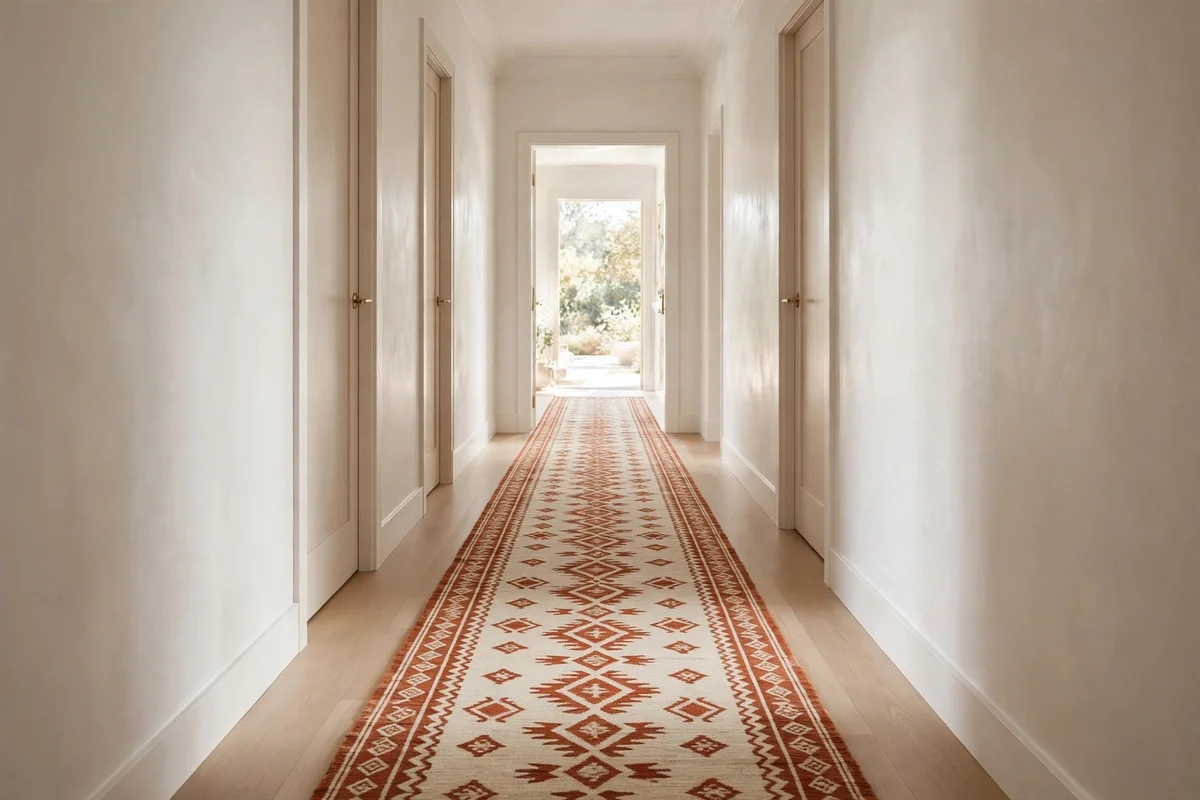
A runner is the fastest narrow hallway idea with the biggest visual payoff — it draws the eye down the length of the hall and makes it feel longer and more intentional. Choose a runner 2 to 3 feet wide and as long as the hall allows, leaving a few inches of bare floor at each end. Vertical stripes or a long directional pattern amplify the elongating effect; a bold small-scale pattern works too if the walls are plain. Low-pile and washable is the practical choice — hallways take the most foot traffic in the house. Skip thick shag; it makes the floor feel higher and the ceiling lower.
3. Narrow Hallway Ideas With Mirrors: Hang One Big Mirror
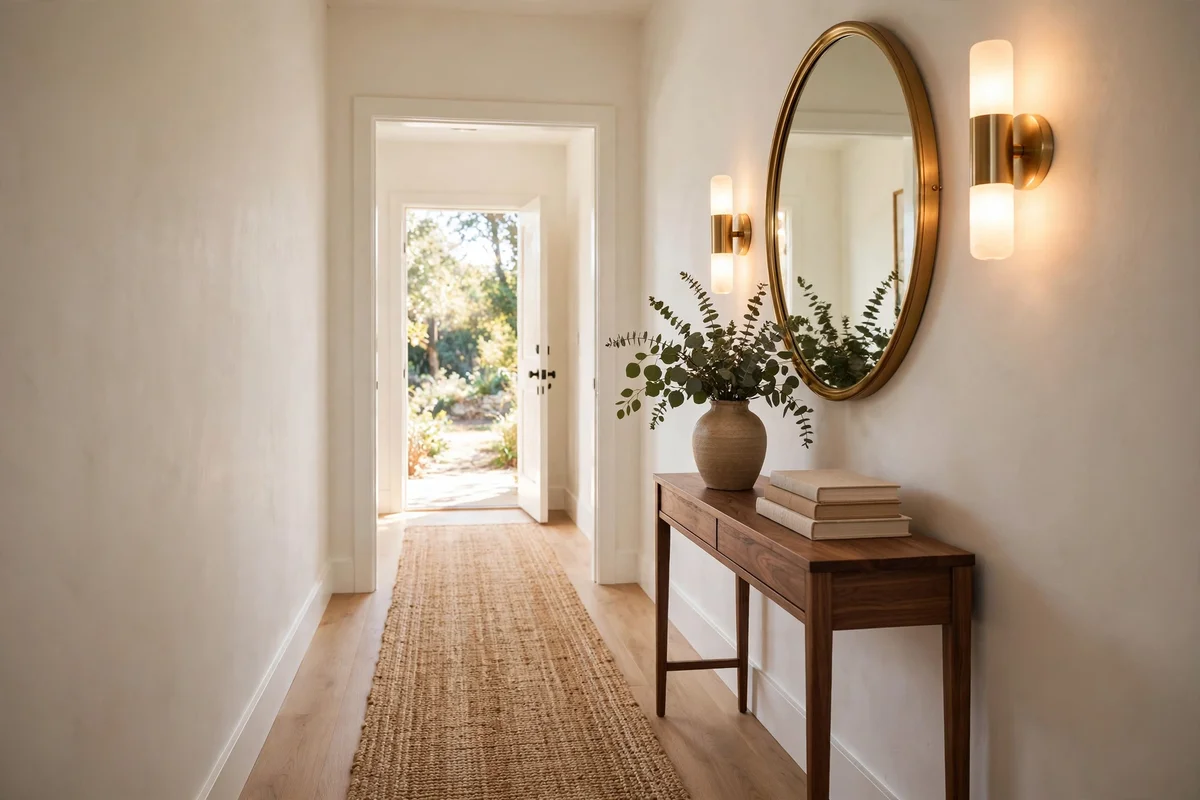
A mirror doubles the perceived width of a narrow hallway instantly. Hang one large mirror (at least 3 feet tall) on the longest wall, centered at eye level — or lean an oversized floor mirror if there’s 6 spare inches of depth. Opposite a window or light source, it doubles the daylight; opposite art, it doubles the interest. Keep the frame slim and light — chunky dark frames undo the widening effect. These mirrors that make small rooms feel bigger explain the placement logic that applies perfectly to corridors: reflect light, reflect something worth looking at, keep the frame quiet.
4. Slim Console, Big Impact
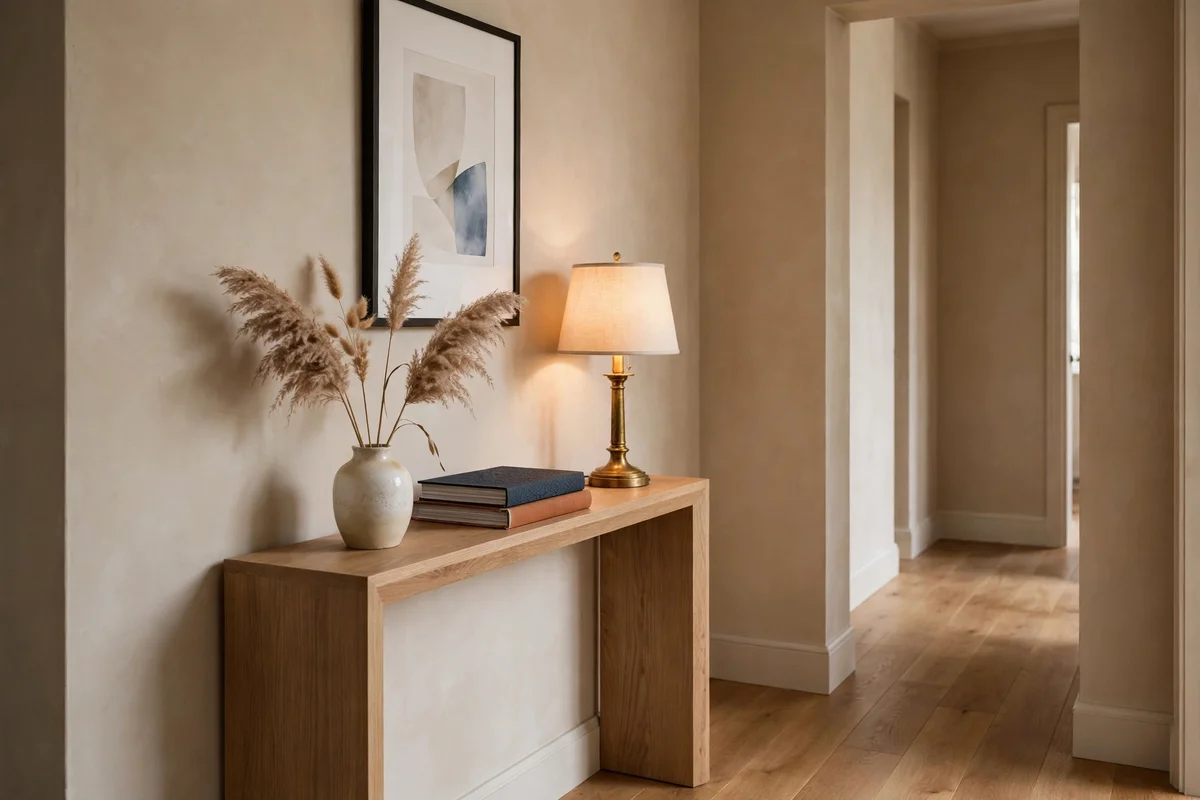
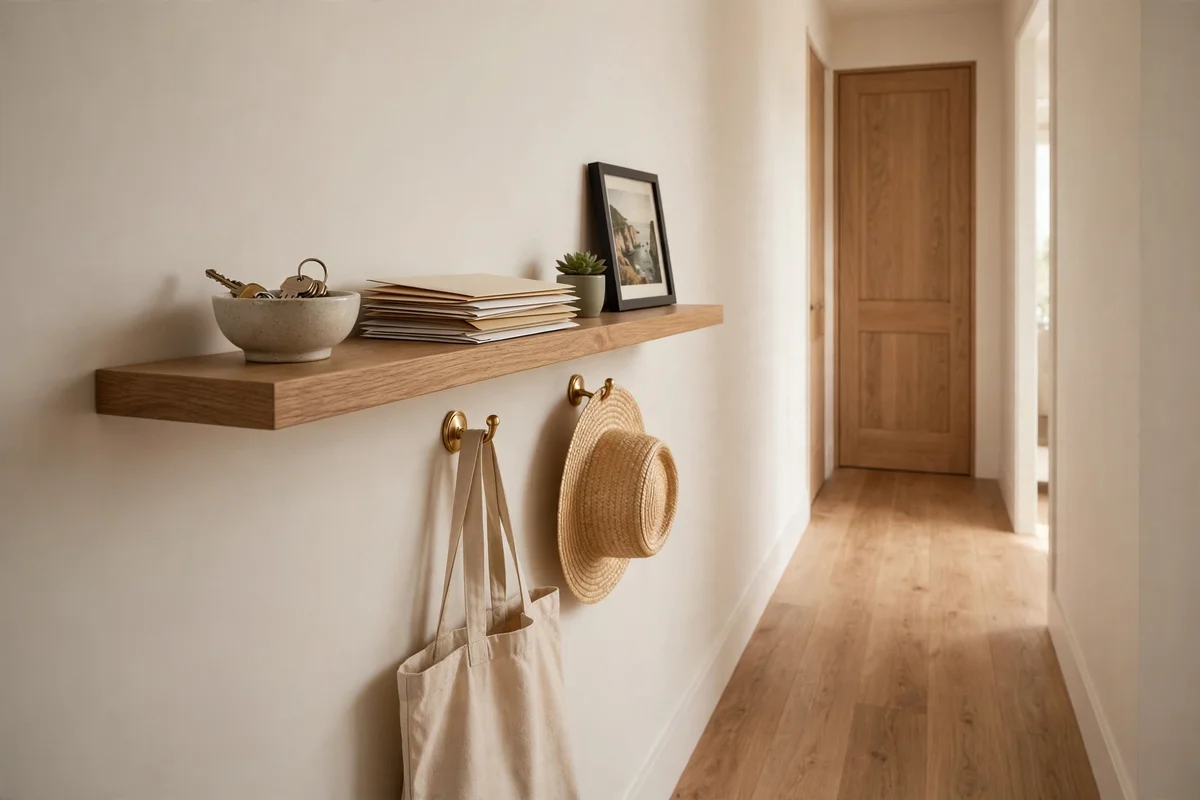
A console table no deeper than 10 to 12 inches adds a landing spot for keys, mail, and a lamp without stealing the walkway. Anchor it with a mirror or one piece of art above, add a small tray for the everyday drop zone, and keep the surface styled but sparse — three objects max. In a very narrow hall, a wall-mounted floating shelf at console height does the same job with zero floor footprint. Match the console’s finish to nearby doors or trim so it reads as built-in rather than added. One drawer or a lidded basket underneath hides the clutter hallways collect.
5. Create a Gallery Wall That Doesn’t Crowd
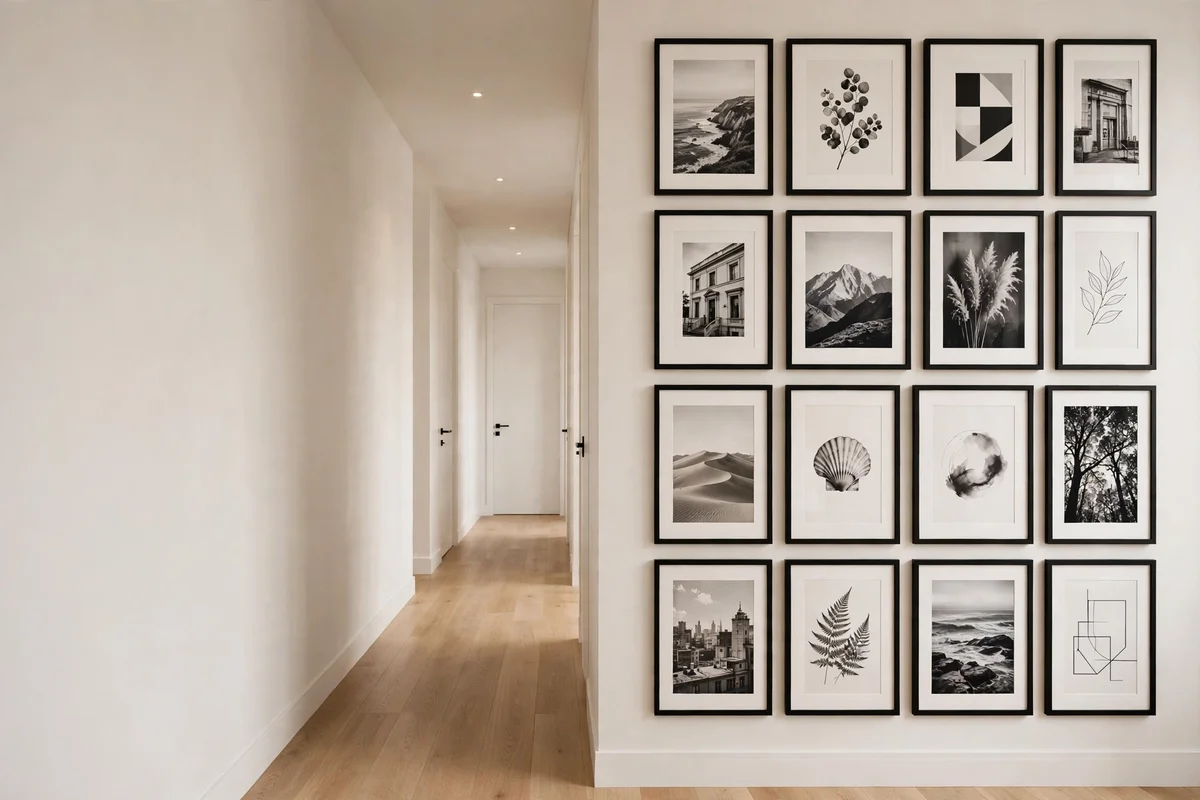
A gallery wall works in a narrow hallway — if you keep it disciplined. Hang frames in a single horizontal line at eye level (center around 57 inches from the floor), with 2 to 3 inches between frames. Stick to one frame color and similar mat widths so the row reads as one composition instead of visual noise. Black-and-white photos or a single-color print series keep it calm; the hallway is a passage, not a gallery opening. Keep the frames’ total depth under 2 inches so shoulders never brush them. One long line of art turns a blank corridor into the most interesting walk in the house.
6. Narrow Hallway Ideas for Lighting: Wall Sconces Over Ceiling Cans
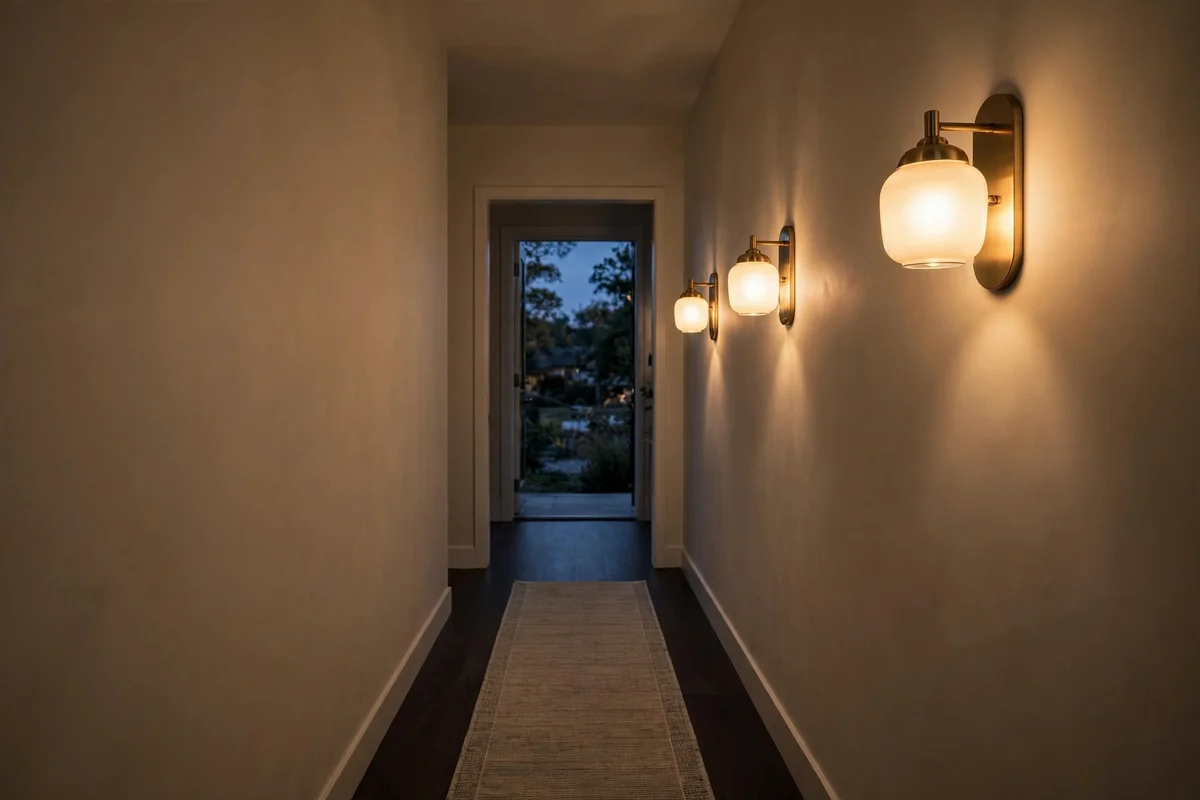
Overhead cans flatten a narrow hallway; wall sconces at eye level add warmth and dimension. Install slim sconces (no more than 4 inches deep) in pairs or a spaced row, about 5 feet high, on alternating walls or one long wall. Up-down sconces wash both walls and ceiling with light, which visually lifts the space. Put them on a dimmer — bright hallways feel institutional, softly lit ones feel intentional. If hardwiring isn’t an option, plug-in sconces with cord covers achieve the same look. Warm-white bulbs (2700K) keep the narrow space feeling cozy rather than clinical.
7. Paint the End Wall a Focal Color
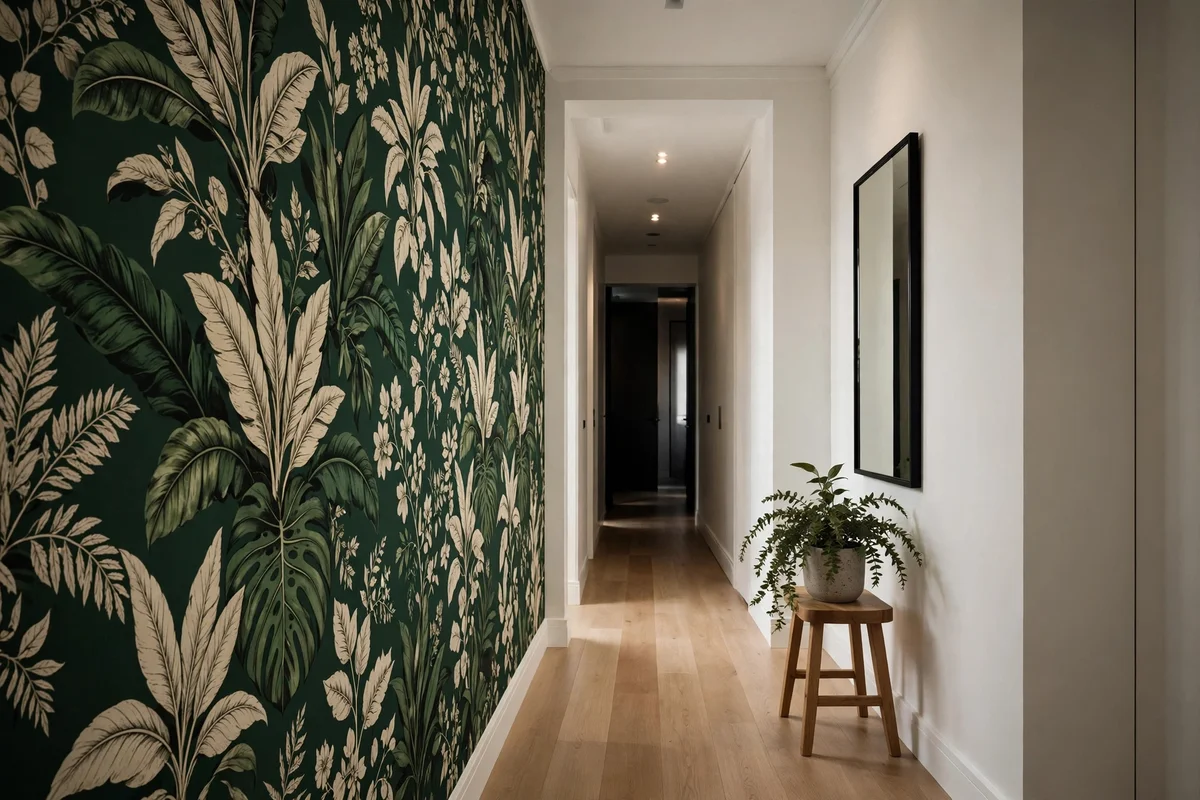
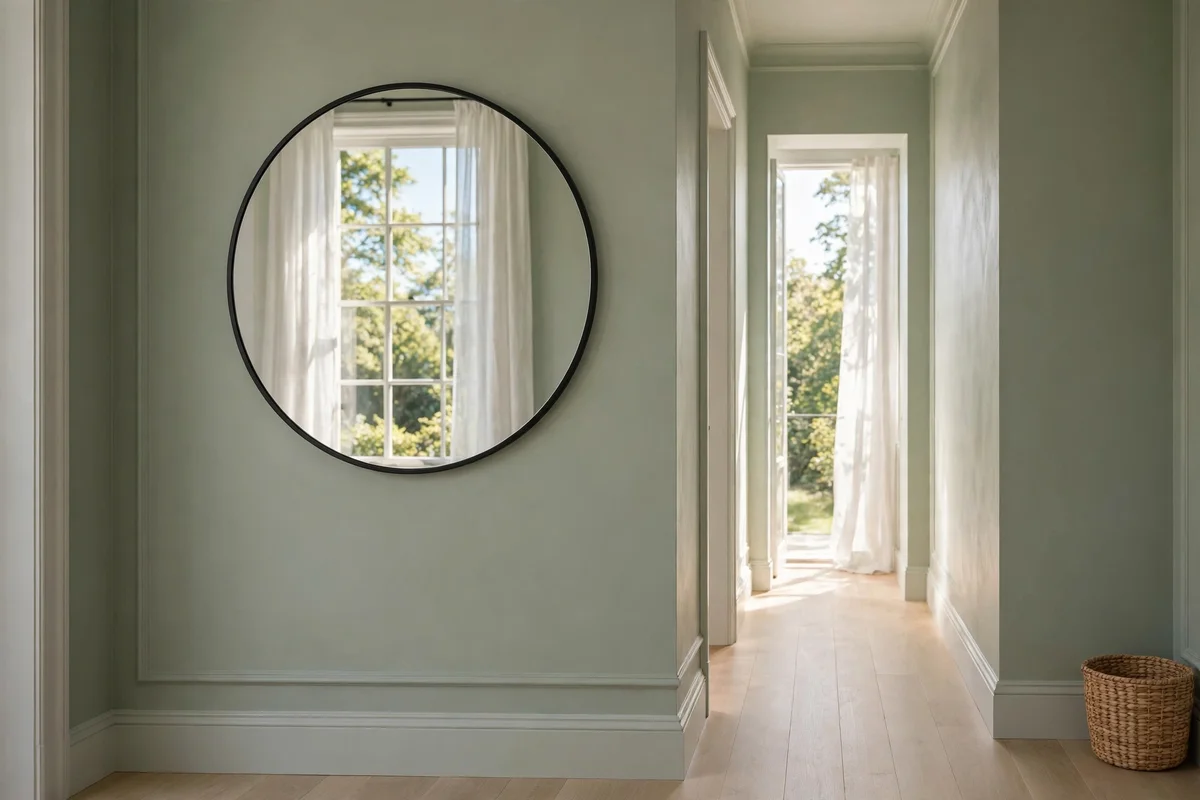
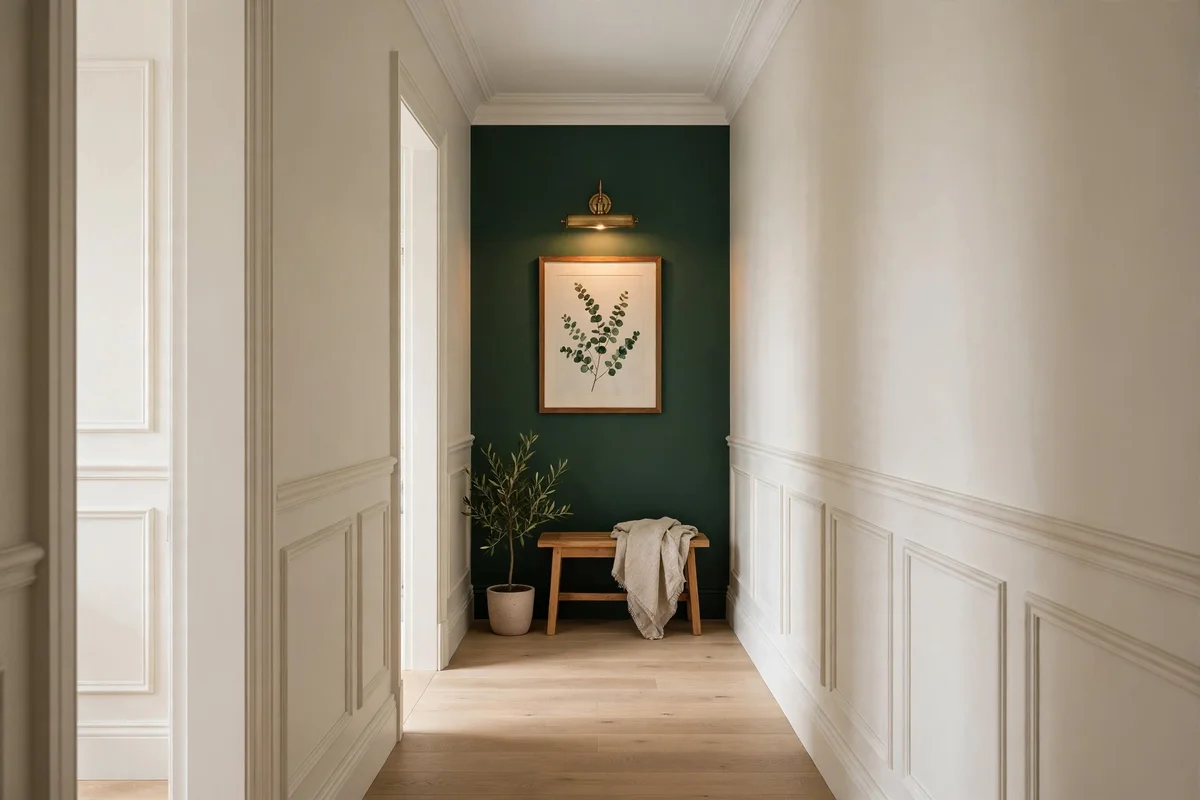
The wall at the end of a hallway is a natural focal point — painting it a slightly deeper tone (sage, dusty blue, warm terracotta) gives the eye a destination and makes the walk feel shorter. Keep the side walls light so the contrast does the work; the end wall becomes the “art.” Hang one statement piece there — an oversized print, a round mirror, or a small floating shelf with a plant — centered at eye level. This is one of the oldest narrow hallway ideas because it genuinely changes how long the hall feels. Avoid very dark colors in windowless halls; a mid-tone is plenty.
8. Add Wainscoting or a Chair Rail for Architecture
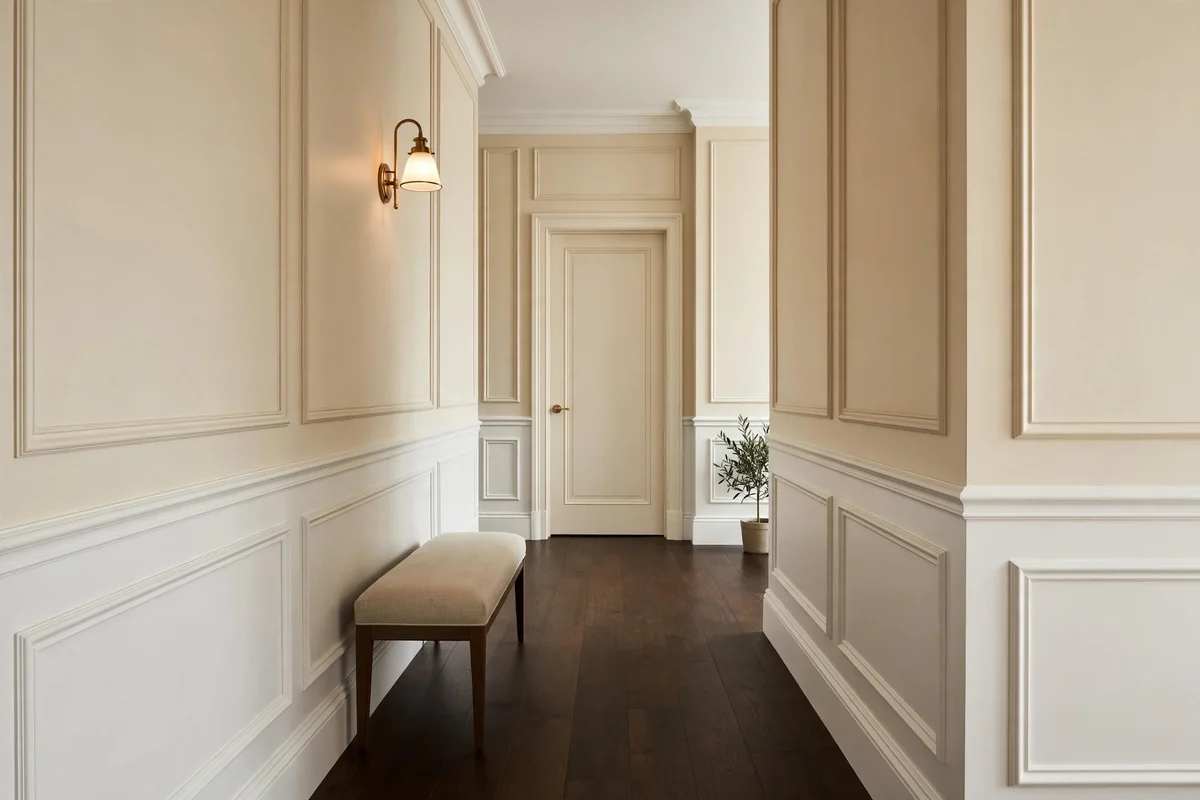
Blank drywall hallways feel unfinished; a chair rail with simple panel molding below adds architecture for the cost of trim and paint. Paint everything one color (walls, rail, molding) for a seamless look that doesn’t chop the narrow space into bands — the texture of the molding provides the interest. In a rental, peel-and-stick molding strips achieve a similar effect without nails. Keep the profile shallow (under 1 inch) so it never catches a shoulder. This works especially well in long hallways where flat walls would otherwise stretch on featureless.
9. Narrow Hallway Ideas With Storage: Hooks, Not Closets
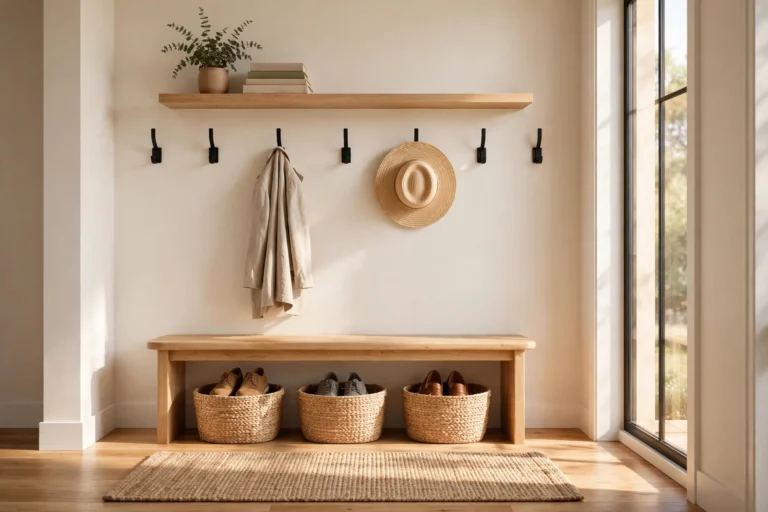
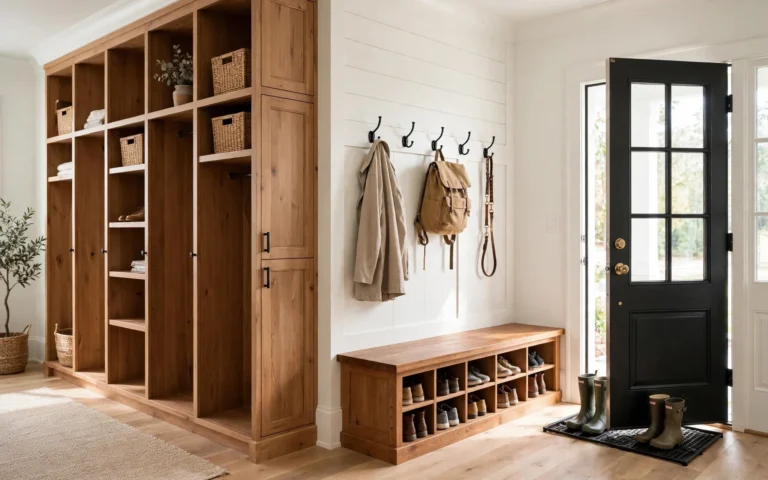
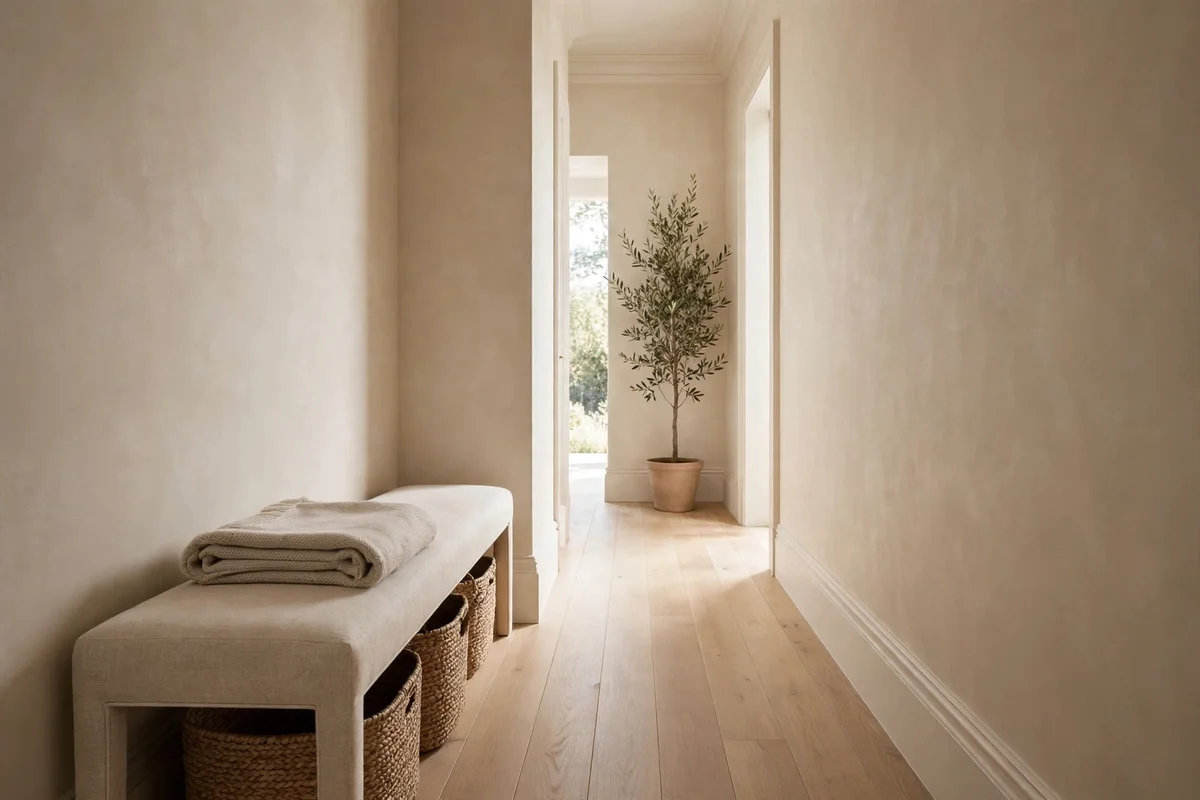
Hallways rarely fit closets, but they fit hooks beautifully. A row of 3 to 5 wall hooks at 60 inches high holds coats, bags, and hats without a single inch of floor space — choose hooks that fold flat when empty if the hall is very tight. Above the hooks, one long floating shelf holds baskets for gloves, scarves, and dog leashes. Keep it edited: this is a grab-and-go station, not long-term storage. In a family hallway, assign one hook per person at kid height for the little ones. A small bench (under 14 inches deep) with shoe storage underneath completes the drop zone if width allows.
10. Keep the Floor Continuous and Clutter-Free
Every threshold strip, rug edge, and scattered shoe visually chops a narrow hallway into segments — and segments feel shorter. Run the same flooring straight through with no breaks, keep the runner centered and flat, and corral shoes into one slim closed cabinet or lidded bench. If the hallway connects rooms with different floors, use the narrowest possible transition strip in a matching tone. This is the least glamorous of these narrow hallway ideas and one of the most effective: an unbroken floor line is what makes a hallway feel like it flows instead of stutters.
11. Bring In One Plant for Life
A single plant softens a hallway’s hard edges like nothing else. Choose an upright grower that stays narrow — a snake plant, a ZZ plant, or a slim olive tree in a tall pot — and tuck it at the end of the hall or in the one wider spot. The vertical lines echo the hallway’s direction and draw the eye forward. Skip trailing plants that spill into the walkway and anything wider than 18 inches at maturity. If the hall is truly windowless, a good faux plant in a real-looking pot fools everyone at a glance — just dust it monthly. One plant is an accent; three is a jungle blocking the path.
12. Narrow Hallway Ideas on a Budget: The $50 Refresh
If the budget is tight, five moves transform a hallway for around $50: a quart of warm-white paint for the end wall, a washable runner from a discount store, three matching frames printed with free black-and-white photos, one plug-in sconce, and a small snake plant. Do the paint first (biggest impact), then the runner, then the frames in a single row. None of these require tools beyond a hammer and a level. These cozy bedroom ideas on a budget use the same high-impact, low-cost philosophy room by room — the hallway just happens to be the cheapest room to transform.
Frequently Asked Questions
What is the best color for a narrow hallway?
Warm white, soft cream, or pale greige in an eggshell finish. Light colors push the walls back visually, and a slight sheen bounces light down the corridor. Paint the ceiling the same color so there’s no dark lid.
How do you decorate a narrow hallway without making it feel smaller?
Keep the walkway at least 3 feet clear, use pieces under 12 inches deep, put interest at eye level, and stick to a light palette. Mirrors and runners are the two highest-impact narrow hallway ideas for tight spaces.
Should a hallway runner match the rooms it connects?
It should coordinate, not match. Pull one color from an adjacent room’s rug or art so the hallway feels connected, but give the runner its own pattern — identical rugs in a row look like a hotel corridor.
Can you put furniture in a narrow hallway?
Yes, if it’s slim: consoles under 12 inches deep, wall-mounted shelves, hooks, and benches under 14 inches deep. Measure the walkway after placement — if it’s under 3 feet, the piece is too deep.
How high should pictures hang in a hallway?
Center frames at 57 inches from the floor (gallery standard), in a single horizontal line for narrow halls. Keep frame depth under 2 inches so nobody brushes them walking past.
The Narrow Truth
Narrow hallways don’t need more stuff — they need smarter stuff. Light walls, one good runner, a mirror, and slim pieces at eye level turn the most ignored corridor in the house into a space that feels wide, bright, and finished. Pick three of these narrow hallway ideas this weekend and walk the difference.
By Nestora Find