12 Mudroom Organization Ideas for Every Home
The mudroom is the hardest-working room in most homes, and these mudroom ideas will keep yours pulling its weight. Coats, backpacks, shoes, sports gear, dog leashes — the average entryway absorbs the family’s daily chaos in a few square feet. Without a system, that clutter spills into the rest of the house. You don’t need a big budget or a renovation: the twelve ideas below give every home a practical, good-looking setup.
1. Built-In Locker Walls: The Backbone of Modern Mudroom Ideas
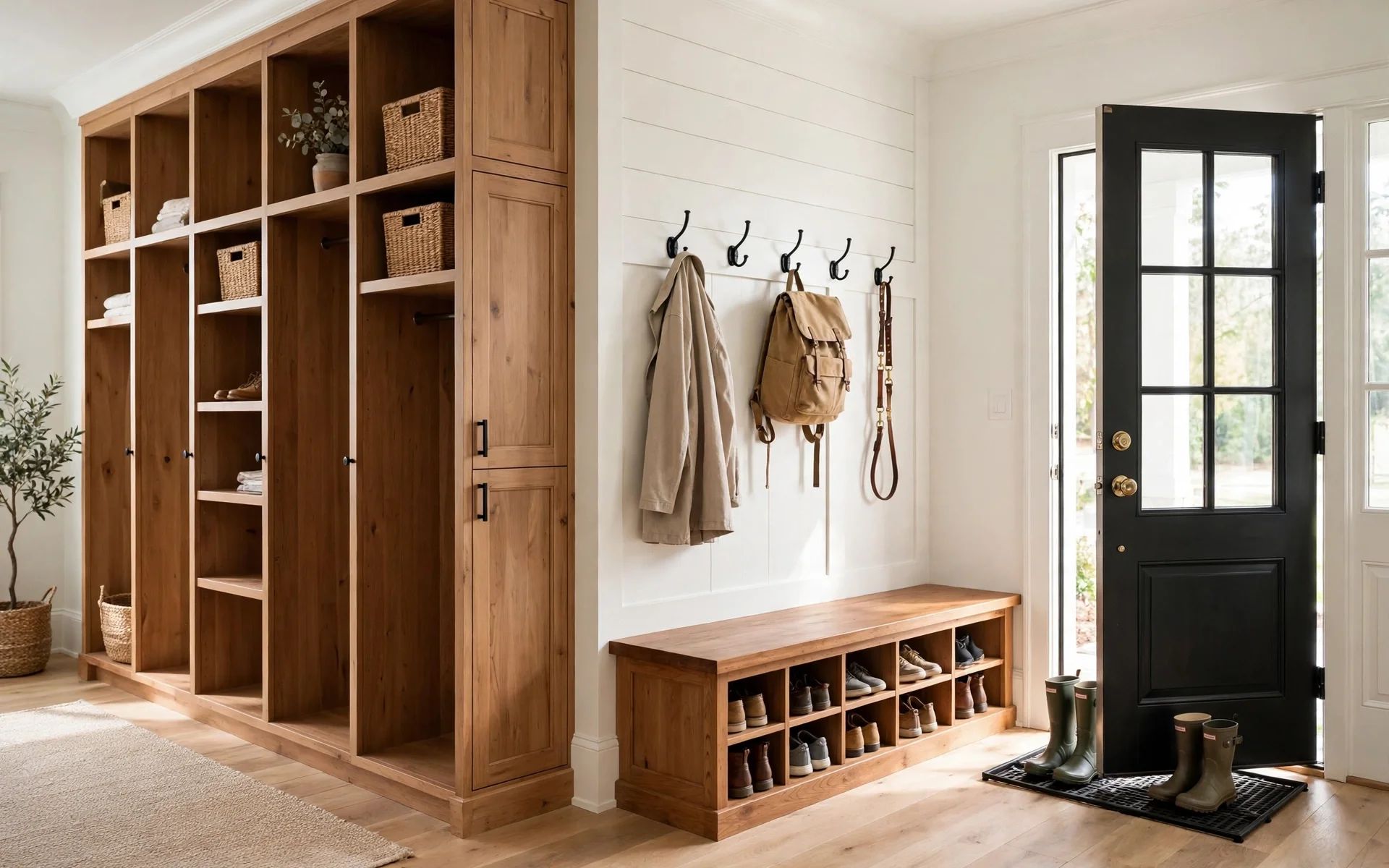
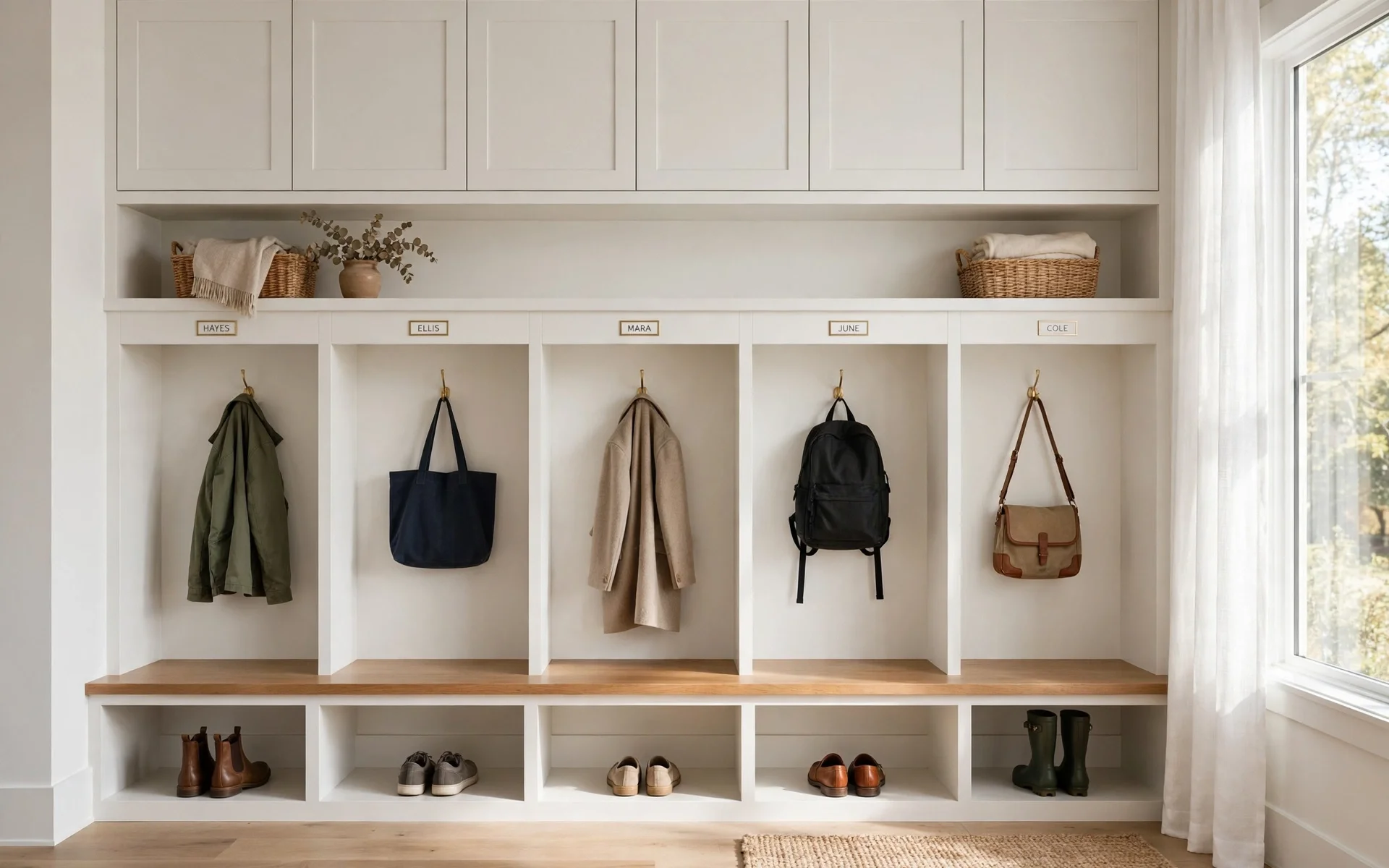
Give every family member their own locker-style cubby and clutter has nowhere to hide. A built-in locker wall — tall dividers, a bench at the base, hooks above, and a shelf or cabinet up top — creates one assigned home for each person’s coat, bag, shoes, and gear. If custom
built-ins aren’t in the cards, freestanding locker units or stock cabinets from a home improvement store get you nearly the same look for a fraction of the cost. For more visual inspiration, browse The Spruce’s mudroom ideas gallery before you plan your layout. Paint the units the same color as the walls so they read as furniture, not a closet. Add name tags or small labels so kids know exactly which cubby is theirs.
2. A Bench With Hidden Storage: Simple Mudroom Ideas
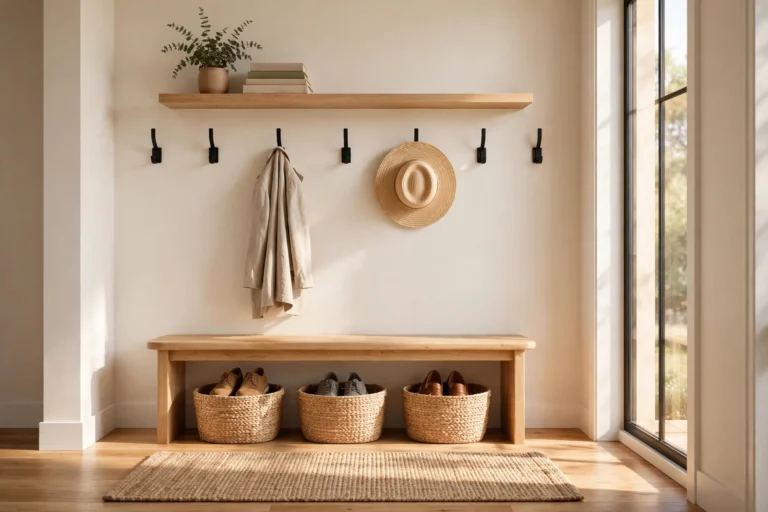
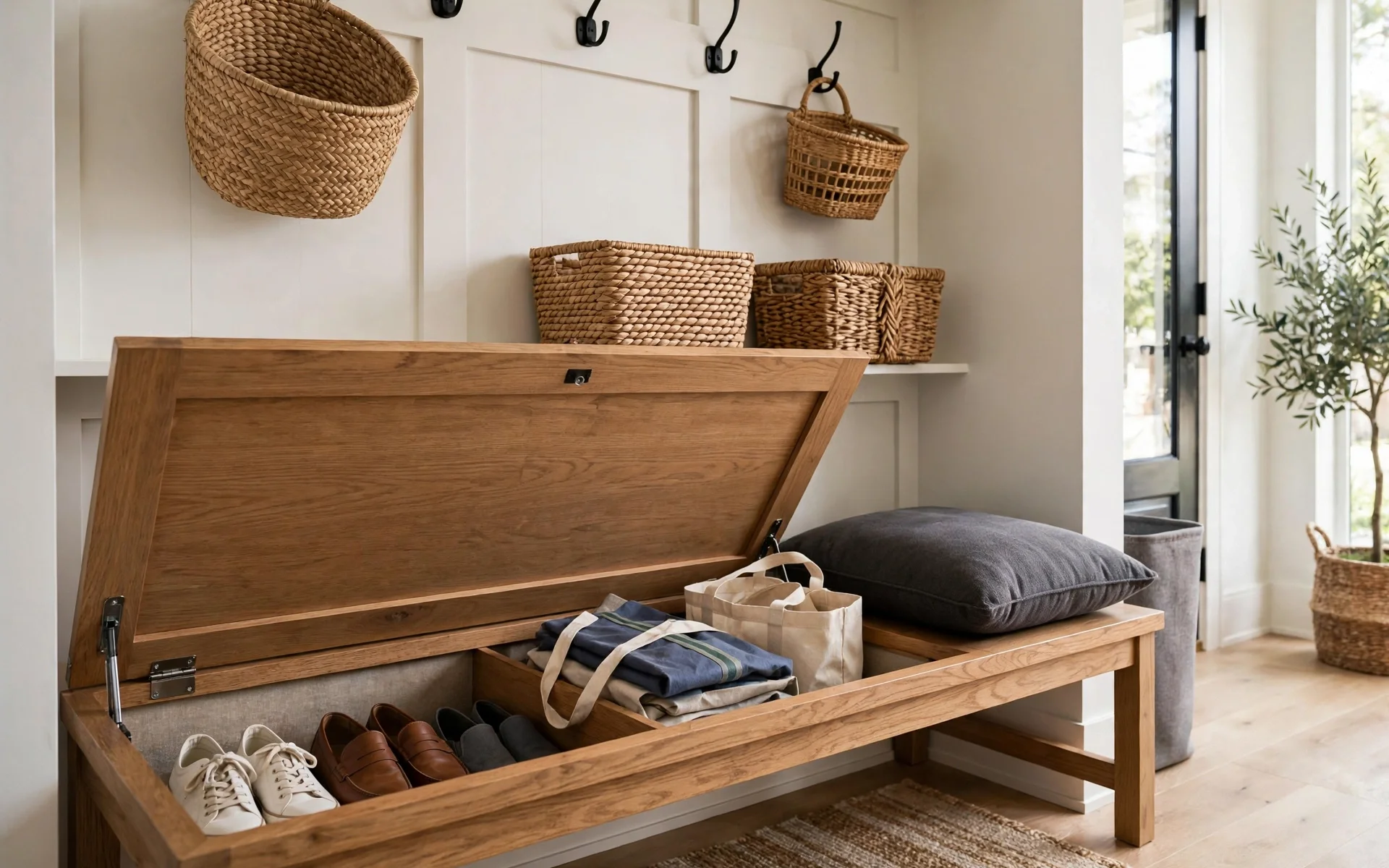
A storage bench is one of the easiest mudroom ideas to add — no construction required. It pulls double duty: a place to sit while you tie shoes, and a lid that hides the mess. Choose a bench with a lift-up top, deep drawers, or an open lower shelf fitted with bins. Keep everyday shoes, cleaning cloths, or reusable shopping bags inside so they never pile up on the floor. Top it with a washable cushion in a dark, forgiving fabric. Wall-mounted floating benches work beautifully in narrow spaces since they leave the floor clear for sweeping. Anchor freestanding benches to the wall so they can’t tip when a child climbs on them. For a coordinated look, paint the bench the same shade as your trim or lockers.
3. Sturdy Wall Hooks for Everyday Coats: Easy Mudroom Ideas
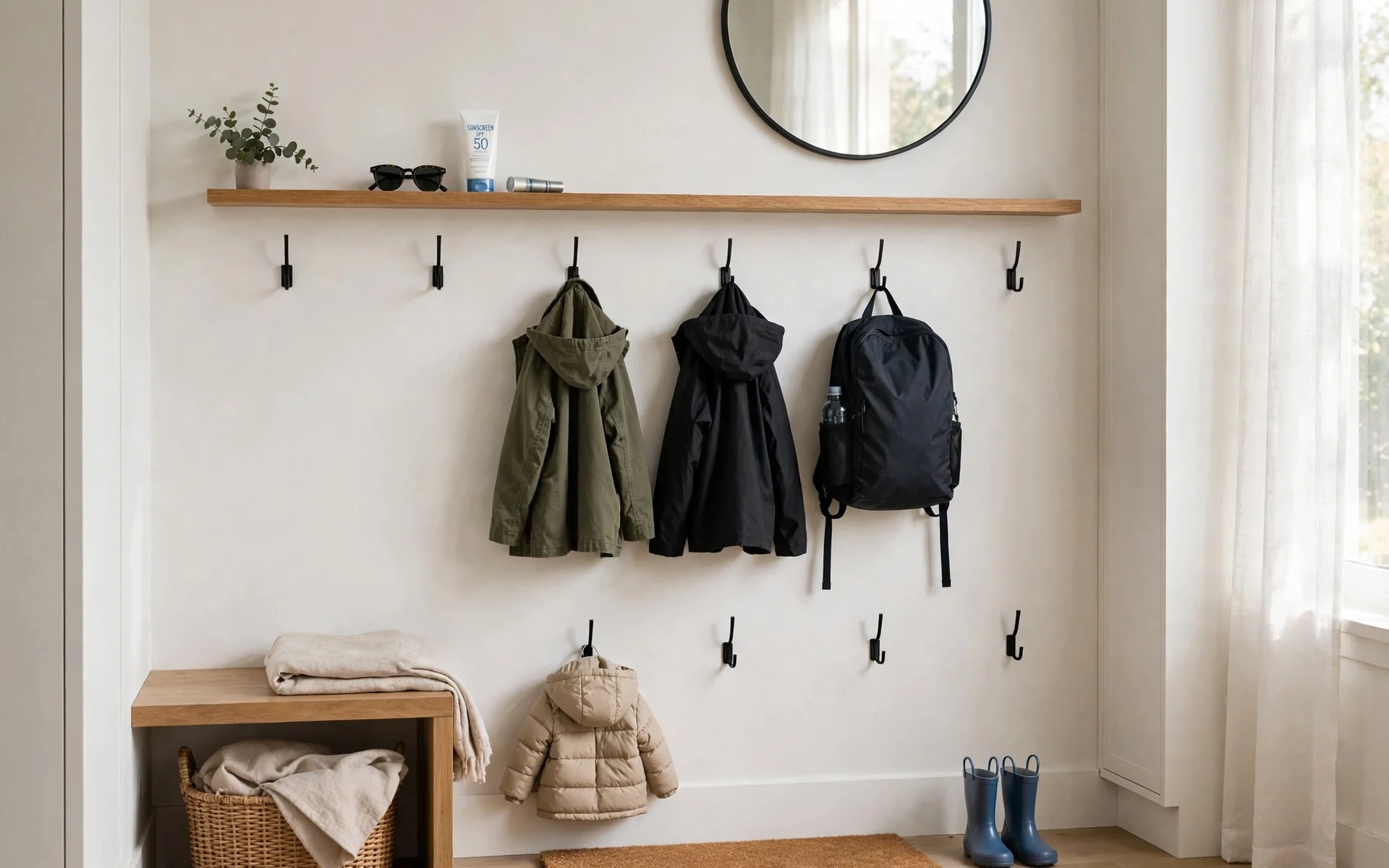
Not everything needs a door. A row of strong wall hooks at two heights keeps coats, backpacks, and dog leashes off the floor and within reach. Mount adult hooks at about 60 inches and kid hooks around 40 inches so everyone can hang their own things. Choose double hooks when space is tight — one hook can hold a coat and a bag. Space them 8 to 10 inches apart so bulky winter jackets don’t crowd each other. Match the hook finish to your style: oil-rubbed bronze suits a farmhouse mudroom, while slim matte-black pegs keep a modern space clean. A narrow shelf above the hooks holds sunglasses and sunscreen within arm’s reach. Hang one of our favorite wall mirror decor ideas above the hooks to bounce light around.
4. Pull-Out Shoe Drawers: Hidden Storage in These Mudroom Ideas
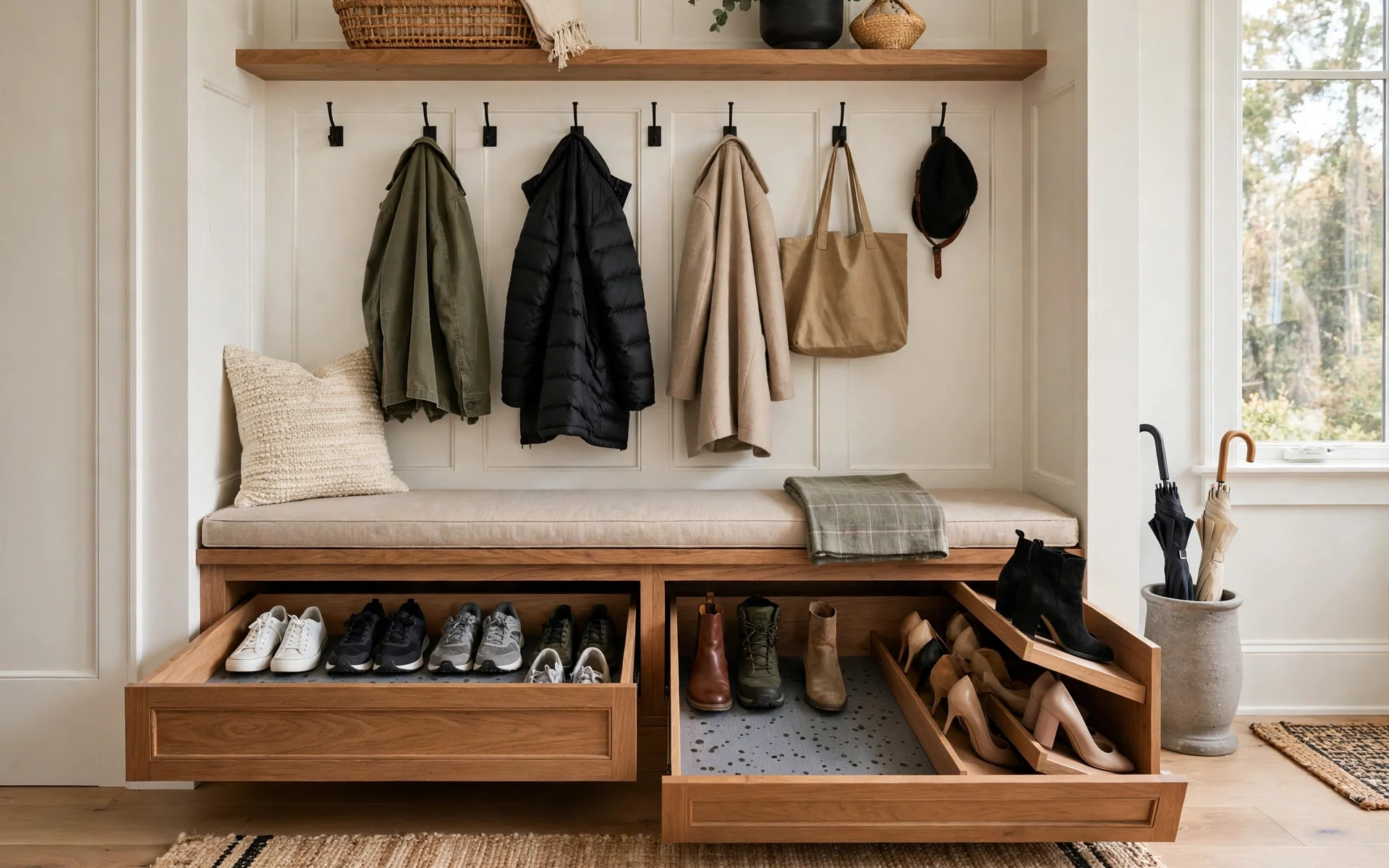
Shoes multiply overnight, so give them a home with a door. Pull-out shoe drawers or tilt-out bins under the bench keep pairs visible but contained — one drawer per family member, or one per shoe type. Tilt-out fronts are shallow enough for narrow mudrooms, while deep drawers can hold a dozen pairs stacked heel-to-toe. Lin
e the drawers with a washable mat so mud and water never reach the wood. Angled shelves work well for heels and dress shoes, while flat shelves fit sneakers and boots. For open shelving, add a low cubby grid with the rule of one pair per slot — the limit is what stops the pile-up. Wipe out the drawers each season so trapped grit doesn’t scratch the finish.
5. Overhead Cabinets for Out-of-Season Gear: Clever Mudroom Ideas
When floor space is precious, build up. Overhead cabinets above the bench or locker row swallow out-of-season gear — beach bags in winter, scarves and gloves in summer — so the daily pieces these mudroom ideas depend on stay at arm’s reach. Keep cabinet doors solid to hide visual noise, and use the topmost shelf for the rarely touched stuff like luggage or camping duffels. Label the doors or shelves so everyone knows what’s stored where. In a rental, replicate the effect with high floating shelves plus lidded boxes. Add battery puck lights inside deep cabinets so the top shelves stay usable after dark. If tall cabinets make the space feel heavy, leave a gap between their tops and the ceiling so the room breathes.
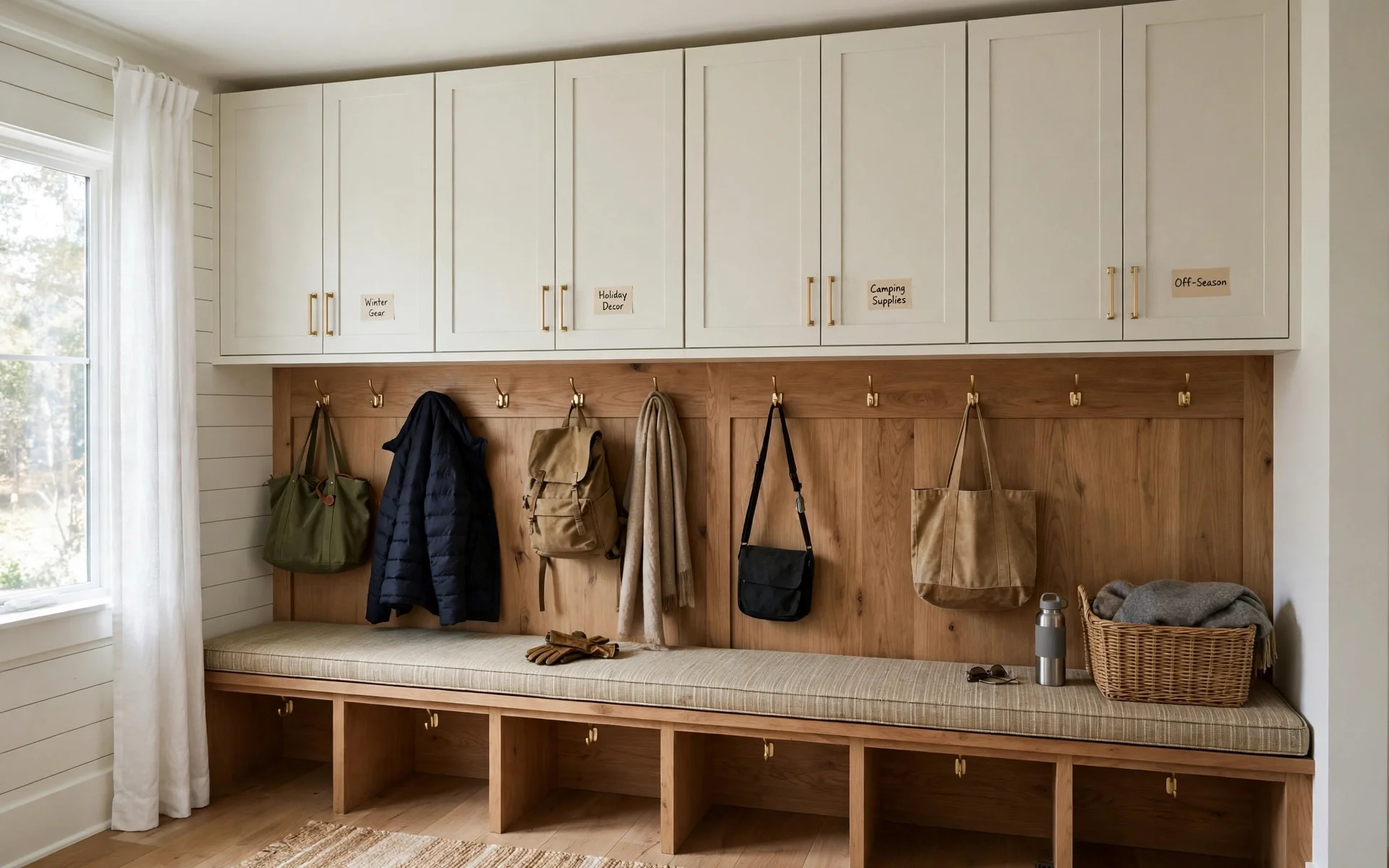
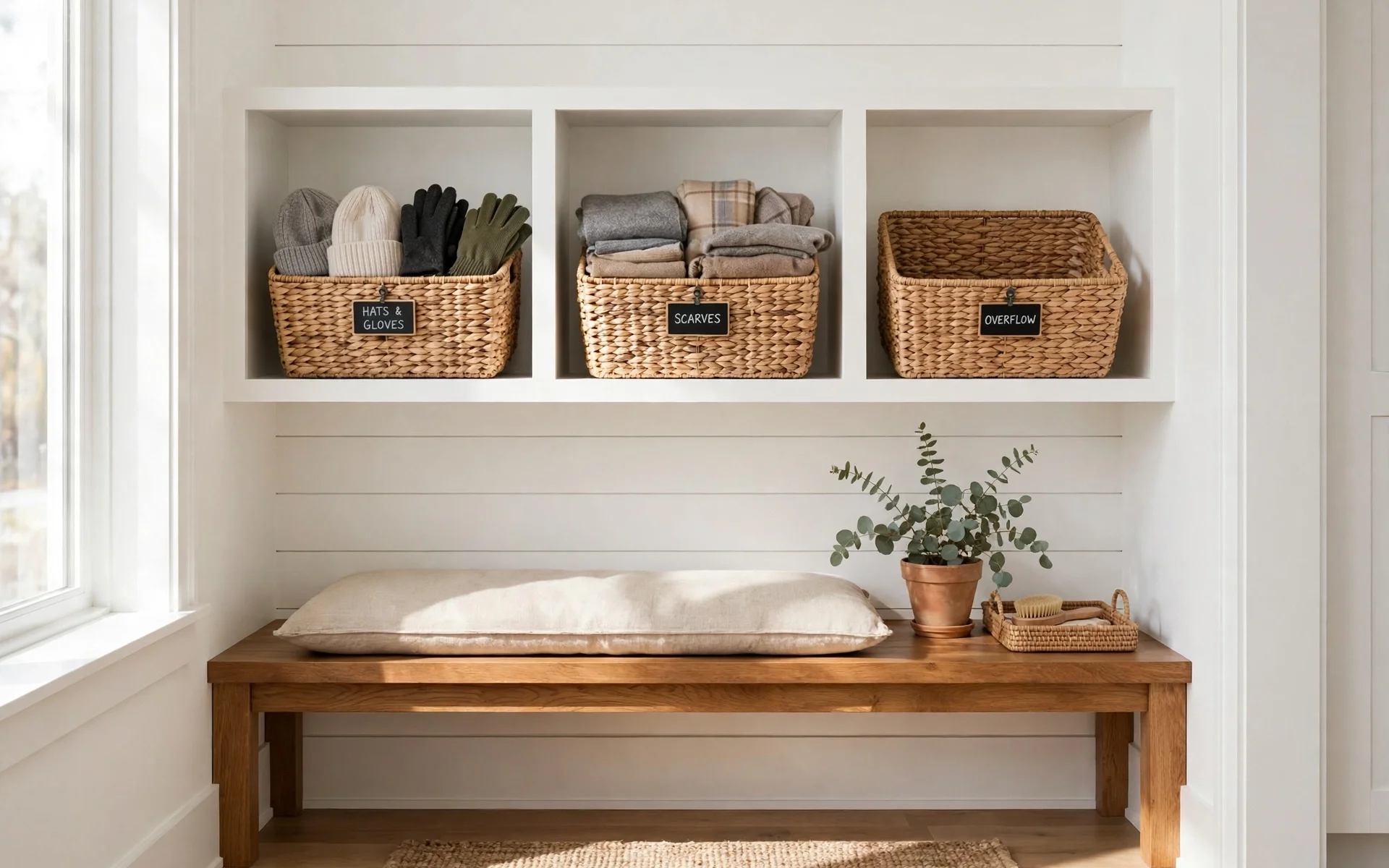
6. Labeled Baskets and Bins on Open Shelves: Tidy Mudroom Ideas
Open shelving only works when everything on it has a container. Group small mudroom essentials — hats, gloves, sunscreen, hand sanitizer, pet treats — into labeled baskets or bins on open shelves above the bench. Use one basket per category and label the front so the system survives busy mornings. Woven seagrass or rattan baskets warm up a white mudroom; clear bins make contents obvious for kids.
Match basket sizes to the shelf openings for a built-in look, and leave one basket empty as an overflow catch-all you clear weekly. Chalk or adhesive labels let you rename bins as seasons change without buying new ones. On deep shelves, file bins front-facing like folders so nothing gets lost in the back.
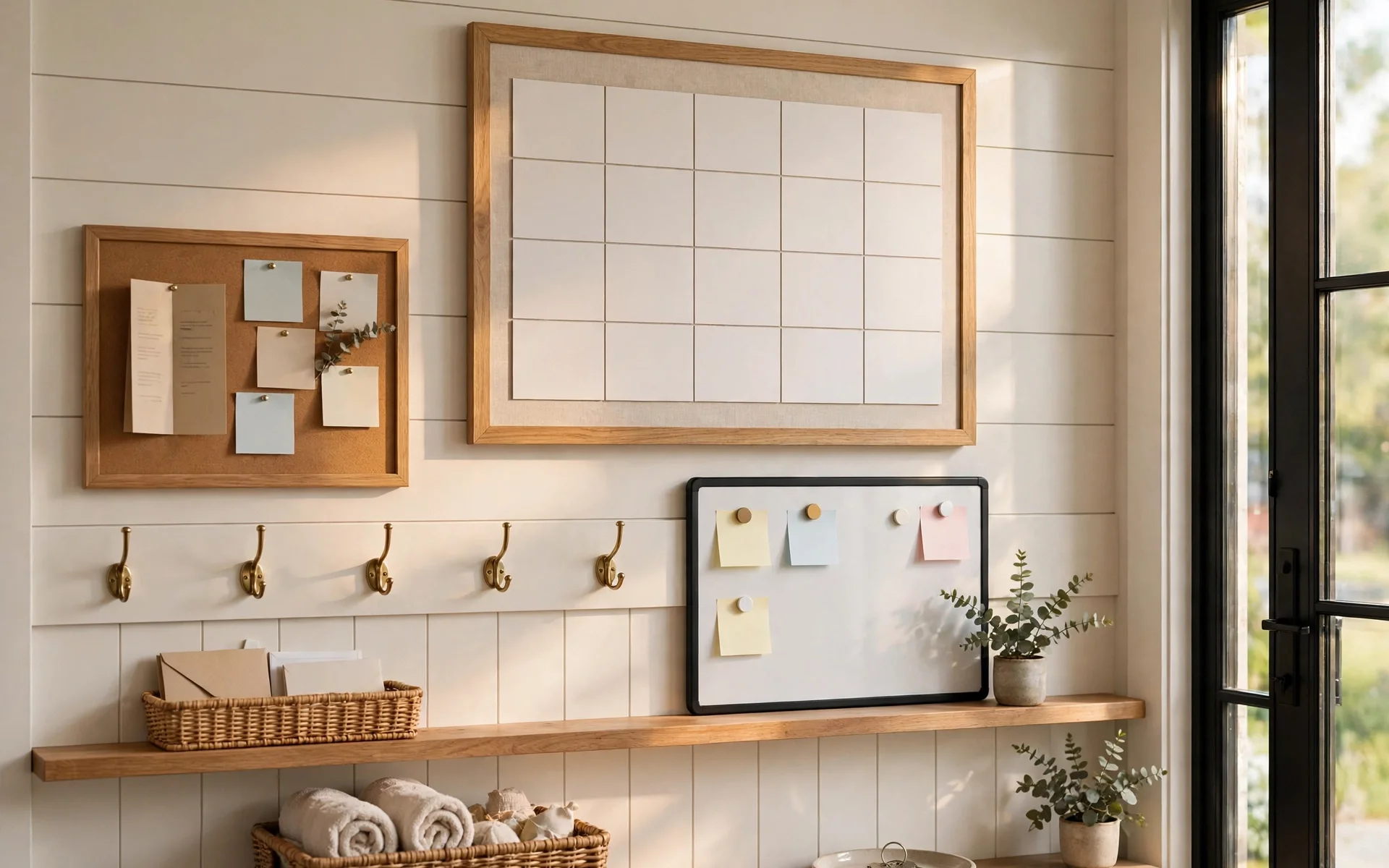
7. A Family Command Center — One of the Smartest Mudroom Ideas
The mudroom is usually the last stop before the front door, which makes it the perfect command center. Mount a wall calendar or weekly planner at eye level near the door, add a small bulletin board for permission slips and takeout menus, and screw in a row of key hooks with a label for each driver. A magnetic whiteboard handles quick daily reminders — practice times, trash day, a grocery list. A charging strip in a shallow drawer keeps phones topped up without cable spaghetti. Keep a slim basket for outgoing mail and library books so they leave with you instead of sitting on the counter. Keep the whole station within the first few feet of the door so it fits the natural grab-and-go flow.
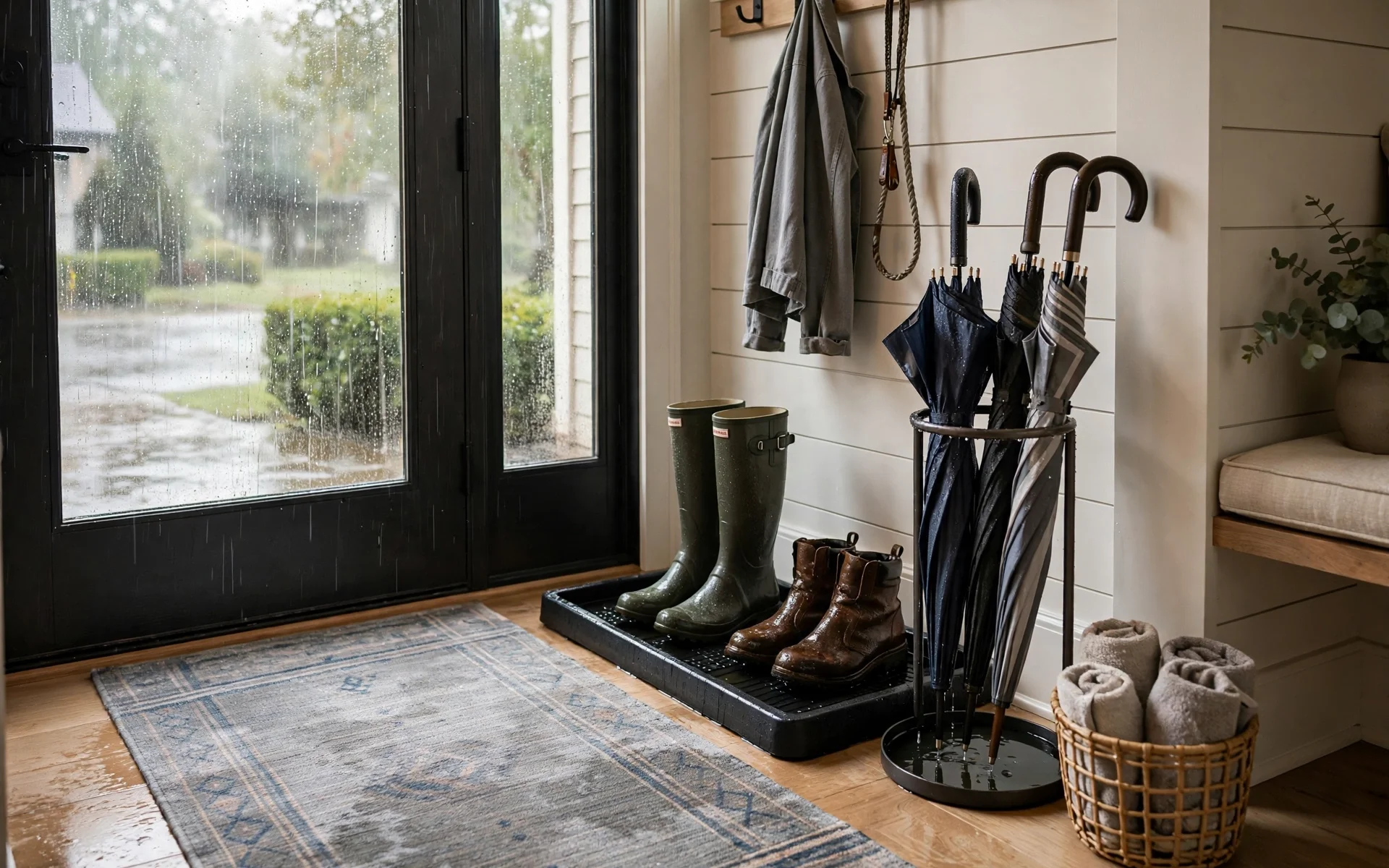
8. Boot Trays and Umbrella Stands by the Door: Practical Mudroom Ideas
Wet weather is a mudroom’s biggest test. A heavy-duty boot tray with a raised rubber surface catches drips and mud before they reach your floors, and an umbrella stand with a drip tray keeps soggy canopies contained. Place both within two steps of the door so wet gear lands there automatically. For households with dogs, add a small basket of old towels beside the tray for wiping muddy paws. In the rainy months this corner earns its keep daily — pair it with our fall entryway ideas to make the space feel seasonal and intentional. Empty the umbrella drip tray after every rainy day so mildew never starts. A washable runner from the door to the tray adds a second line of defense on the wettest days.
9. Kid-Height Stations: Mudroom Ideas That Actually Stick
Kids will use a system only if they can reach it. Set hooks, baskets, and shoe slots at their height — roughly 36 to 40 inches for elementary-age kids — and let each child claim one zone. Picture labels work better than words for little ones: a photo of their backpack taped to their hook removes all guesswork. Add a low open shelf for lunchboxes and water bottles so kids can pack their own bags the night before. Keep a step stool nearby for kids who want the higher shelves. When everything is reachable, hanging up the coat and parking the shoes becomes a two-minute habit instead of a nightly battle. Praise the habit in week one and it usually sticks for the whole school year.
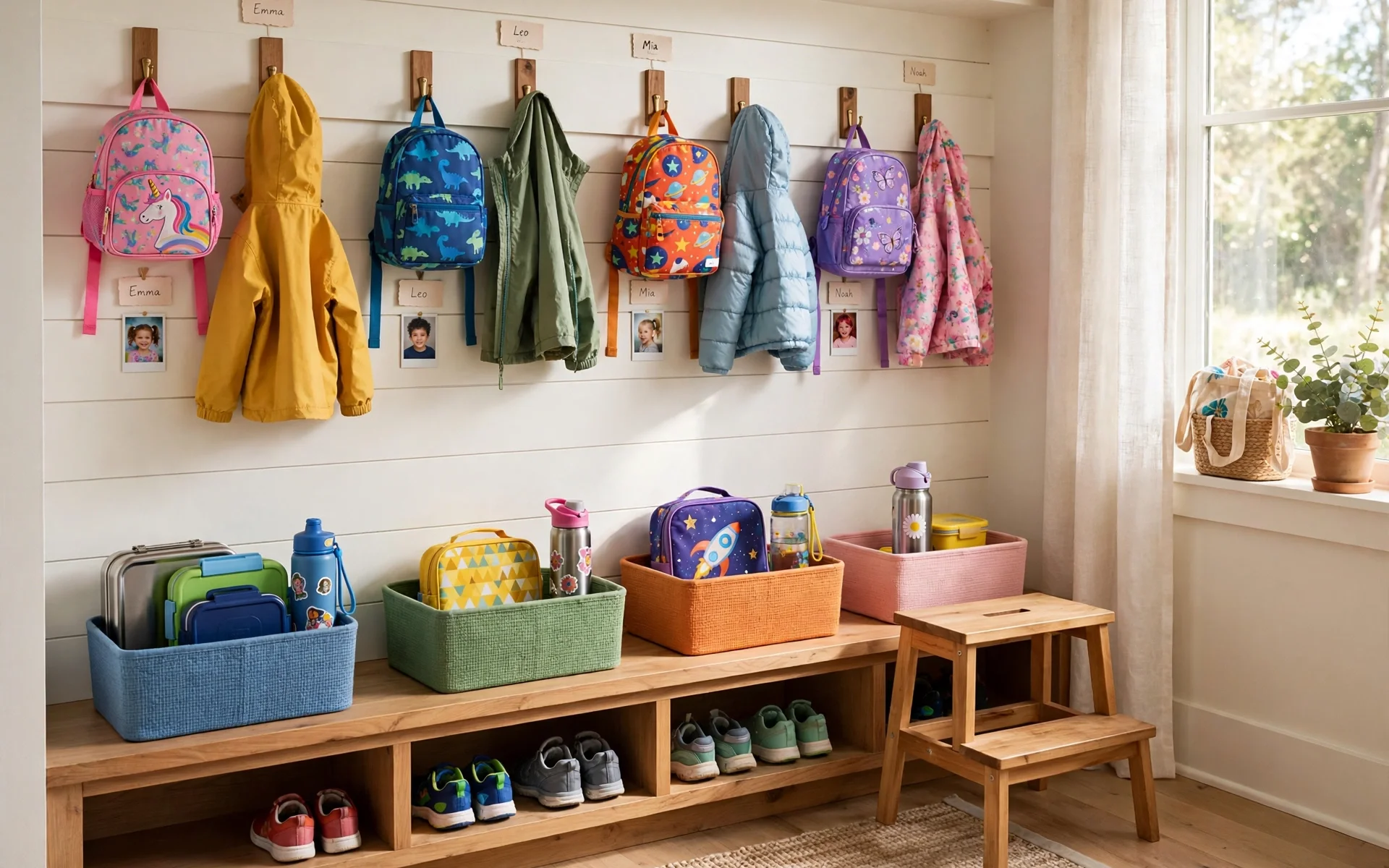
10. A Fold-Down Bench for Multipurpose Nooks: Space-Saving Mudroom Ideas
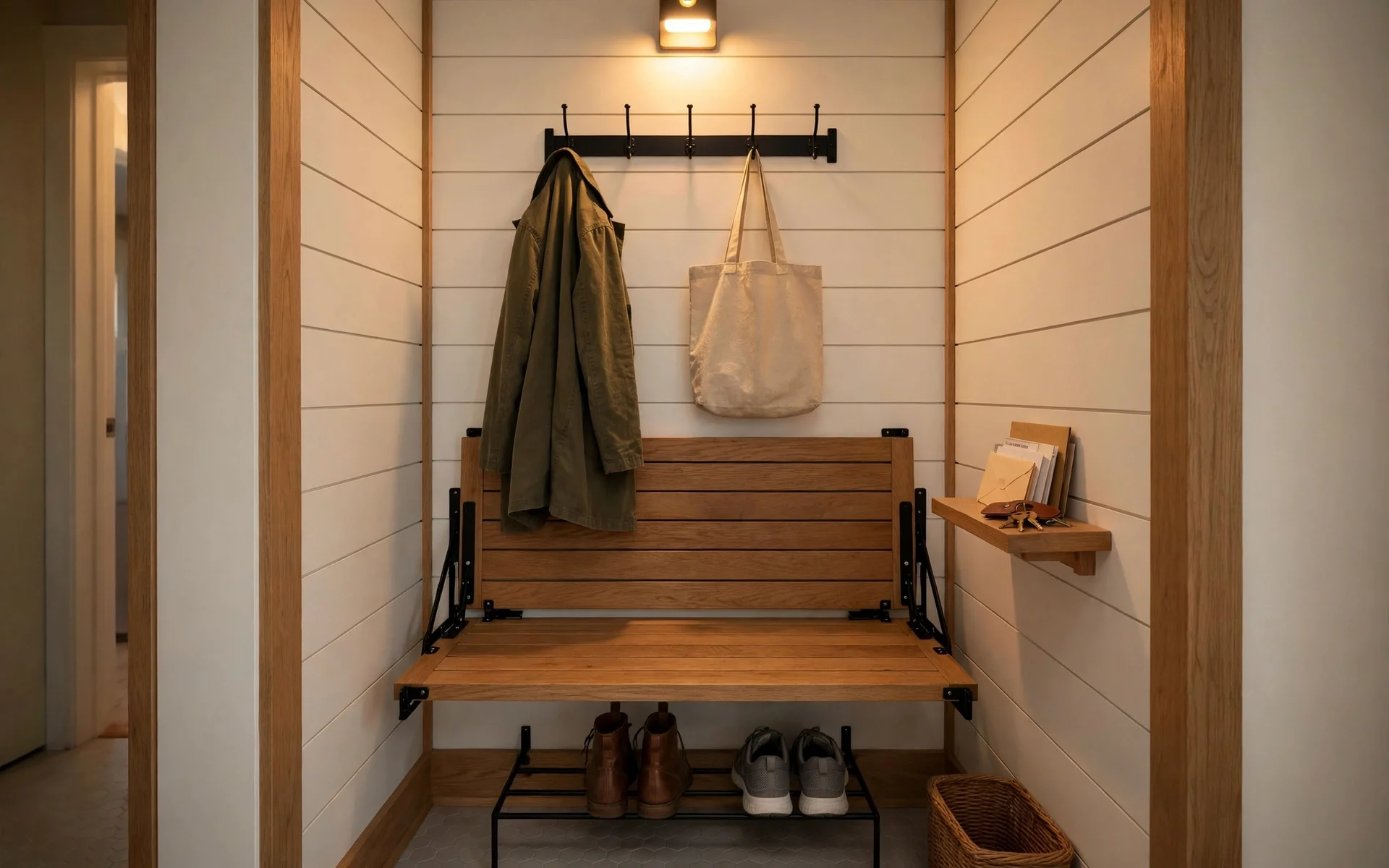
If your mudroom is really a hallway, the laundry room, or a garage corner, a fold-down wall bench gives you seating only when you need it. Mounted to a stud, a sturdy fold-down seat supports an adult and folds flat against the wall afterward, freeing the floor for bins or a bike. Choose a bench rated for at least 200 pounds so adults can actually use it, not just kids. Pair it with a wall-mounted hook rail and a slim shoe rack so the whole setup takes up less than a foot of depth. Add a battery-powered motion light above so the nook stays bright without wiring. A small wall-mounted shelf beside the bench gives keys and mail a landing spot in the same footprint.
11. A Simple Seasonal Rotation System: Mudroom Ideas That Last
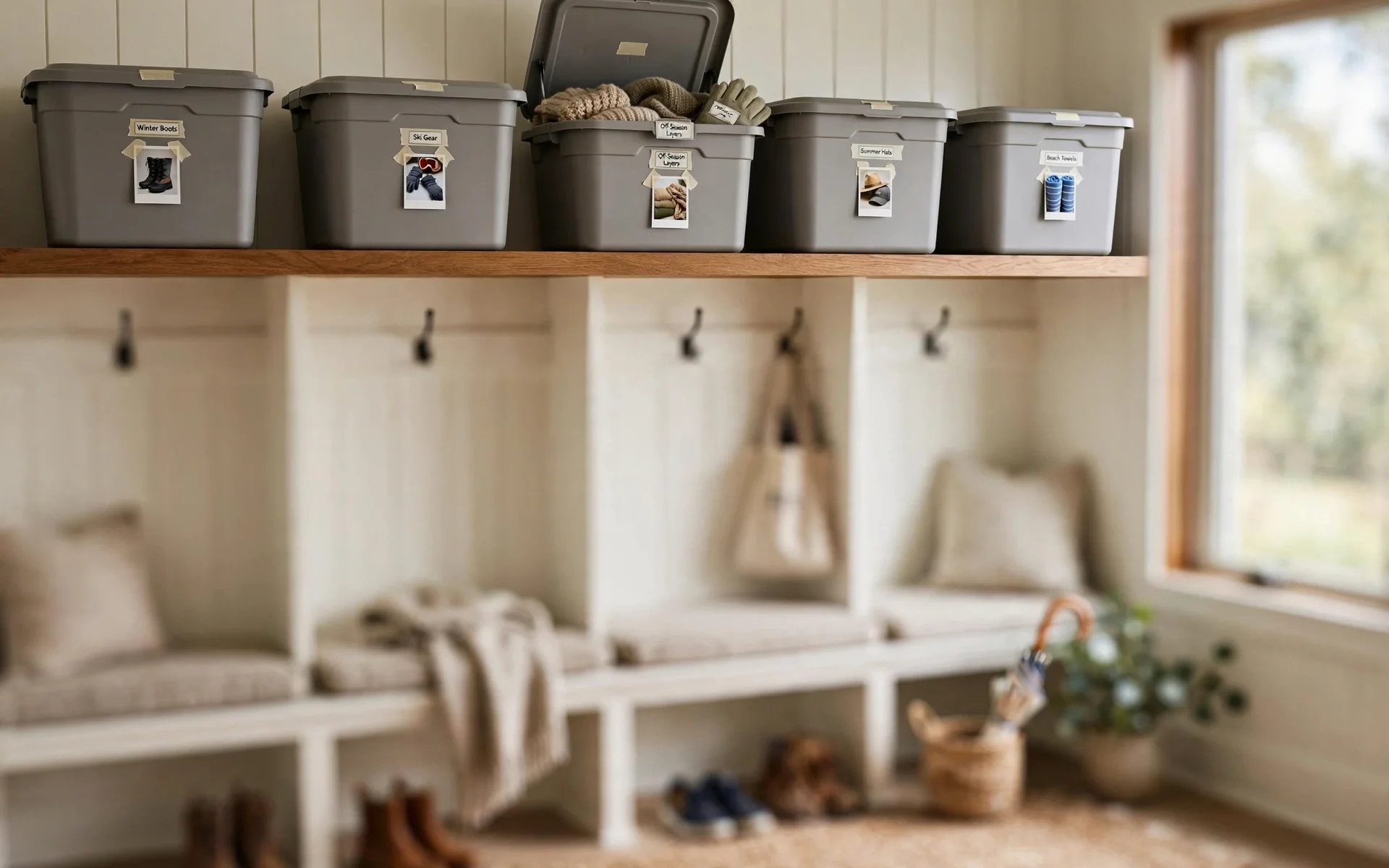
Clutter creeps in when last season’s gear never leaves. Twice a year — once when boots come out, once when sandals return — empty the mudroom and sort everything into three groups: current season stays, off-season goes upstairs, and worn-out goes to donation. Store the off-season batch in labeled bins on the top shelf or in a closet so it doesn’t fight for daily space. Photograph each bin’s contents and tape the photo to the lid — future you will thank present you in January. This reset takes an afternoon and is the maintenance step most mudroom ideas skip; without it, hooks and cubbies slowly fill with gear nobody uses. Donate the worn-out pile the same week so it doesn’t migrate back into the mudroom.
12. No Spare Room? Mudroom Ideas for Tiny Entryways
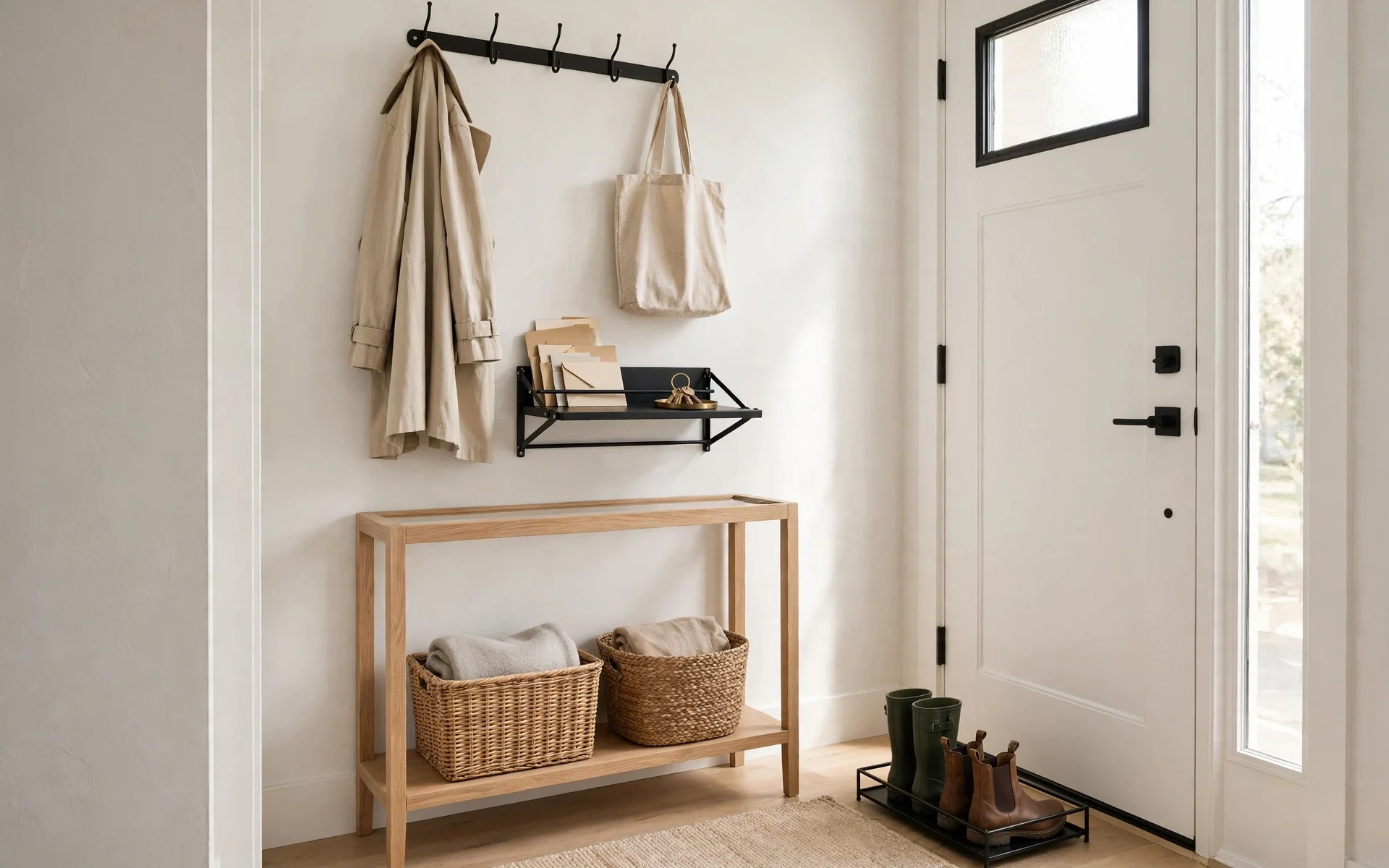
No mudroom? Borrow the concept. A slim console table with a basket shelf, a wall-mounted hook rail, and a boot tray in front of the front door creates a one-foot-deep drop zone that handles most of the chaos. Add a tall, narrow cabinet — or even a wardrobe armoire — for coats if there’s no closet nearby. In apartments, the inside of the front door can hold an over-the-door hook rack for bags and jackets. Stick to a light palette and one rug so the small entryway feels bigger. A wall-mounted folding shelf above the console gives keys and mail a landing spot without stealing floor space. Our guide to small living room ideas has more tricks for tight quarters. The lesson: a mudroom is a system, not a room.
Frequently Asked Questions
What is the cheapest way to organize a mudroom?
Start with hooks, baskets, and a boot tray — those three solve most mudroom chaos cheaply. Add a freestanding bench for shoes and label everything. Biggest payoff per dollar of all the mudroom ideas here.
How do I keep a mudroom organized with kids?
Give each child their own hook, basket, and shoe slot at their height, with picture labels for pre-readers. Do a two-minute evening reset — coats, shoes, bags — small enough to finish before dinner.
How many hooks does a mudroom need?
Plan two to three hooks per person: everyday coat, bag, plus one spare. Space hooks 8 to 10 inches apart with a lower row for kids. Short on wall? Use a cabinet door.
What should be stored in a mudroom versus a closet?
The mudroom holds active rotation: today’s coat, this week’s shoes, backpacks, keys, seasonal gear. Off-season or rarely used items — dress coats, luggage — belong in a bedroom closet.
How do I make a small entryway feel like a real mudroom?
Use the same pieces in miniature: slim hook rail, one boot tray, a narrow bench, a basket per person. Keep the palette light, and these compact mudroom ideas handle daily traffic like a full-size room.
The Takeaway
A good mudroom isn’t about square footage — it’s about giving every item a home. Pick three or four mudroom ideas that fit your household and set them up in a weekend; small systems, used daily, beat big renovations.
By Nestora Find