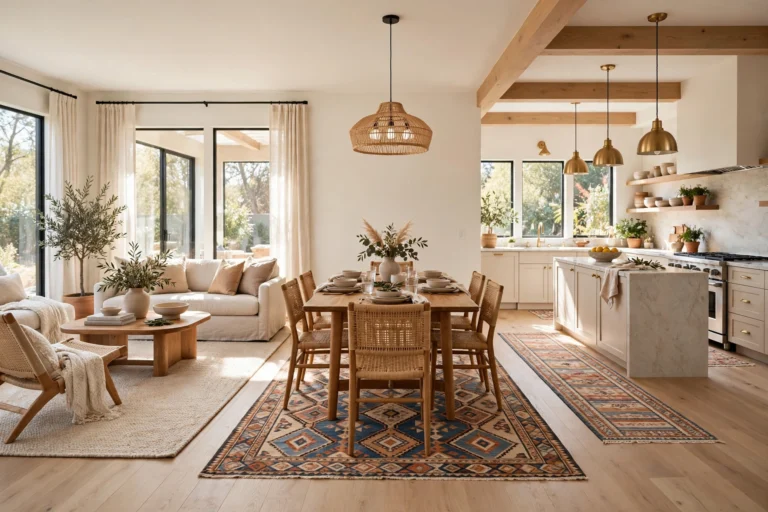
12 Rug Layering Ideas for a Cozy Home
These rug layering ideas solve a common problem: a single rug rarely gives a room enough warmth, pattern, and softness at once. Layering lets a large, plain base do the practical work while a smaller, more personal rug brings color and texture on top. Start with a base that reaches under the front legs of your seating, then add a top rug about two-thirds its size so both layers stay visible. That proportion is a useful starting point, as this guide to combining two rugs in one room from Apartment Therapy explains. Below are twelve room-by-room ways to layer rugs well, with sizes, materials, and care notes for each one.
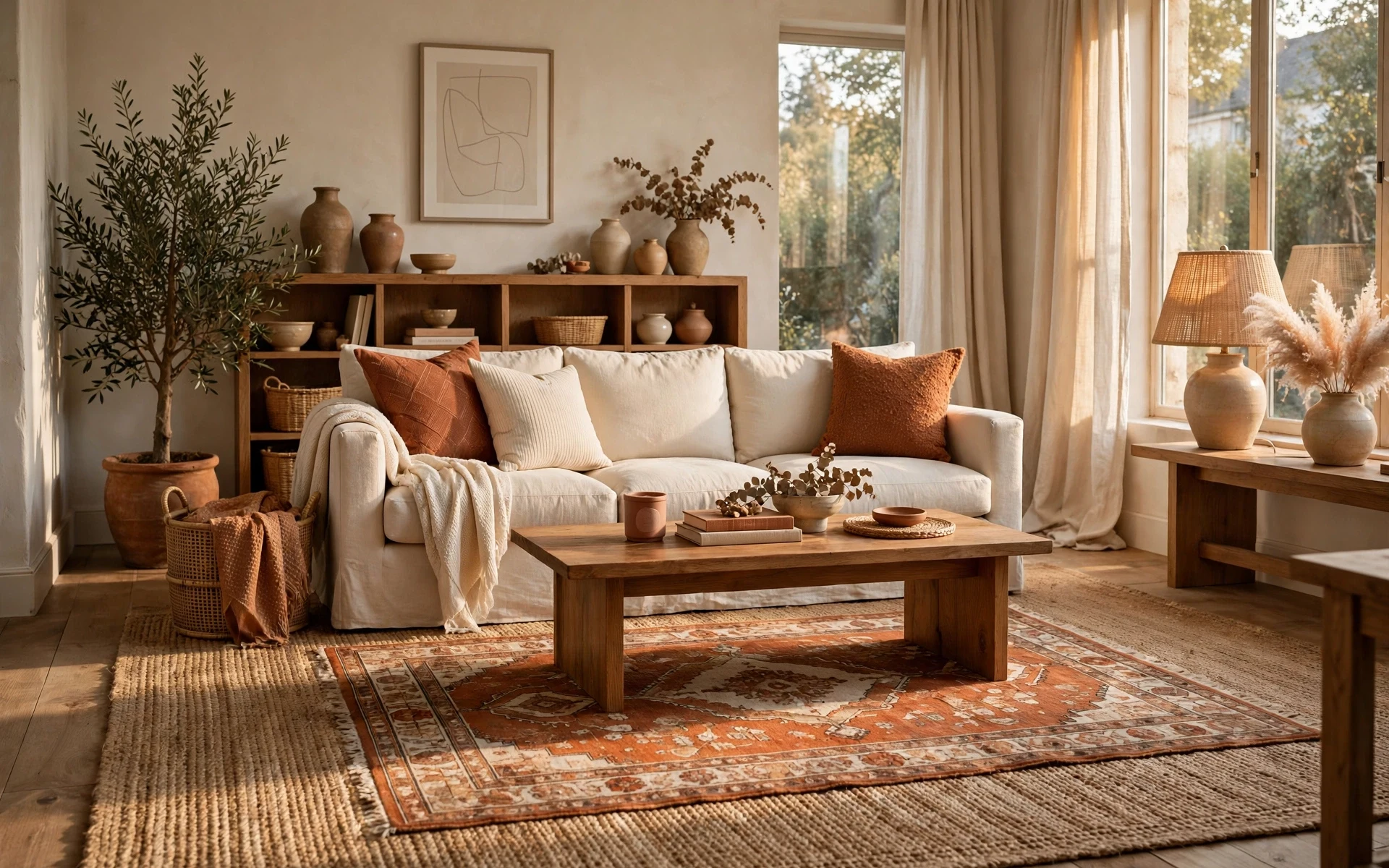
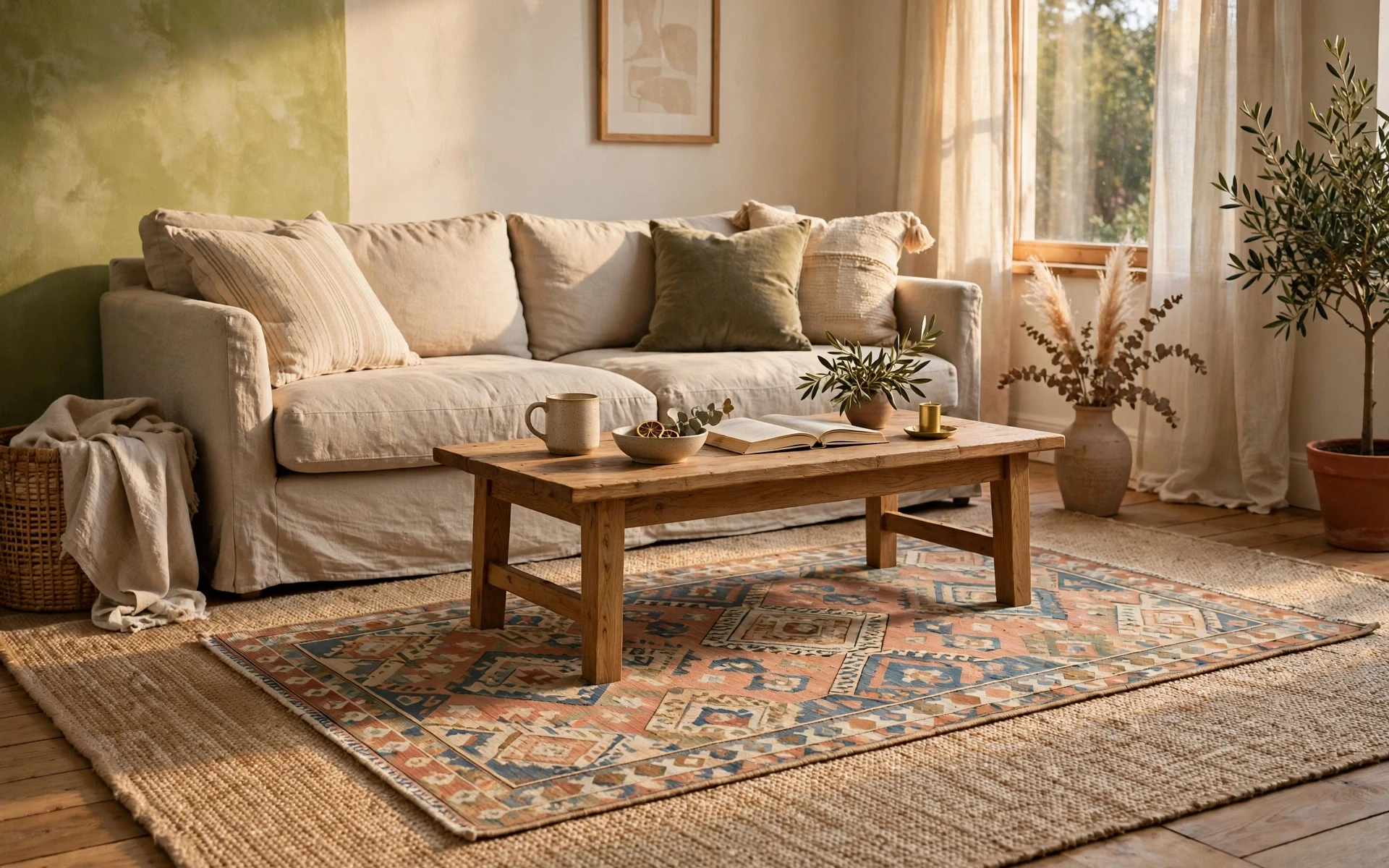
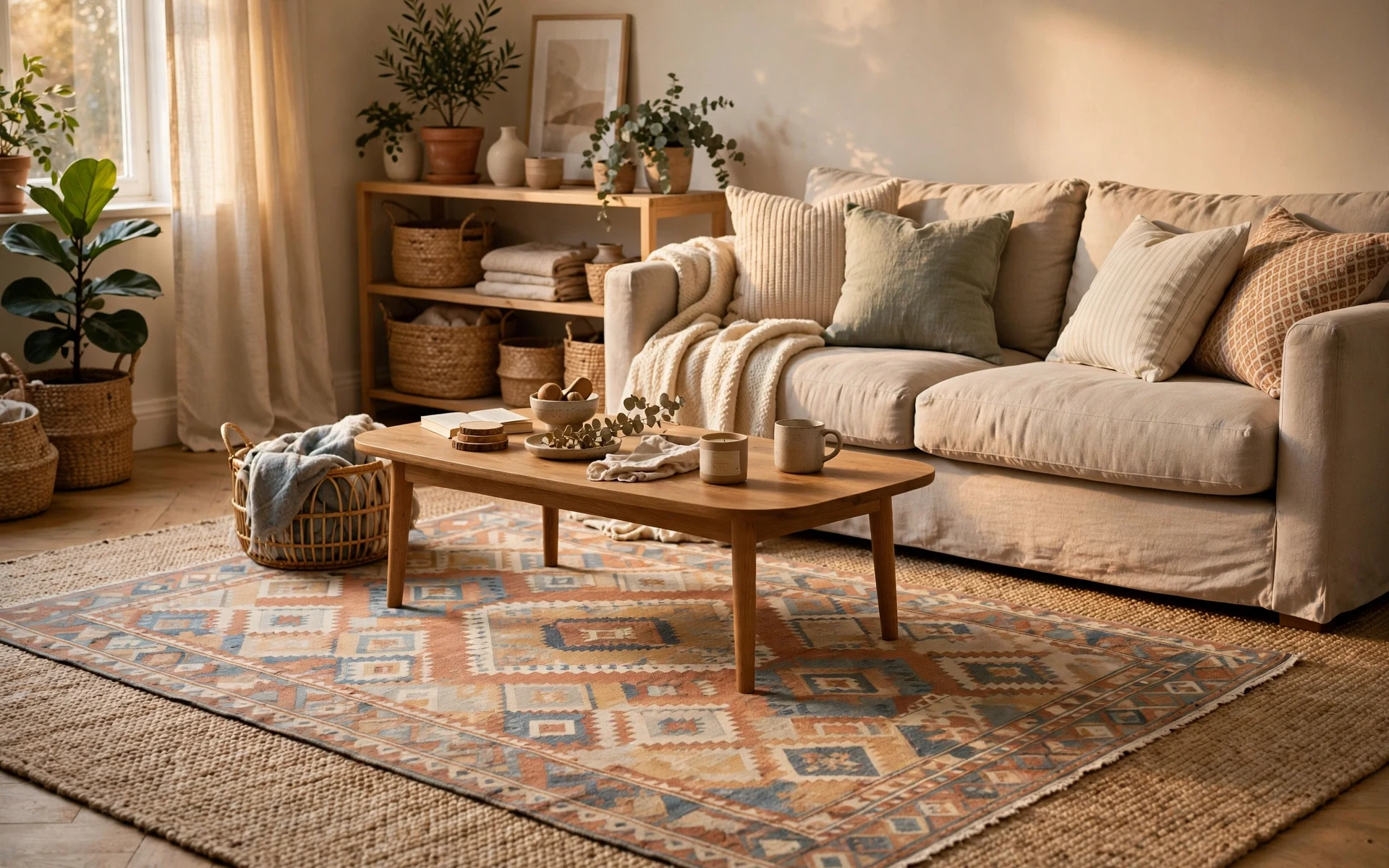
Rug Layering Ideas: Jute Base With a Vintage Rug on Top
This is the most reliable place to begin. Lay a large natural jute rug first — 8 by 10 feet works under most sofas, and 9 by 12 feet suits a larger seating group — then center a smaller vintage-look wool rug, around 5 by 8 feet, on top. Jute gives you coverage and a calm, textured background for far less floor space anxiety, while the vintage piece brings the pattern you actually want to look at. Keep the jute flat and the top rug low-pile so the coffee table sits level.
Add a thin non-slip pad under each layer to stop creep on wood floors. Vacuum the top rug weekly and lift it once a month to shake grit out of the jute beneath, since trapped grit wears fibers from below. If you are building a wider scheme, these area rug ideas help with sizing the base correctly.
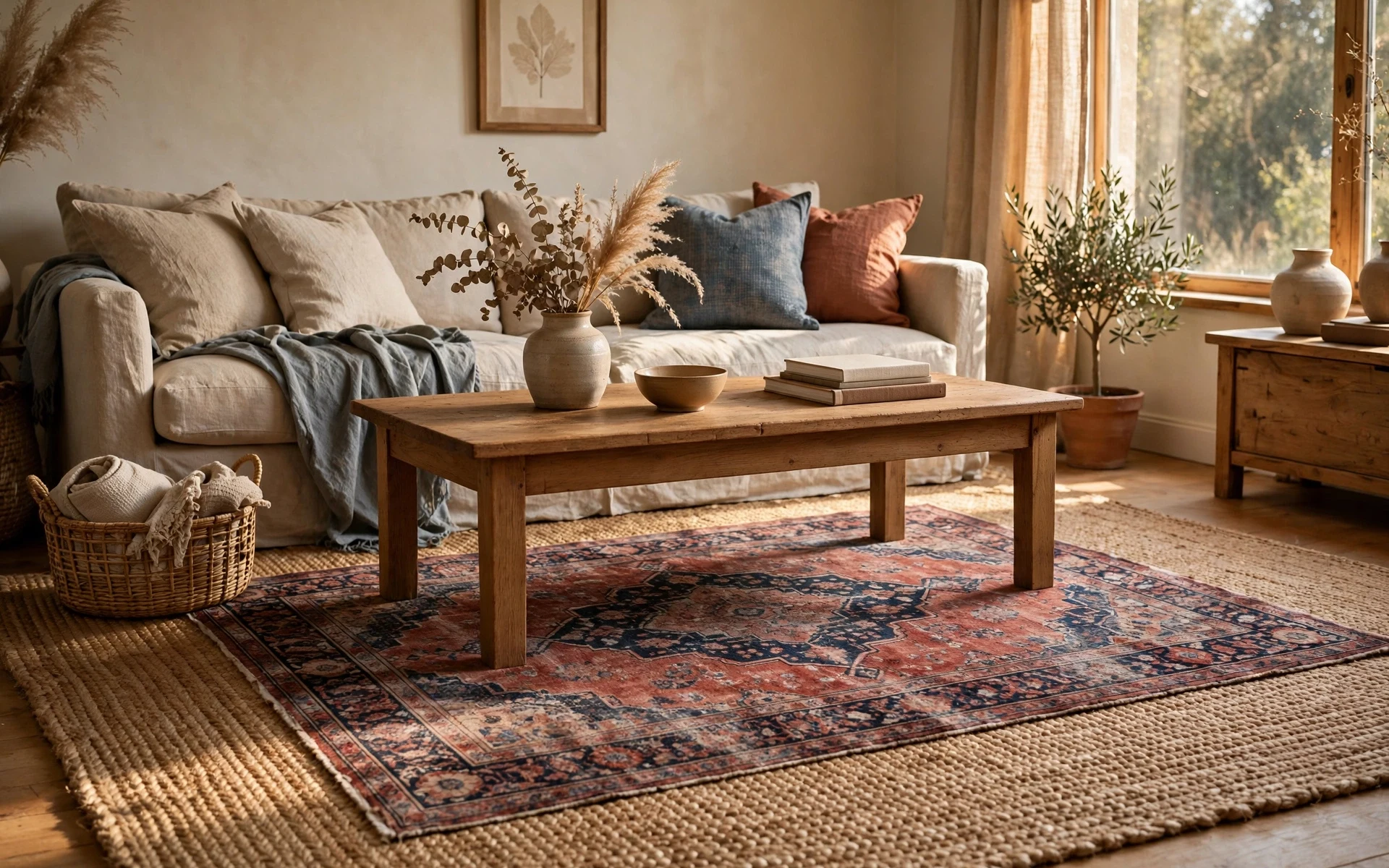
Cowhide Over Sisal: Rug Layering Ideas for Shape Contrast
Rectangles on rectangles can look tidy but flat, and an irregular shape fixes that in seconds. Lay a woven sisal rug as your base, then place a cowhide — real or faux — diagonally across one corner so its organic edge breaks up the straight lines. Angle the hide toward the seating rather than the door, and let one point run under an armchair leg to anchor it. Sisal is hard-wearing and low, so the hide sits close to the floor instead of bunching. Keep this pairing away from dining chairs, whose legs catch on hide edges. Brush a real hide with a stiff brush in the direction of the hair and keep it out of strong sun to limit fading. Faux hides can be shaken outside and spot-cleaned with a damp cloth.
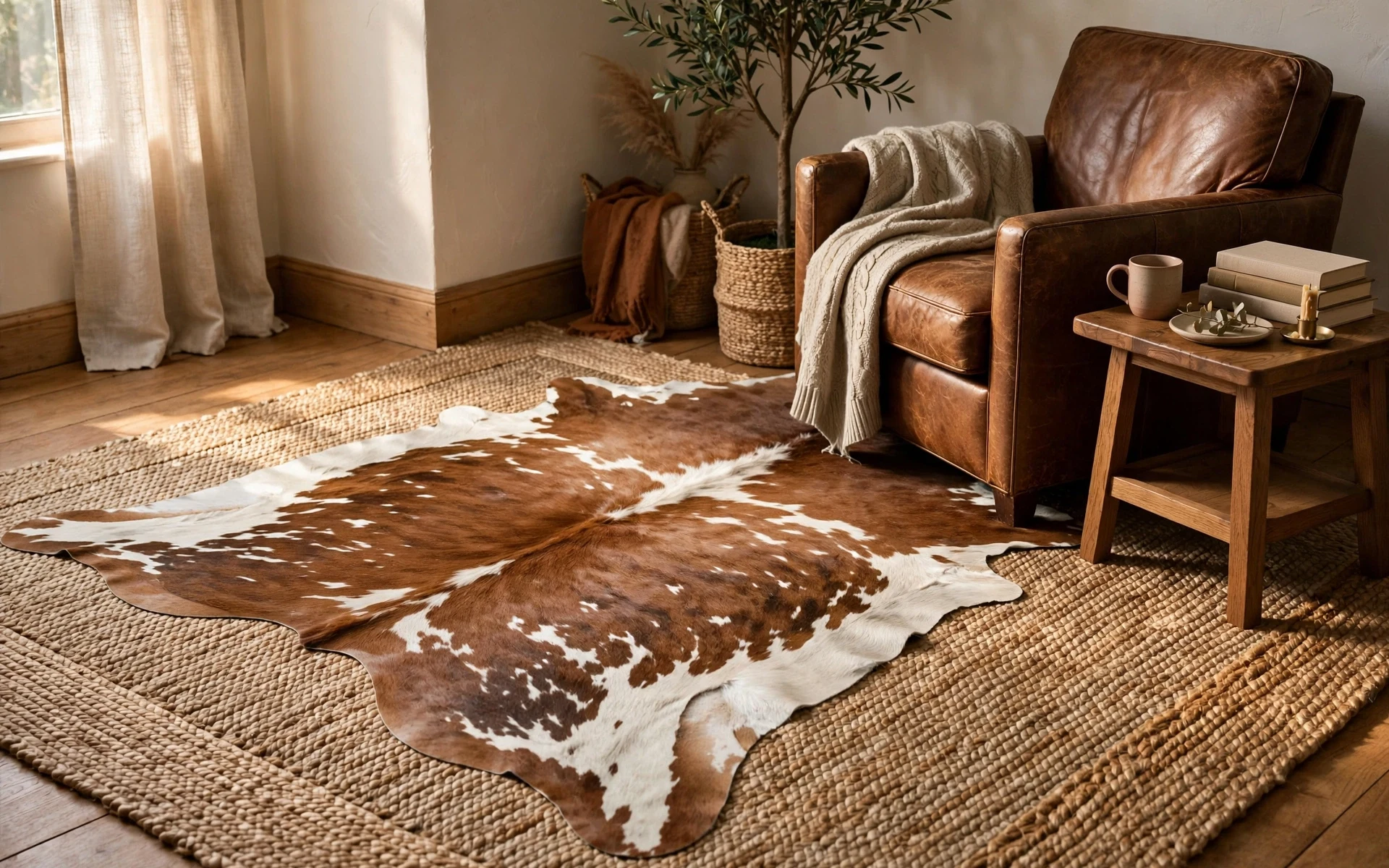
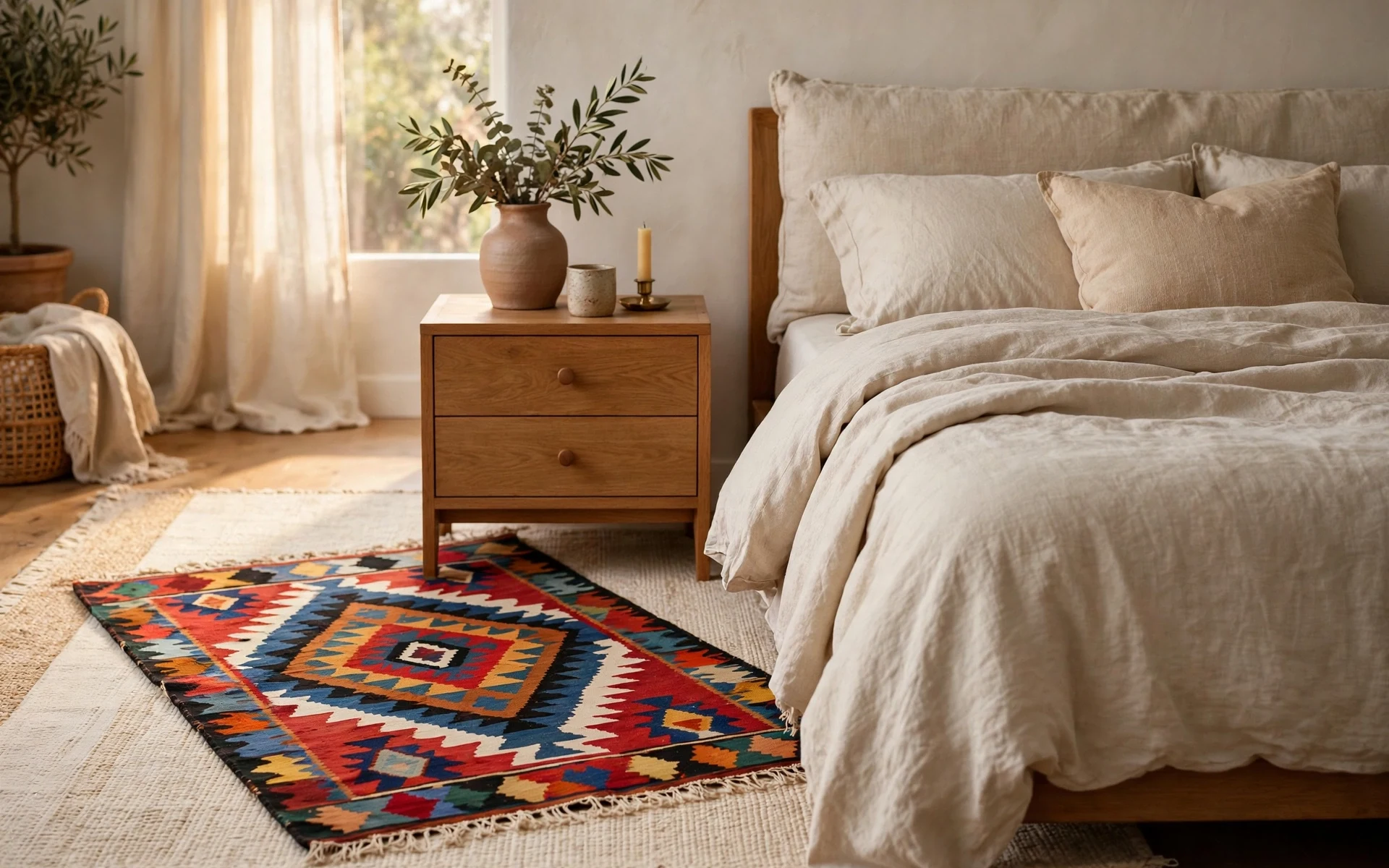
Kilim Over a Flatweave in the Bedroom
Bedrooms want softness under bare feet, but a thick pile everywhere can fight with doors and bedside tables. Try a large, plain cotton or wool flatweave as the base, extending at least 18 inches beyond each side of the bed, then lay a kilim in warm geometric pattern across the lower two-thirds where your feet land first. Kilims are thin, reversible, and easy to lift for cleaning, which makes them practical top layers.
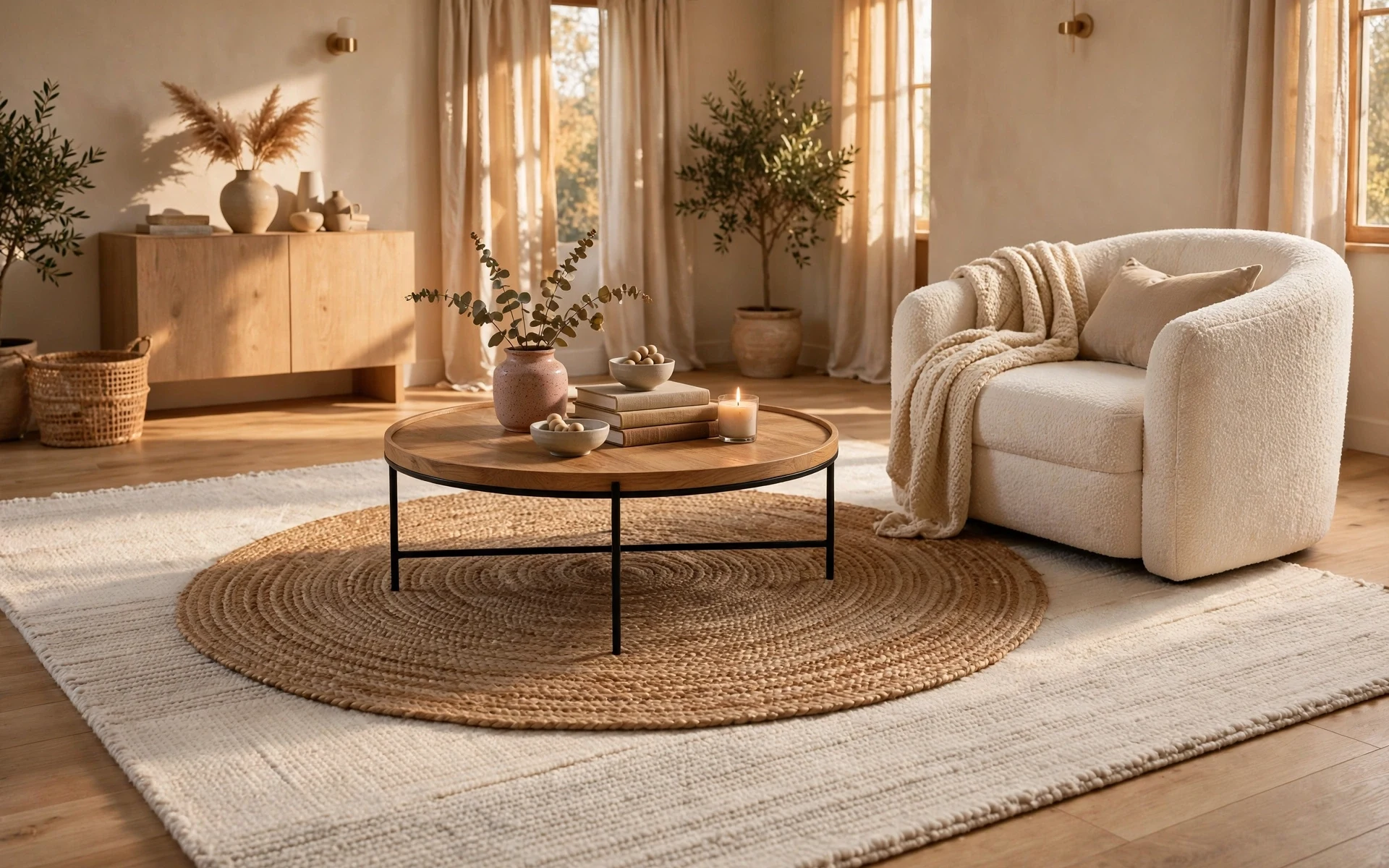
Round Rug Over a Rectangular Base
A round top rug softens a room full of straight edges — sofas, shelves, and rectangular tables all read less boxy with a circle in the middle. Start with a rectangular base rug sized to your seating, then place a round rug, 5 to 6 feet across, centered under the coffee table. Woven jute, braided wool, and low-pile cotton all work well in round form. Center the circle on the table, not on the room, so the grouping looks deliberate even in an off-center layout. Leave a border of base rug visible on all sides; if the round rug touches the sofa legs, it is probably too large. A felt-and-rubber pad cut slightly smaller than the circle keeps it from curling at the edge, a common problem with braided rounds.
Angled Top Rug: Rug Layering Ideas for a Relaxed Look
Not every layer needs to line up. Turning the top rug 15 to 30 degrees gives a lived-in feel and can help a small top rug cover more visual ground in a long room. Keep the base rug straight and aligned with the walls — that contrast is what makes the angle look intentional instead of careless. Push the angled rug so at least one corner tucks under the sofa or coffee table, which stops it sliding and ties it to the furniture. This approach works best with a plain or softly patterned top rug; a strong geometric print at an angle can feel busy. Walk the main path through the room before you settle it, and move any raised corner out of the walkway to avoid a trip edge.
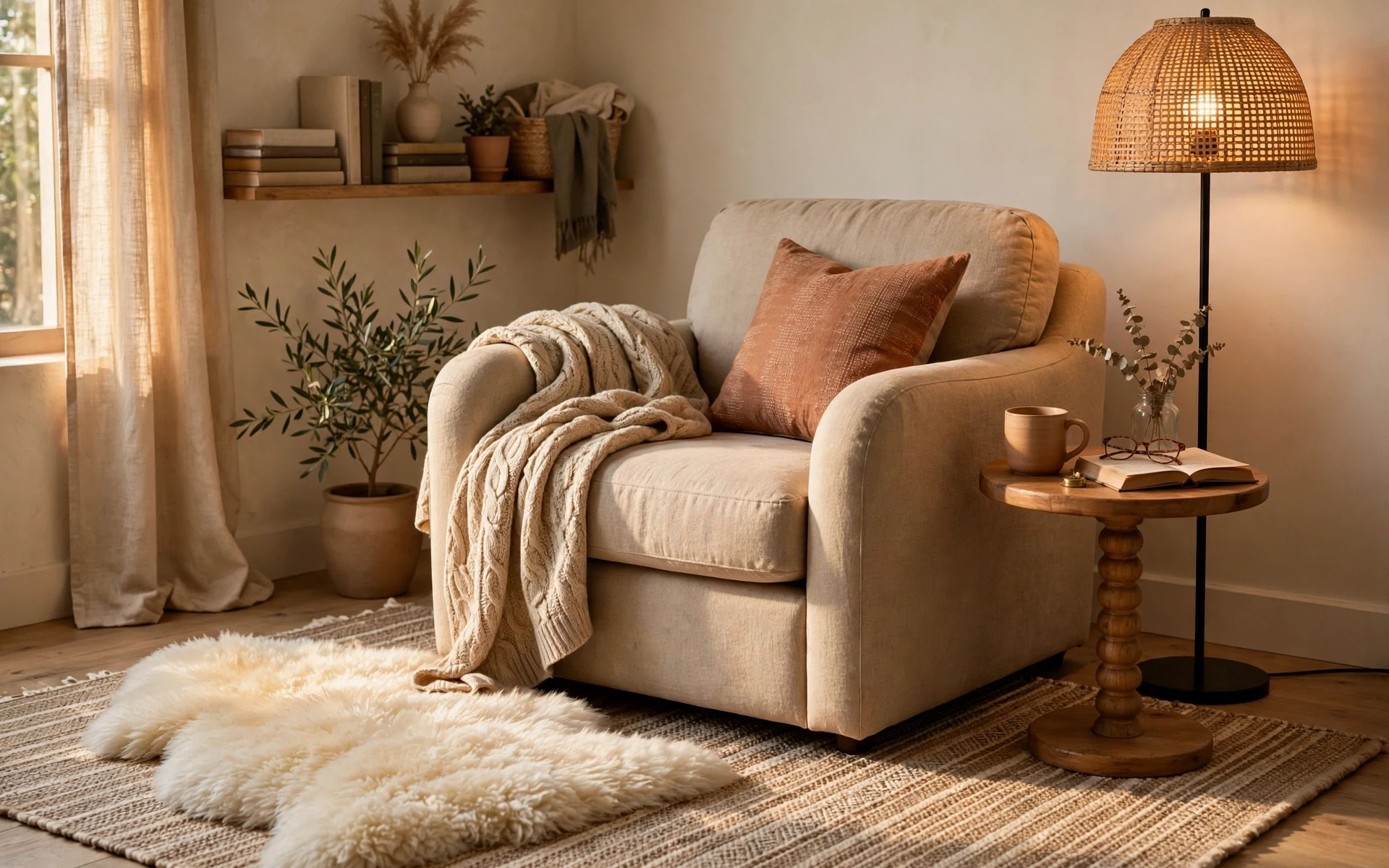
Sheepskin Layer by a Reading Chair
Small layers earn their keep in spots where you sit still. Place a flatweave or low-pile rug under a reading chair first, then drop a single sheepskin — real or faux — where your feet rest, angled half under the chair. The base defines the nook on the floor, while the sheepskin gives warmth and cushion in the one place you feel it most. Keep the skin away from radiators, which dry real sheepskin and make the backing crack. Shake it outside weekly, brush the pile with a wide pet brush, and spot-clean spills quickly with cool water. Faux versions are easier for busy homes and most can be hand-washed and dried flat. This is one of the smallest rug layering ideas here, and often the one people use every single day.
Tone-on-Tone Layers: Rug Layering Ideas for a Calm Room
Layering does not have to mean contrast. A large ivory or oatmeal base rug with a slightly deeper cream top rug in a different texture gives a calm room depth without adding pattern. The trick is texture change: try a flat, looped base with a cut-pile or subtly ribbed top, so light catches the two surfaces differently through the day. Keep furniture in the same warm neutral family and add wood, linen, and one darker accent — a walnut table or black lamp — so the room does not wash out.
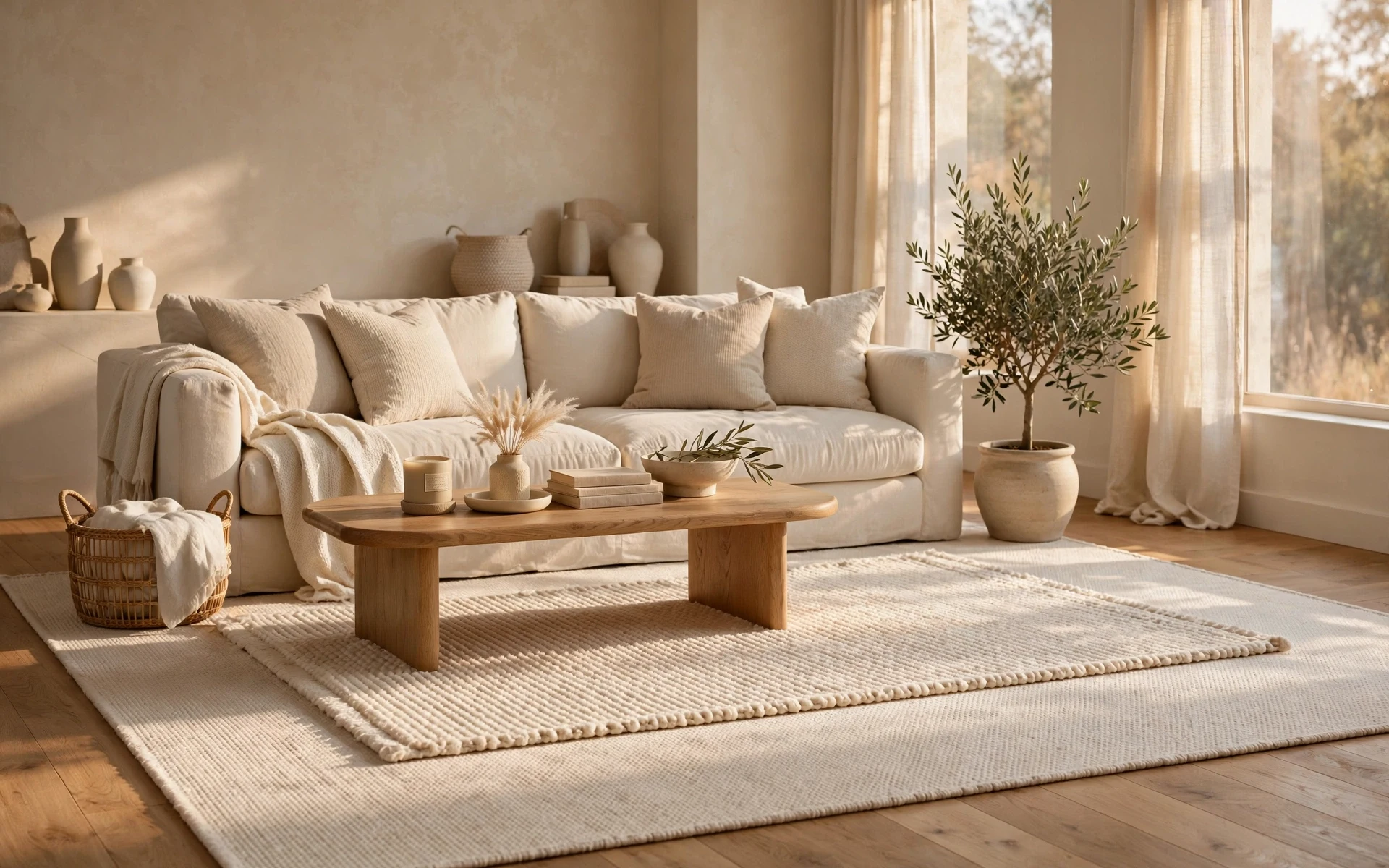
Pattern Over a Solid Base in the Living Room
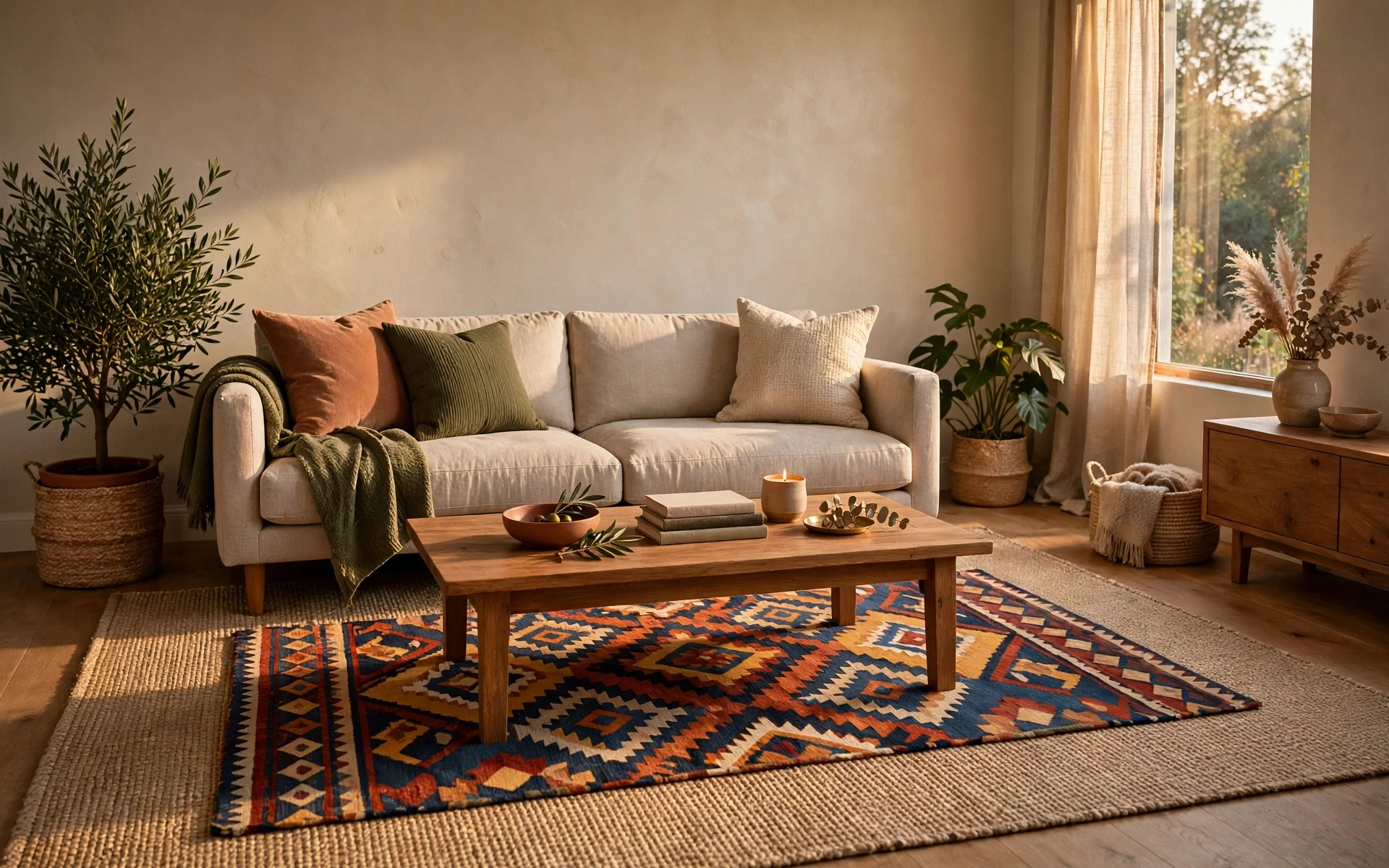
If you own one bold rug, give it a quiet frame. Choose a solid base rug at least 12 to 24 inches larger than the patterned rug on every side, in a color pulled from the pattern’s background rather than its brightest shade. That visible border calms the pattern and makes a too-small patterned rug usable in a larger room — a practical fix if your favorite piece is 5 by 8 feet but your seating needs 8 by 10 feet of coverage. Keep other patterns in the room smaller in scale, on cushions or a throw, so they do not compete at floor level. Use a pad under the base only if the top rug already has a grippy backing.
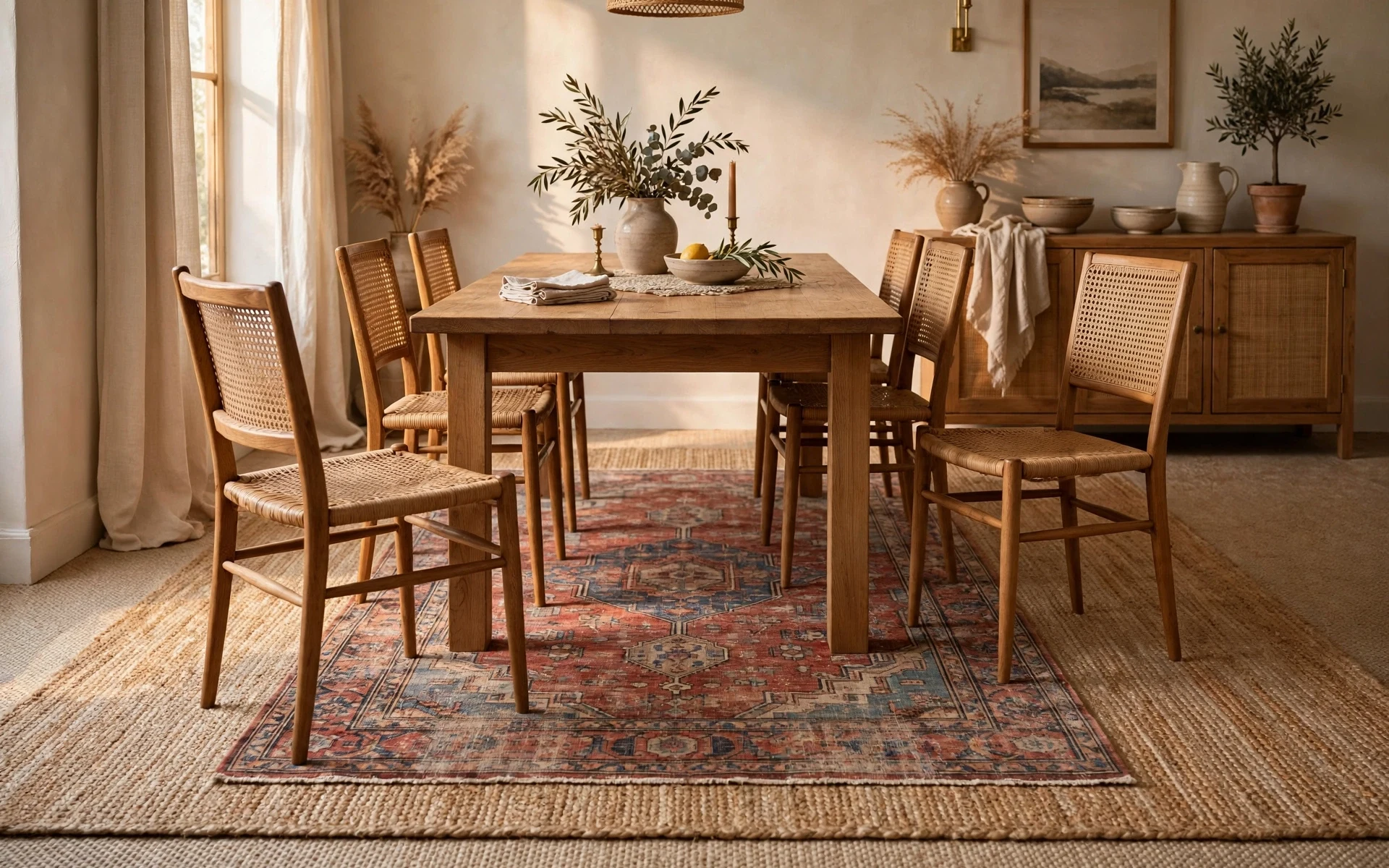
Layered Rugs Under a Dining Table
Dining rooms need flat, not fluffy. Pick a low-pile flatweave base that extends at least 24 inches beyond the table on all sides, so chairs stay on the rug when pulled out, then add a smaller vintage-look top rug centered under the table itself. Both layers should be flat enough for chair legs to slide without catching — skip shag and thick wool here entirely. Pattern on the top layer is practical, since it hides crumbs and small marks between cleans. Choose washable or wool-rich materials that release spills more easily than synthetics with deep pile. Vacuum after gatherings, and lift the top rug to clean under it weekly in a busy home. Test chair movement before guests arrive, not during dinner.
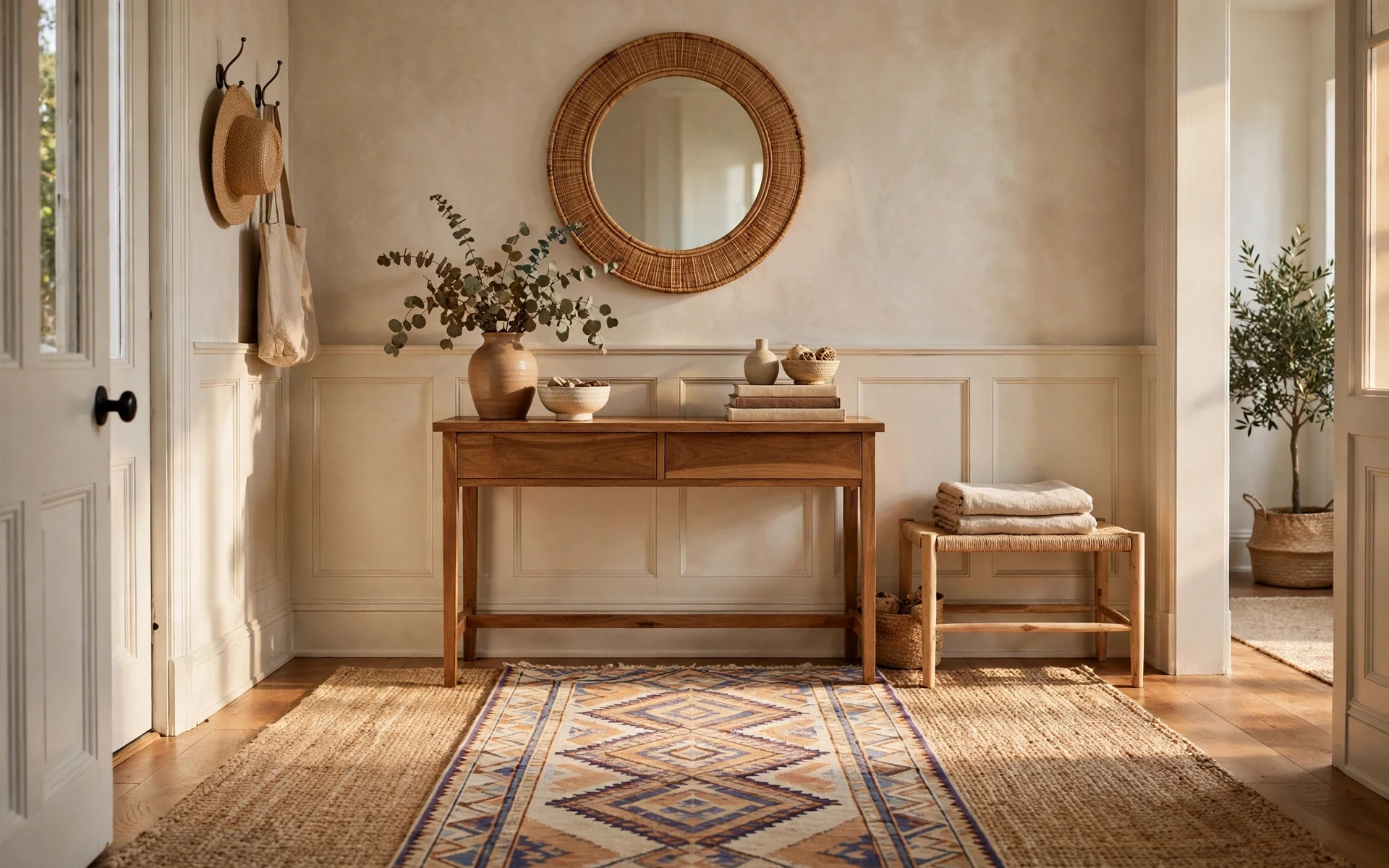
Entryway Runner Over a Larger Mat
Entryways take mud, grit, and wet shoes, so layer for function first. Put a large, coarse natural-fiber mat or low flatweave down as the base, then run a narrower patterned runner over the center, leaving a border of the tough base visible at the door edge where shoes land. The runner carries the color and can be lifted, shaken, and washed far more easily than one large rug. Keep total height low so the door clears both layers — measure the door swing before you buy. Choose a runner with a rubber or latex backing, or add grip tape at both ends. In wet weather, lift the runner to dry underneath once a week so moisture does not sit trapped between layers and mark wood floors.
Layering Rugs Over Carpet
Wall-to-wall carpet does not rule out layering — it just changes the rules. Your top rug needs to be low-profile and fairly firm: kilims, dhurries, and thin wool flatweaves sit best, while thick or floppy rugs wrinkle and creep on carpet pile. Go larger than you think, since a small rug on carpet looks lost and moves more; a top rug of at least 5 by 8 feet holds its place better. Use a pad made specifically for rug-on-carpet use, which grips in both directions. Keep the color relationship simple — a patterned top over a plain carpet, never pattern on pattern. Move furniture onto the rug’s edges where you can, since weight is still the simplest anchor. Reset corners weekly, as creep is normal on plush carpet.
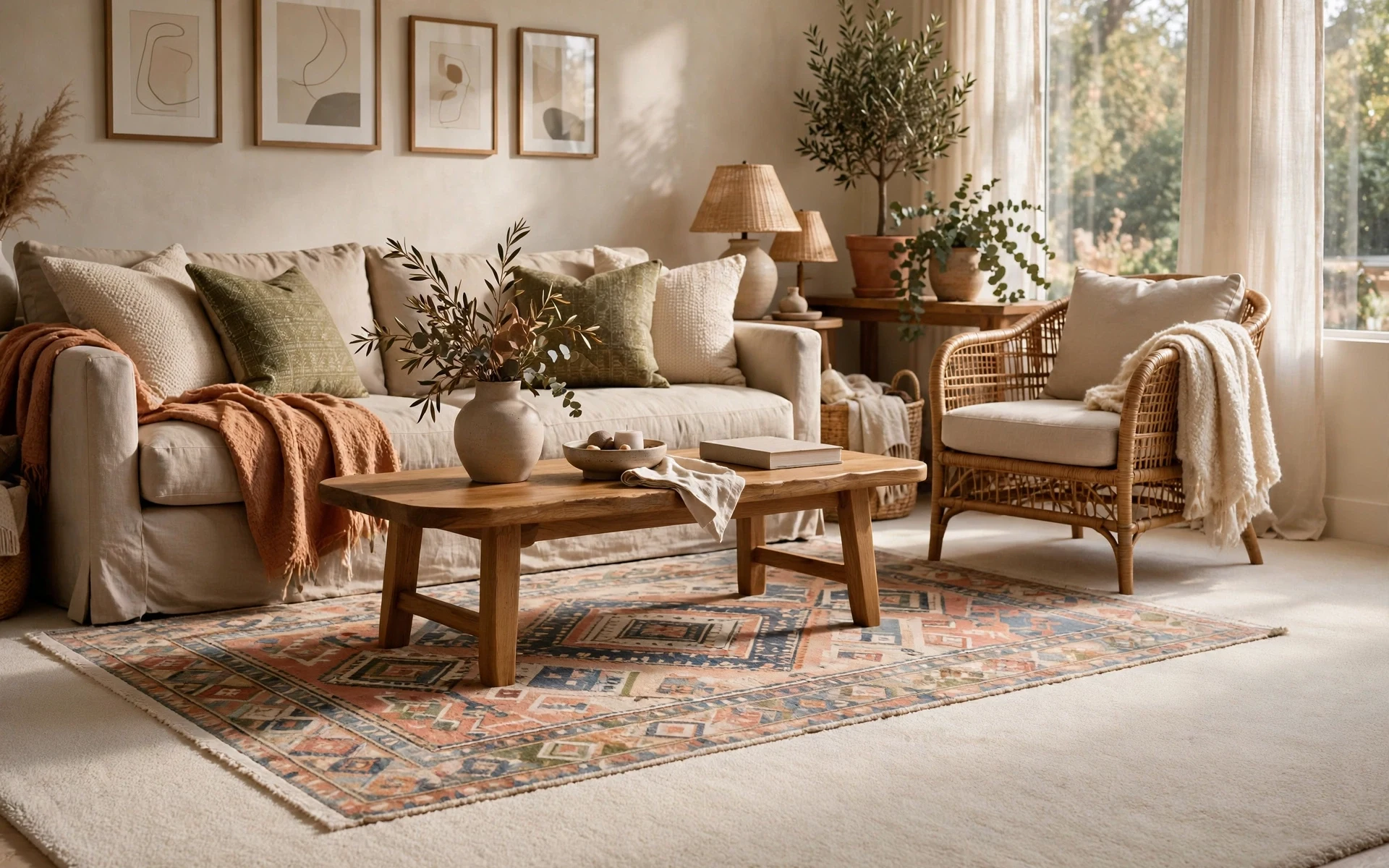
Washable Top Rug: Practical Rug Layering Ideas for Busy Homes
Families and pet owners get the most from layering when the top layer is washable. Keep a durable, neutral base rug in place and use a machine-washable cotton or synthetic top rug in the busiest spot — under the coffee table, in front of the sofa, or where children play. When spills happen, you wash the small rug instead of deep-cleaning the large one. Check the rug’s care label for its maximum wash size for your machine, and choose a top rug that fits without folding tightly. Low-pile washable rugs layer flattest and dry fastest. Keep a second inexpensive top rug in rotation if the spot gets daily use, so the base is never left bare while one washes and dries flat.
Frequently Asked Questions
What size should each layer be for rug layering ideas?
Make the base rug large enough to sit under the front legs of your seating, and choose a top rug about two-thirds its size, leaving 12 to 24 inches of base visible around it.
Can I layer rugs on hardwood floors safely?
Yes — use a thin non-slip pad under each layer, keep both rugs low-pile, and check corners weekly so edges stay flat and do not become a trip hazard.
Which materials layer best together?
A flat natural-fiber base such as jute, sisal, or a cotton flatweave pairs well with a wool, kilim, cowhide, or washable cotton top rug in a contrasting texture.
How do I clean layered rugs?
Vacuum the top rug weekly, lift it monthly to vacuum the base beneath, shake small layers outside, and spot-clean spills on each layer separately before moisture sits between them.
Conclusion
Good layering is mostly proportion and texture: a large, quiet base, a smaller top rug with the color or softness you want, and a pad to keep both in place. Start with one of these rug layering ideas — jute under vintage, a sheepskin by your chair, a washable top in a busy room — and adjust the angle and position over a few days of real use. Cozy floors are built, not bought in one piece.
By Nestora Find
These rug layering ideas work in every room, from entryways to bedrooms. If you want more rug layering ideas, start with a large natural-fiber base and layer a smaller patterned rug on top. The best rug layering ideas balance proportion and texture, which is why these rug layering ideas feel so inviting.