12 Small Pantry Organization Ideas

A small pantry can hold a surprising amount — if every inch is organized with intention. The difference between a chaotic pantry and a functional one is not square footage; it is systems. Clear containers, smart shelving, and a place for everything turn even the tiniest pantry into a hardworking part of your kitchen. You do not need a walk-in pantry or a big budget — most of these ideas cost under twenty dollars and take an afternoon to implement.
These small pantry organization ideas focus on maximizing what you have, from door-mounted storage to vertical tricks that double your capacity. As The Spruce notes in its pantry shelving guide, shallow shelving, risers, and pull-out designs keep everything visible and accessible — the golden rules for small spaces.
1. Decant Dry Goods into Clear Containers
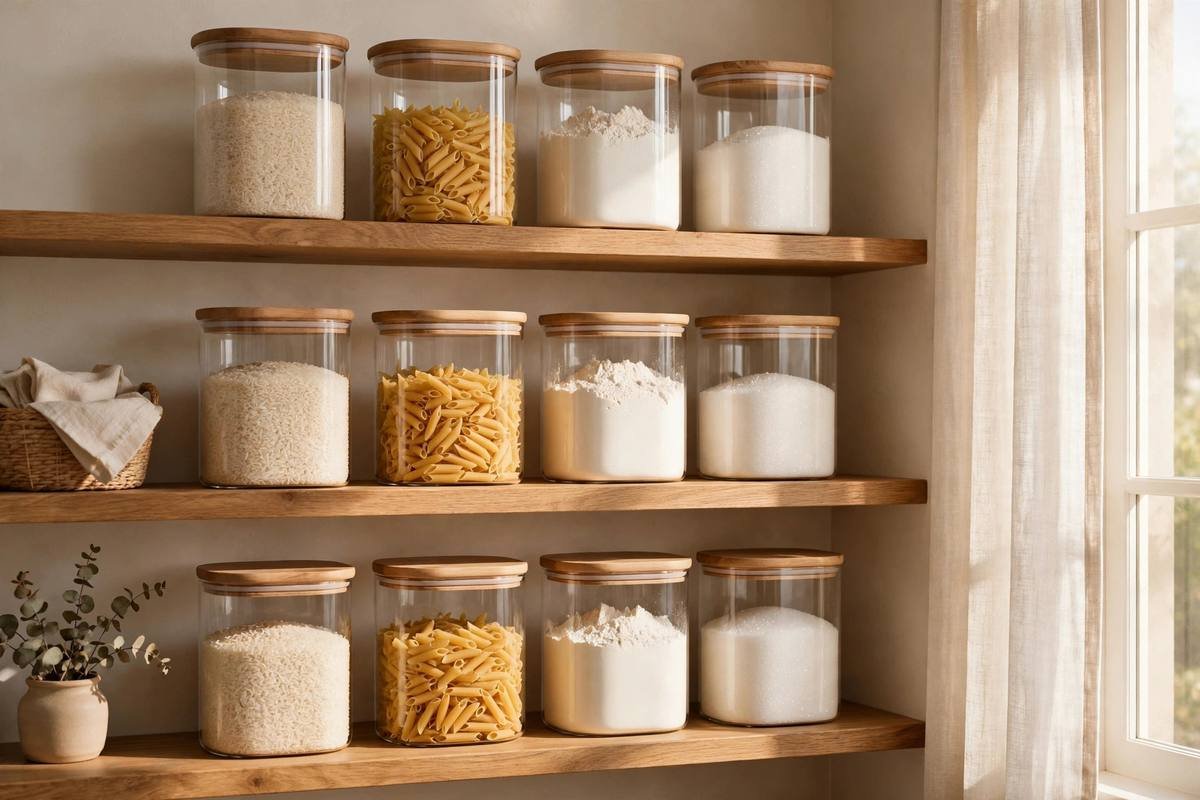
Decanting flour, sugar, rice, pasta, and snacks into clear airtight containers is the single most transformative pantry move. You can see exactly what you have and how much is left, which ends duplicate buying and forgotten bags going stale. Choose stackable square containers — they use shelf space far more efficiently than round ones. Add simple labels so everyone in the household knows what goes where. This one change makes even a messy pantry look instantly organized and makes inventory checks take seconds.
2. Use the Back of the Door

The back of the pantry door is prime unused real estate. Mount a wire or plastic over-the-door rack with multiple tiers for spices, packets, oils, and small jars. In a small pantry, door storage can add the equivalent of an entire extra shelf. Choose a rack slim enough that the door still closes easily — measure the clearance first. This is renter-friendly organization at its best: no drilling, no damage, huge payoff. Keep heavier items on lower tiers so the rack stays stable when the door moves.
3. Add Shelf Risers for Canned Goods

Shelf risers — those simple stepped platforms — let you see every can instead of just the front row. Place risers on pantry shelves and arrange canned goods, jars, and small bottles in stadium-style rows. No more buying a third can of tomatoes because the first two were hiding behind the soup. Risers are inexpensive, need no installation, and instantly double the visibility of deep shelves. For narrow pantries where shelves run deep, risers are practically mandatory. They also work beautifully inside kitchen cabinets, as our small kitchen ideas explain.
4. Group Items into Labeled Bins

Bins turn a jumble of small items into tidy categories. Create zones: a breakfast bin, a snack bin, a baking bin, a spice bin. Use open bins you can pull out like drawers for frequently used categories, and lidded bins for backstock. Label every bin — labels are what keep the system working after the initial organizing energy fades. Choose bins that fit your shelf depth with a little room to spare so they slide in and out easily. Clear bins work best for this system since you can see contents at a glance without pulling each bin out. This system is especially powerful for families, since even kids can follow a labeled-bin system.
5. Install a Lazy Susan for Corners and Deep Shelves

Deep shelves and corner spots are where pantry items go to disappear. A lazy Susan — a simple rotating turntable — solves this by bringing the back row to you with a spin. Use them for oils, vinegars, condiments, and spice collections. Two-tier lazy Susans double the capacity for small jars. They need no installation and cost very little, yet they eliminate the most frustrating part of a small pantry: the unreachable back. Place one on every deep shelf and watch your usable space effectively double.
6. Go Vertical with Stackable Storage

In a small pantry, vertical space is your best friend. Use stackable bins and containers to build upward instead of spreading out. Add an extra shelf to tall pantry cabinets — most have adjustable shelving with unused height between shelves. Store lesser-used items and backstock up high, daily essentials at eye level, and heavy items down low. A small step stool kept nearby makes high shelves genuinely usable rather than decorative. Every inch of vertical space you claim is an inch of counter or cabinet space you save elsewhere.
7. Use Clear Bins for Snack Visibility

Snacks disappear into clutter faster than anything else, especially with kids in the house. Corral them in clear bins — one for savory, one for sweet, one for lunchbox items. The transparency means everyone can see options without dumping everything out to look. Keep the snack bins at kid height so little ones can serve themselves, which also teaches independence. Restock the bins weekly from your backstock area. This simple system ends the daily "there's nothing to eat" complaint because the options are always visible.
8. Create Zones by Category

Professional organizers swear by zoning, and it works in the smallest pantries. Divide your pantry into clear zones: breakfast, cooking ingredients, baking, snacks, canned goods, and backstock. Keep each zone's items together on the same shelf or in adjacent bins. Within zones, arrange by frequency of use — daily items at eye level, occasional items higher or lower. Zoning means anyone can find things and put them back correctly, which is what keeps the pantry organized long-term. Sketch your zones on paper before you start moving things for the smoothest reset.
9. Add Under-Shelf Baskets
Recommended Ebook
Small Space Checklists & Planners
299 fillable checklists and planners for small space living — tick boxes digitally or print and use!
Only $7

Under-shelf baskets hook onto existing shelves to create bonus storage in the dead space below. They are perfect for packets, spice pouches, tea boxes, and other flat items that waste shelf height. No tools needed — they simply slide onto the shelf above. In a small pantry, two or three under-shelf baskets can add the equivalent of half a shelf of storage. They work best for lightweight items since they hang from the shelf. This is one of the cheapest upgrades on this list with one of the biggest space payoffs.
10. Maximize with a Pull-Out Pantry Cabinet

If you are renovating or have a narrow gap beside the fridge, a pull-out pantry cabinet is the ultimate small-space solution. These tall, narrow cabinets slide out to reveal multiple shelves accessible from both sides — no more lost items in deep dark corners. Even a six-inch-wide pull-out holds an impressive number of spice jars and cans. For existing kitchens, a freestanding slim rolling cart tucked into a gap works on the same principle. Pull-outs turn awkward narrow spaces into some of the most functional storage in the kitchen. See our galley kitchen ideas for more narrow-space wins.
11. Label Everything Consistently

Labels are the glue that holds every other system together. Use a label maker, chalkboard labels, or simple printed tags — the method matters less than the consistency. Label containers, bins, and shelves so every item has a named home. This is what makes the pantry maintainable: when everything is labeled, anyone can put groceries away correctly and notice when something is running low. Revisit labels every few months and update them as your needs change. Keep a label maker or spare labels in a kitchen drawer so relabeling takes seconds, not a whole project. A labeled pantry also makes it dramatically easier to write an accurate grocery list.
12. Do a Quarterly Pantry Reset

Even the best systems drift over time. Schedule a quarterly pantry reset: pull everything out, wipe the shelves, toss expired items, and put everything back in its zone. This takes about an hour and prevents the slow creep of clutter that undoes good organization. Use the reset to notice what you actually use versus what sits untouched, and adjust your zones accordingly. Donate unexpired items you will not use to a food bank. A regular reset keeps your small pantry working as hard as the day you organized it — and for open storage inspiration, our open shelf kitchen guide pairs well with these systems.
Frequently Asked Questions
How do I organize a very small pantry with no shelves? Start with a freestanding shelving unit or a slim rolling cart that fits the space. Add stackable bins, an over-the-door rack, and under-shelf baskets to the unit. Even a closet with a single tension rod and hanging organizers can become a functional pantry. Focus on vertical storage and door space first.
What containers are best for pantry organization? Airtight, stackable, square or rectangular containers in clear plastic or glass. Square shapes use shelf space most efficiently. Choose a single matching set for dry goods so everything stacks neatly. For bins, sturdy plastic or woven baskets with labels work well depending on your style.
How do I keep my pantry organized long-term? Zone by category, label everything, and do a quick five-minute tidy weekly plus a deeper quarterly reset. Only buy what fits your system — if a new item has no home, the system breaks. Involve the whole household so everyone maintains the zones and labels.
Should pantry containers be glass or plastic? Glass looks beautiful, does not stain or absorb odors, and is dishwasher safe — ideal for frequently used staples. Quality BPA-free plastic is lighter, cheaper, and safer for high shelves or homes with kids. Many organizers use glass for counter-visible staples and plastic for high or kid-accessible storage.
How deep should pantry shelves be? Twelve inches is the sweet spot for most pantries — deep enough for containers but shallow enough that nothing hides. For deeper shelves, use risers, lazy Susans, and pull-out bins so the back stays accessible. Avoid shelves deeper than sixteen inches unless they are pull-out style.