12 Organic Shape Mirror Ideas for Soft Style
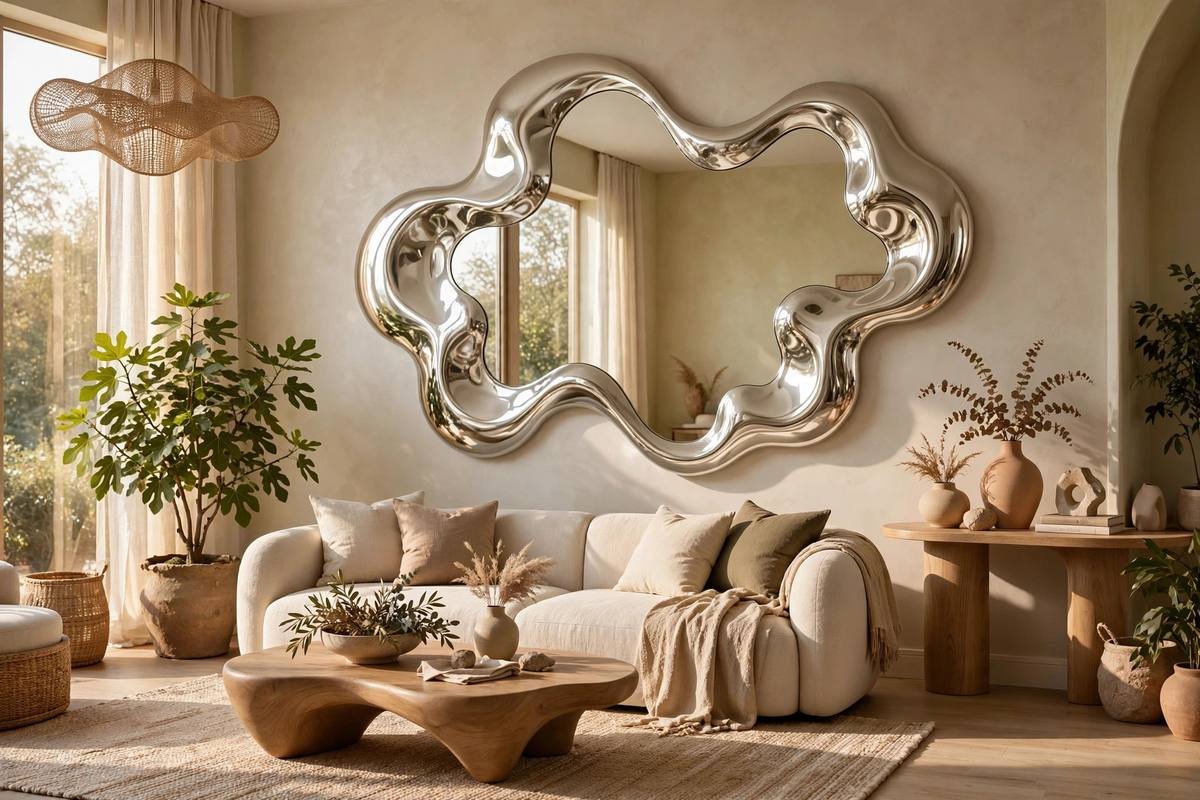
Straight lines have had their moment. Organic shape mirrors — with their freeform curves, pebble silhouettes, and asymmetrical outlines — bring a softness to interiors that rectangles and squares simply cannot. They feel sculptural and artistic, like functional art for your walls.
The beauty of an organic mirror is its versatility: it softens modern minimalist rooms, adds contemporary edge to traditional spaces, and makes small rooms feel larger without the hardness of angular glass. Here are twelve ways to style organic shape mirrors throughout your home.
1. The Classic Blob Mirror
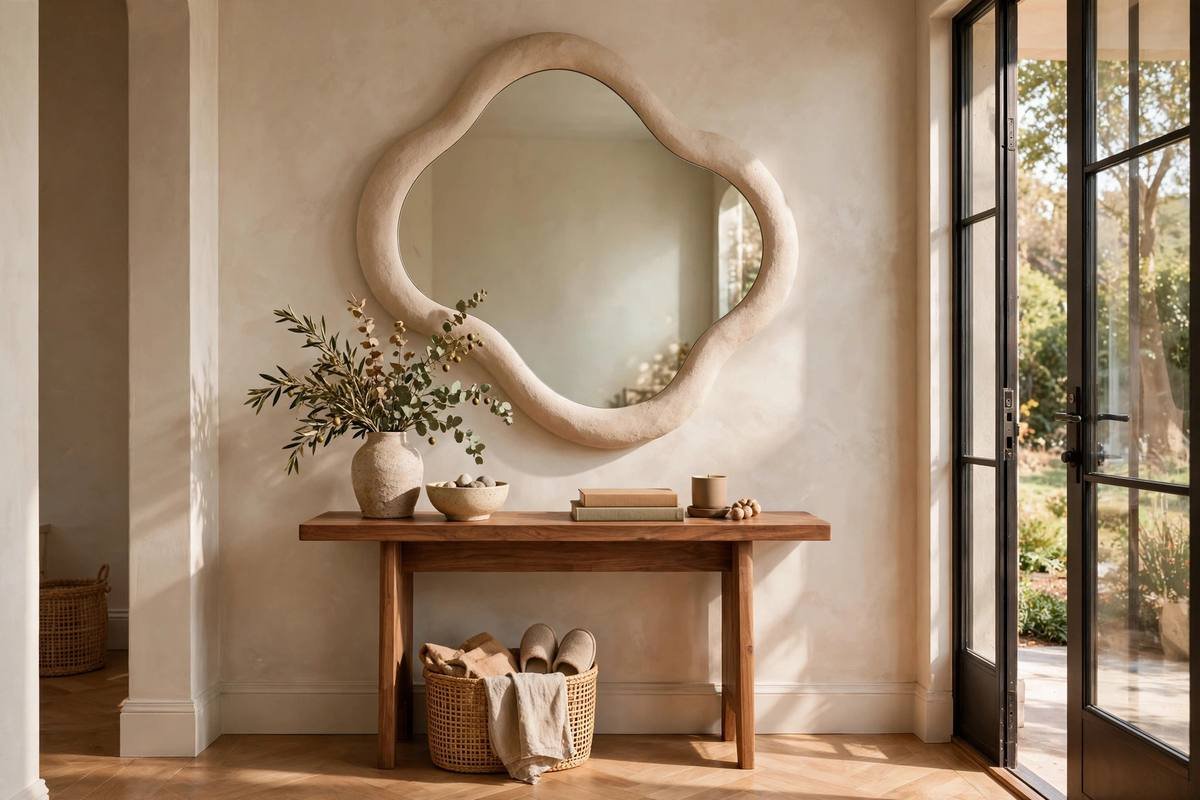
The blob mirror — an irregular, pebble-like freeform shape — is the icon of the organic mirror trend. Its wavy, asymmetrical outline feels playful yet sophisticated, working as both a mirror and a piece of wall sculpture. Hang one above a console table in the entryway for an instant style upgrade, or let a large blob mirror anchor a living room wall. The frameless versions keep the look clean and modern, while thin brass or black frames add definition. As The Spruce notes, choosing a mirror with an organic or asymmetrical shape adds retro charm and creates a stylish, practical focal point. Start with one statement blob mirror before committing to the trend throughout your home.
2. Pond-Inspired Asymmetrical Mirrors
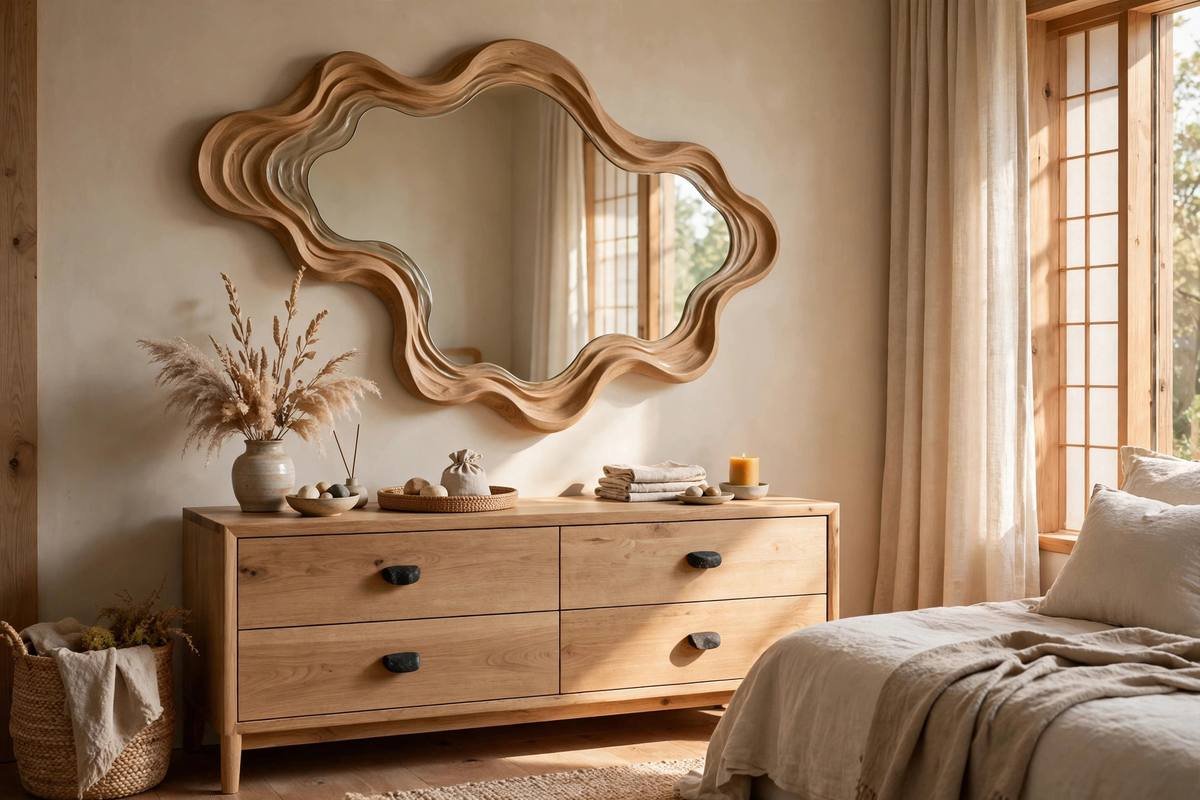
Pond mirrors take their shape from the irregular outline of a natural pond — soft, flowing, and slightly different from every angle. These designs feel especially at home in Japandi, Scandinavian, and organic modern interiors where nature-inspired forms rule. A medium pond mirror above a dresser or vanity brings gentle movement to the bedroom, while a large one leaning against a living room wall makes a dramatic, gallery-like statement. Look for versions with slim metal frames in brass or matte black for a finished edge, or go frameless for maximum fluidity. The key to styling pond mirrors is giving them breathing room — they need empty wall space around them so their sculptural silhouette can shine without competition.
3. Wavy Edge Mirrors
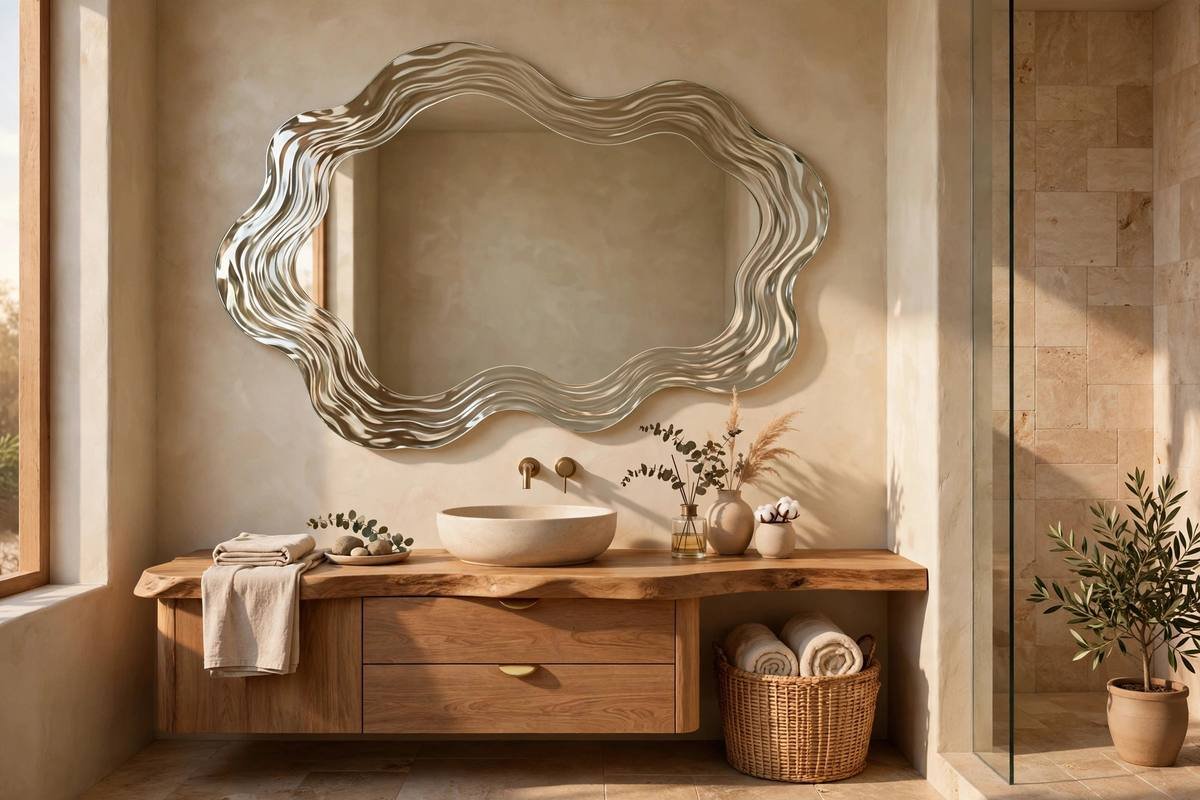
Mirrors with wavy, undulating edges capture the free-spirited energy of the seventies while feeling completely current. The rippled outline catches light differently along each curve, creating subtle highlights that change as you move through the room. These work beautifully in bathrooms, where the wave motif echoes water, and in bedrooms above nightstands or dressers. Pair a wavy mirror with curved furniture — an arched headboard, a round side table — to amplify the soft, flowing feeling. In small rooms, a wavy mirror does double duty: its reflective surface expands the space while its playful shape keeps the room from feeling stark or boxy.
4. Arched Organic Mirrors
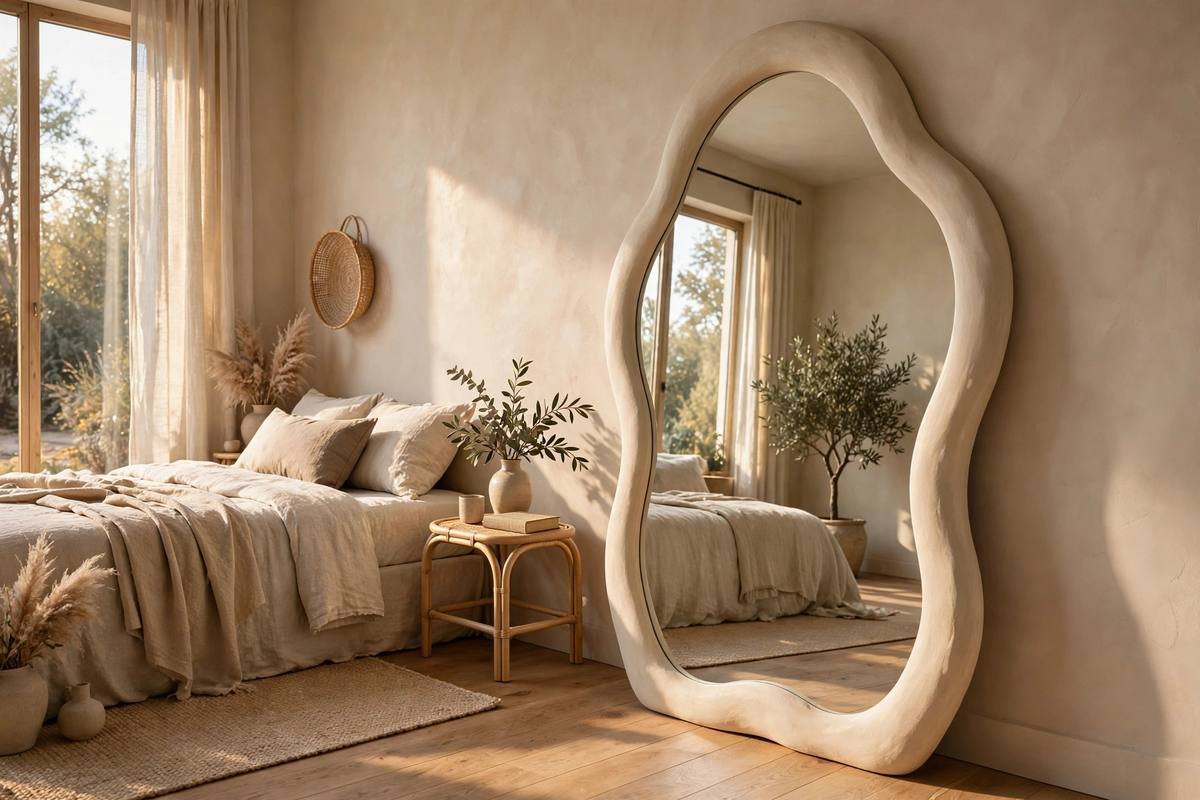
The arch is the gentlest way into the organic mirror trend. Arched mirrors combine a classic architectural shape with soft curves, making them feel both timeless and current. A tall arched mirror leaning against a bedroom wall elongates the room and provides a full-length reflection with elegance. Smaller arched mirrors work beautifully in pairs flanking a fireplace or above bathroom vanities. The arch shape echoes doorways and windows, creating architectural harmony even in rooms without those features. Choose a thin metal frame for a modern look or a chunky wood frame for warmth. Arched mirrors are the safest organic shape investment — their classic roots mean they will look good long after more extreme freeform shapes cycle out.
5. Organic Mirror Gallery Walls
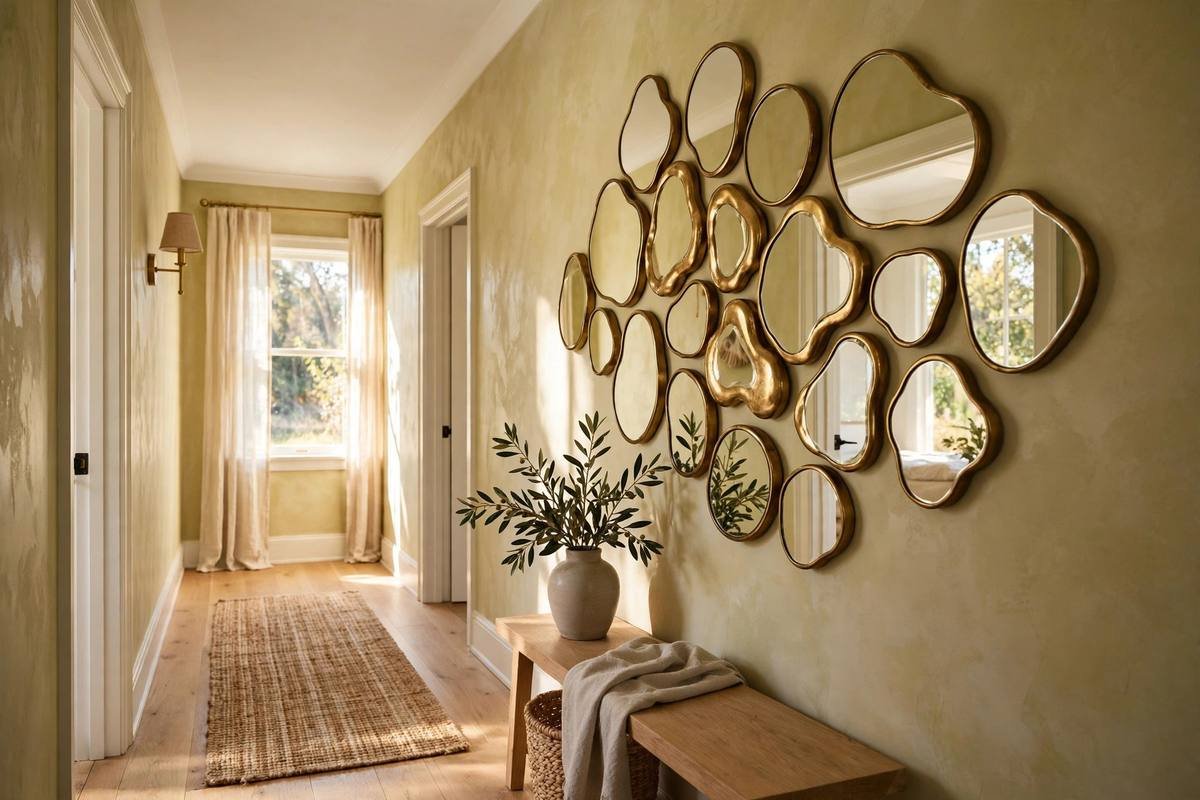
Why hang one mirror when you can hang five? A gallery wall of small organic mirrors in varying freeform shapes creates a stunning, light-bouncing installation. Mix blobs, pebbles, and asymmetrical ovals in a loose cluster, keeping two to three inches between each piece. Unify the grouping with a consistent frame finish — all brass, all black, or all frameless — so the variety of shapes feels intentional rather than chaotic. This approach works brilliantly in stairwells, long hallways, and above sofas where a single mirror would get lost. For layout confidence, trace each mirror on kraft paper, tape the templates to the wall, and adjust until the composition feels balanced before hammering a single nail. See our gallery wall ideas for more arrangement inspiration.
6. Floor-Length Organic Mirrors
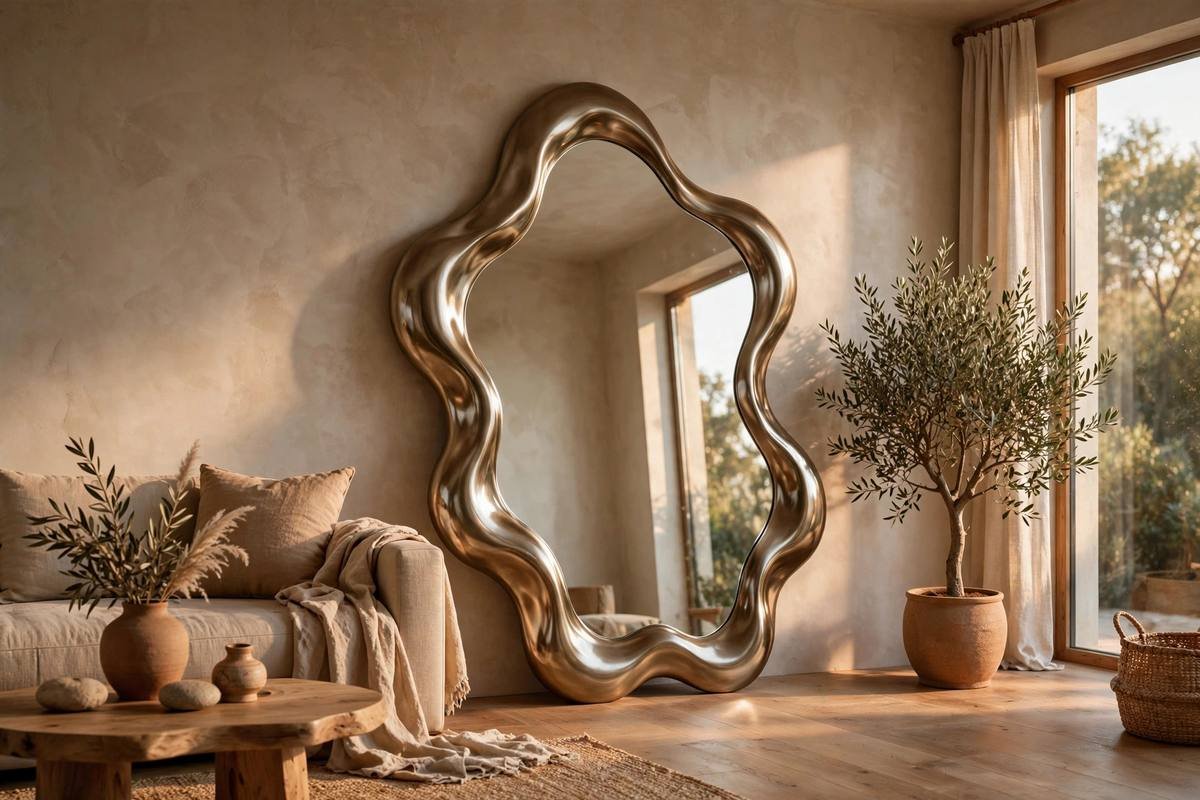
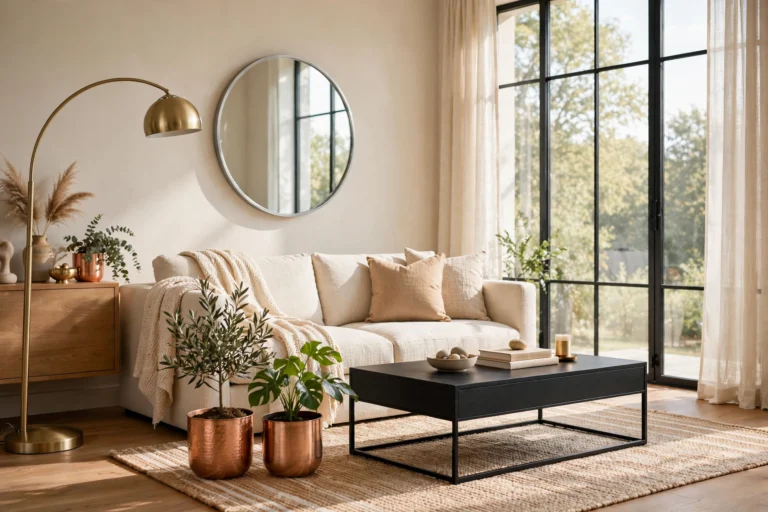
A floor-length organic mirror is pure drama. These oversized freeform mirrors lean against the wall like sculptures, reflecting the entire room and doubling the sense of space. Place one in a bedroom corner for a dressing mirror that is also art, or in a living room to bounce light from windows deep into the space. Because of their size and weight, secure leaning mirrors to the wall with anti-tip hardware — especially in homes with kids or pets. The irregular outline keeps a large mirror from feeling like a commercial fitting room; instead it reads as a deliberate design choice. Style the area around it simply — a small plant or stool nearby is enough — so the mirror remains the undisputed star.
7. Rattan and Wicker Framed Organics
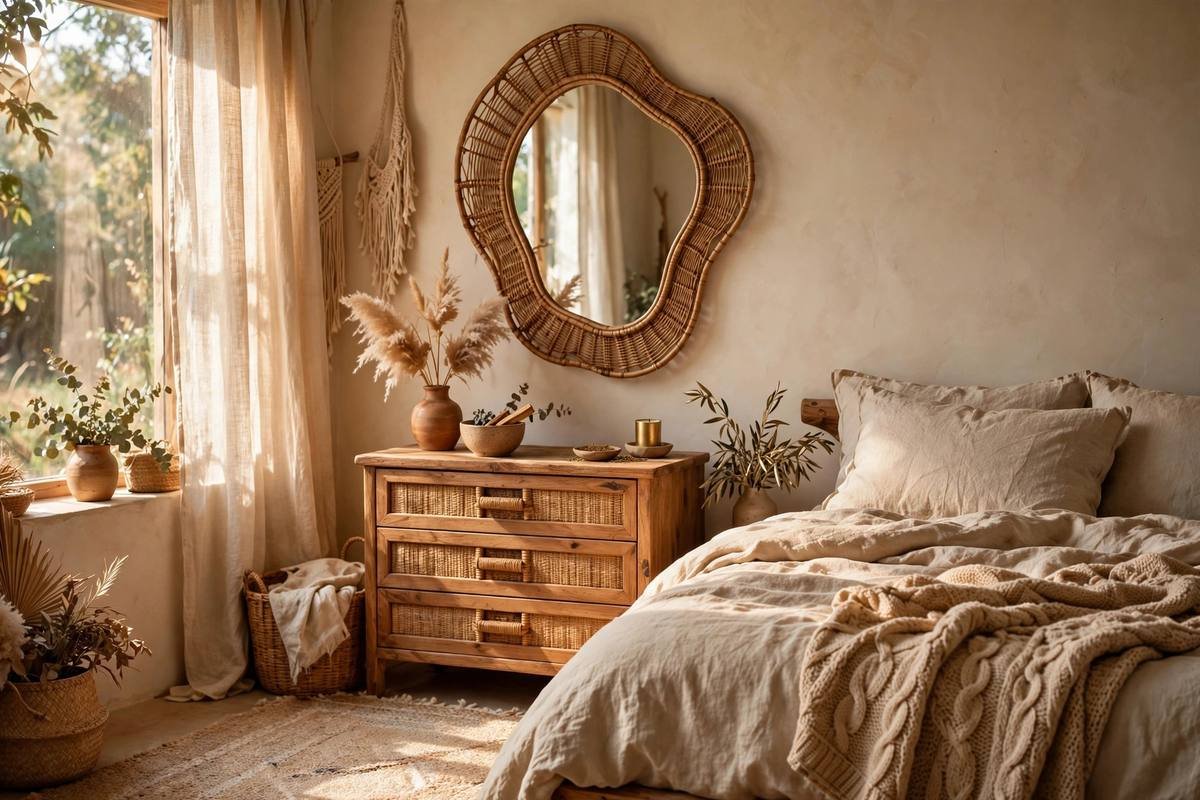
Organic mirror shapes paired with natural rattan or wicker frames are a match made in bohemian heaven. The freeform glass softens the texture of the woven frame, and the combination feels warm, handmade, and relaxed. These mirrors shine in sunrooms, bedrooms with linen bedding, and entryways with a coastal or tropical lean. A large rattan-framed organic mirror above a dresser or console creates a focal point with vacation vibes. Keep surrounding decor in the same natural material family — wood, jute, cotton, clay — for a cohesive look. The texture of the frame adds visual weight, so these mirrors hold their own even on large empty walls where a frameless blob might disappear.
8. Bathroom Vanity Organics
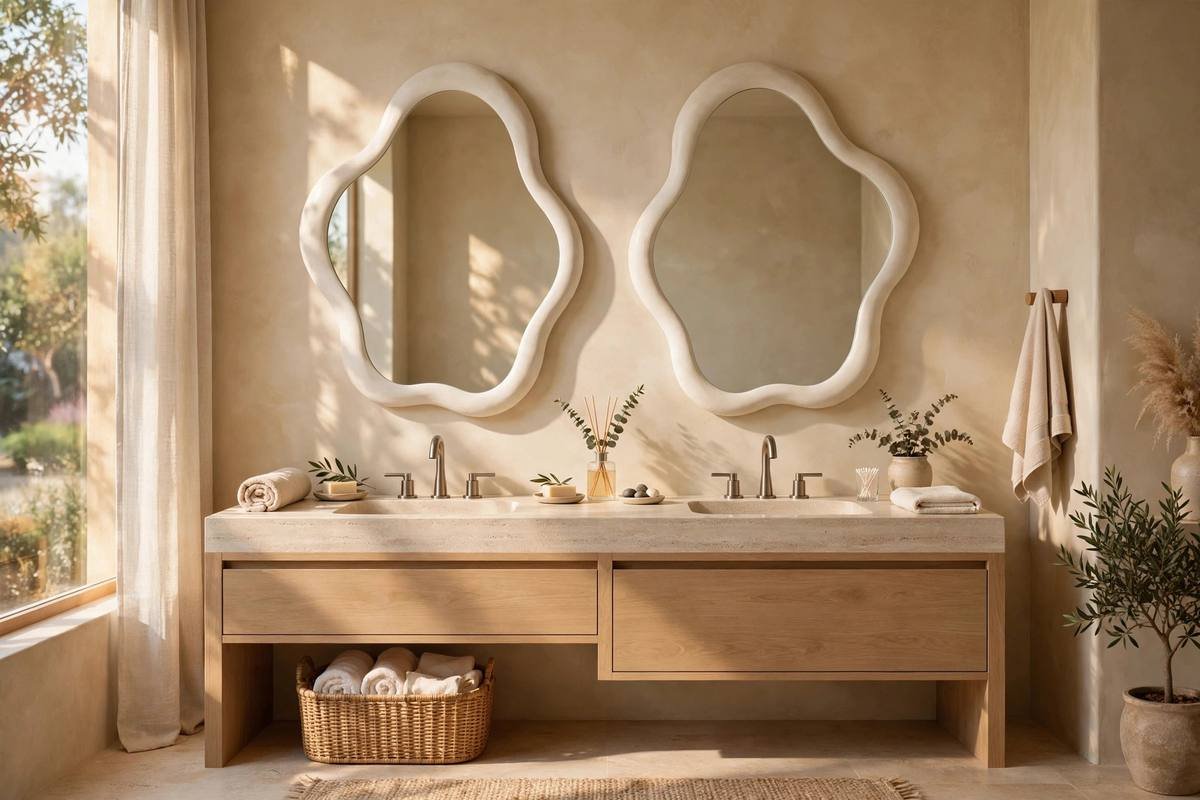
The bathroom is one of the best places for an organic mirror because it instantly softens all the hard surfaces — tile, porcelain, glass — that dominate the room. Replace a standard rectangular vanity mirror with a blob or asymmetrical shape and watch the whole bathroom feel more spa-like and less clinical. For double vanities, hang two matching organic mirrors rather than one long rectangle; the pair feels custom and considered. Make sure the mirror is large enough to be functional — you still need to see your whole face comfortably. Frameless organic mirrors are ideal in bathrooms since there is no frame to trap moisture. The unexpected shape turns an ordinary bathroom into a space with genuine design personality.
9. Backlit Organic Mirrors
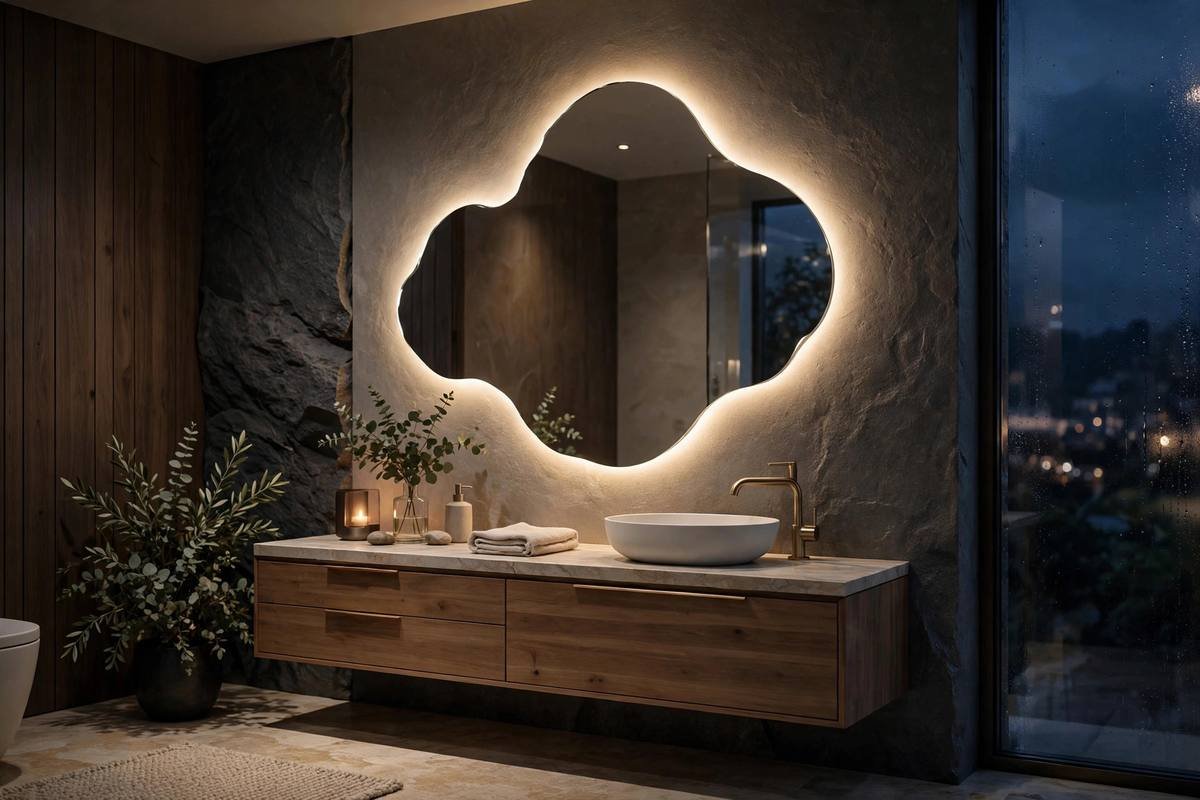
LED-backlit organic mirrors combine the trend's sculptural shapes with flattering ambient light. The soft halo glowing around the mirror's irregular outline emphasizes its freeform silhouette while providing gentle illumination perfect for bathrooms, vanities, and bedrooms. Backlit mirrors eliminate harsh overhead shadows on your face, making them as functional as they are beautiful. Look for dimmable options and warm color temperatures (2700K–3000K) for the most flattering glow. In a bathroom, a backlit blob mirror above a floating vanity creates a high-end hotel feel. The technology has become affordable enough for most budgets, and many versions are simple to install with a standard outlet. This is the organic mirror at its most luxurious.
10. Small-Space Organic Mirrors
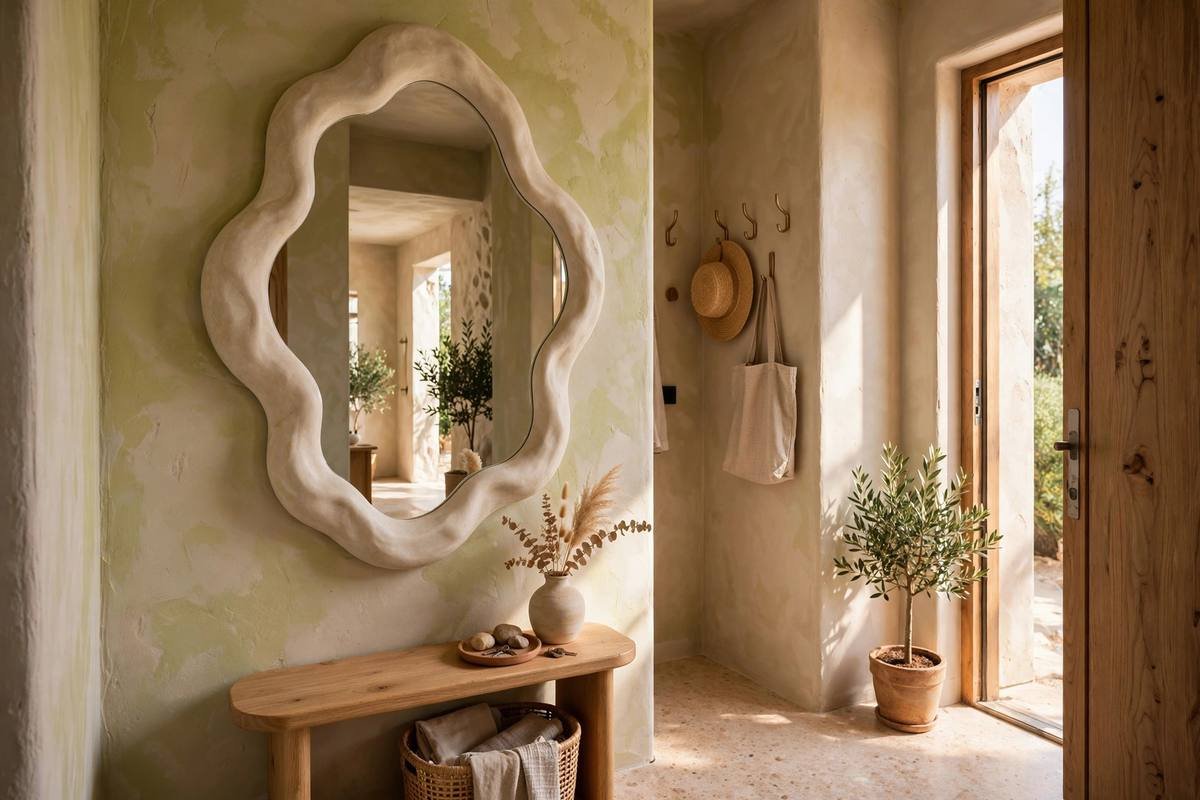
In tight quarters, an organic mirror is smarter than a rectangular one. Its curved edges visually soften corners and tight walls, while the reflective surface still does the space-expanding work mirrors are famous for. Hang a medium blob mirror in a tiny entryway to create the illusion of depth, or place a small wavy mirror in a powder room to make it feel less boxy. Because organic shapes lack the hard corners that emphasize a room's boundaries, they trick the eye into perceiving more space. For more ways to use reflective surfaces as statement pieces, explore our stylish wall mirror decor ideas. One well-placed organic mirror can do the work of a much larger rectangular one.
11. Mixing Organic Mirrors with Art
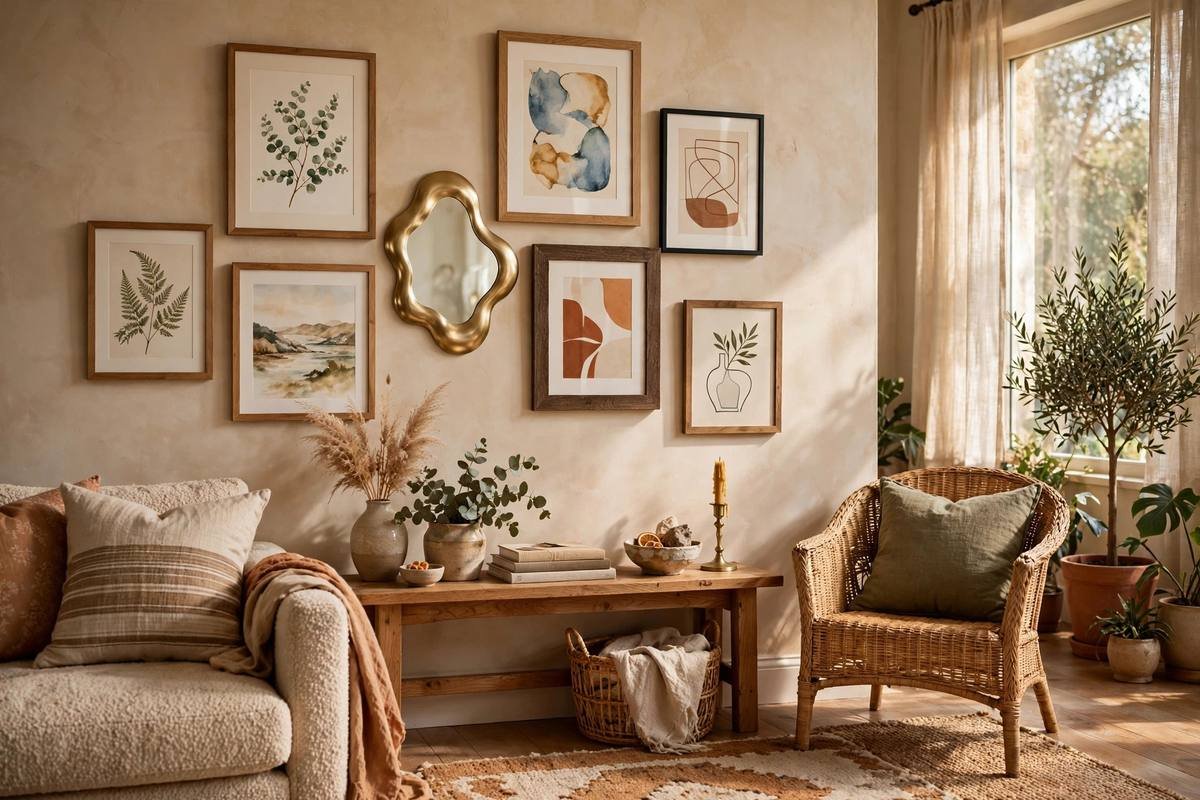
Organic mirrors do not have to hang alone — they pair beautifully with framed art. Hang a small blob mirror within a gallery wall of prints and paintings, letting its reflective surface add light and dimension among the matte artwork. The mirror's shine contrasts with the flatness of prints, creating visual variety that keeps the wall interesting. Alternatively, hang an organic mirror above a piece of art-leaning furniture like a console, flanked by smaller framed pieces. Keep the color palette of the art cohesive with the room so the mirror feels integrated rather than random. This mixed approach works especially well in living rooms and hallways where you want walls to feel collected and personal rather than decorated in one shopping trip.
12. DIY Organic Mirror Upgrades
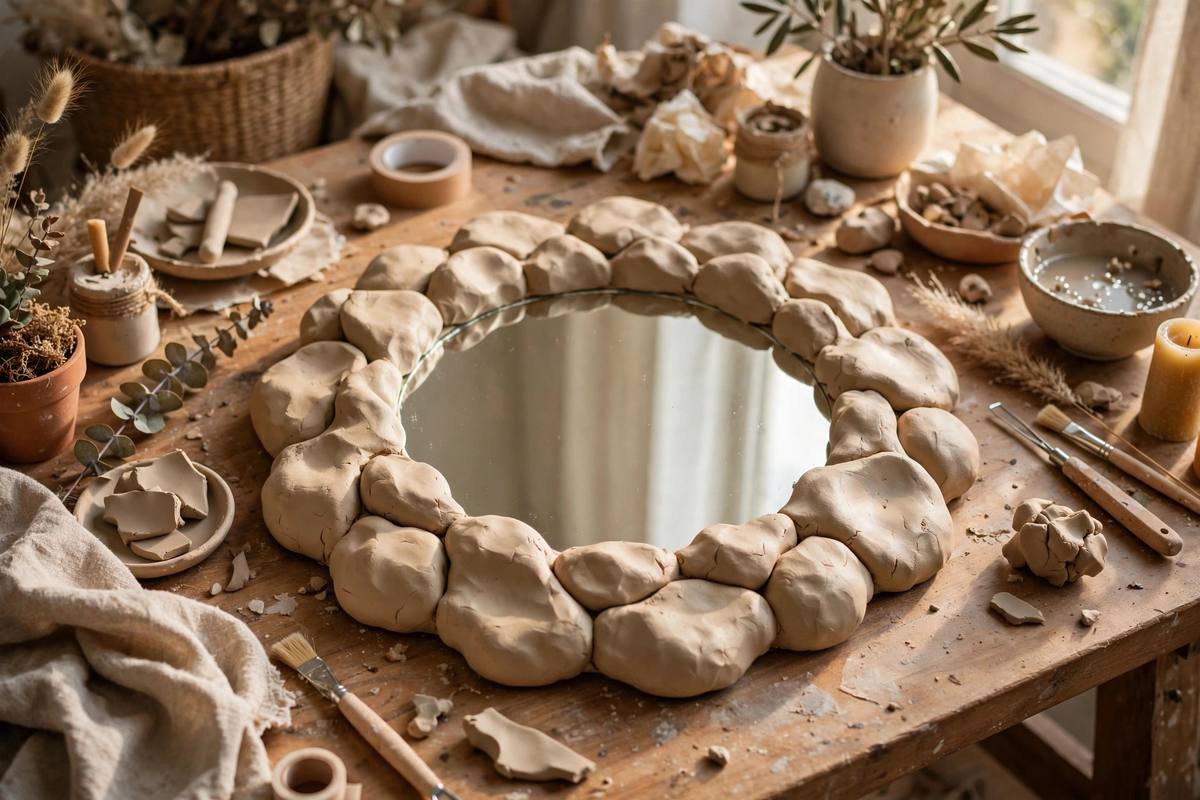
You do not need a designer budget to join the organic mirror trend. Thrift stores are full of inexpensive rectangular mirrors waiting for transformation — have a glass shop cut one into a freeform shape, or add a DIY wavy frame using flexible trim or clay. Another easy upgrade: apply adhesive LED strip lights behind an existing blob mirror for the backlit effect at a fraction of the cost. Spray-painting an old mirror's frame in matte black or brass instantly modernizes it. For the truly crafty, creating a mirror frame from air-dry clay in an organic, blob-like border gives you a one-of-a-kind piece. These projects prove that soft, sculptural style is about creativity, not spending — and a handmade organic mirror carries a story no store-bought piece can match.
Frequently Asked Questions
Are organic shape mirrors still in style? Yes. While the trend peaked a few years ago, organic mirrors have settled into modern classic status, much like round mirrors did before them. Their sculptural quality and versatility keep them relevant, especially in organic modern, Japandi, and Scandinavian interiors that show no signs of fading.
Where should I hang an organic mirror? Entryways, above consoles and dressers, in bathrooms, and leaning in bedroom corners are all ideal spots. Hang them where they can reflect something beautiful — a window, a plant, art — since a mirror doubles whatever it faces. Avoid hanging them where they reflect clutter.
Do organic mirrors make rooms look bigger? Yes, like all mirrors they reflect light and create the illusion of depth. Their curved edges can actually enhance the effect in small rooms by softening hard corners that emphasize boundaries. Pair with good lighting for maximum impact.
What styles go with organic shape mirrors? They work with almost everything: organic modern, Scandinavian, Japandi, bohemian, mid-century modern, and even traditional rooms that need softening. The frame finish helps bridge styles — brass for warmth, black for contrast, rattan for boho, frameless for minimalism.
How do I clean a frameless organic mirror? Use a microfiber cloth with a 50/50 mix of water and white vinegar, wiping in gentle circular motions. Avoid harsh chemicals that can damage mirror backing, especially near the edges. For mirrors with textured or clay frames, dust the frame separately with a dry soft brush.