

12 Gallery Wall Ideas for Every Room
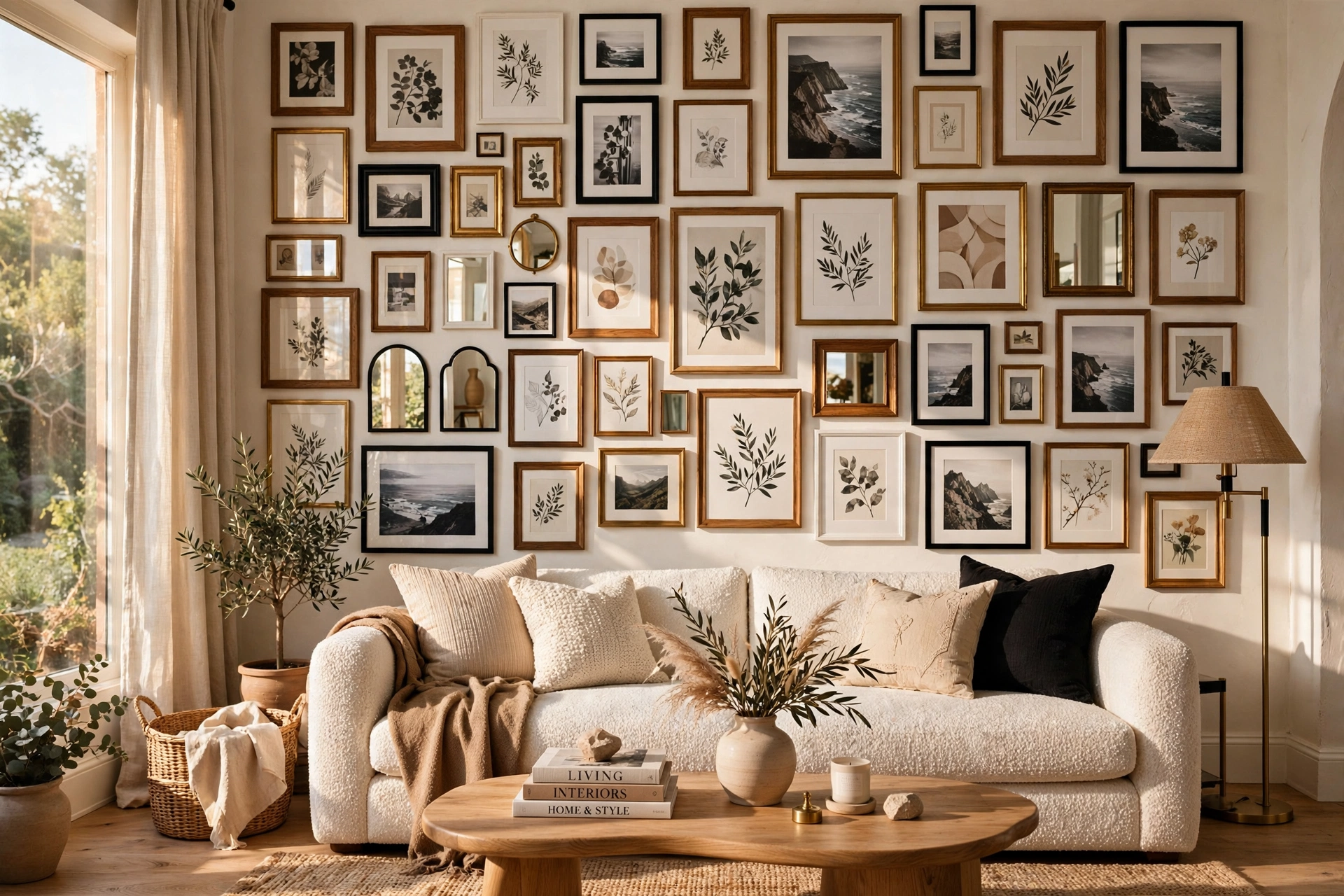
A blank wall is an invitation, and a gallery wall is one of the best answers. It fills awkward empty space, puts your taste on display, and usually costs far less than one large statement piece. The secret is matching the arrangement to the room it lives in. The gallery wall ideas below cover the living room, bedroom, staircase, entryway, kitchen, bathroom, hallway, home office, and kids’ room, with specific notes on spacing, frames, and what actually works where. A few ground rules apply everywhere: treat the whole arrangement as one unit, center it near eye level, keep two to three inches between frames, and map the layout on the floor with painter’s tape before you pick up a hammer.
1. Living Room Gallery Wall Ideas: The Salon-Style Hang
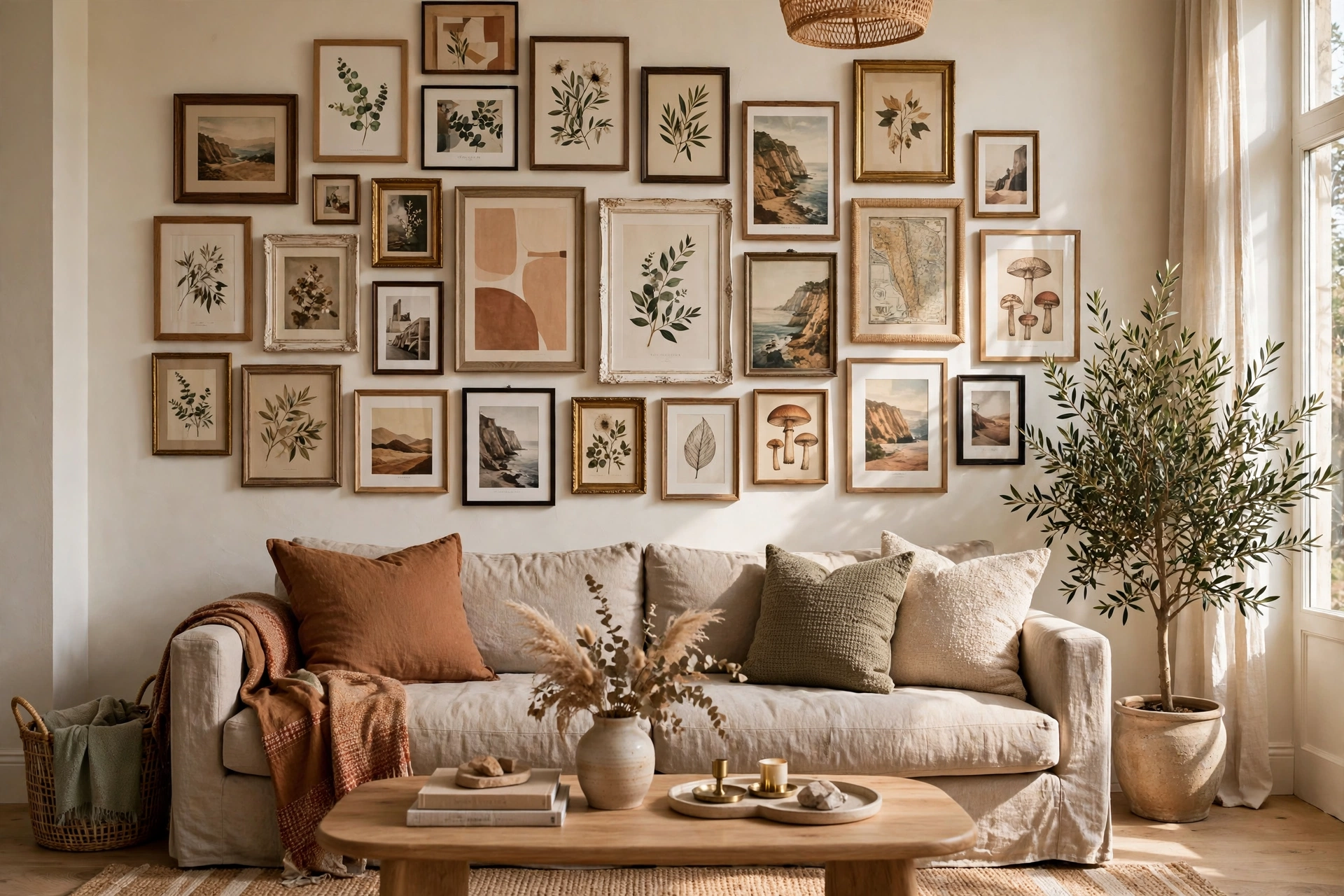
The salon-style hang is the classic for a reason: an organic cluster of frames filling the wall from just above the sofa to near the ceiling makes a living room feel layered and lived-in. Start with your largest piece as the anchor and build outward, keeping about two inches between frames. Mix frame finishes if you like, but repeat at least one thing — black frames with white mats, or a consistent wood tone — so the mix reads as intentional. Before hanging, trace each frame on kraft paper and tape the shapes to the wall; twenty minutes of prep beats a wall of regret holes. Keep the lowest frame six to eight inches above the sofa back.
2. A Symmetrical Grid Above the Bed
Bedrooms feel best when they feel calm, and nothing calms a wall like a strict grid. Use identical frames — same size, finish, and mat — in a 3×3 or 2×4 arrangement with exactly two inches between them. Precision is the whole effect here, so use a level; a crooked grid defeats its own purpose. Fill the frames with one repeating subject: botanical prints, black-and-white travel photos, or abstract line drawings all work. From across the room the grid reads as one large, quiet piece of art. One trade-off: a strict grid is unforgiving — one frame hung a quarter-inch off shows immediately, and the sameness can feel cold if the rest of the room is very casual. If you are ever unsure about placement, these designer rules for hanging pictures at the right height are a helpful reference before you commit to nails.

3. A Staircase Gallery That Follows the Climb
A stairwell wall is long, tall, and almost always wasted — prime gallery territory. Let the arrangement follow the slope of the stairs instead of fighting it: hang frames so their bottom edges step up in parallel with the treads, keeping the center of the composition around 57 to 60 inches off each step. Mix sizes freely for a slightly informal rhythm, and favor family photos here — people slow down on stairs and actually look at them. Check your progress from the bottom landing as you hang, because the diagonal reads very differently from below than it does up close. Where the stairs meet a flat landing wall, treat that stretch as its own mini-gallery rather than forcing the diagonal to continue.

4. An Entryway Cluster That Sets the Tone
The entryway is the first thing guests see, so keep it welcoming and uncluttered. A vertical cluster of five to seven pieces above a slim console table works in most foyers: stack frames in a loose column with generous white space between them, and include one small mirror to bounce light around a dim entry. Keep the arrangement within the console’s width so nothing juts into the walkway, and use secure hangers in a high-traffic spot. A tray on the console for keys and mail ties the display to the entryway’s real job instead of letting it feel like a gallery you walk through.

5. Dining Room Gallery Wall Ideas for a Statement Wall
Dining rooms can handle drama, so go bigger here than in a bedroom. Hang one oversized piece as the anchor — a large abstract or landscape — and build outward with smaller frames. Pull one or two tones from your tableware, rug, or curtains into the art so the wall feels designed with the room, not dropped onto it. Leave six to twelve inches between the sideboard and the lowest frame so serving dishes have clearance. If you add picture lights or sconces, angle them to wash light down across the frames rather than glaring across the table. Center the whole arrangement on the sideboard or the dining table, whichever anchors the room’s layout.

6. A Home Office Wall That Keeps You Focused
The wall behind your desk shows up on video calls, so curate it on purpose. A neat, slightly asymmetric cluster works best: five to eight framed prints — architectural photos, simple abstracts, a small wall clock — plus a short floating shelf with a plant to break up the rectangles. Keep the palette restrained and frames consistent, since visual noise behind you reads as distraction on camera. Hang the arrangement’s center at seated eye level, a few inches lower than standing eye level, so it frames you well on calls. One motivational quote is plenty; the rest of the wall will age better without them.

7. A Small-Scale Cluster for the Kitchen
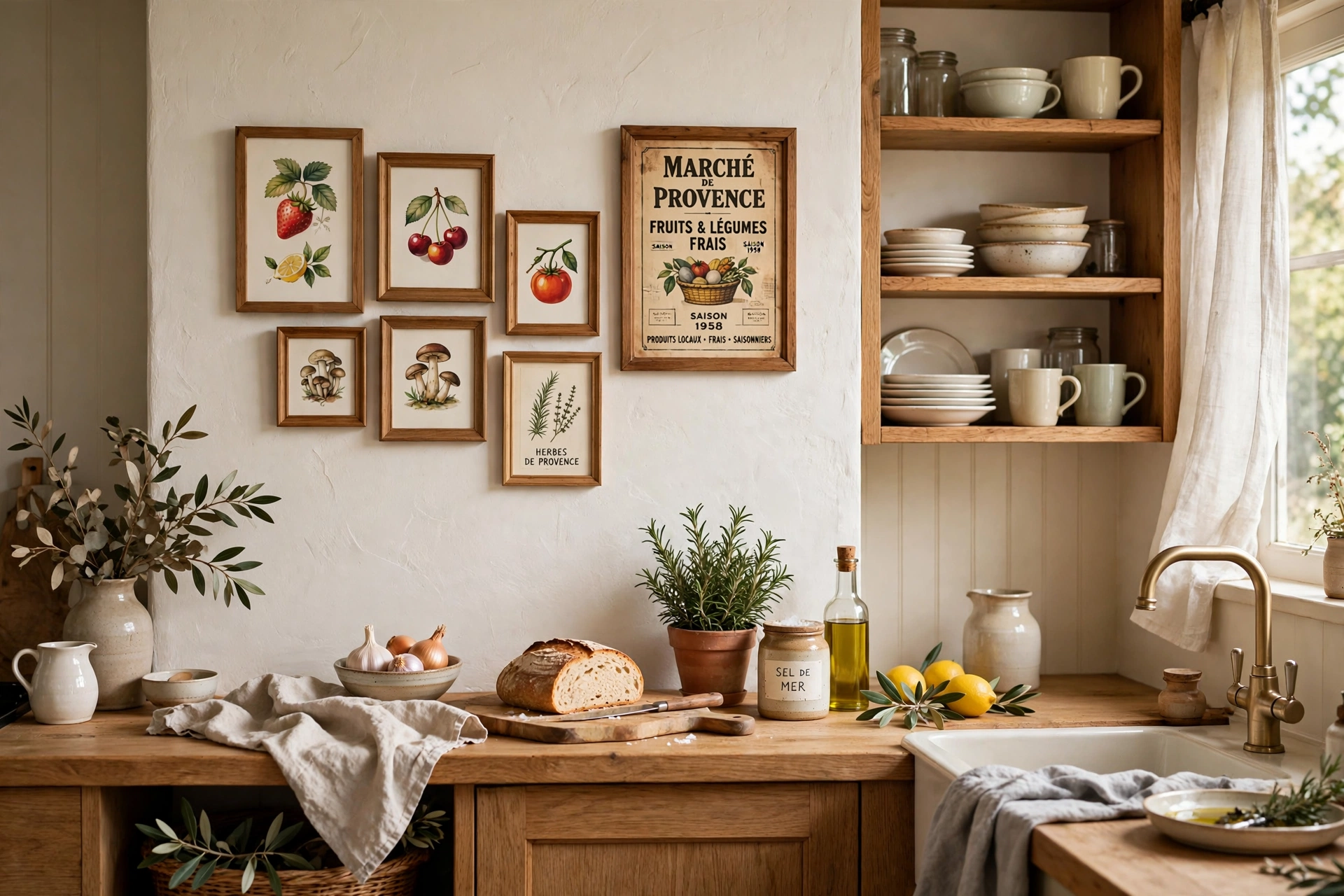
Kitchens rarely offer much free wall, but a tight cluster of four or five small pieces can warm up the space between cabinets and a window or along a pantry wall. Keep frames small — nothing wider than a dinner plate — and choose subjects that suit the room: vintage market posters, food illustrations, herb prints, or a framed family recipe. Hang them well away from the stove, where grease and steam coat glass within weeks, and use adhesive strips so you can reposition around outlets and switches. Echo a shelf or cabinet color in the frames so the little cluster feels like part of the kitchen’s design.
8. A Moisture-Smart Gallery for the Bathroom
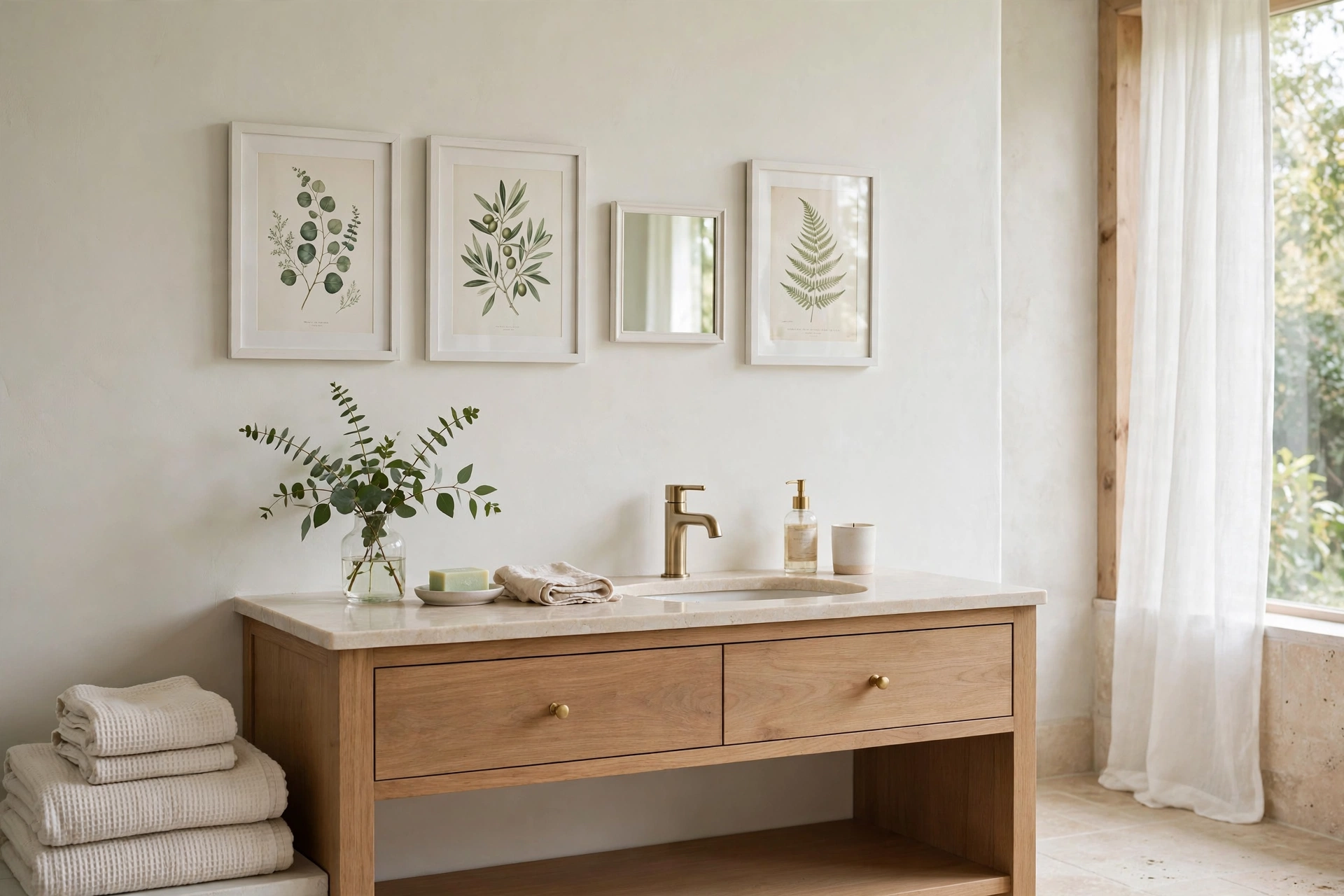
Bathrooms get steam, and steam ruins paper, so choose materials with intent. Sealed metal frames, acrylic box frames, or canvas prints with sealed edges handle humidity far better than standard wood frames with glass. Keep the display small — three to five pieces above the vanity or beside the mirror — and away from the shower’s direct splash zone. Botanical prints, simple line drawings, and small mirrors are natural fits, and a eucalyptus sprig in a vase beneath the frames gives the corner a spa feel. In a windowless bathroom, light bright-toned art keeps the small space from closing in. Stick to prints you can wipe down, and skip anything irreplaceable in a bathroom that gets heavy steam.
9. A Single-Row Photo Line Down the Hallway
Long hallways ask for rhythm, and a single horizontal row of matching frames delivers it. Hang identical thin frames at exactly the same height — center each around 57 inches from the floor — spaced evenly down the corridor. Black-and-white photos with white mats are the classic choice; a timeline of family photos taken over the years looks especially good here. Run a level string line down the hallway before hanging, since even a quarter-inch drift shows over a twenty-foot run. Keep the frames clear of any chair rail or wainscoting so the line reads cleanly. Few arrangements are this forgiving — the straight line does all the design work for you.

10. A Kids’ Room Wall Built for Swapping
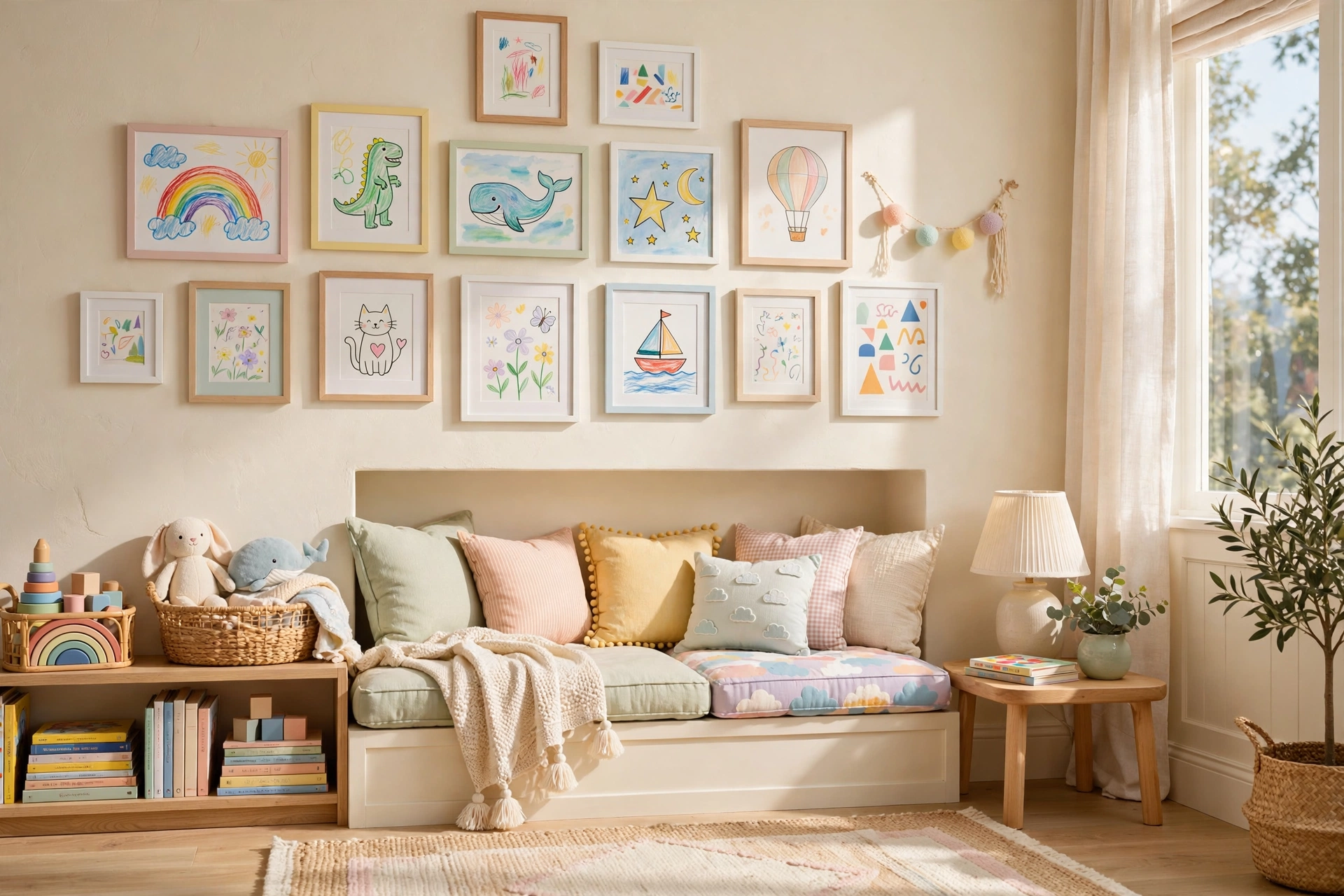
A kid’s gallery wall should be built to change, because their favorite things change monthly. Mount clipboards, clip rails, or shallow picture ledges at your child’s eye level so they can swap their own drawings in and out — the independence is half the fun. Mix their artwork with a few cheerful framed prints to keep the wall from feeling chaotic, and use lightweight plastic frames that won’t shatter if knocked down. Washi tape “frames” stuck straight to the wall are another good trick for a rotating display. Hang the lowest pieces around 40 inches high so small kids can see and reach their own gallery.
11. Picture Ledges for an Easy-to-Change Display
If committing to nail holes makes you hesitate, picture ledges are the answer. Mount two long, narrow ledges about twelve inches apart vertically, then lean framed prints against the wall, layering smaller pieces in front of larger ones. The overlap is the whole look — collected and casual in a way a flat hang can’t match. This setup shines in a reading corner or beside an armchair, where a plant, a small clock, or a stack of books can join the frames on the ledge. You can rotate in seasonal art or new photos in minutes without a hammer, which makes it the lowest-commitment of all these gallery wall ideas. If the ledge hangs over seating, add a thin strip of museum putty under each frame — one bumped elbow is all it takes to slide a frame off a shallow ledge.

12. Renter-Friendly Gallery Wall Ideas for Small Apartments
Renters can have a full gallery wall without losing a security deposit — it just takes the right hardware. Damage-free adhesive strips hold standard frames on painted drywall and remove cleanly when you move; use two strips per frame for anything heavier than a paperback. Keep the cluster compact and centered above the sofa — a sprawling arrangement overwhelms a small room — and lean one oversized frame on a dresser for height without any holes. Choose lightweight frames, plastic or thin aluminum rather than heavy wood, and do a paper-template test first; adhesive strips don’t forgive a crooked first attempt the way a nail hole does. Strips also fail on textured or freshly painted walls — wait at least a week after painting, and expect some brands to pull paint off older plaster no matter how carefully you remove them.

Frequently Asked Questions
How many frames do I need for a gallery wall?
Five to seven pieces make a tidy cluster, six to ten suit a hallway row, and a full salon-style hang can use fifteen or more. Lay everything on the floor first — if it looks thin, add two more pieces before hanging.
Should all my frames match?
Both approaches work. Matching frames give a calm, orderly look that suits bedrooms and offices. Mixed frames feel collected and personal, but repeat one element — frame color, mat color, or subject matter — so the mix looks deliberate.
Can I hang a gallery wall without nails?
Yes. Adhesive hanging strips hold most standard frames on painted drywall, picture ledges let you lean art without any holes, and washi tape frames work for lightweight prints in kids’ rooms. Always check the weight rating on the strips you buy.
What is the best height for a gallery wall?
Treat the whole arrangement as one picture and center it around 57 to 60 inches from the floor — roughly eye level. Above furniture, leave six to twelve inches between the furniture top and the bottom of the lowest frame.
Conclusion
The best gallery walls start with the room, not the frames. Pick the wall that needs the most help, map the arrangement with paper templates before a nail goes in, and start with pieces you already own. These gallery wall ideas work best when the wall is left to grow over time — a gallery wall is never finished, and that is the point.

One Comment