
12 Limewash and Plaster Wall Ideas for Texture
12 Limewash and Plaster Wall Ideas for Texture
These plaster wall ideas prove that walls can be a finish, not just a background. Flat paint gives you color. Limewash adds a second layer: texture you can almost feel, and daylight that shifts across the surface as the hours pass. The finish is made from slaked lime, water, and natural pigments, brushed on in crisscross strokes; it cures into a soft, cloudy mottling that looks hand-troweled and aged. It works over real plaster and painted drywall, with a mineral primer on the latter. You don’t need a full renovation — one accent wall can carry the whole effect. From warm white living rooms to moody charcoal dining rooms, the twelve ideas below walk through the house room by room.

1. Plaster Wall Ideas Start With Warm White in the Living Room
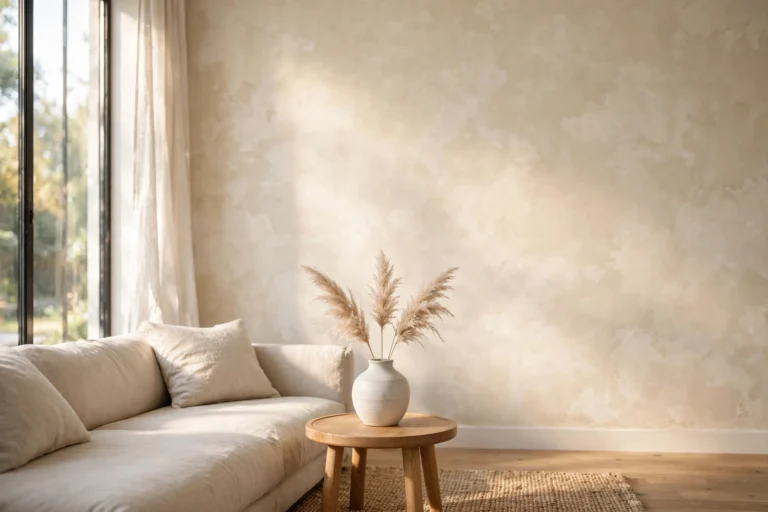
Warm white limewash is the friendliest entry point into textured walls, and it flatters almost every style of furniture. Choose a warm white — bone, ivory, or chalk — rather than a blue-white, so the mottling reads as depth instead of patchiness. Plan on two to three thin coats; the finish dries much lighter than it looks when wet, so brush a test swatch and live with it for a day before committing. Over previously painted drywall, a mineral primer helps the limewash bond properly. Style the room so the texture can do the talking: a linen sofa, a jute rug, and one sculptural piece like an olive tree or a travertine side table. Of all the finishes in this list, this one asks the least of your budget and changes the room the most. One practical note before you start: wear gloves and eye protection while you work — wet limewash is alkaline and caustic until it has fully cured.

2. Terracotta Limewash for a Reading Corner
Terracotta limewash brings sun-baked warmth to a corner that might otherwise feel like dead space. Pick the wall your armchair faces and let the earthy tone do the work. The cloudy finish keeps terracotta from feeling flat or heavy — light moves through the brush marks and softens the color at the edges. Pair it with natural textures: rattan or cane seating, a wool throw, a brass floor lamp, and a small stack of books on a wooden side table. Terracotta sits beautifully next to deep chocolate browns; these chocolate brown decor ideas show how to layer the two tones. This is also a smart first project, because a small wall forgives beginner brushwork. Test two terracotta tones on poster board first and watch them in morning and evening light before you commit.

3. Sage Limewash for a Calm Bedroom
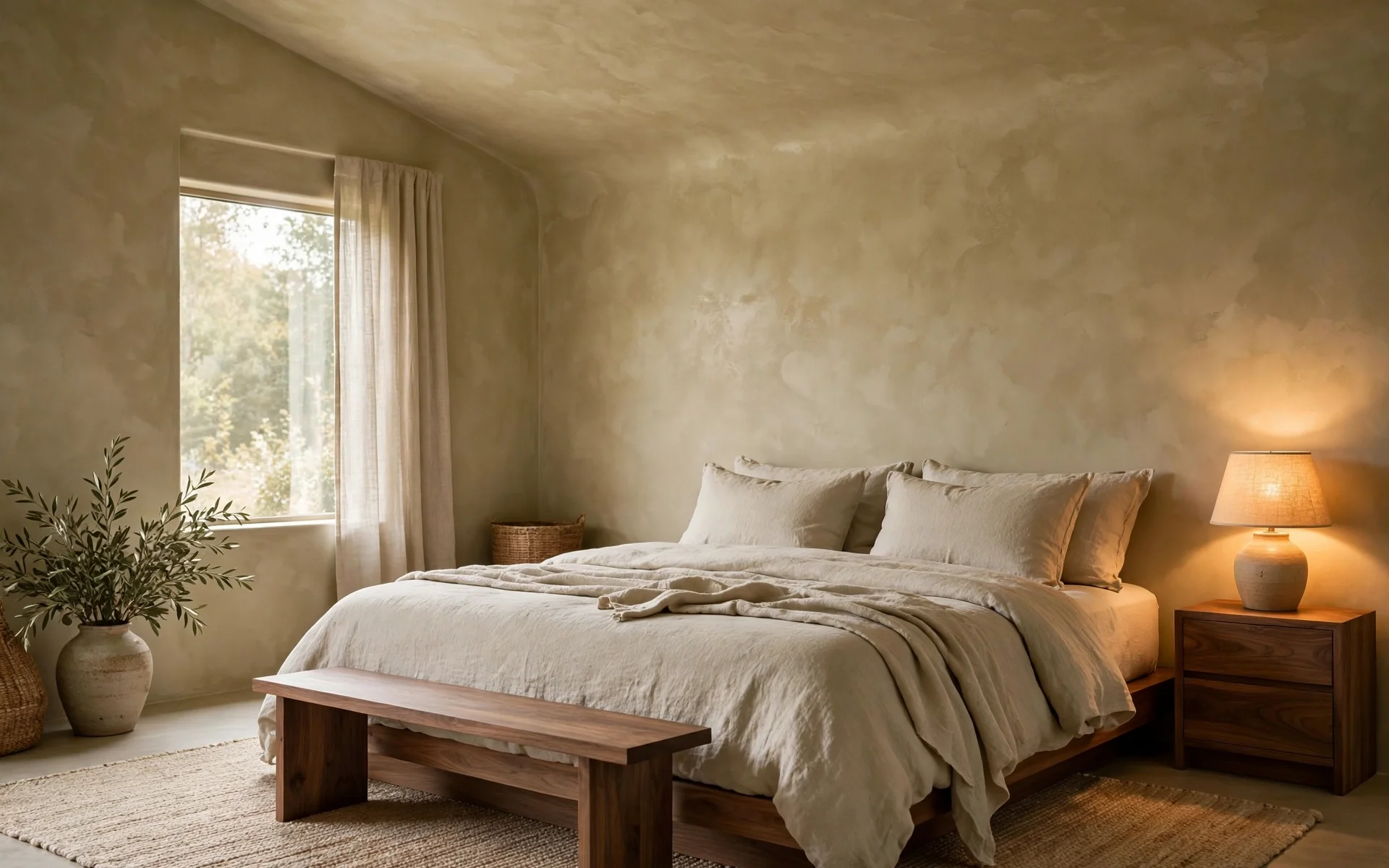
Sage green limewash turns a bedroom wall into something closer to a landscape than a surface. Put it behind the bed and keep everything else quiet: white or oatmeal linen bedding, pale oak nightstands, and one ceramic lamp. The mottled finish gives the green a watercolor quality that shifts from morning to evening, which keeps the room restful. Sage suits bedrooms with strong daylight, since the texture breaks up glare that flat paint would bounce around. If you’re refreshing the whole room on a tight budget, pair this wall with these cozy bedroom ideas on a budget for bedding and lighting — the wall supplies the atmosphere, and simple pieces do the rest. Add a woven basket for extra throws and one small framed print so the walls never feel bare.

4. Wrap a Tall Entryway in Warm Sand
Entryways with high ceilings swallow flat paint — the color just disappears upward. A warm sand limewash gives all that height something to do. The cloudy texture catches light differently at the top of the wall than at eye level, so the room feels taller and finished without extra trim. Use a single tone from floor to ceiling and resist the urge to add a chair rail; the uninterrupted surface is the point. A dark wood console, a large vase with branches, and a runner rug are all the furniture this space needs. For very tall walls, work in sections and keep a wet edge, or hire a painter — it’s one of those finishes where a steady hand matters more than anywhere else. Budget honestly for access, too: walls over about ten feet need a scaffold tower or long-reach rollers, and rushing the top sections from a ladder is where streaks and missed patches happen.

5. Charcoal Limewash for a Moody Dining Room
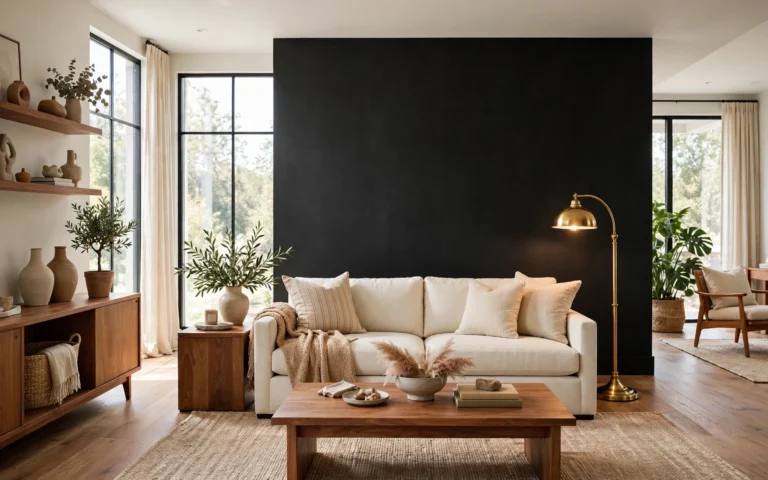
Charcoal limewash is drama without the deadness of flat dark paint. In a dining room, the mottled finish catches candlelight and lamplight in a way that makes evening meals feel intentional — the walls seem to glow from within rather than closing in. Keep the palette tight: a solid wood table, black or cognac leather chairs, and brass or black metal lighting. Because dark limewash shows every brush decision, use even X-pattern strokes and step back often to check the cloud pattern before it dries. One wall is enough in a small dining room; in a larger one, take all four walls and let the room go full evening. Hang a large mirror on one wall to bounce light back across the texture.

6. Soften a Minimal Kitchen with Warm Beige
Kitchens collect hard surfaces — stone, steel, tile — and a warm beige limewash wall is the counterweight. Choose the wall opposite the main work zone, or the wall behind open shelving, and let the soft texture balance the sharp edges elsewhere. A beige with a warm undertone, like oat or biscuit, keeps white cabinetry from feeling clinical. It also forgives small scuffs and splashes that flat paint would show — a genuine win near a cooking space. Style open shelves with handmade ceramics and wooden boards; their irregular surfaces rhyme with the wall. One unframed print is enough; in a kitchen, breathing room reads as calm. Warm beige also bridges mixed wood tones, so oak shelves and walnut stools can share the room without clashing.
Among plaster wall ideas for kitchens, warm beige is the safest first step — it hides cooking splatter better than white and keeps the room feeling sunlit even after dark. Keep it off the wall directly behind the hob, though: repeated steam and grease will mark any limewash there, sealed or not, so tile or a splashback should take that zone.

7. Limewash for a Spa-Like Bathroom
Bathrooms are where limewash’s plaster heritage shows — the finish has a softness that makes a plain room feel like a retreat. Choose a pale stone or warm greige tone and keep the fixtures calm: a freestanding tub or a simple vanity, brushed brass or matte black hardware, and one green sprig in a stone vase. Limewash is breathable, but bathrooms are humid, so research sealing first — some makers recommend a protective topcoat in wet zones, reapplied over time. Ventilation matters more here than in a bedroom. Done right, the result is a bathroom with no cold tile glare, just soft matte walls that make morning light look golden. A teak bath mat and one folded towel complete it. Hang towels on a simple wooden ladder rail to keep the whole look uncluttered.

8. Limewash the Fireplace Surround
A fireplace surround in limewash plaster reads as carved from a single piece of stone. The texture softens a boxy surround and makes a simple firebox look considered. Warm greige or pale clay tones work best — they sit comfortably next to both the fire’s glow and the room’s daylight. Style the mantel sparingly — a pair of candlesticks or one sculptural object — and let the surround be the statement. Above it, a round mirror from these stylish wall mirror decor ideas doubles the texture by reflecting it back into the room and bounces firelight across the mottled surface. If your fireplace is non-working, style the firebox with a cluster of pillar candles at different heights. Few finishes make a living room feel this grounded for so little effort. Check the product’s heat rating first if the fire is used — the surround closest to the opening takes real heat, and not every limewash is rated for it.

9. Blush Limewash for a Soft Nursery
Blush limewash gives a nursery warmth without the sugar-rush of flat pink paint. The cloudy finish mutes the color into something closer to clay, which keeps the room restful for naps and calm for late-night feeds. Put it on the wall the crib faces rather than directly behind the crib — you’ll see it more, and the texture becomes part of the room’s quiet backdrop. Pair blush with cream, warm white, and light wood; add softness through a knit throw and a plush rug rather than more color. Because limewash is low-odor and made from natural ingredients, many parents prefer it to conventional paint for a baby’s room — just confirm the specific product’s ingredients and full cure time first, and let the room air out completely before the crib moves in. A simple wooden name sign or one soft wall hanging is all the extra decor this room needs.

10. Drench Walls and Ceiling in the Same Tone
Color drenching — taking one limewash tone across walls, ceiling, and trim — is the boldest move on this list, and limewash is the ideal material for it. The mottled texture stops a single-color room from feeling flat, and wrapping the ceiling erases the hard line where wall meets ceiling, which makes small rooms feel larger and big rooms calmer. Warm greige is the safest drenching color; it behaves like a neutral but has far more life. Keep bedding and upholstery in the same tonal family — oatmeal, flax, pale taupe — and let one darker piece, like a walnut bench or a black lamp, anchor the room. It’s the most enveloping finish on this list, and it photographs beautifully. Sheer curtains in the same tone keep the light soft and complete the wrapped effect.
11. Limewash Over Picture-Frame Panel Moulding
Picture-frame moulding plus limewash is two kinds of texture in one wall: the crisp geometry of the panels and the soft cloud of the finish. Use the same limewash tone on moulding and wall so the light catches the raised edges and the recessed centers differently — the panels read as subtle shadow boxes. This works beautifully in hallways, dining rooms, and behind a bed, anywhere a flat wall feels unfinished but wallpaper feels like too much. Keep the color light — warm white, pale greige, or soft stone — so the moulding shadows stay gentle. Style it simply: a slim console, one vase, and a runner rug. This one adds architecture without any construction. In a dining room, flank the panels with two simple sconces for gentle evening light.

12. Faux Limewash on a Budget
Real limewash paint costs more than a standard gallon, but the look can be faked convincingly with regular matte paint. Mix the paint with water until it’s thin, then apply it with a wide block brush in crisscross X strokes, working in small sections and blending as you go. Two tones — a base coat plus a slightly lighter wash — build the cloudy depth that makes limewash read as limewash. Let each layer dry fully; the finish always dries lighter than it looks wet. Before you open a can, read Apartment Therapy’s guide to the dos and don’ts of limewash paint for brush choice and mistakes to avoid. This is the most forgiving of the faux finishes here, because every irregularity just adds to the effect. Be honest about the trade-off, though: the faux version sits on the wall like paint, so it lacks real limewash’s depth up close and its breathable, mineral feel — from a few feet away, almost nobody can tell.

Budget note: several of these plaster wall ideas work with faux-limewash paint that costs a fraction of real limewash. The cloudy, soft-movement look reads the same from a few feet away, which is where guests actually see it.
Frequently Asked Questions
Is limewash the same as plaster?
No. Plaster is the base coat on walls; limewash is a lime-based paint finish applied over plaster, brick, stone, or primed drywall.
Does limewash work over already-painted drywall?
Yes, with the right prep. Clean the wall, repair damage, and apply a mineral-based primer so it has something porous to grip. Skipping primer is the most common reason it fails.
How many coats of limewash do I need?
Most walls need three to four thin coats. Keep them thin and let each dry fully; thick coats dry unevenly and the color lightens as it dries.
Can I use limewash in a bathroom or kitchen?
You can, with preparation. Check whether your product needs a sealer in wet zones and how often to reapply it. Ventilate well; a shower’s splash zone needs true waterproof plaster, not limewash alone.
Recommended Ebook
Small Apartment Paint Palettes
Renter-friendly paint palettes and color formulas that make small apartments feel bigger and brighter.
Only $9
Conclusion
Textured walls reward you every time the light changes. These limewash plaster wall ideas share one secret: imperfection is the finish. Pick the room that bothers you most, start with a single wall, and live with the color through a full day of light before deciding whether the rest of the room follows. Give it a wall with a heartbeat.



3 Comments