12 Arched Doorway Decor Ideas for Charm
12 Arched Doorway Decor Ideas for Charm
Good arched doorway ideas start with a simple truth: an arch already does the hard work of softening a room. These arched doorway ideas build on that curve with paint, trim, tile, light, and texture, so a plain opening between two rooms feels deliberate rather than leftover. You do not need to rebuild the opening to get the effect.
A painted reveal, a pair of sconces, or a length of linen in the opening can change how both rooms read from the doorway. The Spruce notes the same appeal in its guide to Spanish-style homes, where softly arched doorways, often painted in an accent color, anchor warm and inviting interiors. Work through the twelve ideas below in any order, and start with the one that matches the arch you already have.
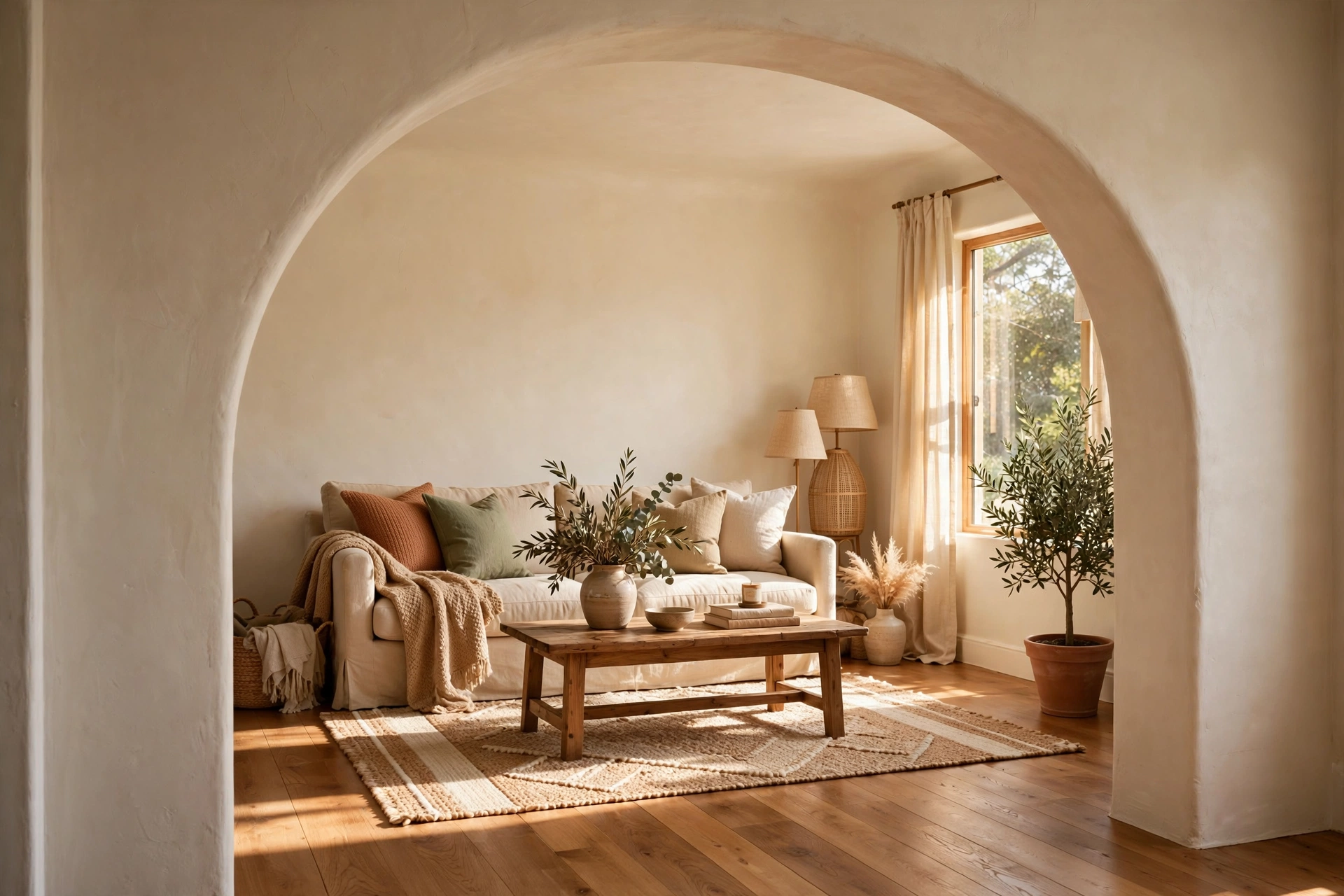
1. Arched Doorway Ideas: Paint the Inside a Deeper Color
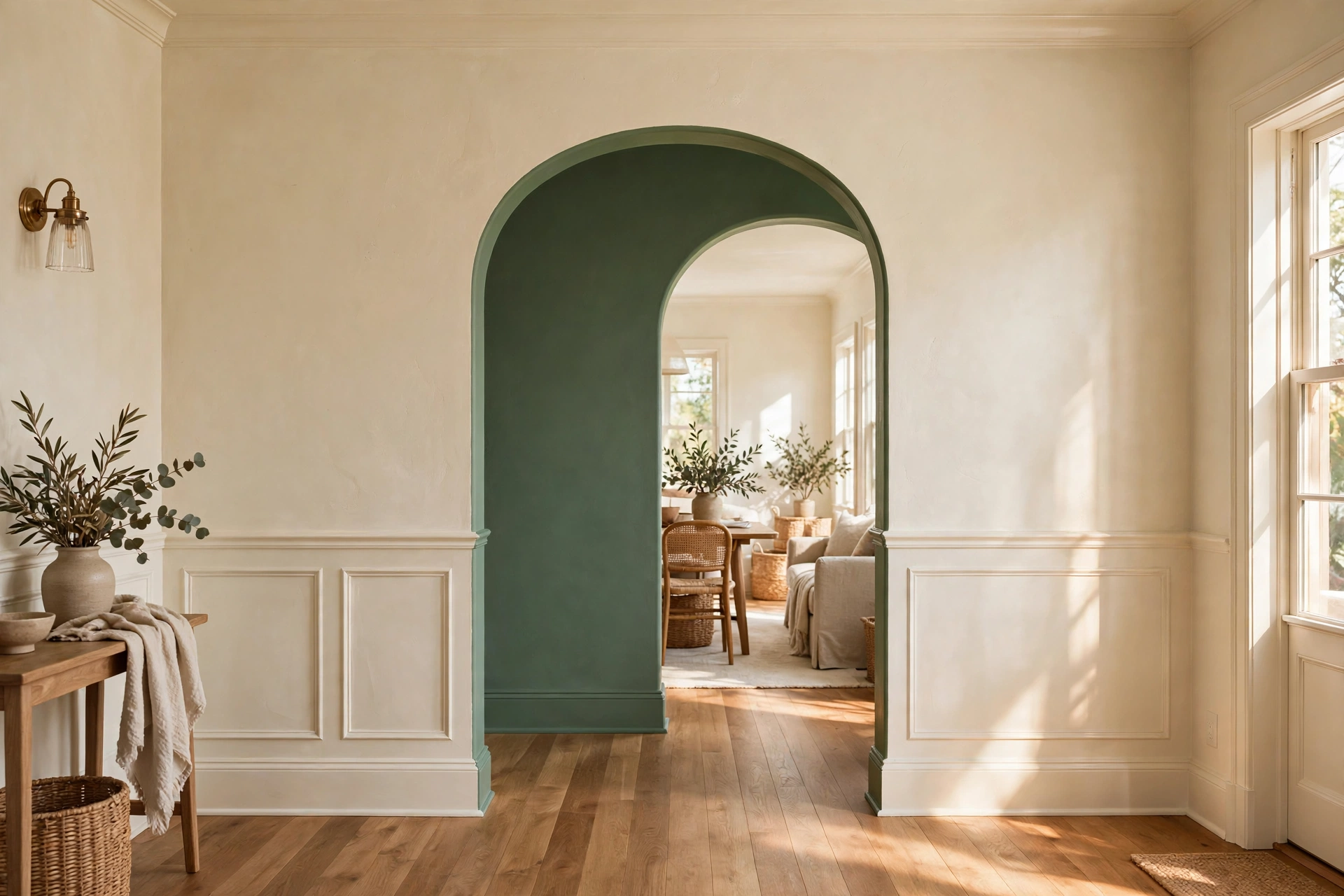
One of the simplest arched doorway ideas is to paint only the inside reveal of the arch, the curved band you walk under, in a deeper tone than the walls on either side. Try a warm clay, sage, muted navy, or chocolate brown against cream or warm white walls. The contrast outlines the curve and gives the opening depth, even when the rooms beyond are plain.
Use painter’s tape along both edges and a small angled brush for the curve, then finish with an eggshell or satin sheen so light catches the band gently. Sample the color first and check it at midday and after dark, because deep tones read darker inside a shaded reveal. If both adjoining rooms use different wall colors, choose a reveal shade that sits comfortably between them rather than matching one side exactly.
2. Add Slim Wood Trim — Arched Doorway Ideas
Wood trim gives arched doorway ideas a finished, built-in quality that bare drywall rarely has. Flexible wood molding and thin bent oak or poplar strips can follow a gentle curve, while a carpenter can steam-bend or kerf-cut solid trim for a tighter radius. Keep the profile slim, around 2 to 3 inches wide, so the trim frames the opening without making it feel smaller.
Stain it to match nearby floors or cabinetry, or paint it the same color as baseboards for a quieter look. Miter the ends cleanly where the curve meets the straight sides, fill any small gaps with paintable caulk, and sand before the final coat. In older homes, this detail helps a newer arch blend with original door casings elsewhere in the house, so the whole floor feels consistent from room to room.

3. Tile the Arch Surround for Texture and Color
Tile turns a plain arch into a focal point, and small formats work best because they follow the curve without awkward cuts. Handmade-look zellige tiles in cream, sage, or dusty blue, narrow kit-kat tiles, and small marble mosaics all suit arched doorway ideas in kitchens, bathrooms, and entries. Tile just the face around the opening, or wrap the tile through the reveal as well for a more immersive effect.
Use a contrasting grout if you want each small tile to read, or a matching grout for a softer, plaster-like surface. Keep the palette to one tile color so the shape, not the pattern, stays the star. Seal grout in kitchen and bath openings, wipe tiles with a damp cloth rather than harsh cleaners, and order extra pieces, since curved edges always need a few more cuts than straight runs.

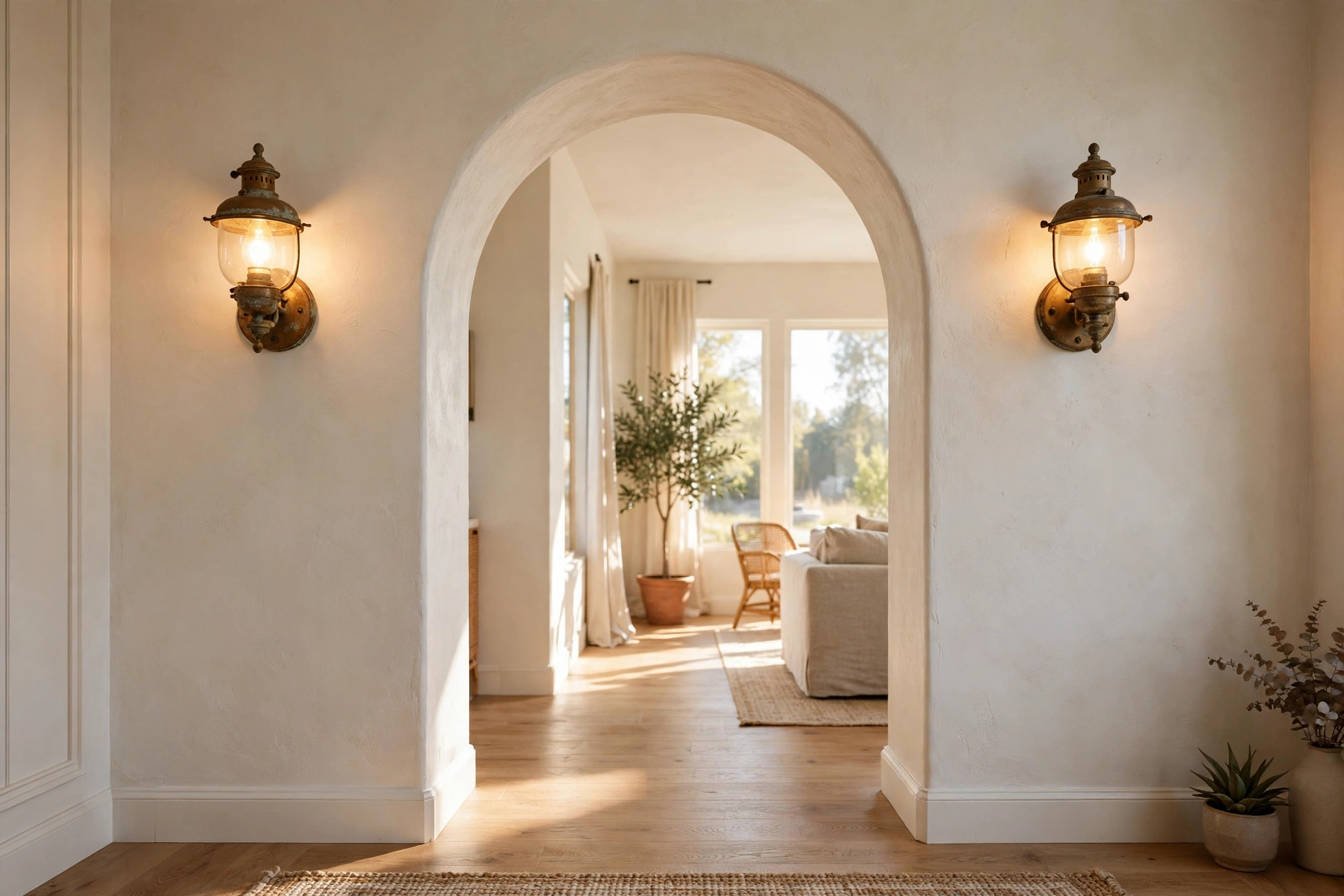
4. Arched Doorway Ideas: Flank the Arch With Sconces
Lighting on both sides of an opening is one of the most reliable arched doorway ideas for evenings, when an unlit arch can disappear into shadow. Mount a matched pair of sconces about 5 to 6 feet from the floor, centered on the wall space beside the curve, and choose shades that throw light up and down rather than straight out. Aged brass, blackened steel, and fluted glass fixtures all sit well against plaster and painted walls.
Put the pair on a dimmer so the doorway glows softly during dinner or movie time instead of competing with lamps in the next room. If hardwiring is not an option, battery or plug-in sconces with a cord cover give a similar look for renters. Match the bulb temperature to the adjoining rooms, usually 2700K, so walking through the arch does not feel like stepping into a different kind of light.
5. Hang a Soft Curtain Inside the Opening
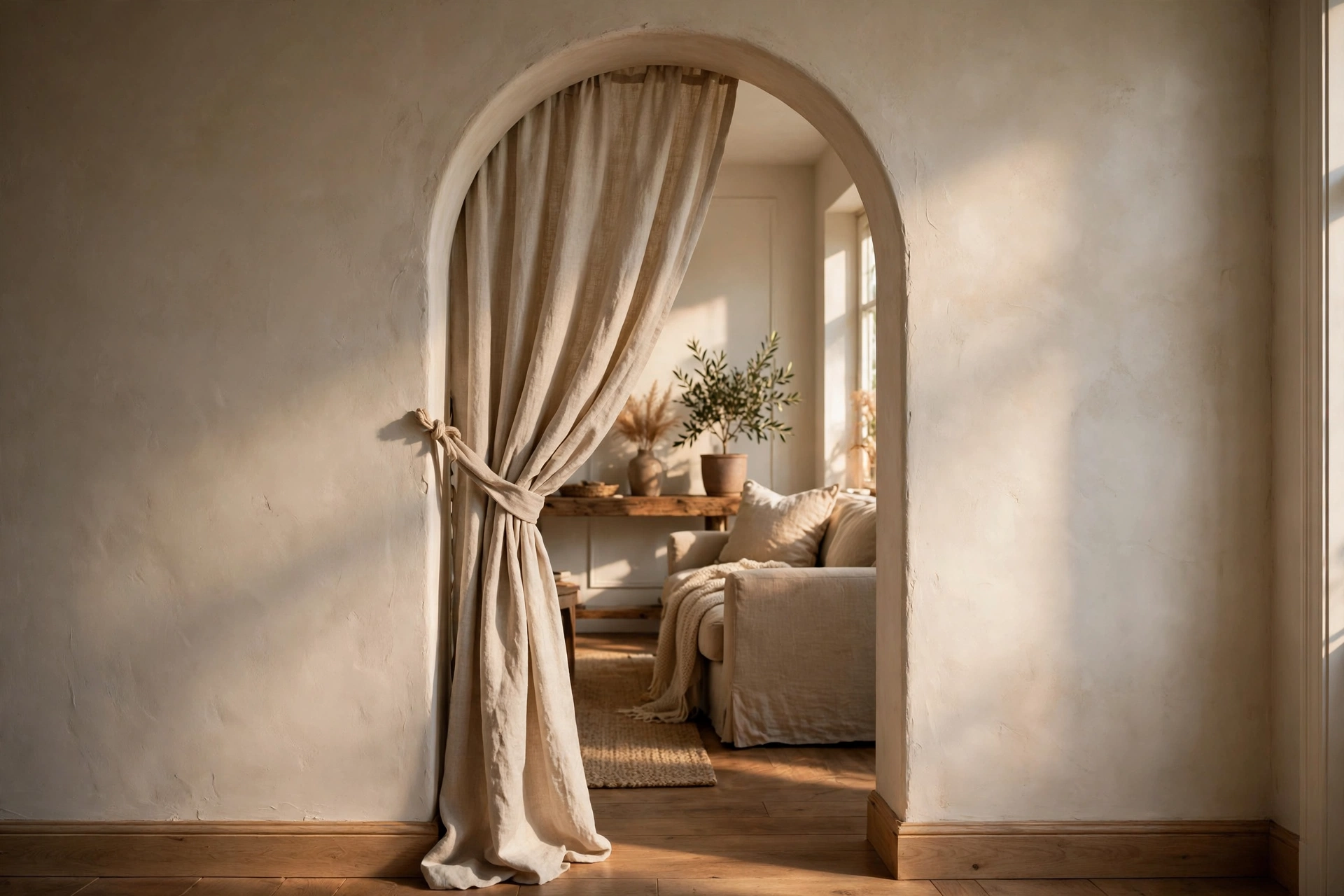
A curtain gives arched doorway ideas a practical job: it softens sound, adds privacy, and lets you close off a dining room, study, or guest space without adding a door. Hang a linen, cotton velvet, or washed canvas panel from a slim curved track or a straight rod mounted high inside the reveal, so the fabric falls in one clean sweep. Choose a single panel pulled to one side for an easy walk-through, or a pair that meets in the middle for a more formal entry.
Let the hem just kiss the floor, and add a simple tieback in brass or leather so the panel stays open during the day. Natural fabrics in cream, flax, olive, or rust suit the soft geometry of an arch. Launder or steam the panel seasonally, since doorway fabric collects dust faster than window curtains in a still corner.
6. Finish the Arch in Limewash or Smooth Plaster
Texture is what makes many arched doorway ideas feel old and settled rather than newly cut into drywall. A coat of limewash in a warm off-white, pale terracotta, or soft greige adds cloudy movement that catches light differently as the day changes. Smooth Venetian-style plaster goes one step further, with a faint sheen on the curve where hands and shoulders pass. Apply either finish through the reveal and a few inches onto the surrounding wall, feathering the edge so there is no hard line.
Work in loose, overlapping strokes and expect two coats for even coverage. Keep strong scrubbing cleaners away from limewash, and dust it with a dry cloth instead. This approach pairs especially well with wood floors, woven shades, and unlacquered brass, because all of them share the same slightly imperfect, hand-finished character that makes an arch feel at home.

7. Arched Doorway Ideas With Glass French Doors
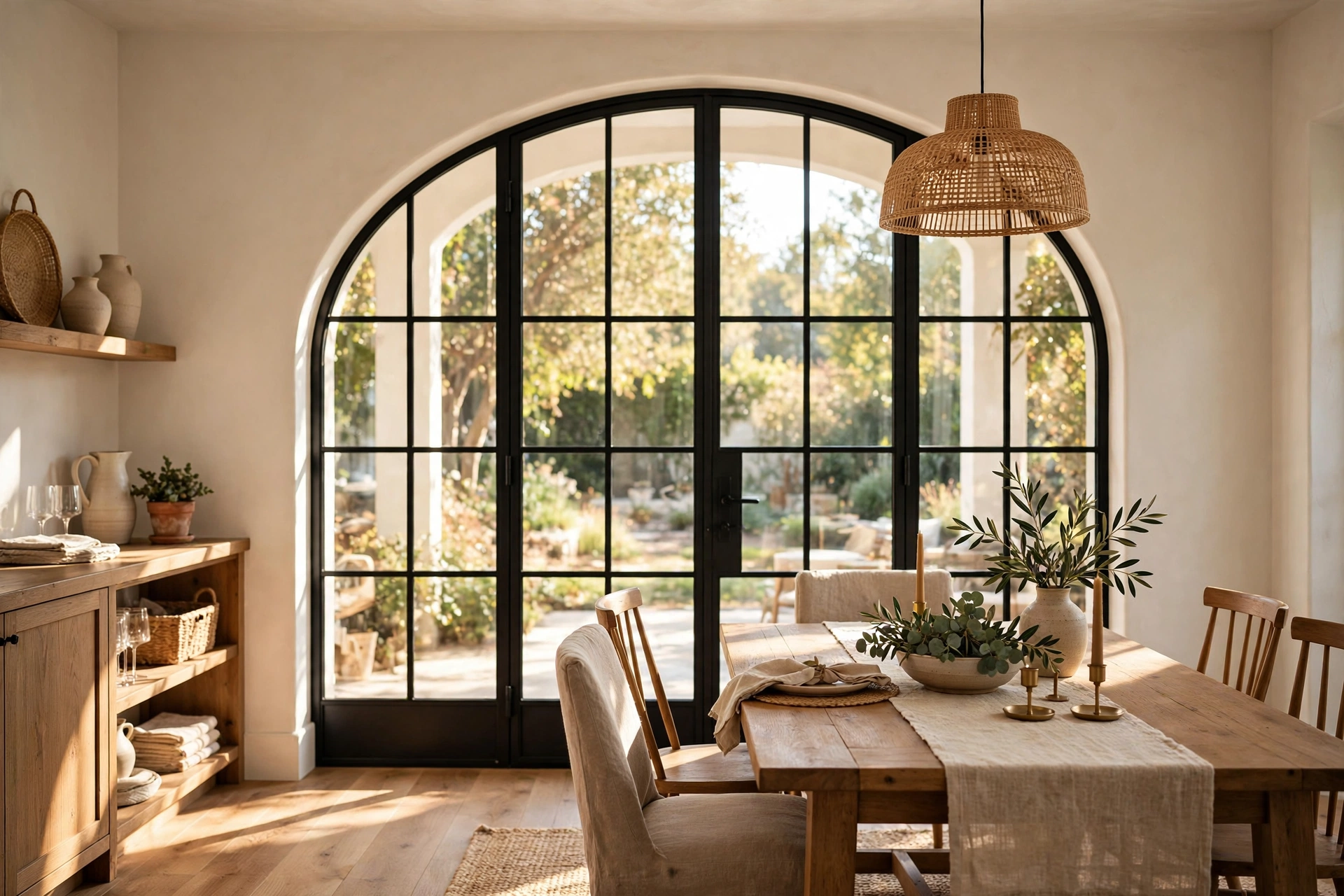
When you need a real door but love the curve, arched French doors keep the light while adding separation. A pair of narrow doors with clear or lightly reeded glass suits a dining room, home office, or sunroom opening, and blackened steel or painted wood frames both work depending on the house. Reeded glass is the practical middle ground: it blurs a desk or dining clutter while still letting daylight pass between rooms.
Have the doors made to the true radius of your opening, measured at several points, since older arches are rarely perfectly symmetrical. Choose quiet hardware, such as a small round knob or a slim lever in aged brass, and soft-close hinges if the doors will be used daily. Clean the glass with a microfiber cloth and keep the tracks or thresholds swept, so the doors keep closing with a clean, even line.
8. Build Shelves and Storage Into the Wall Beside the Arch
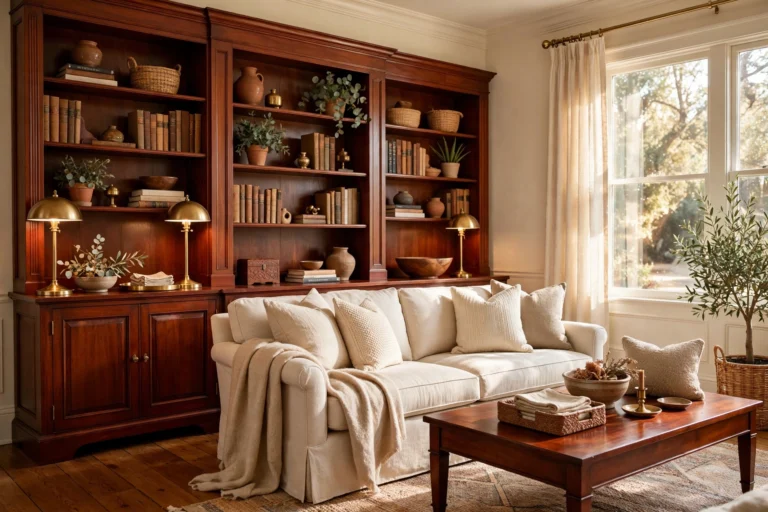
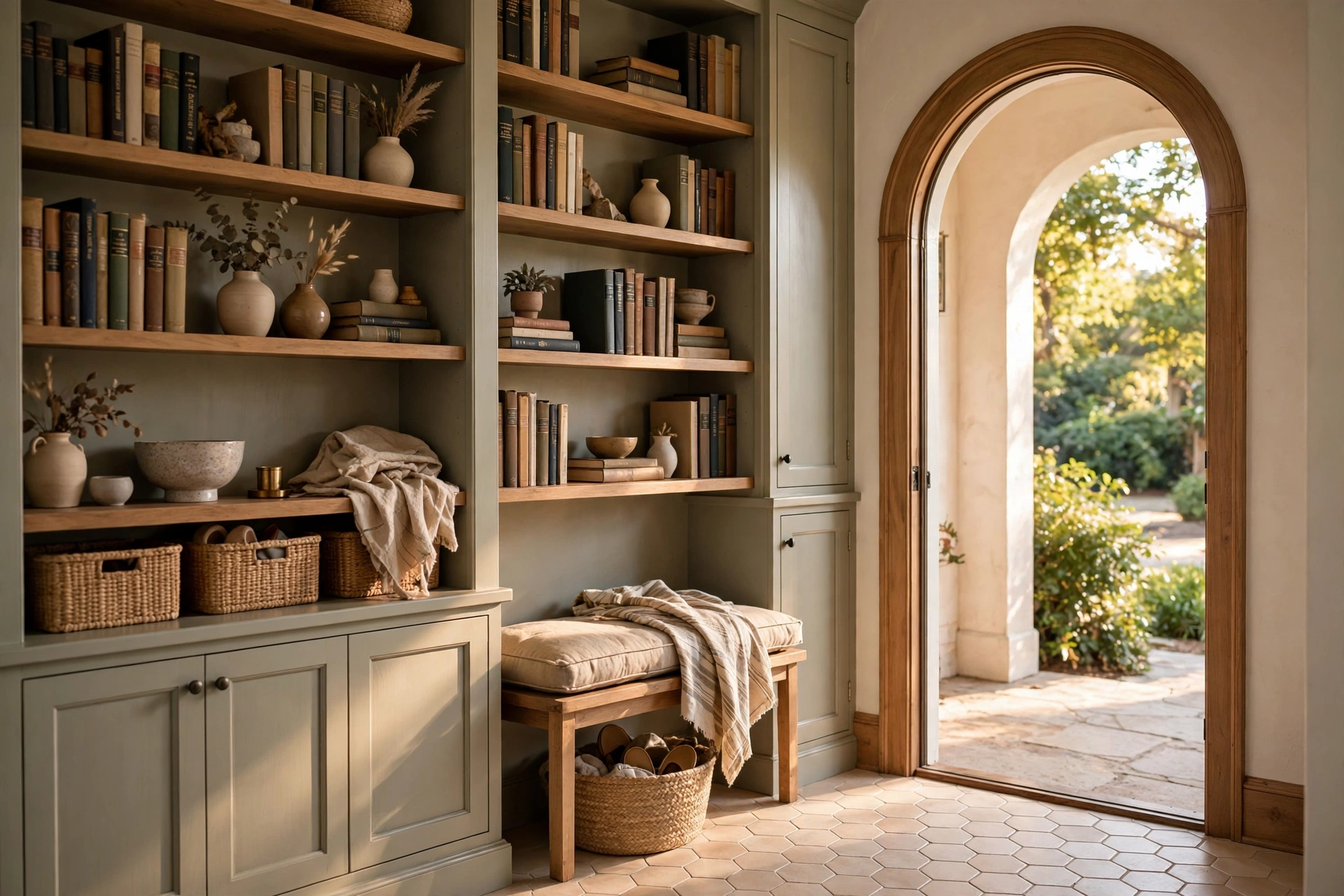
The wall space beside an arch is often wasted, and building into it makes arched doorway ideas work harder. Shallow bookcases, a small bench with drawers, or closed cabinets on one or both sides give the opening a composed, library-like frame. Keep shelves 10 to 12 inches deep so they hold books and baskets without crowding the walk-through, and repeat the arch shape in one or two shelf openings if you want a stronger connection.
Practical entryway storage ideas follow the same rule: closed storage low for shoes and bags, open display higher up. Paint built-ins the same color as the walls for a calm look, or stain them like the floor for contrast. Leave the shelves closest to the curve a little emptier than the rest, so the arch itself still has room to read as the main feature.
9. Lead the Eye Through With a Runner and Ceiling Light
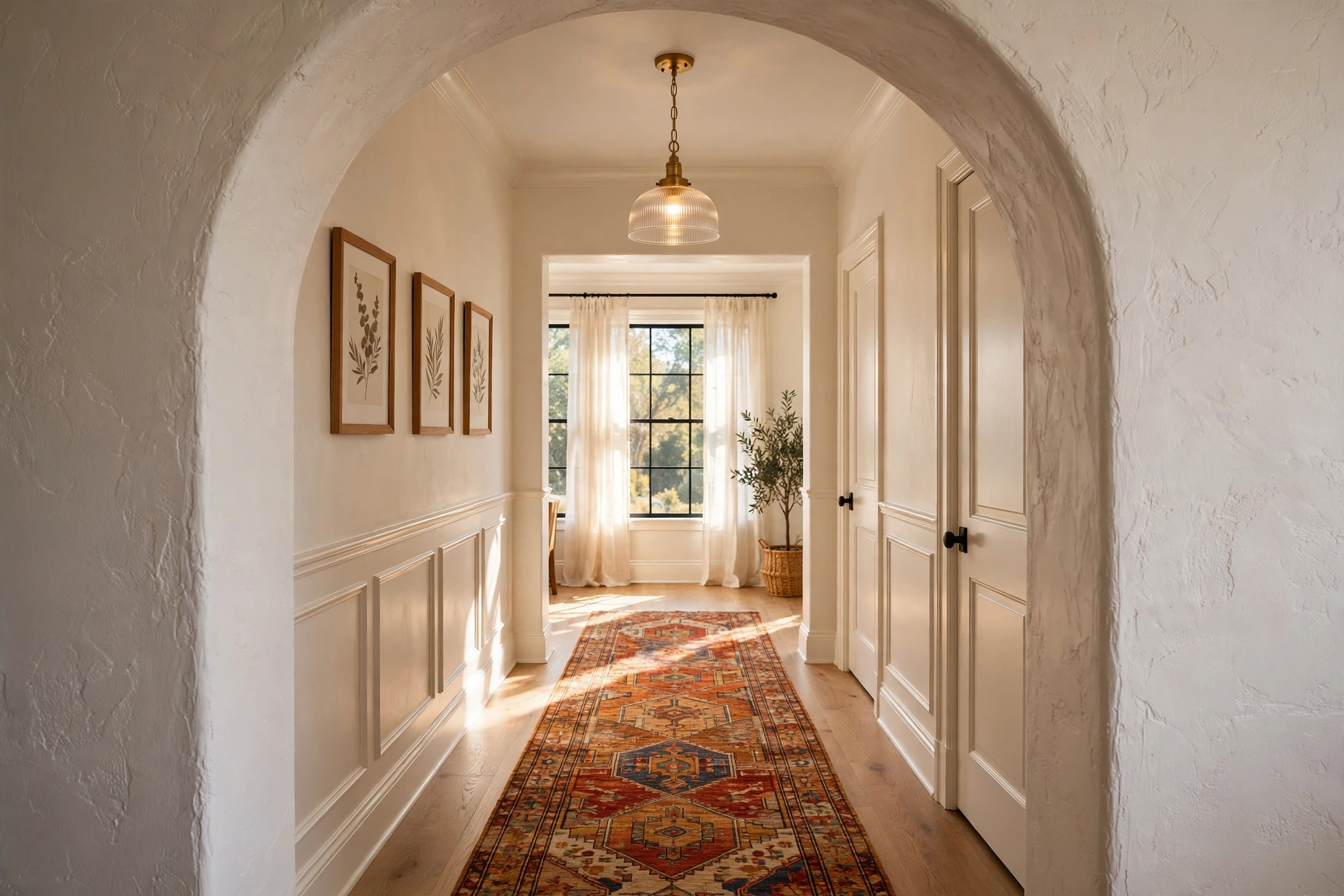
What you see through an arch matters as much as the arch itself, and a clear sightline is one of the most overlooked arched doorway ideas. Lay a runner in the hall or room beyond, aligned with the center of the opening, so the eye travels straight through instead of stopping at the threshold. Add one ceiling fixture on that same centerline, a flush mount or small pendant, to mark the destination.
This works especially well in long passages, where our narrow hallway ideas cover width, lighting, and wall color in more detail. Choose a low-pile, washable runner in a warm pattern that hides foot traffic, and size it so at least a few inches of floor show on each side. Keep the path through the arch completely clear of furniture edges, baskets, and door swings.
10. Frame the Opening With Plants on Both Sides
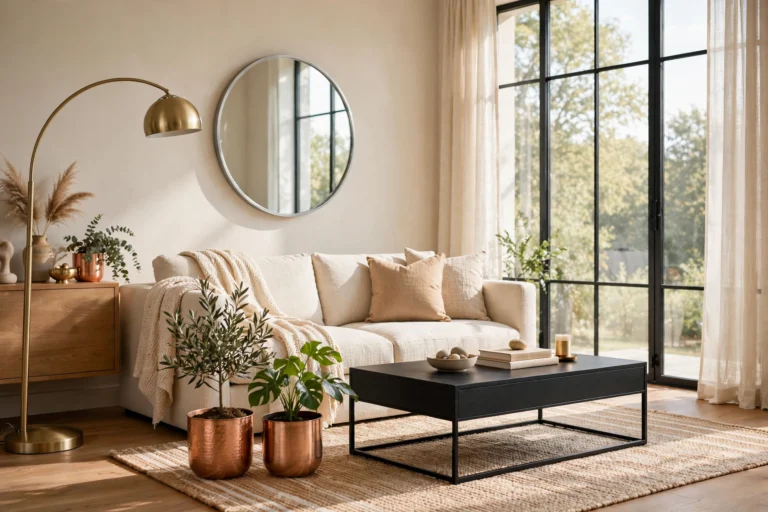
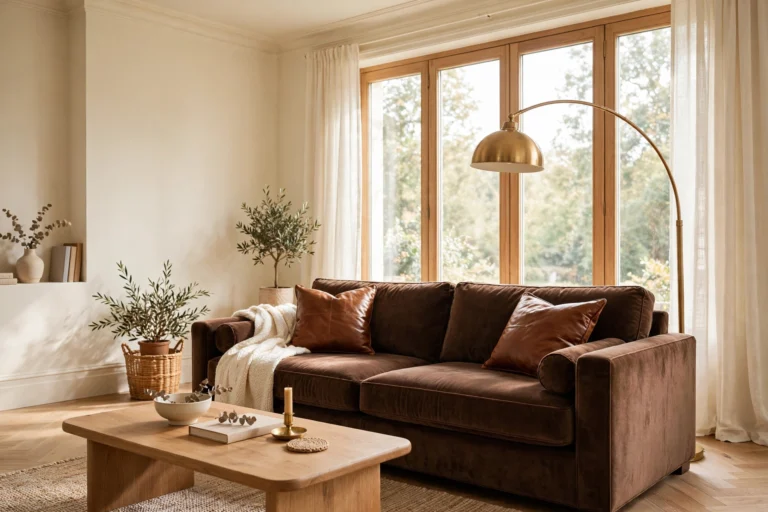
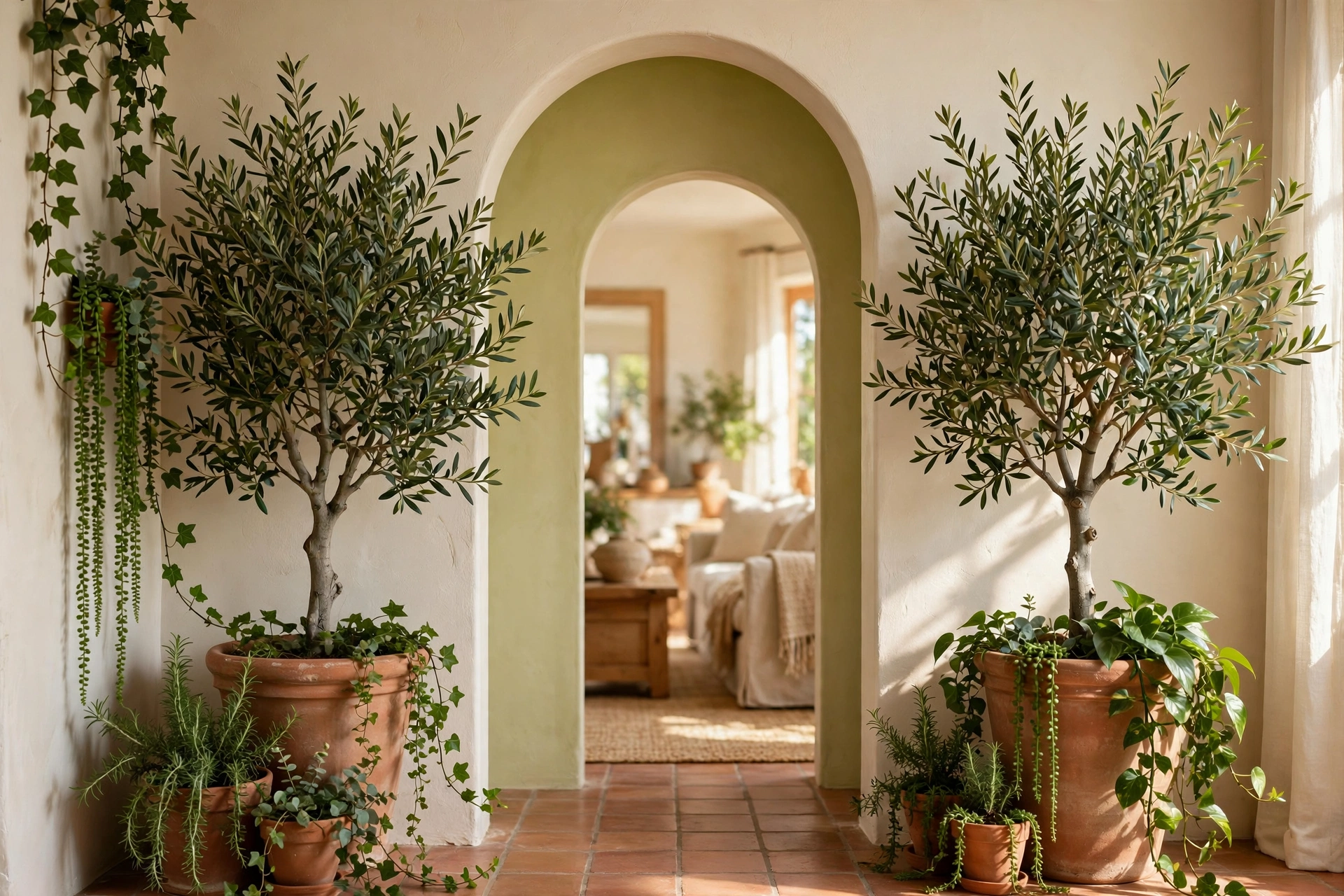
Plants soften the base of an arch where the curve meets the floor, and a matched or loosely matched pair keeps the composition balanced. Use a tall olive tree, fig, or Norfolk pine in a terracotta, stone, or woven planter on the wider side, and a smaller plant or a stack of art books with a trailing pothos on the other. Among arched doorway ideas, this one is the easiest to test: move plants you already own into place for a week before buying anything.
Keep leaves trimmed back so nothing brushes shoulders in the walk-through, and rotate the pots a quarter turn every week or two so growth stays even. Choose planters heavy enough not to tip in a busy doorway, and set a saucer or liner inside each one so watering never marks wood floors or a nearby rug.
11. Wallpaper the Wall Around the Arch
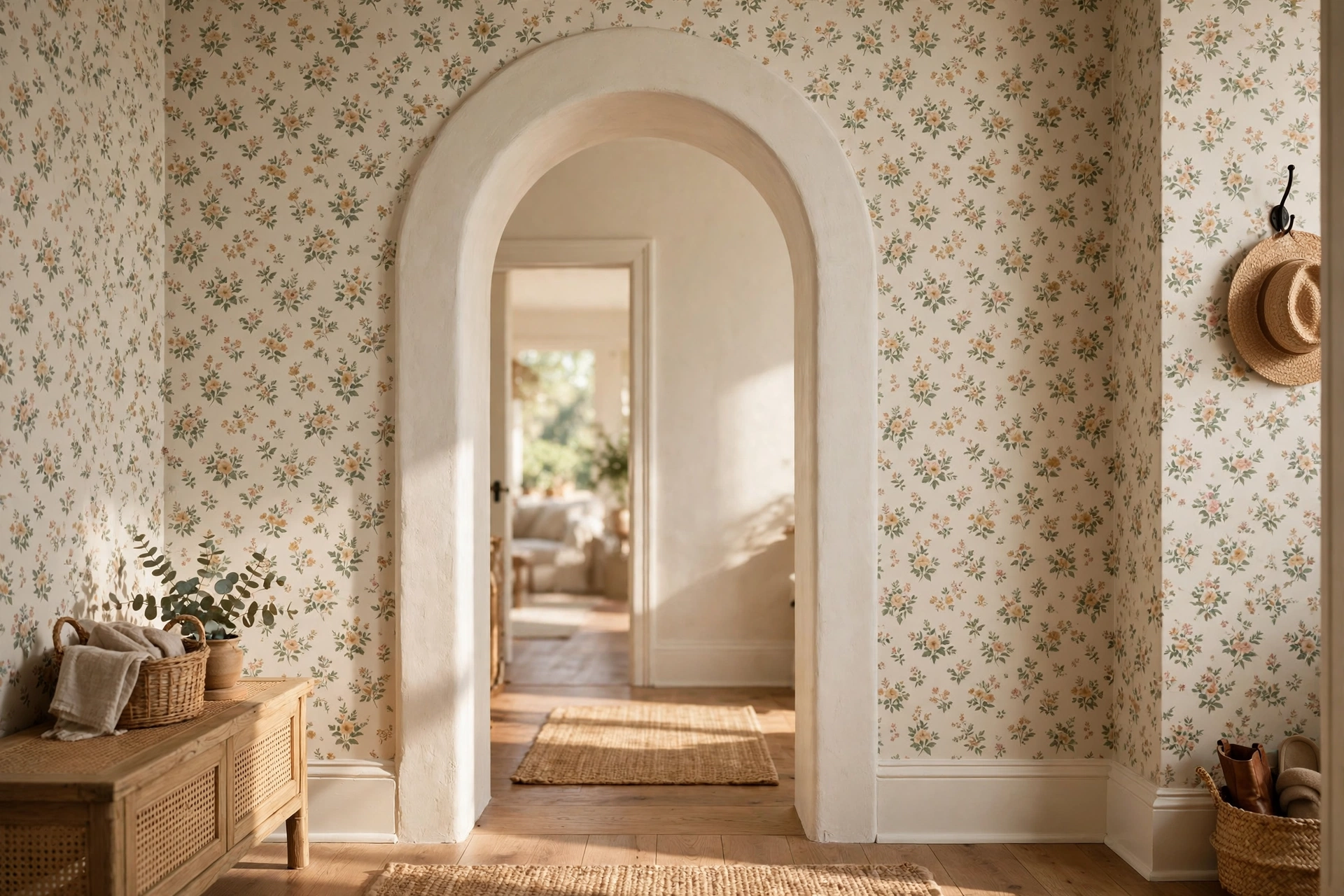
Wallpaper gives arched doorway ideas a clear frame when paint alone feels too plain. A small-scale floral, a fine stripe, or a grasscloth texture on the wall surrounding the opening makes the smooth, plain arch read as a clean cut-out by contrast. Keep the arch reveal and the wall inside the next room in a solid color pulled from the paper, so the pattern does not compete with itself through the opening.
Hang paper up to the curve and trim it carefully with a sharp blade, since any ragged edge will show against the smooth plaster. This is a strong choice for entries and dining rooms, and it sits comfortably alongside broader hallway decor ideas such as wainscoting, framed prints, and a console on the opposite wall. Choose paste-the-wall papers if you like to redecorate, because they strip off far more cleanly.
12. Repeat the Arch — Arched Doorway Ideas for Nearby Decor
An arch looks intentional when its curve shows up once or twice more in the same view. Hang an arched mirror on the wall facing or beside the opening, place an arched-top cabinet or bookcase in the adjoining room, or choose a console with a curved front. Our roundup of arched mirror ideas covers sizes and placement for mirrors that echo a doorway without copying it exactly.
Keep the repeated shapes in a similar scale and finish, such as aged brass on both the mirror frame and the sconces, so the connection reads quietly. Two or three echoes are enough; more than that and the room starts to feel themed. Step back to the farthest point in the room and check the view: the doorway, the mirror, and one piece of furniture should form a loose, balanced triangle rather than a straight line of matching curves.

Frequently Asked Questions
Can I add an arch to a regular rectangular doorway? Yes, in many homes. A contractor or skilled DIYer can frame the corners of a non-load-bearing opening with curved plywood or framing, cover it with flexible drywall, and finish it with joint compound and paint. Always confirm the wall is not load-bearing and check for wiring or plumbing before opening it up.
What paint finish works best inside an arched doorway? Eggshell or satin is the practical choice. Both wipe clean in a high-traffic opening and catch just enough light to show the curve. Flat paint hides imperfections better on older plaster, but it marks more easily where shoulders and bags brush past.
How wide should an arched doorway be? Most interior arches work well at 32 to 40 inches wide for a single opening, with the curve starting around 6 feet 6 inches to 7 feet above the floor. Wider cased openings between living and dining rooms can run 48 inches or more, but keep enough straight side wall for the curve to look graceful.
Do arched doorways suit modern homes? Yes. Keep the trim off, the plaster smooth, and the colors simple, and an arch reads as a clean geometric shape that softens modern rooms full of straight lines. Black steel and glass arched doors are a particularly good fit for contemporary spaces.
How do I decorate an arch without making it look dated? Limit the decoration to one or two moves, such as a painted reveal plus sconces, and use current, natural materials: limewash, linen, aged brass, and real wood. Avoid heavy faux finishes and ornate applied molding, which are what usually date an arch.
Conclusion
An arch is already a gift in a house full of straight lines and right angles. Pick one idea that suits your opening, a painted reveal for a weekend, tile or built-ins for a bigger project, and let the curve do the rest. Small, well-finished details around an arched doorway make both rooms it connects feel more considered.