
12 Beige Living Room Ideas That Never Feel Boring
The best beige living room ideas have nothing to do with playing it safe. Beige works when you treat it as a full palette — pale cream, warm sand, taupe, camel, and soft brown layered together — rather than one flat color repeated on every surface. Get the layers right and the room feels calm, warm, and finished, never washed out. Below are twelve practical ways to build that depth, from texture and wood to black accents and proper lighting. The approach lines up with what designers keep returning to in these warm beige living rooms from The Spruce, where tonal layering does all the heavy lifting.
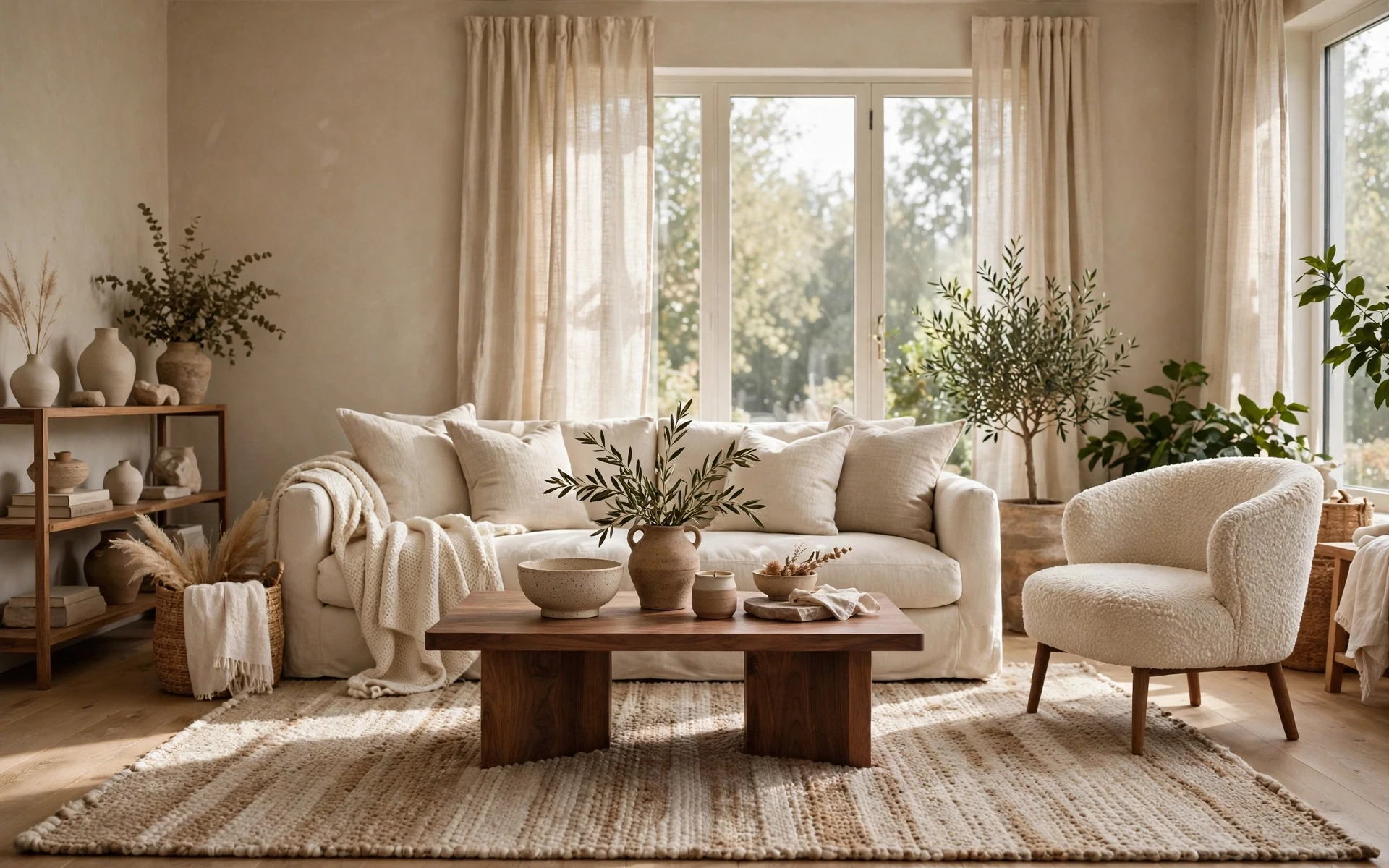
Start With Texture: Beige Living Room Ideas That Add Depth
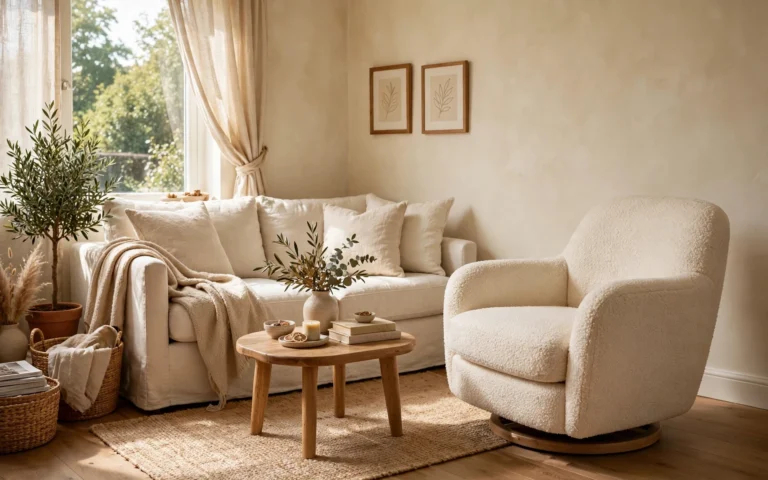
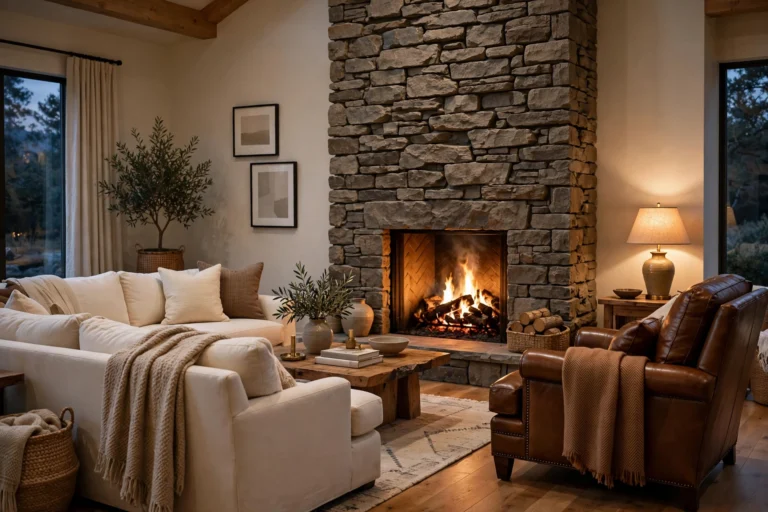
If a beige room feels flat, texture is almost always the missing piece. Keep the colors close and vary the surfaces instead: a nubby boucle accent chair, flat-weave linen sofa fabric, a chunky knit throw, a jute or wool rug, and a smooth leather cushion. Light hits each material differently, so the same shade reads as several tones across the room. Aim for at least four distinct textures in the main seating area.
Place the roughest textures — jute, woven baskets, raw wood — next to the softest ones, like velvet or brushed cotton. Wipe woven pieces with a dry cloth weekly and vacuum rugs on a low suction setting so natural fibers do not fray at the edges. Check the mix in both daylight and lamplight, because texture always reads stronger once the sun drops.
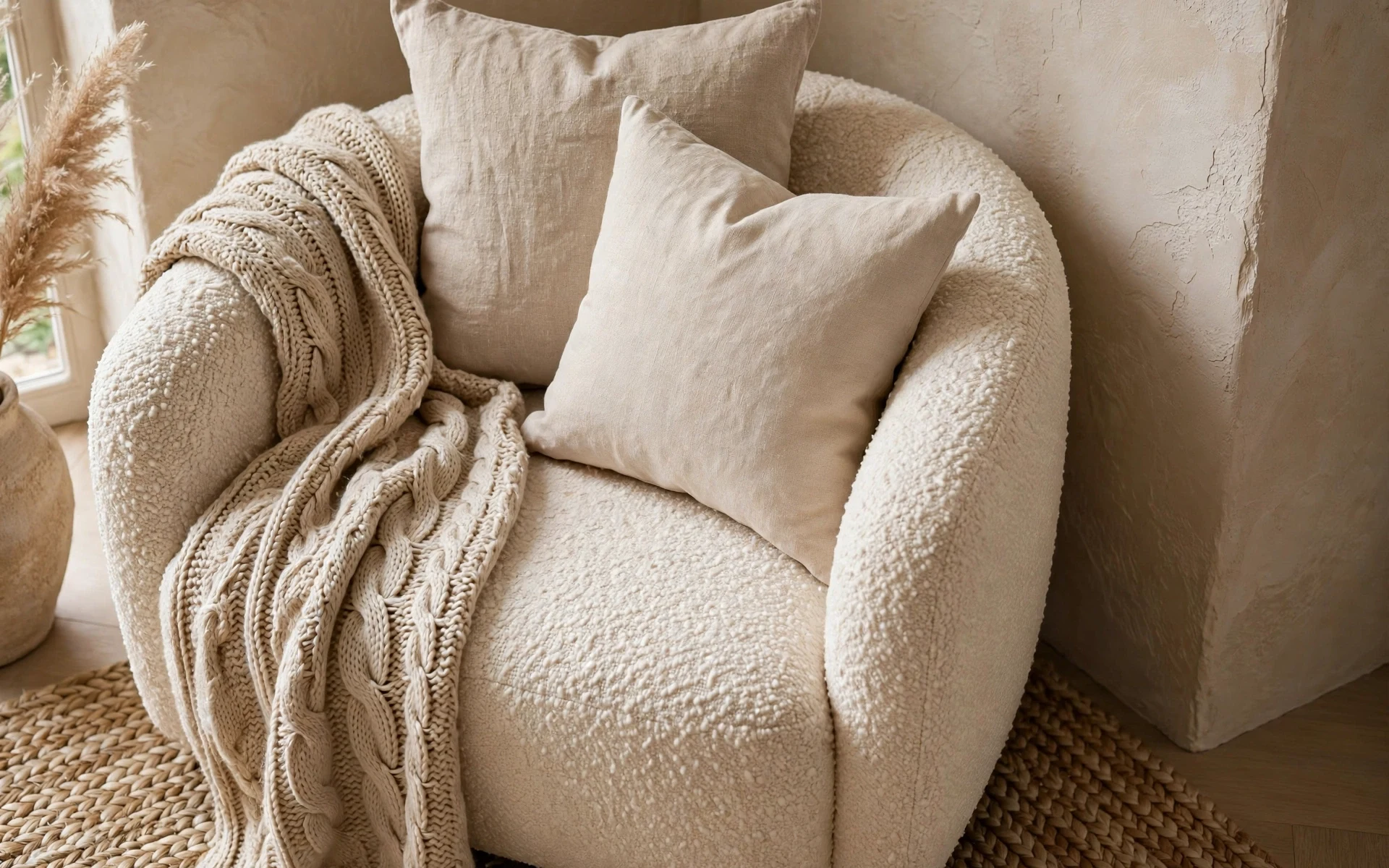
Tonal Shades: Beige Living Room Layering Without the Flat Look
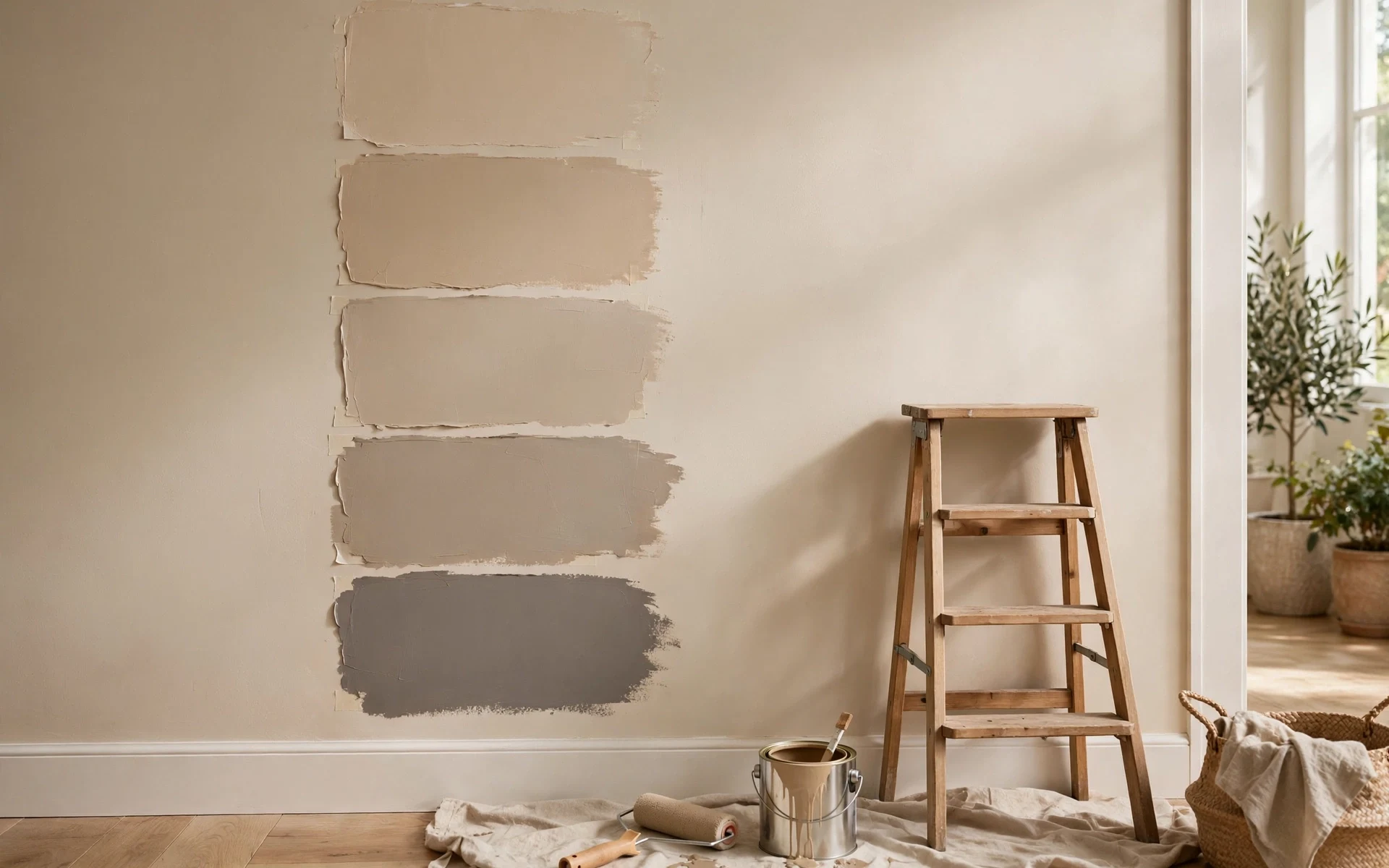
One shade of beige on the walls, sofa, and rug is what gives the color its dull reputation. A stronger approach is tonal layering: choose a light beige for the largest surfaces, a mid-tone for upholstery, and a deeper taupe or camel for cushions, curtains, or a single chair. Keep every shade on the warm side so they sit comfortably together — a pink-leaning beige next to a yellow-leaning one can look off in daylight. Test paint and fabric swatches against each other at noon and again in the evening. This tonal thinking carries through the whole home, too — the same layered approach works just as well in a smaller, quieter bedroom. Keep a small swatch board of your chosen shades together so new purchases stay inside the palette.
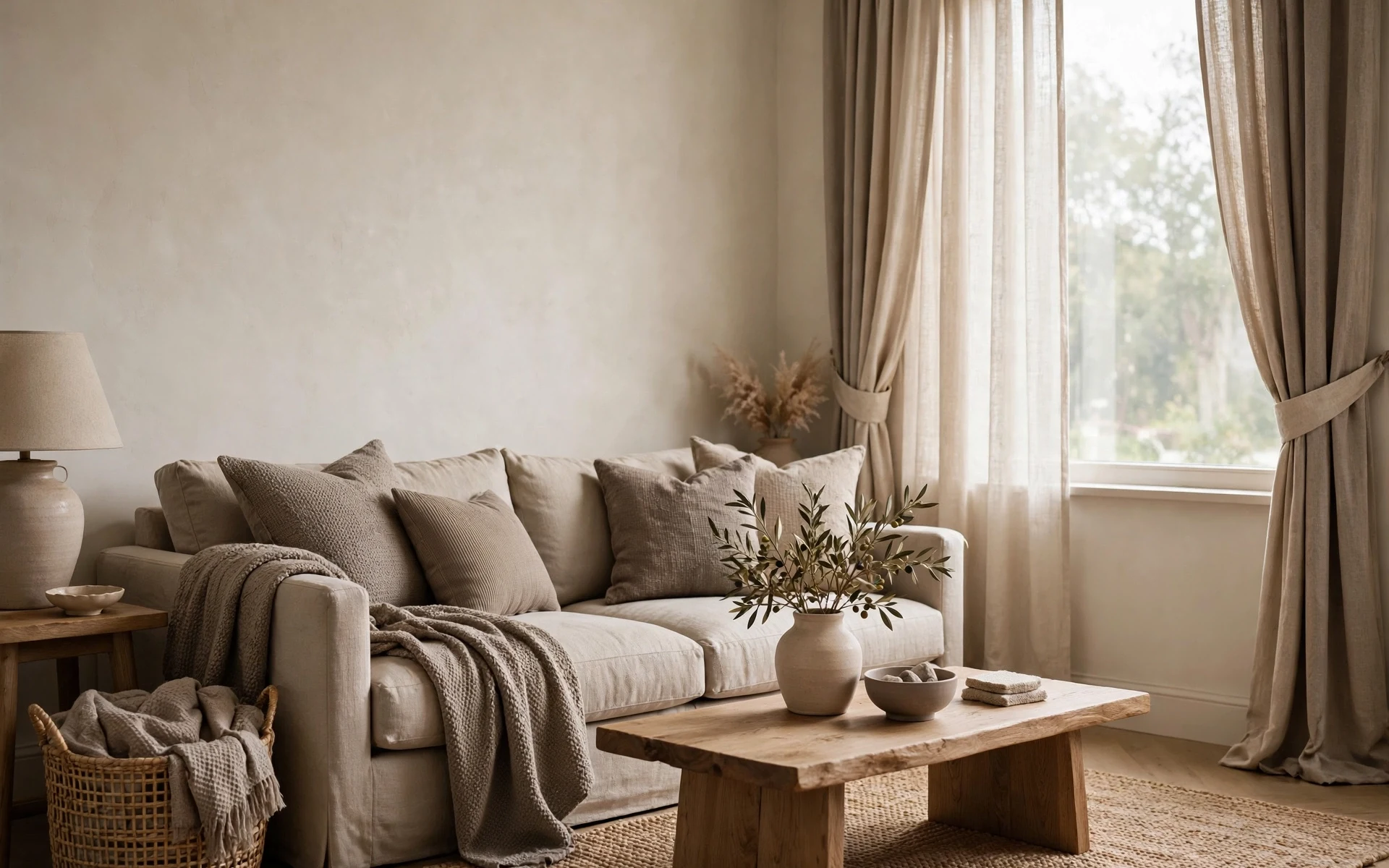
Cream Sofa: The Anchor of a Beige Living Room
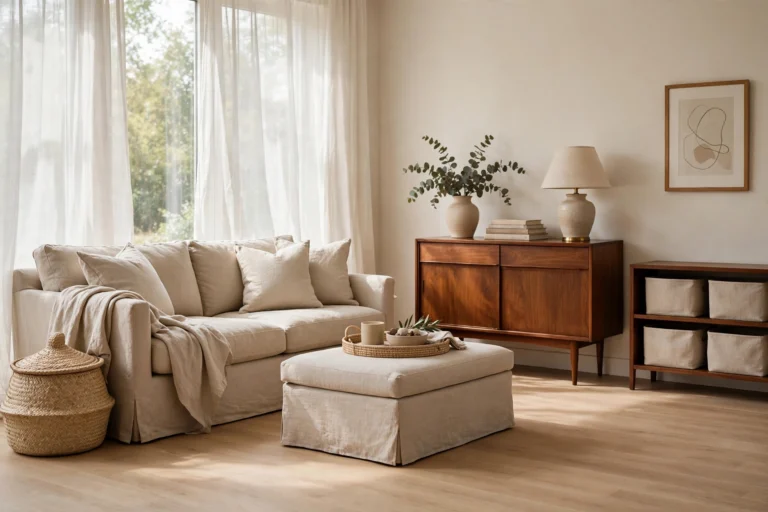
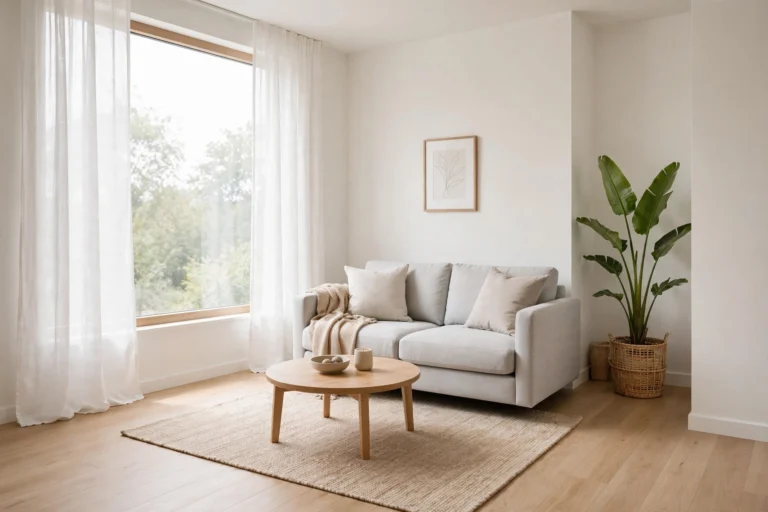
A large cream or pale beige sofa gives the room a clear anchor and keeps the scheme feeling light. Choose a practical fabric — tightly woven linen-look polyester or a performance weave shrugs off daily use far better than loose natural linen, and most marks lift with a damp cloth and mild soap. Set the sofa on a rug that is at least one tone deeper so it does not disappear into the floor. Add two cushions in a warm brown and one in a soft pattern to break up the expanse of pale fabric. For fabric choices, layouts, and care in detail, see our guide to cream sofa styling. Rotate the sofa cushions every few weeks so the fabric wears evenly and keeps its shape longer.
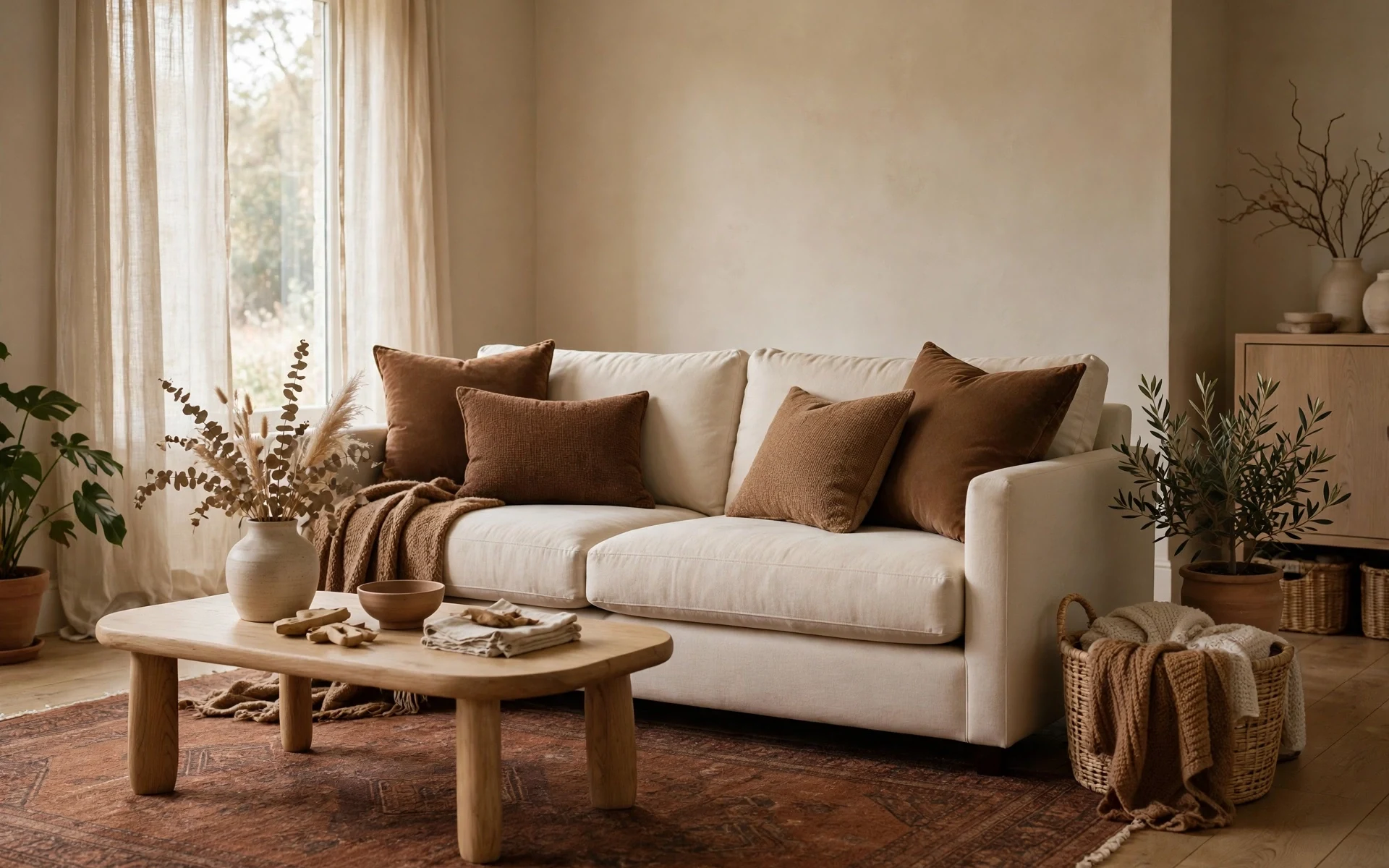
Warm Wood: Natural Contrast for a Beige Living Room
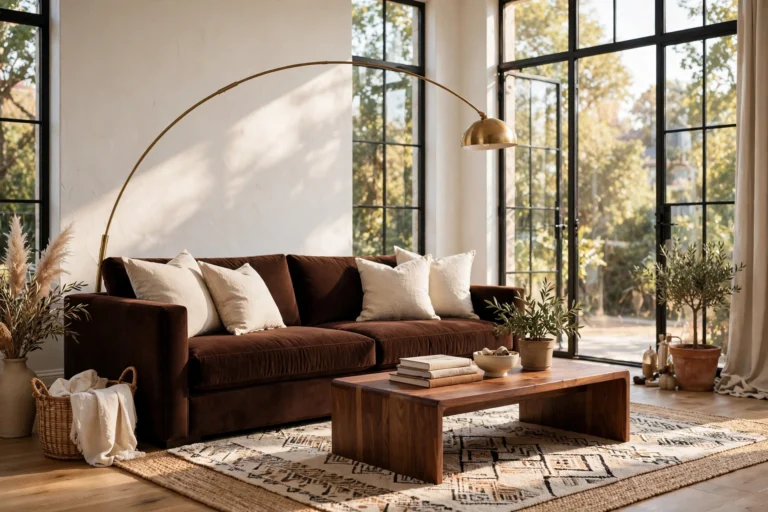
Beige needs wood the way a plain outfit needs good shoes — it finishes the look and adds warmth no paint can match. A walnut coffee table, an oak media console, or honey-toned side tables all work, as long as you repeat a similar wood tone at least twice so it feels planned. Avoid matching every piece exactly; a slight variation looks collected rather than bought as a set. Keep orange-heavy pine to a minimum, since it can push beige walls toward yellow. Dust wood weekly and use coasters under drinks on unsealed surfaces. Even a wooden tray on an upholstered ottoman counts if a full furniture swap is not in the budget this season. A light wax or oil finish once a year keeps drier wood from looking tired against soft upholstery.
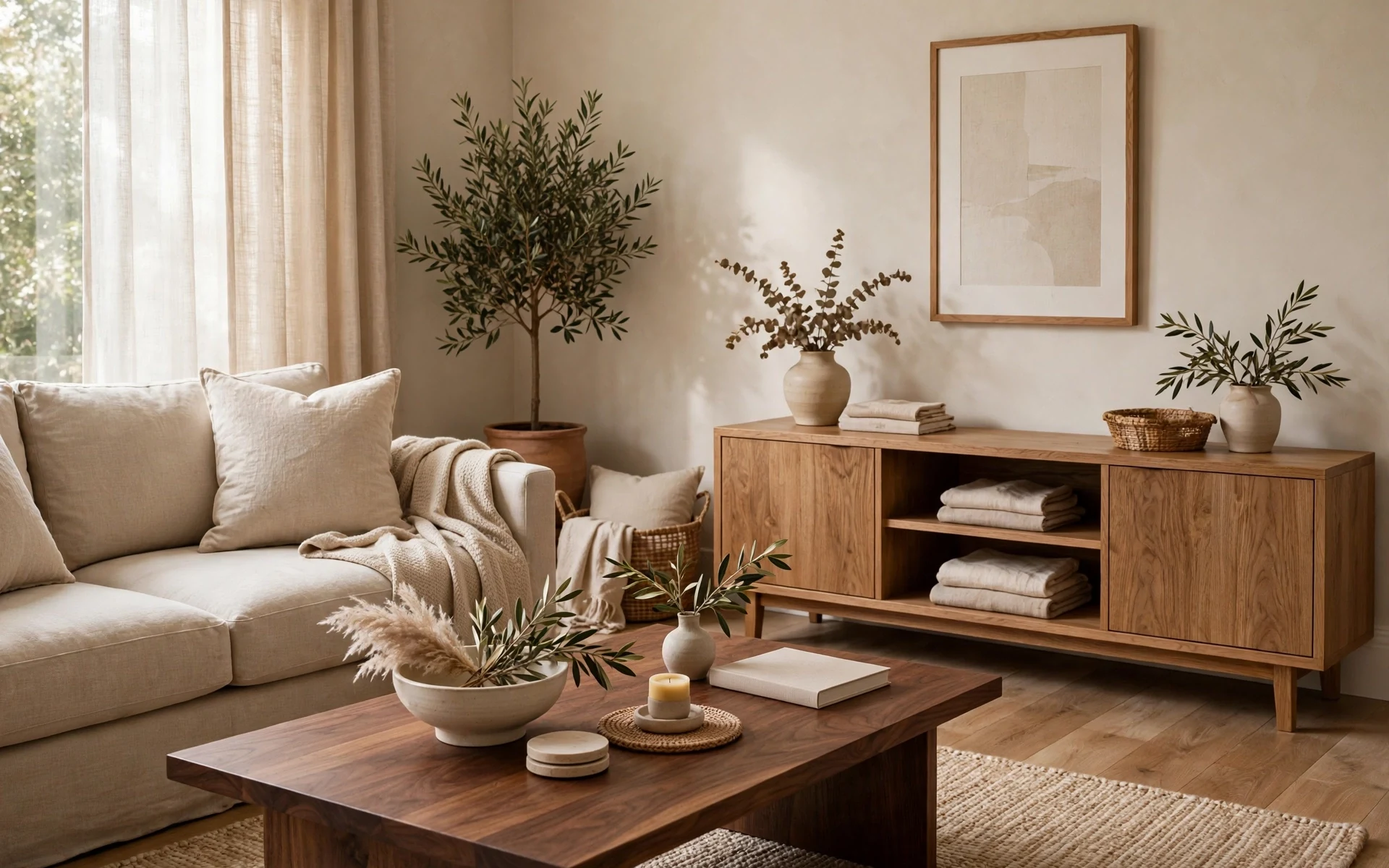
Add Black Accents in Small, Sharp Doses for a Beige Living Room
A few black details stop a beige scheme from drifting into bland. Think of black as punctuation: a slim floor lamp, picture frames, a side table with a black metal base, curtain rods, or the legs on a coffee table. Three to five touches spread around the room is usually enough — group them too closely and the corner feels heavy, scatter them and the eye keeps moving. Matte black reads softer than glossy black and hides dust better. If black feels too strong for your taste, dark bronze or espresso brown gives a similar grounding effect with a gentler edge, especially in smaller rooms with limited natural light. Start with two black pieces first, live with them for a week, then add more only if needed.
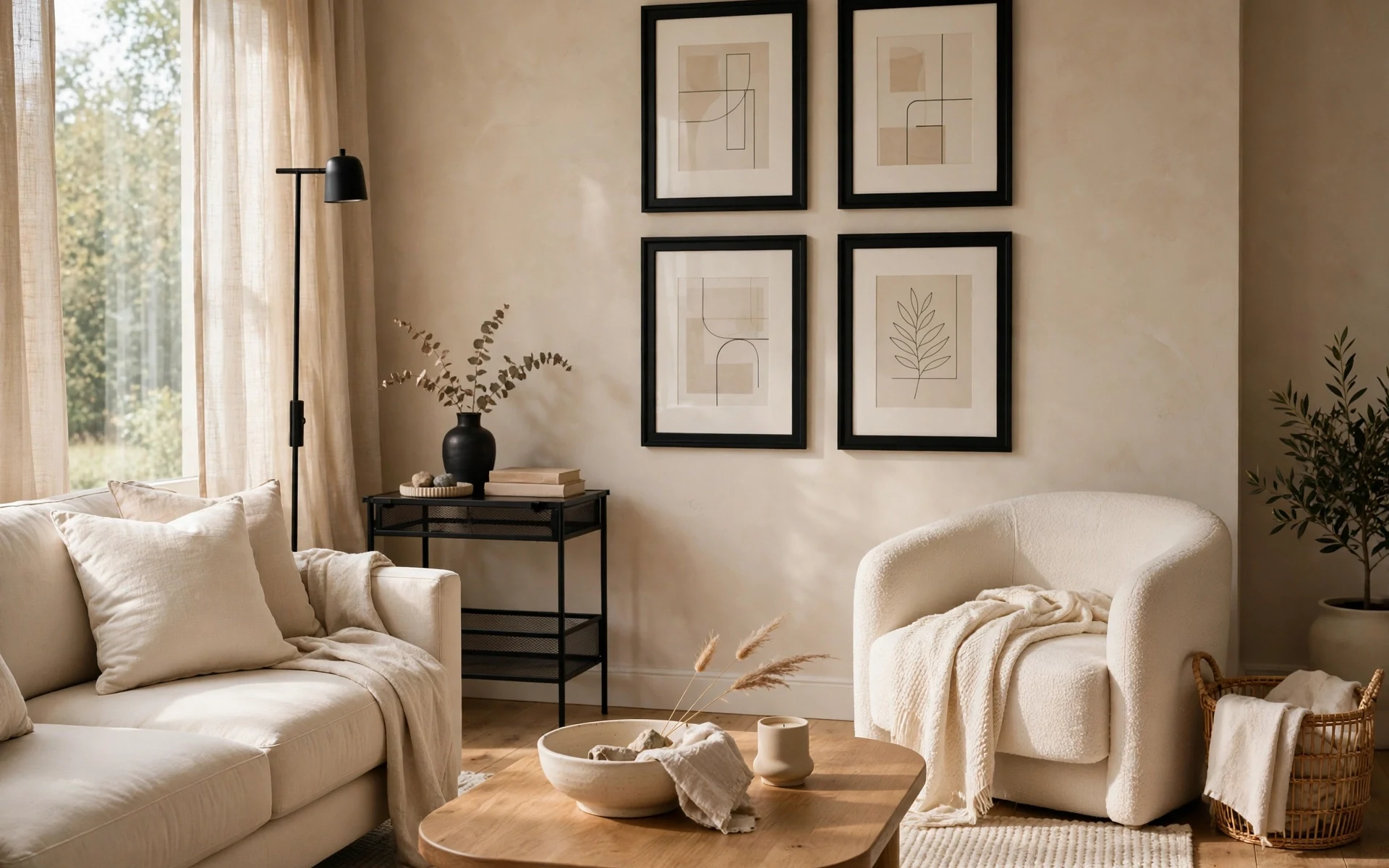
Get Throw Pillows Right With a Simple Formula for a Beige Living Room
Pillows are the fastest way to test a beige palette before committing to larger pieces. A mix that works on most sofas is two large solid cushions in a mid-beige, two patterned cushions picking up cream and brown, and one smaller lumbar in a textured fabric like woven cotton or faux leather. Keep the pattern scale varied — one larger print, one small stripe or check — so they do not compete. Plump feather-blend inserts hold their shape better than flat polyester fill. For more combinations by sofa color and season, browse these throw pillow combos and swap the patterned pair first when you want a refresh. Keep spare covers in the next shade deeper for winter, when the room benefits from extra visual warmth.
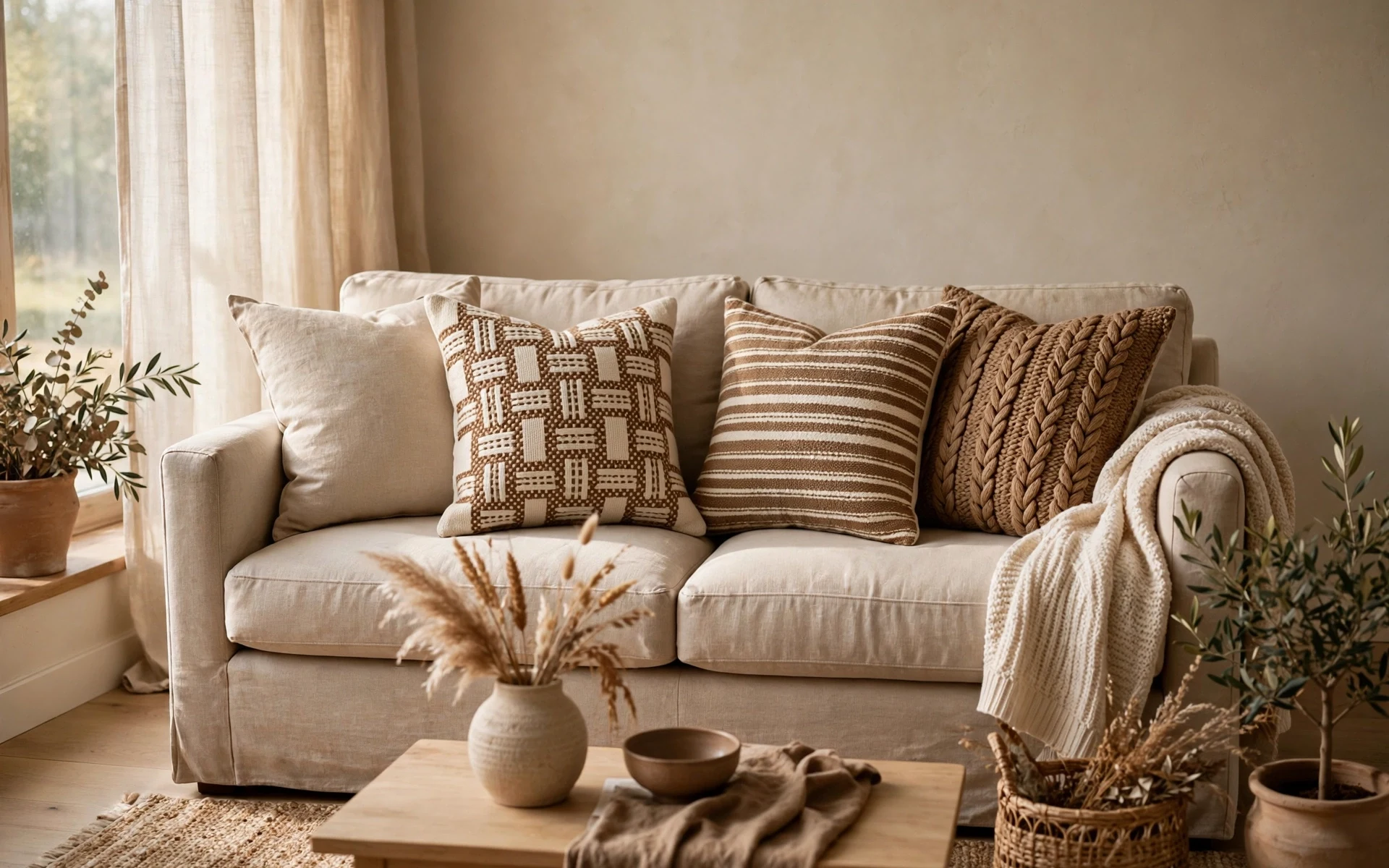
Choose a Rug That Does Real Work in a Beige Living Room
In a neutral room the rug carries more visual weight than usual, so pick one with pattern, pile variation, or a clear border. A vintage-look rug in faded rust, cream, and brown adds quiet color without breaking the calm. Size matters more than style: the front legs of the sofa and both chairs should sit on the rug, which usually means at least 8 by 10 feet in an average living room. A low-pile wool or wool-blend handles foot traffic and vacuums cleanly. Add a non-slip pad underneath — it stops the rug creeping, feels softer underfoot, and helps the pile last longer between deep cleans. Leave a clear walking path of at least two feet across the rug so the layout stays practical.
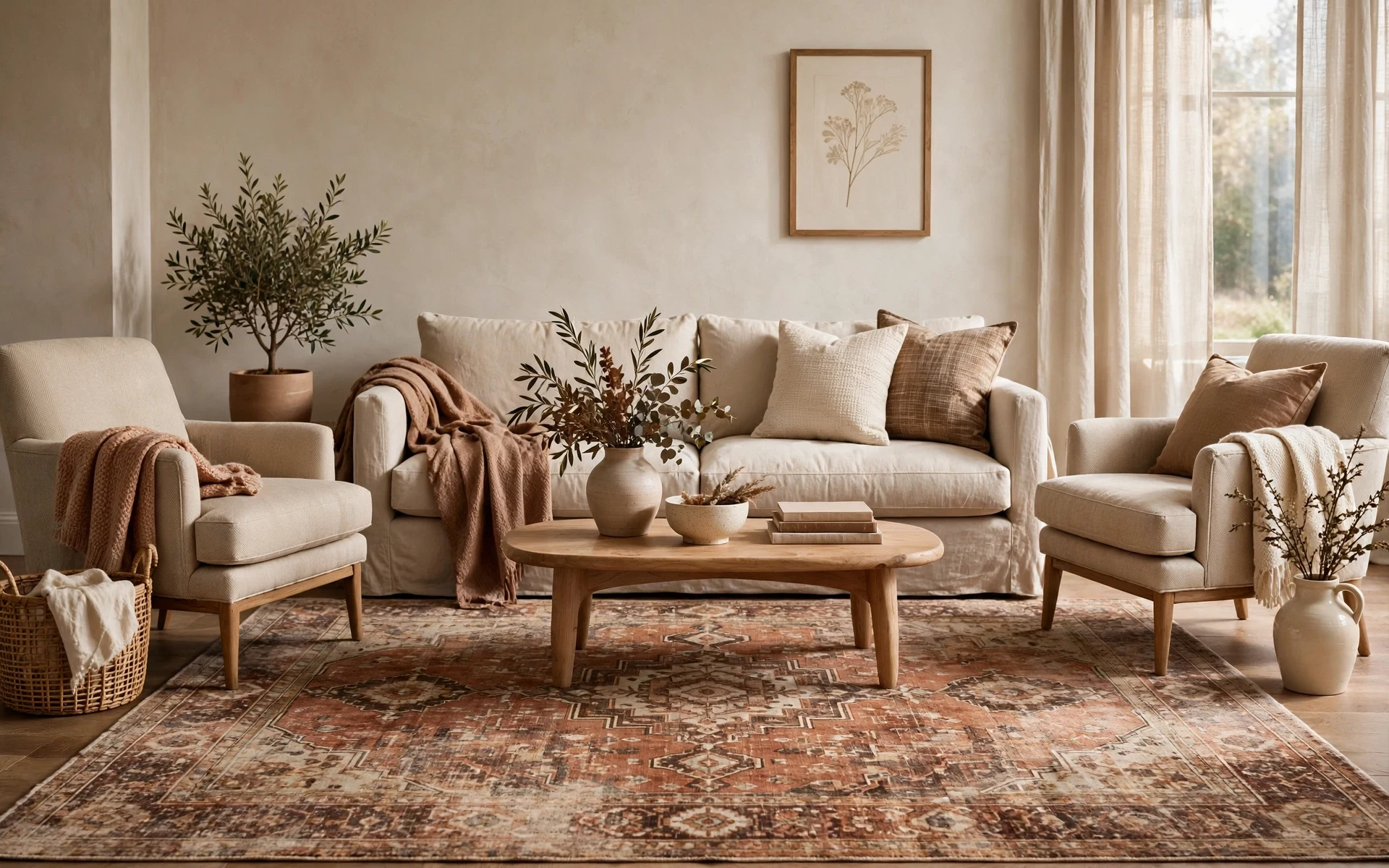
Pick the Right Beige Paint — and Know When to Choose Gray for a Beige Living Room
Paint is where beige rooms succeed or fail. Warm beiges with a yellow or red base feel cozy in north-facing rooms, while greige-leaning shades suit bright, sun-filled spaces. Always paint a large swatch — at least two feet square — and live with it for a full day before deciding, because beige shifts a lot between morning and lamp light. If your swatches keep reading as pink or muddy, a warm gray may solve the problem more cleanly; this comparison of warm gray living room ideas helps you judge which direction suits your light. Use matte or eggshell on walls and reserve satin for trim. Note the paint name and finish on a card kept in a drawer for quick, accurate touch-ups later.
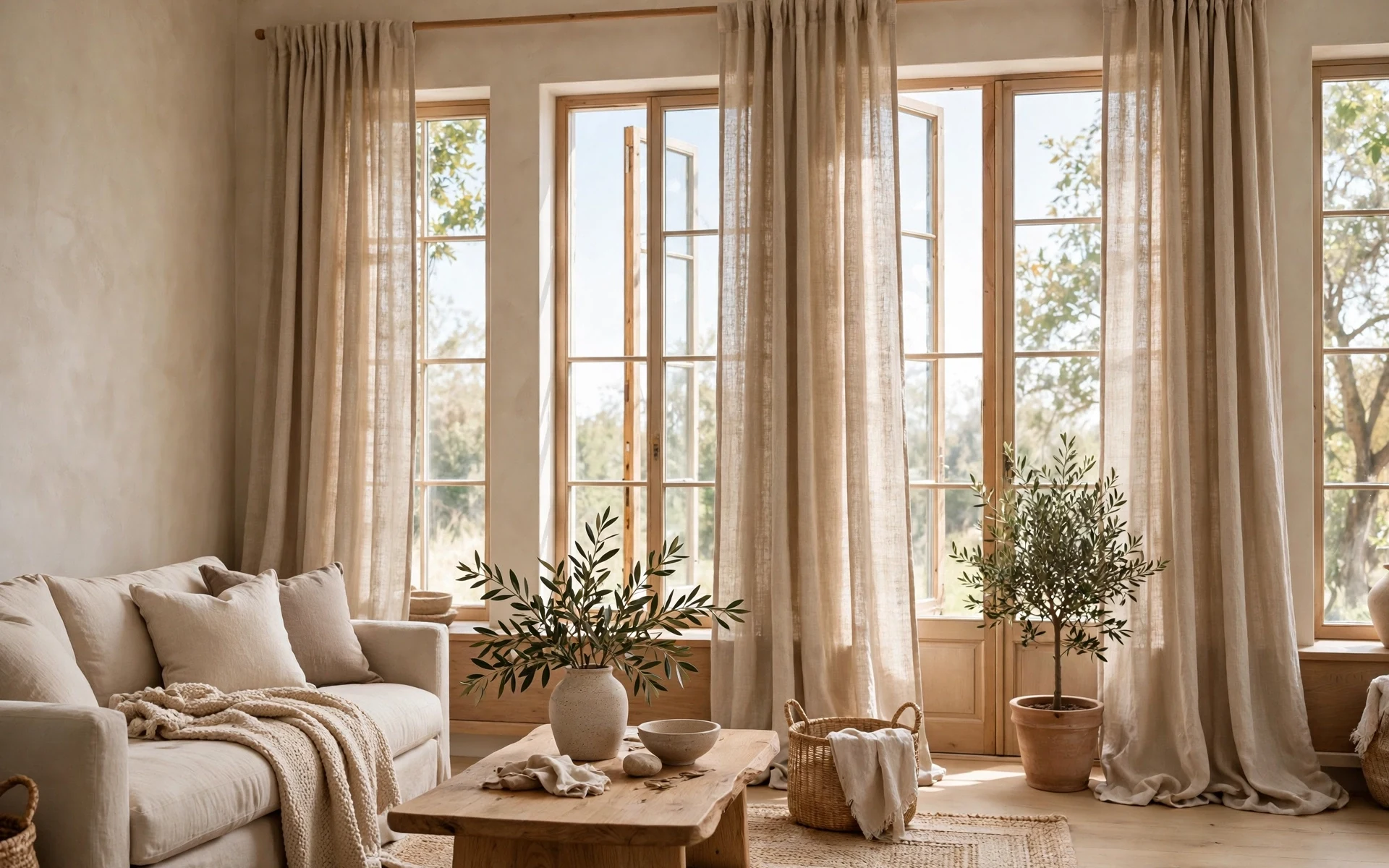
Dress the Windows Softly, Not Heavily in a Beige Living Room
Heavy drapes can make a beige room feel dated and dim. Floor-length linen or linen-look curtains in a shade close to the walls keep the room soft while letting the texture show. Hang the rod four to six inches above the frame and a few inches wider on each side so the curtains clear most of the glass when open — the room gets more daylight and the windows look larger. If privacy is a concern, add a simple white sheer behind the main panels. Wash or vacuum curtains every few months; pale fabrics show dust along the folds sooner than you would expect, especially near open windows. Choose rods and finials in a finish already used elsewhere in the room for a calmer, joined-up look.
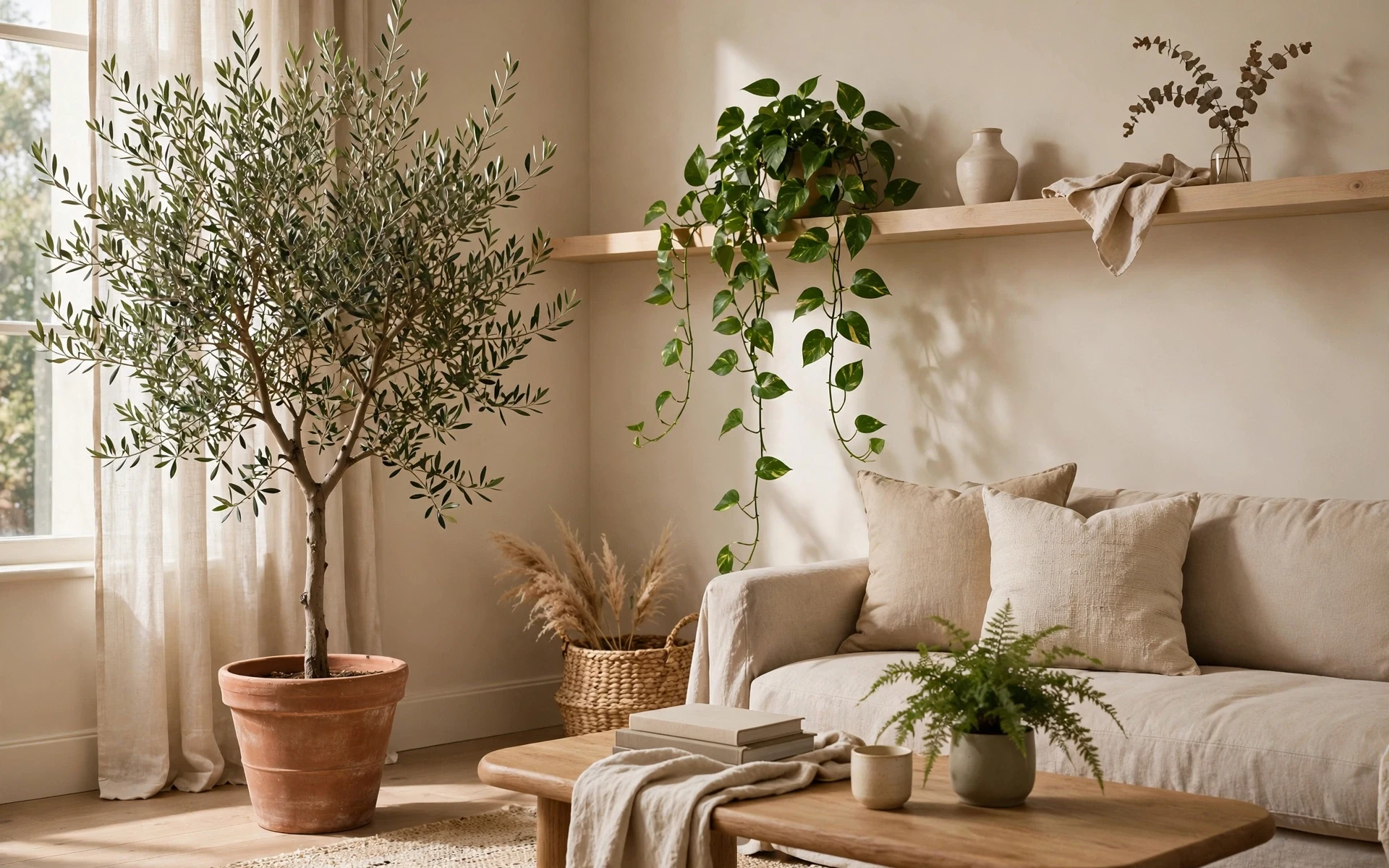
Use Greenery to Break Up the Neutrals in a Beige Living Room
Beige rooms come alive the moment something green enters them. A tall fiddle-leaf fig or olive tree in a corner, a trailing pothos on a shelf, and a small potted herb or fern on the coffee table give you three heights and three shapes — enough to feel natural without turning the room into a greenhouse. Terracotta, woven seagrass, and matte stone pots all suit the palette. If real plants are not realistic with your schedule, choose one good faux stem arrangement for the hardest corner and keep real, easy plants — pothos and snake plants — where the light is kind. Dust leaves monthly so they stay a fresh green, not a dull gray-green. Group plants where you will actually water them, near a sink or on your usual morning route.
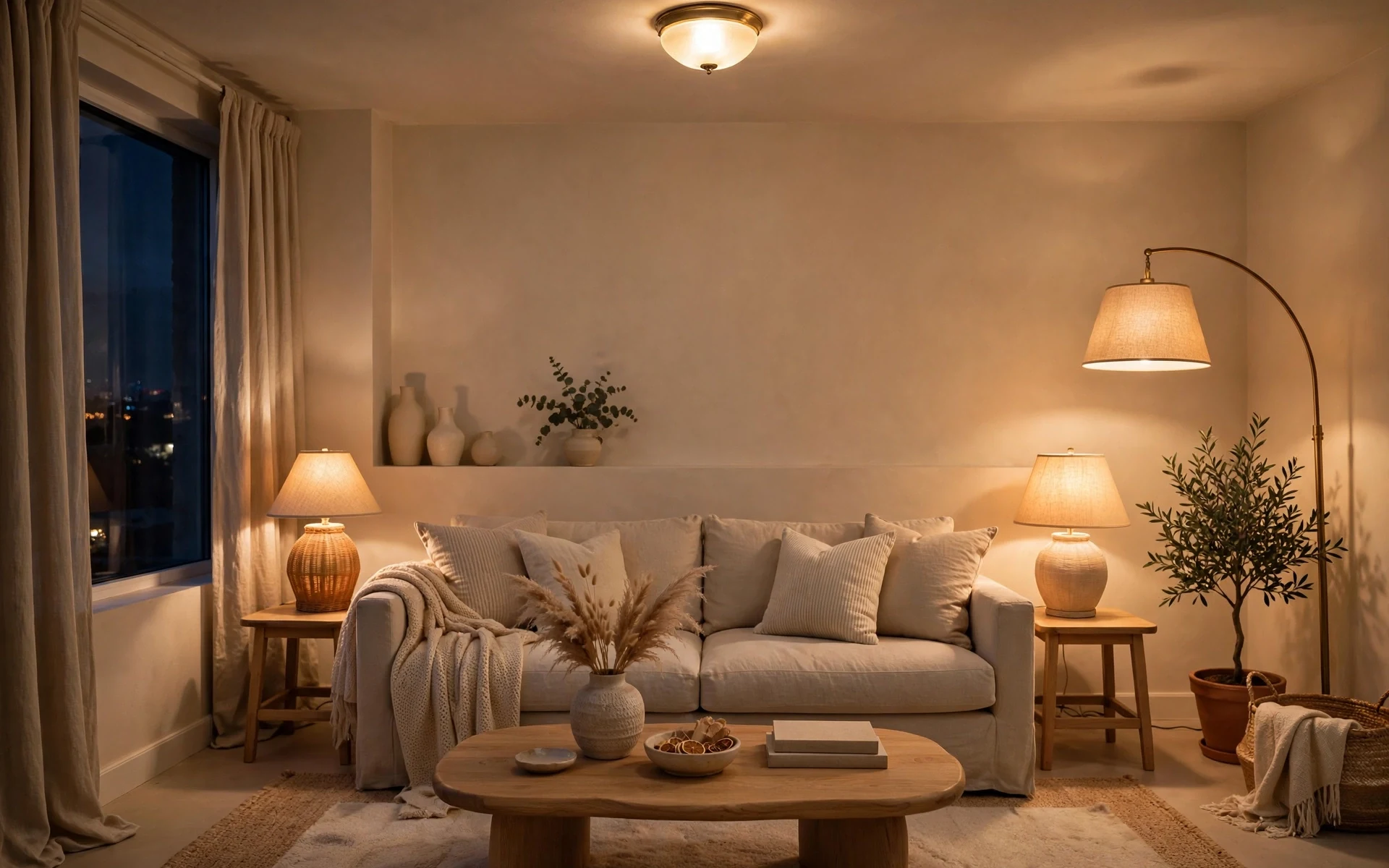
Layer Lighting at Three Heights in a Beige Living Room
Overhead light alone flattens a neutral palette. Layer it instead: a ceiling fixture or recessed lights for general brightness, table lamps at sofa height for reading and conversation, and one low source — a floor lamp behind a chair or a small lamp on a console — for evening warmth. Use warm-white bulbs throughout so the beige reads golden rather than gray after dark, and put the main lamps on dimmers if you can. Keep lamp shades in cream or natural linen; a white shade can look stark against beige walls. Matching the two table lamps on either side of a sofa is fine, but vary the third light source in shape and height. Clean fabric shades with a lint roller monthly so the light stays warm rather than dusty and dim.
Finish With Art, Books, and Lived-In Details for a Beige Living Room
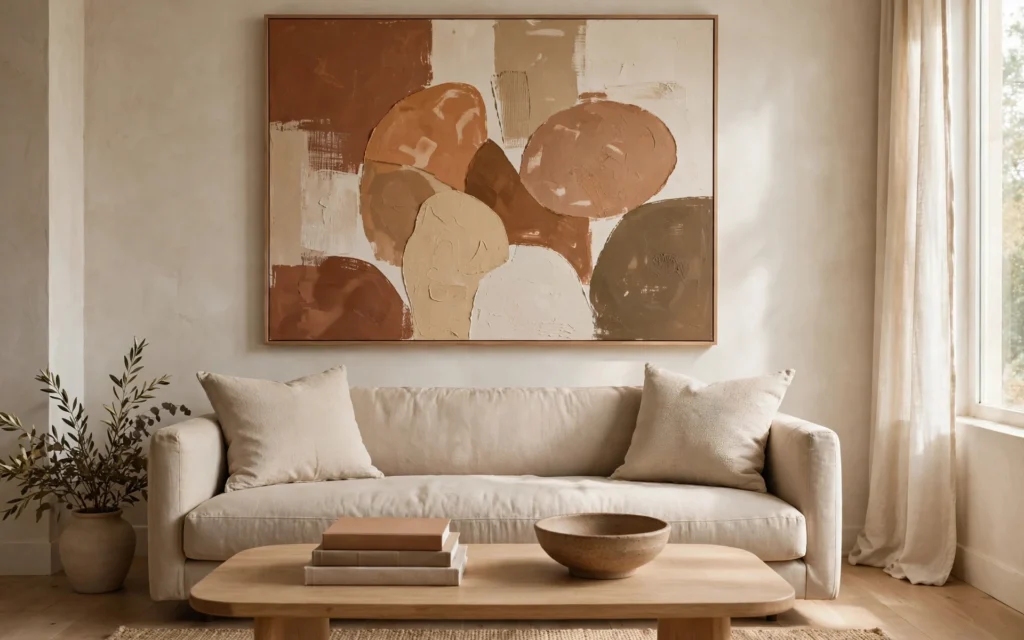
The last layer is the one that makes the room yours. Hang one large piece of art above the sofa — abstract work in cream, brown, and charcoal, or a framed landscape with soft earth tones — with the center roughly at eye level when standing. Style the coffee table with a short stack of books, a ceramic bowl, and one natural object like a piece of driftwood or a stone. Leave some surface empty; a crowded table makes even a calm palette feel busy. Rotate small objects between rooms every few months instead of buying new ones. Among all these beige living room ideas, this finishing layer is the cheapest, and it is the one guests remember. Step back to the doorway before finishing and remove one object — breathing room is part of the styling.
Frequently Asked Questions
What colors go best with beige living room ideas?
Warm white, cream, taupe, camel, walnut brown, and soft black all sit comfortably with beige. For a touch of color, try muted olive, clay, or faded rust in cushions and art.
How do I stop a beige living room from looking boring?
Layer at least three shades of beige, mix four or more textures, and add contrast with warm wood, black accents, and greenery. Texture and contrast matter more than adding bright color.
Is beige a good choice for a small living room?
Yes. Pale beige walls and a light sofa reflect daylight and make a small room feel open. Keep the rug and curtains light, and use darker tones only in small accents.
What is the best rug color for a beige sofa?
A rug one or two tones deeper than the sofa, or a faded vintage pattern in cream, brown, and rust, grounds the seating area without closing the room in.
Conclusion
Beige only feels boring when it is used flat. Layer the shades, mix the textures, ground the room with wood and a few black details, and finish with light, greenery, and objects you actually like. Start with two or three of these beige living room ideas — pillows and a rug are the fastest — and build from there at your own pace.
By Nestora Find
One Comment