12 Toy Storage Ideas That Keep the Living Room Stylish
The best toy storage ideas for a family living room have one thing in common: the storage looks like furniture first and toy storage second. Low enough for small hands, sturdy enough for daily roughhousing, and closed — doors and lids do the hiding. For more inspiration, The Spruce’s roundup of hidden toy storage ideas shows real living rooms pulling this off. The twelve ideas below keep toys contained without cramping the room’s style.
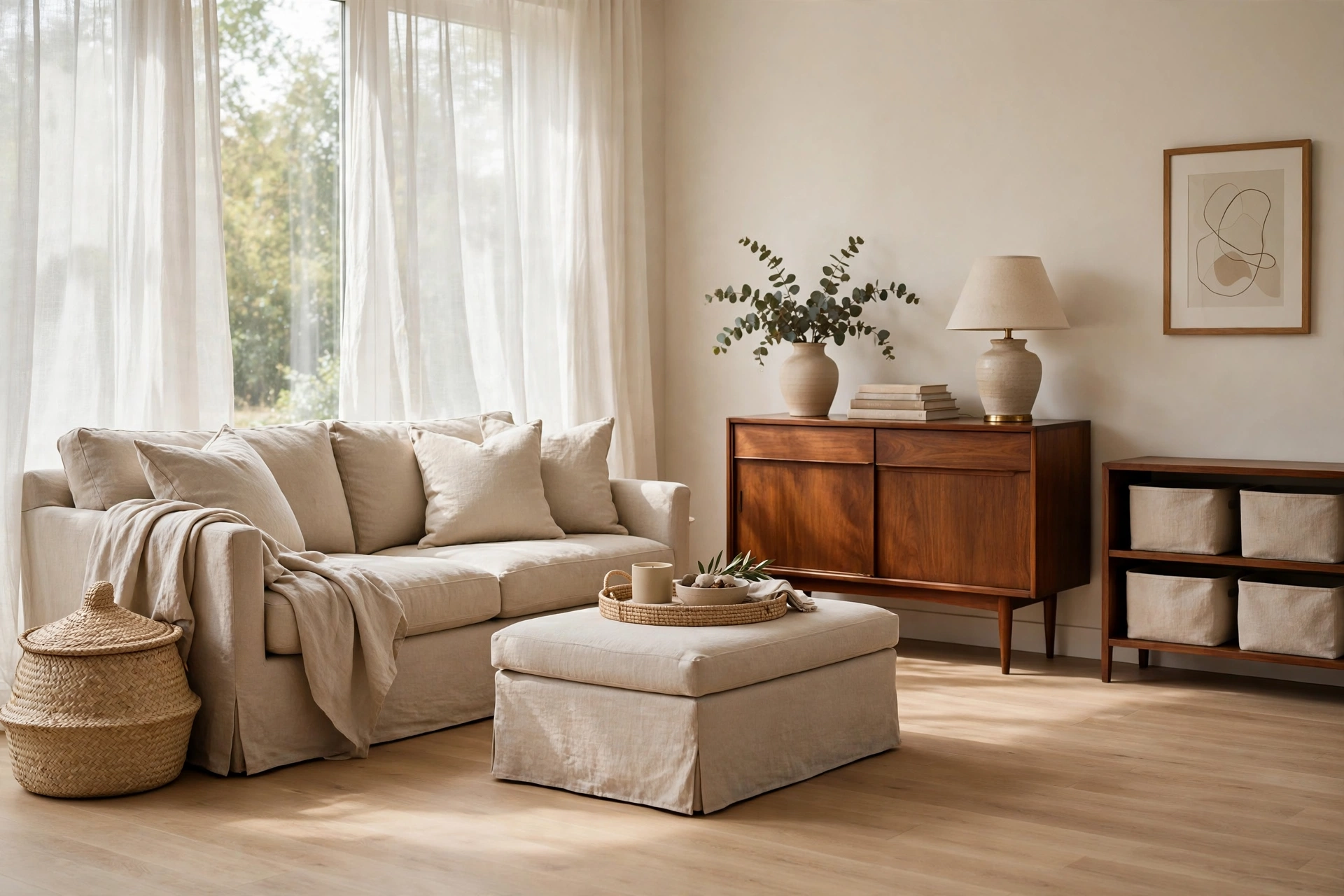
1. Toy Storage Ideas Start With a Window-Seat Bench
A window-seat bench is the hardest-working piece a family living room can own. Build or buy a low bench with a hinged top, then dress it like a daybed with a washable cushion, throw pillows, and a folded quilt. Inside, deep compartments swallow puzzles, train sets, and dress-up clothes. Keep it 16 to 18 inches tall so toddlers can reach in on their own. Fit a soft-close or safety hinge before anything else — a heavy lid dropping on small fingers is the one real hazard of this design. The result reads as a cozy reading spot, not a toy box.
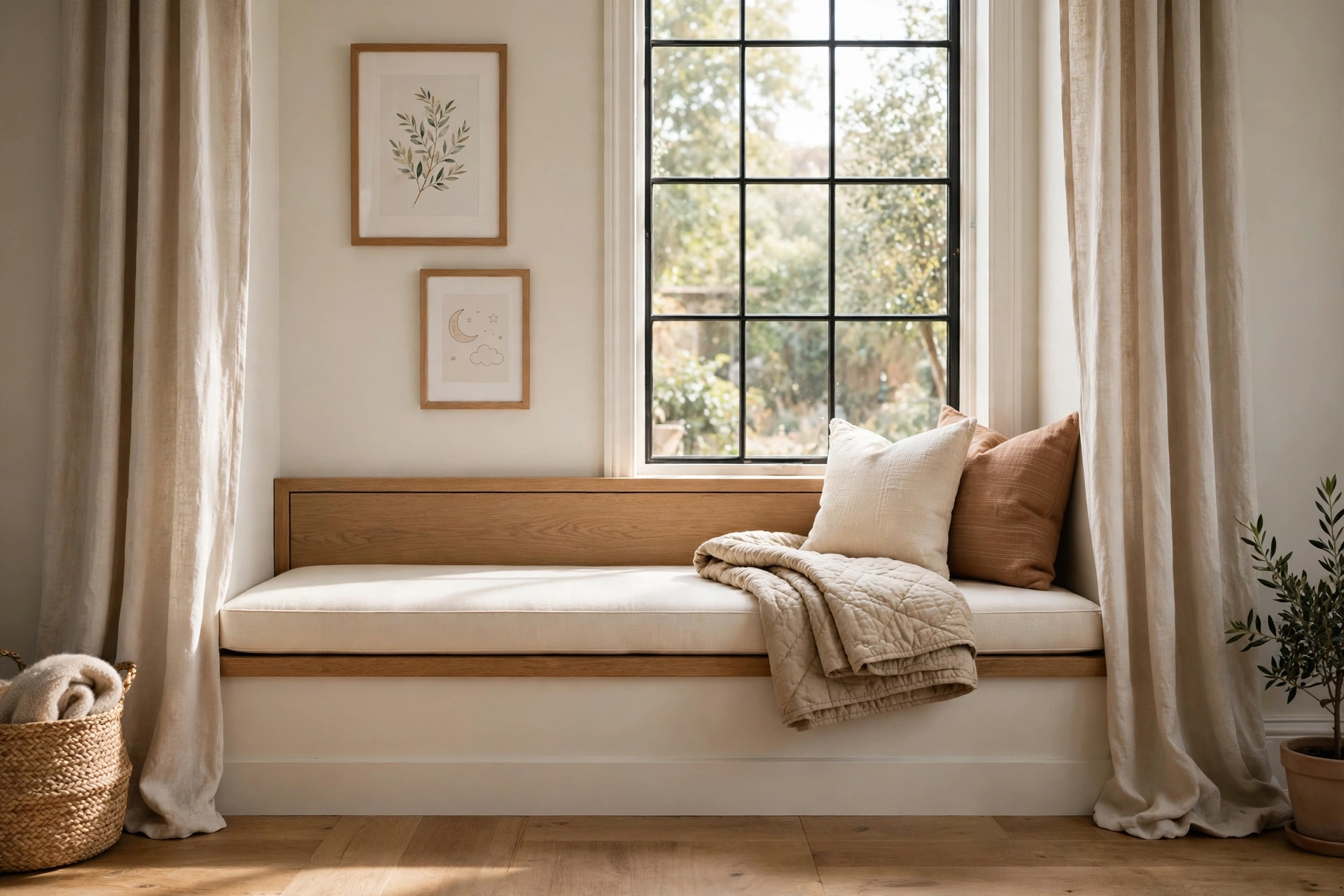
2. Park a Storage Ottoman in the Middle of the Room
A large square ottoman with a lift-off lid is one of the most practical toy storage ideas for a shared living room: it pulls triple duty as footrest, extra seating, and toy cavern. Choose leather, faux leather, or a stain-resistant weave that wipes clean after sticky fingers. A 36-inch square holds an entire Lego collection, and a fitted tray on top turns it into a stable surface for drinks. One honest limit: everything lands in a single jumble, so small pieces migrate to the bottom — add two shallow trays inside if sorting matters. A five-minute nightly sweep of toys into the ottoman resets the room.
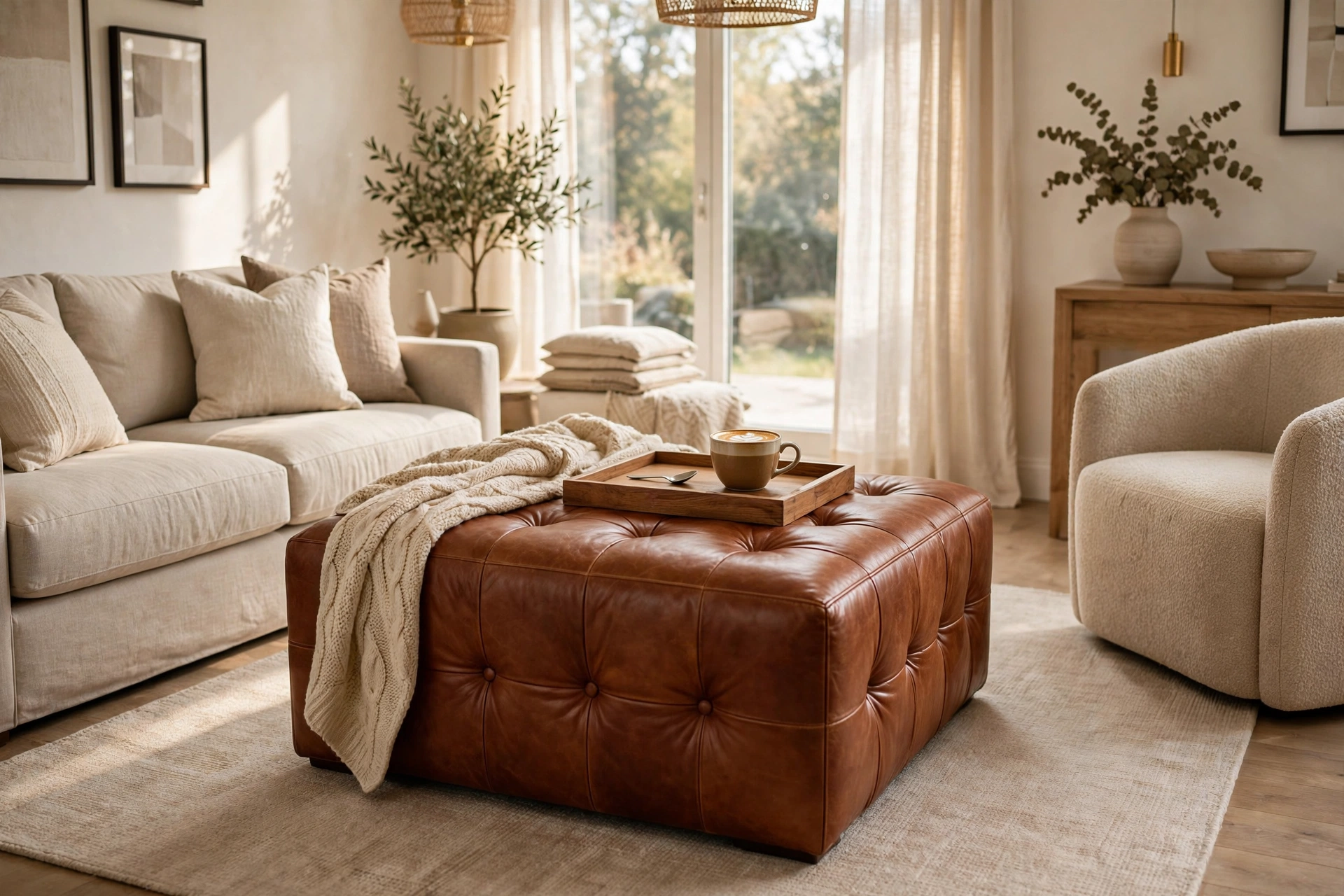
3. Hide It All in a Closed Sideboard
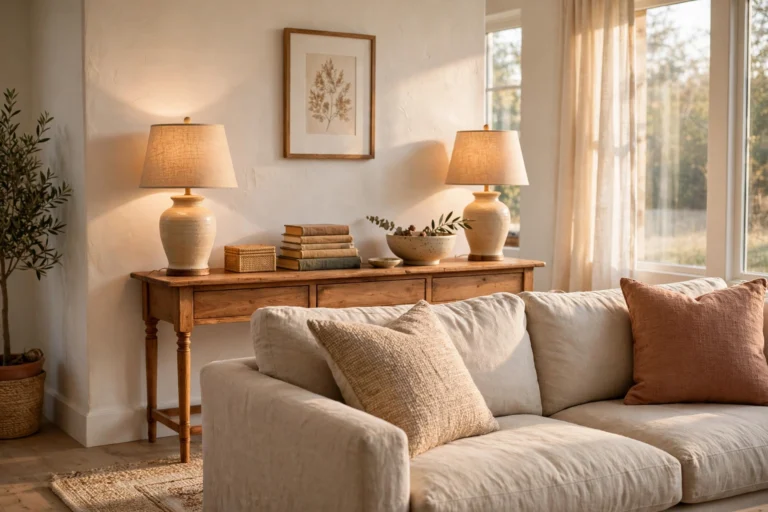
A mid-century style sideboard with solid doors is the stealth option: behind walnut or oak fronts, adjustable shelves hold board games, art supplies, and action figures in stackable bins. Keep one rule: nothing toy-related lives on top. Style the surface like an adult would — a table lamp, a small stack of design books, a vase with branches — so the piece anchors the room’s look. Choose a sideboard at least 60 inches wide for real capacity, and add soft-close hinges so slamming doors don’t wake napping toddlers. Because it looks like dining-room furniture, guests will never guess it holds a dinosaur collection.
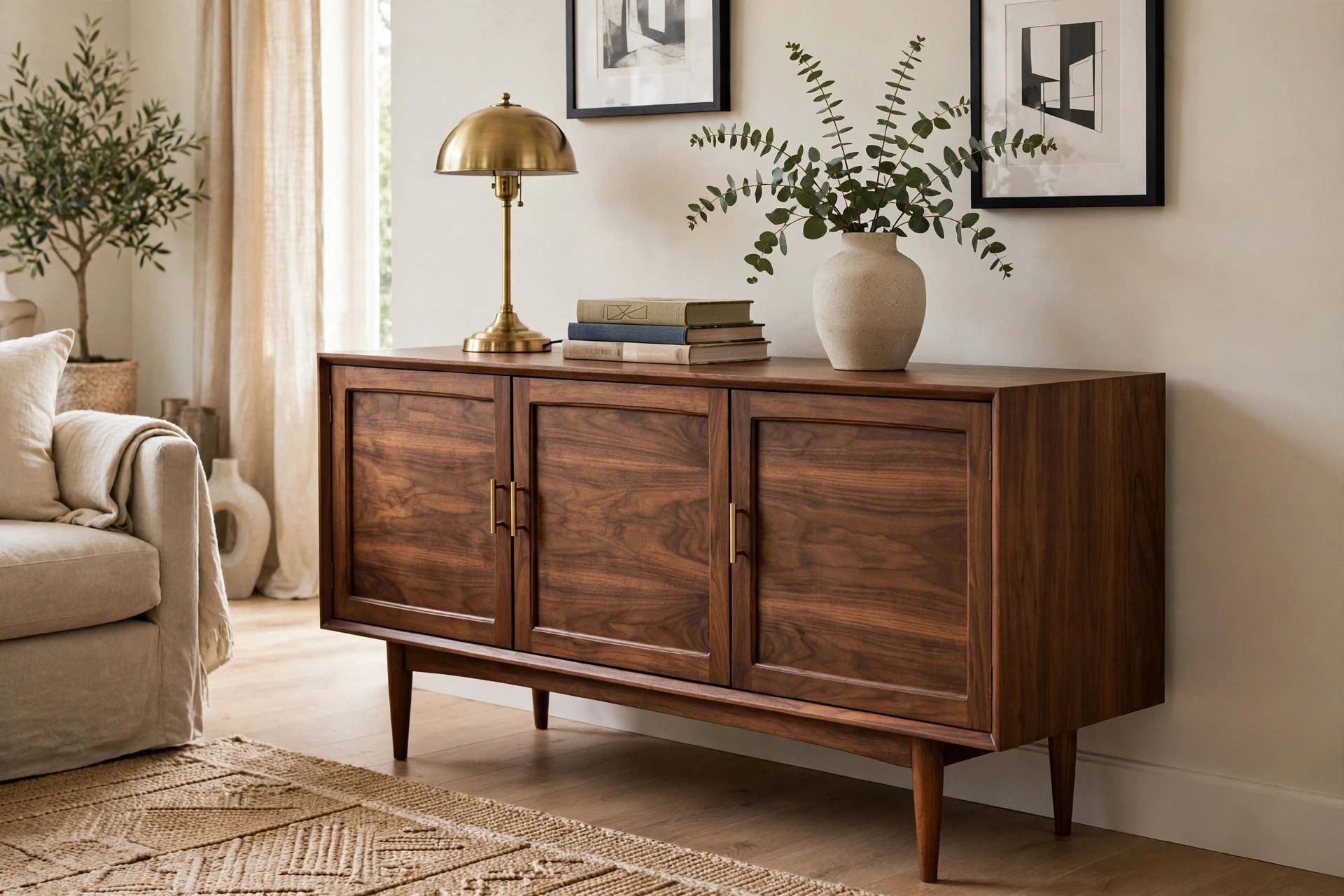
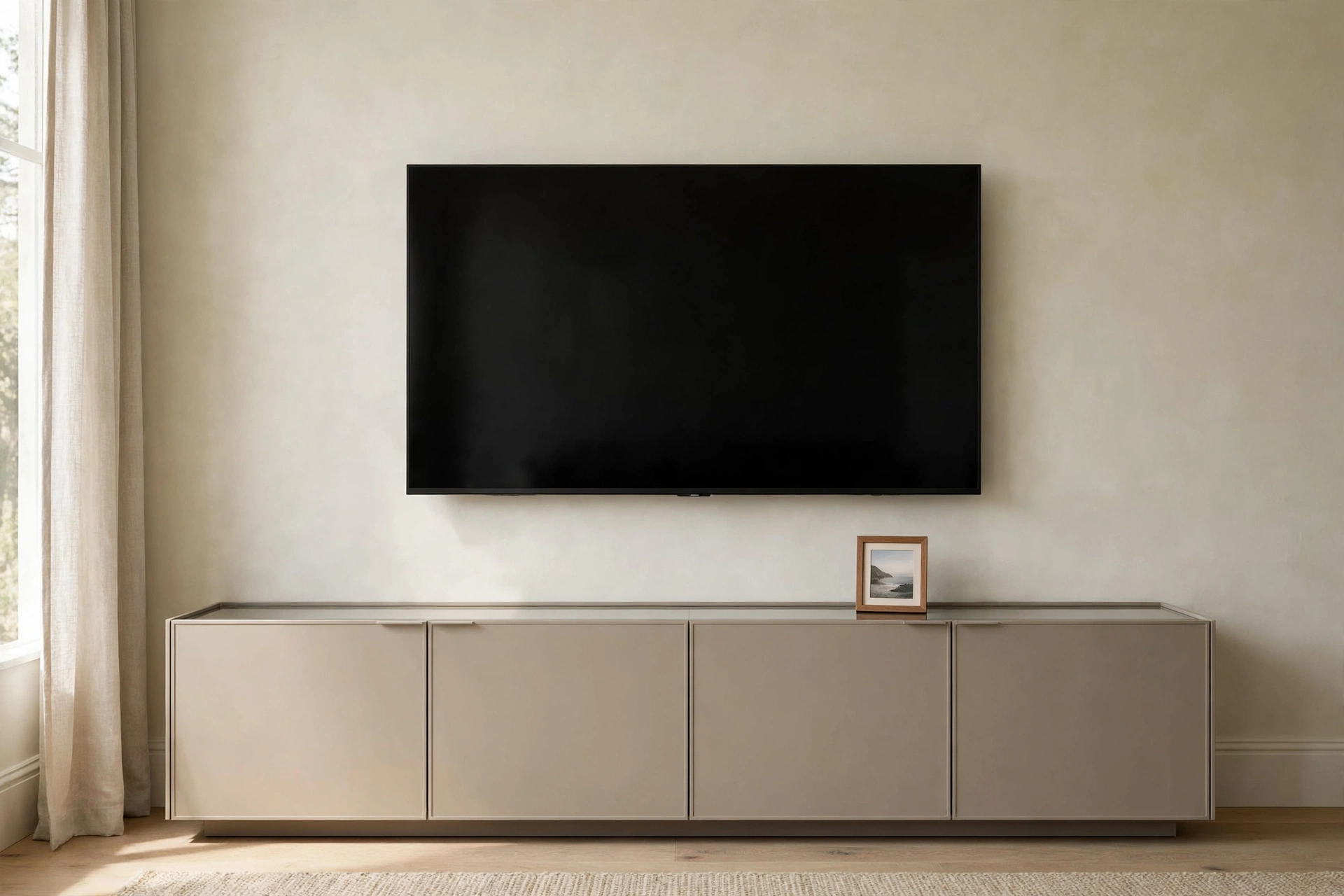
4. Swap Open Shelving for a Closed Media Console
The wall under the TV collects clutter fast — remotes, game controllers, chargers, and whatever the kids were last playing with. A low media console with solid doors corrals all of it in one 18-inch-deep sweep. Drill a discreet hole in the back panel for cords so devices stay charged but invisible, and keep the top clear except for the TV and maybe one framed photo. Matte finishes in warm white, greige, or deep green hide fingerprints better than high-gloss black. If you rent, a freestanding console does the same job without touching the walls. The closed front keeps the tech wall calm, which matters because the TV wall is the first thing eyes land on. One trade-off to know: a fully loaded console is heavy to pull out for cleaning or cord access, so pick one on low-profile glides if your floors allow it.
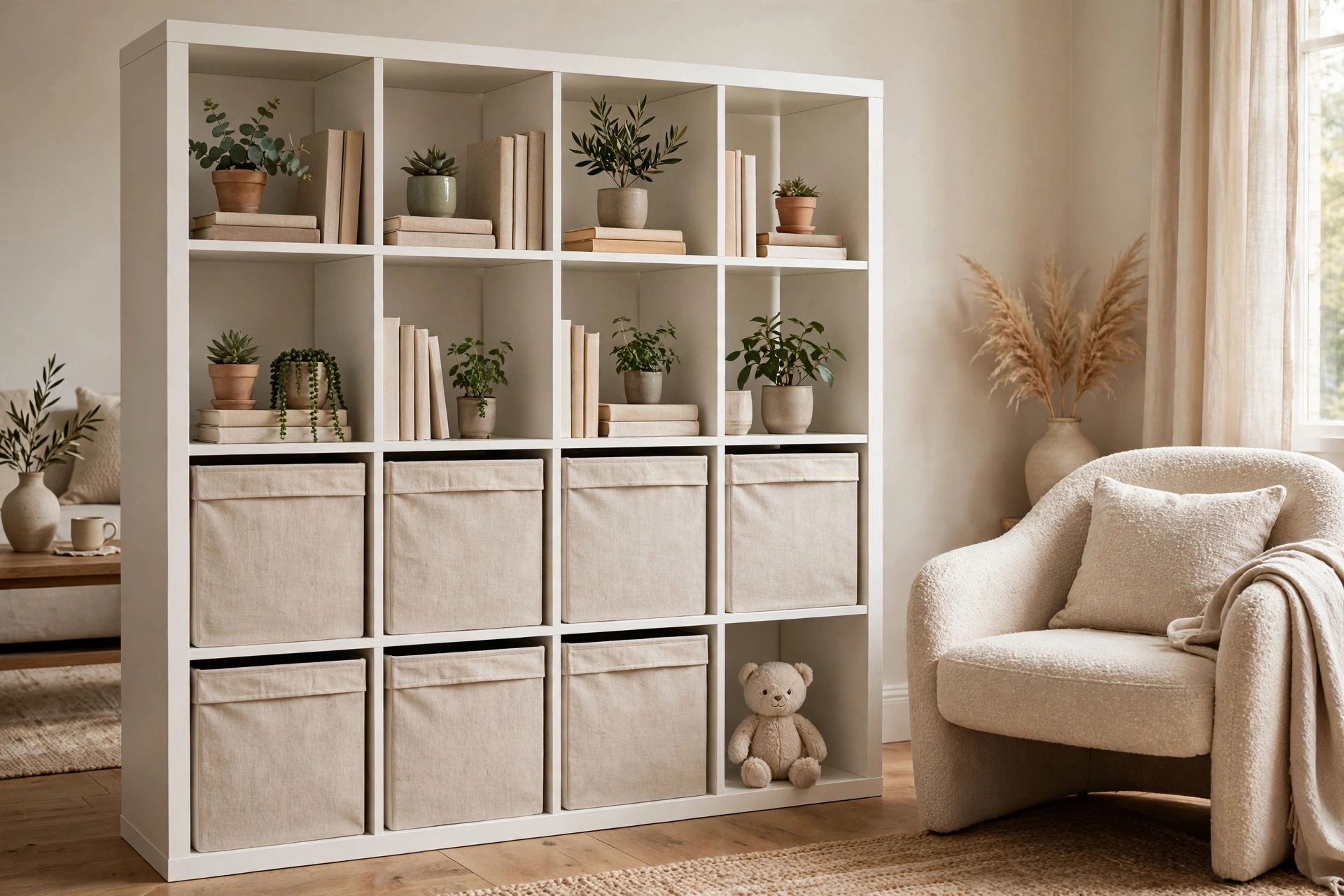
5. Use Cube Shelving With Matching Bins
Cube shelving is one of the most flexible toy storage ideas for a living room, because a 2×4 or 4×4 unit becomes genuinely stylish when every bin matches. Use linen or canvas bins in one neutral — oatmeal, charcoal, or sage — and skip the rainbow plastic. Dedicate the bottom two rows to toys at kid height, label bins with simple picture tags for pre-readers, and reserve the top rows for books, plants, and decor that stays out of reach. Leave one cube open as a rotating display for the current favorite build or stuffed animal; it gives kids ownership of the shelf’s look. Anchor the unit to the wall for safety, and choose a finish that echoes your other wood tones so it reads as built-in furniture.
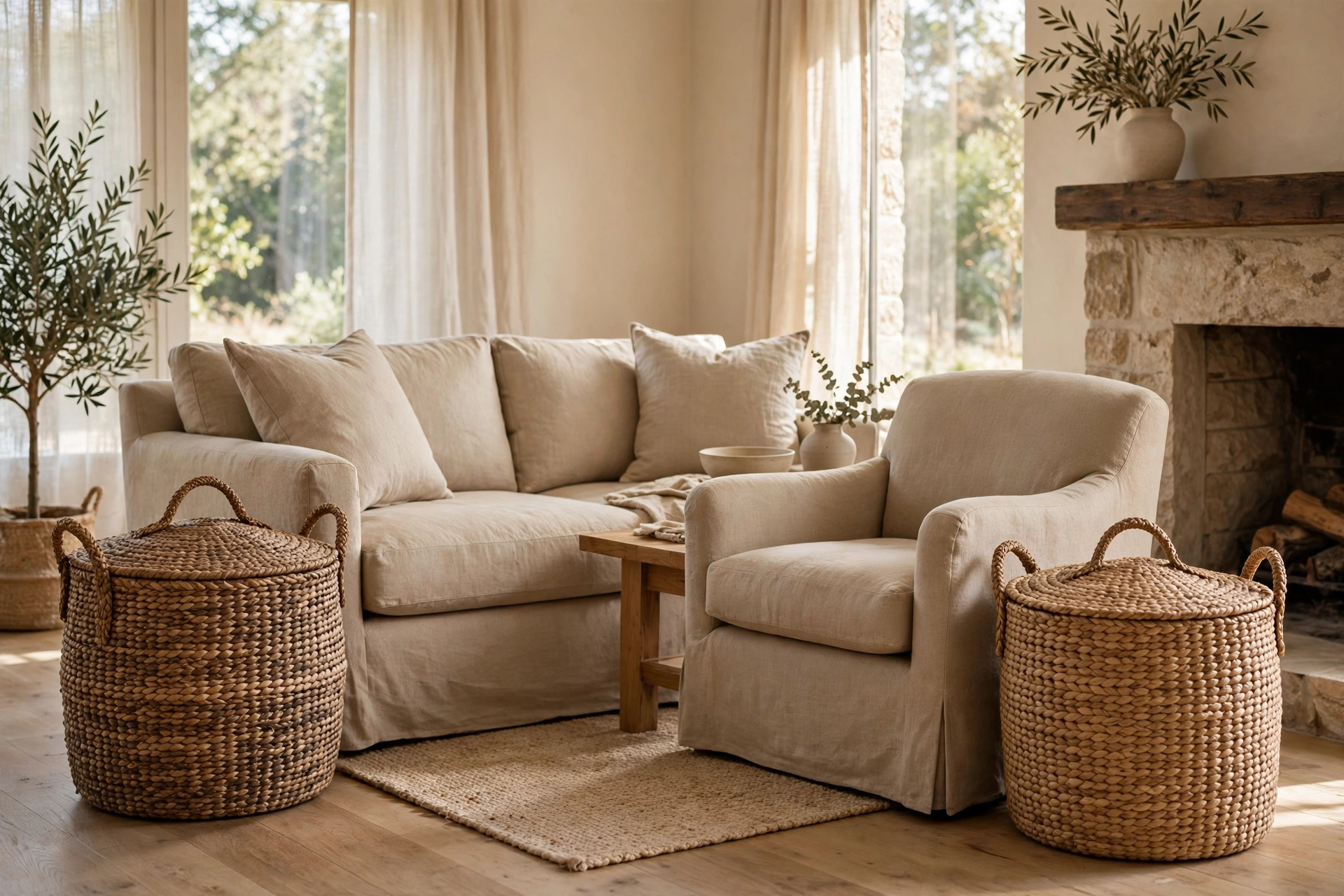
6. Set Out Lidded Woven Baskets
Few things soften a room like natural texture, and a pair of lidded seagrass or rattan baskets earns its floor space twice over. Use them for bulky, awkward toys — stuffed animals, balls, dress-up capes. The lids turn a toy pile into a clean silhouette in two seconds. Place one flanking the sofa and another beside the reading chair, as if always part of the decor plan. The weave adds warmth that plastic bins never will. One limit: woven baskets are the wrong home for tiny pieces, which slip through the weave and vanish — keep those in the lidded bins instead.
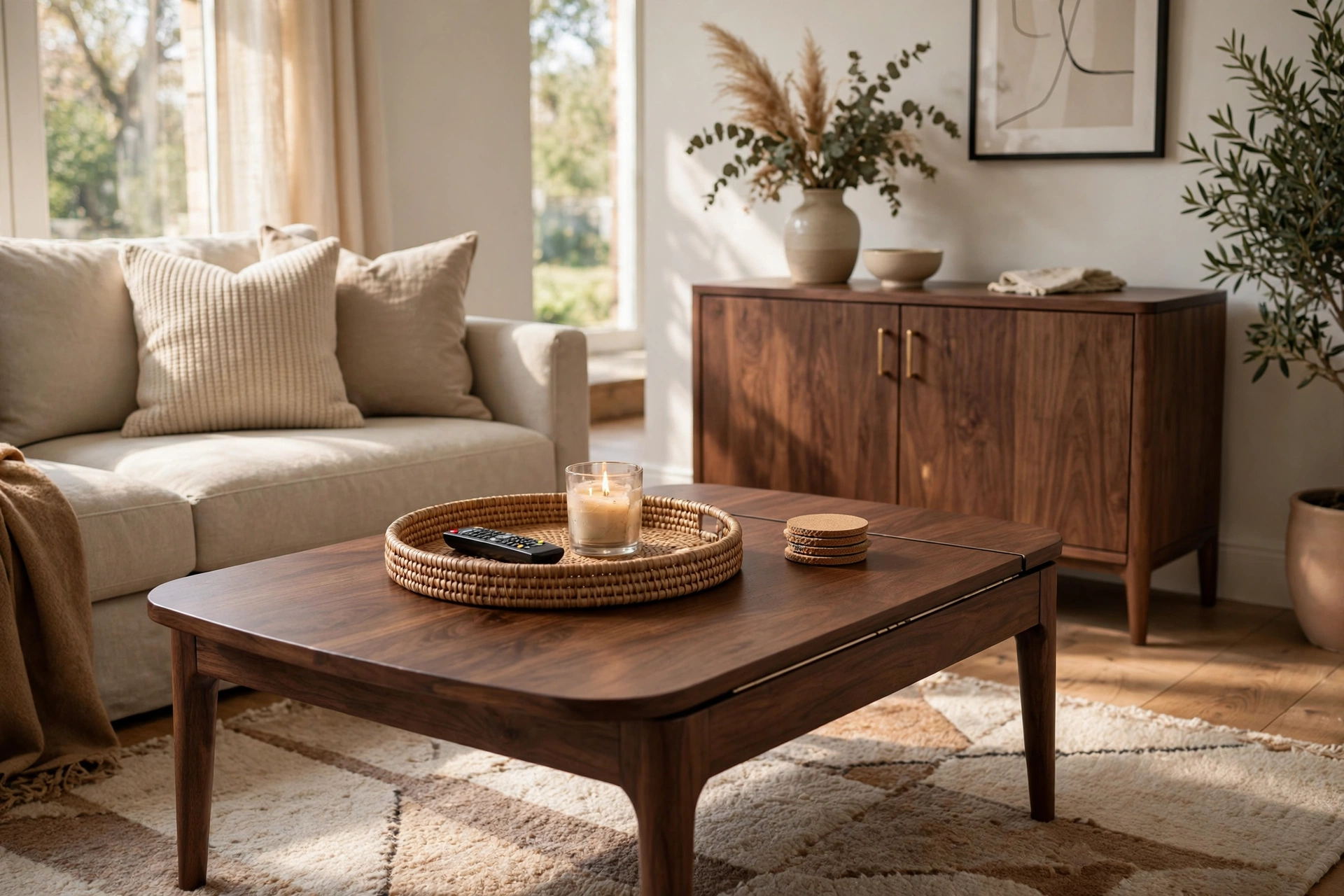
7. Choose a Coffee Table With Real Storage
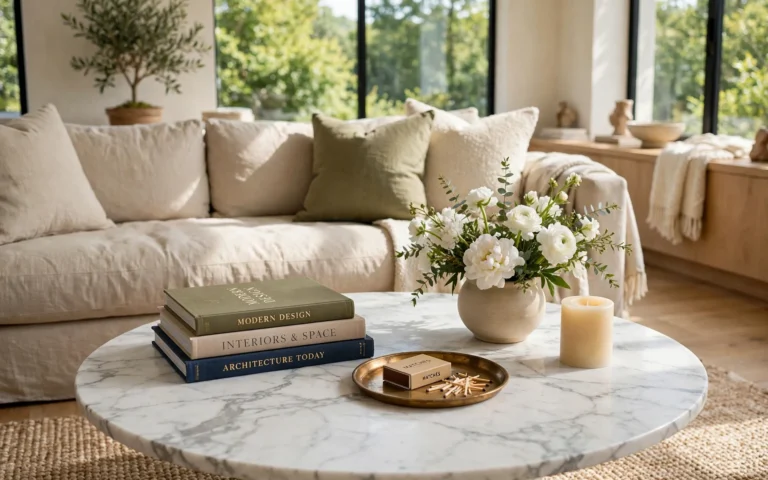
The coffee table sits in the exact spot where toys accumulate, so make it part of the solution. A lift-top or deep-drawer coffee table swallows coloring books, card games, and small figures right where they’re used. Look for soft-close mechanisms and rounded corners — both matter with small kids circling the table daily. Style the top with a large tray to corral the remote, a candle, and a coaster set; the tray lifts off in one motion when it’s time to open the storage. Keep the table’s finish consistent with your sideboard or media console so the storage pieces read as a set, not a collection of random furniture.
8. Give Bulky Toys an Armoire
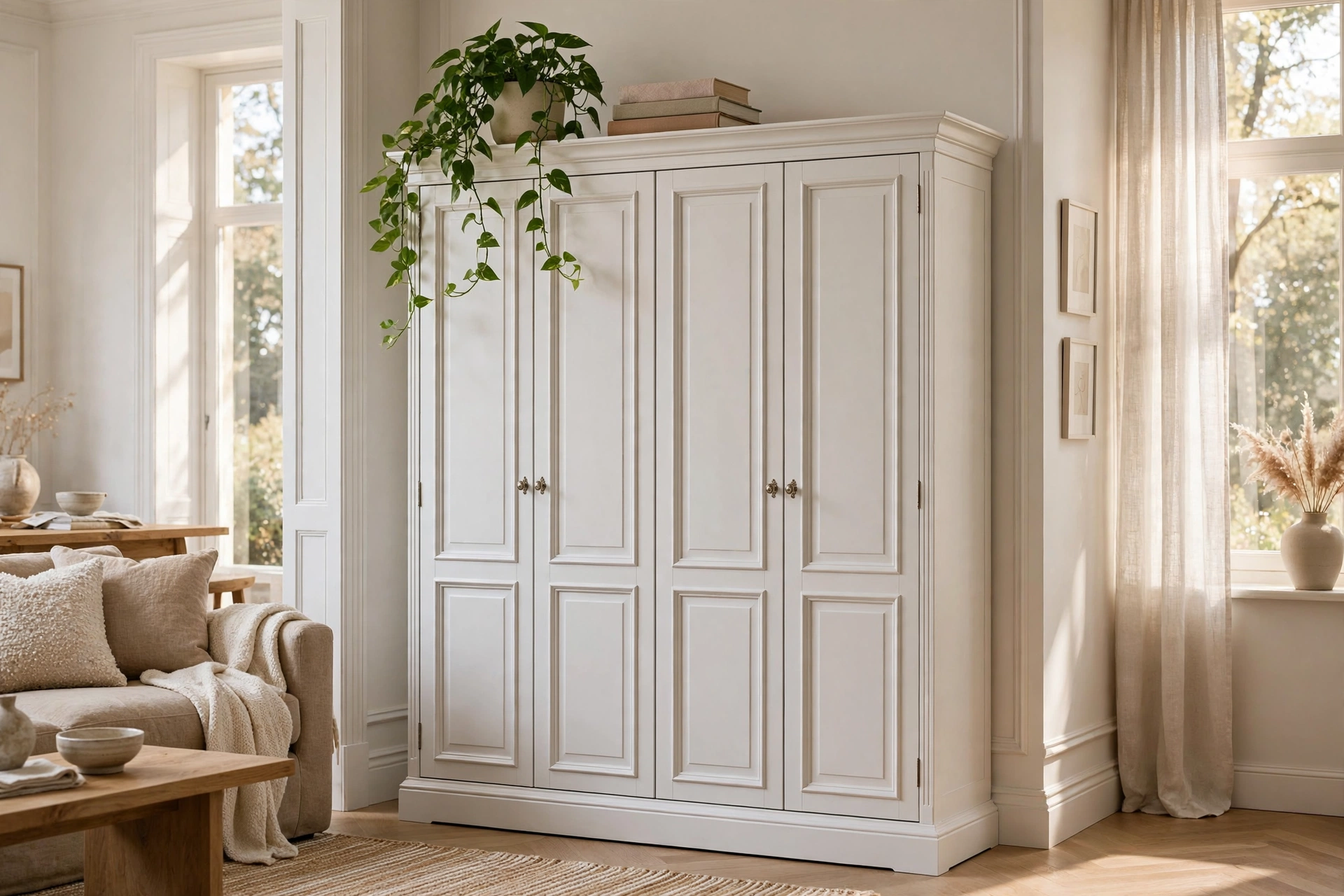
Ride-on toys, dollhouses, and dress-up wardrobes don’t fit in bins — they need a tall cabinet with doors that close. A freestanding armoire or wardrobe in the living room corner, painted to match your trim, handles exactly this. Inside, fit one shelf at kid height and leave the floor of the cabinet open for the big pieces; add hooks on the inside of the doors for capes and bags. When the doors shut, the room regains its adult proportions. Style the top with a trailing plant or a stack of coffee-table books to complete the disguise. This single piece can retire three scattered toy piles at once. Anchor it to the wall — a tall, top-heavy cabinet full of toys is a tip-over risk around climbers.
9. Slide a Slim Console Behind the Sofa
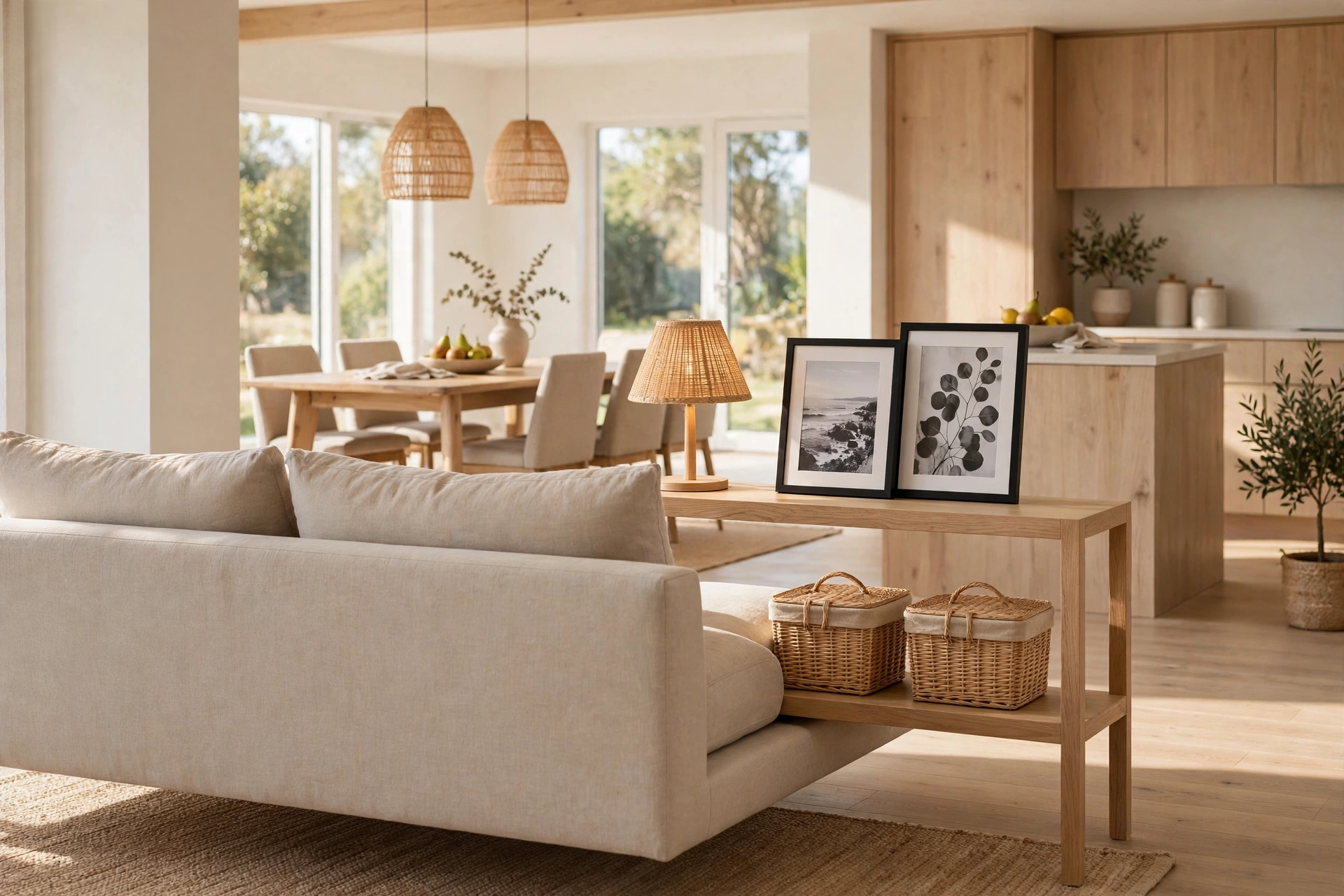
The 10 inches of dead space behind a floating sofa is prime storage real estate. A narrow console table there holds a lamp and framed photos on top, while the shelf below fits two or three lidded baskets for toys. Because it sits behind the seating, the baskets are reachable for kids but visually screened from anyone facing the sofa. This works especially well in open-plan rooms where the sofa floats between the living area and dining space. Keep the console’s finish light — white oak or painted cream — so it doesn’t loom behind the seating. It’s the rare storage that adds display space and hiding space at the same time. Measure the gap before you buy, though: once a console is in, most sofas sit 8 to 12 inches off the wall, and a deep sectional may not leave room at all — this trick belongs to straight sofas in open-plan rooms with wall space to spare.
10. Roll Low Bins Under Existing Furniture
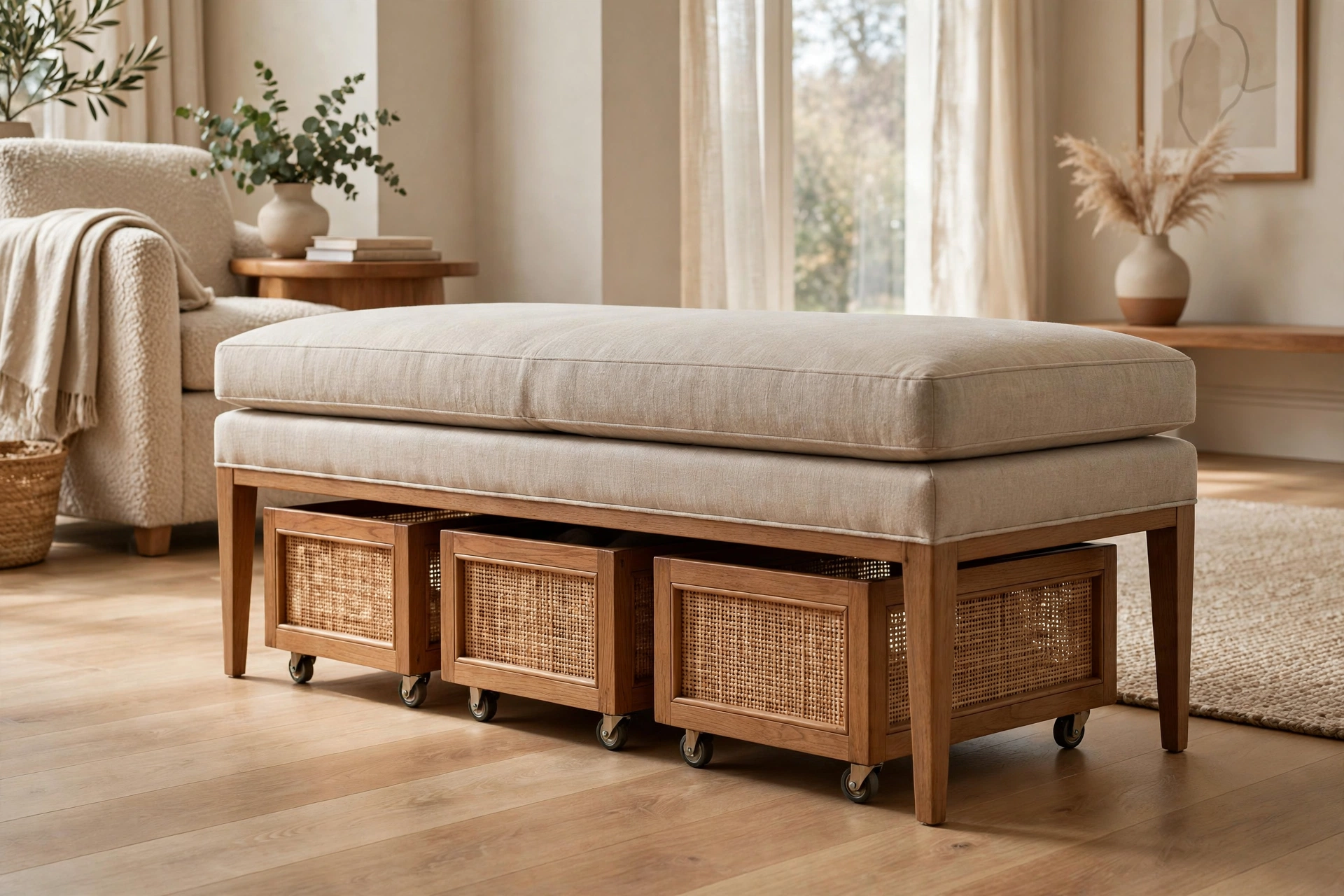
Not every storage piece needs to be furniture — sometimes the answer is what fits underneath it. Low wooden crates or fabric bins on casters slide under a daybed, a bench, or a console table, turning wasted clearance into toy parking. Kids love the roll-out-and-roll-back motion, which makes cleanup feel like part of play. Measure your clearance first: most sofas and benches offer 5 to 7 inches, so shop for bins marketed as under-bed storage and check the height with casters attached. Choose wood or woven fronts so the bins look deliberate when they peek out, and keep one bin per child so everyone knows whose mess goes where.
11. Pick a Bookcase With Cabinets on the Bottom
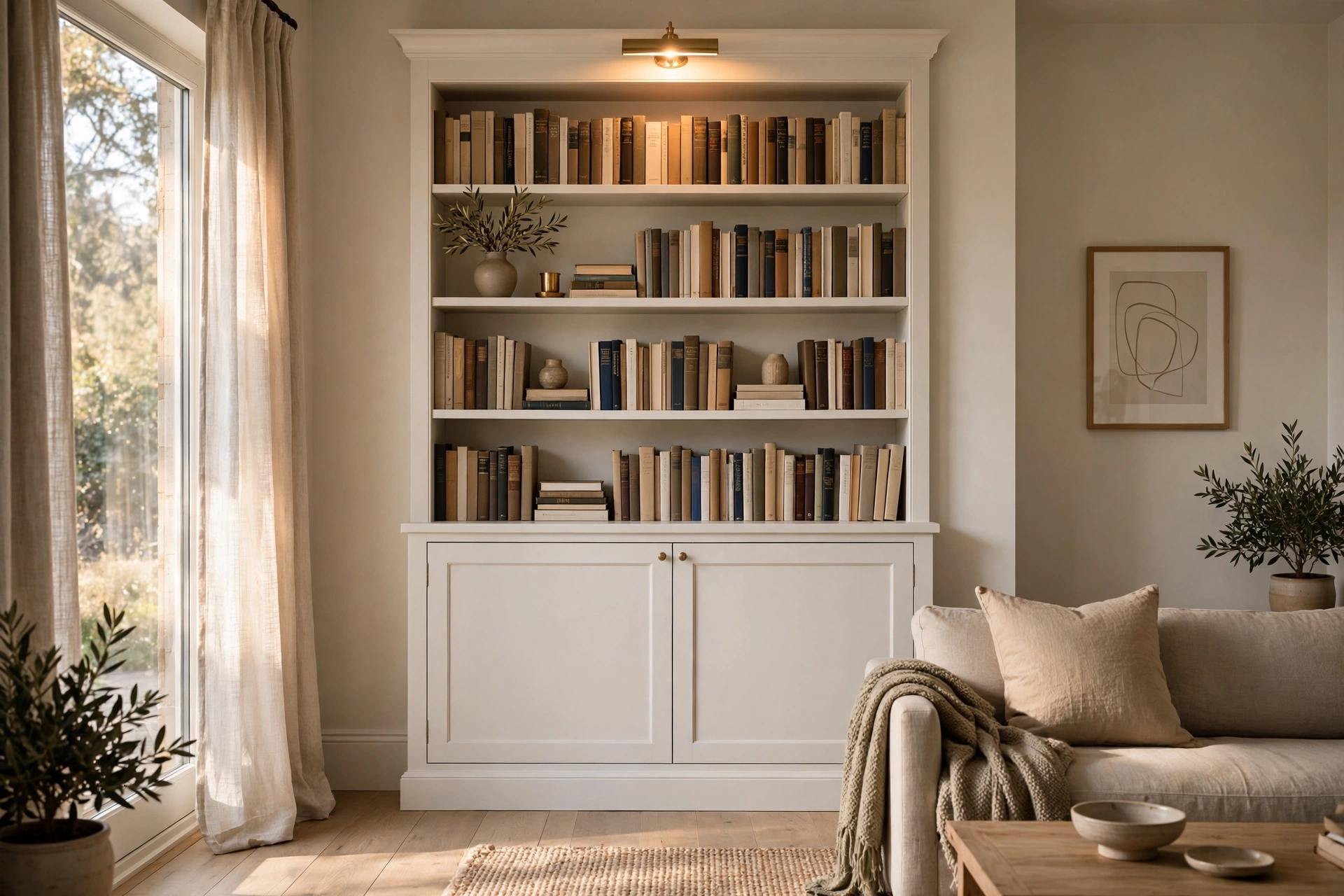
Open bookshelves plus small kids equals a permanent avalanche. The fix is a bookcase with solid cabinet doors on the lower half and open shelves up top. Store picture books and chapter books on the upper shelves where they stay tidy, and let the closed cabinets below hold the toy overflow, puzzles, and craft supplies. Paint or stain the whole unit one color so it reads as a single built-in piece. In a small living room, one tall unit like this can replace a separate toy chest entirely, freeing floor space for actual playing. Add a picture light or small lamp on top to make it a focal point rather than an afterthought.
12. Let an End Table Do the Hiding
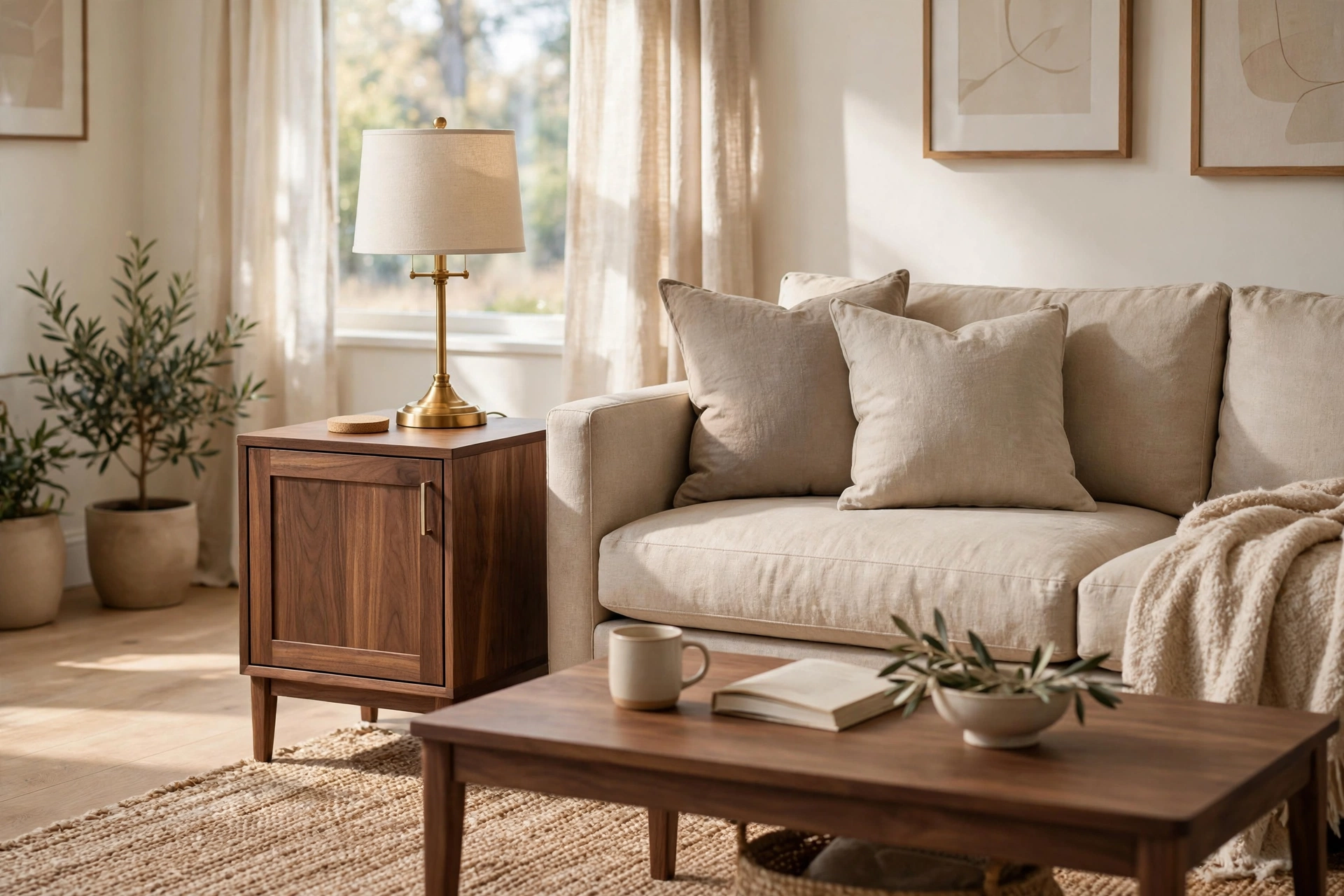
Every sofa needs an end table, and every end table can hold a door. A small cabinet-style end table — one door, one shelf inside — swallows the small stuff that migrates to the couch: crayons, card decks, fidget toys, TV remotes. Top it with a lamp and a coaster, and it performs its decor job perfectly. Because the storage is arm’s reach from the main play-and-lounge zone, it gets used constantly, which is more than you can say for a toy chest across the room. Match its finish to your coffee table for a pulled-together look, or go bolder: a curved furniture accent piece here adds softness that suits a family room.
Quick Tips for Keeping Toy Storage Tidy
Before you buy a single bin, audit the toy pile. Start with decluttering: gather everything in one spot, donate what the kids have outgrown, and keep only what fits your space. Once the volume is under control, the storage you choose will actually stay tidy, and you will buy fewer pieces than you expected.
Measure twice when you shop. That perfect sideboard is useless if it blocks a walkway, so tape out the footprint on the floor before you order. The toy storage ideas that last balance capacity with circulation — deep enough for toys, shallow enough to keep pathways clear. Bring a tape measure to the store and check door clearances too.
Get the kids invested in the system. Label bins with picture tags for pre-readers and keep daily favorites at kid height so cleanup feels like a game, not a chore. When children can reach the storage themselves, the system keeps working long after the novelty wears off. A five-minute nightly reset keeps the room company-ready.
Finally, style the storage like decor, not an afterthought. Match bin colors to your palette, add a lamp or framed print on top of closed pieces, and let texture do the talking. The most convincing setups blend so well that guests never spot them — and a calm room is the real payoff.
Frequently Asked Questions
How do I hide toys in a living room without it looking like a playroom?
Favor closed storage — sideboards, armoires, and lidded baskets — over open bins. Keep toy colors behind doors and style every visible surface the way you would in a child-free home.
What is the best storage for a small living room with kids?
Pieces that do double duty win: a window-seat bench, a storage ottoman, and a behind-sofa console all add seating or display space while hiding toys. Vertical pieces like an armoire use wall space instead of floor space.
How can I get my kids to actually put toys away?
Make the storage easy and obvious: bins at kid height, picture labels for pre-readers, and one bin per child. A nightly five-minute reset — everything into the ottoman or bench — keeps the system from sliding.
Should toy storage match my decor?
Yes, where it’s visible — the system only works when the tidy state is the default state. Matching bin colors, consistent wood finishes, and lidded baskets keep the room cohesive. What matters most is that lids and doors close easily.
Recommended Ebook
Budget Small-Space Organization
Clever, budget-friendly systems to organize every inch of a small home — no renovation needed.
Only $12
Recommended Ebook
Small Space Checklists & Planners
299 fillable checklists and planners for small space living — tick boxes digitally or print and use!
Only $7
Conclusion
A stylish family living room isn’t a toy-free one — it’s a room where every toy has a door, lid, or drawer to disappear behind. These toy storage ideas prove you don’t need a separate playroom: a bench here, an ottoman there, and the room stays calm and ready for both kids and company. Planning a full refresh? Our chocolate brown living room ideas and burgundy decor ideas pair warm, family-friendly palettes with hidden storage.