
12 Closet Organization Ideas for Every Wardrobe
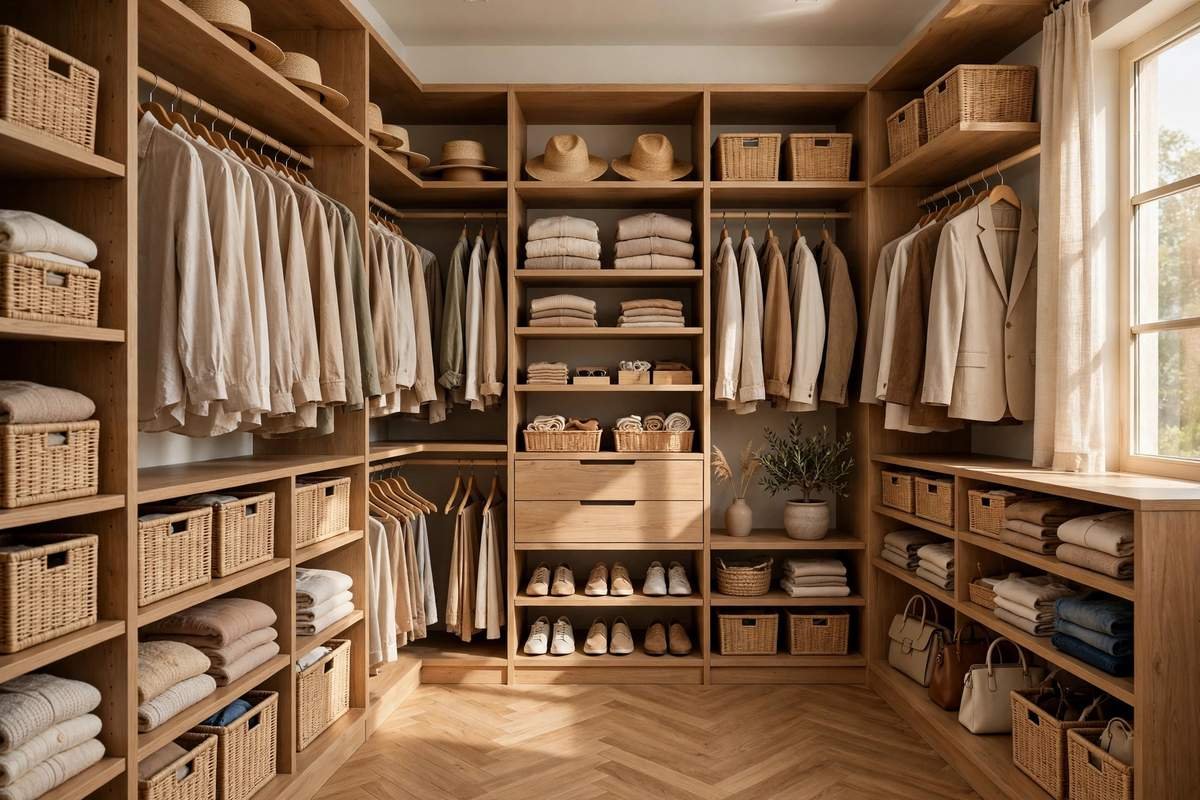
Small reach-in closet organization ideas change how your whole morning feels. When every piece has a home and you can see what you own, getting dressed becomes effortless instead of stressful. The good news is that you do not need a custom-built walk-in to achieve this — smart organization works in reach-in closets, wardrobe armoires, and rental bedrooms alike.
The secret to small reach-in closet organization ideas is matching your storage to your actual habits. These twelve ideas are tailored for compact reach-in closets but scale to every wardrobe type, from tiny reach-ins to generous walk-ins.
1. Matching Slim Hangers — Small Reach-In Closet Organization Ideas for More Rod Space
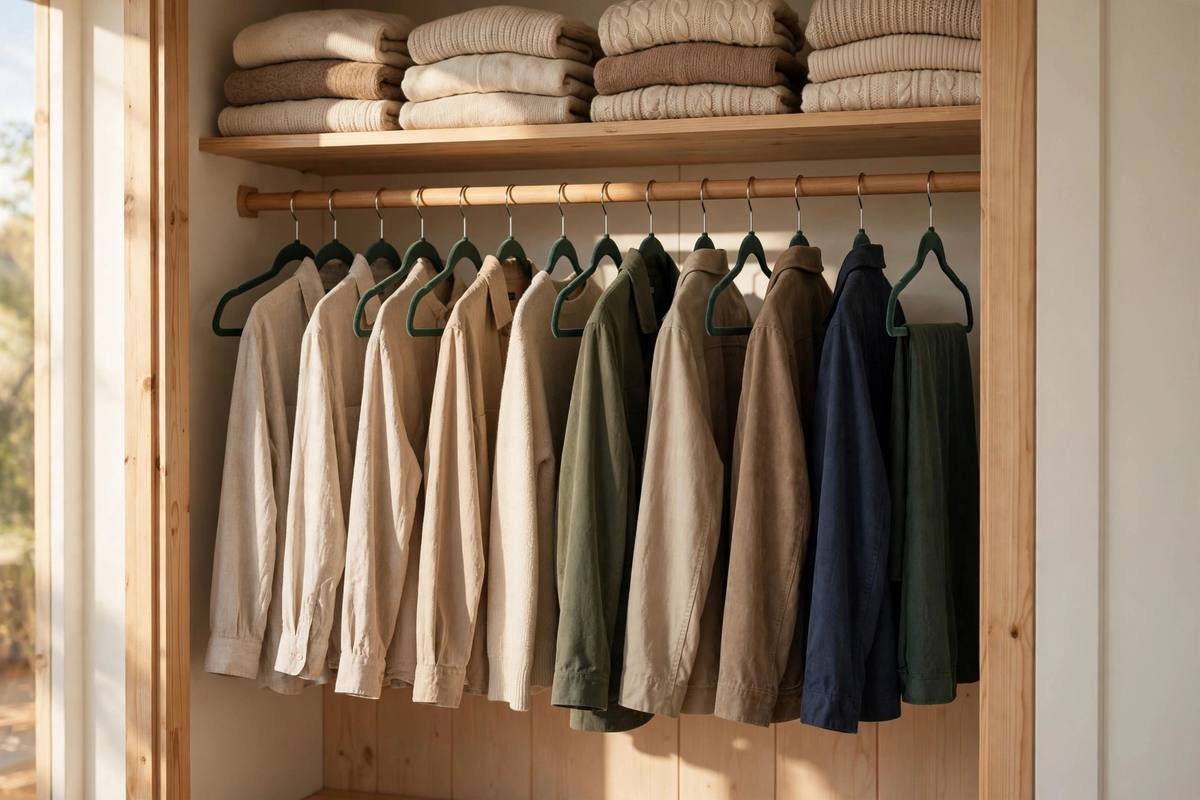
The single fastest closet transformation costs less than twenty dollars: replacing mismatched hangers with a full set of slim velvet hangers. Bulky plastic and wire hangers eat up rod space and let clothes slip off; slim velvet hangers grip garments, take up half the room, and create a visually calm, uniform row of clothing. Buy them in bulk and commit to the full switch — a half-done hanger swap just looks messy. As The Spruce notes, simple functional storage containers and consistent tools are among the easiest budget-friendly ways to organize a closet that holds everything. Once every garment hangs at the same height on the same hanger, your closet instantly looks twice as organized, even before you do anything else.
2. Double Your Hanging Space: Small Reach-In Closet Organization Ideas for Vertical Space
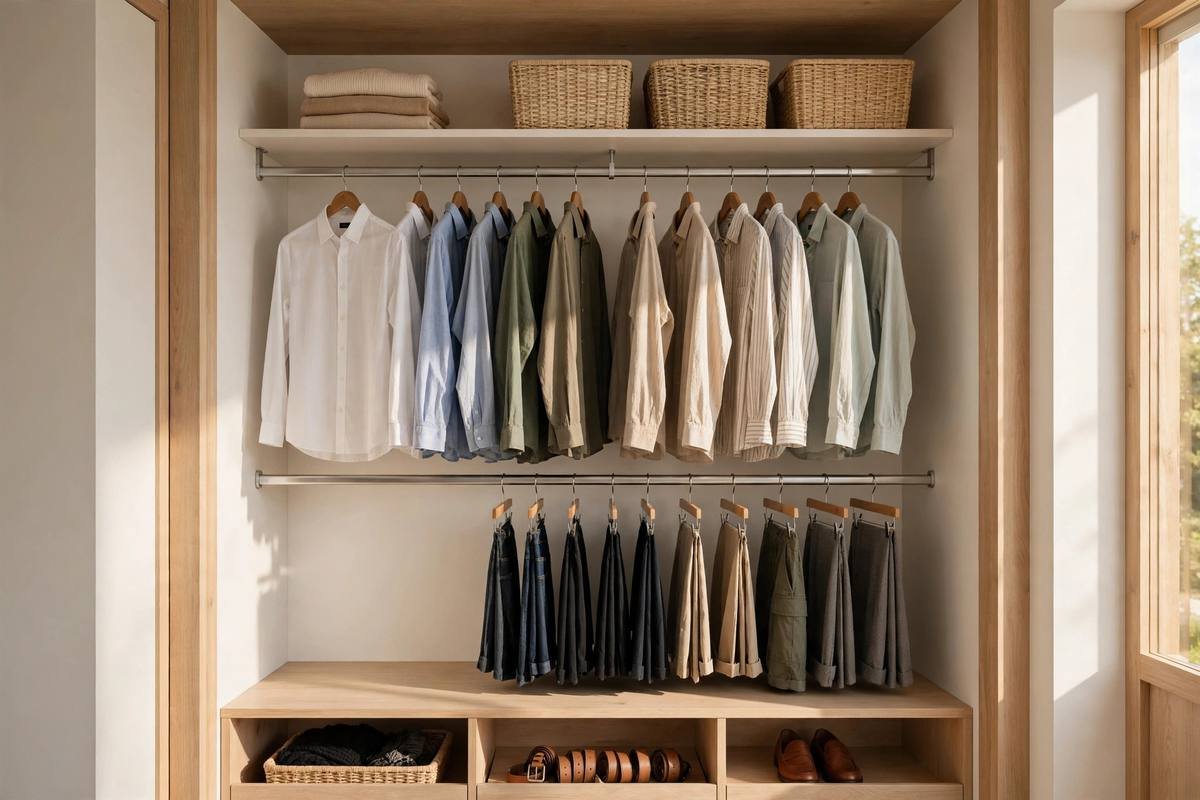
Most reach-in closets waste enormous vertical space with a single rod hung at one height — which is why double rods top every list of small reach-in closet organization ideas. Adding a second rod below the first instantly doubles your hanging capacity for shirts, pants, and folded-over jeans. Tension rods, add-on hanging rods that hook over the existing one, or a simple closet rod from the hardware store all do the job without tools. Keep long items — dresses, coats, jumpsuits — on one side with a single tall rod, and double-rod the rest. This one change often frees up enough room to eliminate the “chairdrobe” entirely. For renters, freestanding double-rod garment racks achieve the same effect without drilling a single hole. The goal is simple: every inch of vertical space should be working.
3. Shelf Dividers for Folded Clothes
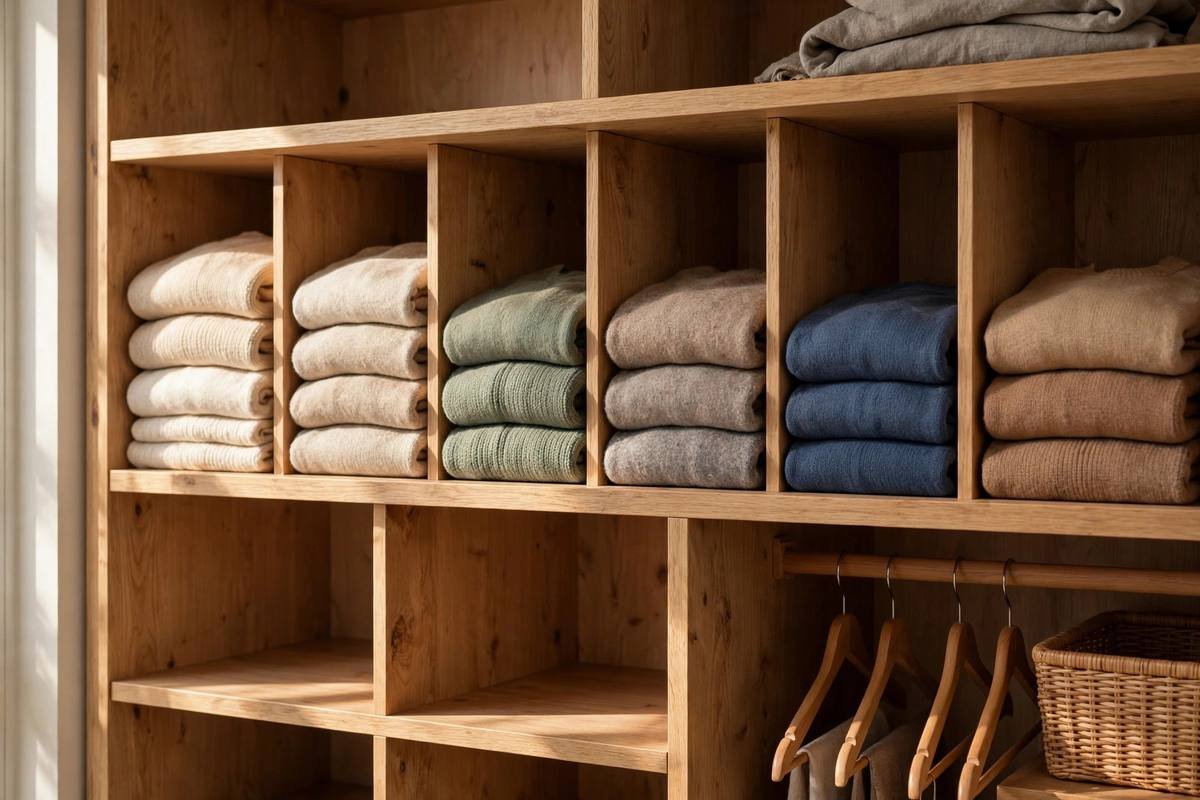
Folded stacks of sweaters and jeans look neat for about a day — then they avalanche, which is why shelf dividers are essential small reach-in closet organization ideas. Shelf dividers solve this by creating vertical compartments that keep each stack contained. Wire or acrylic dividers clip onto existing shelves in seconds and turn one long shelf into four or five tidy cubbies. Assign each cubby a category: sweaters in one, jeans in another, workout tops in a third. The dividers make it easy to pull one item without toppling the whole stack, which is what keeps the system working week after week. For deeper shelves, use dividers front-to-back to create two rows. This small addition is what separates closets that stay organized from closets that look good only in before-and-after photos.
4. Clear Storage Bins with Labels
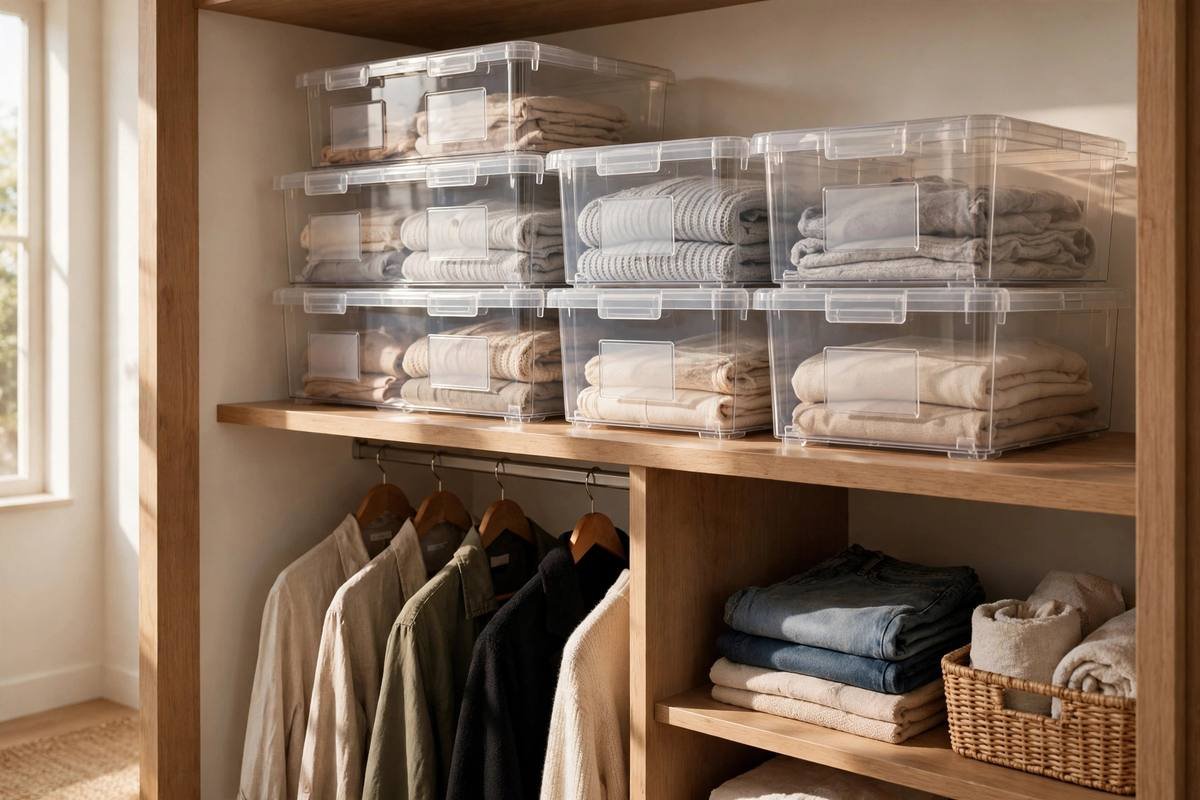
Opaque bins are where good intentions go to disappear — out of sight means out of mind, and then out of use. Clear storage bins let you see contents at a glance, which means you actually wear and use what you own. Use them for off-season clothes, accessories, and anything you reach for less than weekly. Add simple labels anyway, because even clear bins look tidier with them and labels help other household members put things back correctly. Stack identical bins for a clean, uniform look on high shelves. The transparency also forces honesty: when you can see the bin is full of clothes you never wear, it is easier to let them go. Pair this approach with under-bed storage for overflow seasonal items that do not need closet real estate.
5. Over-the-Door Organizers
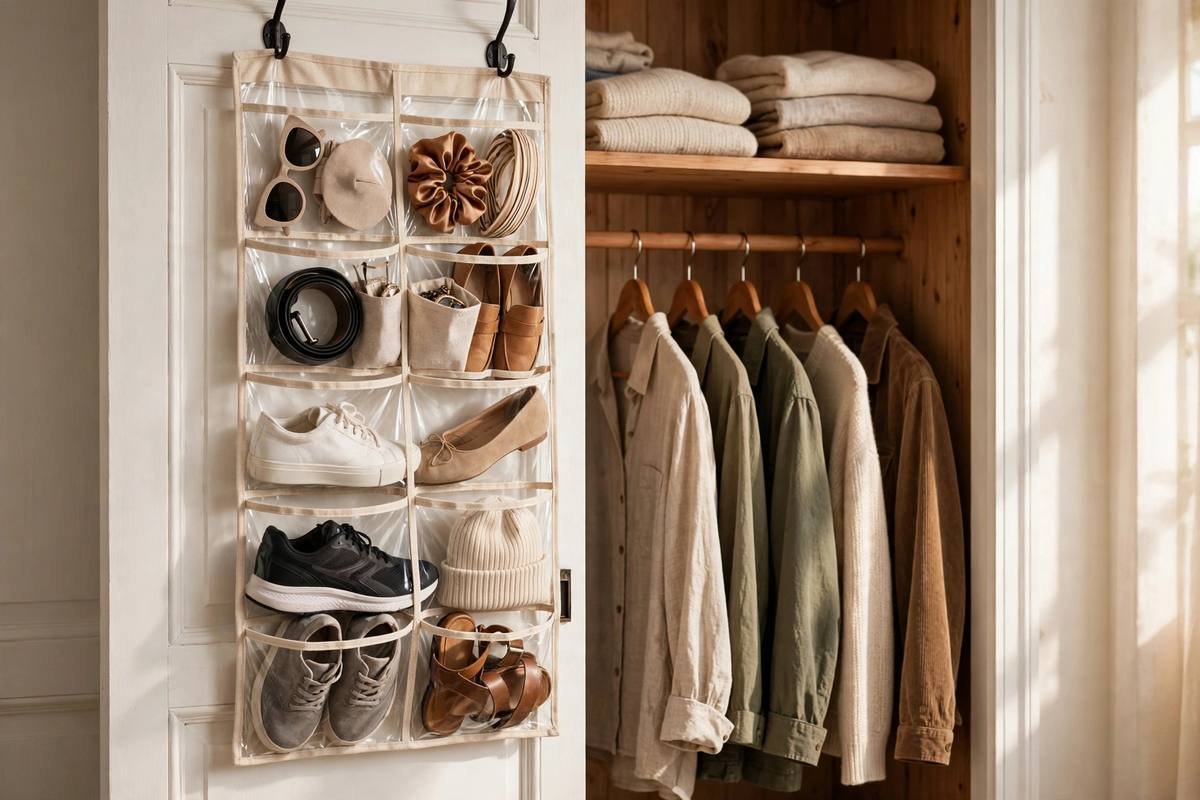
The back of the closet door is prime unused real estate, making over-the-door organizers a staple of small reach-in closet organization ideas. Over-the-door organizers with clear pockets are perfect for shoes, accessories, scarves, belts, and small items that otherwise clutter shelves. Because they hang over the door, they require no installation and leave no marks — ideal for renters. Choose the slim-profile versions so the door still closes easily. Beyond the classic shoe pocket organizer, look for over-the-door hooks for tomorrow’s outfit, jewelry organizers with clear pouches, and even narrow wire racks for handbags. This is dead space you are already paying rent for, so put it to work. Just be disciplined about what earns a pocket — if everything gets shoved in, the organizer becomes visual clutter instead of a solution.
6. A Dedicated Shoe System
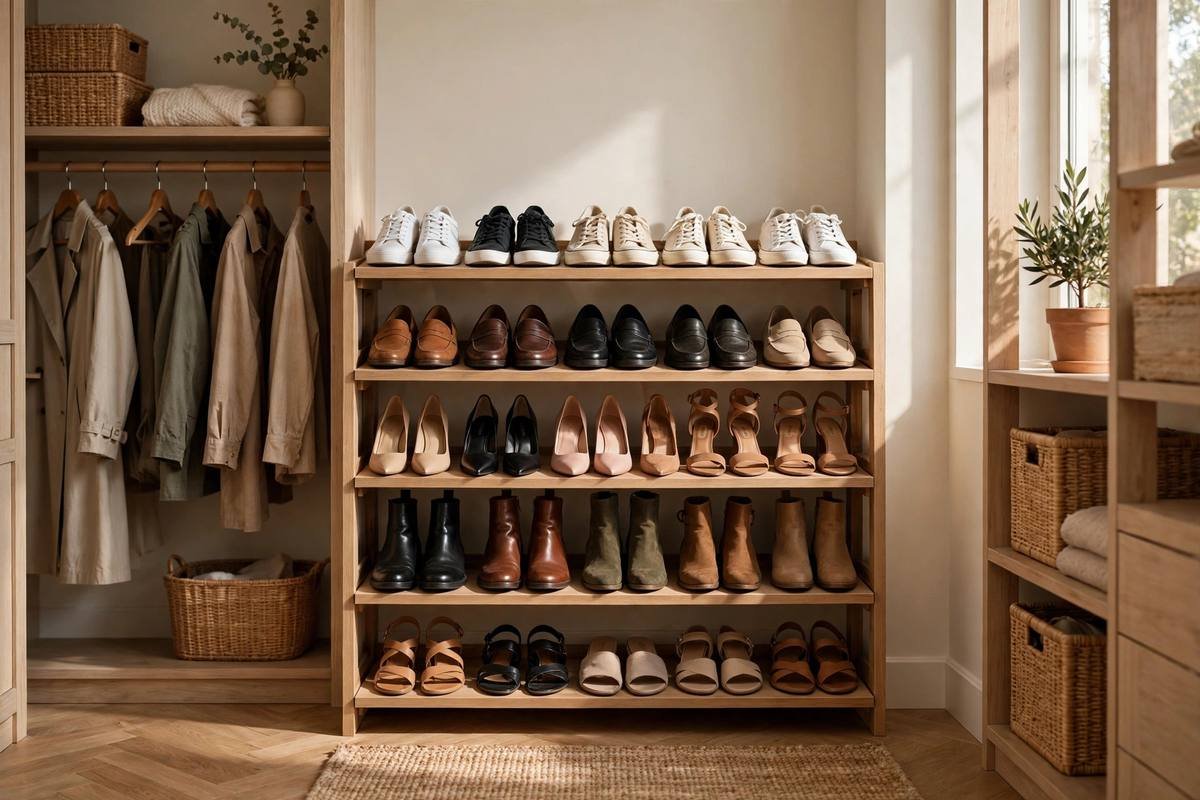
Shoes multiply silently and consume shocking amounts of closet floor space. A dedicated shoe system — whether it is a tiered rack, cubby shelving, or clear drop-front boxes — keeps every pair visible and accessible. Arrange shoes by category and keep everyday pairs at eye level, with occasion shoes higher or lower. Limit yourself to what the system holds: when the rack is full, something must go before something new comes in. For small closets, a narrow over-the-door shoe organizer or a slim rolling cart tucked beside the dresser can handle the overflow. If your collection has outgrown the bedroom closet entirely, a shoe storage setup in the entryway or hallway can take the daily-wear pressure off the wardrobe. The one-in-one-out rule is what keeps any shoe system working long-term.
7. Drawer Inserts and Dividers
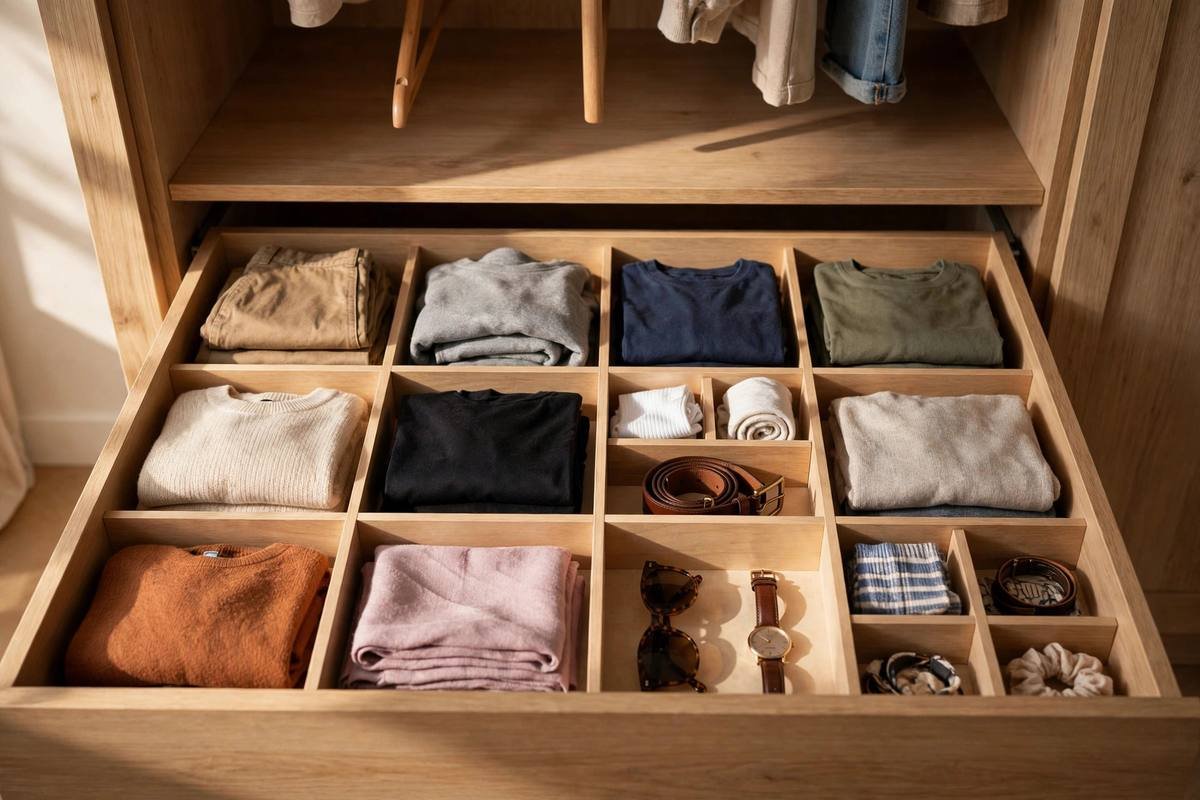
Closet drawers without dividers become junk drawers within a week. Spring-loaded drawer dividers, honeycomb organizers, and simple trays turn one deep drawer into a grid where every item has an assigned slot. Use them for underwear, socks, accessories, and folded tees — the small items that migrate and tangle. The KonMari-style file fold works beautifully in divided drawers because you can see every item at once instead of digging through a stack. Measure your drawers before buying inserts, and leave a little breathing room so drawers still close easily when full. This is also the perfect system for kids’ closets, where dividers help little ones find their own clothes.
8. Seasonal Rotation System
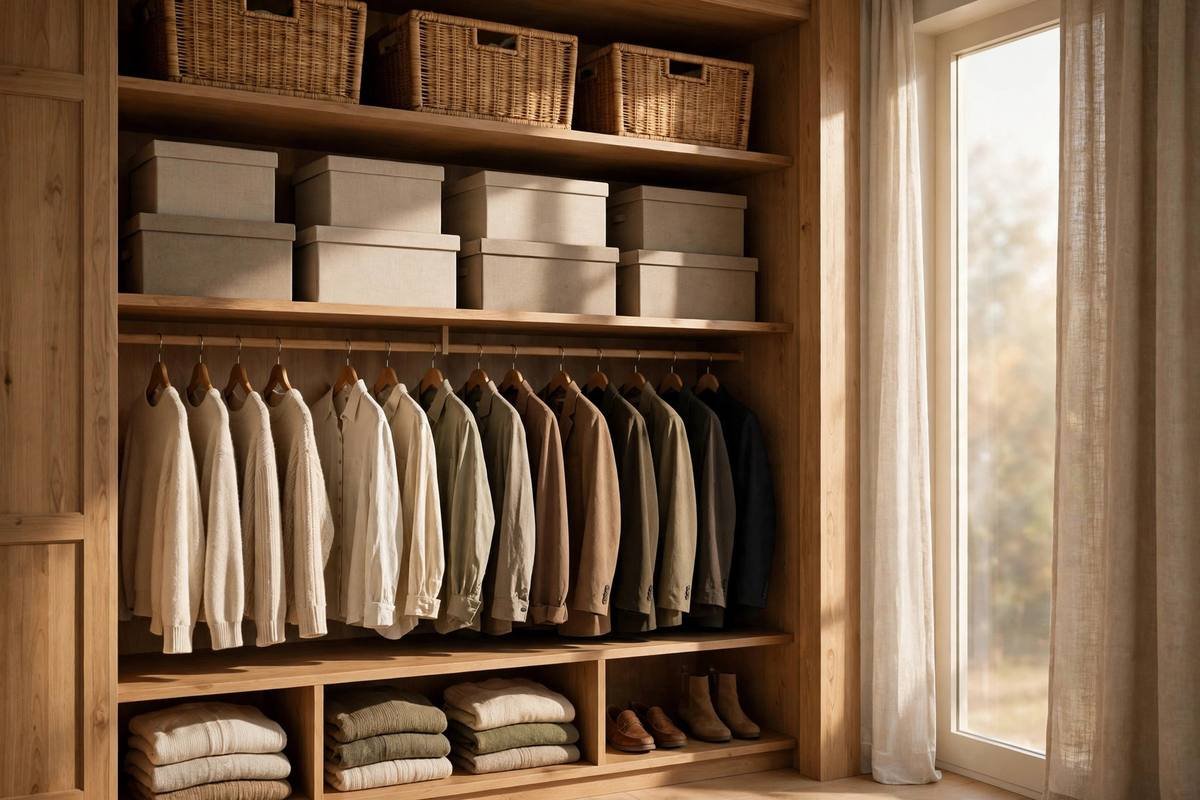
Trying to fit all four seasons of clothing into one closet is the fastest route to chaos. A seasonal rotation system keeps only the current season’s clothes in prime closet space, with off-season items stored elsewhere in labeled bins. Twice a year, do the swap — it takes an afternoon and doubles as a decluttering session, since you will naturally reconsider pieces you have not worn in months. Store off-season bins on the highest closet shelf, in the garage, or in under-bed storage containers. Vacuum-seal bags compress bulky winter coats and sweaters dramatically. The payoff is huge: a closet holding half as many clothes is twice as easy to keep organized.
9. Valet Rods and Hooks
Recommended Ebook
Small Space Checklists & Planners
299 fillable checklists and planners for small space living — tick boxes digitally or print and use!
Only $7
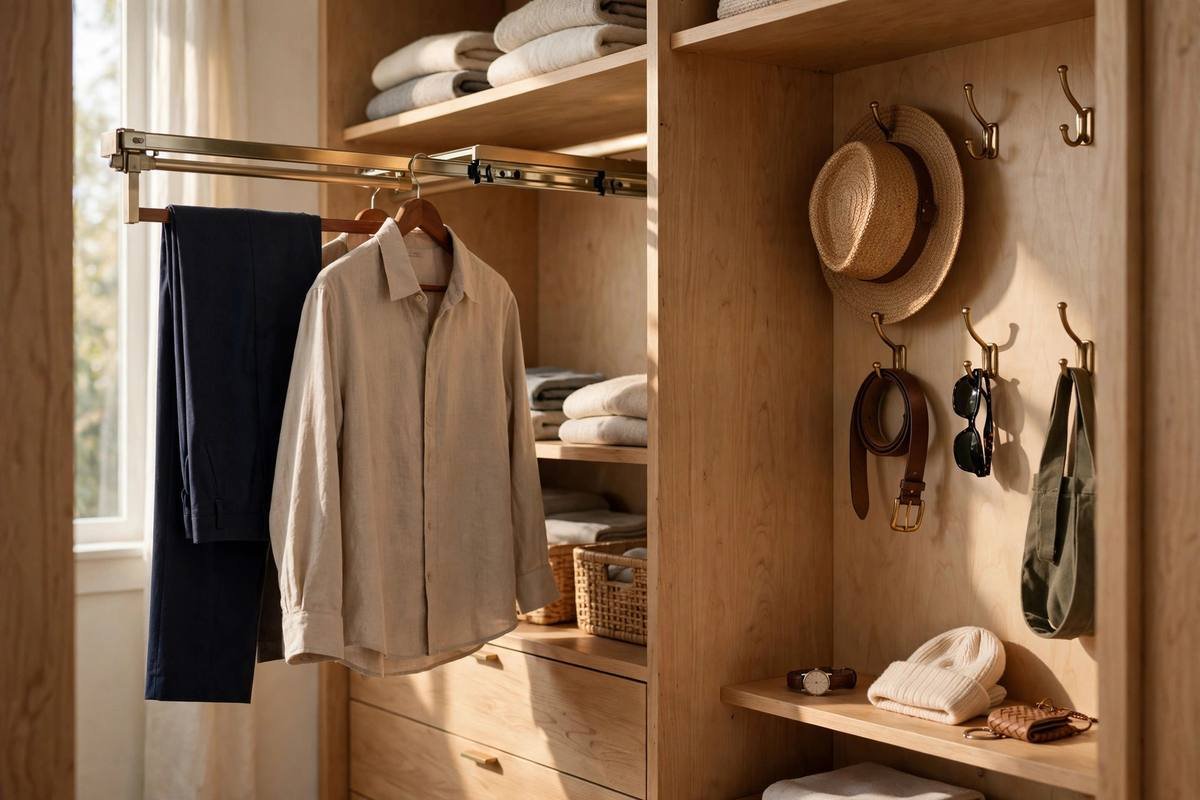
Valet rods — those small pull-out rods mounted inside the closet — are the unsung heroes of daily organization. Use one to stage tomorrow’s outfit the night before, hang a handbag while you get ready, or air out clothes you have worn once but are not ready to wash. Wall hooks inside the closet serve a similar purpose for robes, pajamas, and tomorrow’s jeans. These tiny additions prevent the two biggest closet messes: the chair pile and the floor pile. Mount hooks on any unused wall or door interior, and add a valet rod near the closet entrance where it is most convenient. They cost very little and install in minutes, but they quietly eliminate the in-between clutter that makes closets look messy even when everything technically has a home.
10. Lighting Your Closet
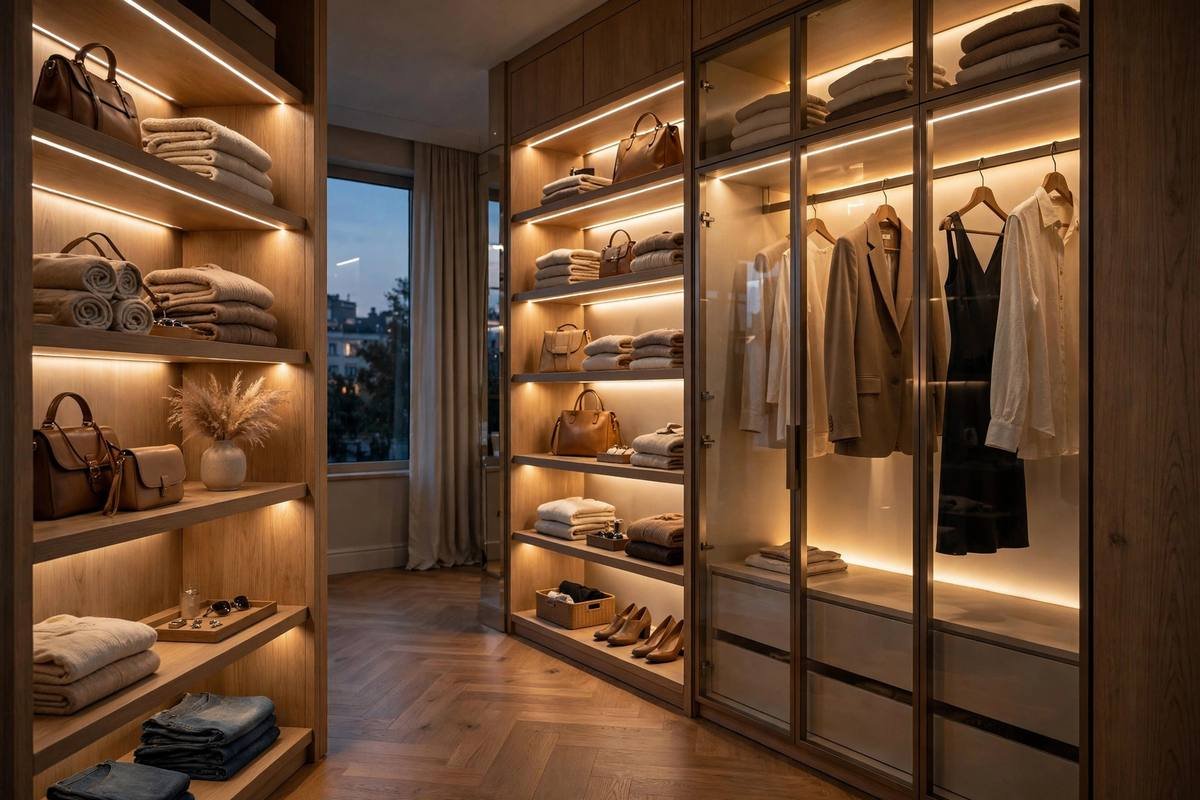
You cannot organize what you cannot see. Most closets have terrible lighting — a single dim bulb or none at all — which makes it hard to distinguish navy from black and easy to ignore growing messes. Battery-operated LED strip lights or puck lights transform a dark closet for under thirty dollars, with no electrician required. Stick motion-sensor strips under shelves so the light turns on automatically when you open the door. Good lighting also makes the closet feel like a boutique rather than a cave, which motivates you to keep it beautiful. If your closet has no outlet and you cannot use battery lights, even a small rechargeable motion-sensor light makes a dramatic difference. This upgrade pays off every single morning.
11. A Donation Station
Every organized closet needs an exit strategy, or clutter creeps back in. Keep a bag or basket in the closet designated for donations, and the moment you try something on and do not love it, it goes in the bag — no second-guessing, no “maybe” pile on the chair. When the bag is full, it goes straight to the donation center. This habit is more powerful than any organizing product because it addresses the root cause of closet chaos: too much stuff. The one-in-one-out rule works on the same principle — a new item means an old one leaves. Place the donation bag somewhere visible but out of the way, like the closet floor corner or a high shelf. Making it easy to let go is the real secret to a closet that stays organized year after year.
12. Style Your Closet Like a Boutique
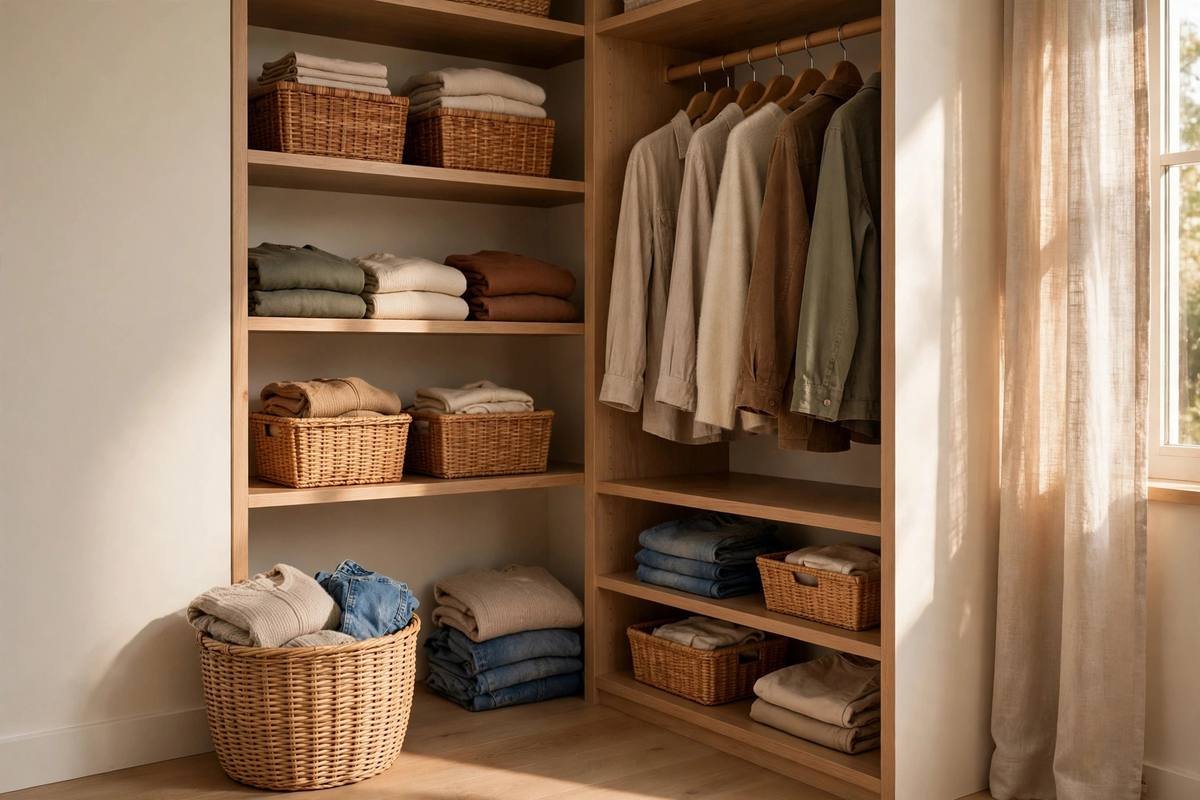
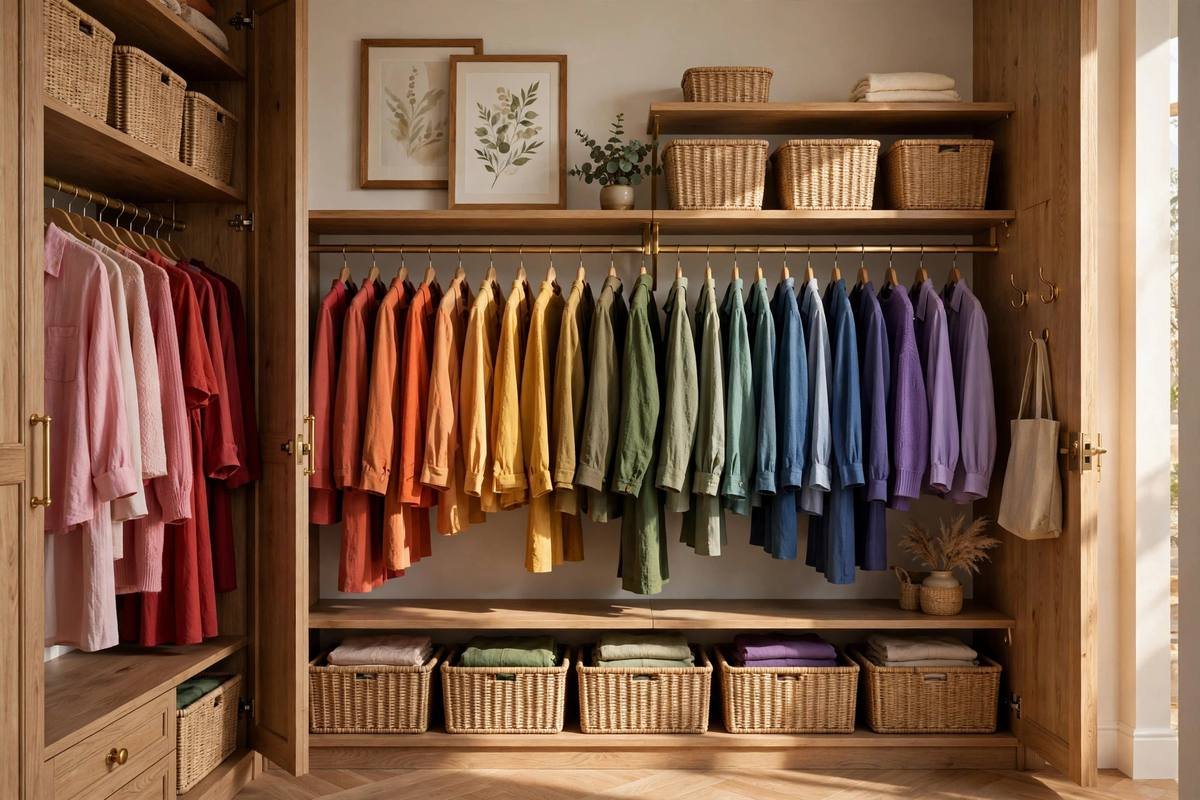
The final step is the one most people skip: making the closet beautiful, not just functional. When a space looks good, you naturally want to keep it that way. Add a small framed print or mirror on the closet wall, use matching baskets instead of mismatched boxes, and keep a scented sachet or small diffuser among the clothes. Arrange clothes by color within each category for that boutique rainbow effect that makes getting dressed feel luxurious. Leave a little breathing room on rods and shelves — a closet stuffed to bursting can never look or feel organized. This mindset shift, from storage unit to personal boutique, is what turns organization from a chore into a pleasure. Extend the same care to your mudroom and entryway storage so the organized feeling greets you at the front door.
Frequently Asked Questions About Small Reach-In Closet Organization Ideas
How do I organize a very small closet? Start with these small reach-in closet organization ideas: maximize vertical space with a second hanging rod, use slim hangers to fit more garments, and move off-season clothes elsewhere. Over-the-door organizers and shelf dividers add storage without taking floor space. The key rule for small closets: strict limits on what lives there, enforced by a one-in-one-out policy.
What is the best way to organize clothes by category? Group by type first (tops, pants, dresses), then by color within each type, arranging from light to dark. Keep everyday items at eye level and between shoulder and hip height — the prime real estate. Rarely worn occasion pieces go high, and heavy items like jeans go low.
How often should I declutter my closet? Do a quick seasonal review twice a year when rotating clothes, plus a deeper annual declutter. The daily habit that matters most is the donation bag: removing items the moment you decide against them prevents buildup far better than any scheduled purge.
Are closet organization systems worth the money? A basic system of rods, shelves, and drawers is worth it if your closet is just a rod and a shelf — the wasted space costs you daily frustration. Start with inexpensive fixes (hangers, dividers, bins) before investing in a full system, so you know your habits first.
How do I keep my closet organized long-term? Give every category a defined home with physical boundaries like dividers and labeled bins, maintain the donation bag habit, and do a five-minute reset weekly. systems fail when they require too much effort, so choose storage that matches your laziest habits.
Start your small reach-in closet organization ideas by measuring every inch before buying any organizers. The best small reach-in closet organization ideas work around your actual wardrobe, not an idealized one. When planning small reach-in closet organization ideas, list what you own first, then choose storage to fit.
Do not overlook vertical space in small reach-in closet organization ideas — most closets waste the top shelf and the floor below hanging clothes. These small reach-in closet organization ideas use stackable bins and hanging shelves to claim that space. For the best small reach-in closet organization ideas, think in three zones: eye level, above, and below.
Uniform hangers are a small upgrade with a big visual payoff in small reach-in closet organization ideas. When every hanger matches, the closet looks instantly calmer. The smartest small reach-in closet organization ideas also use the door back and side walls. These small reach-in closet organization ideas turn dead space into storage.
Finally, the most durable small reach-in closet organization ideas are the ones you actually maintain. Schedule a ten-minute weekly reset to keep your small reach-in closet organization ideas working. When your small reach-in closet organization ideas have a place for everything, tidying becomes effortless. These small reach-in closet organization ideas will keep your mornings calm for years.