12 Curved Headboard Ideas for a Softer Bedroom

Bedrooms are full of straight lines: the bed frame, the nightstands, the window, the door. A curved headboard breaks that grid with one clear shape, and the room feels calmer and more finished for it, even before anything else changes around the bed. These curved headboard ideas cover the main silhouettes — the classic arch, the wave, the scallop — plus the upholstery colours, wall pairings, and sizing rules that decide how each one lands. Fabric and scale matter as much as shape here: the same arch looks quiet in oatmeal linen and dramatic in bottle-green velvet, so read each idea with your room’s light and ceiling height in mind before you settle on a shape, a fabric, or a colour for the bed.
1. Start With a Classic Arch in Cream Linen
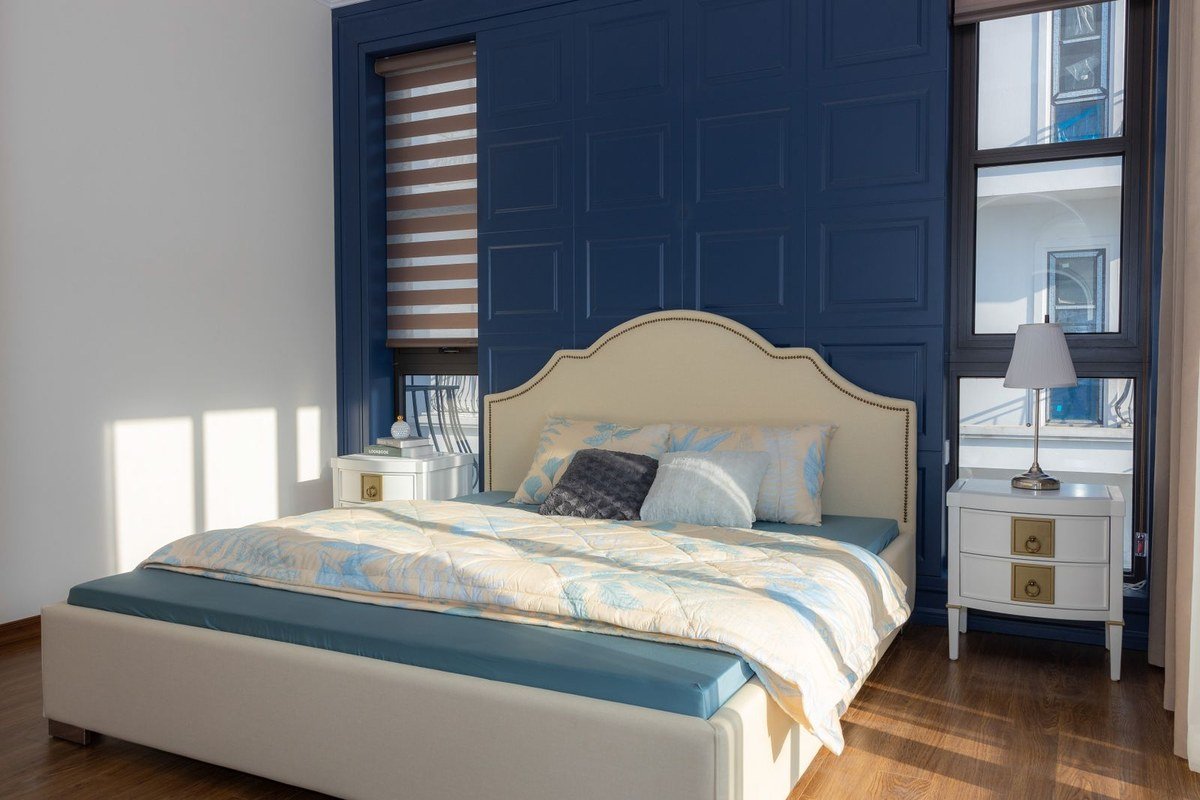
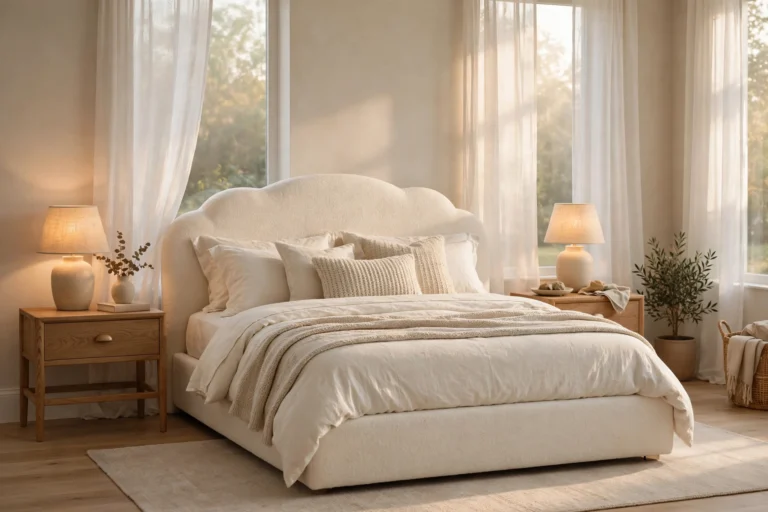
The single arch is the easiest curved shape to live with. It rises in the centre, leaves the corners of the wall clear, and suits almost every bedding colour. Cream or oatmeal linen keeps the arch soft and lets texture do the work; look for a visible weave rather than a flat synthetic finish. Centre the bed carefully, because an arch exposes any misalignment with the wall behind it. Pair it with plain white or ivory bedding and one darker throw, so the silhouette stays the main event in the room.
2. Choose a Wavy Headboard for Movement

A wave headboard runs a gentle S-curve across the full width of the bed, which makes it a strong focal point in a plain room. Velvet shows the rise and fall of the wave best, since light catches each crest differently. Keep everything else quiet: plain bedding, simple nightstands, and no artwork above the bed, because the wave needs empty wall around it. The editors at The Spruce single out a wavy headboard as a focal point that works even in a compact guest room, paired there with teal velvet and dark bedding.
3. Try a Scalloped Edge for Detail
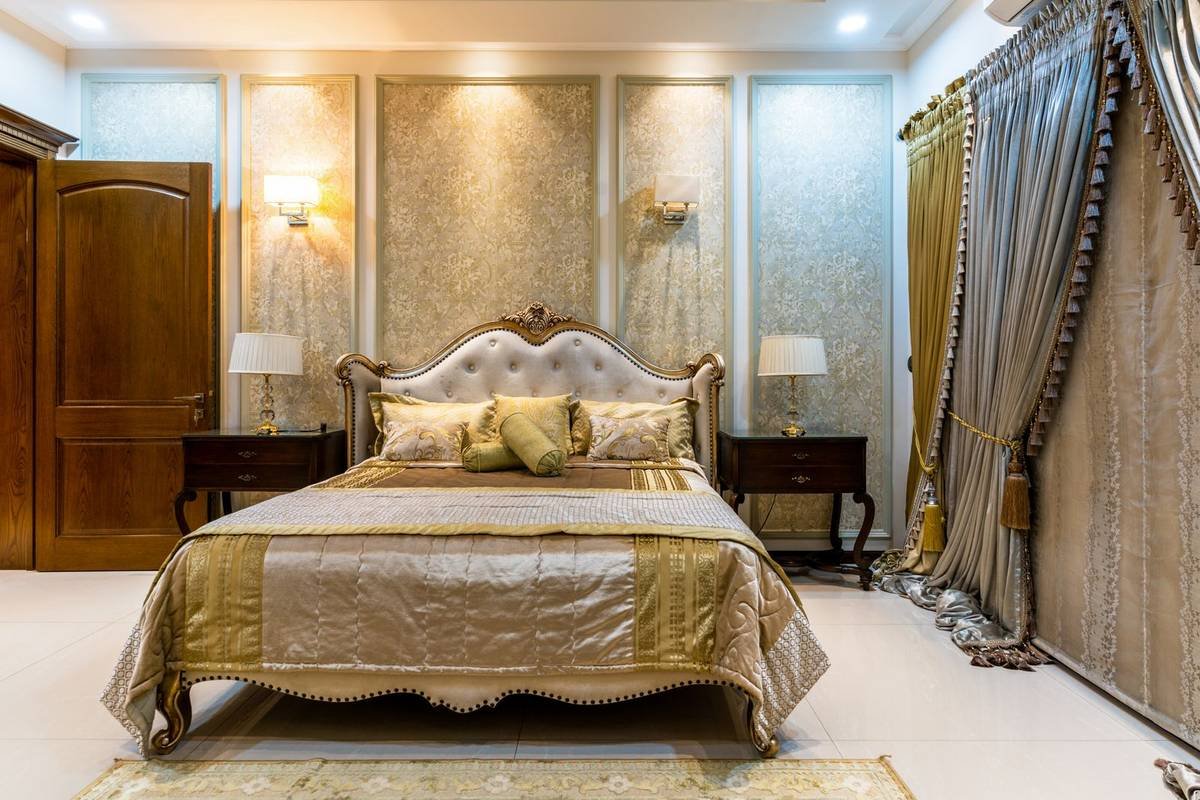
Scallops give a curved headboard a decorative edge without adding another colour or pattern. The repeated half-circles suit traditional and romantic bedrooms, and the shape looks especially good in blush, dusty blue, or soft sage upholstery. Because the edge is busy, keep the face of the headboard plain: no tufting, no contrast piping competing with the outline. A scalloped headboard also pairs well with a simple white bed skirt or a plain wood frame, since ornate furniture on both sides of the bed quickly becomes too much.
4. Pick Boucle for a Soft, Textured Arch

Boucle’s looped yarn makes a curved headboard look as soft as it feels, and its texture hides the seam lines that show up on smooth fabrics. White and ivory boucle are the common choices, and they work best against a coloured wall — sage, warm taupe, or a muted clay — that outlines the arch. Our boucle bed frame guide covers full boucle frames, including the footboard, if you want the texture carried around the whole bed rather than stopping at the headboard.
5. Go Deep With Velvet in Bottle Green or Navy

A curved shape in dark velvet reads as the room’s centrepiece, so give it a pale wall and light bedding to lean against. Bottle green, navy, and aubergine all hold a curve well because the shadow along the arc deepens the colour. Add brass or aged-gold lamps on both sides; the warm metal keeps dark velvet from turning cold. This is the version for a main bedroom with decent ceiling height, where the headboard can rise well above the pillows and still leave breathing room below the ceiling.
6. Oversize the Arch for a Tall Wall

On a tall wall, a standard headboard can look lost. An oversized arch — wider than the mattress by 15 to 30 centimetres on each side and rising 140 centimetres or more — fills the wall on purpose and frames the nightstands inside its span. Wall-mounted panels upholstered as one wide arch achieve this without a heavy frame. Keep the upholstery colour close to the wall colour for a calm, built-in effect, or contrast it fully if the arch is meant to be read from the doorway.
7. Keep It Low and Rounded in a Small Room

Small bedrooms need the curve without the height. A low headboard with fully rounded corners, rising just 30 to 40 centimetres above the mattress, softens the bed without crowding a low ceiling or a window wall. Choose a light fabric and slim padding so the bed keeps its footprint. Rounded corners have a practical benefit here too: in a tight room where you walk close past the bed, there are no sharp frame corners at hip height.
8. Paint an Arch on the Wall Behind It

A painted arch behind a low curved headboard doubles the shape for the price of a tin of paint. Paint the arch slightly wider and taller than the headboard itself, in a tone two or three shades deeper than the wall, and the headboard sits inside a halo of colour. This pairing suits renters and anyone testing the look before buying furniture. It also rescues a plain rectangular headboard: a curved band of colour above it borrows the softness of a curved frame.
9. Add Channel Tufting to the Curve

Vertical channels stitched into a curved headboard add rhythm and make a wide arch feel tailored rather than plain. The channels draw the eye upward, which helps in rooms with low ceilings, and they give plain fabrics such as cotton velvet or woven polyester a finished look. Keep channel spacing even and fairly wide; narrow, crowded channels fight the curve. This style pairs best with smooth bedding, since heavily textured covers plus channel tufting plus a curved outline is one pattern too many.
10. Bring In a Curved Rattan or Cane Headboard
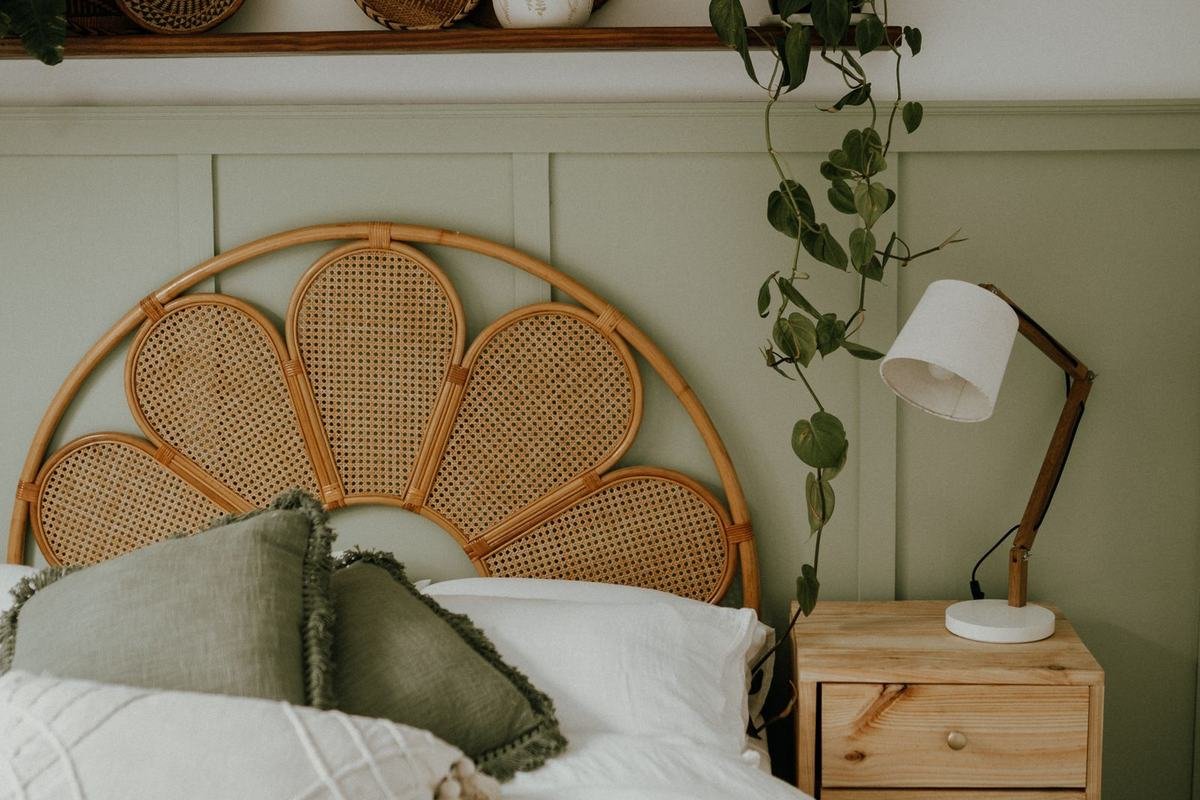
Not every curve is upholstered. A rattan or cane headboard with a rounded or sunburst top brings the shape in a lighter, airier material that suits coastal and relaxed bedrooms. The open weave keeps a small room from feeling boxed in, and the natural tone pairs with white bedding and light wood. Complete the texture story with our textured bedding ideas and plain linen bedding ideas: woven and washed fabrics sit naturally beside cane, while shiny satin would clash with its matte finish.
11. Style a Curved Headboard on a Daybed

A daybed gains a proper sofa back from a curved headboard along its long side. An arch or gentle wave turns the daybed into seating that looks intentional in a guest room or study, rather than a bed pushed against a wall. Add two firm bolster cushions to support sitting upright, and keep the cover in a washable fabric. Our daybed styling ideas cover the cushion formulas and throws that help a daybed work as both couch and bed.
12. Wrap Up With Velvet Bedding Against a Pale Curve
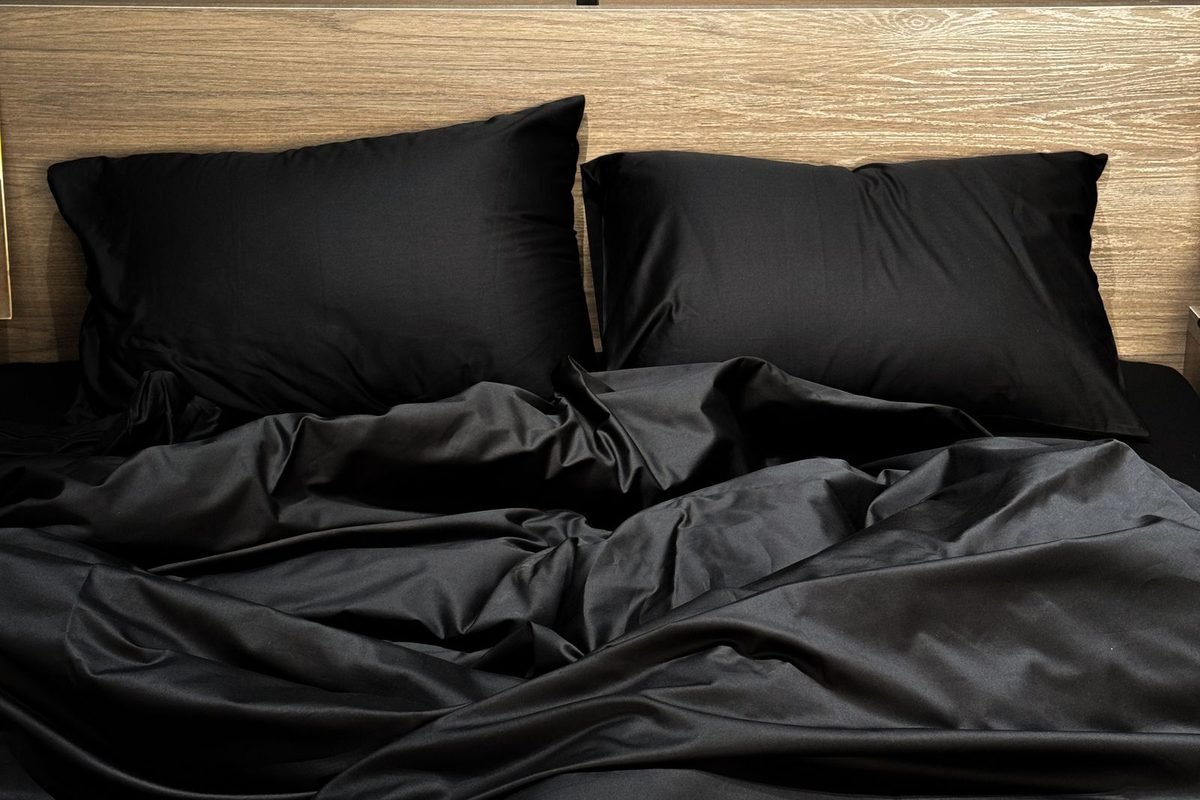
The last pairing works in reverse: a pale curved headboard in cream boucle or natural linen, styled with rich bedding in front of it. Deep-toned velvet bedding ideas — rust, plum, or forest — make a light arch stand out by contrast, and the two soft surfaces echo each other. This is a useful order of operations if the headboard is already bought and the room still feels plain: change the bedding first, keep the headboard, and let contrast do what a new frame would have done.
Frequently Asked Questions
How wide should a curved headboard be? Match the mattress width or go up to 15 centimetres wider on each side for an oversized look. Wider than that, the headboard starts to swallow the nightstands. Measure the wall as well: the curve needs clear space on both sides to read as a shape.
How tall should a curved headboard be? A total height of 110 to 140 centimetres from the floor suits most bedrooms, leaving 50 to 75 centimetres visible above the mattress and pillows. In a room with low ceilings, choose the lower end and a shallow curve so the top of the arch keeps clear space below the ceiling.
Which fabric is best for a curved headboard? Boucle and linen give a soft, matte curve and suit calm, neutral rooms. Velvet shows the shape most dramatically because light moves across the arc. For a family bedroom, a tight-weave performance fabric in a mid-tone hides marks and keeps the outline clean.
Do curved headboards suit small bedrooms? Yes, in a low, slim profile. A rounded-corner headboard that rises just above the pillows softens a small room without taking wall space the way a tall arch does. Keep the fabric pale, skip artwork above the bed, and let the curve be the room’s single soft shape.