12 Curved Kitchen Island Ideas for Flow

Curved kitchen island with seating ideas start here: sharp corners are out and soft curves are in. The curved kitchen island has become one of the defining kitchen trends of 2026, and it is easy to see why: rounded forms improve traffic flow, soften hard-edged cabinetry, and make the hardest-working piece in the kitchen feel more like furniture and less like a box. Curves invite people in — there are no corners to bump, and conversation flows as easily as foot traffic.
Whether you are remodeling or simply dreaming, these curved kitchen island with seating ideas show how to bring softness — and sociable seating — into the heart of your home. From pill-shaped islands and tambour bases to arched overhangs and half-moon designs, each idea balances beauty with real-life function. Here is how to make curves work in kitchens of every size and style.
1. Pill-Shaped Curved Kitchen Island with Seating Ideas for Instant Softness
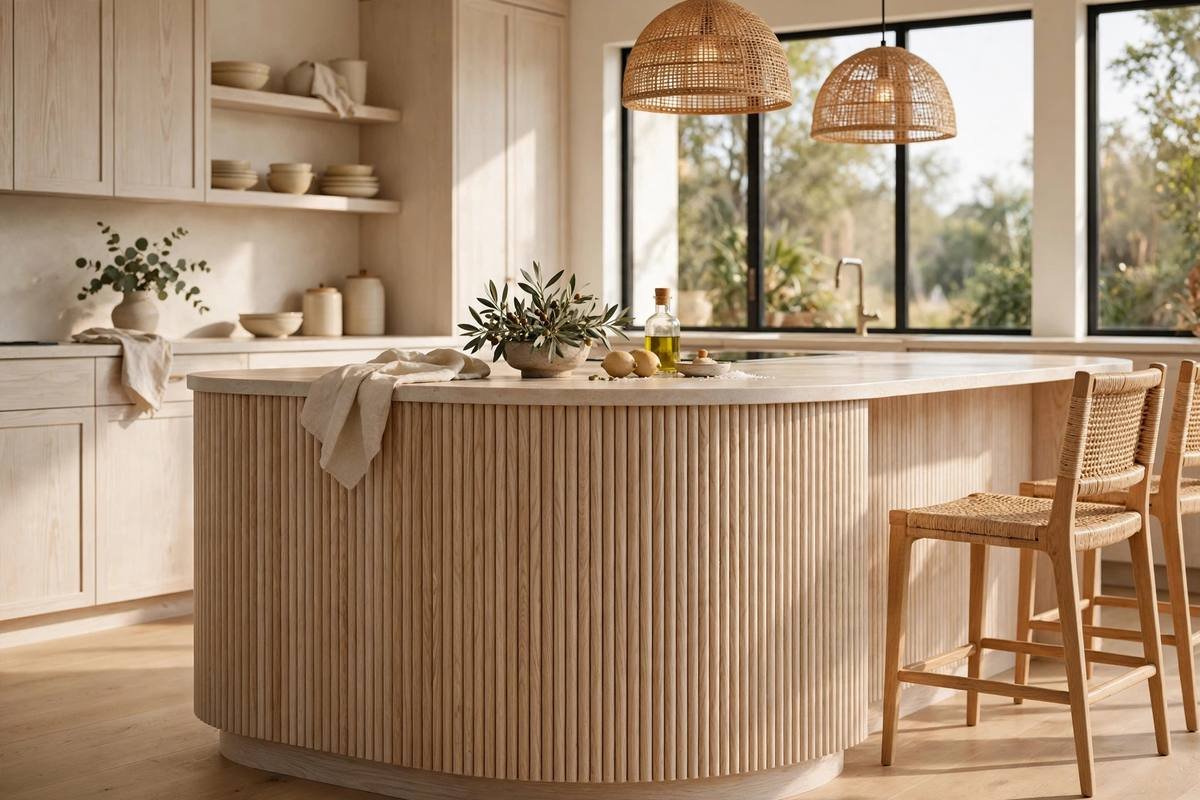
The pill-shaped island — a long rectangle with fully rounded ends — is the gateway to curved kitchen design and one of the most practical curved kitchen island with seating ideas. It keeps the generous prep space and seating of a traditional island while eliminating every sharp corner, so traffic glides around it instead of catching on edges. This shape is especially kind to open-plan kitchens, where the island sits in the middle of daily circulation paths. Pair it with a waterfall or simple eased-edge countertop and let the curve be the star. Three counter stools tuck neatly along one rounded side, and the whole kitchen instantly feels calmer, safer for small kids, and far more welcoming. For families with toddlers, the absence of sharp corners is a genuine safety upgrade worth celebrating.
2. Wrap the Ends in Tambour Wood
Tambour — thin vertical wood slats joined on a flexible backing — is the material made for curves. It bends smoothly around rounded island ends, adding rich texture and a handcrafted feel that flat panels cannot match. A tambour-wrapped island base in white oak or walnut turns the island into a furniture piece with serious design credentials. The vertical lines also add subtle height, making the island feel lighter than a solid slab. As Houzz highlights in its roundup of outside-the-box islands, tambour is one of the key materials designers use to round the bend on curved island ends. Choose a wood tone that echoes your flooring or range hood to make the island feel integrated, not added on.
3. Arched Overhang: Curved Kitchen Island with Seating Ideas for Conversation

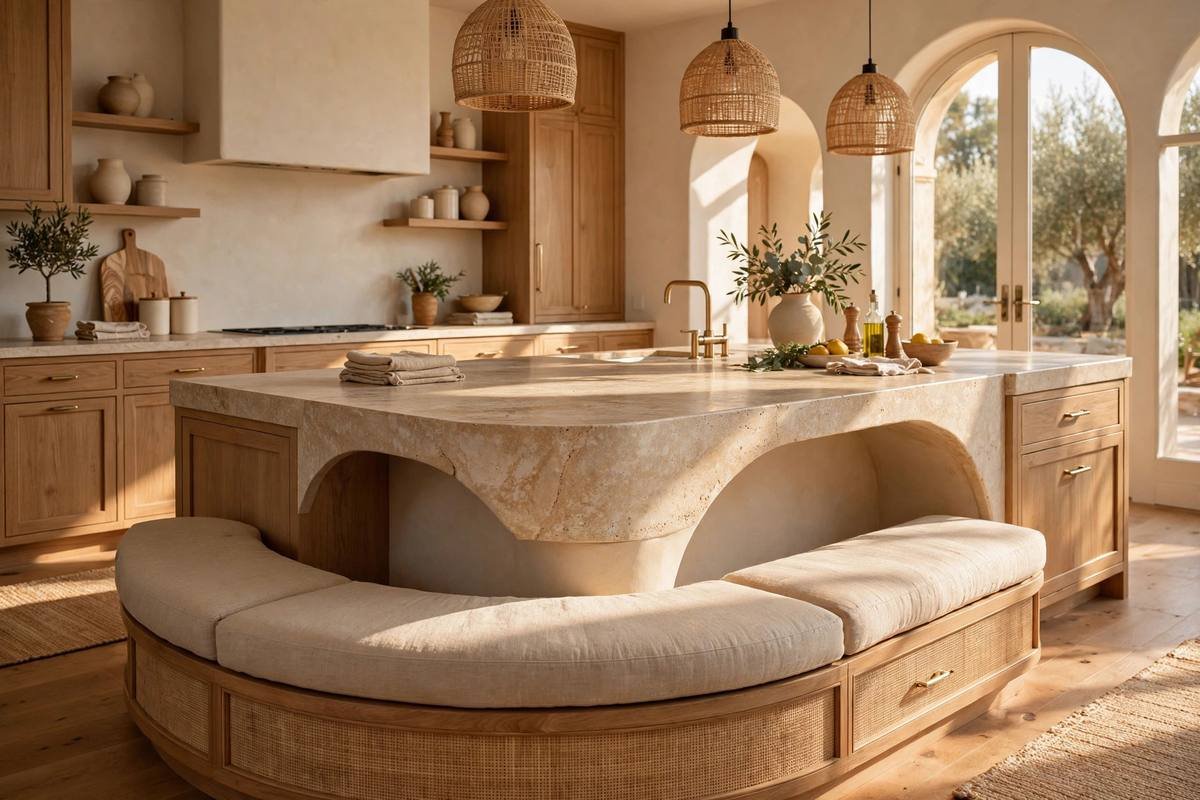
An arched overhang — where the countertop sweeps out in a curve beyond the island base — creates conversation-friendly seating with room for knees and elbows, the heart of great curved kitchen island with seating ideas. Unlike a straight overhang, the arch lets stools angle toward each other, so guests actually face one another instead of staring at a wall of cabinetry. This works beautifully on the long side of a rectangular island: keep the working side straight for prep, and let the social side curve outward. Support the span with discreet steel brackets or a curved corbel so the stone feels solid. The result is an island that works as hard socially as it does functionally. A waterfall edge on one curved end adds drama and protects the base from scuffs.
4. Choose a Curved Island to Fix Flow Problems

If your kitchen has an awkward pinch point — a walkway that narrows, a corner everyone clips — a curved island is the functional fix, not just a pretty one. Rounding the island end that faces the traffic path buys precious inches of clearance and eliminates the bruised-hip corner. Designers often specify a wedge or curved island in L-shaped kitchens for exactly this reason: the shape follows the natural movement of the room. Before you commit, tape the footprint on the floor and walk around it for a few days. Even rounding a single corner can transform how a cramped kitchen moves. For more layout wisdom in tight spaces, our small kitchen ideas show how shape choices transform compact kitchens.
5. Round the Ends of a Galley Island

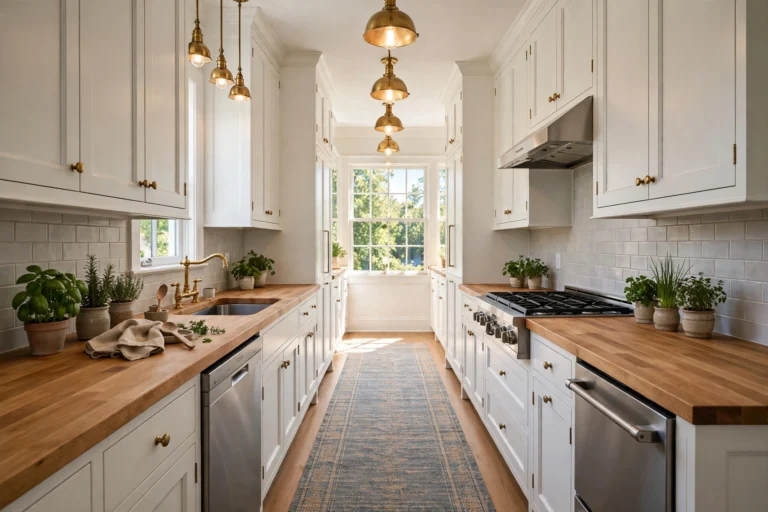
Galley kitchens benefit enormously from rounded island ends. In a narrow space, every inch of clearance matters, and a curved end lets two people pass comfortably where a square corner would snag hips and grocery bags. A slim island with two rounded ends reads almost like a console table — light, graceful, and perfectly scaled. Keep the base in the same finish as your perimeter cabinets for a seamless look, or paint it a soft contrasting tone to define the zone. Add open shelving on one curved end for cookbooks and a trailing plant, and the hardest-working small kitchen gains both function and charm. Paint the curved end a shade deeper than the rest for a subtle, custom-looking detail.
6. Pair the Island With a Curved Banquette
For the ultimate in soft geometry, team a curved island with a curved banquette on the opposite side of an eat-in kitchen. The two rounded forms echo each other across the room, creating a sense of rhythm that makes the whole space feel designed rather than assembled. A built-in banquette with a rounded back tucks into a bay window or an unused corner, offering generous seating without the visual weight of chairs. Upholster it in a wipeable performance fabric in a warm neutral, and it becomes the family’s favorite homework-and-coffee spot. Curves, repeated with intention, are what make a kitchen feel truly custom. Round dining tables echo the theme beautifully if you prefer chairs to a banquette.
7. Oval Curved Kitchen Island with Seating Ideas All Around

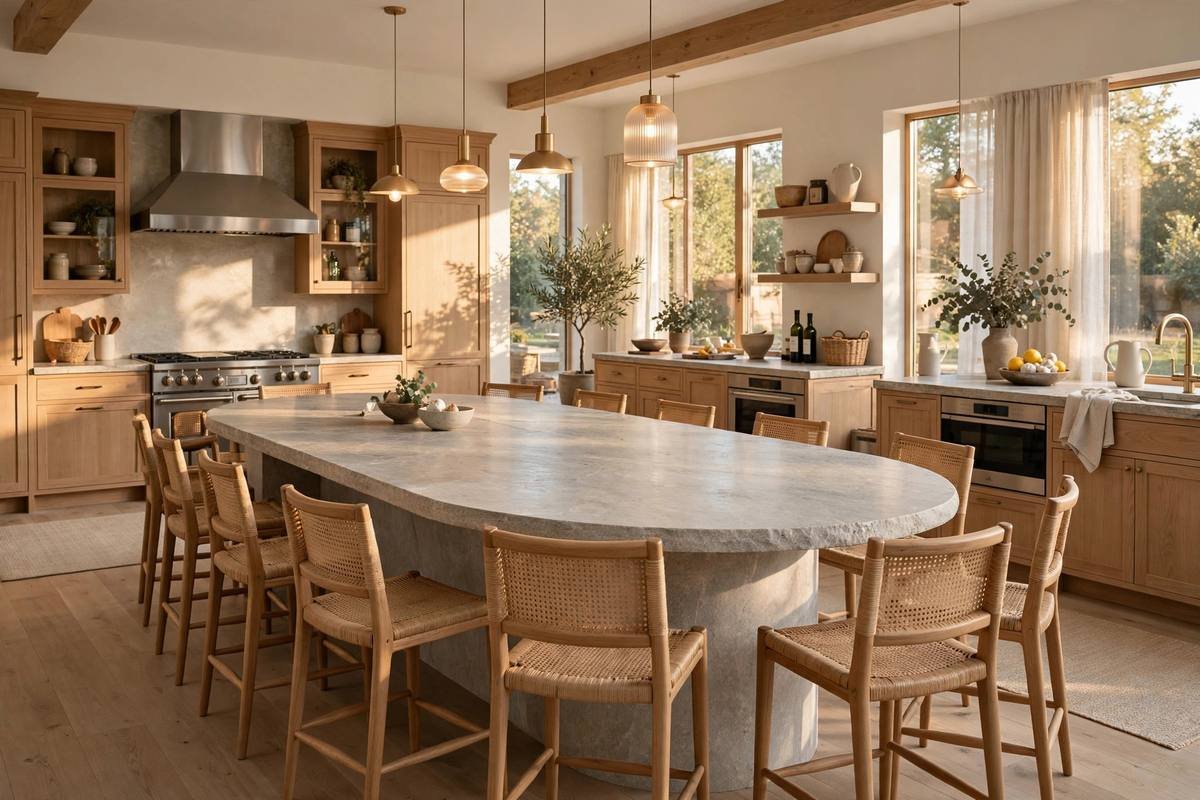
An oval island takes the curved concept all the way: no straight sides at all, just one continuous flowing edge — the ultimate curved kitchen island with seating ideas for entertainers. Seating wraps around nearly the entire perimeter, making it ideal for families who gather in the kitchen and for hosts who love a crowd. The oval shape keeps sightlines open across the room, so the cook never has their back to the action for long. This shape demands a larger kitchen — allow at least 42 inches of clearance on all sides — but in the right space it is pure magic. Top it with a single slab of stone with soft veining and let the shape speak for itself. A single statement pendant centered over the oval anchors the composition.
8. Make It Sculptural in Honed Stone
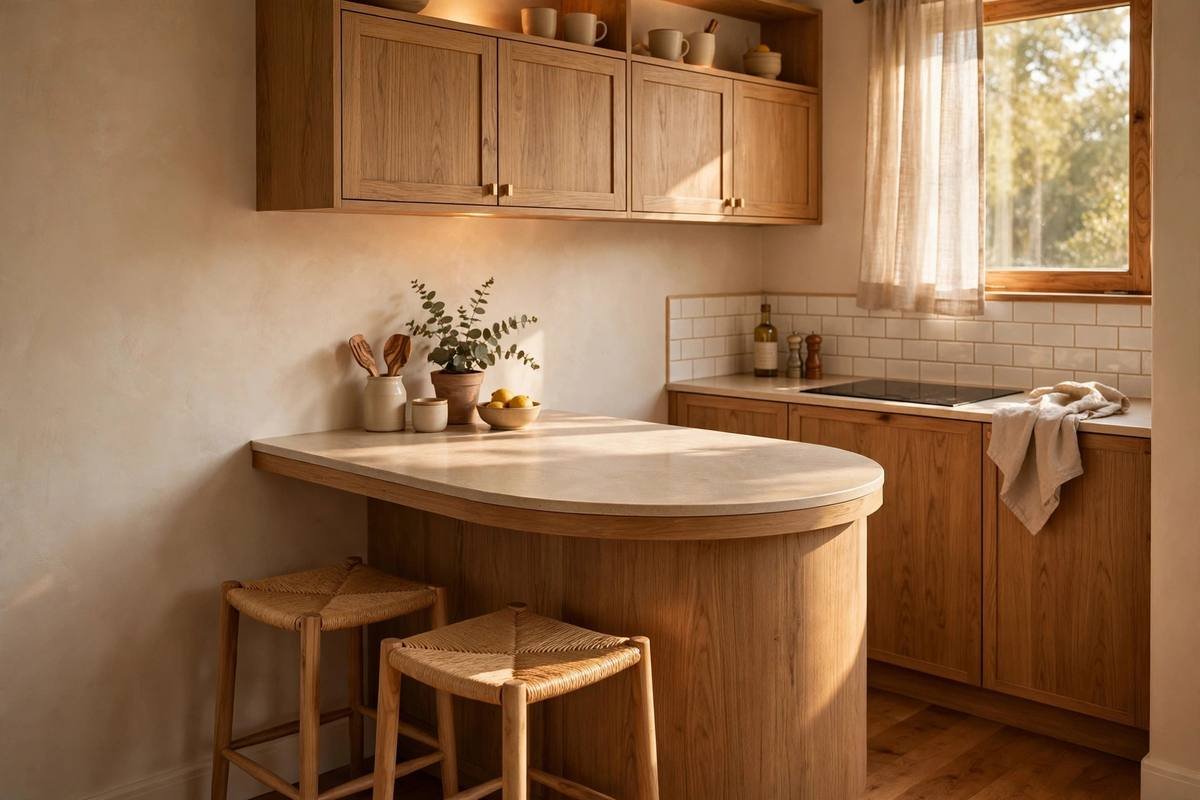
For a high-impact look, clad the entire island — base and top — in honed stone like travertine, limestone, or quartzite. The monolithic form reads as sculpture, and the curved profile keeps all that stone feeling soft rather than severe. Honed finishes are key: they absorb light gently and show off the stone’s natural texture without the glare of polish. This is a splurge, but it turns the island into the undeniable centerpiece of the home. Keep the surrounding cabinetry quiet — warm white or pale wood — so the stone island holds the spotlight. Seal natural stone properly and it will handle daily life beautifully. Under-cabinet lighting grazes the honed surface at night, revealing every nuance of the stone.
9. Build a Half-Moon Against the Wall

Not every kitchen has room for a freestanding island. A half-moon island — flat on the wall side, curved on the room side — delivers the curve trend in compact spaces. It works as a peninsula alternative, offering prep space and two to three seats while hugging the wall. The curved front softens the room’s geometry and improves flow around the open side, which is exactly where traffic needs it most. Style the wall above with open shelves or a single piece of art to complete the vignette. Add two backless stools that tuck fully underneath to keep the walkway clear. For styling inspiration once the shape is set, browse our kitchen island decor ideas for centerpieces and vignettes.
10. Flute the Curved Front for Texture

Fluted detailing — shallow vertical grooves — adds rhythm and shadow play to a curved island front, catching light differently as you move through the room. On a curve, fluting feels especially organic, almost like a shell or a piece of turned wood. You can achieve the look with fluted wood panels, a routed MDF front painted in a rich tone, or even fluted stone for a luxury statement. Pair a fluted curved island with simple flat-front perimeter cabinets so the texture contrast reads clearly. This is the detail that makes guests run their hands along the island — in the best way. Paint the flutes the same color as the base for subtlety, or contrast them for drama.
11. Paint It a Soft, Nature-Inspired Color
A curved island in a soft, nature-inspired paint color — sage, olive, warm greige, or dusty blue — doubles the softness: gentle shape plus gentle hue. The color defines the island as the room’s focal point while the curve keeps it approachable. This is a lower-commitment way to try the trend than a full stone reclad, and paint can be refreshed as tastes change. Our olive green kitchen roundup shows how beautifully these earthy tones play with wood and brass. Keep the countertop light and quiet so the colored curve remains the star of the show. Brass hardware and a light oak floor keep the colored curve feeling fresh rather than heavy in a sun-filled space.
12. Light It Like a Sculpture

A curved island deserves lighting that celebrates its shape. Hang a linear pendant that follows the island’s length, or cluster three small pendants in an arc that echoes the curve. Under-cabinet LED strips along the toe kick create a floating effect at night, making the island glow like a lantern — especially stunning with a curved stone or tambour base. Put the pendants on a dimmer so the island shifts from bright task lighting to soft evening ambiance. Thoughtful lighting is what elevates a curved island from a nice shape to the unforgettable heart of the home. Smart controls let you schedule the glow to fade as the evening winds down, turning the kitchen into a calm nighttime retreat.

Frequently Asked Questions About Curved Kitchen Island with Seating Ideas
Are curved kitchen islands more expensive than rectangular ones? Generally, yes — curved cabinetry and bent materials like tambour require more skilled labor than straight runs, and curved stone countertops cost more to fabricate. Expect a premium of roughly 15 to 30 percent over a comparable rectangular island. A curved end on an otherwise straight island is a budget-friendlier way to get the look.
Do curved islands work in small kitchens? Absolutely — in fact, curves can make small kitchens function better by improving clearance around tight corners. A slim island with rounded ends or a half-moon peninsula fits where a rectangular island would block traffic. Just keep the overall footprint modest and maintain at least 36 inches of walkway clearance.
What countertop materials work best on a curved island? Quartz and quartzite handle curves well since they can be fabricated to templates, and butcher block can be shaped with the right tools. Natural stone slabs work beautifully for pill and oval shapes. Avoid materials that only come in rigid rectangular slabs unless your fabricator confirms they can cut the curve.
How much clearance do I need around a curved island? Plan for 36 inches minimum between the island and surrounding counters or walls, and 42 to 48 inches where seating is involved so stools can pull out comfortably. The beauty of curves is that clearance feels more generous — rounded ends visually and physically ease the passage, so the same inches go further.
Start your curved kitchen island with seating ideas by measuring your kitchen and traffic paths. The best curved kitchen island with seating ideas fit the room, not just the trend. When planning curved kitchen island with seating ideas, allow 36 inches for walkways.
Seating comfort defines successful curved kitchen island with seating ideas. Choose backless stools that tuck fully under the curve. The best curved kitchen island with seating ideas allow 24 inches per person. These curved kitchen island with seating ideas make the island a gathering spot.
Materials matter in curved kitchen island with seating ideas. Quartz and butcher block handle curves well. The most durable curved kitchen island with seating ideas use sealed stone. These curved kitchen island with seating ideas will last for decades.
Finally, the best curved kitchen island with seating ideas balance beauty and function. Test the layout with tape before committing. When your curved kitchen island with seating ideas work for daily life, the kitchen becomes the heart of the home. These curved kitchen island with seating ideas will inspire your remodel.