12 Industrial Living Room Ideas With Raw, Urban Edge

Industrial style works when the materials look honest: brick with its color variation showing, metal with a matte finish, wood with grain you can feel. It fails when it becomes a costume of gears, signs, and black paint on every surface. The industrial living room ideas below follow a simple ratio that keeps the look grounded: one raw surface in charge, warm wood and leather to soften it, and black metal repeated in just three places before you stop.
You do not need a converted warehouse to use them. A standard apartment living room of 12 by 16 feet takes the style well if the furniture stays low, the walkways stay at 30 to 36 inches, and every hard surface gets one soft layer next to it. Start with two or three ideas, live with them, and add the rest only where the room still feels unfinished.
1. Let One Brick Wall Lead the Room
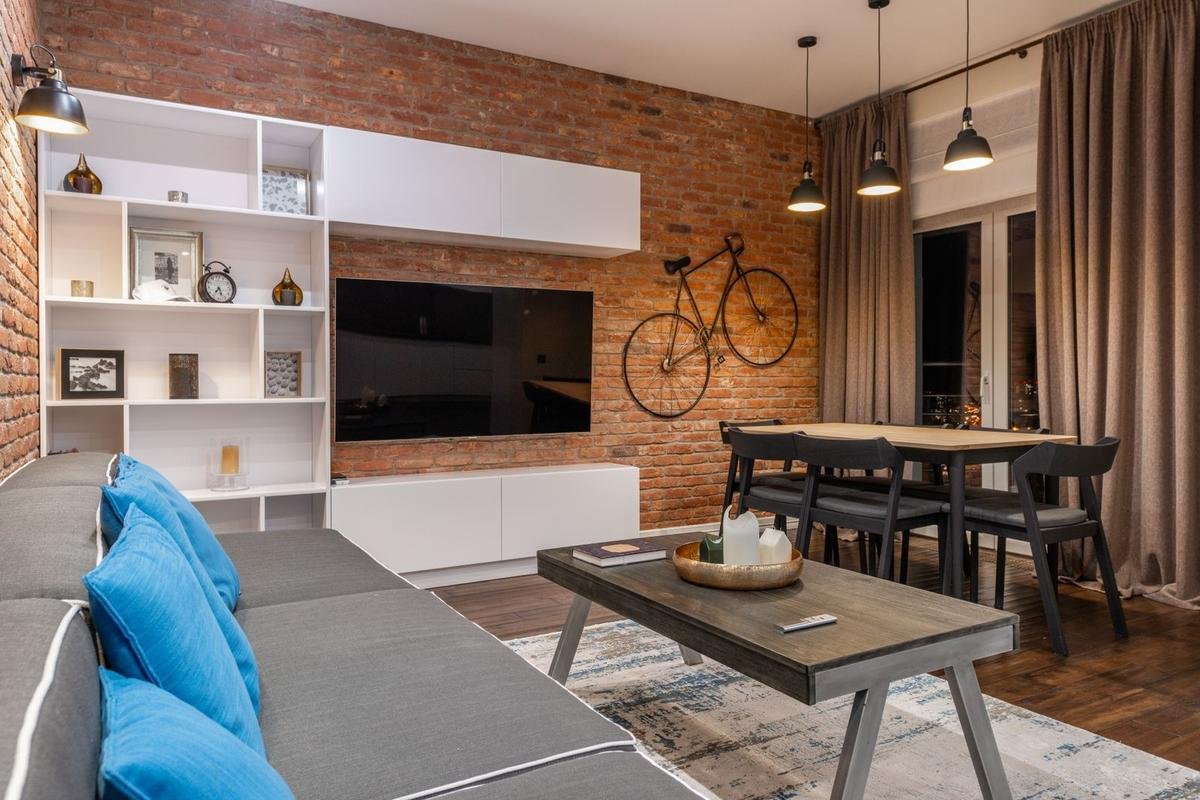
Brick is the strongest texture in the style, so give it one wall, usually the longest one or the one behind the sofa, and keep the other walls a warm white or pale gray. Real brick needs only dusting and a matte sealant every few years; never paint over original brick, because the color variation is the whole effect. Renters and brick-free rooms can use brick slips or panels on a single wall section of 8 to 10 feet wide, kept to a matte finish so the light does not bounce off them. Leave 2 to 3 inches of plain wall at each end so the brick reads as a deliberate panel, not a failed attempt to cover the room.
2. Ground the Seating on a Concrete-Look Floor

Polished concrete is the classic industrial floor, cool gray, slightly reflective, and tough enough for daily life. Where real concrete is not an option, large-format concrete-look tiles or a matte gray vinyl plank give the same read for roughly $3 to $8 per square foot installed, against $6 to $12 for polished concrete. Concrete is hard and cold underfoot, so size the rug generously: 8 by 10 feet minimum under a three-seat sofa, with the front legs of every seat on it and 12 to 18 inches of bare floor left around the room's edge. A worn-look wool or flat-weave rug in rust, cream, or faded red is what stops the floor from feeling like a parking garage.
3. Anchor the Room With a Low Leather Sofa

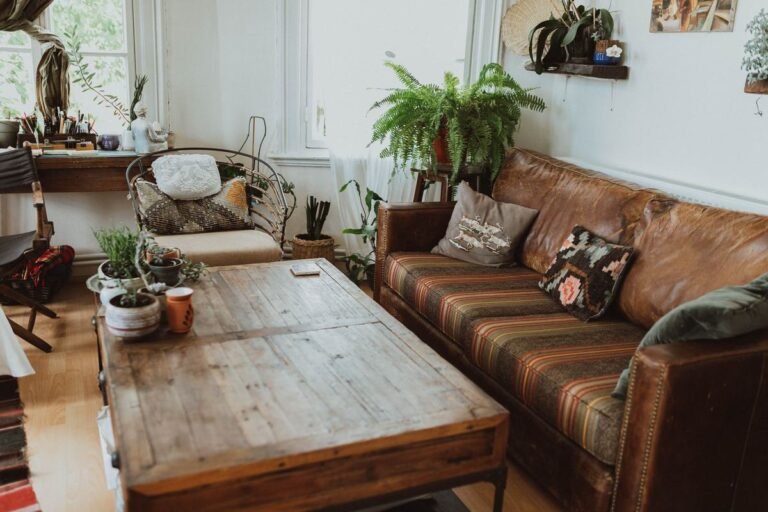
A leather sofa is the piece that makes hard rooms feel inhabited. Full-grain leather in cognac, tobacco, or chocolate develops a patina instead of wearing out, and it stands up to brick and concrete without looking delicate. Keep the profile low and the arms slim; a low-profile sofa of about 84 inches wide and 32 inches high preserves sightlines in a loft-style room and leaves the brick visible above it. Budget honestly: $400 to $700 buys bonded or corrected leather that cracks early, while $1,200 to $2,500 buys full-grain that lasts a decade. Condition the leather twice a year and keep it out of direct sun, which dries it faster than use does.
4. Pair Black Metal With Warm Wood, Every Time

Black metal on its own reads cold; black metal against warm wood reads industrial. Use the pairing for the big flat pieces: a coffee table, a media console, and shelving, all with matte black frames and wood tops in one family of brown. Our walnut furniture ideas show how walnut's mid-brown grain sits against black steel without turning orange, and our dark wood decor guide covers the deeper stains for rooms with little daylight. Keep wood tones within one family and let the metal be identical everywhere; matching the metal and varying the wood slightly looks collected, while the reverse looks like a showroom mismatch.
5. Build Iron Pipe Shelving on the Blank Wall

Pipe shelving is the most useful of these industrial living room ideas because it is storage, structure, and decor in one run. Use 3/4-inch black iron pipe with floor flanges and boards 10 to 12 inches deep; a run 48 to 60 inches wide with shelves at 14 to 16 inches apart holds books, baskets, and a plant without crowding. The parts for a three-shelf unit run about $80 to $150, roughly half the price of a comparable bought bookcase. Anchor every flange into a stud or use rated wall anchors, because a loaded shelf easily carries 40 pounds. Style it at two-thirds full: books in short stacks, one metal object, one plant, and empty space left on purpose.
6. Layer Factory Lighting at Three Heights

Factory lighting means metal shades, visible bulbs, and light aimed at a job, and one ceiling fixture cannot do it alone. Work at three heights: a pendant or two over the coffee table, hung so the shade sits about 48 to 54 inches above the floor; a floor lamp beside the reading chair; and a small caged table lamp on the console for the evening layer. Keep every bulb warm white, 2700K, because cool bulbs turn brick blue and leather gray. The Houzz industrial living room photo gallery shows how consistently real lofts mix pendant, floor, and table light rather than matching one fixture three times. Expect $60 to $150 per fixture for metal shades that feel substantial rather than tinny.
7. Choose a Reclaimed-Wood Coffee Table With Steel Legs

The coffee table is where reclaimed wood earns its place: a top 1.5 to 2 inches thick with saw marks and nail holes left visible, on black steel legs or a riveted frame. Size it at roughly two-thirds the sofa length, about 48 to 54 inches for an 84-inch sofa, and leave 14 to 18 inches between the table edge and the sofa so knees and trays pass comfortably. Casters look authentic but wander on hard floors, so choose fixed legs unless the table is light. Sand only enough to remove splinters, then finish with matte oil or wax; a glossy coat turns salvage into reproduction in one step. Solid reclaimed tops run $250 to $600 and outlast most flat-pack tables twice over.
8. Run a Dark, Moody Palette Without Going Black Everywhere
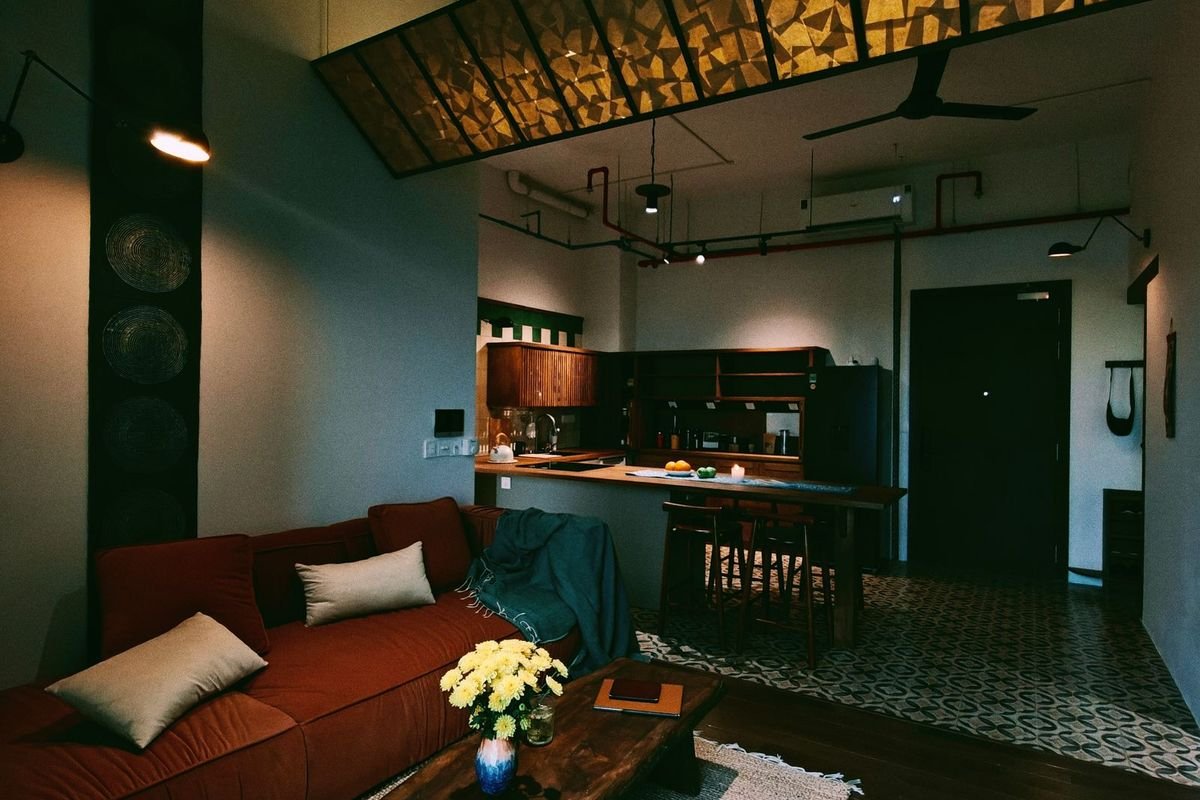
Charcoal, iron gray, and deep brown give industrial rooms their evening mood, but the palette needs a warm counterweight or the room goes flat by day. Build it as roughly 60 percent warm neutral (walls, rug, upholstery), 30 percent dark (sofa, console, one painted wall at most), and 10 percent rust, cognac, or aged brass. A chocolate brown living room scheme is the softest version of this palette, swapping black for brown so north-facing rooms keep their warmth. Test dark paint on the wall behind the sofa first: it is the wall you face least while seated, and it makes leather and pale cushions look richer from the doorway.
9. Mix Metals, But Stop at Two Finishes

Mixed metal is where industrial rooms most often go wrong, because every lamp, handle, and frame arrives in a different finish. Set one dominant metal, usually matte black, across about 70 percent of the metal in the room, then allow one accent metal, aged brass or raw steel, for the remaining 30 percent. Our mixed metal decor guide shows the same two-finish rule at whole-room scale. Repeat the accent at least three times, a lamp base, a frame, and a bowl, so it reads as a decision. Chrome and polished nickel are the finishes to skip here; their shine belongs to modern rooms and makes honest steel beside them look dull by comparison.
10. Zone an Open Plan With Rugs and Low Furniture
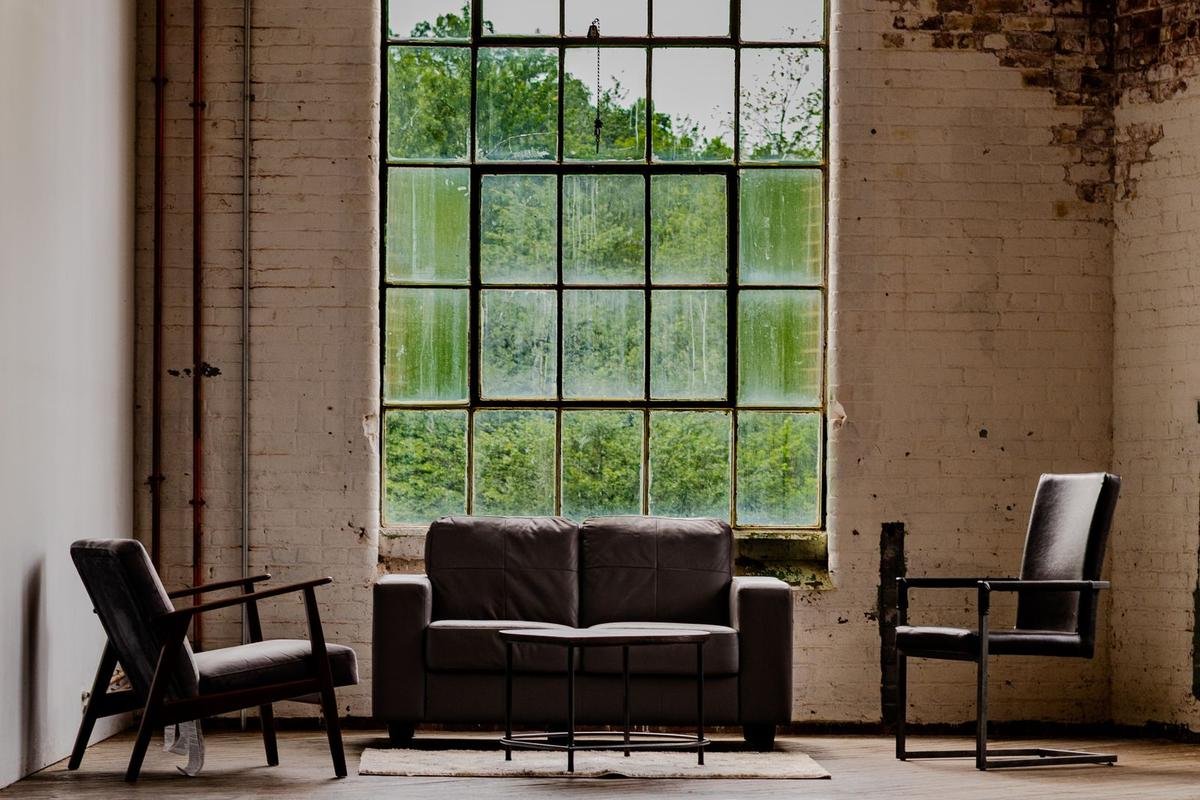
Loft layouts fail when furniture floats without a job, so define the living zone physically. One large rug, 9 by 12 feet in a true open plan, plus the sofa's back makes a room inside the room; keep every other piece under 36 inches high so sightlines run over the furniture to the windows. Place the sofa at least 6 inches off the wall if the plan allows it, and keep a clear 36-inch path from the entry to the kitchen or hall. A low bookcase or console behind the sofa, no taller than the sofa back, finishes the boundary without a wall. This is the cheapest of the industrial living room ideas to test, because it costs nothing but an afternoon of moving furniture.
11. Add Vintage Factory Finds, Sparingly and With a Job

One or two real factory pieces give a room a history that reproductions cannot: a metal locker cabinet as a media unit, a factory cart as a side table, a large wall clock that actually works. Give each piece a job and a clean surface, and stop at two; the third prop is where a living room starts to read as a theme restaurant. Check salvaged metal for sharp edges and flaking paint, seal rust with a clear matte coat, and expect to pay $75 to $300 per piece at salvage yards, less than most reproduction versions. Gears, pulleys, and signage work only as a single wall grouping, hung asymmetrically, never scattered one per shelf.
12. Soften Everything With Textiles, Plants, and Maintenance

The final layer decides whether the room is livable. Add one woven throw and two cushions per sofa in linen, canvas, or wool, a curtain panel in a natural weave at each window, and one large plant, such as a rubber plant or olive tree in a terracotta or concrete pot, to put something alive against the brick and steel. Then maintain the honest materials honestly: dust brick with a soft brush rather than washing it, wipe concrete-look floors with a pH-neutral cleaner, and dust pipe shelving monthly because open shelves show it first. Rooms built on real texture age gracefully when they are kept clean and slightly under-decorated, which is the whole point of these industrial living room ideas.
Frequently Asked Questions
How can I get industrial living room ideas to work in a small apartment? Scale down, not out. Keep walls light, choose a low sofa under 84 inches, repeat black metal in just three slim pieces, and use one 5 by 8 or 8 by 10 foot rug to hold the seating together. Skip pipe shelving runs wider than 48 inches and factory pieces larger than a side table. The materials create the style, so a small room needs fewer of them, not smaller versions of everything.
How do I stop an industrial living room from feeling cold? Warmth comes from three things: warm wood against every black metal piece, bulbs at 2700K rather than daylight white, and a textile layer of rug, throw, and cushions covering roughly a third of what you see from the sofa. Leather in cognac or chocolate instead of black does more for warmth than any accessory, because it is the largest warm surface in the room.
Can I do industrial style as a renter without real brick or concrete? Yes. Use brick slips or matte brick panels on one wall section, concrete-look vinyl plank or a large gray rug over the existing floor, and freestanding pipe shelving that anchors to a single stud row. Keep every change reversible, photograph the walls before you start, and spend the real money on the sofa and lighting, which move with you.
How many metal finishes should I use in one room? Two. One dominant finish, usually matte black, on about 70 percent of the metal, and one accent such as aged brass or raw steel repeated at least three times. A third finish is the point where industrial living room ideas stop looking collected and start looking accidental, especially when one of the finishes is shiny chrome.