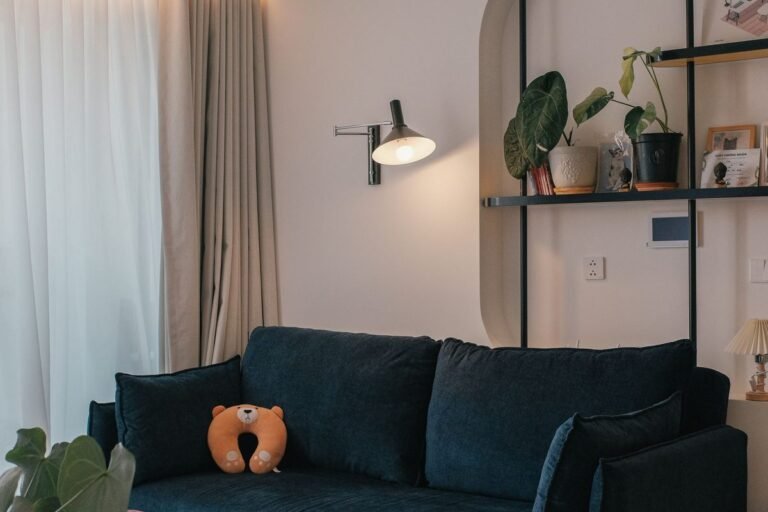
12 Low Ceiling Decor Ideas That Make Rooms Feel Taller
A low ceiling is usually a ceiling of 7 to 8 feet in a room furnished as if it were 9 or 10. The fix is rarely structural. Low ceiling decor ideas work on perception: they remove the hard line where wall meets ceiling, keep furniture mass near the floor, and give the eye long vertical lines to travel instead of short horizontal ones. Done together, three or four of the moves below can make a standard 8-foot room read a full foot taller.
Work in the order that costs least. Paint, a moved curtain rod, and one tall mirror change more than any furniture purchase, and most of these low ceiling decor ideas cost between $0 and $150. Measure your ceiling first, in the middle of the room and at the walls, because older homes often vary by an inch or more, and every clearance below assumes a true 8-foot, 96-inch ceiling.
1. Paint the Ceiling and Walls One Light Color

The single most reliable move is to erase the boundary. Paint the walls and ceiling the same soft white, pale gray, or warm off-white, and the eye can no longer find the exact height where the room ends. If you want some definition, keep the ceiling one shade lighter than the walls, never darker. Use flat or matte paint on the ceiling, since sheen shows every flaw at close range. Our living room paint guide covers choosing the shade by light direction. One gallon, about $35 to $65, covers roughly 350 square feet, so most ceilings take a single gallon. In a dim, north-facing room this light approach is not optional; it is the whole strategy.
2. Hang Curtains at the Ceiling, Not at the Window

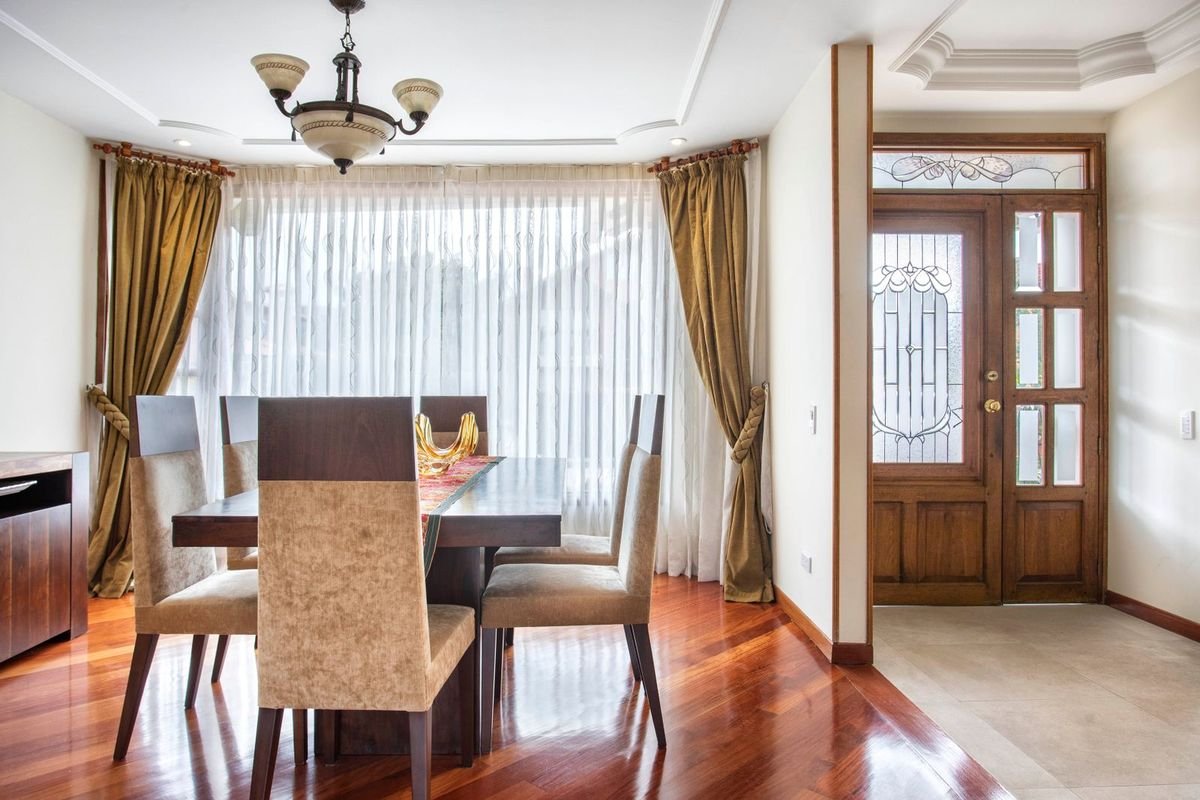
Curtains hung at the window frame announce exactly how short the wall is. Mount the rod 2 to 4 inches below the ceiling instead, extend it 8 to 12 inches past each side of the frame, and let the panels fall to within half an inch of the floor. On an 8-foot wall that means a drop of about 90 to 94 inches, so buy 96-inch panels, not the standard 84-inch length that stops at the sill line. The unbroken vertical fall is the tallest single line most rooms can hold. Our curtain ideas cover fabrics and fullness; here, lightweight linen-look panels in a color close to the wall work best, about $30 to $80 a pair. Renters can use ceiling-mounted track, which leaves only small, fillable screw holes.
3. Choose Low-Profile Furniture and Show Its Legs

Every inch of sofa height is an inch subtracted from the wall above it. Choose a sofa with a back height of 30 to 32 inches or less, a seat height around 17 to 18 inches, and visible legs of 4 to 6 inches that let light pass underneath. A coffee table at 14 to 16 inches high and a media console under 24 inches keep the room's mass in its bottom third. Our small living room ideas apply the same proportions to tight floor plans. Avoid tall armoires and 7-foot bookcases against the main wall; if storage must be tall, move it to the shortest wall where it reads as a deliberate feature. Low does not mean uncomfortable. It means the back cushions, not the frame, do the work.
4. Add Vertical Lines With Paneling, Stripes, or Tall Plants

The eye follows lines, so give it lines that go up. Thin vertical stripes in wallpaper or paint, board-and-batten or slat paneling run floor to ceiling, and a tall, narrow plant such as a fiddle-leaf fig or snake plant at 4 to 5 feet all pull the gaze upward. Keep stripes subtle, tone on tone or under 4 inches wide; bold, wide stripes belong to tall rooms. One accent wall of vertical treatment is enough in a small room, and it should be the wall you face on entry. A roll of striped wallpaper runs about $40 to $90 and covers roughly 56 square feet. Skip chair rails and any horizontal trim at mid-wall, which cuts the wall, and the ceiling, visually in half.
5. Use Tall Mirrors to Double the Height You Have

A mirror is the cheapest extra window a low room can get. Choose one tall, narrow mirror, at least 55 to 65 inches high and 20 to 24 inches wide, and lean it against the wall or hang it opposite a window so it reflects light and a slice of ceiling. Floor-length placement matters: a mirror that starts at the floor reads as a doorway into a taller space, while a small mirror at eye level is just decor. Our mirrors for small rooms guide covers shapes and placement in detail. A large leaning mirror costs about $80 to $250. Secure the top with an anti-tip strap, especially a leaned piece; at this size it is furniture, not an accessory.
6. Swap Pendants for Flush Mounts and Up-Lighting

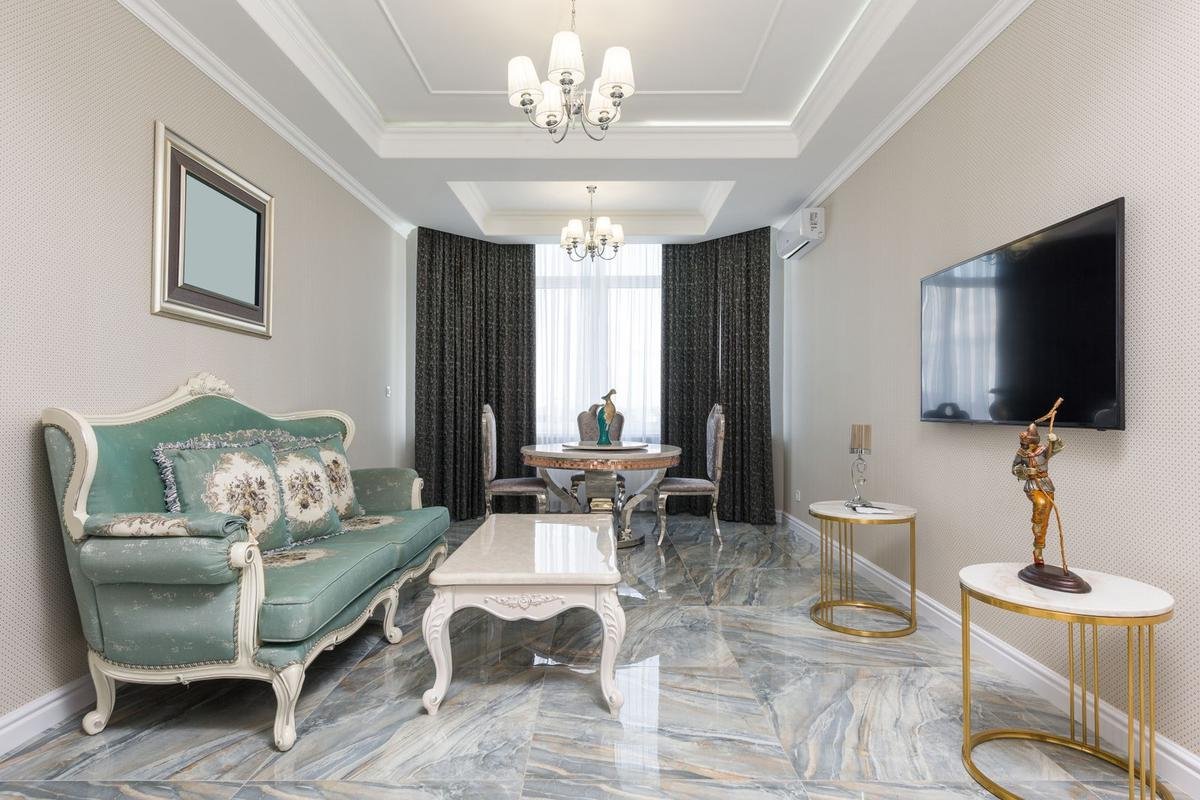
Anything that hangs down from a low ceiling spends height you do not have. As Houzz shows in its guide to making ceilings feel taller without renovating, keeping the ceiling plane clean and the room bright is what lets the other tricks work. Choose flush mounts that sit within 3 to 4 inches of the ceiling, or recessed lights, and then layer light at wall level: sconces that wash light upward, a torchiere floor lamp, or LED strip along the top of a tall cabinet. Light pooled on the ceiling from below makes the surface recede. Budget about $40 to $150 per flush mount. Never hang a pendant lower than 7 feet over a walkway; over a dining table, 30 inches above the tabletop is the floor for the fixture.
7. Hang Art Higher and in Vertical Arrangements
Art hung at the standard center of 57 inches is calibrated for taller rooms. In a low room, hang pieces 2 to 4 inches higher, and choose vertical formats, or stack two smaller pieces in a column, so the arrangement itself is a vertical line. One tall piece of 36 to 48 inches in height does more than a wide horizontal canvas, which stretches the room sideways and squeezes it down. Keep the top of the highest frame at least 6 to 8 inches below the ceiling so the wall still reads as wall. Groupings should climb, not spread: a column of three 11-by-14-inch frames with 2 inches between them spans about 46 inches of height, a strong upward gesture for about $30 to $60 in frames.
8. Run Storage and Doors to the Full Height

A gap between the top of a bookcase or cabinet and the ceiling is a shelf for dust and a ruler that measures your ceiling's shortness. Take storage to within 2 to 3 inches of the ceiling, with tall, narrow bookcases of 72 to 84 inches, kitchen uppers extended with a matching filler panel, or a full-height door of 84 to 96 inches where a standard 80-inch door stood. The unbroken run makes the wall, and therefore the ceiling, read taller. This is the priciest of these low ceiling decor ideas, from about $150 for a tall bookcase to several thousand for cabinet work, so do it only where storage is genuinely needed. A tall piece in every corner crowds the room; one full-height run per room is the limit.
9. Keep the Ceiling Plane Completely Clear

Beams, bulky crown molding, ceiling fans with downrods, and busy ceiling medallions all lower a ceiling visually, and some lower it physically. If crown molding exists, paint it the wall and ceiling color and keep its profile under 3 inches; a wide, contrasting crown draws a heavy frame around the ceiling's true size. Choose a flush-mount fan, which hugs within about 8 to 10 inches of the ceiling, and keep blades at least 7 feet above the floor, the standard safety minimum. Remove nothing structural, obviously, but every decorative layer you strip from the ceiling returns perceived inches. This is also where our statement lighting guide needs a low-ceiling footnote: in these rooms, the statement should be a sculptural flush mount, not a chandelier.
10. Lay a Rug That Holds the Eye at Floor Level

When the ceiling cannot be raised, give the eye somewhere better to be. A large, interesting rug, at least 8 by 10 feet under a standard seating group with the front legs of the furniture on it, becomes the room's focal point at floor level, and guests stop auditing the ceiling altogether. Border patterns and directional designs that run the length of the room reinforce the effect. A quality flat-weave at this size runs about $150 to $500. Keep the rug light or mid-toned rather than very dark; a dark floor under a low ceiling closes the box from both ends. This is the one move here that works by distraction rather than illusion, and in genuinely low rooms, under 7.5 feet, it is often the most honest one.
11. Declutter the Top Third of the Room

Perceived height dies in the top third: tall plants on top of cabinets, stacked storage boxes, art crowded against the ceiling line, and curtains bunched on a low rod all fill the zone the eye needs empty. Audit the room standing at the door and remove everything that sits above about two-thirds of the wall height unless it is one of the deliberate vertical elements, a tall mirror, full-height curtains, or a storage run. What remains above the furniture line should be mostly bare, light wall. Of all the low ceiling decor ideas in this list, this is the one with the best return, because the cost is $0 and the effect is immediate. In practice this is the step people resist, because the tops of cabinets feel like free storage, but in a low room that storage is paid for in headroom.
12. Let In Every Bit of Natural Light

Daylight is height. A bright room reads taller than a dim one at the same dimensions, because shadows pool at the ceiling line and draw it down. Use sheer or light-filtering panels instead of blackout drapes in living spaces, keep the top of the window glass completely uncovered by mounting treatments above and outside the frame, and wash window glass inside and out; dirty glass can cut light noticeably. Trim, or ask your landlord to trim, shrubs that block the lower half of ground-floor windows. Mirrors placed opposite the window, idea 5 above, then have something to work with. Where privacy allows, a bare window with only a simple roller shade, about $25 to $60, is the tallest-looking treatment of all, and the cheapest.
Frequently Asked Questions
What height counts as a low ceiling? Most designers treat anything under 8 feet as low. The International Residential Code sets 7 feet as the minimum ceiling height for habitable rooms, with bathrooms and laundry rooms allowed down to 6 feet 8 inches, though local rules vary. Many older homes and basement conversions sit between 7 and 7.5 feet, which is exactly the range where these visual fixes matter most.
What color should I paint a low ceiling? The same light color as the walls, or one shade lighter, in a flat or matte finish. That removes the visible line where the wall ends. A darker ceiling can work as a deliberate, cozy canopy in a bright bedroom, but in a dim or small room it will feel lower, so decide by daylight: bright room, some freedom; dim room, stay pale.
How high should curtains hang with a low ceiling? As high as the hardware allows: the rod or track 2 to 4 inches below the ceiling, wider than the window by 8 to 12 inches on each side, with panels that end within half an inch of the floor. On an 8-foot wall that means buying 96-inch panels. An 84-inch panel hung at frame height does the opposite of what you want.
What can renters do about a low ceiling? Most low ceiling decor ideas are renter-safe. Nearly everything except paint and recessed lights: ceiling-height curtains on a track, a tall leaning mirror, low-profile furniture, flush-look plug-in sconces, and decluttering the top third are all reversible and deposit-safe. Painting only the ceiling a shade lighter is the one change worth asking a landlord about, since it is cheap to reverse and often approved in writing.