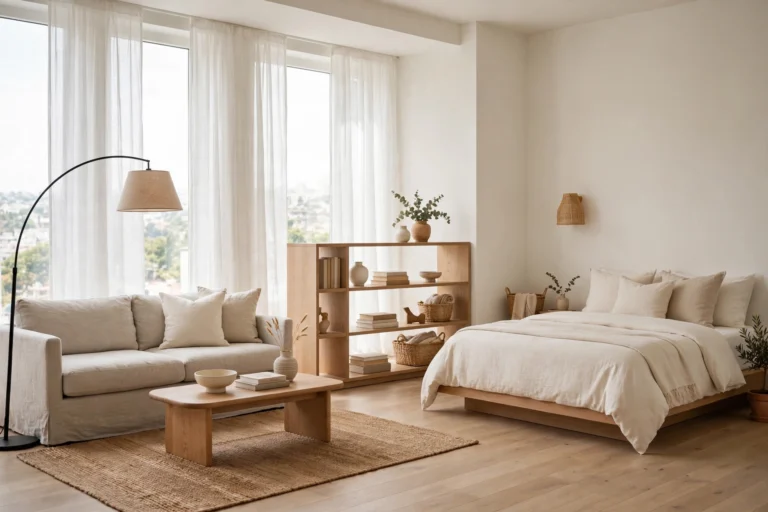
12 Windowless Room Ideas That Feel Bright and Airy

A room without windows is not a lost cause; it is a room where every source of brightness has to be chosen on purpose. Basement bedrooms, interior dens, and converted garages all share the same problem: no daylight, no view, and walls that seem to close in by evening. The windowless room ideas below fix that in a deliberate order, starting with the light itself, then the surfaces that bounce it around, and finally the details that make the space feel lived in rather than sealed off.
Work through them in sequence and measure as you go. A lamp placed at the wrong height, a mirror hung opposite a blank wall, or a rug two feet too dark can undo the rest. Each of these windowless room ideas includes the sizes, bulb temperatures, and price ranges that make it work in a real room, including rentals where you cannot cut a new opening or rewire the ceiling.
1. Layer the Lighting at Three Heights

A single ceiling light is why windowless rooms feel like waiting rooms: it flattens everything and leaves the corners dark. Build three layers instead. Put ambient light overhead, a dimmable flush mount or pendant delivering roughly 800 to 1,200 lumens for a 120-square-foot room, task light at seat height with table or floor lamps, and accent light low or high, such as a picture light or a small uplight behind furniture. Keep every bulb between 2700 and 3000 Kelvin so the layers blend into one warm glow. Budget $150 to $350 for a full three-layer setup using plug-in lamps and one hardwired ceiling swap. Browse real layered schemes in the windowless rooms photo gallery on Houzz before you shop, and note how rarely one fixture works alone. Our layered lighting guide breaks down the lumen math room by room.
2. Paint the Walls and Ceiling One Pale, Warm Color

Color is the cheapest brightness you can buy. Paint all four walls and the ceiling the same warm white, pale greige, or soft cream with a light reflectance value of 70 or higher, and the corners visually disappear, which is exactly what a windowless room needs. Use an eggshell or satin finish rather than flat matte: the slight sheen bounces lamp light instead of absorbing it, worth roughly the effect of one extra lamp. One gallon covers about 350 square feet and costs $35 to $60, so a small room is a $70 to $120 weekend project including a ceiling coat. Avoid cool blue-whites, which turn gray and clinical under artificial light. Test a 2-by-2-foot patch and live with it under your actual bulbs for a full evening before committing to the whole room.
3. Hang One Oversized Mirror Where It Has Light to Steal
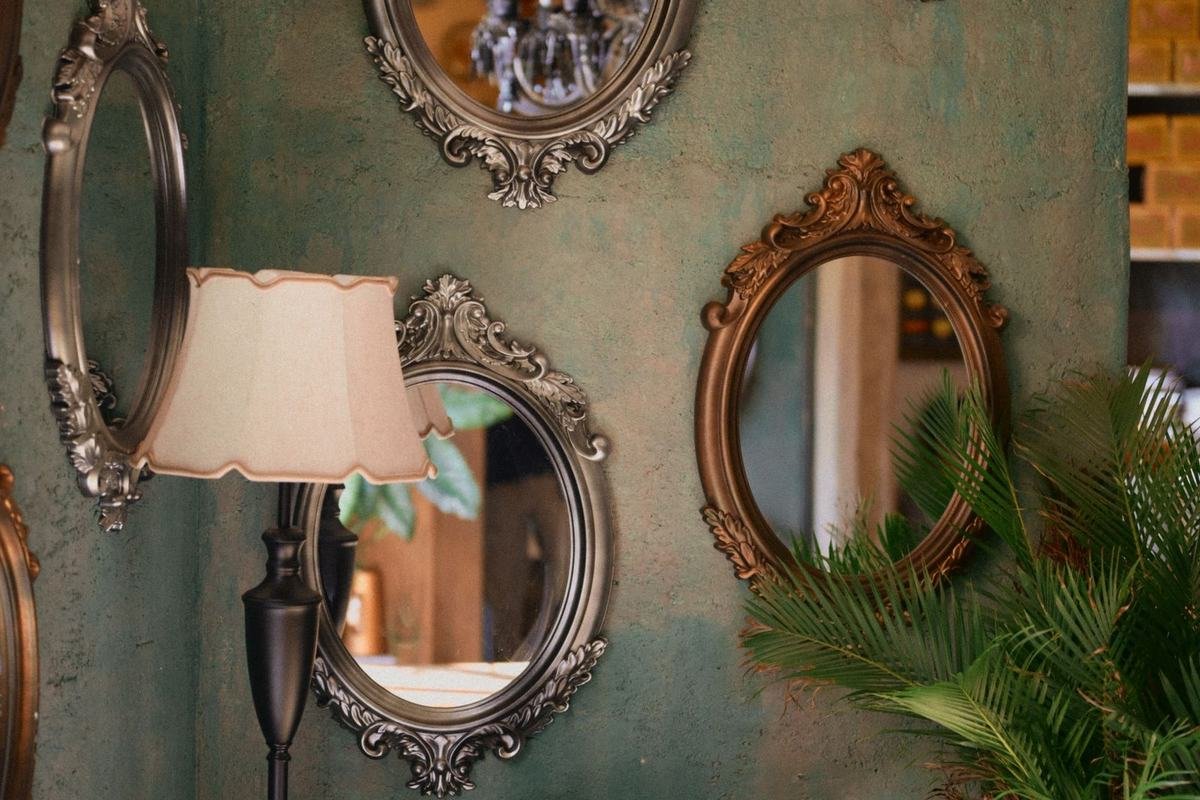
A mirror only brightens a room if it faces something bright, so placement matters more than size. Hang one large mirror, at least 30 by 40 inches and ideally 36 inches wide or more, directly opposite or at a right angle to your strongest lamp or lit artwork, never opposite a blank dark wall or a bookcase, which it will simply double. A cluster of four to six smaller mirrors in matching frames gives a similar bounce for $60 to $120 if a single large piece, usually $120 to $300 framed, is out of reach. Keep the center of the mirror at about 57 inches from the floor so it reflects the room at standing eye level. Our mirrors in small rooms guide shows the placement diagrams for narrow and square rooms.
4. Build a Faux Window With a Backlit Panel and Curtains
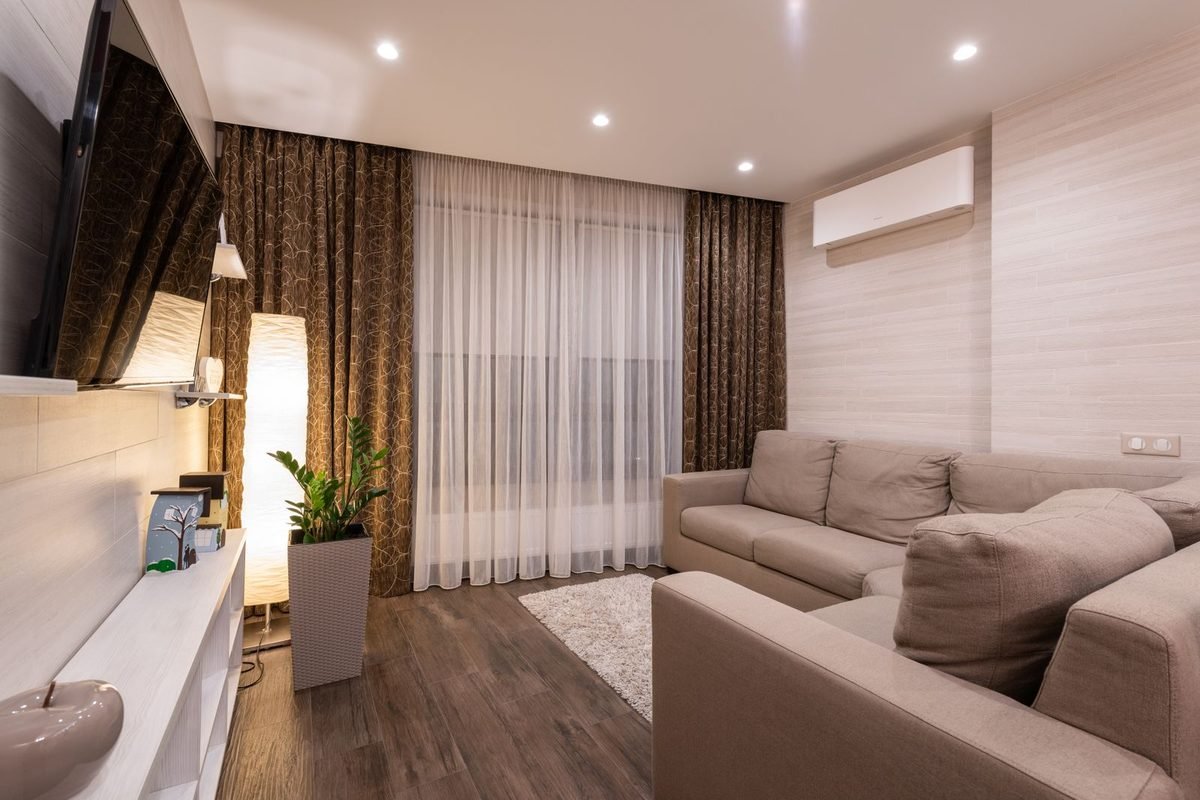
The most convincing trick in this list is also the simplest: give the wall the window it is missing. Mount a shallow LED light panel, 24 by 36 inches is a good scale, behind a simple four-pane frame made from painted trim, then hang curtain panels on a rod 4 to 6 inches above it so the fabric falls as it would over real glass. Use a daylight-balanced panel around 4000 Kelvin, slightly cooler than your lamps, and put it on a dimmer or smart plug timer so it brightens in the morning and warms down at night like actual daylight. The full build runs $90 to $200 with a ready-made panel kit. Behind the sofa or above a desk are the two spots where the illusion holds up best, because nobody studies it up close.
5. Choose Low, Leggy Furniture in Light Fabrics

Heavy, skirted furniture swallows light at floor level, where a windowless room can least afford it. Choose pieces raised on legs 6 to 8 inches high so light travels underneath and the floor stays visible: a sofa with exposed wood or metal legs, an open-base console, and a coffee table you can see through or under. Keep the sofa back under 32 inches high so it does not wall off the room, and favor pale upholstery, oatmeal, light gray, or washed linen, over dark leather or navy fabric. A leggy light-toned sofa runs $700 to $1,400, but legs and fabric matter more than brand. The furniture rules in our small living room ideas apply double here, because a windowless room reads smaller than its measurements.
6. Add Gloss, Glass, and Metal Wherever a Surface Allows

Matte surfaces absorb light; reflective ones hand it on. Trade one dark wood piece for a glass-top coffee table or console, around $150 to $400, and the lamps above it suddenly light the floor below as well. Add satin or gloss finishes in small doses: lacquered trays, ceramic lamps with a glazed finish at $40 to $90, picture frames in brushed brass or chrome, and a metallic-flecked cushion or two. Mirrored furniture is powerful but easy to overdo, so limit it to one piece per room. The goal is sparkle at the edges of your vision, roughly 10 to 15 percent of visible surfaces, not a showroom. Wipe glass weekly; dust shows faster under artificial light and dulls the reflection you bought it for.
7. Lay a Pale Rug to Lift the Whole Floor
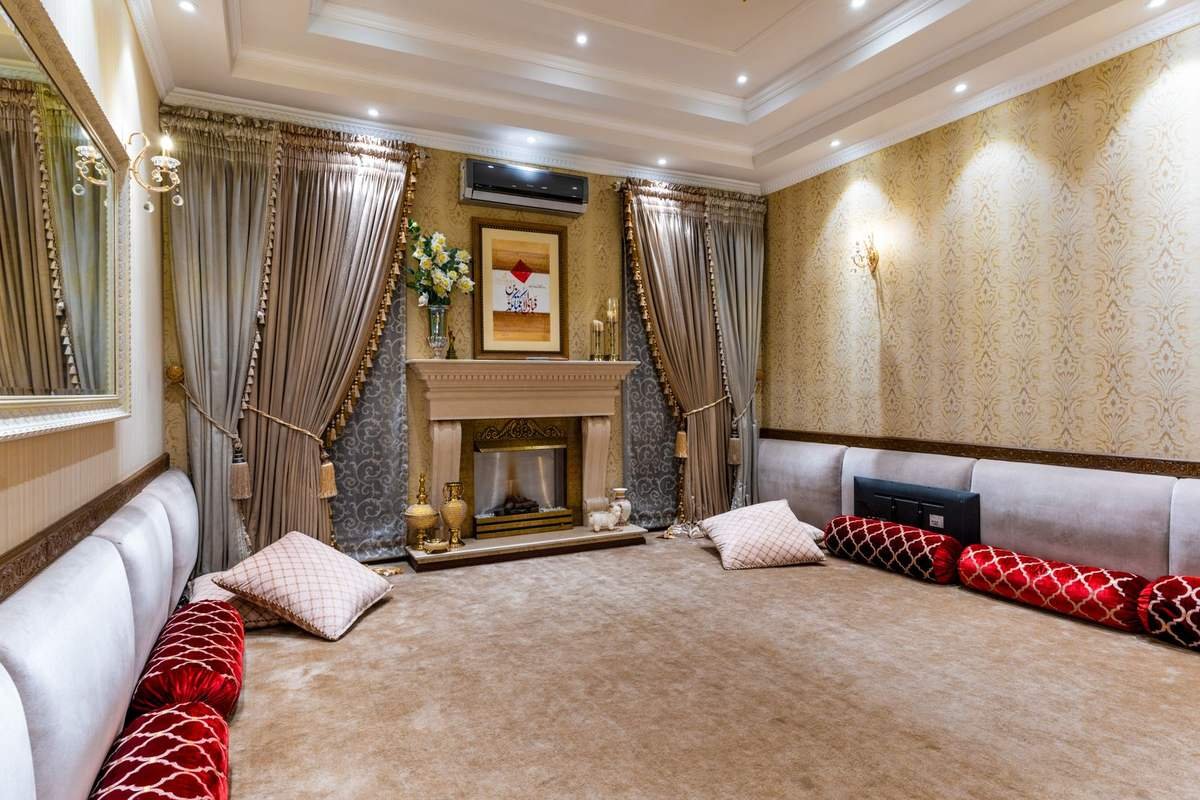
Floors are the largest dark surface in most windowless rooms, and dark wood or gray laminate pulls the whole palette down. Cover the central 60 to 70 percent with a pale rug: an 8 by 10 foot rug in cream, ivory, or a very light heathered gray for a seating area, or a 5 by 8 foot size under a bed or desk setup. Low-pile wool blends and flatweaves reflect more light than deep shag and cost $120 to $350 in the larger size. Leave 12 to 18 inches of border floor visible so the rug reads as a deliberate light panel rather than wall-to-wall carpet. This is the single fastest fix for a rented studio, and our studio apartment ideas show the same pale-floor trick zoning a one-room layout without walls.
8. Grow Low-Light Plants, or Fake Them Convincingly

A room with no window still needs something alive in it, or the eye registers a storeroom. Choose plants that genuinely tolerate low light: snake plants, ZZ plants, and pothos survive on the spill from your lamps, especially within 6 to 8 feet of a bright bulb or under a $20 to $35 full-spectrum grow bulb in a desk lamp for 8 to 10 hours a day. Group three plants at staggered heights, one floor plant around 36 inches, one on a stand, one trailing from a shelf, for $45 to $90 total. Where even a snake plant gives up, use high-quality faux stems in heavy pots; the weight and matte leaves are what sell the illusion. Dust real and fake leaves monthly, because dusty foliage reads as neglect and flattens the green.
9. Hang Large Landscape Art as a Stand-In View
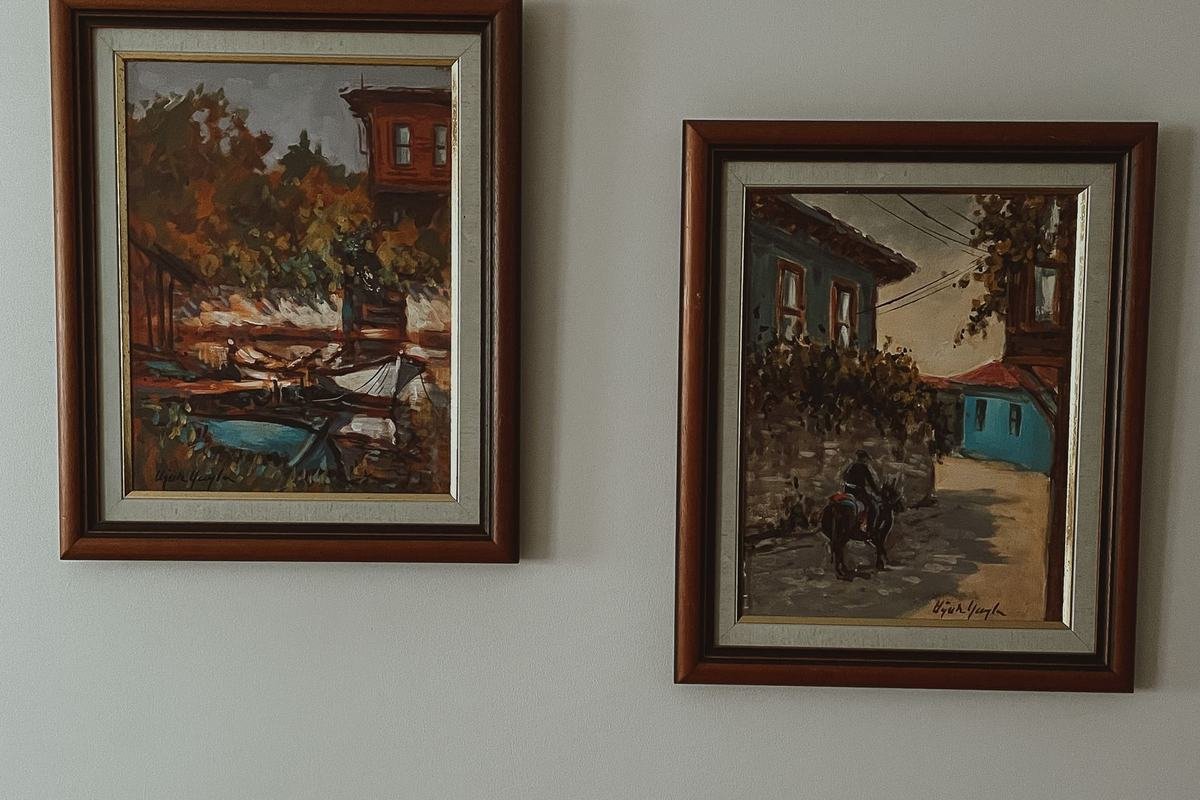
Your eye expects a window to offer distance, so give it distance on canvas instead. Hang one large landscape print, seascape, or open-sky photograph at least 36 to 48 inches wide, centered about 57 inches from the floor, on the wall you face most: opposite the sofa, behind the desk, or above the bed. Pale, high-horizon images with plenty of sky work better than dark forests or moody abstracts, which absorb light like the wall they cover. A framed print in that size runs $80 to $250, or print a downloaded file locally for under $60. Keep the frame light, white, pale oak, or thin brass, and light the piece with a $25 to $50 battery picture light so it glows like the brightest thing in the room, the way a window would.
10. Borrow Light Through Glass or Frosted Interior Doors

If the windowless room sits next to a brighter one, the wall between them is an opportunity. Swapping a solid interior door for a frosted or fluted glass door lets borrowed daylight and lamp light through while keeping privacy, and it is the change renters should ask about first because the original door can go back at move-out. A pre-hung frosted glass door runs $250 to $600 plus fitting. Softer versions of the same idea: a glass transom panel above the doorway, an interior window cut high in the shared wall at $400 to $900 installed, or simply painting the facing side of the existing door gloss white so it throws light back. Even a 1-inch under-door gap replaced with a proper sweep matters less than the glass; one frosted door can raise perceived brightness more than two extra lamps.
11. Hide LED Strips Where Daylight Would Naturally Fall

Daylight enters at edges: along ceilings, under cabinets, behind curtains. Copy that pattern with LED strips and the brain accepts the room as daylit. Run warm-white 2700 to 3000 Kelvin strip along the top of a bookcase, under floating shelves, behind the faux window frame from idea 4, or in a shallow cove where the wall meets the ceiling. A 16-foot reel costs $15 to $35, cuts to length, and sticks on with its own adhesive, so this is fully renter-safe. Put strips on a separate switch or smart plug from your main lamps so you can run the glow alone in the evening. Our indoor string lights guide covers the softer decorative version for shelves and headboards. Avoid cool blue strips; they read as office lighting and undo the warmth.
12. Keep Clutter Behind Closed, Multi-Function Storage
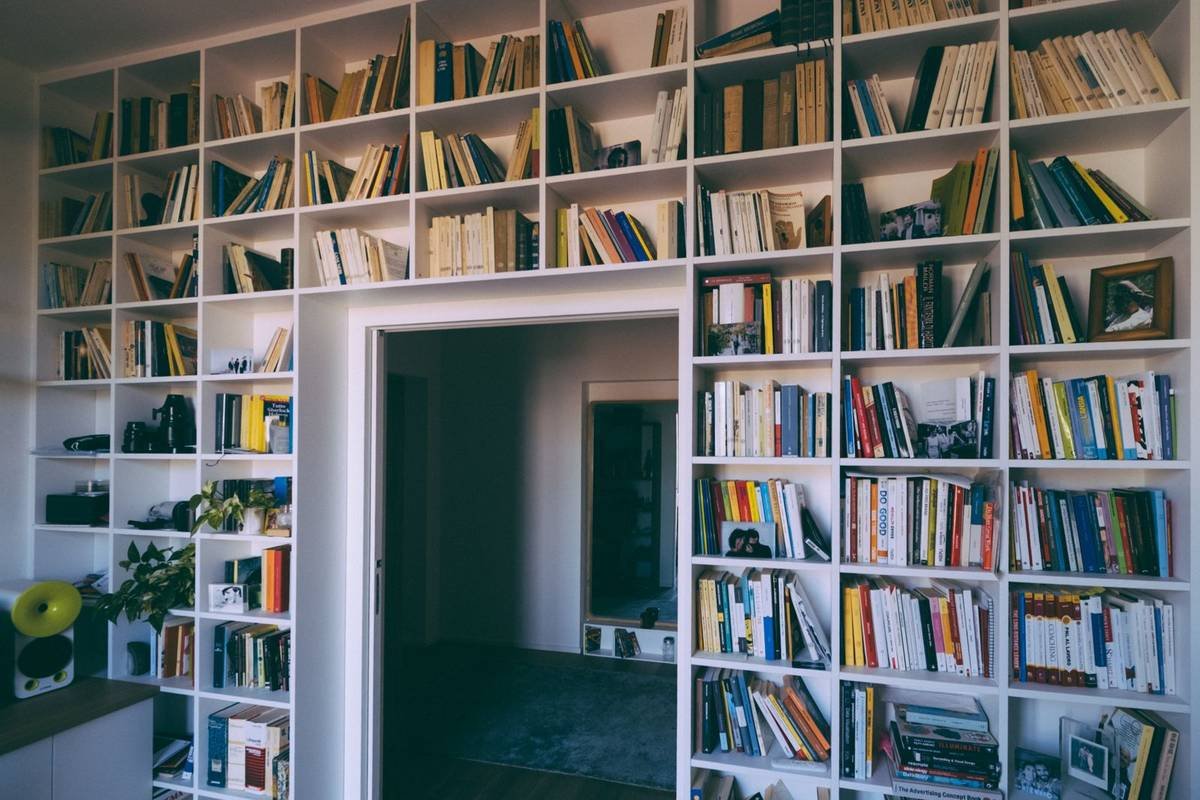
Clutter reads darker than it is: every object on a surface casts a small shadow and breaks up the light. Move storage behind doors, literally, with a closed cabinet, lidded baskets, a storage ottoman at $60 to $150, or a bed base with drawers, and keep visible surfaces at least two-thirds clear. Choose storage in the same pale tone as the walls so it disappears rather than adding new dark blocks, and prefer one tall, narrow piece, 24 inches wide and 72 inches high, over several low boxes that chop up the wall. Label nothing visibly and keep one completely empty shelf; the breathing room is the point. These windowless room ideas only hold if the room stays edited, so do a ten-minute surface reset weekly rather than a monthly excavation.
Frequently Asked Questions
How do you make a windowless room feel brighter without renovation? Layer the lighting first: an overhead source, lamps at seat height, and one accent source, all between 2700 and 3000 Kelvin. Then multiply it with pale paint, one large mirror opposite a lamp, and a light rug. Those changes, roughly $300 to $600, deliver most of a renovation's brightness with no wiring and nothing a renter cannot reverse in a weekend.
What colors work best for windowless room ideas? Warm whites, pale greige, soft cream, and very light warm gray with a light reflectance value of 70 or above are the reliable base, because they bounce artificial light without turning blue or clinical. Keep the ceiling the same color as the walls to erase the corners. Save saturated color for cushions, art, and one accent piece, where it adds life without lowering the room's overall brightness.
Can plants really survive in a room with no windows? Yes, if you choose true low-light species and give them a light source. Snake plants, ZZ plants, and pothos tolerate low ambient light for long stretches, and a full-spectrum grow bulb in an ordinary lamp, run 8 to 10 hours a day, covers the rest for about $20 to $35. Rotate plants to a bright room for a week every couple of months if growth stalls, or use realistic faux plants where nothing thrives.
Is a faux window worth it, or does it look fake? Done at the right scale, it works, because the effect is about light rather than the view. Use a panel at least 24 by 36 inches, frame it with trim, hang real curtains beside it, and run it slightly cooler and brighter than your other lamps, on a timer that follows the day. It looks fake when small, unframed, or glowing blue at midnight.