12 Entryway Mirror Ideas for More Light and Space
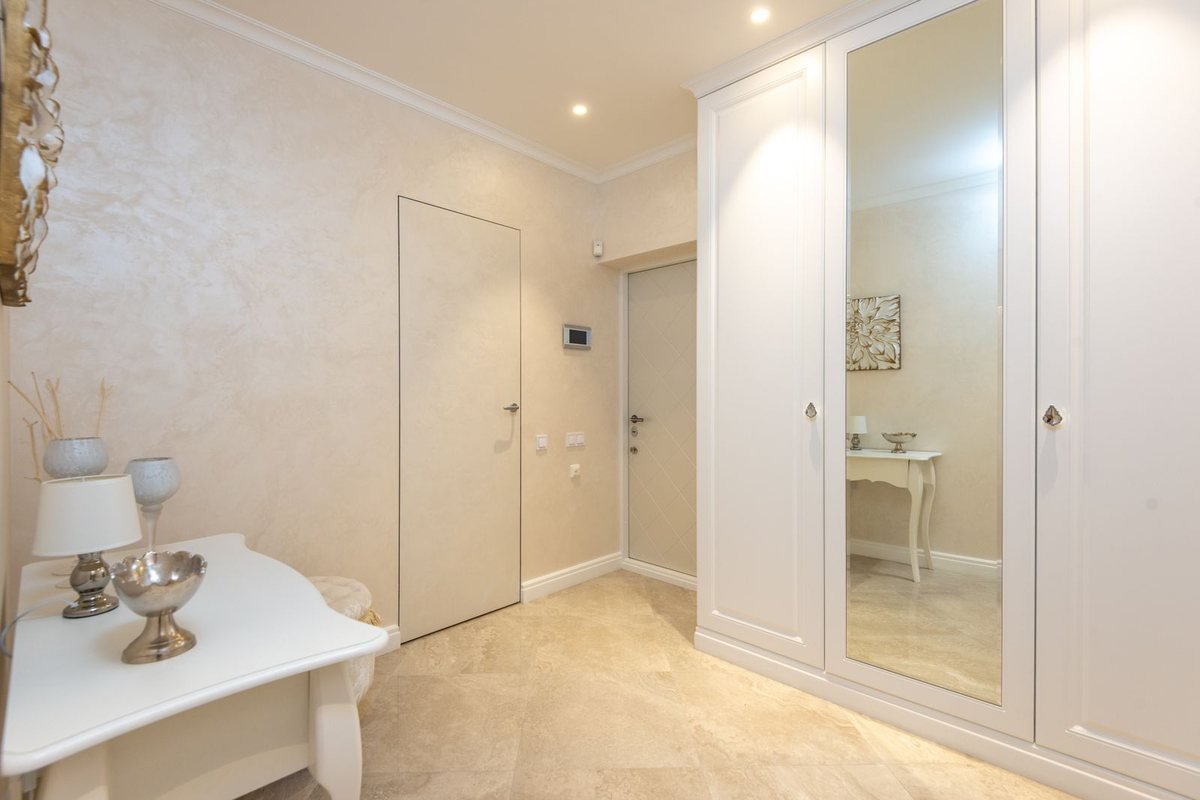
Most entryways get the worst light in the home. Many have no window at all, and the ones that do often face a wall, a staircase, or the side of the house. A mirror is the simplest fix: it borrows light from the nearest bright room, doubles it back into the entry, and gives you a last check before heading out.
The entryway mirror ideas below focus on small and narrow entries, where shape, size, and placement matter more than budget. A few rules run through all of them. Hang a mirror so its center sits around 57 to 60 inches from the floor, keep it a hand’s width above any console or bench below, and let it reflect something worth seeing — a window, a lamp, or a bright room — rather than a cluttered coat rack.
1. Hang a Round Mirror Above the Console
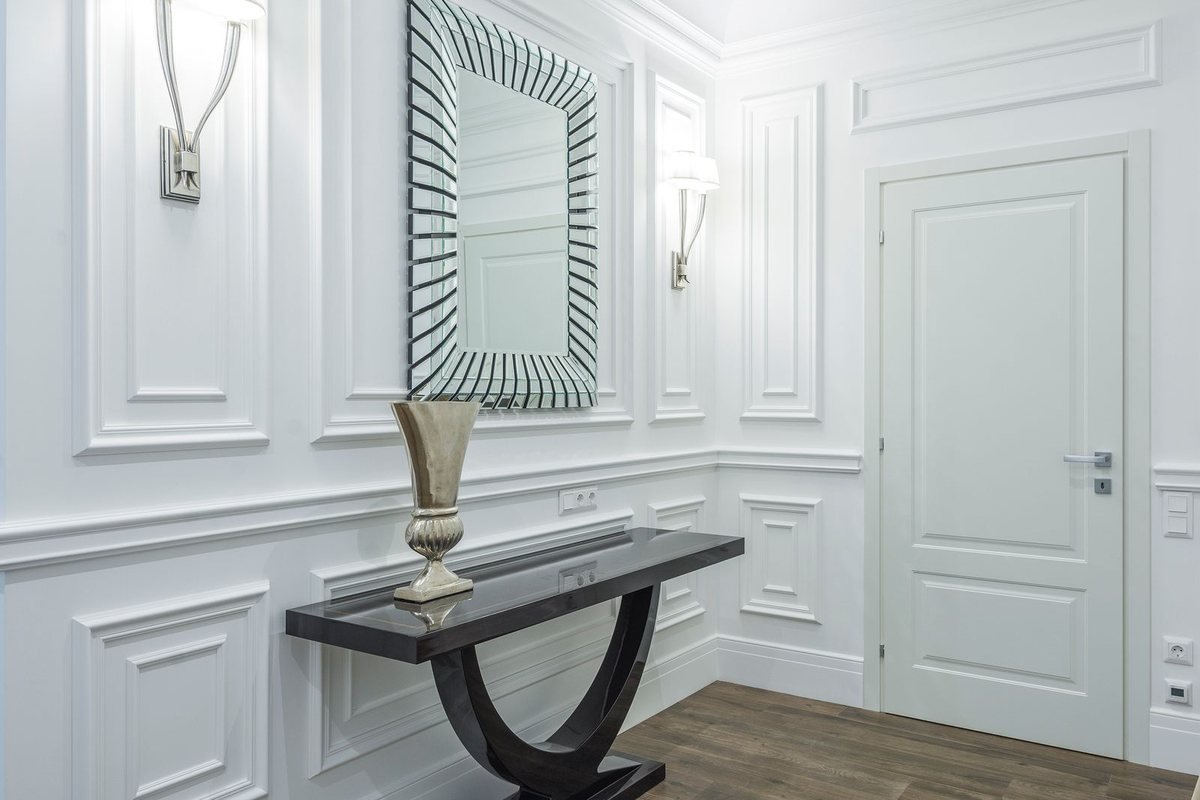
A round mirror is the classic entryway pairing, and it works because entries are full of straight lines: door frames, console edges, stair rails. The circle softens all of them. Size it at roughly one-half to two-thirds the width of the console below, and leave four to six inches between the console top and the mirror’s lower edge. A 24- to 32-inch round suits most small consoles. Keep the console styling low and off-center — a small lamp or vase on one side — so nothing tall blocks the reflection.
2. Choose an Arch to Soften the Entry
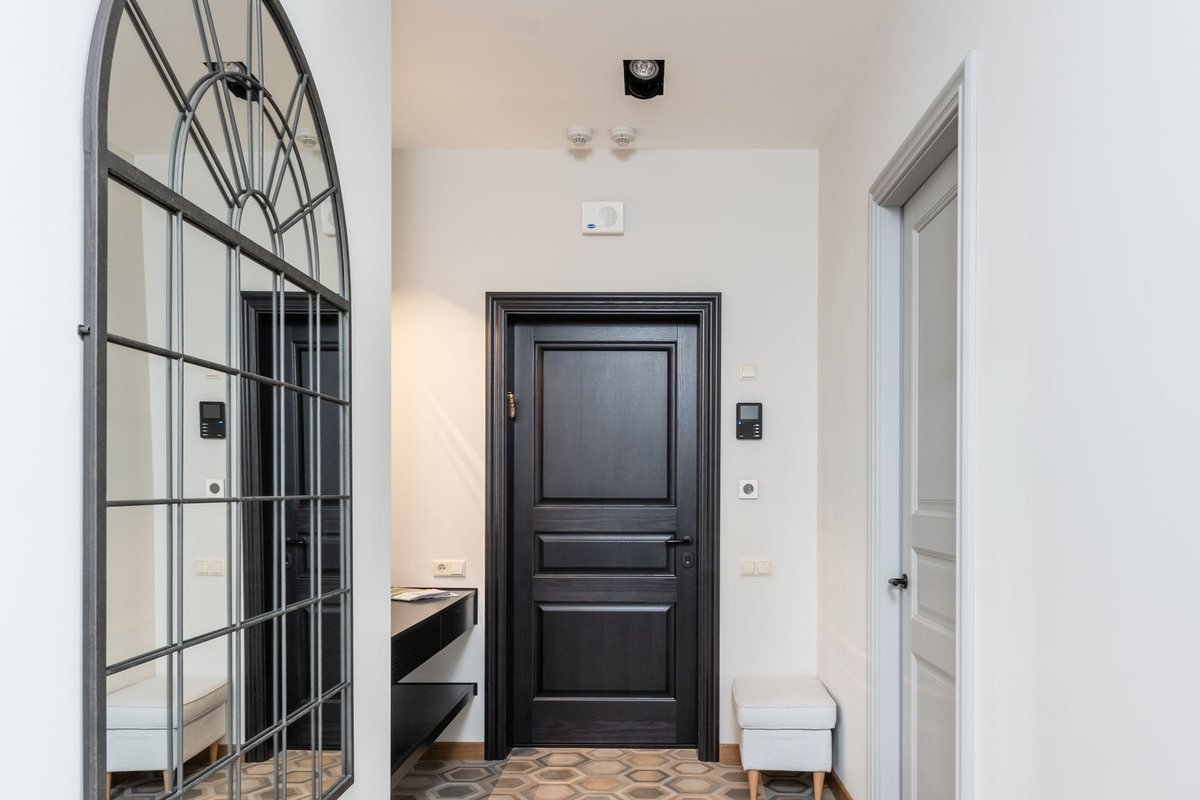
An arched mirror brings the feel of a doorway or a tall window into an entry that has neither. The flat base sits neatly above a console or shoe cabinet, while the curved top draws the eye upward and makes a low ceiling feel taller. Arches suit entries with other soft shapes — a round rug, a curved bench — and they also hold their own against angular modern furniture. Choose a thin metal or wood frame so the shape, not the border, does the talking. Leave clear wall around it; an arch crowded by frames loses its effect.
3. Lean a Full-Length Mirror for a Last Look

A full-length mirror answers the question every entryway asks: how do I actually look before leaving? Lean a tall mirror against the wall beside the door, or fix it flat to the wall if floor space is too tight for a lean. Sixty inches tall is the minimum for a true head-to-toe view. Secure the top with an anti-tip strap even when leaning — entryways get bumped by bags, dogs, and doors. Our mirrors for small rooms guide covers the same leaning and sizing rules for bedrooms and living rooms.
4. Go Tall and Narrow in a Tight Entry
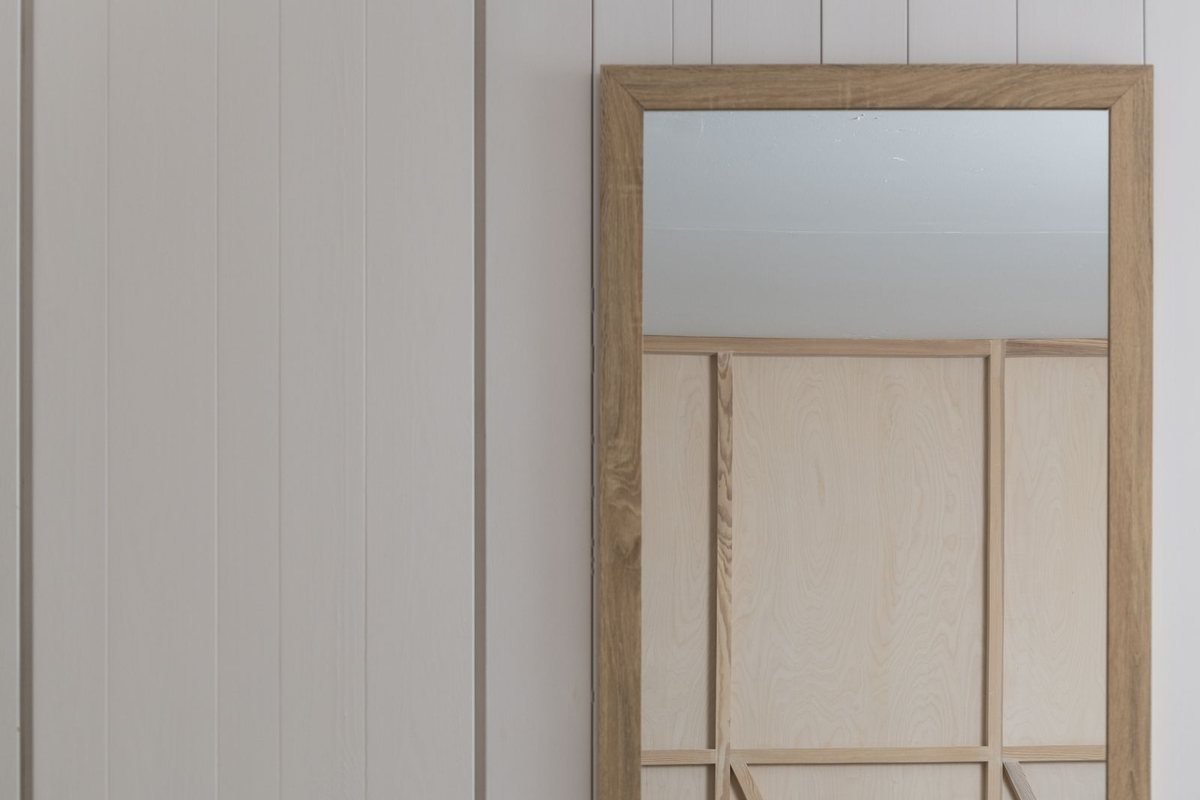
When the only free wall is a slim strip beside the door, a tall, narrow mirror is the shape that fits. A mirror 16 to 20 inches wide and 48 to 60 inches tall still gives a near full-length reflection, bounces light down the entry, and leaves room for hooks or a small shelf beside it. Hang it vertically, never horizontally — height is what a narrow entry lacks.
5. Place the Mirror to Catch Window Light
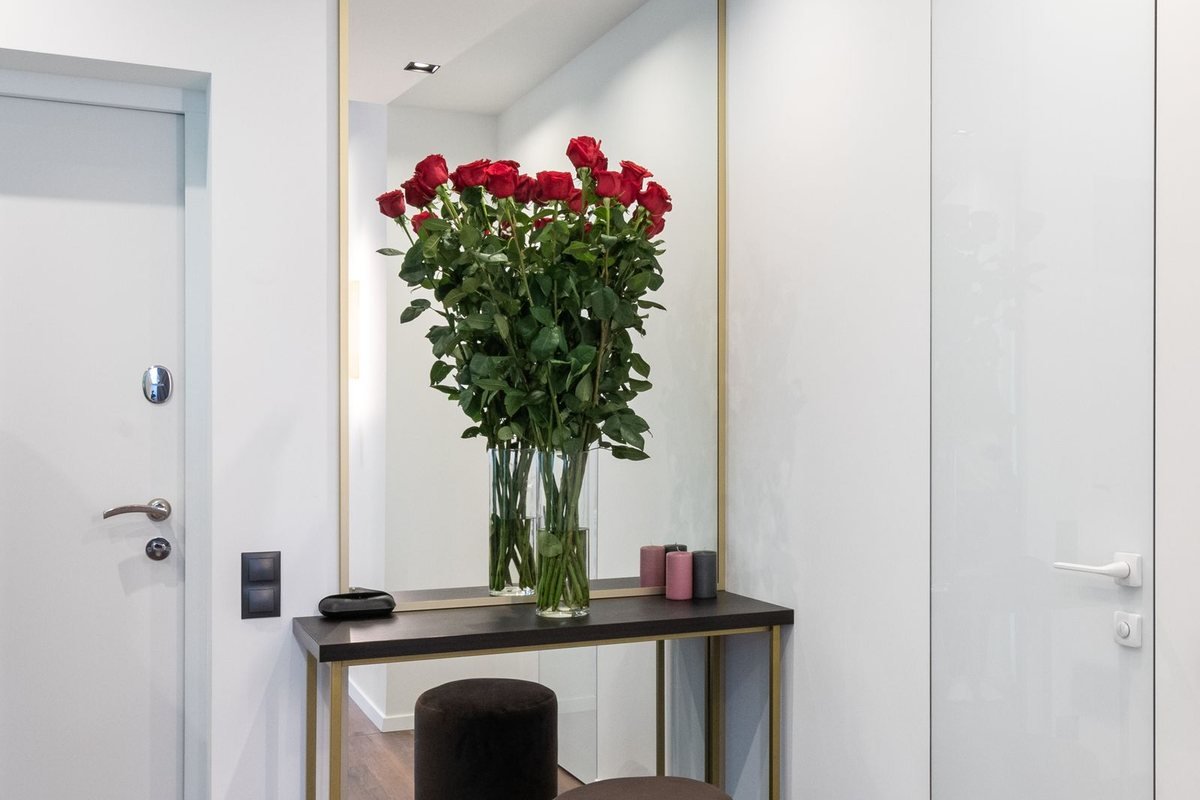
A mirror only brightens a room if it has light to work with. The strongest position is on the wall opposite or at a right angle to a window, a glazed front door, or the brightest adjoining room, so daylight lands on the glass and spreads. Test the spot before drilling: hold the mirror in place at the time of day your entry feels darkest and check what it reflects. Avoid placing it directly facing a dark hallway or a busy coat wall — it will faithfully double those instead. Small entries benefit most, a point we return to in our narrow hallway ideas.
6. Let a Pale, Slim Frame Disappear
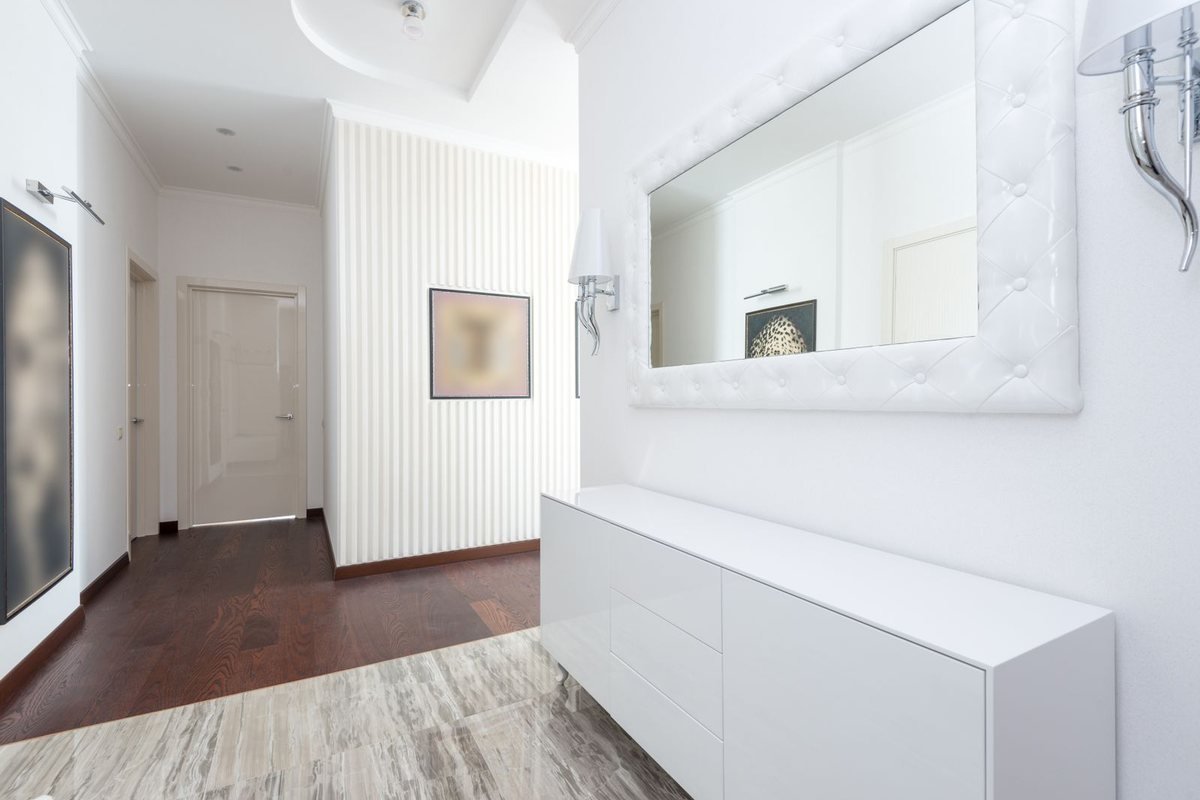
A mirror with a slim frame in white or a pale finish nearly disappears against light walls, so the reflection — not the border — fills the view and the wall seems to open up. This suits modern and minimalist entries, and small spaces generally, because there is no dark or chunky frame competing with the door casing and trim. A large pale-framed mirror above a low sideboard works especially well: the furniture and mirror read as one light block, and the entry stays bright. Pale frames also pair well with busy wallpaper, where a strong frame would fight the pattern.
7. Warm the Entry With a Wood Frame
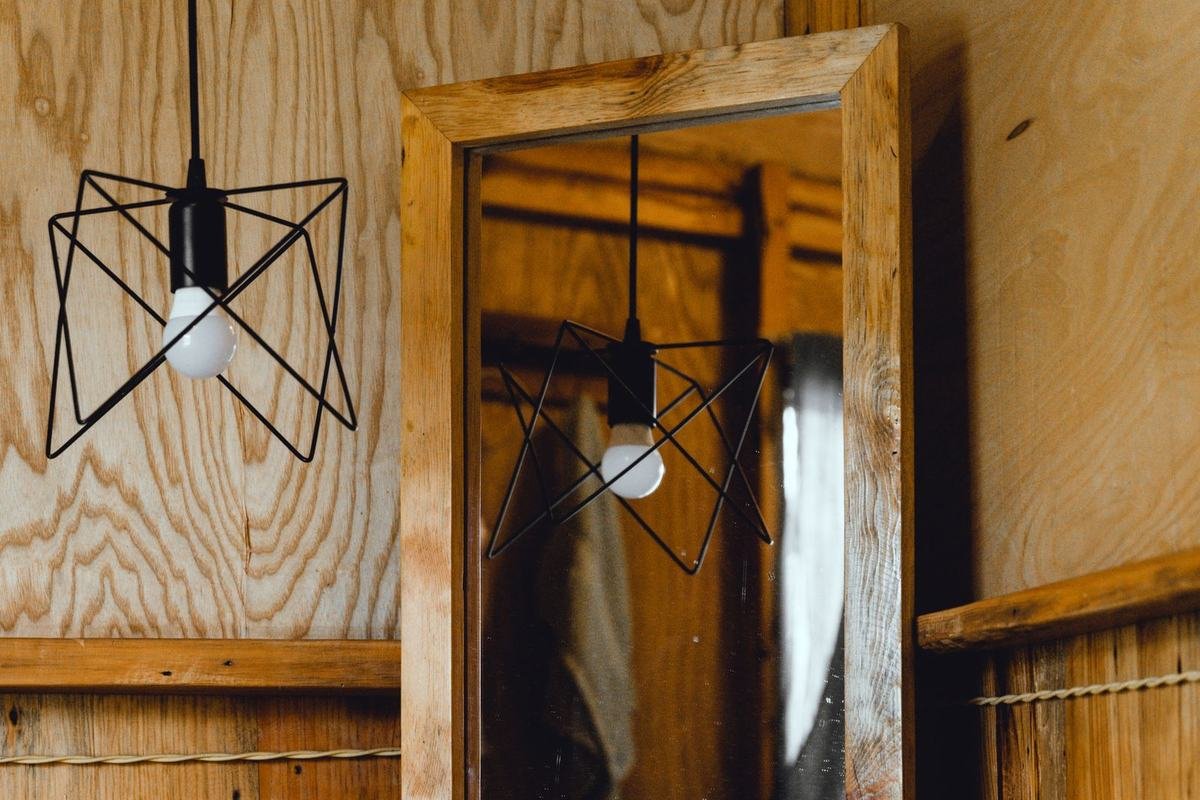
A wood-framed mirror adds warmth that glass and metal cannot. Oak, walnut, and rattan frames sit comfortably with wood floors, woven baskets, and the natural textures many entries already have. Match the frame tone loosely to the console or bench below — close is fine, exact is unnecessary — and repeat the tone once more in a small detail, like a tray or a hook rail, so the mirror feels part of a set. In a white or cool-toned entry, a medium wood frame is often the single warm note the space needs.
8. Pick Brass or Gold for a Brighter Edge
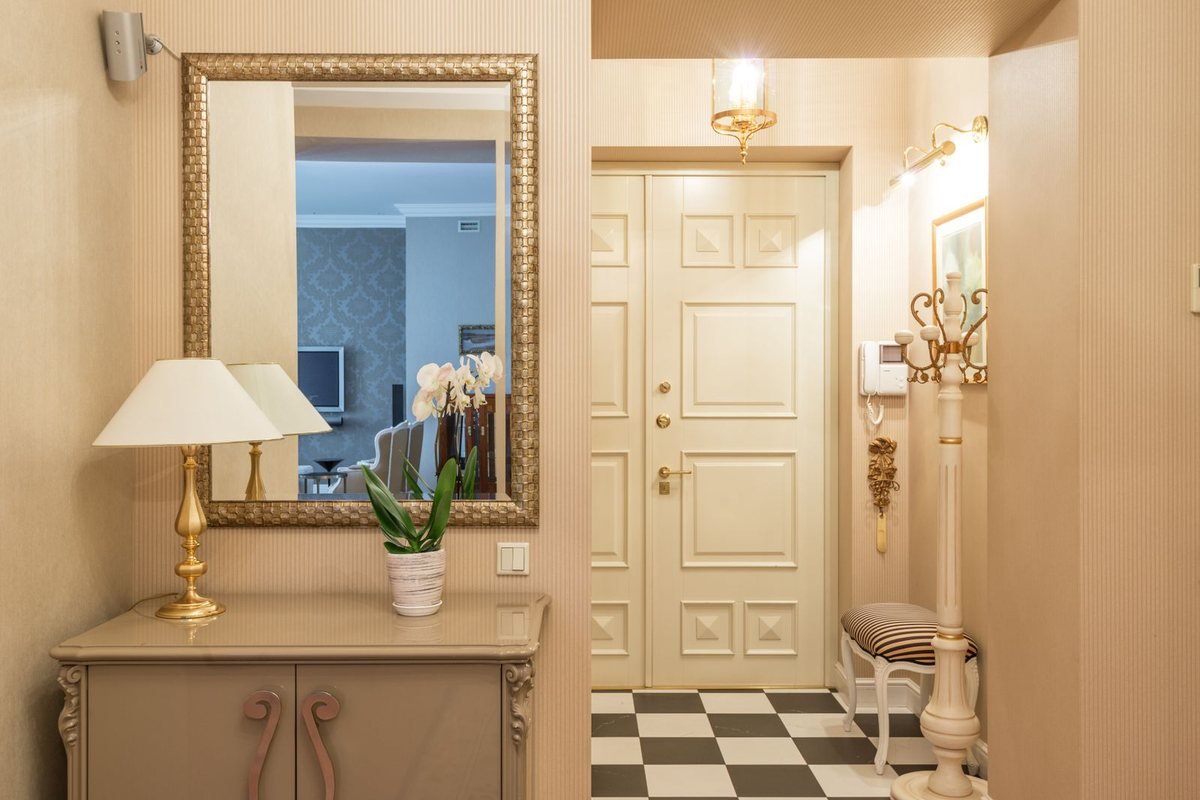
A brass or brushed-gold frame does two jobs: it outlines the mirror against pale walls, and its warm metal catches lamplight in the evening, when entries rely on artificial light. Keep the frame thin — the metal is an accent, not the main event — and echo it in one or two small finishes nearby, such as the console hardware, a lamp base, or the door handle. The Spruce shows the same pairing in its entryway mirror roundup, where gold frames are matched to sconces for a cohesive finish.
9. Pair the Mirror With a Seat Below
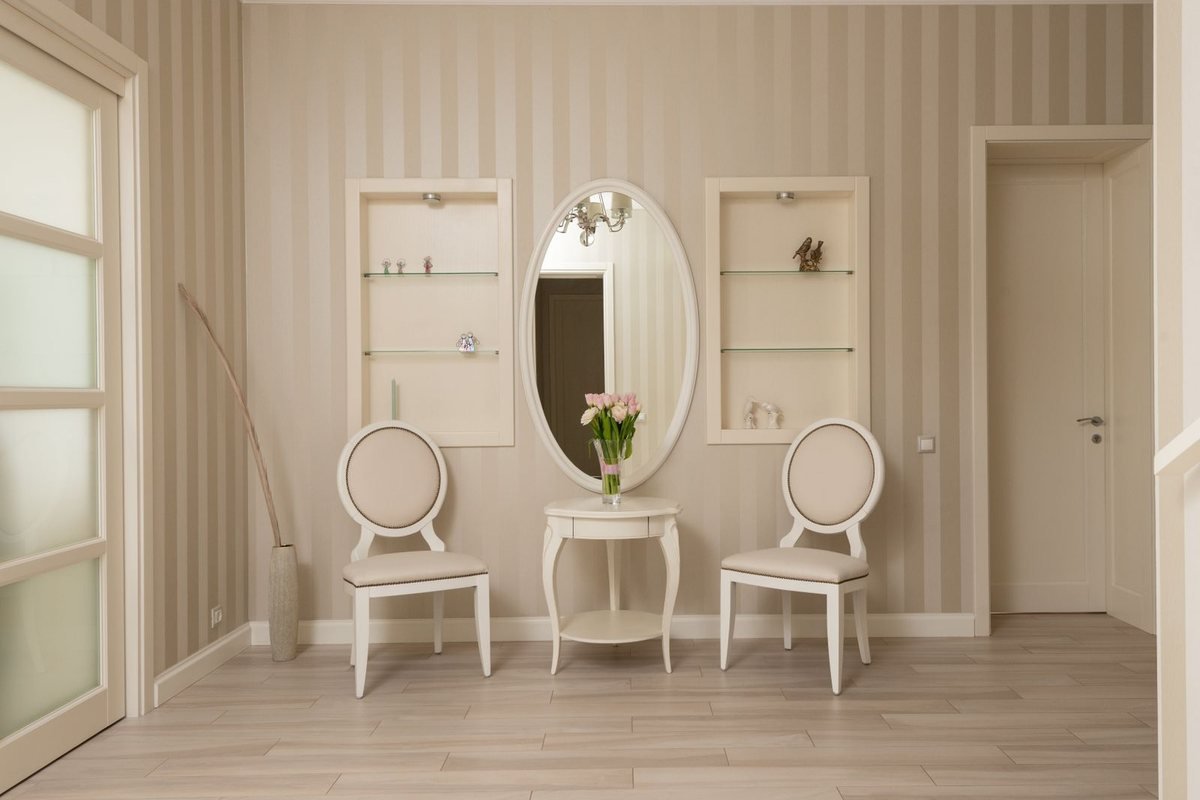
A mirror above a bench or a pair of small chairs turns a blank wall into a working station: sit to put on shoes, check the result, leave. Choose a mirror with a slim profile and hang its lower edge at least six inches above the seat, higher if the seat has a back or if tall people will sit there — heads should never meet glass. Width-wise, a mirror slightly narrower than the seating below looks settled. Our entryway bench ideas cover bench sizes and the storage versions that hide shoes underneath.
10. Use a Windowpane Mirror to Fake a Window

A windowpane mirror — a grid of panes inside one frame — mimics the look of a window in an entry that has none. The divided panes scatter reflections into smaller pieces, which reads as light and depth rather than a single flat reflection. It suits farmhouse, cottage, and traditional entries, and works well on the wall facing the front door, where a real window might plausibly be. Keep the frame color close to your door and trim colors so the illusion holds.
11. Hang an Organic Shape as the Focal Point
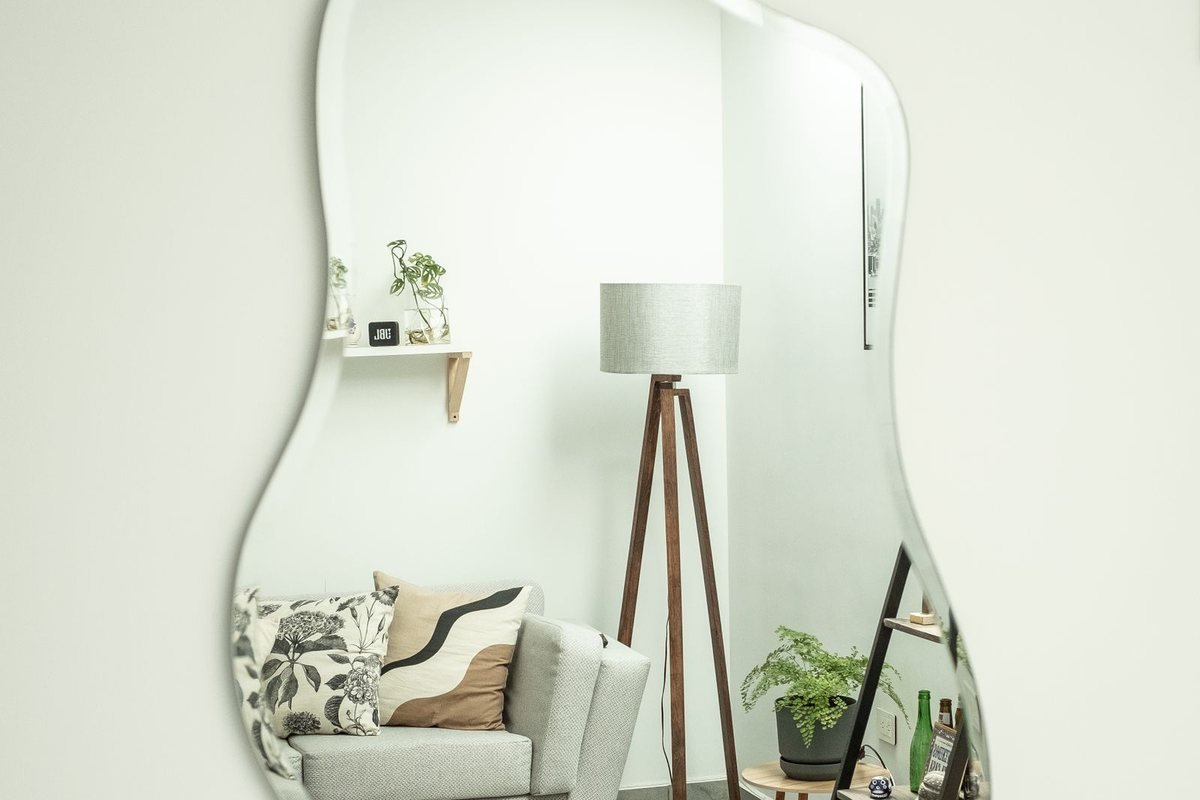
An organic mirror, with a wavy or asymmetrical outline, turns the mirror itself into the entry’s artwork. In a small entry with room for only one decorative piece, that is efficient decorating: the mirror earns its wall by shape alone, so the console below can stay nearly bare. Our organic mirror ideas show the main shapes — pebble, puddle, and soft blob — and the rooms they suit. Hang an organic mirror with clear space around it and a plain wall behind; pattern competes with the outline.
12. Add a Mirror With a Shelf or Hooks
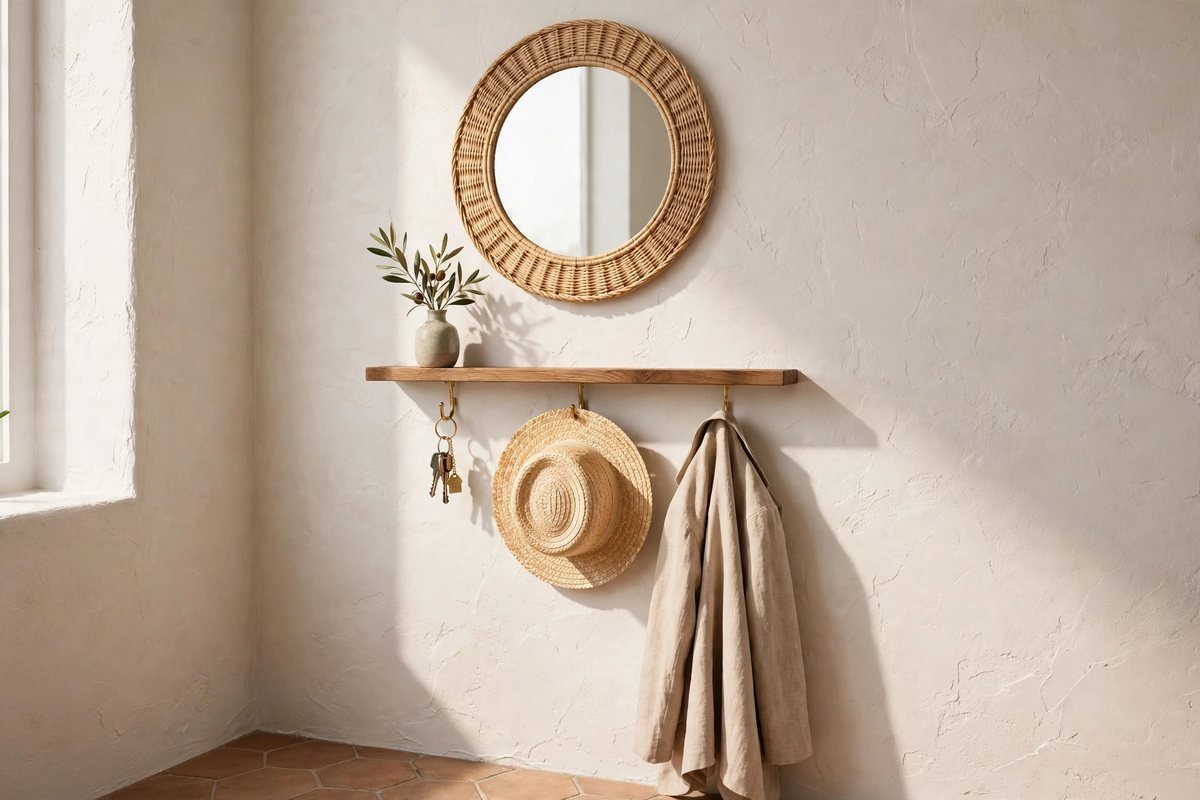
In the smallest entries, a mirror that also stores is worth more than a larger mirror that only reflects. Mirrors with a built-in shelf hold keys, sunglasses, and mail at the exact point you need them, and versions with hooks below take coats, hats, and the dog lead. Mount these firmly into studs or with rated anchors, because the load is more than the mirror’s own weight. For bigger entry storage — cabinets, cubbies, and baskets — our entryway storage ideas pick up where the mirror leaves off.
Frequently Asked Questions
What size mirror is best for a small entryway? Bigger than instinct suggests. A mirror around 24 to 32 inches wide, or a tall narrow mirror near 60 inches high, reflects enough light and view to change how the entry feels. Above a console, aim for one-half to two-thirds of the console’s width.
Where should an entryway mirror be placed for the most light? On a wall opposite or beside a window, glazed door, or bright adjoining room, so it catches daylight and throws it back into the entry. Check the reflection first: it should show the light source, not a dark corner.
How high should I hang a mirror above a console or bench? Leave four to six inches between the furniture top and the mirror’s lower edge, and aim for the mirror’s center around 57 to 60 inches from the floor. Above a bench, add clearance so seated heads stay clear of the glass.
Which mirror shape makes an entryway look bigger? Tall shapes — arches, ovals, and full-length rectangles — draw the eye up and suggest height, while one large mirror opens a small entry more than several small ones. Frameless and thin-framed mirrors add space too, because the reflection runs closer to the edges.