12 Coat Rack Ideas for an Entryway That Stays Tidy

An entryway stays tidy when every coat has an assigned place within two steps of the door. Without one, jackets migrate to chair backs, bags land on the floor, and the first room in the house becomes a holding pen. The coat rack ideas entryway designers reach for first all solve the same equation: enough hooks for the household plus guests, at the right height, in the footprint the room can actually spare.
Measure before you buy. Note the wall width, the door swing, and the walkway you must keep clear, at least 36 inches. Then count hooks honestly: two per person in daily use, plus two spare for guests, is the minimum that survives a busy week. Every idea below includes the size, price, and mounting detail that decides whether it works in your space.
1. Run a Peg Rail the Length of a Narrow Hallway

A Shaker-style peg rail is the oldest of these coat rack ideas entryway walls can take, and still the best for narrow halls. A rail 48 to 72 inches long with pegs every 6 inches holds six to ten coats flat against the wall, projecting only 4 to 5 inches with coats on. Mount it at 66 inches for adults, into studs where possible, at $25 to $70 for a solid oak or pine rail. Browse real rails at family scale in the coat hooks entryway gallery on Houzz before ordering, and note how the best ones pair the rail with a low bench. Our small entryway ideas show the same flat-to-wall logic working in entries under 4 feet wide.
2. Stand a Classic Bentwood Coat Tree in the Corner by the Door

The bentwood coat tree needs no holes, no studs, and about 18 inches of floor in any direction, which makes it the default renter answer. Curved steam-bent arms give eight to twelve hanging points at heights from 60 to 72 inches, so hats sit on top and coats below without stacking. Look for a weighted or wide-tripod base, at least 17 inches across, because a loaded tree tips toward its heaviest coat. Solid wood versions run $90 to $220; metal trees start near $45 but flex under winter weight. Leave 6 inches between the tree and the wall so sleeves do not rub paint, and rotate the load weekly so the same arms do not carry the heaviest coats all season.
3. Choose a Hall Bench With Hooks Above It
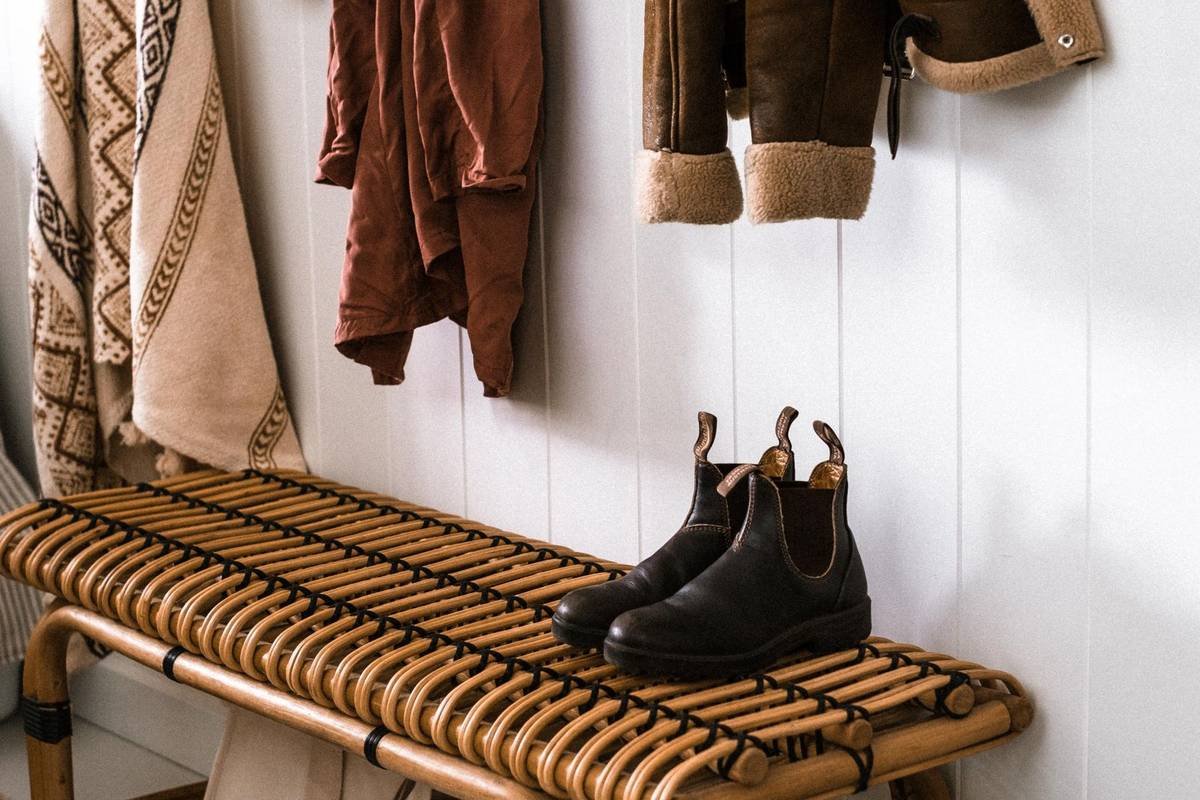
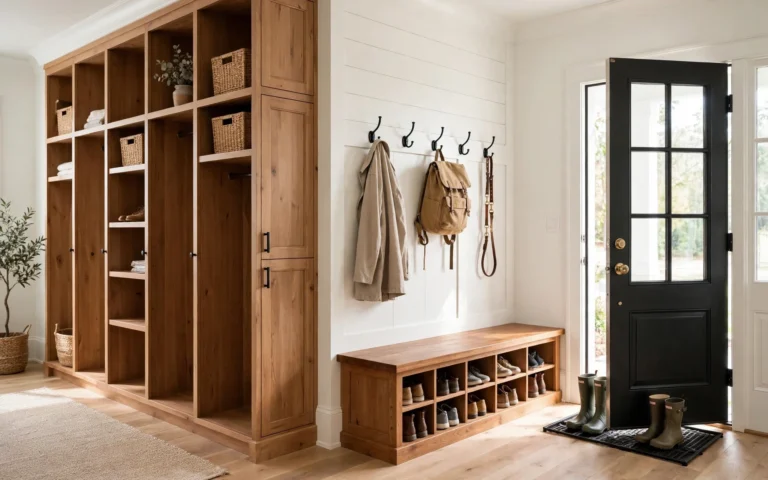
Pairing hooks with a bench turns hanging up into a routine: sit, shoes off, coat up, all in one spot. The working layout is a bench 36 to 48 inches wide and 17 to 18 inches high, with a hook row at 66 inches above it and a shoe zone underneath. Woven, slatted, or open-frame benches dry wet boots faster than solid boxes. Expect $150 to $400 for a bench-and-hook set in wood, less in flat-pack form. Keep bench depth at 12 to 14 inches so the walkway stays clear, and give each person one hook directly above their seat space. Our entryway bench ideas cover cushion heights and storage benches in more detail.
4. Fit a Vertical Hook Board Where a Rail Cannot Go
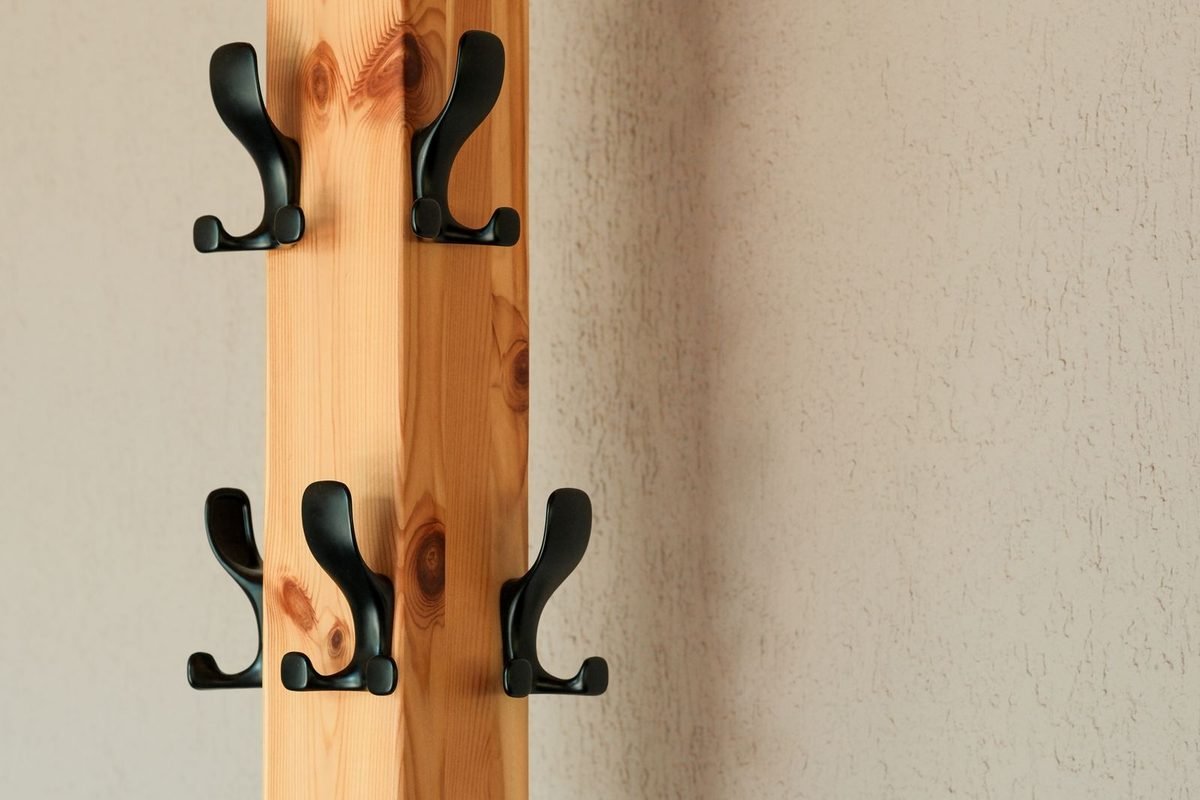
Some entries offer a wall stub only 12 to 18 inches wide, between the door frame and a corner. A vertical hook board is built for exactly that stub: four to six double hooks stacked in two columns on a single board, each hook projecting about 5 inches. Stagger the two columns by 3 inches so coat shoulders overlap less and sleeves do not tangle. Because all the load hangs on one narrow board, fix it into a stud or use two heavy-duty anchors rated for 75 pounds each; a board of hooks holding four winter coats can pull 40 pounds. Painted boards run $30 to $80, and a DIY version from a 1 by 6 board and five hooks lands under $35.
5. Claim the Dead Corner With a Slim Rack

The corner within reach of the door is usually empty because nothing rectangular fits it. A slim corner rack, triangular or quarter-round in footprint and about 70 inches tall, turns that dead angle into six to eight hooks plus a small top shelf for hats. Floor space used is roughly one square foot. Choose steel or sealed wood at $60 to $140, and check the base: corner racks rock on uneven floors, so adjustable feet or a wall strap at the top are worth having. Hang daily coats on the outward arms and reserve the wall-side hooks for guests, whose coats are lighter and worn less often. A small basket at the base catches gloves and keeps the corner from collecting loose clutter.
6. Hang a Top Shelf With a Rail of Hooks Beneath It

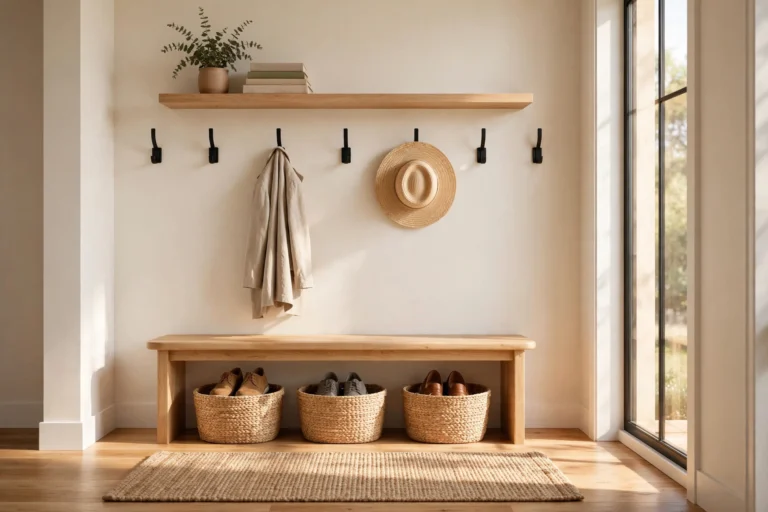
A shelf at 72 inches with a hook rail directly under it stores in two directions at once: boxes, hats, and baskets above, coats on ten to sixteen hooks below. This is the coat rack ideas entryway setup that suits households with more gear than people, because the shelf absorbs everything hooks handle badly. Keep the shelf 10 to 12 inches deep so boxes sit fully on it, and space hooks 4 to 5 inches apart on the rail. The whole unit runs $70 to $180 in wood and metal. Load order matters: heaviest coats under the shelf brackets, where the fixings are strongest. Our shoe storage ideas pair well here, since the shelf top is the natural home for labeled shoe boxes.
7. Build the Look of Built-Ins With a Slatted Panel and Hooks

A slatted wood panel, 36 to 48 inches wide and running from about 12 inches off the floor to 78 inches high, makes a plain hook row look like joinery. Flat black hooks screwed through the slats into wall battens carry coats, bags, and a bench seat fixed at the base turns the panel into a mini hall tree. The panel itself is the budget lever: pre-made slat panels cost $120 to $300, while a DIY version in pine battens lands near $60 plus hooks at $4 to $8 each. Keep slat gaps under an inch so small items cannot slip behind, and finish the wood with hard-wax oil so wet shoulders do not raise the grain or leave tide marks.
8. Pair a Tall Mirror With a Bench and a Slim Stand

A full-length mirror beside the hanging zone does three jobs: last check before leaving, light bounced into a dark hall, and a visual widening of a narrow entry. Use a mirror at least 14 by 48 inches, mounted or leaning with its top at about 72 inches, and place a slim stand or a short hook row on the opposite side of the bench so coats never hang across the glass. Mirror-and-bench sets run $130 to $350; a separate thrifted mirror plus a basic stand can land under $100. Keep 18 inches between the coat stand and the mirror edge, because swinging sleeves and bag straps are the usual cause of chipped mirror corners. Our entryway mirror ideas cover shapes and mounting heights.
9. Keep a Minimalist Slim Stand for a Studio or One-Person Entry
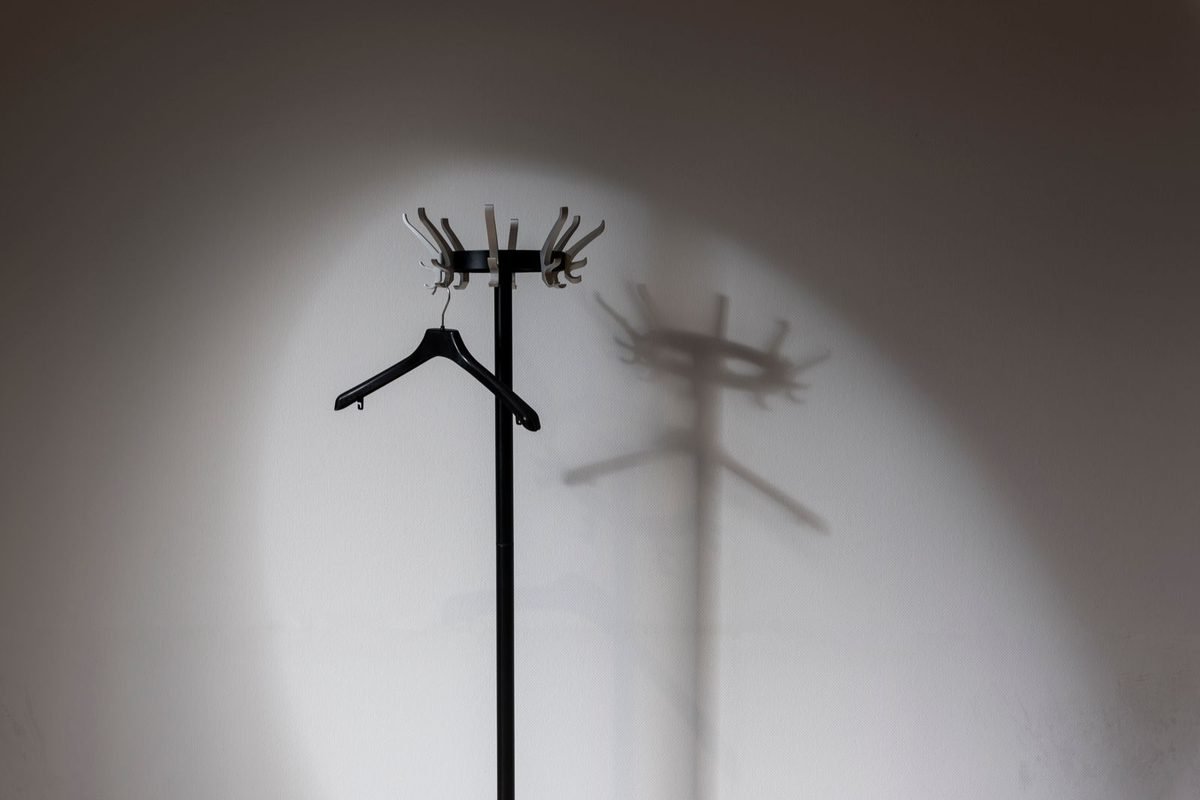
Not every entry needs family capacity. A slim single-pole stand, 68 to 72 inches tall with four to six short arms and a base under 14 inches wide, holds one person's coat, bag, hat, and scarf in the footprint of a shoebox. Powder-coated steel versions cost $35 to $90 and weigh little enough to move for cleaning. The discipline that makes it work is a hard limit: one item per arm, and anything beyond that goes to the bedroom closet the same day. Place it on the hinge side of the door if the swing allows, so the door never clips a hanging sleeve, and add felt pads under the base to protect wood floors from the metal feet.
10. Roll In a Garment Rail When Guests Outnumber Hooks

For parties and family visits, a rolling garment rail is the overflow valve no fixed rack can match. A rail 48 inches wide on casters holds fifteen to twenty coats on hangers, keeps guest coats out of the bedrooms, and wheels into a closet or spare room when the evening ends. Choose a rail rated for at least 60 pounds, with a bar height of 60 to 66 inches so long coats clear the floor; garment rails run $40 to $110. Set it perpendicular to the wall, not parallel, so guests can reach hangers from both sides. The same rail earns its keep weekly as a drying rack for rain-wet coats before they return to the entry hooks.
11. Mount a Rustic Shelf Rack With a Second Low Rail

Two hook levels beat one when children share the entry. A chunky shelf rack at 66 inches handles adults, while a second rail at 42 to 48 inches puts coats, school bags, and hats within a child's own reach, which is the difference between hooks used and coats on the floor. Rustic pine racks with cast-iron hooks cost $50 to $130 and hold their looks in high-traffic halls. Fix both rails into studs; children pull down and outward, a load direction that defeats weak anchors faster than weight alone. Add a small key rack or dish at adult height beside the top shelf. Our entryway storage ideas round out the system with baskets and cubbies sized for each level.
12. Line Up Statement Coat Trees Against a Paneled Wall
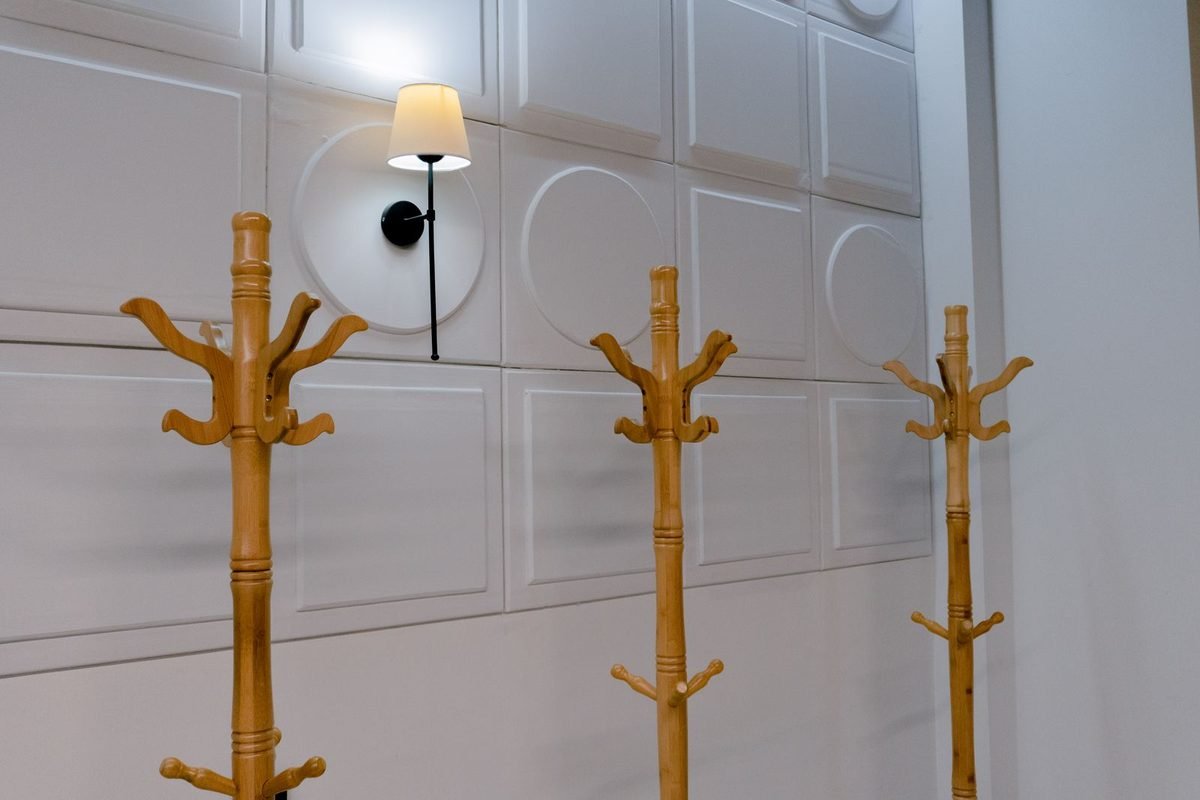
When the entry is wide and the wall is handsome, one rack can become the room's furniture. Two or three matching wooden coat trees, spaced 30 to 36 inches apart against paneling, read as a designed installation rather than storage, and each tree takes one person's full kit or a couple's guest coats. Trees in turned wood run $70 to $160 each, so the full wall lands at $210 to $480. Keep the trees identical; mixed heights and finishes read as clutter, matched ones read as rhythm. A wall light or picture light above the center tree finishes the composition. This is the most decorative of the coat rack ideas entryway spaces with real width can carry, and the easiest to undo: lift the trees out and the room is empty again.
Frequently Asked Questions
How many hooks does an entryway coat rack need? Plan two hooks per person for daily coats and bags, plus two spare hooks for guests. A family of four therefore needs about ten hooks minimum. If your count falls short, hooks get doubled up, coats slide off, and the pile returns to the floor or the nearest chair within a week.
How high should entryway coat hooks be mounted? Mount the main row at 60 to 66 inches from the floor, which lets long coats clear a bench or shoe rack below. Add a second row at 42 to 48 inches for children. Hooks above 70 inches waste reach for most people and end up holding only hats and rarely used items.
Are freestanding coat racks sturdy enough for heavy winter coats? Yes, if the base is wide or weighted. Look for a footprint of at least 16 to 18 inches and load the arms evenly, heaviest coats on opposite sides. Wall-mounted racks fixed into studs remain the stronger choice for households hanging four or more heavy coats in one spot.
How do I keep a coat rack from looking cluttered? Give every hook one job and one owner, keep one hook empty for guests, and move off-season coats to a closet so the rack only holds what is in weekly use. A small basket or shelf beside the rack catches the gloves, keys, and mail that otherwise pile onto the hooks themselves.