12 Entryway Rug Ideas That Can Take the Dirt

An entryway rug has the hardest job of any textile in the house. It takes wet boots, grit, pet paws, and dropped shopping bags, several times a day, and it still has to make the front door look deliberate. The entryway rug ideas below are chosen for that double duty: every one names a size, a pile height, and a material that can be shaken, vacuumed, or washed back to life, because a beautiful rug that cannot survive February is not an entryway rug at all.
Two rules sit underneath all 12 ideas. First, keep the pile low: a rug plus pad under 1/4 inch thick is what lets most doors swing clear. Second, size honestly: a 2 by 3 foot mat suits a single apartment door, a 3 by 5 foot rug suits a standard entry, and long or double-door entries need runners or 5 by 7 feet and up. Start with those measurements, then choose the look.
1. Measure First: Door Swing and the Quarter-Inch Rule

Before choosing any pattern, measure the gap under your front door and the open floor you actually have. Most interior doors clear the floor by about 1/2 to 3/4 inch, so a low-pile rug of 1/4 inch or less, on a thin pad, swings free instead of dragging. Leave 4 to 6 inches of bare floor visible on each side of the rug; a rug that touches every wall reads as a mistake, and one that floats with a border reads as placed. If your entry is part of an open living space rather than a separate hall, our small entryway ideas show how to mark out a landing zone with the rug, a bench, and hooks even when there is no wall to spare.
2. Go Dark and Patterned Where the Dirt Lands

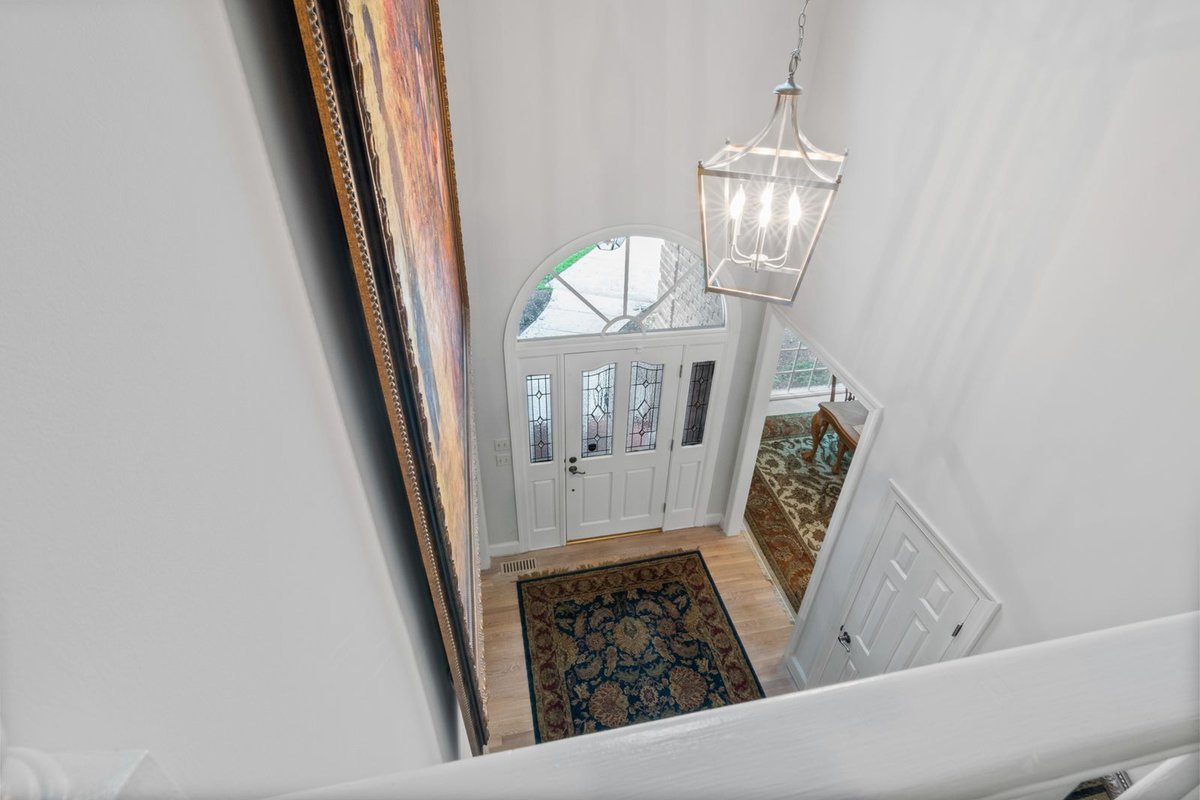
The simplest of all entryway rug ideas is also the most practical: choose a dark, busy pattern for the exact spot where shoes land. Charcoal, deep navy, rust, and forest green in a small-scale all-over pattern hide grit and dried mud between cleanings in a way no cream rug ever will. The pattern needs to be dense enough that a footprint does not read as a stain. As Houzz advises in its guide to choosing the right rug for an entryway, the first rug in the house should clean easily, avoid high pile, and carry the home's style from the door, which is exactly why dark patterned low-pile rugs earn their place in busy family entries: they keep looking tidy on day six, not just day one. Expect $35 to $80 for a washable 3 by 5 foot synthetic version.
3. Choose a Washable Low-Pile Rug for Mud Season

A machine-washable rug changes entryway maths completely, because the cleaning plan becomes the washing machine instead of a professional cleaner. Look for low-pile polyester or polypropylene, pile around 0.14 to 0.25 inch, with a rubber or TPR non-slip backing, in a 3 by 5 foot size at roughly $40 to $90. It should fit a standard washer without folding the backing hard, which cracks it over time. Keep one inexpensive spare, even a plain $25 mat, to cover the floor on wash day. Washable rugs are also the renter-friendly answer: no adhesive, no tape on the floorboards, and nothing left behind when you move except a clean patch of floor.
4. Run a Runner Down a Long, Narrow Entry

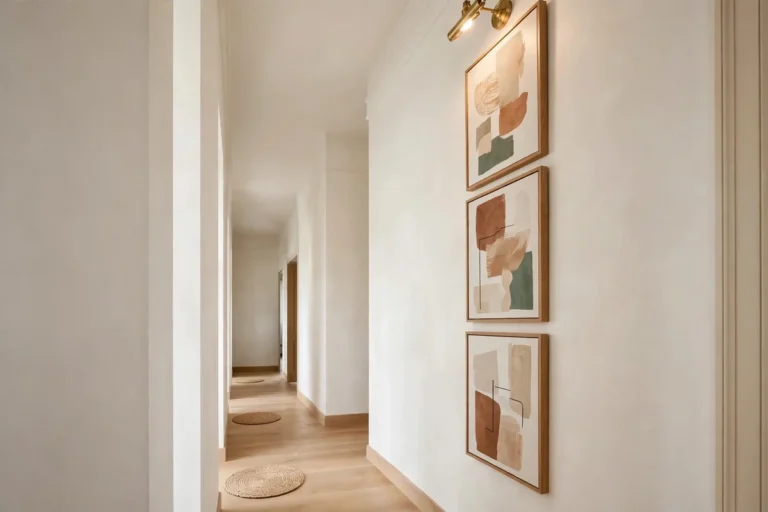
When the entry is a corridor rather than a room, a runner does the work a rectangle cannot. Standard runners are 2.5 to 3 feet wide and 8 to 10 feet long, and the right one starts about 12 to 18 inches inside the door and stops a few inches short of the next doorway, so it reads as a path rather than a carpet offcut. Stripes running lengthwise make a short hall feel longer; a small diamond or trellis pattern hides dirt better. Keep the pile under 1/4 inch and use a runner pad, because long rugs walk forward a fraction every day. Our hallway runner ideas cover widths for wider halls and the stair-runner question in more detail.
5. Work as a Team: Coir Mat Outside, Soft Rug Inside

One rug is being asked to do two different jobs, so split them. Outside the door, put a coir or heavy rubber scraper mat, 18 by 30 inches or 2 by 3 feet, about $15 to $30, whose whole purpose is to take the grit and water off shoes. Inside, the softer washable rug then only handles what is left, and lasts twice as long between washes. This two-mat system is standard in homes with a mudroom, but it works at any front door with a covered step. Replace the outdoor mat when the bristles lie flat, usually every 12 to 18 months; a worn coir mat polishes shoes instead of cleaning them.
6. Pick a Vintage-Style Pattern That Forgives Everything

Vintage-look rugs top many lists of entryway rug ideas for a practical reason: a faded medallion or distressed Persian-style pattern is pre-forgiven. New wear blends into a design that already looks gently worn, so the rug ages evenly instead of developing one obvious traffic lane. Choose a printed washable version, 3 by 5 feet at $50 to $110, rather than a true antique at the door; real wool antiques deserve a lower-traffic spot. Keep the palette in the rust, indigo, and faded red family and even muddy paw prints read as patina for a day or two. It is the easiest way to get a traditional look in a house with dogs, kids, and a gravel drive.
7. Use Jute or Sisal Only in a Covered, Dry Entry

Natural fiber rugs earn their good reputation honestly, with one condition. Jute, sisal, and seagrass are tough, textured, and excellent at trapping dry dirt in a covered porch entry or a dry-climate door, at about $30 to $70 for a 3 by 5 foot rug. But they absorb water, stain visibly, and can mildew under repeatedly wet boots, so they are the wrong choice for an exposed door in a rainy or snowy climate. If your door opens straight onto wet pavement, choose the washable synthetic versions in ideas 2 and 3 instead. Where jute does work, shake it outside twice a week; water is the one cleaning method it does not forgive.
8. Anchor a Bench With a Rug Sized to It

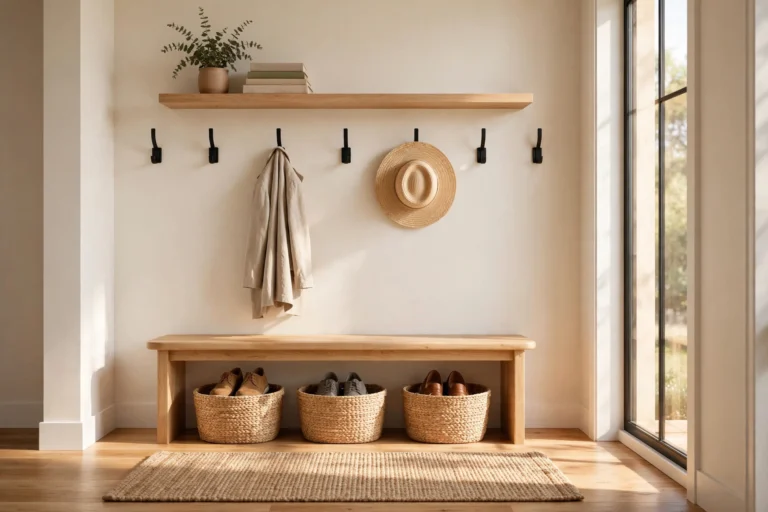
A bench and a rug that ignore each other make an entry feel unfinished, so size them together. The rug should extend at least 6 inches beyond each end of the bench, which means a 48-inch bench wants a rug or runner of about 5 feet or more, with the bench's front legs on the rug and the back legs off if depth is tight. This arrangement catches the dirt exactly where people sit to pull boots off, which is the dirtiest square footage in the house. Our entryway bench ideas cover bench heights and cushion fabrics that survive the same treatment. Keep a boot tray at one end of the bench so melting snow never reaches the rug at all.
9. Keep Shoes Off the Rug With Real Storage

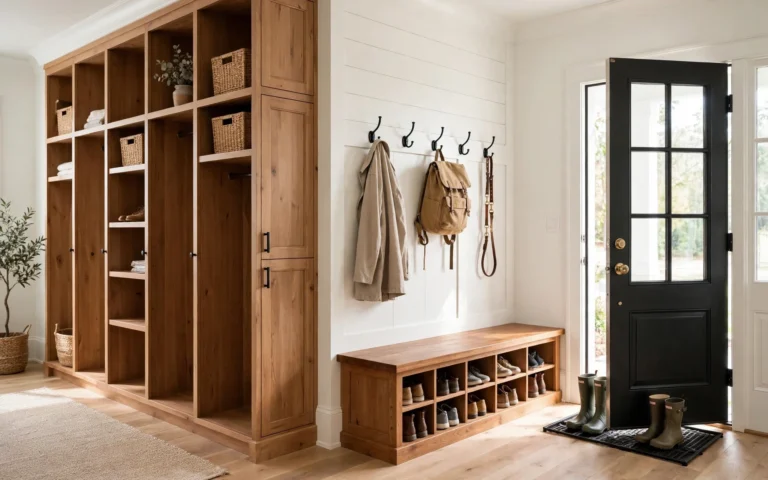
No rug survives being a shoe shelf. Wet soles parked on the same corner every day will flatten the pile, stain the pattern, and grind grit through to the floor beneath. Give shoes a hard, washable home instead: a boot tray with a raised lip, about $15 to $25, for the wet pair in rotation, and closed storage for the rest. Our entryway storage ideas include the narrow cabinets that hold eight to twelve pairs in under 12 inches of depth. Once shoes have a destination, the rug goes back to its real job, catching what falls off soles in transit, and a weekly vacuum is enough to keep it ahead of the dirt.
10. Try a Round Rug in a Square Foyer

A square or wide foyer with doors on several sides often fights a rectangular rug, which points at one door and ignores the rest. A round rug, 4 to 5 feet across, roughly $60 to $140 in washable synthetics, settles the space instead: it centers under a pendant light or a small round table and lets traffic flow around it in every direction. Keep the same low pile, under 1/4 inch, and check that every door swinging over it still clears. Round rugs also soften entries that are all hard angles, new-build halls of tile, trim, and stair rails, where one curve makes the whole space feel less like a corridor junction.
11. Add a Rug Pad and Treat It as Part of the Rug

Half of what people blame on a cheap rug is actually a missing pad. A pad stops the rug creeping, keeps corners from curling into trip hazards, protects the floor finish from the rug's backing, and adds the cushion a thin washable rug lacks. For entryways choose a thin felt-and-rubber pad, about 1/8 inch thick, cut 1 inch smaller than the rug on all sides, around $15 to $30 at 3 by 5 feet. Count the pad in your door-clearance measurement: rug plus pad together stay under that 1/4 inch working limit. Renters should skip rug tape entirely; a proper pad grips better and leaves nothing behind on the floorboards.
12. Rotate, Shake, and Wash on a Simple Schedule
The last of these entryway rug ideas is the one that makes the other eleven last: a routine. Shake the rug outside twice a week, thirty seconds each time, which removes most grit before it grinds into the pile. Vacuum weekly with the beater bar lowered or off on low pile, and wash washable rugs monthly in mud season, every six to eight weeks otherwise. Rotate the rug 180 degrees every few months so the traffic lane and the sunlight are shared between both ends. Blot spills immediately rather than scrubbing, which pushes them deeper. Follow that schedule and a $60 washable rug will outlast a $200 rug that was only ever cleaned when it already looked dirty.
Frequently Asked Questions
What size rug is best for an entryway? Match the rug to the door and the floor you have. A 2 by 3 foot mat suits a single apartment door, a 3 by 5 foot rug is the standard for most entries, runners of 2.5 by 8 to 10 feet suit long halls, and double-door foyers usually need 5 by 7 feet or a 4 to 5 foot round rug. Leave 4 to 6 inches of bare floor showing on each side.
What material takes dirt and wet boots best? Of all the materials behind these entryway rug ideas, low-pile polypropylene or polyester is the hardest-working choice: it resists stains, dries fast, and most versions are machine washable. Wool is the durable natural option and hides dirt well, but costs more and needs gentler cleaning. Jute and sisal trap dry dirt well in covered entries but stain and mildew under repeated wetting, so keep them away from exposed, rainy doors.
How thick can an entryway rug be before the door catches? Work to a total of about 1/4 inch for rug plus pad under a swinging door. Most doors clear the floor by 1/2 to 3/4 inch, but weather stripping and uneven floors eat into that gap. Measure your own door's clearance first, and if the rug drags, drop to a flat-weave style at 0.14 inch rather than forcing a thicker rug to fit.
How often should an entryway rug be washed? Shake it outside twice a week and vacuum it weekly. Machine-wash a washable rug about once a month through mud and snow season, and every six to eight weeks in drier months. Washing on that schedule, before the rug looks dirty, is what keeps grit from grinding down the pile and makes a budget rug last for years instead of one winter.