
12 Closet Door Ideas That Elevate the Whole Room

Closet doors are the largest uninterrupted surface in most bedrooms, often 12 to 20 square feet of flat, builder-grade panel staring back at the bed. That is exactly why they carry so much design weight: change the doors and the whole wall changes with them, even when nothing else in the room moves. The closet door ideas below are ordered from full replacements to weekend refreshes, and every one names the opening size, clearance, and budget it actually needs.
Start by measuring before you shop: the opening width, the swing or slide clearance in front of it, and the blank wall beside it decide which doors are even possible. A barn door with no wall to slide onto and bypass panels on a closet you need fully open are the two most common expensive mistakes. Match the door to the opening first, then pick the finish you love.
1. Hang a Sliding Barn Door on an Exposed Track
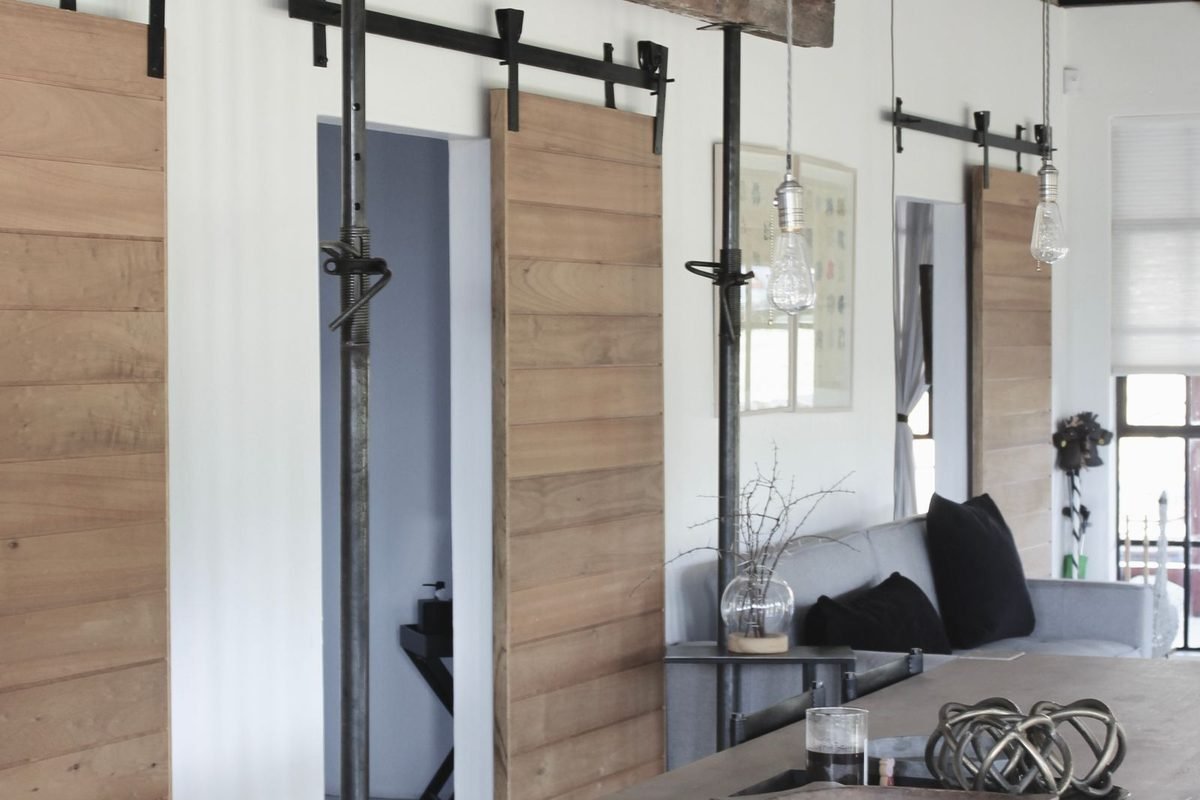
A barn door turns a plain closet opening into the room's focal point, and it needs no swing clearance at all. The panel should be 2 to 4 inches wider than the opening and about 2 inches taller, hung on a track roughly twice the panel width, so a standard 48-inch reach-in closet wants a 50 to 52-inch door and an 8-foot rail. The non-negotiable is blank wall beside the opening equal to the panel's full width, with no switches, outlets, or art in its path. Kits with door and hardware run $250 to $600 in pine or MDF. Browse real installations in the built-in closet photo gallery on Houzz before choosing a finish, and note that barn doors sit slightly off the wall, so they soften noise and light rather than sealing them out.
2. Choose Mirrored Bypass Doors That Double the Light
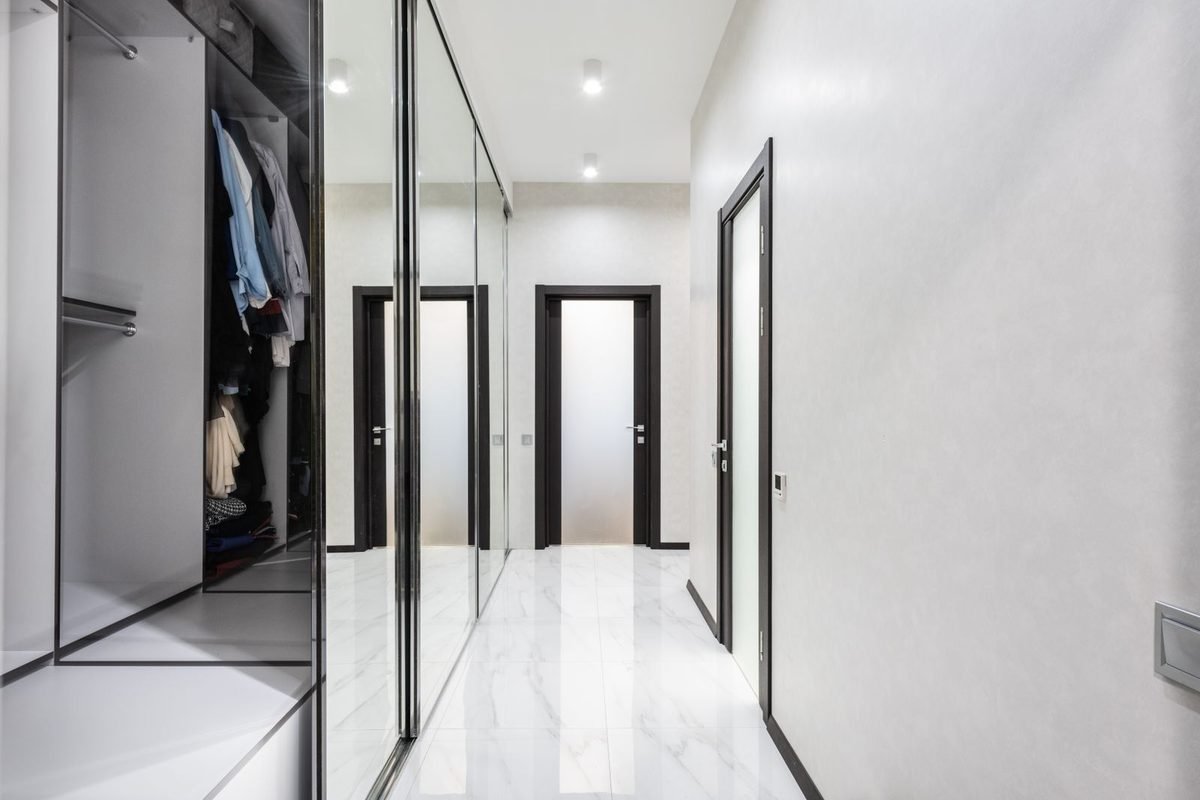
Mirrored bypass sliders are the hardest-working of all closet door ideas for a small, dark bedroom: the panels reflect window light across the room and give you a full-length dressing mirror without using a single inch of wall. Two panels on parallel tracks suit the standard 48 to 72-inch opening, each panel overlapping the other by 1 to 2 inches. Ready-made mirrored sliders run $200 to $500 a pair, and framed panels in black or brushed brass read far more current than frameless 1980s versions. Accept the trade-off honestly: only half the closet is reachable at once, so pair these doors with the zoning approach in our closet organization guide, daily clothes on one side and occasional pieces behind the parked panel.
3. Upgrade Plain Bifolds With Trim and Real Handles

Bifolds suit wide openings in tight rooms because they fold back into just 5 to 7 inches at each side and expose almost the whole closet. If yours are flat and flimsy-looking, the fix is surface, not replacement: add thin molding in a shaker or picture-frame pattern with construction adhesive and brad nails, fill, caulk, and paint the panels as one piece. A pair of 30-inch bifolds takes about $30 to $60 of trim and paint, against $150 to $350 for new paneled bifolds. Swap the tiny center knobs for 5 to 6-inch pulls so the doors read as furniture. Because bifolds barely project into the room, they are a smart pick alongside the other space-stretching tricks in our small bedroom storage guide.
4. Install French Doors When You Want the Full Opening

French doors give a closet the ceremony of a piece of architecture: two hinged panels that open wide and show the entire interior at once, which makes them the best choice for a walk-in or a dressing-style reach-in you use like a boutique. They need a clear swing arc of roughly 24 to 30 inches per panel, so measure the bed and dresser positions before committing. Glass lites, clear or lightly frosted, let the closet borrow light and show off an ordered interior; expect $400 to $900 for a prehung pair in primed wood or fiberglass. Inside, full access rewards good systems, and our shoe storage ideas help the lower half look as deliberate as the doors themselves.
5. Go Frosted Glass for Privacy With Light

Glass closet doors fail when they show every rumpled shelf, so choose glass that edits: frosted or reeded panels blur contents into soft shapes while still passing light between closet and room. Sliding or hinged, a pair of framed glass doors for a 48 to 60-inch opening runs $500 to $1,200 in aluminum or wood framing, with black frames reading modern and oak reading warm. Privacy film on plain glass panels you already own is the $25 to $50 shortcut and peels off cleanly. Textured glass has a maintenance advantage too: its surface hides fingerprints and dust far better than flat clear glass, which shows every touch at handle height and needs weekly wiping in a busy bedroom.
6. Pick Louvered Doors Where Airflow Matters

Louvered doors are the functional classic: the angled slats let air circulate through the closet, which keeps clothes fresher and discourages the musty smell that sealed closets develop in humid rooms. They come as bifolds, hinged pairs, and sliders for standard 24 to 72-inch openings, at $120 to $400 a pair in primed pine or composite. Full louvers maximize airflow; louver-over-panel designs give a tidier, more traditional face and slightly more privacy. The honest cost is upkeep, because slats collect dust, so plan on a monthly pass with a brush vacuum attachment. That same airflow is why louvers suit linen storage so well, a point our linen closet ideas return to when placing towels and bedding where they stay fresh.
7. Choose Shaker-Style Panels for a Quiet, Custom Look

Shaker doors are the safe investment of the group: a flat center panel framed by clean stiles and rails, with no ornament to date. As bifolds, sliders, or a hinged pair, they suit 36 to 72-inch openings and run $180 to $450 a pair in primed MDF or pine, ready for paint. Paint them the wall color for a calm, built-in effect, or one shade deeper for gentle definition; satin or semi-gloss finishes wipe clean and hold up at the edges where hands actually grab. Brass or matte black pulls, mounted vertically and 36 to 40 inches from the floor, finish the custom impression. Shaker is the door to choose when you want the room, not the closet, to be the interesting thing.
8. Hang a Curtain Where a Door Will Not Fit

Sometimes the best closet door is not a door. A ceiling-mounted track or a simple rod with linen, velvet, or blackout-lined curtains covers a 48 to 96-inch opening for $40 to $150 total, needs zero clearance, and never jumps a track, pinches fingers, or blocks a dresser drawer. Hem panels to just clear the floor, and choose a fabric with enough body to hang in folds rather than clinging to the clothes behind it. Renters can often leave the existing doors stored under the bed and rehang them at move-out, making this the most reversible option here. A curtained opening also converts gracefully into the kind of flexible nook our closet office ideas build inside a spare closet.
9. Paint the Doors a Bold Color and Let Them Lead

If the doors themselves are sound, color is the cheapest transformation on this list. A deep green, inky navy, or warm terracotta across both panels turns the closet wall into the room's accent, for the price of a quart of door-and-trim paint, $20 to $35, plus primer. Flat hollow-core and bifold doors take paint well after a light sand and a bonding primer coat; budget a full weekend so each side cures between coats. Keep the surrounding walls quiet and repeat the door color once more, a cushion or a lamp base, so the choice reads intentional. Choose satin over matte: matte and chalk finishes show scuffs and handprints around handles within weeks in a high-touch spot like this.
10. Choose Fluted or Slatted Panels for Warm Texture
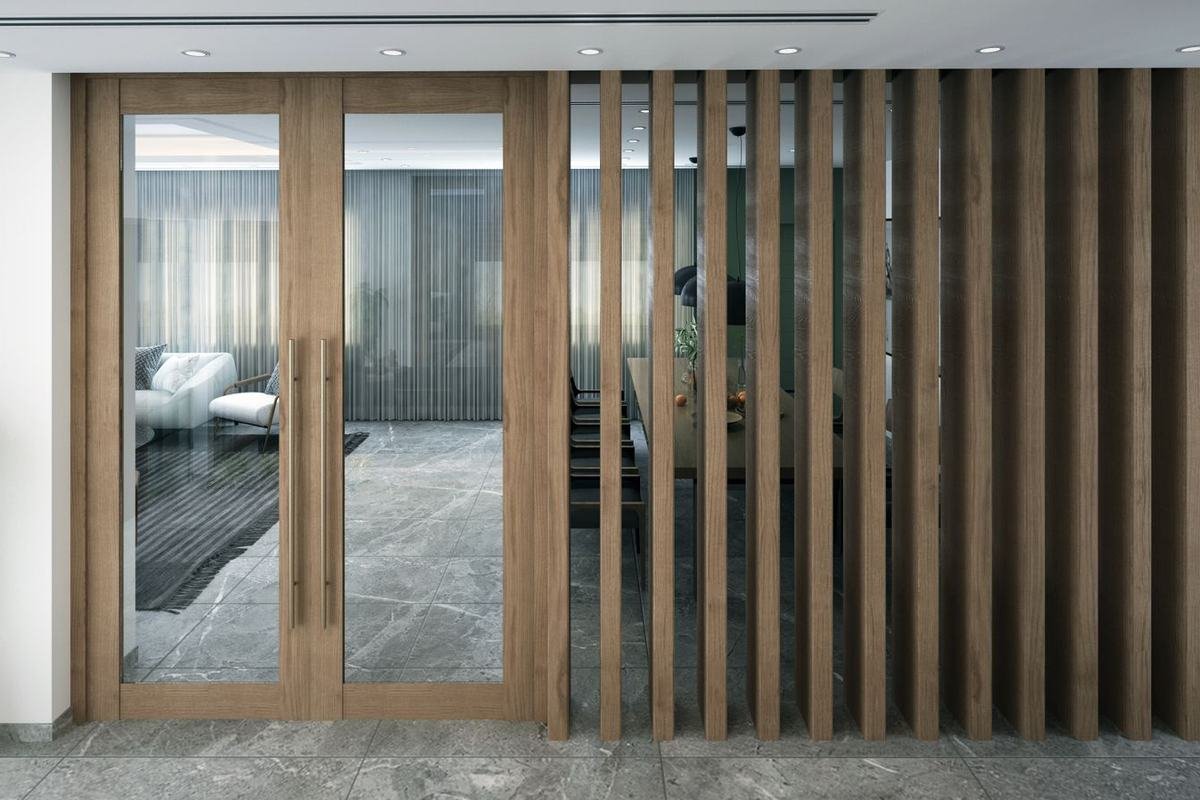
Fluted and slatted doors turn a flat closet front into a ribbed surface that catches light and shadow all day, which is why they have moved from boutique hotels into bedrooms. The construction is simple: narrow vertical grooves or battens, usually 1 to 2 inches apart, across MDF, oak, or walnut-veneer panels, as bifolds, sliders, or a hinged pair for 36 to 72-inch openings. Finished fluted doors run $350 to $900 a pair; the DIY route, half-round molding or fluted panel sheet applied to flat doors you already own, lands at $60 to $150 in materials. Keep the rest of the wall plain so the rhythm reads as texture rather than pattern, and dust the grooves with a soft brush monthly, because the same ridges that catch light also catch lint.
11. Add Cane or Woven Inserts for Texture and Airflow
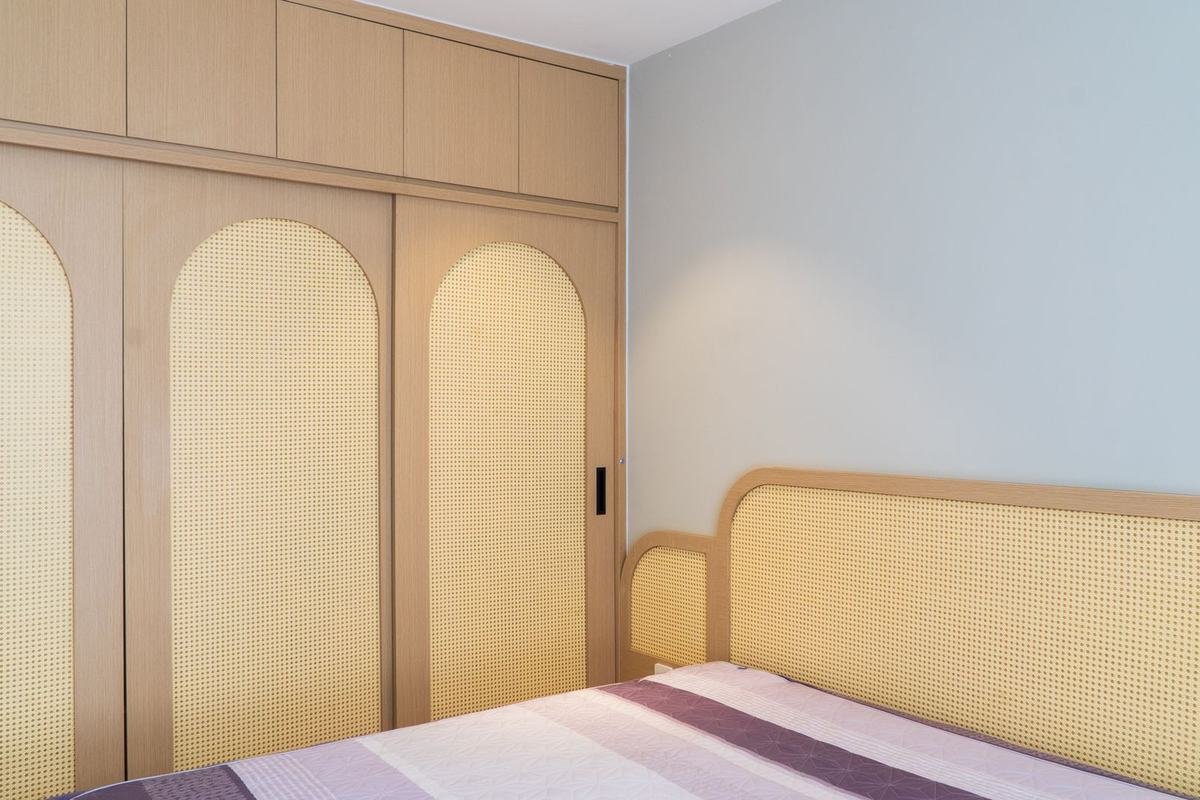
Cane webbing and woven rattan inserts give closet doors the handcrafted texture flat panels lack, while still venting the closet gently. The usual route is a framed door, solid, bifold, or sliding, with the center panel replaced or overlaid by cane webbing sold by the foot at $15 to $30 per linear foot; finished cane-insert doors run $350 to $800 a pair. Keep the frame painted or stained one consistent tone so the weave is the only pattern. Cane is light, which makes it kind to old bifold hardware that strains under heavier panels. It is not the choice for a toddler's or a large dog's room, since the weave dents under direct impact, but in a main bedroom it reads warm, tailored, and quietly expensive.
12. Disappear the Closet Behind Flush, Handleless Doors
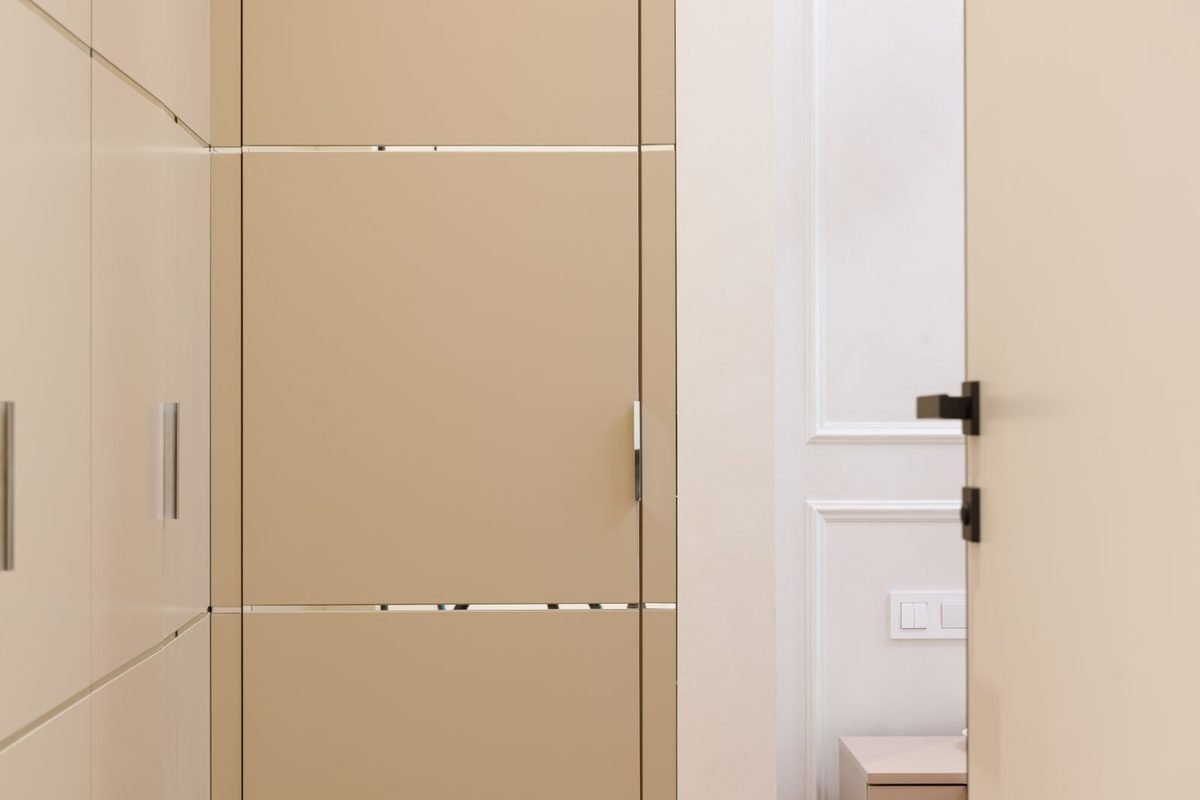
The opposite of a statement door is no visible door at all: full-height flat panels, fitted flush in the opening with push latches or slim edge pulls, painted exactly the wall color so the closet reads as architecture. This suits floor-to-ceiling built-ins on 48 to 96-inch runs and modern rooms where visual quiet matters more than access drama. Expect $600 to $1,500 for fitted flat-front doors with quality push-to-open hardware, since alignment is everything and gaps must stay even at about 1/8 inch. Inside, motion-sensor LED strip lighting, $25 to $50, replaces the light the seamless front hides. Choose this when the bedroom is small or visually busy: removing the closet from view can calm a room more than any single piece of furniture.
Frequently Asked Questions
What type of closet door is best for a small bedroom? Sliding and bifold doors are the safest picks because neither needs a full swing arc: bypass sliders need no clearance at all, and bifolds fold back into 5 to 7 inches at each side. Mirrored sliding panels do extra work in a small room by reflecting light and replacing a separate dressing mirror. If even those feel heavy, a curtain on a ceiling track covers the opening for under $150 and never blocks furniture.
How much do new closet doors cost? A refresh of the doors you have, paint, trim, or peel-and-stick wallpaper, runs $25 to $150. New bifold or shaker pairs land at $150 to $450, barn door kits at $250 to $600, French and glass doors at $400 to $1,200, and fitted flush built-in fronts at $600 to $1,500. Hardware quality drives much of the spread: tracks, rollers, and hinges are where an extra $50 is most visibly repaid.
Can I replace closet doors without replacing the frame? Usually, yes. Bifold and hinged doors are sold in standard sizes for existing openings, and sliding panels can often reuse a sound track after the rollers are replaced. Measure the finished opening width and height, not the old door, and check the track or hinge positions before ordering. The exception is a pocket or fully flush conversion, which changes the wall or the frame and belongs in a planned renovation rather than a weekend swap.
Are mirrored closet doors outdated? Not when they are framed like current furniture. The dated version is the thin, frameless, gold-trimmed slider; a black, brass, or wood frame, or mirror set as panels inside a shaker-style frame, reads deliberate and modern. Mirrors also remain the most practical finish for a bedroom without space for a floor mirror. If full mirror feels like too much reflection for sleep, mirror only one panel, or choose a fluted or frosted glass front instead.

