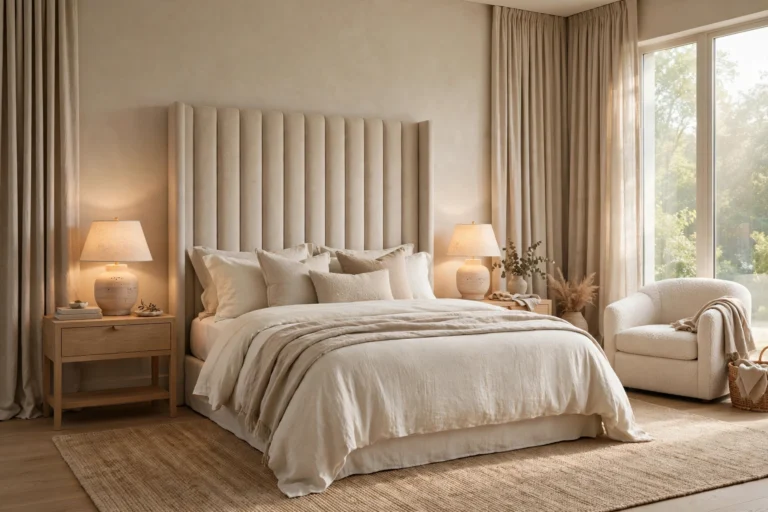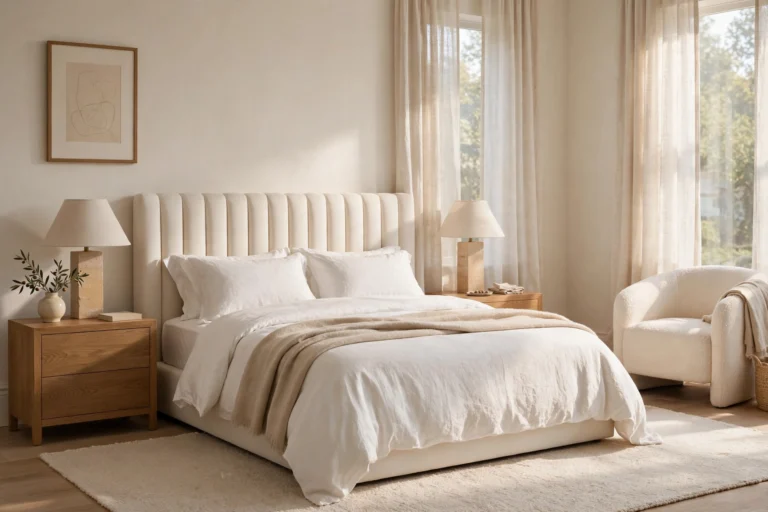
12 Small Bedroom Storage Ideas That Use Every Inch
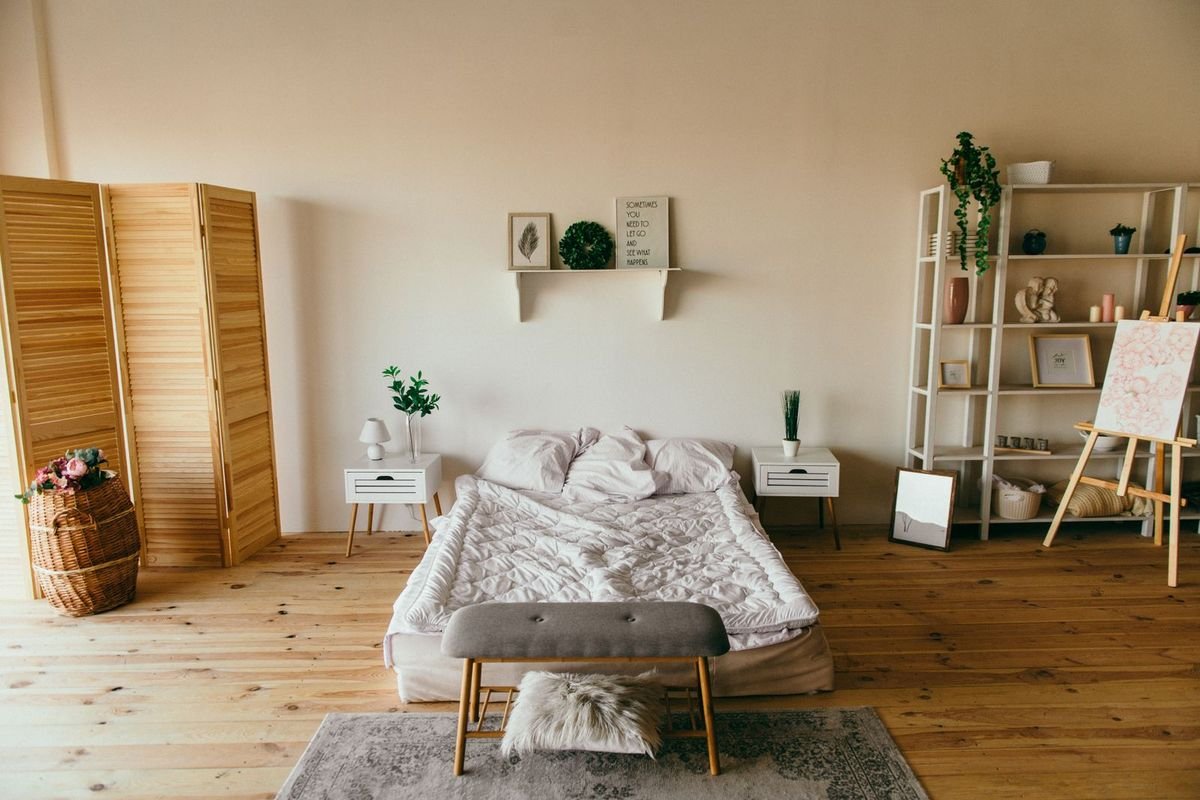
A small bedroom rarely lacks stuff. It lacks places for the stuff to go. The floor fills up first, then the chair in the corner, then every flat surface, until the room feels smaller than its measurements. The fix is rarely a bigger dresser. It is using the zones most bedrooms waste: the space under the bed, the height of the walls, and the back of the door.
The small bedroom storage ideas below work in that order, from hidden volume to vertical space to furniture that stores while it does another job. Start with two or three, measure before you buy anything, and keep daily items within easy reach. Off-season and rarely used pieces can live higher, deeper, and further from the bed.
1. Use the Space Under the Bed First

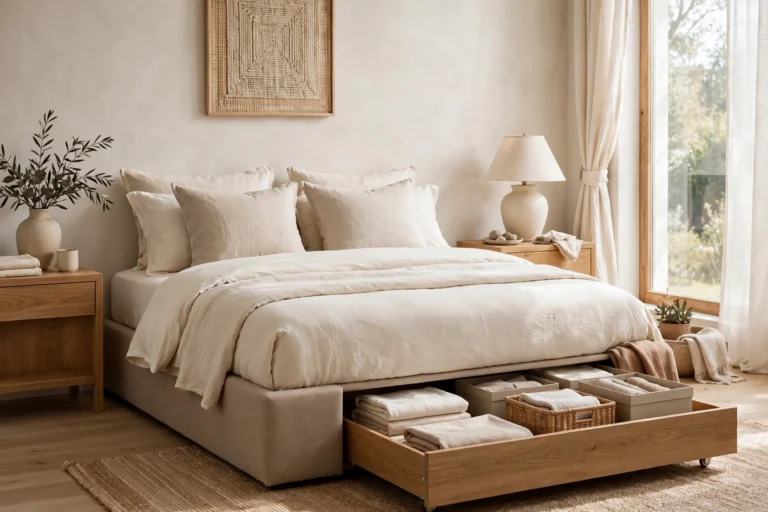
The bed is the largest object in the room, and the space beneath it is usually the largest empty area too. Measure the clearance from floor to frame, then choose low rolling bins, lidded boxes, or zippered bags that slide without catching. Reserve this zone for off-season clothes, spare bedding, and extra shoes — things you need monthly, not daily. Label each container on the short end so you can read it while it is still under the bed. Sealed containers matter here, because under-bed areas collect dust faster than open shelves.
2. Take Storage From Floor to Ceiling
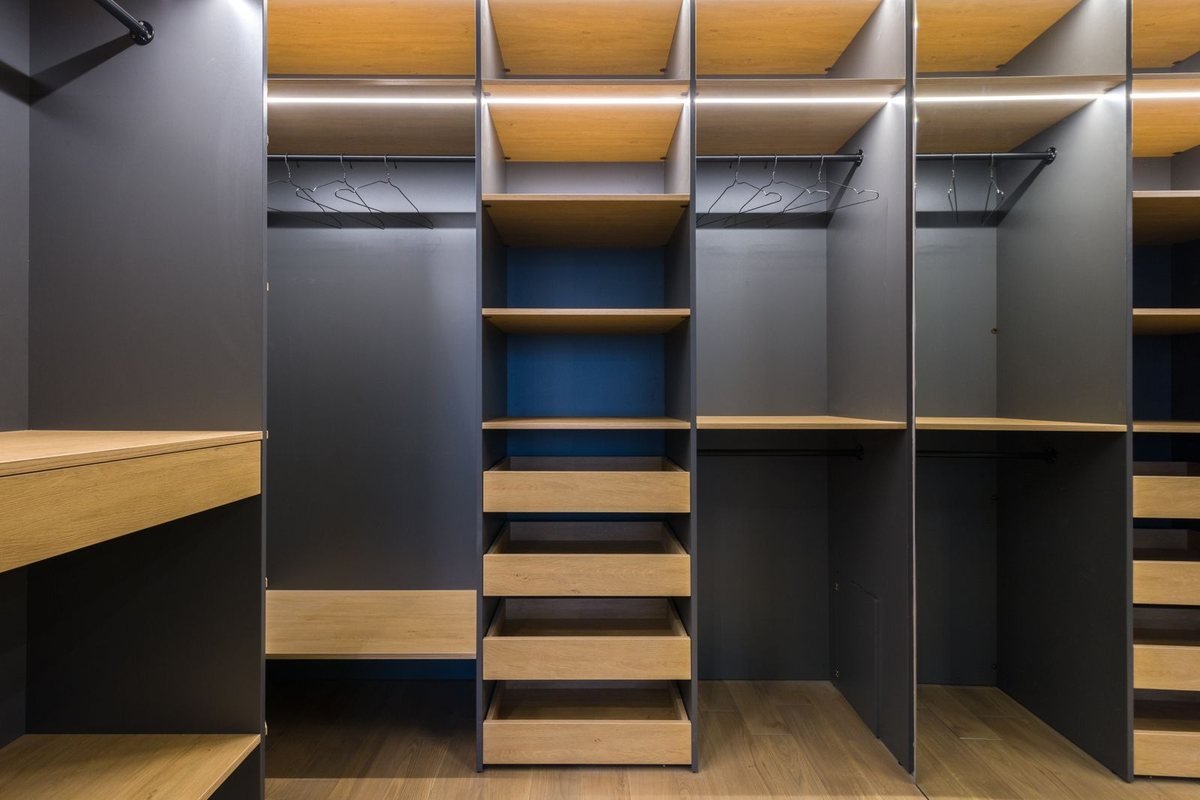
Floor space runs out quickly; wall height usually does not. A tall, narrow wardrobe, a shelving unit that reaches near the ceiling, or a second shelf above the closet rod puts the least-used items up high and keeps daily pieces at eye level. Store high items in matching boxes so the top row reads as one calm line instead of a jumble. Keep a small folding step stool nearby, anchor tall units to the wall, and never place heavy boxes on the highest shelf. Our closet organization guide covers the inside of the closet in the same floor-to-ceiling spirit.
3. Put the Back of the Door to Work
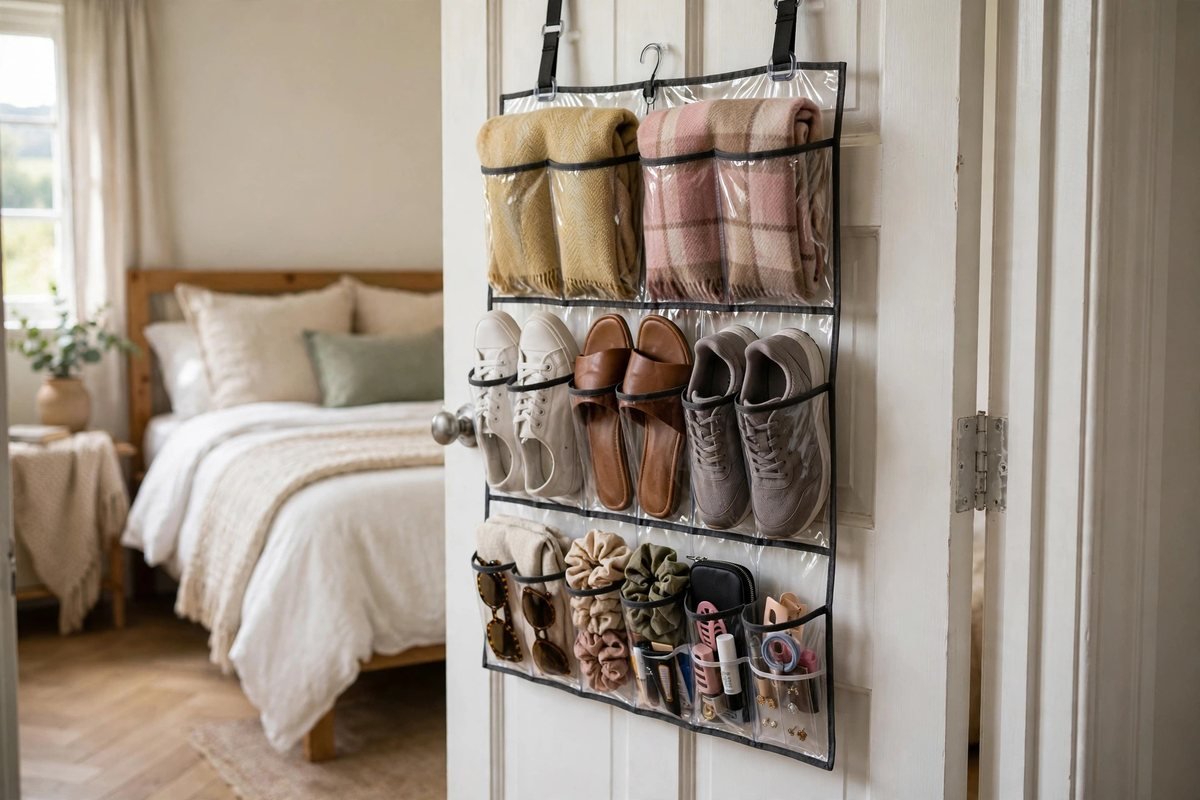
A bedroom door offers roughly twelve square feet of flat, unused surface. An over-door organizer with clear pockets holds shoes, scarves, chargers, and small accessories where you can see them at a glance. Hook racks suit bags, hats, and tomorrow’s outfit. Choose hardware that hangs from the top of the door rather than adhesive strips if you rent, and check that the door still closes cleanly with the organizer loaded. Keep the heaviest items in the lowest pockets so the door does not swing or sag over time.
4. Choose a Bed Frame That Stores

A storage bed turns the bed’s footprint into drawers. Side drawers work well for folded clothes and bedding, and they open without lifting the mattress. A lift-up base gives one deep compartment instead, better for suitcases and bulky items that have no other home. Before ordering, measure the space beside the bed: side drawers need clear floor to pull out, so a bed pushed against a wall may suit a lift-up base or foot-end drawer better. Apartment Therapy makes the same point in its small bedroom roundup — the right storage bed depends on the clearance around it.
5. Add Floating Shelves High on the Wall
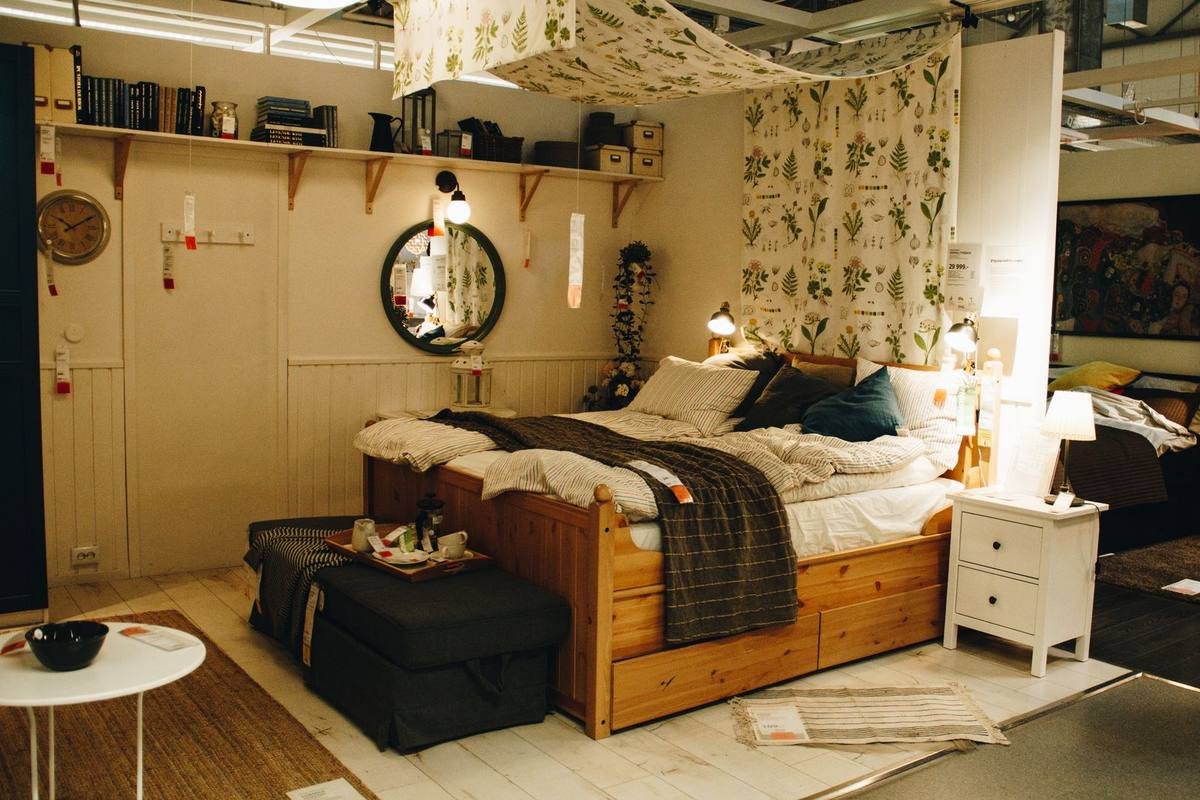
Floating shelves hold books, plants, and keepsakes without taking a single inch of floor. The most useful spots are above the headboard, above a desk, and in the dead space above the dresser. Keep shelves shallow — eight to ten inches — so the room does not feel top-heavy, and fix them into studs or use anchors rated for the load. Style each shelf with a mix of stored and shown: closed boxes and baskets for the clutter, a few upright books and one plant for the finish. Stop one shelf short of the ceiling to avoid a crowded look.
6. Pick a Bench or Ottoman That Opens

The foot of the bed is prime space for a storage bench. Inside, it swallows extra blankets, board games, or the bedding set for guests. On top, it gives you a seat for putting on shoes and a landing spot for folded laundry. Measure the width so the bench sits a few inches narrower than the bed, and check the height against the mattress so it does not block the bed’s lines. An upholstered ottoman does the same job in a smaller footprint and doubles as a side table with a tray on top.
7. Slide a Slim Cart Into the Gap

Most small bedrooms have one awkward gap: between the bed and the wall, beside the dresser, or next to the desk. A slim rolling cart, often under ten inches wide, turns that gap into tiered storage for books, skincare, chargers, and craft supplies. Wheels matter — you pull the cart out to reach the back rather than fishing blindly. Choose metal or sturdy plastic tiers that do not flex when loaded, and keep the top tier for the items you grab every morning and night.
8. Rework the Closet With a Double Hang
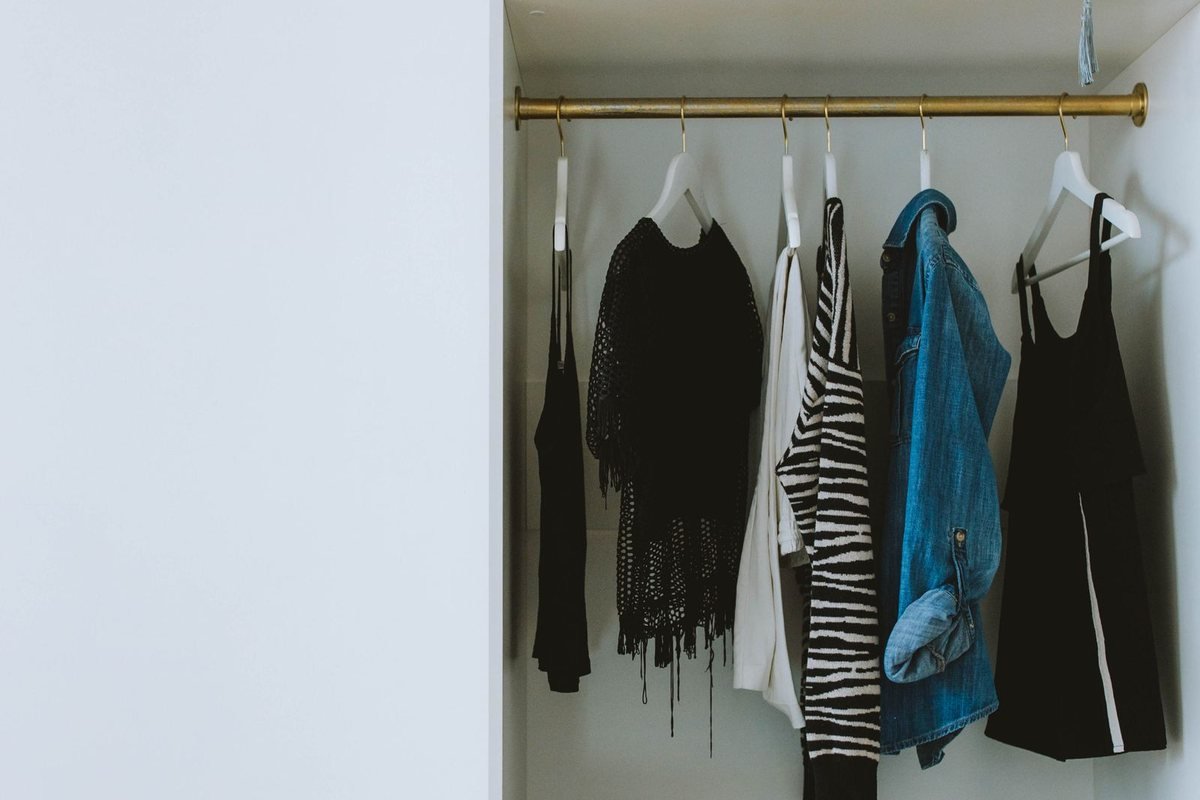
A single closet rod wastes the vertical half of most closets. Adding a second rod below the first doubles hanging space for shirts, trousers, and shorter dresses, while long items keep a narrow full-length section at one end. Add a shelf above the top rod for boxes, and use slim hangers so the rods hold more without bulging. If your closet also stores linens, our linen closet ideas show how to fold and stack so shelves stay readable instead of slumping into piles.
9. Swap In a Headboard With Shelves

A headboard with built-in shelves or cubbies replaces the nightstand’s job on one or both sides of the bed. Books, an alarm clock, glasses, and a small lamp sit inside the headboard’s depth instead of on a separate table. This works especially well in rooms too narrow for two nightstands. Keep cubbies partly open and partly boxed so the bed wall looks tidy, and route charging cables through the back or down the side so cords do not cross the pillow zone.
10. Corral Soft Things in Baskets

Loose soft items — throws, spare cushions, knitting, gym clothes waiting for the wash — make a tidy room look messy in minutes. Large woven or fabric baskets contain them in one move and move easily when you clean. Place one basket beside the bed and one near the door, and give each a single job. Our throw blanket storage ideas cover ladders, baskets, and lidded options for keeping blankets stored but still part of the room’s look.
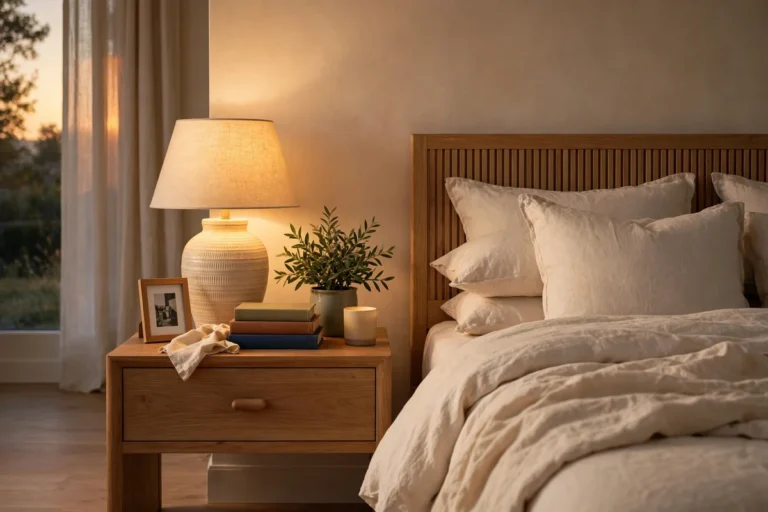
11. Replace the Nightstand With Drawers

A flat-topped nightstand with one small drawer wastes most of its volume. Swapping it for a slim three-drawer chest or a cubby unit keeps the same footprint and adds real storage for clothes, books, and bedside clutter. The top still holds a lamp and a glass of water; everything else goes behind a drawer front. If a full swap is not possible, the nightstand alternatives in our guide include wall-mounted drawers and stackable boxes that free the floor entirely.
12. Give Shoes a Dedicated Slim Home

Shoes scattered by the door and under the bed eat space in every direction. A slim, closed shoe cabinet — often only six to eight inches deep — holds several pairs behind a flat front that reads as a simple console. An over-door rack or low under-bed shoe organizer works if there is no wall for a cabinet. Keep everyday pairs in the cabinet and store the rest with your off-season rotation. Our shoe storage ideas round up more options for hallways and closets once the bedroom pairs are sorted.
Frequently Asked Questions
What is the best storage for a very small bedroom? Start under the bed, because that space already exists and costs nothing to claim. Low sealed bins for off-season clothes and spare bedding give the biggest gain. After that, go vertical with tall shelving and door-back organizers before buying any new floor furniture.
How do I add storage without making the room feel cramped? Favor closed storage over open display, keep boxes and bins in one color family, and leave some wall and floor visibly empty. Storage that reaches up looks calmer than storage that spreads out, and matching containers stop high shelves from reading as clutter.
What should I store under the bed, and what should stay out? Store off-season clothing, spare bedding, extra shoes, and luggage — items you reach for monthly or less. Keep daily clothes, damp items, and anything valuable out of under-bed storage, and use sealed containers because the space collects dust.
Are storage beds worth it in a small bedroom? Usually, yes. A bed already takes the largest share of the floor, so drawers or a lift-up base inside that footprint add storage without adding furniture. Check drawer clearance first: beds against a wall suit lift-up bases or foot drawers better than side drawers.