12 Behind-the-Door Storage Ideas for Every Room

Every home already owns a row of tall, flat, empty surfaces it barely uses: the backs of its doors. A standard interior door offers roughly 15 to 20 square feet of vertical space, and the gap behind a fully open door adds a shallow shelf zone most people never measure. Used one door at a time, that hidden area holds the spices crowding your counters, the towels with no rail, and the shoes piling up by the bed, all without taking a single inch of floor.
The behind the door storage ideas below work room by room, so you can start at your worst clutter spot and copy the system on the next door. Before buying, run two checks: open and close the door fully, hand on the swing path, and confirm it is a standard swinging door, 1-3/8 inches thick, not sliding or bifold. Most racks and hooks below cost $12 to $40, need no drilling, and come off clean when you move.
1. Fit a Slim Rack on the Pantry Door for Spices and Wraps

The pantry door is the highest-value door in the house because its cargo is flat and light. A slim wire or wood rack, 4 to 5 inches deep and made in widths for 24-, 30-, and 36-inch doors, holds spice jars in a single visible layer plus foil, wrap, parchment, and zip bags standing upright. Expect $20 to $45 for a sturdy over-door version with six to eight baskets. Browse real pantry layouts, including door organizers, in the kitchen pantry photo gallery on Houzz before you order, and pair the rack with the sorting habits in our small pantry ideas guide. Label every basket by category, keep the heaviest jars on the lowest tier, and leave the top basket for packets only, so the door still swings without a rattle.
2. Hang a Hook Rack on the Bathroom Door for Towels and Robes

A bathroom door with a hook rack solves the most common small-bathroom problem: two people, four wet towels, one short rail. Choose a metal over-door rack with four to six hooks, $14 to $28, with padded brackets that fit a 1-3/8-inch door and felt pads where metal meets paint. Hang one towel or robe per hook so air can move and fabric actually dries; a doubled-up towel stays damp and sour. Keep the load soft and light, because heavy bottles belong on a shelf, not swinging on a door. If your door is hollow-core, stay under about 15 pounds total. Hooks also give guests an obvious place for their towel, which quietly keeps the rest of the bathroom off duty during visits.
3. Use Clear Pockets for Cleaning Supplies on the Laundry Door

Cleaning supplies scatter because they live wherever they were last used. A clear pocket organizer on the laundry or utility door, 54 to 66 inches tall with 12 to 24 pockets, $12 to $22, gathers spray bottles, stain remover, dryer sheets, cloths, and a lint roller into one visible station off the washer and floor. Clear vinyl matters here: you see the empty bottle before laundry day, not during it. Store bottles upright with lids fully closed, put stronger cleaners in the highest row, out of a child's reach, and keep one pocket empty as overflow so the system never gets stuffed. Wipe the pockets monthly, since laundry dust settles fast. This is one of the most renter-friendly behind the door storage ideas, because the whole station lifts off in seconds.
4. Put Shoes in a Hanging Organizer, Not on the Floor

A hanging shoe organizer turns a bedroom or closet door into 12 to 24 pairs of vertical storage for $15 to $30, and it works best when you assign it the right shoes: flats, sneakers, sandals, and kids' shoes fit standard pockets about 5 inches wide, while tall boots and chunky heels do not and will stretch the fabric. Clear pockets beat solid canvas because you grab the pair you can see. Keep everyday pairs at waist height and seasonal pairs at the bottom. Our shoe storage ideas cover the floor and closet systems for the pairs a door cannot take. Dust open pockets with a handheld vacuum every few weeks, and skip this idea on a door that opens against a wall of hanging clothes, where shoes will rub fabric daily.
5. Turn a Closet Door Into an Accessories Station

The inside of a closet door is prime getting-dressed space that usually holds nothing. Small adhesive or over-door hooks, a hanging jewelry organizer with clear pockets, and a scarf or belt hanger, $10 to $25 combined, give every accessory its own visible spot where you actually choose outfits. Necklaces hung on individual pegs stop tangling, belts stop sliding off the rod, and sunglasses stop migrating to kitchen counters. Keep the layout shallow, under 3 inches of projection, so the door closes over hanging clothes without pressing them. This is the behind the door storage ideas principle at its simplest: one door, one job. Our closet organization guide builds the rest of the closet around the same visible, one-spot-per-item rule.
6. Build an Entry Drop Zone on a Closet Door
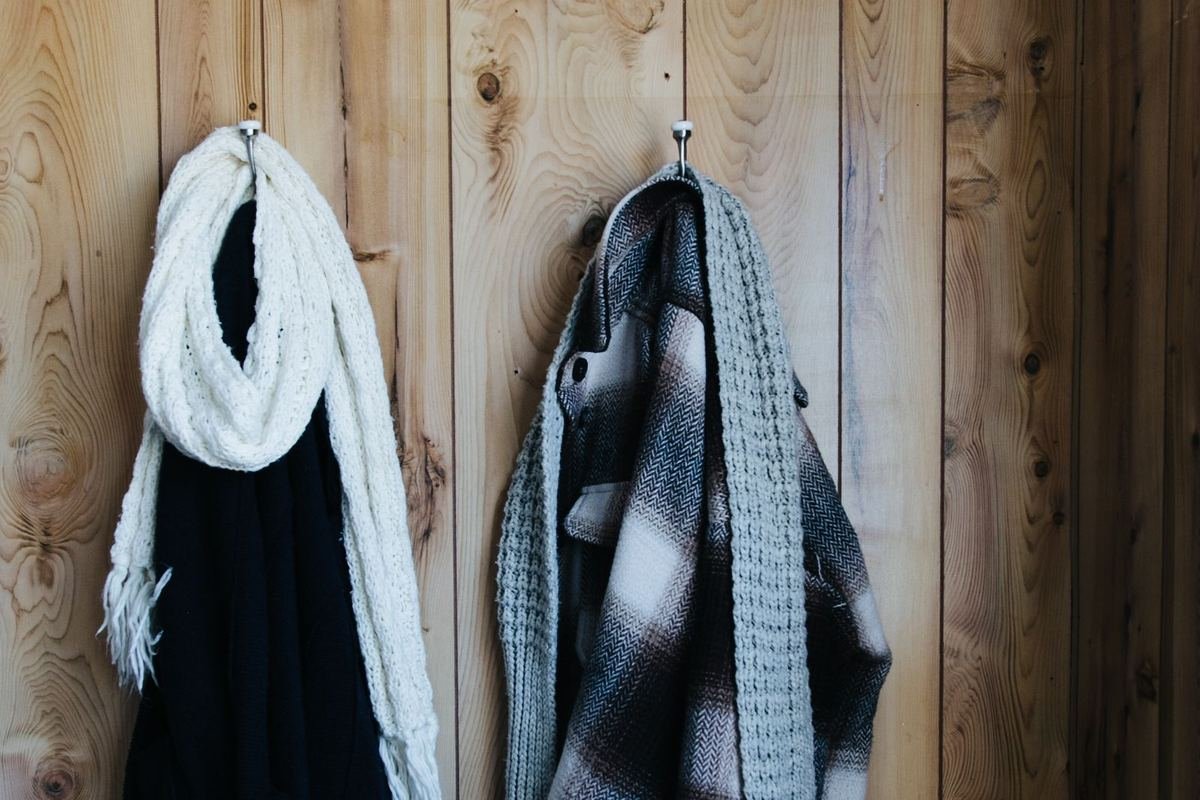
Homes without a mudroom still need a landing strip, and the inside of an entry closet door is the closest thing to free. Hooks for hats, gloves, scarves, and a dog leash, plus two or three pockets for sunglasses, keys, and mail, cost $15 to $30 and put everything for leaving the house in the last place you look before the door opens. Fit the hooks at two heights, about 60 inches for adults and 40 inches for kids. Rotate the contents once a season: cold-weather gear out, sunscreen and caps in, so the door never becomes a year-round pile. Our entryway storage ideas extend the same drop-zone thinking to benches and wall rails when the closet door is already full.
7. Give Kids' Art and Books a Door of Their Own

Clear pockets at child height turn a kids' room door into an art station that tidies itself. Sort crayons, markers, stickers, glue sticks, and coloring books by pocket, keep scissors and other grown-up tools in the top row, and face a few picture books outward on the inside of the closet door so choosing a bedtime story takes seconds. A full organizer runs $13 to $25. Rotate books and craft supplies every few weeks; the door feels new without buying anything. Keep the load light and soft, since kids swing doors harder than adults do, and check the top brackets monthly for loosening. Of all the behind the door storage ideas here, this one earns its keep fastest, because every pocket filled is a supply that is not on the floor.
8. Add Narrow Shelves in the Dead Space Behind a Door

Some of the best storage is not on the door at all, but in the wedge of wall the open door hides. Measure that gap first: most doors leave 4 to 6 inches between the open door and the wall, enough for picture ledges or narrow shelves 3.5 to 4.5 inches deep. Two or three ledges, $12 to $25 each, hold paperbacks, small plants, toiletries, or a slim sling bookshelf for a nursery reading corner. Mark the door's full swing on the floor with tape before drilling, and stop the door with a hinge pin or floor stop so it can never slam into a shelf edge. This only works where the door opens flat against the wall; a door stopped at 90 degrees has no hidden wedge.
9. Create a Gift Wrap and Craft Station on One Door

Wrapping paper fails every storage test: too tall for drawers, too fragile for closets, too rarely used for prime space. A wire over-door rack with tall compartments, $25 to $45, holds rolls upright in the back baskets, with tape, tags, ribbon, and scissors in small clear jars or pockets at hand height. The modular rail systems that screw to the door hold more, but the hanging version keeps it renter-safe. The same setup serves craft supplies in a home office: notebooks and envelopes low, tools high. Keep rolls under about 30 inches so standard paper fits without bending, and store the station on a spare-room or office door, since it is a weekly-or-monthly door, not a daily one. One dedicated door ends the pre-party hunt through four closets.
10. Claim the Shelf Space Above the Door

The strip between the top of the door frame and the ceiling, usually 8 to 12 inches, fits a simple shelf that disappears from normal sight lines. A board cut to the door's width plus a few inches, on two small brackets, costs $20 to $40 in lumber and hardware and holds the things you need rarely but predictably: spare toilet paper and guest toiletries above a bathroom door, batteries and bulbs above a utility door, luggage or out-of-season decor above a closet. Use lidded, labeled boxes so the shelf reads as one tidy line, and never store anything heavy or daily up there, because a shelf you need a step stool for should serve monthly items at most. Paint the board the wall color and it nearly vanishes.
11. Store Toiletries and Guest Extras on a Linen Closet Door

Small spare items vanish between stacks of towels, which is why the inside of a linen closet door deserves its own small system. Pockets or slim baskets, $12 to $28, hold spare toothbrushes, travel-size toiletries, cotton balls, first aid basics, and extra soap where guests and family can find them without unfolding a single sheet. Sort by person or by task, label each row, and restock from the top of your shopping list when a pocket empties. This pairs naturally with the vanity and cabinet fixes in our small bathroom storage guide. Keep liquids in the lowest baskets inside a leak-proof tray, and aerosols away from the door's sunniest side. It is a quiet idea, but it ends the linen closet avalanche for good.
12. Mount a Hinge-On Cabinet or Mirror for the Deepest Fix

When pockets and hooks are not enough, a hinge-mounted cabinet is the full-commitment version: a shallow cabinet, typically 4 to 5 inches deep and door-height, that attaches to the door's own hinges and swings with it, adding real shelved storage in a bathroom, kitchen, or bedroom for $150 to $350. A full-length mirror version hides jewelry and toiletries behind the glass you use every morning. Check three things before ordering: solid-core or strong hinges that can carry the added weight, full clearance through the swing, and a wall the open cabinet will not strike. This is the one idea here that is not renter-friendly, so treat it as the last step, after the $20 versions prove the door earns its keep.
Frequently Asked Questions
How much weight can a door hold safely? Keep door storage light as a working rule: roughly 10 to 15 pounds on a hollow-core door and up to about 20 to 25 pounds on a solid-core door, spread low and even rather than hung from one hook. Towels, accessories, wraps, spices, and small supplies are ideal loads; full bottles, books by the dozen, and heavy bags strain hinges. If the door starts to sag, creak, or resist closing, remove items immediately and move the load to fixed shelving.
Will an over-the-door organizer damage my door or stop it closing? Most hanging organizers rest on padded hooks and need no screws, so they leave no marks, which is why they suit renters. Fit matters more than brand: brackets are sized for standard 1-3/8-inch doors, and a door that will not close usually has hooks that are too thick for the gap at the top jamb. Try slimmer hooks, add felt pads, or move the rack to the inside of a closet door. If it still binds, that door gets wall storage instead.
How much clearance do I need behind a door for shelves? Measure with the door fully open and flat to the wall. Most doors leave 4 to 6 inches of usable depth, which suits picture ledges and shelves 3.5 to 4.5 inches deep with a small margin so nothing brushes the door. Tape the swing path on the floor before you drill, fit a door stop, and test with the deepest item you plan to store. Doors that stop at 90 degrees against furniture have no hidden wedge, so give those doors an on-door organizer instead.
Which door should I start with? Start with the door nearest your worst clutter, which for most homes is the pantry or bathroom door. A pantry rack or a bathroom hook rail costs $15 to $30, installs in minutes, and shows within a day whether the one-door-one-job system works for your household. Copy that door's layout to the next room before inventing a new system each time, and leave about 20 percent of every organizer empty so putting things back never requires force.